

Pros and Cons of Jahlil Okafor for Los Angeles Lakers in the 2015 NBA Draft
Even days after the NBA draft lottery, fans of the Los Angeles Lakers are still rejoicing. Not only did L.A. keep its top-five pick, it also snuck all the way up to the No. 2 overall selection in the draft!
For the second consecutive season, the Lakers find themselves in position to draft an elite offensive big man who came into the season as the likely No. 1 overall pick. As the second-ranked player on most draft boards, the Duke Blue Devils' Jahlil Okafor could start next to Julius Randle for L.A. this fall.
Let's key in on Okafor and take a look at the pros and cons of the Lakers selecting the highly touted freshman center.



Pros
1. Size
Okafor has the size of a true center. He didn't make an appearance at the NBA Draft Combine, but his most recent measurements have him at 6'11" in shoes, with an impressive 7'5" wingspan and a 9'2.5" standing reach. Weighing in at around 270 pounds, he's an absolute behemoth on the block.
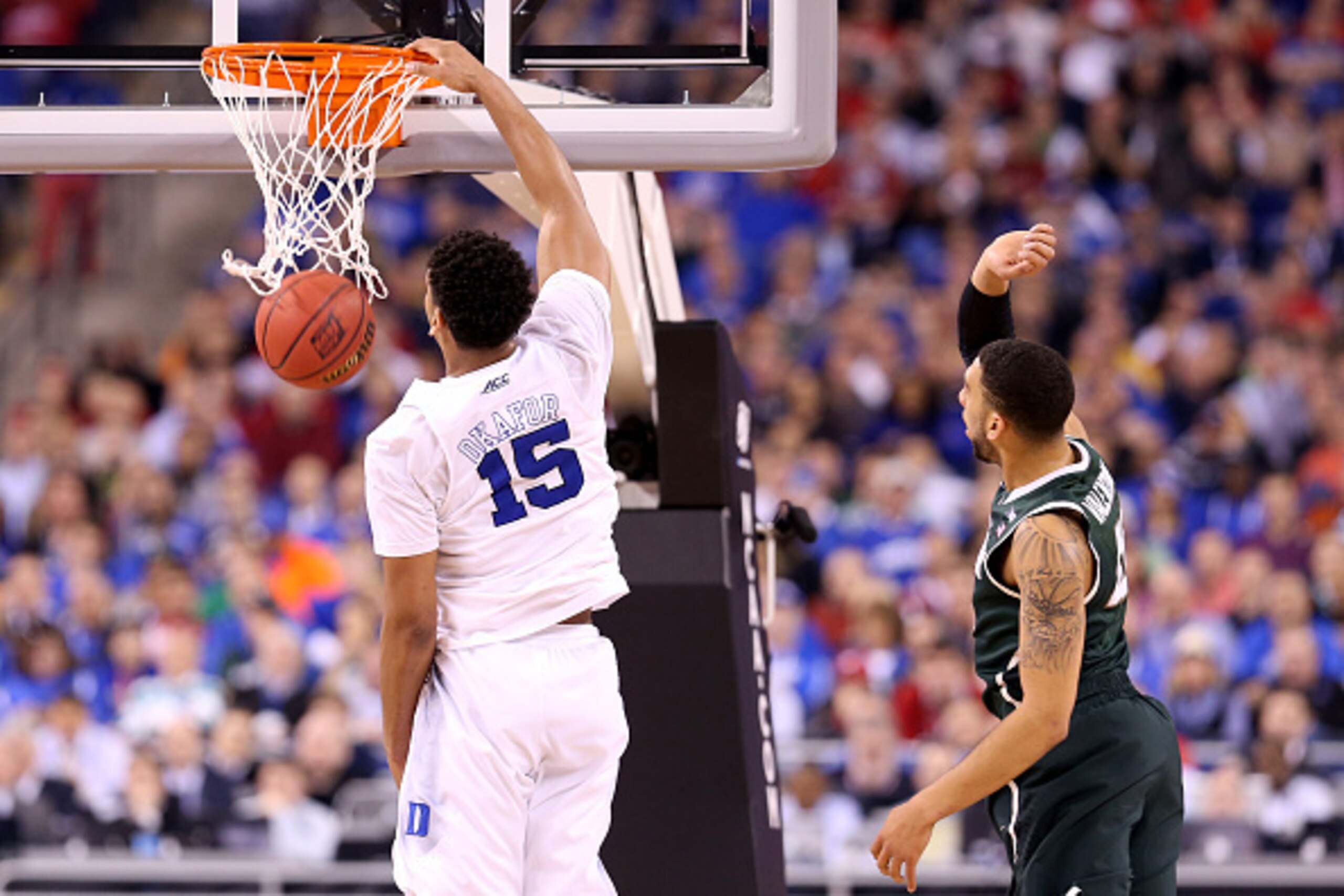
His measurables compare favorably to the other big men in the draft, particularly that wingspan, which would have been the third longest of anyone at the combine.
He also has massive hands that just smother the basketball. Fitting 13 tennis balls into your hand is no joke.
2. Skill
Despite his mammoth size, Okafor still has a highly refined skill set, which makes him even more intriguing.
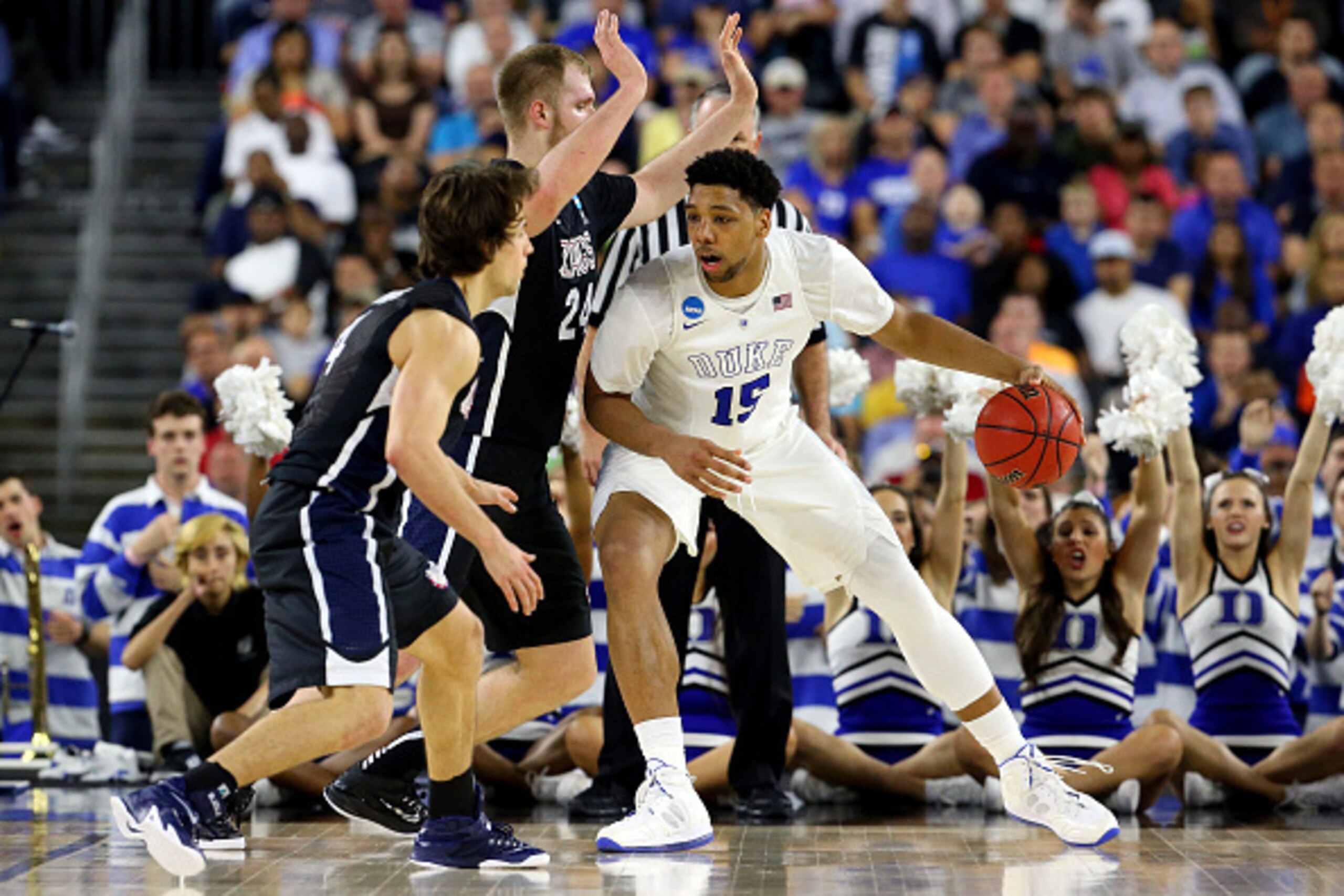
Okafor is nimble on his feet, possesses excellent body control and can get out on the break, as well, where he averaged 1.47 points per 100 possessions, per DraftExpress.
He faced a lot of double-teams down on the block thanks to his low-post prowess and showed a superb ability to pass out of them and hit the open man. Not only did he display a high basketball IQ, he was an unselfish, willing mover of the ball.
The young center also has a deceptively good handle for his size. His teammate Justise Winslow vouched for that at the combine, saying, "He actually has great ball-handling skills for a big man," according to Marc Berman of the New York Post.
3. Scoring Ability
Okafor's biggest draw is his ability to score. ESPN's Chad Ford called him, "the most polished offensive freshman big man we've seen in a decade."
His back-to-the-basket game harks back to the centers of old—many of whom starred for the Lakers in the past. His footwork is on point, and he's got the countermoves to stay one step ahead of his defender in the post.
He also is the best finisher in the draft. According to DraftExpress, Okafor shot a ridiculous 79.2 percent in the half court in non-post up situations, the best mark in the nation.
Additionally, he can face the hoop and take his man off the dribble with that strong handle and long arms. Finally, he has the ability to knock down the mid-range jumper.
"On the block, he's unstoppable, and a lot of teams had to double him, and he can step back and hit a 15-to-17-foot jump shot," Winslow said, per Berman.
With his all-around skill, he may grow into a DeMarcus Cousins-type of offensive weapon at the center position.
4. Pedigree
After being the consensus top prospect for much of the season, Okafor began to fall out of favor—particularly in the latter stages of the tournament when Winslow outshined him.
However, it's foolish to dismiss his body of work.
Okafor was named a first-team All-American and became the first freshman in conference history to be named ACC Player of the Year.
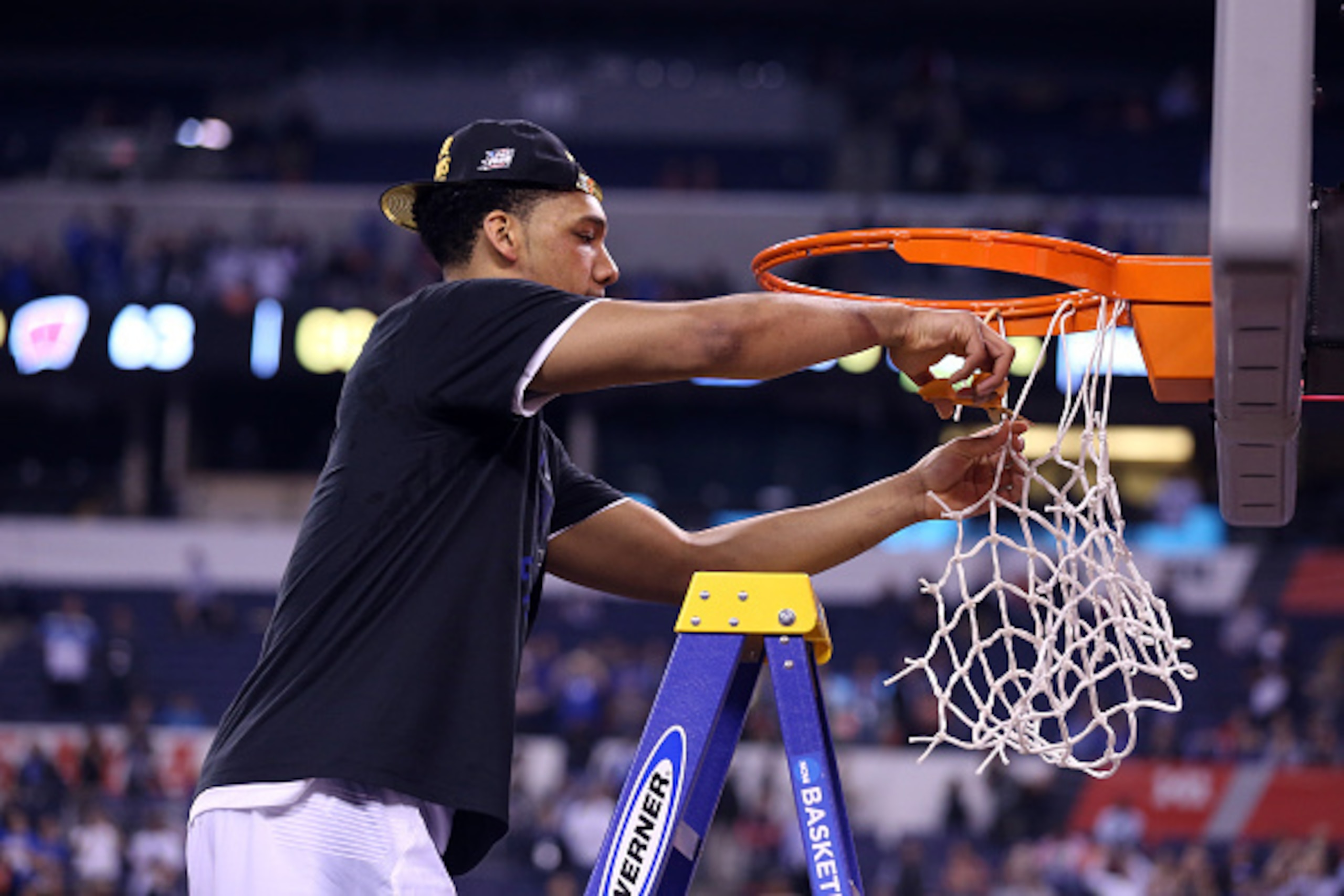
He was the best player for the balance of the season on a team that won the national championship, another rare feat for a freshman. Recent examples include Anthony Davis and Carmelo Anthony. The sample is small, but you don't mind that company at all.
The Lakers want to rebuild their winning culture. Okafor comes in with the right pedigree to foster that environment.
Cons
1. Athleticism
As mentioned before, Okafor skipped the combine, therefore we don't have his athletic testing numbers on file. You could look at that as a cop out, as scouts have been concerned about his athleticism translating to the pros all year long, and Okafor feared to confirm their beliefs.
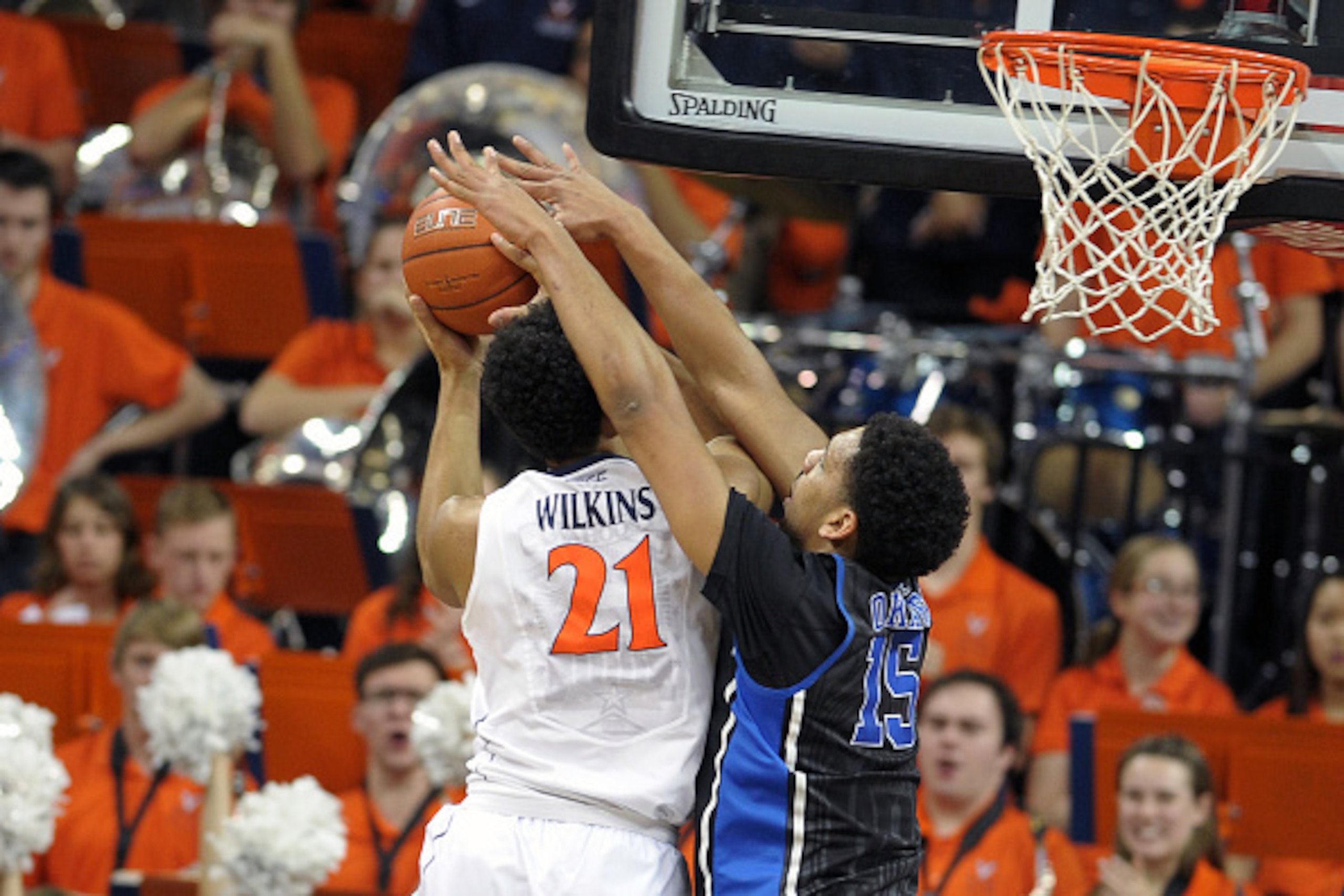
He's not laterally quick and looked slow-footed anytime he had to roam outside the paint on defense. His rim protection could be limited by a lack of explosion around the basket, and his effort was lacking at times, possibly due to poor conditioning.
His trainer Rick Lewis insists Okafor has gotten into terrific shape for the draft.
"We've taken 12 pounds of fat off him since the season ended, not muscle but fat. His conditioning is building," Lewis said, per Berman.
If he really is in as good a shape as his camp claims, it would have been nice to see him go through the athletic testing at the combine and ease the fears scouts have been harboring in that department.
2. Individual Defense
Okafor's game doesn't exactly scream "lockdown defender." He has outstanding size but doesn't have the explosion near the basket that most of the league's elite rim protectors possess.
His sluggishness on the perimeter also limits his effectiveness guarding the pick-and-roll, the staple diet of NBA offenses. With Okafor in the fold, the Lakers will almost certainly be forced into a conservative scheme that has the Duke big man dropping back into the paint to contain the ball-handler.
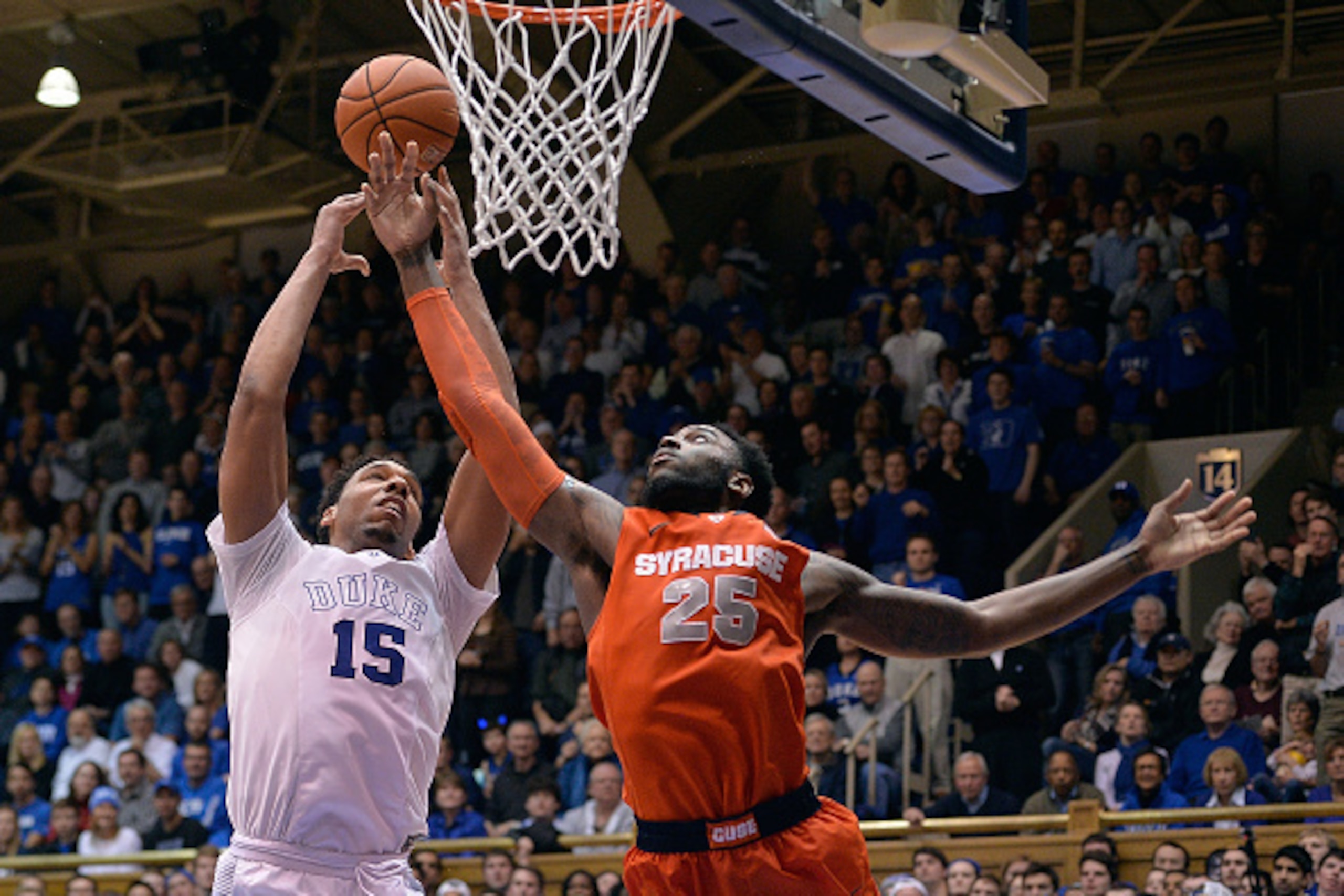
While that formula can have success, it does create more space and options for the offense. Many guards in the league have mastered the Chris Paul-patented foul line pull-up to take advantage of precisely that tactic.
Okafor also was a surprisingly poor defensive rebounder in college. He developed some bad habits, merely reaching for the ball instead of getting a body on his man and sealing off the board. A general malaise plagued often enough on the defensive end, which may have been the result of substandard conditioning.
We know he's been working on that aspect of his game, so if he can keep his motor running high consistently, his size and length can make up for the lack of athleticism and turn him into a solid individual defender down the line.
3. Defensive Fit
Every team needs a defensive anchor in the middle, especially the Lakers. Teams feasted on them near the basket, shooting nearly 62 percent inside the restricted area—the fifth-worst mark in the league, per NBA.com.
Los Angeles has been near the bottom of the league in points allowed per possession the last two seasons, largely because it hasn't had an intimidating paint presence since Dwight Howard's departure.
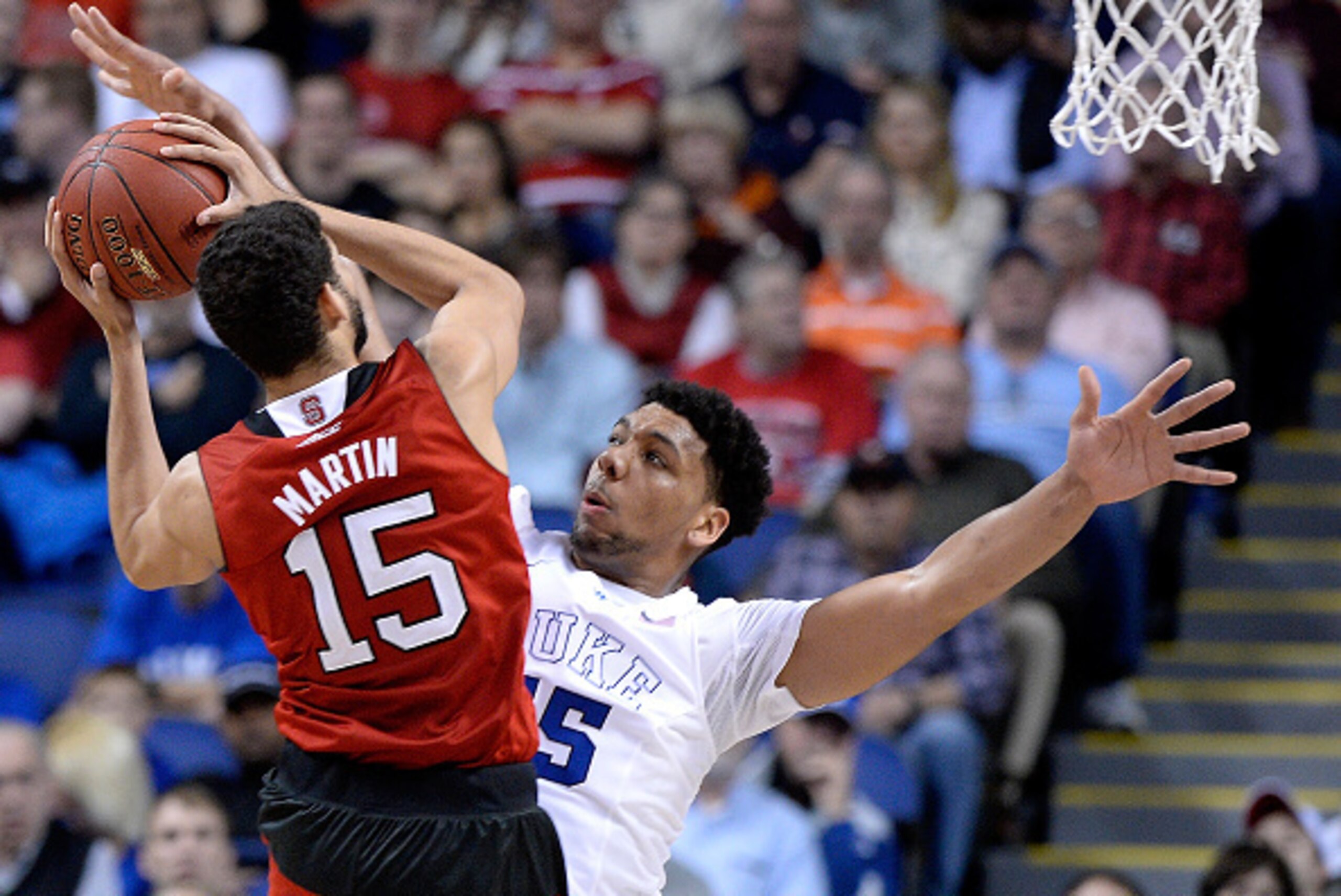
As discussed earlier, Okafor alone may not be enough to turn that around, and that is the biggest concern for the Lakers.
Randle already projects to be a below-average interior defender with his smaller stature and short arms (6'9" height in shoes and a 6'11" wingspan, per DraftExpress). Pairing him with Okafor down low could be a problem, especially initially.
No matter how good the two are on offense, if they give it all back on the other end, it will be irrelevant.
With the right coaching and development, this issue can be overcome to a large extent. But the prospect of another couple of years' worth of layup parades for the opposing team is worrisome.
Conclusion
There are pros and cons to every player in the draft, and Okafor is no exception.
The Lakers should be excited to possibly welcome a player of his caliber aboard, but they must know he's far from a finished product, and it will take some perseverance from both parties to unlock all of his vast potential.

.jpg?w=2560 "Raiders Could Start Mendoza")

.jpg?w=2560 "Rodgers Iced Out on Plane 💎")

.jpg?w=2560 "🚨 Week 8 AP Top 25 Poll")
.jpg?w=2560 "Packers Safety Slams Refs 🤬")