

In a new NBA era dominated by pace, space and advanced stats, a certain style of play has come to dominate the Association.
But instead of explaining it piece by piece, Golden State Warriors head coach Steve Kerr is here to concisely sum up the stylistic methods prosperous teams have embraced.
"To me, you have to have a combination of three-point shooting and great defense," Kerr said, according to CSNBayArea.com's Monte Pool. "And that’s been the formula the last few years. All those teams defended really well, made threes. You've got to be healthy, and you’ve got to be clicking and playing well, but the three is a huge part of the game."
He's not kidding.
According to Bleacher Report's Grant Hughes, the four teams that qualified for the conference finals (Houston Rockets, Golden State Warriors, Cleveland Cavaliers and Atlanta Hawks) finished 1-4 when it came to the percentage of their respective offenses that were generated via three-pointers.
However, not every team has followed that up-tempo, three-point happy blueprint.
But that doesn't mean change isn't on the way. A few franchises have already been outspoken regarding plans to kick their offenses into higher gear and subsequently downsizing personnel as a way to fast-track change.
Using three-pointers made and pace metrics (possessions generated per 48 minutes) from the 2014-15 campaign as benchmarks to pinpoint a need for stylistic shifts, there are a handful of teams in need of more analytically driven mindsets during the 2015-16 season.
Charlotte Hornets
1 of 5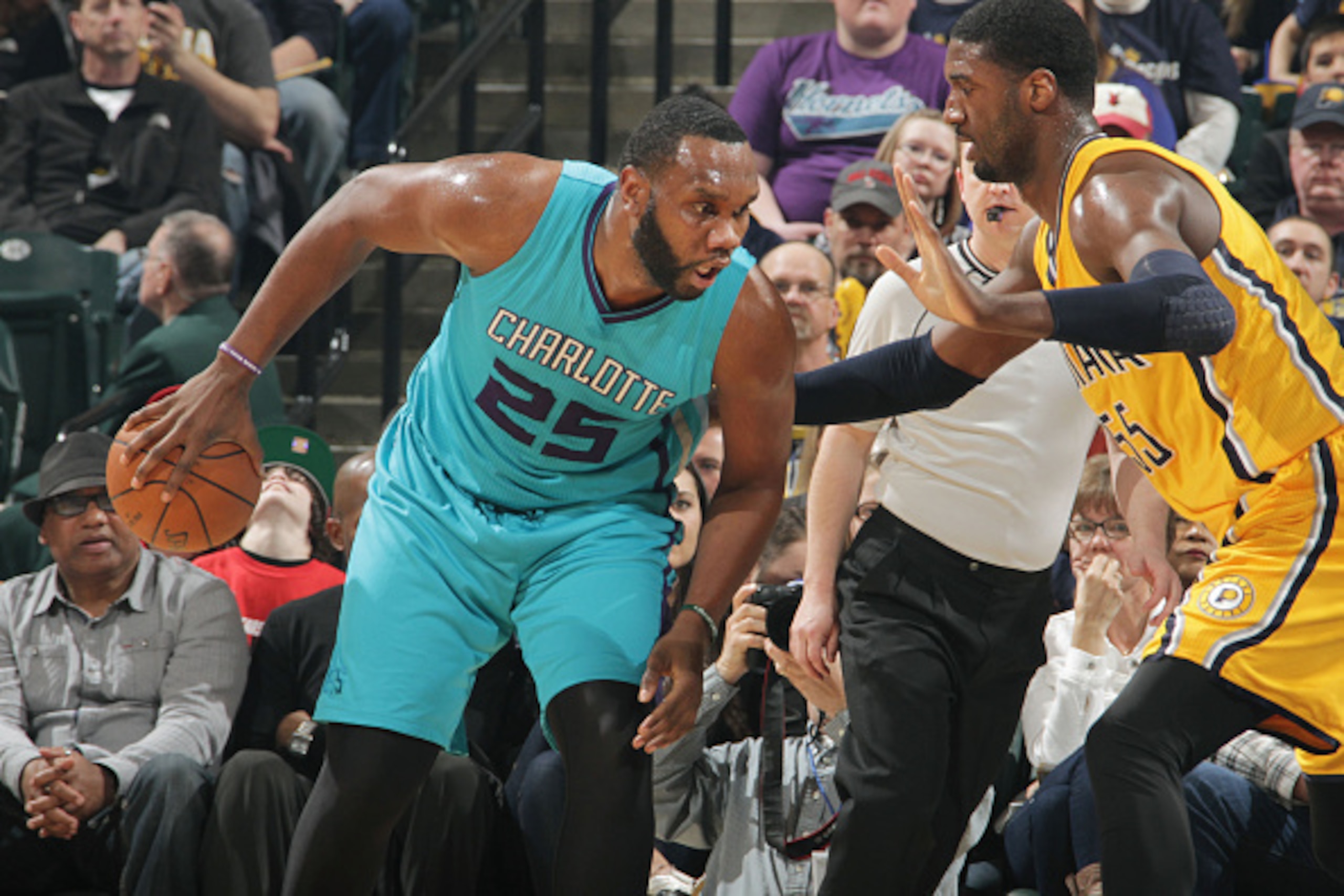
Three-Pointers Made: 498 (No. 26 overall)
Pace: 95.33 (No. 22 overall)
The Charlotte Hornets may have undergone a re-branding last season, but their on-court preferences didn't change at all as blue and orange gave way to purple and teal.
As was the case under head coach Steve Clifford during a 2013-14 season that saw the then-Bobcats nab the Eastern Conference's No. 7 seed, Charlotte lacked the floor balance and three-point shooting necessary to evolve on offense.
As a matter of fact, Charlotte actually regressed from a raw three-point shooting standpoint a year removed from draining 516 triples.
But that's not entirely surprising considering Marvin Williams (35.8 percent) was the team's most consistent three-point shooter among players who attempted at least 50 treys.
Lacking the conventional and deadly swingmen required to give opponents fits, the Hornets were content to do the bulk of their damage inside the arc. Specifically, Charlotte generated 19.3 percent of its offense via long-range shots, which was worse than all but four squads.
Now, that approach makes sense since the Hornets' most reliable scoring option is a low-post banger (Hi, Al Jefferson), but a little more inside-outside harmony could help provide a multi-dimensional dynamic.
Chicago Bulls
2 of 5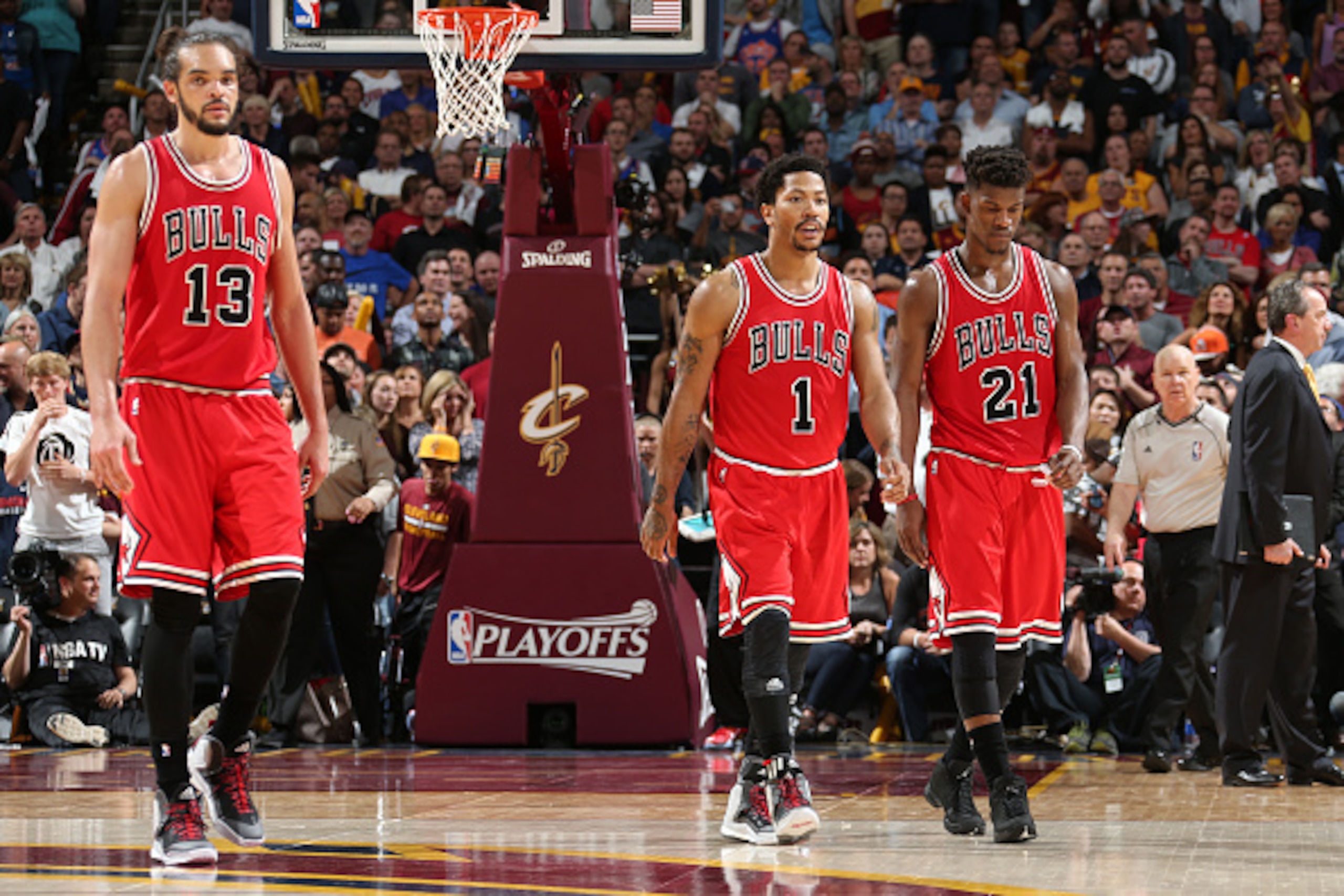
Three-Pointers Made: 645 (No. 15 overall)
Pace: 95.35 (No. 21 overall)
Here's a strange case.
The Chicago Bulls ranked 10th in three-point percentage (35.3) and offensive rating (104.7) during the regular season, but those seemingly strong marks masked fundamental problems that prohibited them from advancing to the Eastern Conference Finals.
During their six-game second-round series against the Cleveland Cavaliers, Chicago averaged 91.2 points per game and was ultimately sent packing because of some hideous floor spacing.
"The Bulls were done in by brutal scoring droughts that rendered them offensively helpless for huge swaths of crucial playoff quarters," Bleacher Report's Grant Hughes wrote. "Part of those recurring dry spells had to do with overall system failures. Chicago's offense lacks the off-ball movement and creative use of space that mark effective offenses of the modern era."
Although Derrick Rose, Jimmy Butler and Pau Gasol comprised a borderline-elite offensive core, Tom Thibodeau's system never valued floor space enough.
Namely, he abandoned stretch 4 Nikola Mirotic when the Bulls most needed a spot-up perimeter distraction to lure Cleveland's defenders away from sagging away and packing the paint.
"Mirotic shot poorly this season, but his presence on the floor helped Chicago breathe and represents the easiest path to improving an offense that falls apart in the playoffs every season," Grantland's Zach Lowe noted.
It also doesn't help that Thibodeau failed to stray away from Joakim Noah, who often clogged the middle of the offense and only occasionally helped as a decisive roller at the rim. During the playoffs, Chicago's offense was 2.5 points better per 100 possessions with Noah on the bench.
With Gasol manning the middle solo and Mirotic flanking Chicago's perimeter weapons on the wing, the offense can thrive. But until those changes are made, stagnancy will tend to reign supreme.
Indiana Pacers
3 of 5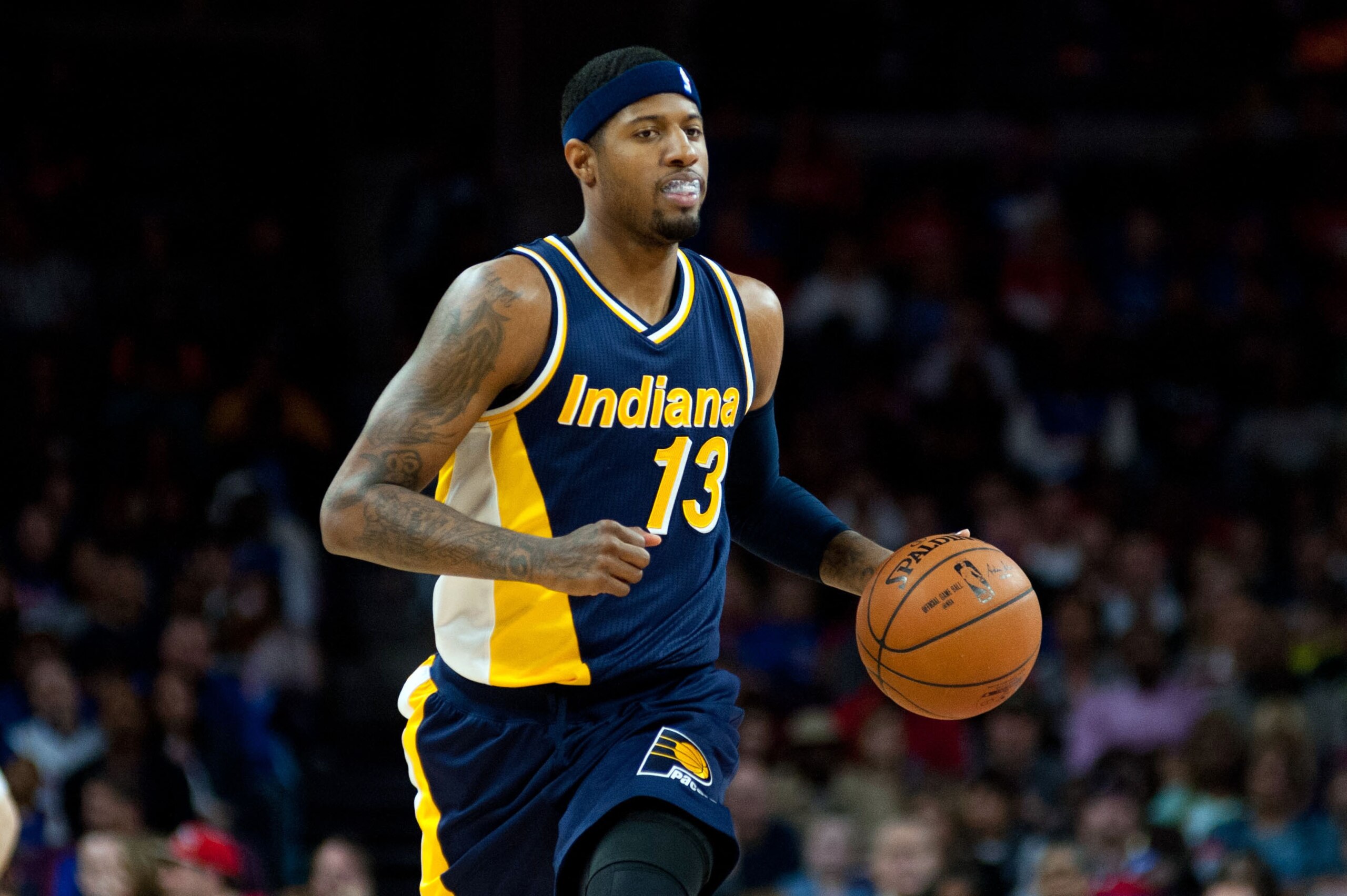
2014-15 Three-Pointers Made: 612 (No. 17 overall)
Pace: 95.50 (No. 19 overall)
It's time for the Indiana Pacers to embrace their race car roots.
After missing out on a playoff berth for the first time since 2011, the organization is ready to ditch the slow tempo it's moved at and run the floor.
"I was talking to coach earlier; we'd like to play a little faster tempo," Pacers president of basketball operations Larry Bird said, according to The Indianapolis Star's Candace Buckner.
"And that means we've got to run a little faster, maybe at times play a little smaller. We just got into it, so I don't know what style, but we'd like to change it a little bit. … But I would like to score more points, and to do that, you've got to run."
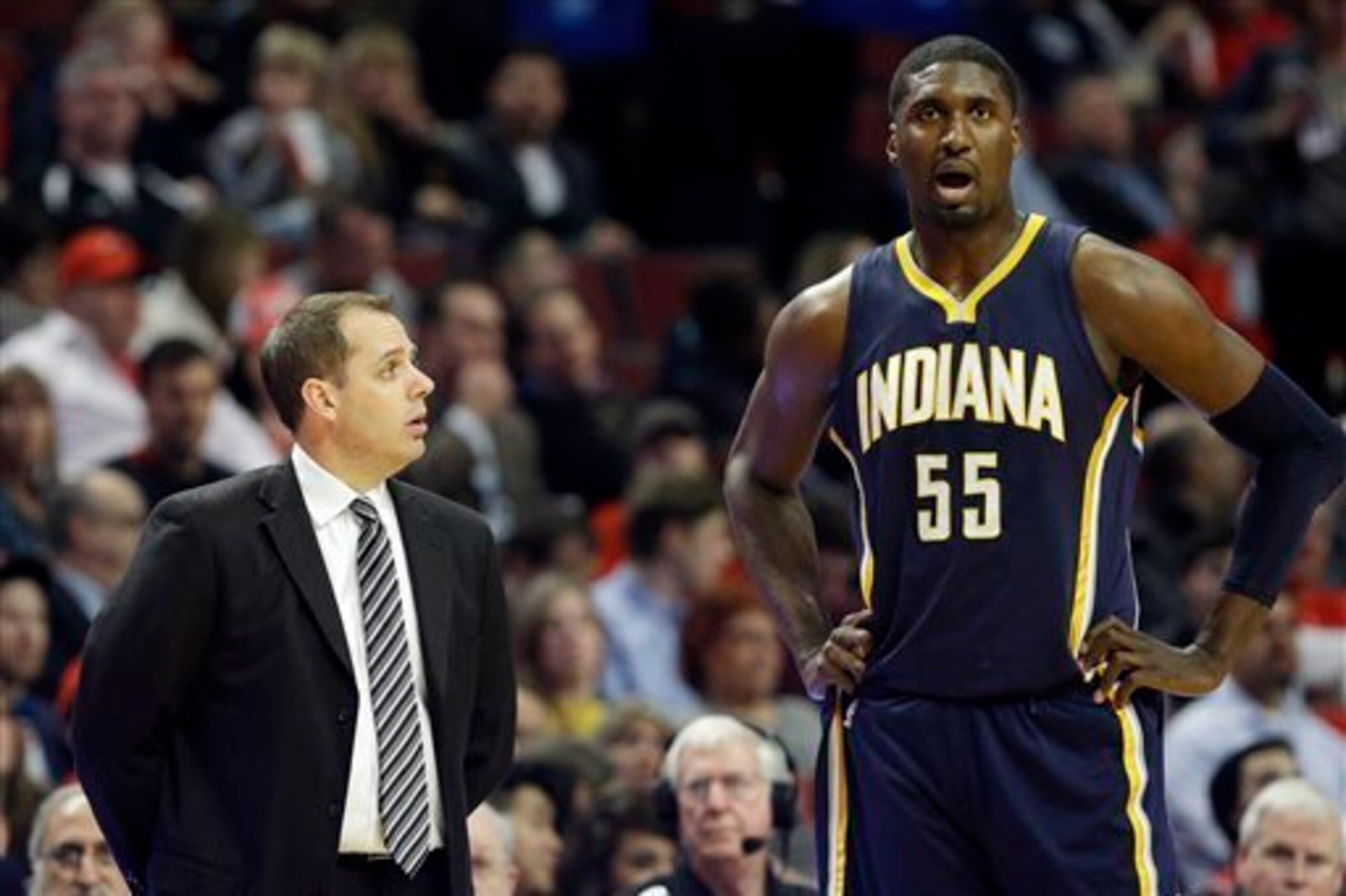
One of the potential casualties of that philosophical shift? Center Roy Hibbert.
"We'll have to see how it all plays out and what the roster ultimately looks like, but there's a possibility that Roy's role will be diminished, if we're trying to play faster and trying to play smaller," head coach Frank Vogel said, per Buckner. "But a lot of stuff is going to happen this summer. We'll see how the roster shapes out coming into next season."
However, if Indiana is really hellbent on getting out and pushing the pace, it will need to prove it can be more efficient on the move.
According to Synergy Sports play-type data (via NBA.com), the Pacers ranked 24th in transition scoring (1.07 possessions), plays which accounted for 11.5 percent of the team's total offense. Only the New York Knicks and Charlotte Hornets got out in the open floor less.
There's plenty to improve upon, as the numbers show, but it remains to be seen if a core comprised of Paul George, George Hill, David West and Hibbert is built to kick things into fifth gear consistently.



Memphis Grizzlies
4 of 5
Three-Pointers Made: 423 (No. 29 overall)
Pace: 94.78 (No. 26 overall)
According to Basketball-Reference.com, the Memphis Grizzlies have ranked 28th, 30th and 30th in pace each of the last three seasons, respectively. That's not surprising since their "Grit and Grind" mantra is built on a foundation of crushing opponents' confidence with a muscular disposition, but it's starting to look outdated in an era where speed and finesse triumphs over sheer strength.
To wit: During the 2014-15 season, 15.7 percent of Memphis' offense came via the three. Only the league's worst team—the Minnesota Timberwolves—clocked in lower (15.2 percent). In logical fashion, it shouldn't shock that a league-leading 66.3 percent of the Grizzlies' buckets came on two-point shots.
Personnel dictates the distribution here, to be sure. Marc Gasol and Zach Randolph are high- and low-post machines who can snap their defenders' psyches with bruising tactics, but that doesn't dismiss the Grizzlies' dire need for more systemic variety.
During the playoffs, the Grizzlies attempted a league-low 14 threes per game—4.2 less than the 15th-ranked Milwaukee Bucks. That's asking for trouble against three-point happy clubs like the Golden State Warriors.
So how can they mix things up?
It all comes back to personnel.
"Priority No. 1 remains adding as much shooting with whatever is left financially after the re-signing of Gasol that team officials have been praying for since, oh, roughly last July 4," ESPN.com's Marc Stein wrote.
But that may be easier said than done.
As Stein noted, a return from Marc Gasol would cut into the Grizzlies' ability to bring more shooters aboard to complement Courtney Lee, Vince Carter and Mike Conley—a price they should absolutely be willing to pay.
Then there's Jeff Green, who can opt into a $9.2 million player option, per Basketball Insiders that would further hamstring Memphis' financial flexibility. After Green shot 31.4 percent on catch-and-shoot threes during the regular season, Memphis may be resigned to another year of lumbering in the half court before a revolution can occur.
Washington Wizards
5 of 5
Three-Pointers Made: 497 (No. 27 overall)
Pace: 95.96 (No. 16 overall)
Unlike the other four teams on the list, the Washington Wizards did a more commendable job of pushing the pace. Although they still clocked in just below the league average, John Wall helped the Wizards rank third in transition efficiency (1.17 points per possession) behind the Los Angeles Clippers and Cleveland Cavaliers, per Synergy Sports (via NBA.com).
Instead, the maddening problems stemmed from analytically backward shot selection.
Despite ranking ninth in three-point percentage (39.0) during the regular season, the Wizards consistently opted for mid-range jumpers—which accounted for 23.3 percent of their offense. Threes, meanwhile, accounted for 18.5 percent of it.
The silver lining: Head coach Randy Wittman realized the benefits of downsizing, which became evident during playoff time.
"Obviously playing small is successful for us," Wittman said, according to CSNWashington.com's J. Michael. "Playing faster. Those are the things I want to try to improve [on] this team moving forward."
Over the course of 10 postseason appearances, the Wizards generated 27.9 percent of their points via threes and just 15.4 percent from mid-range, which should be a good starting point for next season's offense.
The key to sustaining that distribution, though, may be going small more often, a la postseason alignments that featured Wall, Bradley Beal, Otto Porter, Paul Pierce and Marcin Gortat.
"As much as I love Nene, and I think Nene understands this, too, I would love to play with a stretch 4, with a guy who shoots the ball from the three-point line because that automatically gives me more room under the basket to operate," Gortat said, per Michael. "It gives me more opportunity to play pick-and-rolls to the paint where the paint is open."
On that note, the Wizards' offensive rating sank to 94.9 when Gortat and Nene shared the floor in the playoffs. Cumulatively, that represented an 8.4-point per-100-possession decrease in the postseason.
If that's not enough to incite change, I don't know what is.
All statistics are courtesy of Basketball-Reference.com and NBA.com unless noted otherwise.

.jpg?w=2560 "Raiders Could Start Mendoza")

.jpg?w=2560 "Rodgers Iced Out on Plane 💎")
.jpg?w=2560 "🚨 Week 8 AP Top 25 Poll")
.jpg?w=2560 "Packers Safety Slams Refs 🤬")