Otto Porter's Breakout Changes the Washington Wizards' Future
As recently as March, Otto Porter’s NBA future was a bleak combination of squinting-eyed optimism and depressing resignation. The 2013 NBA draft was admittedly terrible, but this guy was still its third overall pick!
With that label came (somewhat unfairly) high expectations and potential stardom. But at the very least, all the Washington Wizards want from Porter is consistent two-way play and signs that he can be a dependable starting small forward.
In his first two seasons, the only thing about Porter that inspired hope was his age (he turns 22 in June). He averaged fewer than 20 minutes per game with 6.0 points and 3.0 rebounds in a moribund season that called for better play.



Porter’s physical makeup and Washington’s parched outside shooting dilemma combined make Porter a complimentary piece that could eventually plug in beside John Wall and Bradley Beal. We saw improvements in his sophomore season, but Porter still shot just 33.7 percent from beyond the arc and attempted 34 more mid-range jumpers than three pointers.
Then the playoffs started.
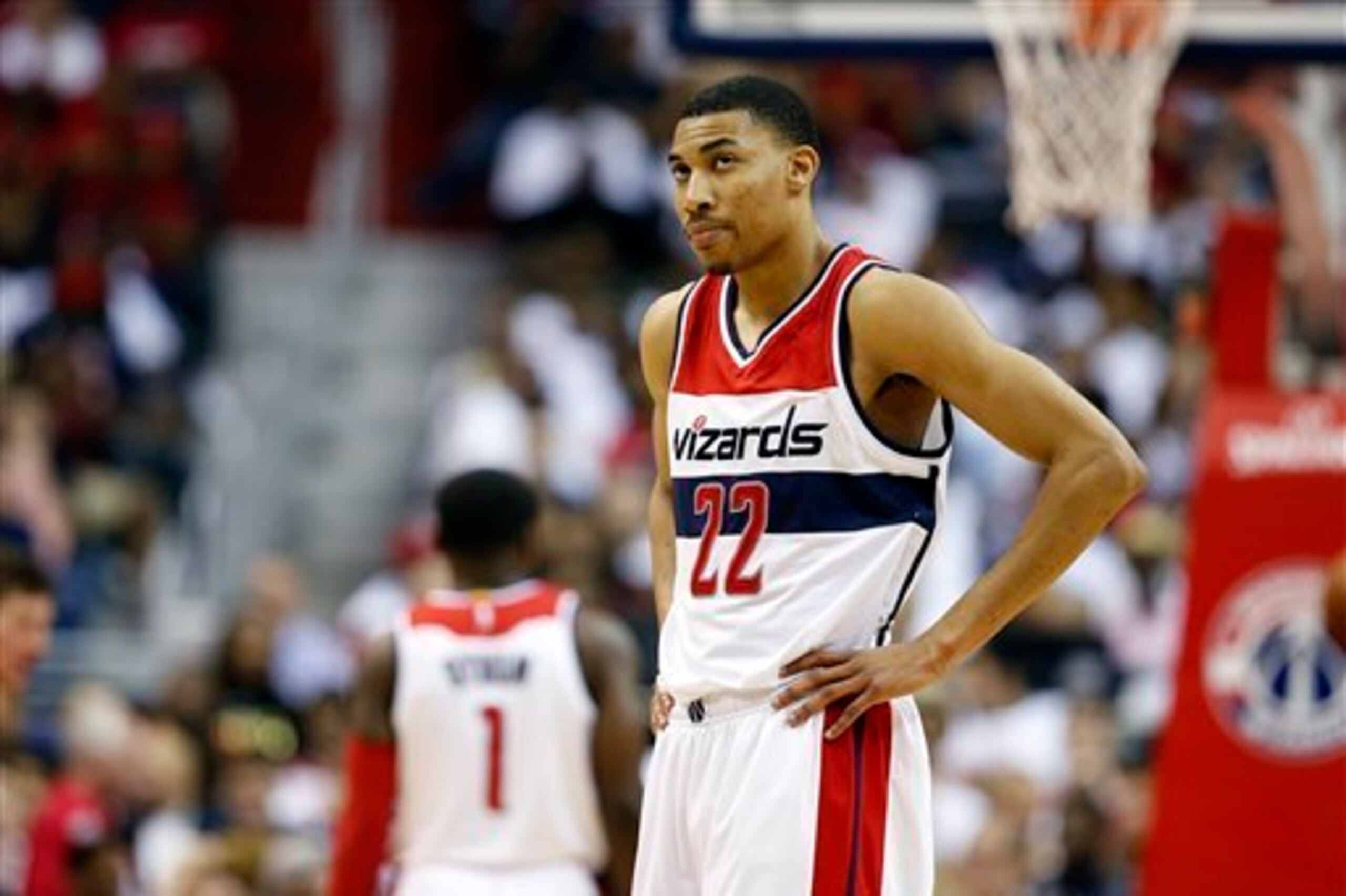
Through nine games, the Wizards outscore opponents by 11.2 points per 100 possessions with Porter on the floor, which leads the team, according to NBA.com. He’s their fifth-leading scorer (10.3 points per game), second-leading rebounder (8.0 rebounds per game) and only Beal has logged more minutes.
Porter isn’t a go-to scorer or even someone the Wizards need to create offense. His point totals will always be the result of a teammate’s selflessness. But Porter can still impact basketball games in various ways, and in a tiny sample size he hints at what may be to come in the future.
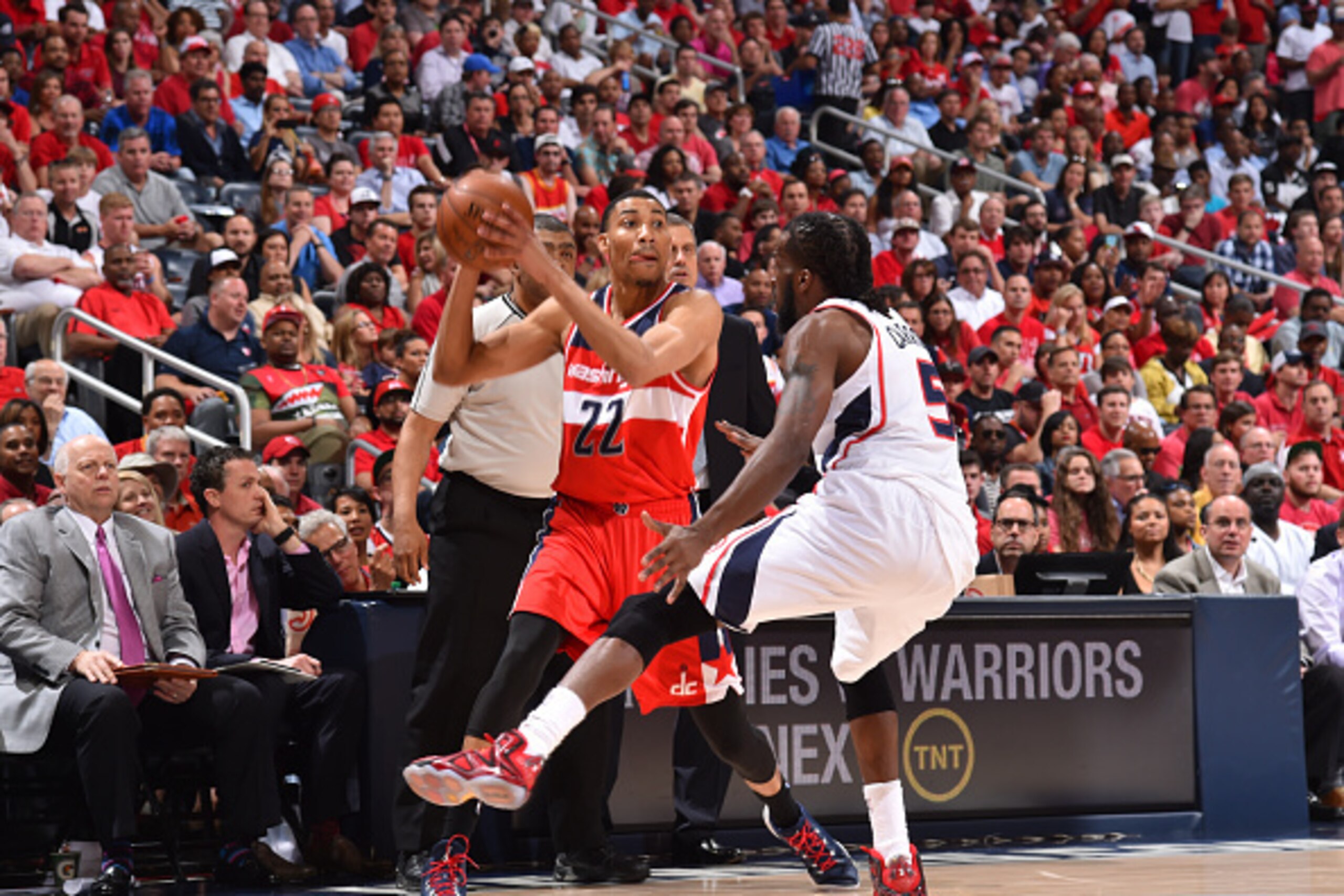
We’ll start with the three-point shot, which is integral in Porter’s development if he’s to maximize the speed and all-consuming aggressiveness of Washington’s shiny young backcourt. Porter’s attempted 30 threes in the postseason and made 12, which is good for a stellar 40 percent mark.
In the regular season, 26.6 percent of his shot attempts came behind the three-point line. In the playoffs that number has bumped up to 38 percent. Whether he’s standing in the corner—while Wall devastates the defense by conducting a pick-and-roll—or above the arc, Porter’s never more useful than when he’s helping space the floor, or making opponents pay for overplaying Beal, Wall or even Paul Pierce.
(Related: Just under 24 percent of Porter’s points came from mid-range jumpers during the regular season, but in the postseason, the game’s least-efficient shot only accounts for 8.6 percent.)
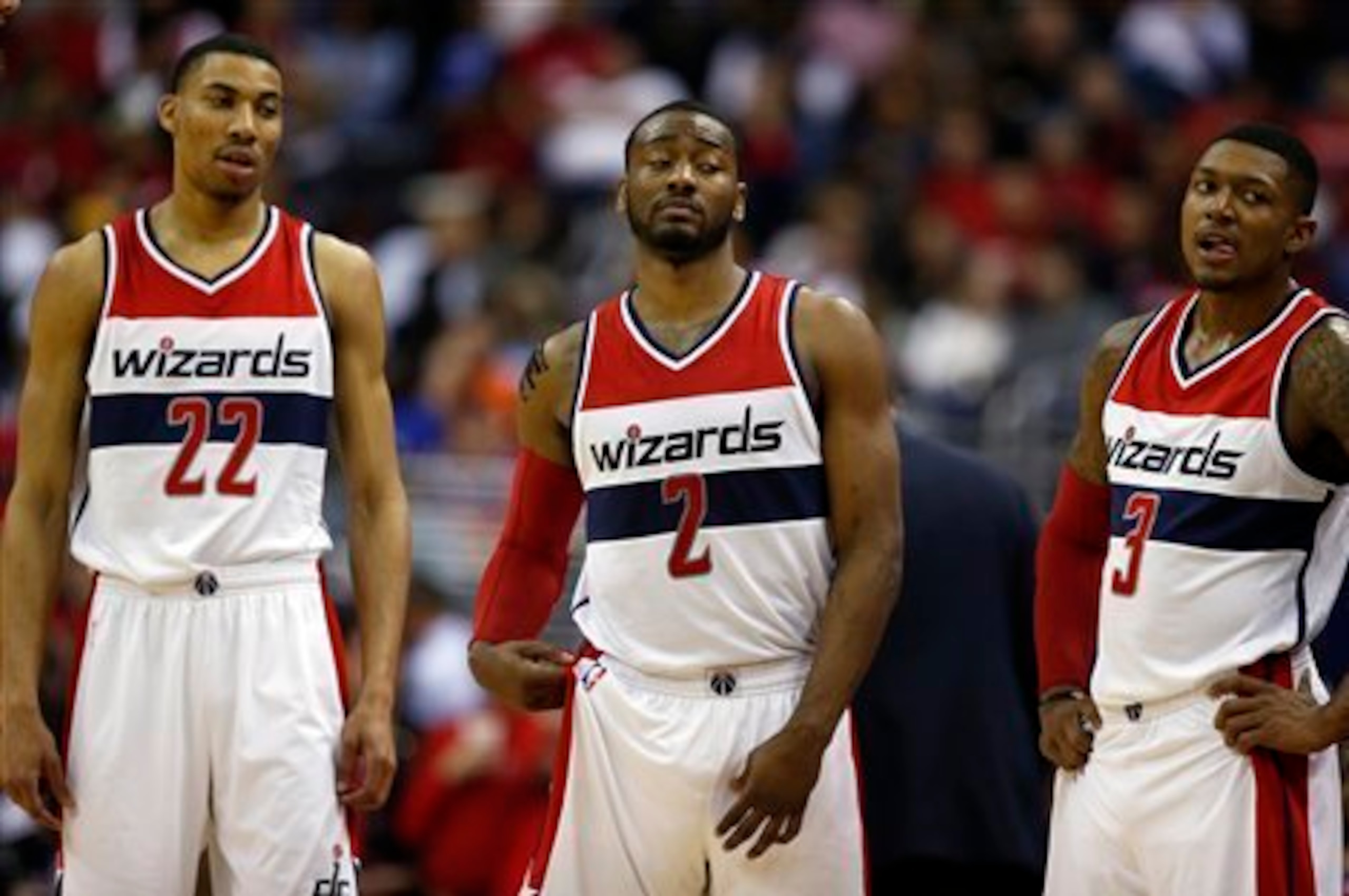
Scoring the ball efficiently is always important, but Porter had a dreadful performance in Game 5 against the Atlanta Hawks, tallying nine points on 3-for-13 shooting. Still, he found other ways to positively influence the game, swooping into the paint to grab several timely offensive rebounds.
Even if he sometimes doesn’t know what to do after corralling a teammate’s missed shot, he still finished Game 5 with five of them, 10 in total. And Porter has All-Defensive team potential—a huge boon for Washington if they keep him beside Wall and Beal for the foreseeable future. All three have great size (Porter is 6'9"!) and instincts, and can eventually measure out as some of the best defenders at their respective positions (Wall is already there).
Porter’s shown he can make perimeter threats sweat: most notably Hawks guard Kyle Korver, who’s shooting 30.8 percent with Porter on the court and 42.9 percent with Porter on the bench, according to NBA.com.
The Wizards are throwing multiple options at Atlanta's top shooting weapon—even when Porter’s on the floor—but these numbers are still notable in a five-game sample size. When it comes to a shooter as accurate as Korver, even more valuable than contesting his attempts is the ability to close out and eliminate them altogether.

Short of an absolute meltdown from this point until the Wizards are eliminated (or win the championship), Porter will enter the offseason giving the Wizards good vibes and positive thinking. Instead of leaving the taste of continued dissatisfaction in his team and fanbase's mouth, he’s finally blooming into the useful two-way perimeter threat general managers tend to fight over.
No discussion of the Wizards’ immediate future can be had without mentioning Kevin Durant’s looming free agency—a potential return home that would change the course of NBA history.
But for now, all Washington can do is worry about the players actually on its team. And Porter’s postseason makes that topic much brighter than it was just a few weeks ago.
All statistics are courtesy of Basketball-Reference.com or NBA.com unless otherwise noted.
Michael Pina is an NBA writer who lives in Los Angeles. Follow him on Twitter @MichaelVPina.

.jpg?w=2560 "Raiders Could Start Mendoza")

.jpg?w=2560 "Rodgers Iced Out on Plane 💎")
.jpg?w=2560 "Packers Safety Slams Refs 🤬")
.jpg?w=2560 "🚨 Week 8 AP Top 25 Poll")