College Football's 25 Most Indispensable Players for 2015 Season
If the best things in life are those we cannot do without, doesn't the same apply to college football players?
Last year's national championship team, Ohio State, somehow managed to overcome the loss of not one but two standout quarterbacks on its way to the title. Both Braxton Miller and J.T. Barrett seemed indispensable when they got injured, yet the Buckeyes' "next man up" mindset enabled them to persevere.
Not every team is so fortunate, not if they were to suddenly lose the services of certain players. It's not that these players are irreplaceable, as someone else on the roster would take their place, but it just wouldn't be the same.
Here's our look at college football's 25 most indispensable players heading into the 2015 season.
Quin Blanding, S, Virginia
1 of 25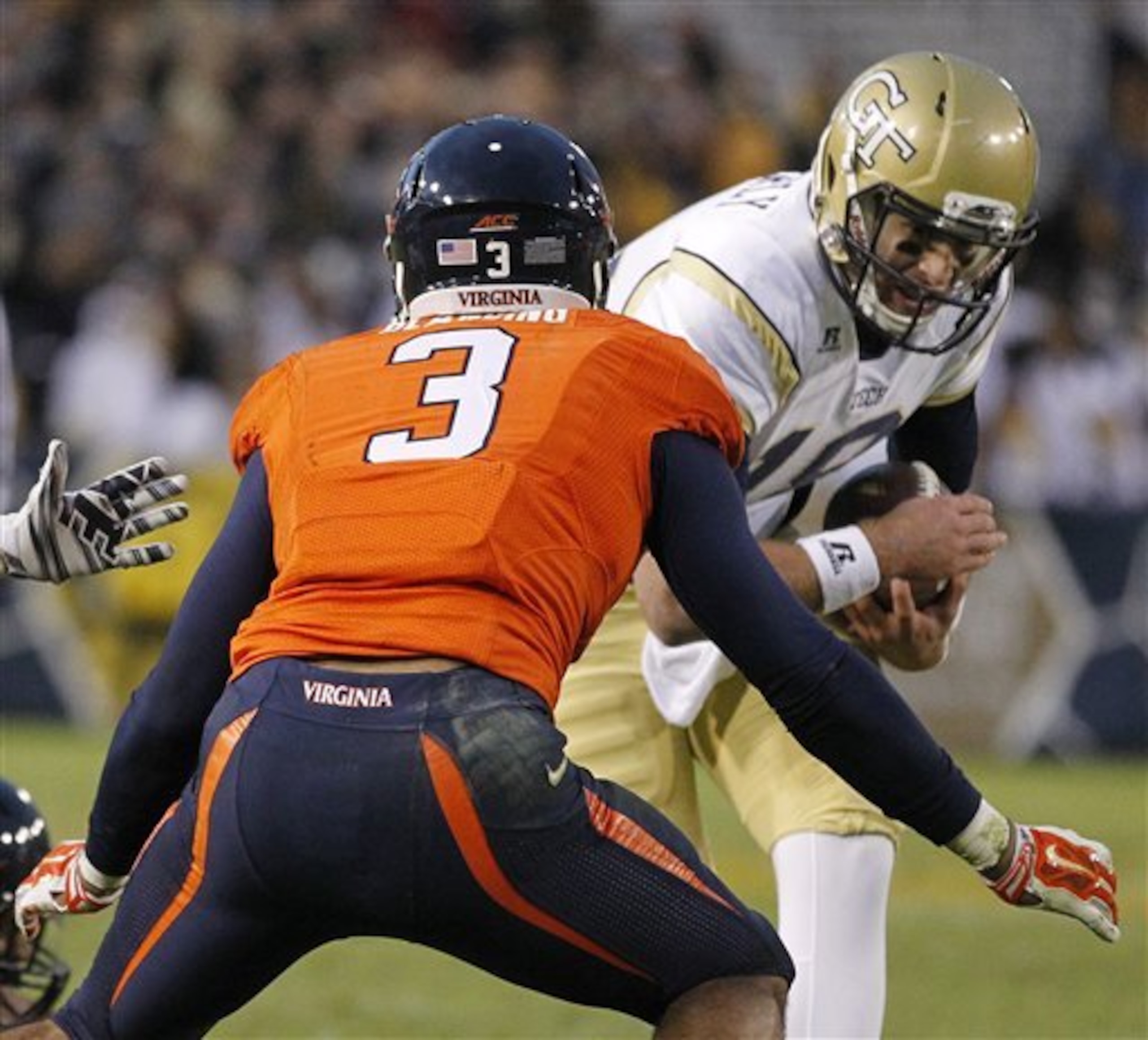
It only took Quin Blanding one season to show how integral he was to Virginia's defense, as the true freshman led the Cavaliers with 123 tackles last season. One of two 5-star prospects, per 247Sports, who signed with Virginia for 2014, along with defensive tackle Andrew Brown, Blanding immediately lived up to the hype.
The 6'4", 215-pound Blanding started all 12 games, the first freshman to start at safety for the Cavs' opener since 1976, setting a freshman school record for tackles along the way. He also tied for the team lead with three interceptions.
With fellow safety Anthony Harris and several other key defensive players gone from last season, Blanding is essential to keeping Virginia among the top 30 in total defense.
Devontae Booker, RB, Utah
2 of 25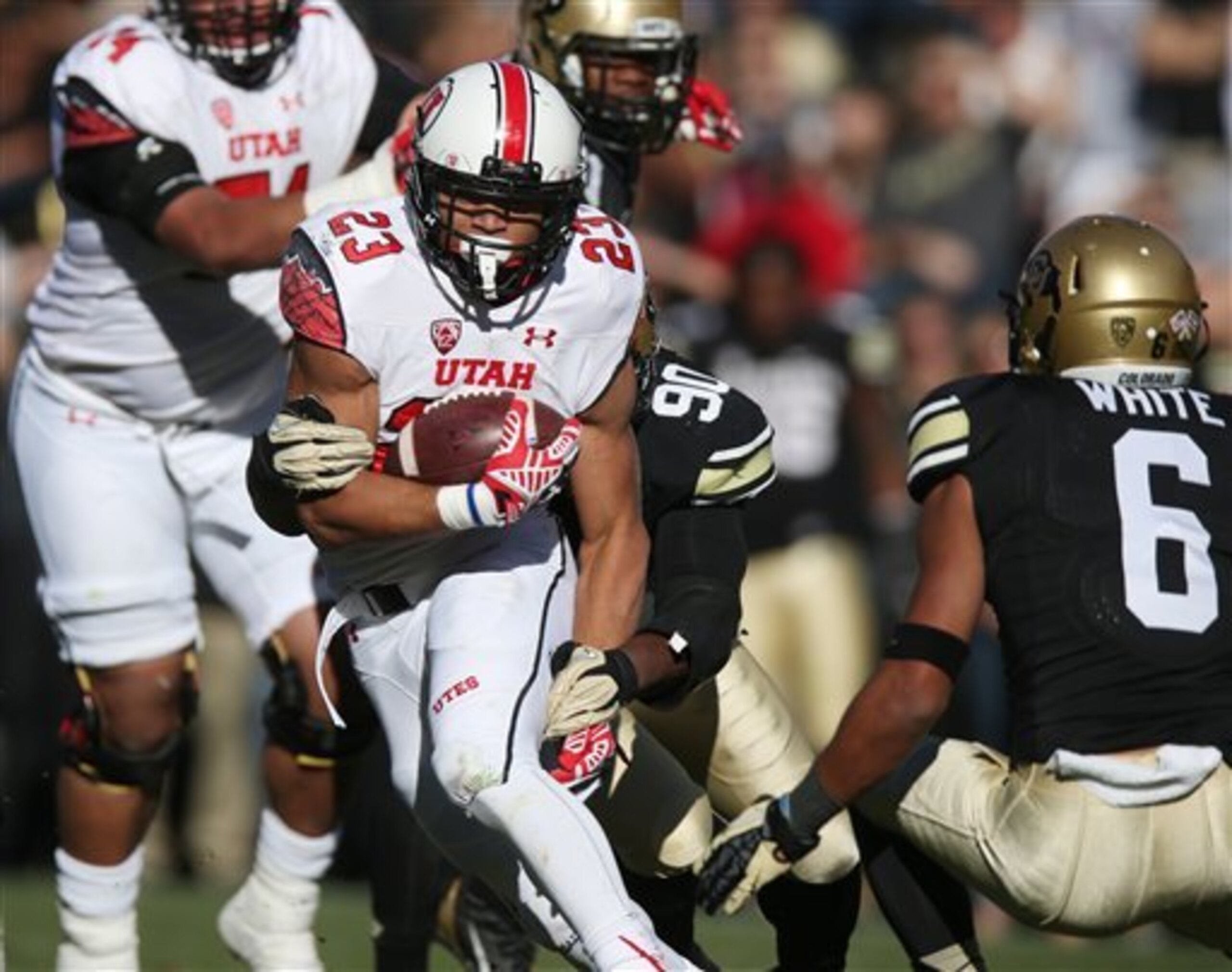
Utah's offense finished in the bottom half of FBS last season, yet the Utes were able to reach nine wins for the first time since 2010. That was because Devontae Booker carried them with his running, accounting for more than 1,500 rushing yards and 10 touchdowns.
The 5'11", 212-pound Booker was a huge surprise in his first season at the FBS level, having transferred from American River College in Sacramento. He sat out the 2013 season to focus on academics before joining Utah, and he came in with fresh legs that Utah took advantage of to the tune of at least 20 carries in eight of its last 10 games.
Trevone Boykin, QB, TCU
3 of 25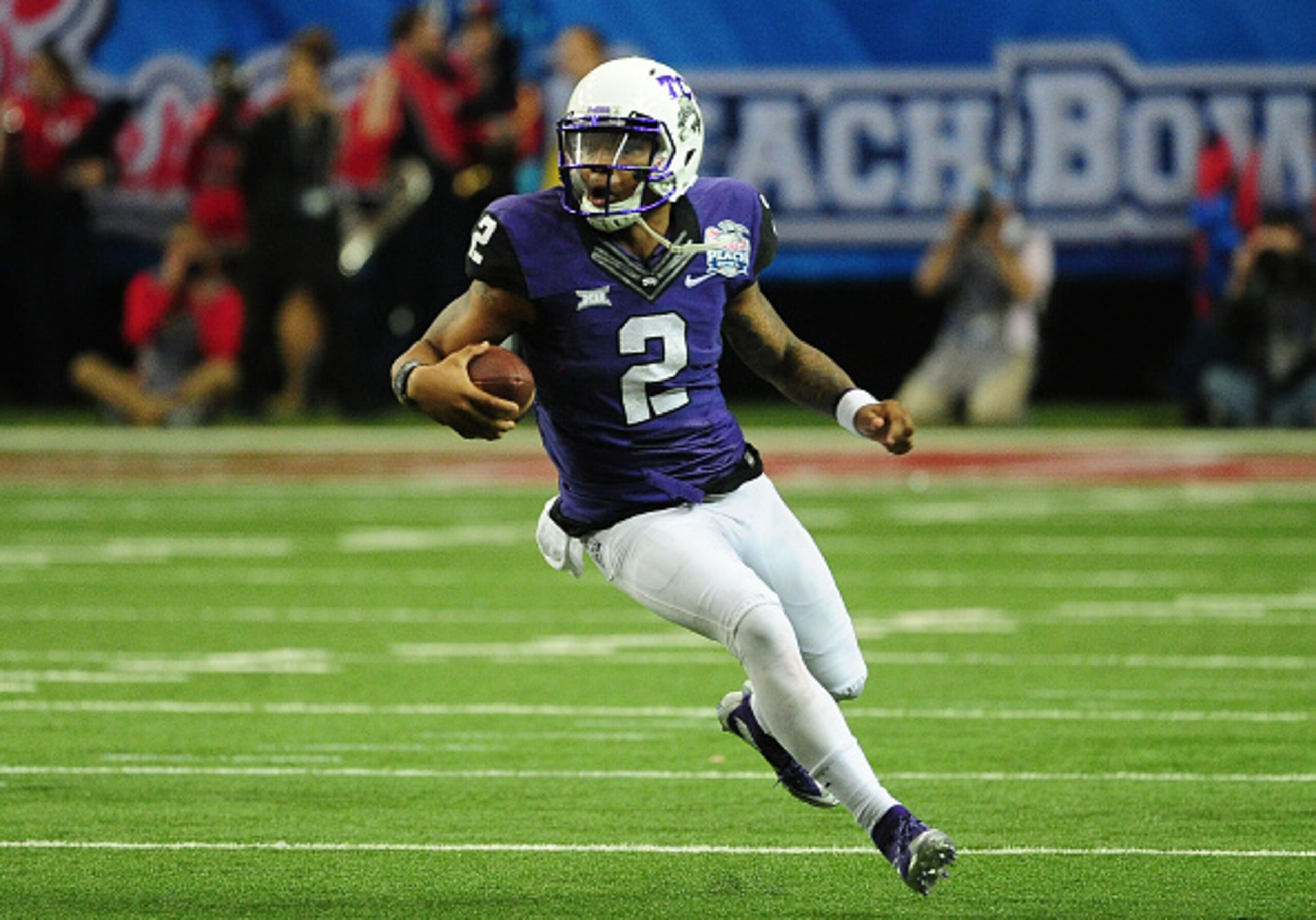
TCU's shift to a more uptempo offense under new coordinators Doug Meacham and Sonny Cumbie has been credited with the Horned Frogs' rise from a sub-.500 team in 2013 to one that was on the cusp of the playoffs last season. But how effective would that offense have been if someone other than Trevone Boykin were at the helm?
Boykin shuffled between quarterback, running back and receiver during his first two seasons at TCU, but under Meacham and Cumbie's guidance, he thrived in the new system last season. The 6'2", 205-pound Boykin had 4,608 yards of total offense, more than he'd collected in the previous two years.
Now a senior who will be expected to take TCU one step further and make the semifinals, Boykin is the one player his team cannot afford to lose.
"With the group of guys coming back, I feel like we can reach our potential," Mac Engel of the Fort Worth Star-Telegram wrote. "I'm a little piece of the puzzle."
.jpg?w=2560 "AP Poll Top Five Week 9")
.jpg?w=2560)
Nick Chubb, RB, Georgia
4 of 25
As fate would have it, Georgia's most indispensable player has earned that distinction because of the way he stepped in for another Bulldog who seemed irreplaceable and somehow made him forgettable.
Nick Chubb was thrust into a featured role midway through last season, after Todd Gurley was suspended four games for getting paid to sign autographs. Before then, the 5'10", 220-pound true freshman had managed just 31 carries in five games, but once given a shot to run, he never stopped.
Chubb ran for at least 100 yards in every remaining game, continuing his strong play even after Gurley came back (and then was quickly lost for the rest of the season to a knee injury). He finished with 1,547 yards, tied for fourth-most in school history.
Gurley's injury didn't hurt Georgia because of Chubb, but it's hard to fathom what the Bulldogs offense would be like this season if Chubb were to go down.
Connor Cook, QB, Michigan State
5 of 25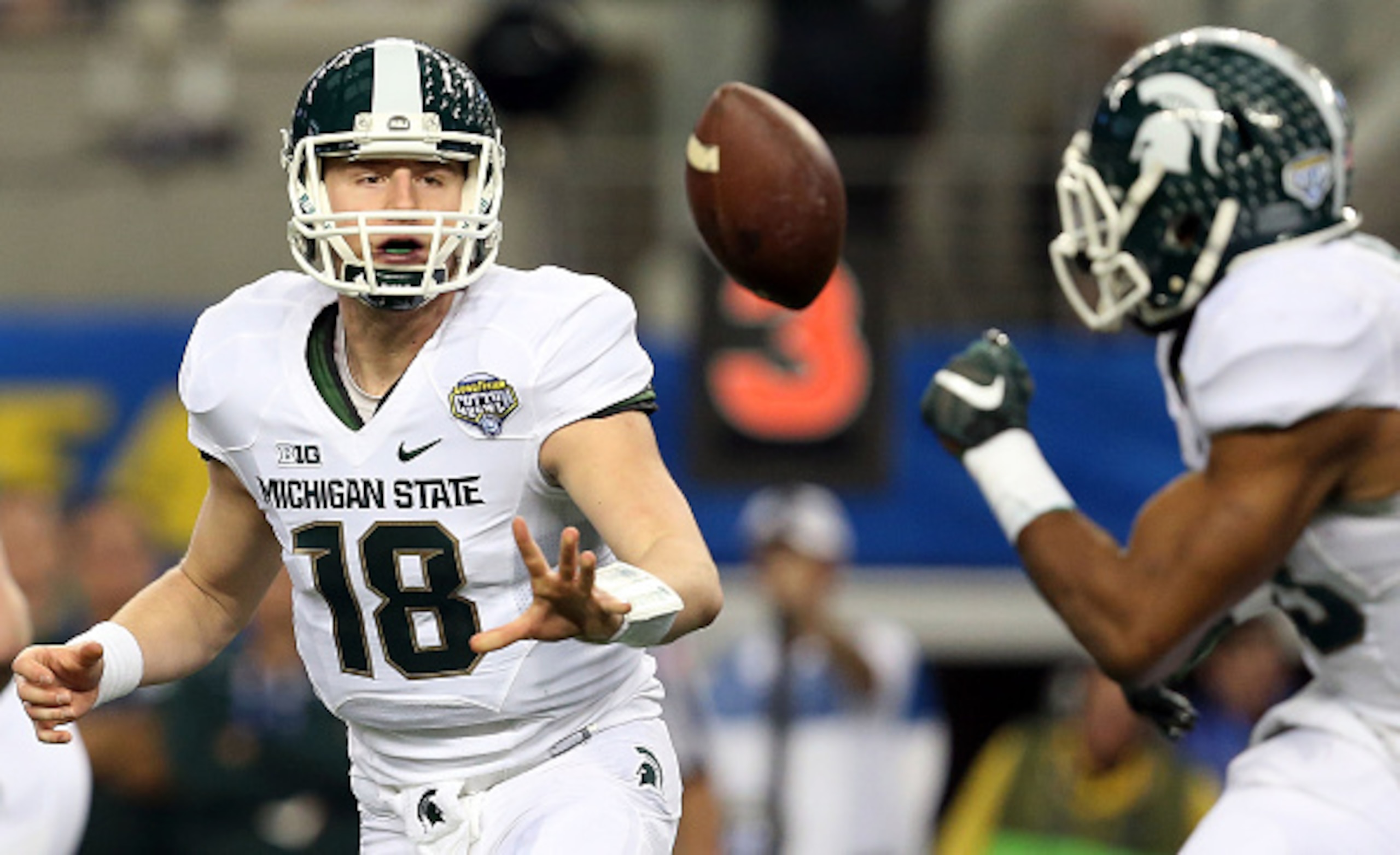
Numbers don't always tell the story, otherwise Connor Cook wouldn't be getting celebrated as arguably the best quarterback in Michigan State history and a potential first-round pick in 2016.
The 6'4", 220-pound senior has a chance to be the Spartans' all-time passing leader, needing 3,069 yards and 20 touchdowns to top Kirk Cousins' career marks. But his 3,214 passing yards in 2014 was only 28th-best in FBS, as his value was more in leadership and decision-making than in raw statistics.
And with Cook choosing to come back for his final season rather than get an early start on his NFL career, he'll tap into the experience he's gained in 26 starts during Michigan State's most successful back-to-back seasons ever.
Pharoh Cooper, WR, South Carolina
6 of 25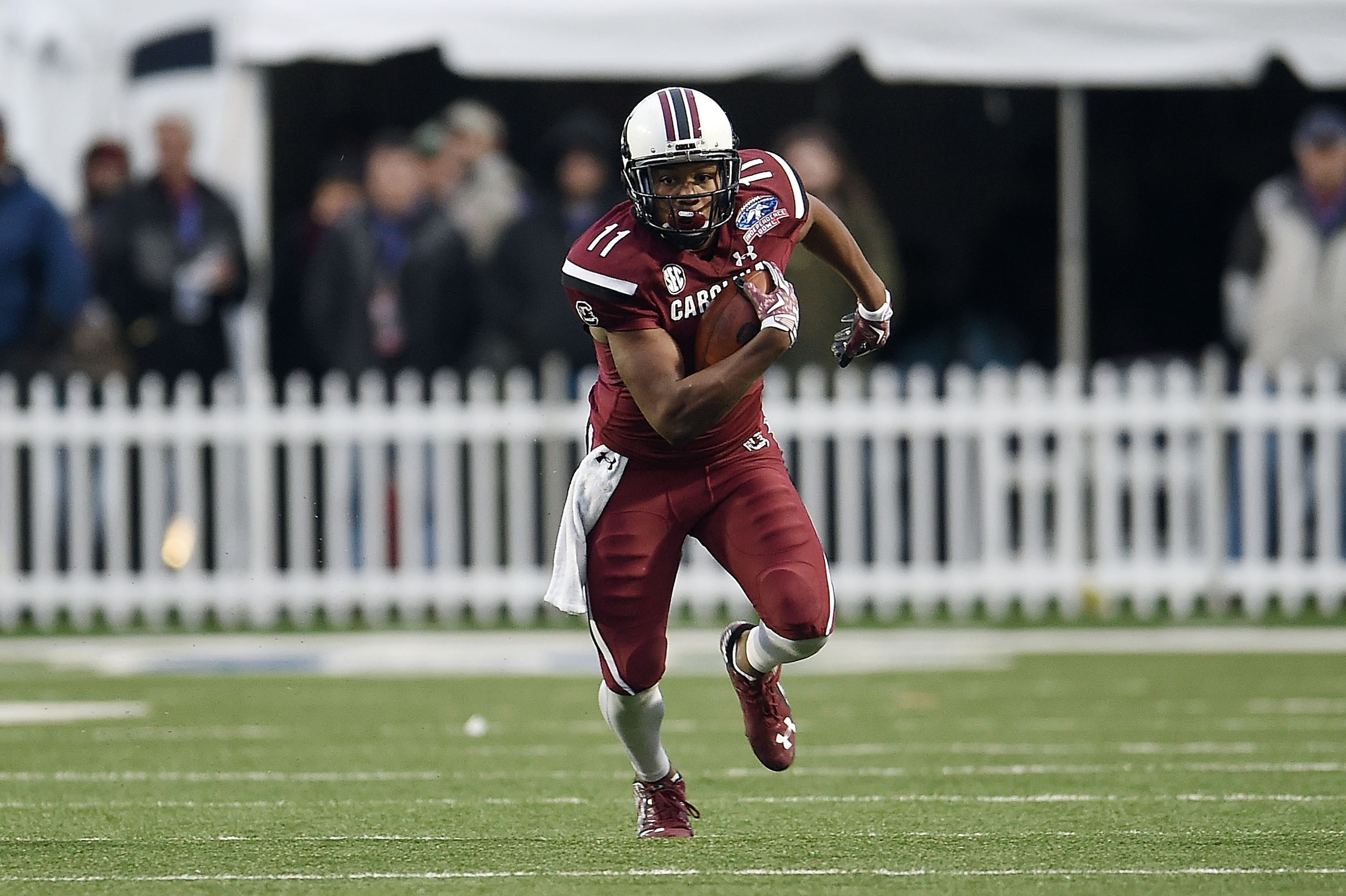
Pharoh Cooper will only occupy one spot on South Carolina's depth chart this season, that of the No. 1 wide receiver. Yet, when the Gamecocks are on offense, he could end up playing several positions in an effort to tap into his versatility and athleticism like they did in 2013 and 2014.
The 5'11", 208-pound Cooper has amassed 1,699 yards from scrimmage and 474 return yards in his career, scoring touchdowns as a quarterback, running back and receiver and doing so in all three ways in the same game last season against Tennessee.
Cooper is most effective as South Carolina's No. 1 wideout, and he'll be the one whom its new quarterback will turn to regularly this fall. But coach Steve Spurrier won't forget to also utilize Cooper's abilities in the run game and give him some passing plays as well.
Su'a Cravens, LB, USC
7 of 25
If he were a little bigger, Su'a Cravens might find himself playing defensive end in what should be his final college season. Instead, the 6'1", 225-pound junior will continue to slide between linebacker and safety for USC and remain the Trojans' most important defensive player.
Leonard Williams got most of the attention on that side of the ball last year for USC and parlayed that into a first-round NFL draft spot. Cravens was just as key to the attack, though, as his role as a hybrid rover-type impacted both the run game and pass protection. Seventeen of his 68 tackles were for a loss, along with five sacks, and he had three interceptions along with nine pass breakups.
USC's increased depth in the secondary makes him more valuable as a linebacker this year, something that's enhanced by starters Hayes Pullard and J.R. Tavai departing.
Joshua Dobbs, QB, Tennessee
8 of 25
Tennessee's 2014 season was headed toward another likely near-miss in terms of bowl eligibility, sitting at 3-4 overall and and quickly down at home to Alabama, when a major turning point occurred. That's when coach Butch Jones made the move to pull Joshua Dobbs' redshirt and insert him into the lineup in hopes he could spark the Volunteers offense.
The Vols didn't win that game, but they did claim four of the next five behind Dobbs' dynamic dual-threat abilities. He finished the season with a team-high 1,675 yards of total offense, despite only playing the final six games of his sophomore season.
According to Brad Shepard of Bleacher Report, Dobbs' offseason has been spent working on becoming more of a vocal leader to go with his existing lead-by-example approach.
"I think this offseason, he's taken that step to holding guys accountable, to being that vocal leader," Tennessee linebacker Curt Maggitt told Shepard.
Brandon Doughty, QB, Western Kentucky
9 of 25
Brandon Doughty's college career has already had its fair share of struggles, as he missed nearly all of two seasons with knee injuries. But as he neared the end of what was supposed to be his final year with Western Kentucky last fall, the NCAA rewarded him with a sixth season and prevented the Hilltoppers from having to worry about replacing his amazing production for a little longer.
Doughty led FBS with 4,830 passing yards and 49 touchdowns last season, nearly doubling his own school record for 2,857 yards set the year before. He had a pair of 500-yard games and threw for 977 yards and 13 touchdowns in his final two contests including an eight-touchdown effort in knocking off previously unbeaten Marshall.
Had Doughty not gained his extra year, Western Kentucky likely wouldn't have been able to compete for its first Conference USA title. With him back, it might be the league favorite.
Ezekiel Elliott, RB, Ohio State
10 of 25
Ohio State's next-man-up approach to quarterback worked wonders at quarterback and other spots last season, but it's hard to say it would have had the same success if applied to the running back position. The way Ezekiel Elliott ran for the Buckeyes during the postseason, to assume that any of his backups would have been able to come close to that effort is unrealistic.
OSU has a good feeling that it will do well this season regardless of which QB it goes with, but there's nowhere near that level of confidence if Elliott were to get dinged up.
He was a workhorse down the stretch last year, carrying it 76 times for 696 yards and eight touchdowns in the Big Ten title game, Sugar Bowl semifinal and the national championship, and he's expected to be the constant of this year's offense that won't change depending on the passer on the field.
Elliott actually was hurt last season, playing the whole year with a wrist injury that required surgery and kept him out of spring ball. This wasn't evident, though, as he never showed any signs of being unable to carry the ball effectively.
Leonard Fournette, RB, LSU
11 of 25
Few players who enter college with immense hype are ever able to live up to those expectations, but Leonard Fournette appears capable of coming pretty close. His first year at LSU was a massive success, even if it didn't come close to being the best season ever like many had predicted he'd put forth, and now with a full offseason to get bigger, faster and strong (if that's possible), he is the Tigers' most important weapon.
Fournette set an LSU freshman record with 1,034 rushing yards and 10 touchdowns, finishing strong by gaining 289 yards and scoring three times in his final two games. He also showed off his surprising speed for a 6'1", 230-pound bruiser by returning a kickoff for a TD in the Music City Bowl against Notre Dame.
LSU continues to search for an answer at quarterback, as well as to develop a more balanced receiving corps. There's no need to seek anything else in the backfield, as Fournette is going to be the first, second and maybe third option on every run play.
D.J. Foster, WR, Arizona State
12 of 25
A position change for his senior year is meant to help D.J. Foster get prepared for an NFL career, as he's projected more as a receiver than the running back he's been for his first three seasons. But the move is also key for Arizona State to maximize its weapons and to ensure that it has a dependable player for Mike Bercovici to throw to.
Foster ran for 1,081 yards and nine touchdowns last season, and for his career he has 2,075 rushing yards and 17 TDs. But he's also caught 163 balls for 1,874 yards and 11 scores, and despite being a running back to this point, he'll finish no worse than second in school history in receptions, and he needs only 343 yards from scrimmage to be the team's all-time leader.
ASU lost top receiver Jaelen Strong to the NFL, and then projected replacement Cameron Smith required knee surgery that will keep him out all season. Devin Lucien transferred in from UCLA to help, but without Foster the Sun Devils' passing game would likely struggle this fall.
Myles Garrett, DE, Texas A&M
13 of 25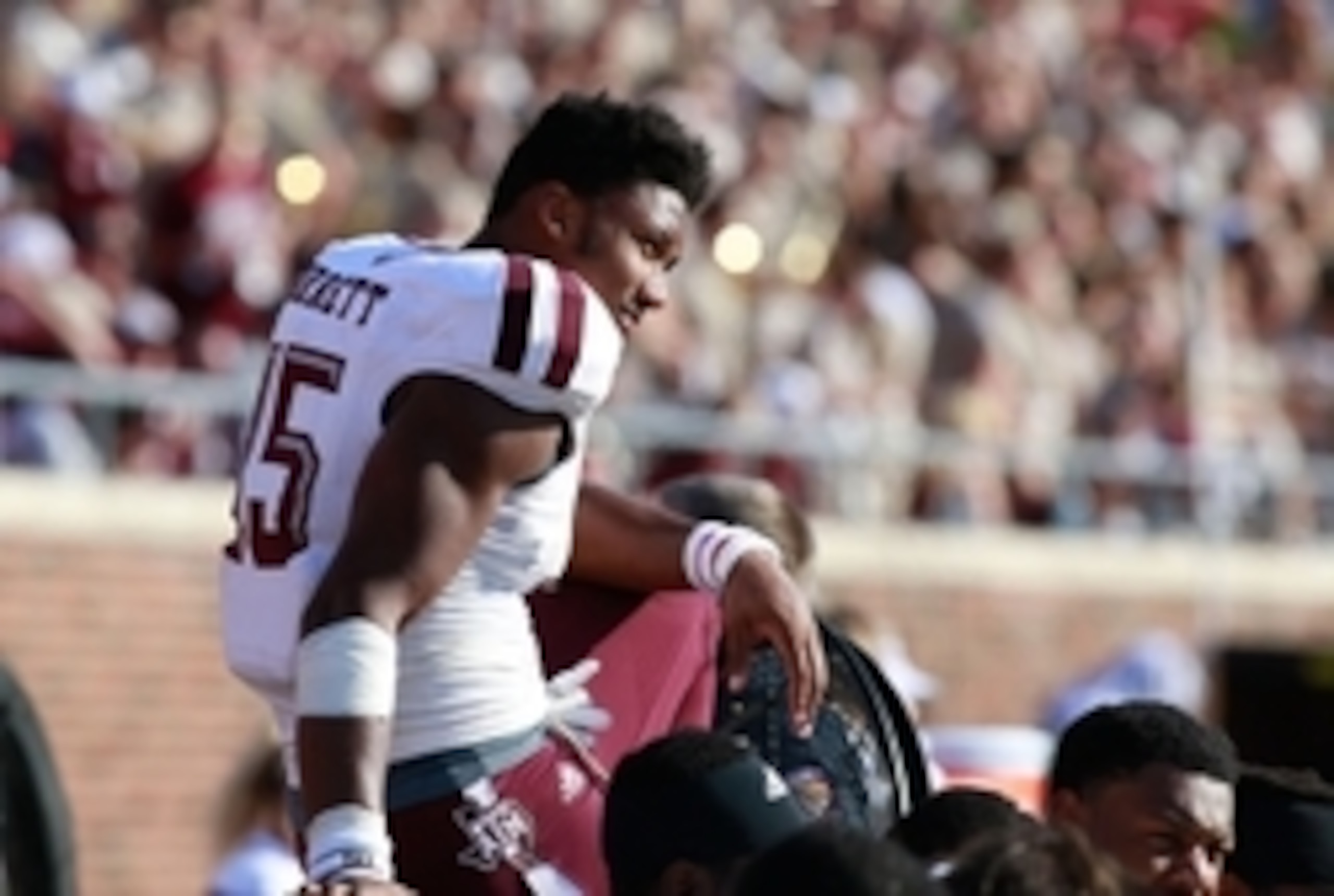
Kevin Sumlin's tenure at Texas A&M hasn't included much praise about his team's defenses, with the last two years' units ranking in the bottom 30 in FBS in yards allowed. Last season the Aggies were 104th in total defense, yet it wasn't nearly as bad as it seemed due to how Myles Garrett played as a freshman.
Garrett broke the SEC freshman sack record (previously held by South Carolina's Jadeveon Clowney) with 11.5, though only three of those were against league opponents. He was regularly double-teamed as he came off the edge, yet he still managed to get pressure and disrupt plays.
Though Garrett gets help this season in the form of star defensive tackle recruit Daylon Mack, his presence on the line is critical for A&M to become better at slowing teams down.
Jared Goff, QB, California
14 of 25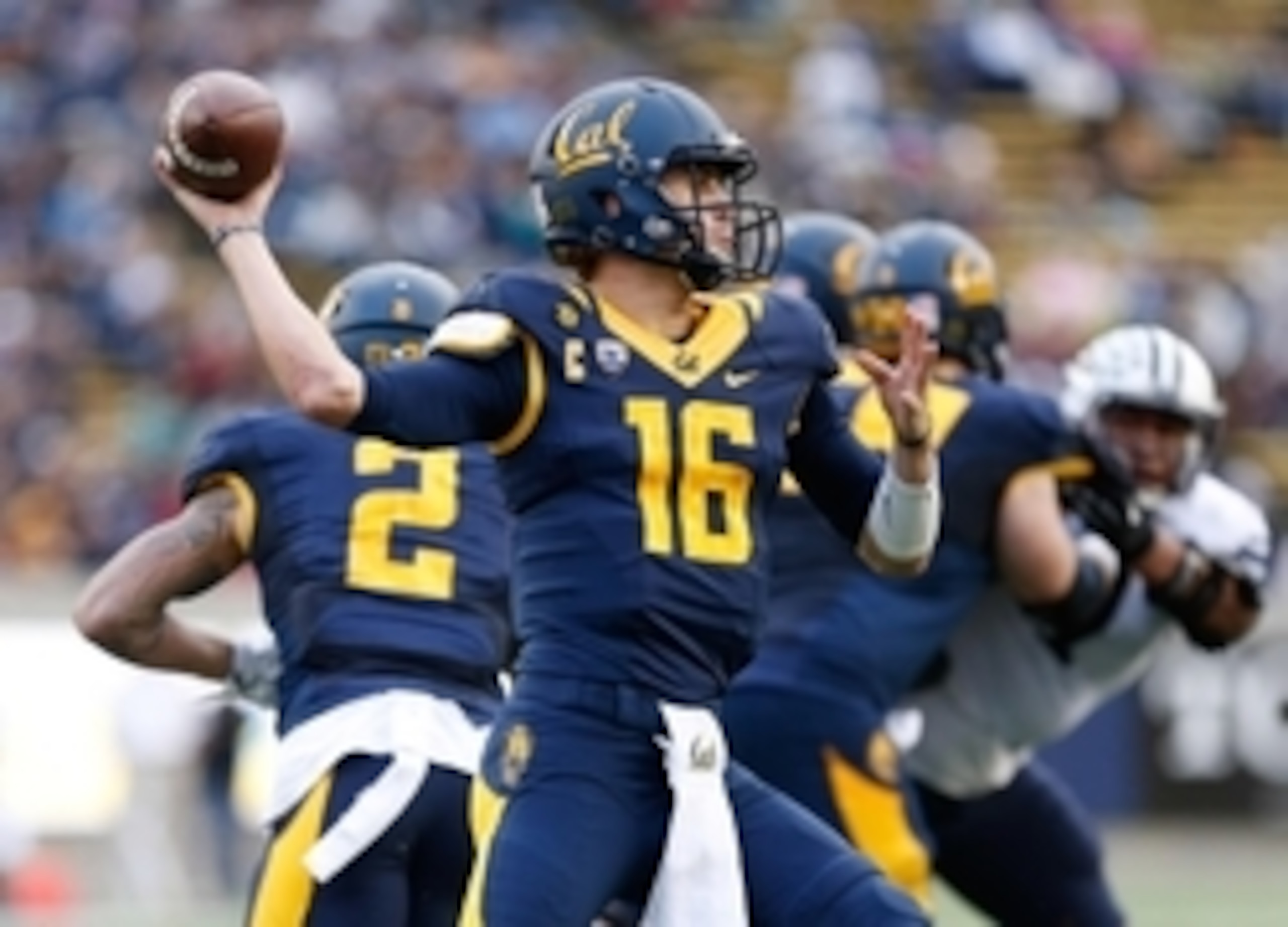
California made huge improvements last season, going from 1-11 in 2013 to 5-7 and were some late defensive breakdowns against BYU away from being bowl-eligible. Jared Goff's development into one of the top passers in the country was key to that jump, and when he wasn't in the lineup, the Golden Bears were a different team.
For much of last year, coach Sonny Dykes opted to rotate Goff and freshman Luke Rubenzer at quarterback, using Rubenzer in scenarios where he wanted more mobility from the position. Yet Rubenzer averaged only 5.1 yards on his 73 offensive touches, compared to nearly seven per play for Goff.
The Bears gradually moved away from this rotation later in the season, and while they only won one of their final seven games the offense was much more crisp and free-flowing with Goff on the field.
Christian Hackenberg, QB, Penn State
15 of 25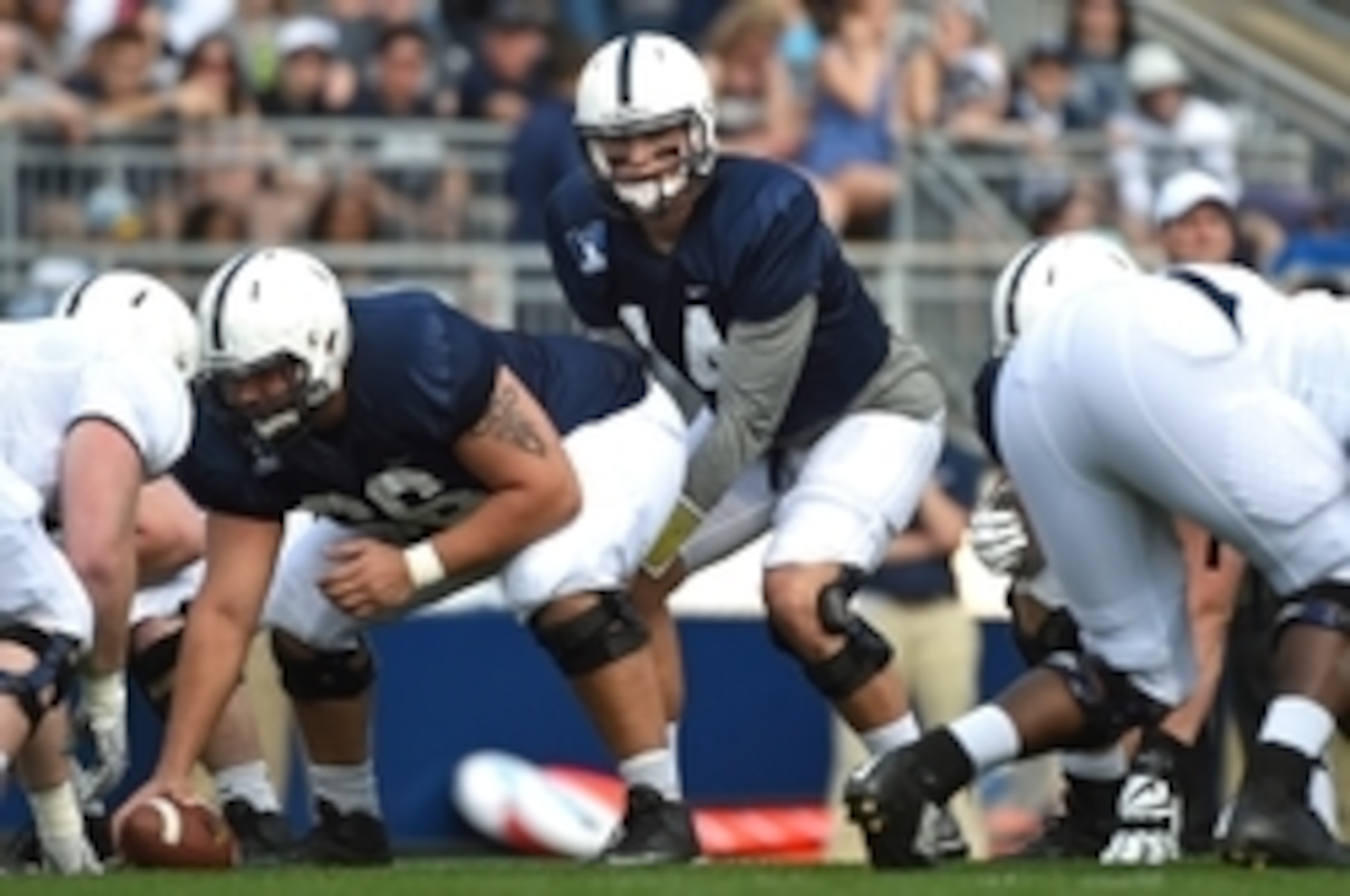
Sophomore slump and mobility concerns notwithstanding, it's hard to fathom how much worse Penn State's offense would have been last season without Christian Hackenberg in the pocket. Many of the 44 sacks he took were his fault, but the main culprit was a porous offensive line that just lost its best blocker to the NFL draft.
Hackenberg showed what he could do when given good working conditions, such as his school-record 454 yards in the 2014 season opener and his 371-yard, four-touchdown performance to help the Nittany Lions down Boston College in the Pinstripe Bowl.
There was a major lull in between, but as he enters what should be his final college year—Hackenberg sits second overall on Bleacher Report draft expert Matt Miller's early 2016 big board—he still remains the difference between a winning and losing season for PSU.
With a little more protection and some better decision-making, Hackenberg could have a masterful junior year. If he were to be removed from the offense, though, the Lions would be in serious trouble.
Vernon Hargreaves III, CB, Florida
16 of 25
Much was made of the fact that a Florida program that won 11 games over the past two seasons produced nine NFL draft picks last weekend. Many of those selected were considered underachievers at the college level but ones who had enough potential to warrant getting drafted.
There's no such hedging needed for the Gators' best player, Vernon Hargreaves III, because amid all of the poor team play the past two years, he's stood out from the pack as someone living up to expectations.
Hargreaves has six interceptions and another 24 pass breakups in 24 games, including 22 starts, putting a blanket over one side of the field and allowing Florida's other defensive backs to stick to the other end. The Gators ranked 42nd in pass defense last year, a ranking that would have been far lower had Hargreaves not been involved.
Kareem Hunt, RB, Toledo
17 of 25
The last time that Kareem Hunt failed to gain at least 90 rushing yards in a game he played was in October 2013. Since then the 5'11', 215-pound wrecking ball has gone for 100-plus in 15 of 16 games, including all 10 he was available for in 2014.
Only an ankle injury that sidelined Hunt for three games last fall could slow him down. After he returned from the injury, he averaged 184 yards and had a season per-carry rate of 7.96 yards to go with 16 touchdowns. Five of those came in Toledo's GoDaddy Bowl win over Arkansas State, when he also had career highs of 32 carries and 271 yards.
"He runs the ball maybe as hard as I've ever seen anyone run the football," Toledo coach Matt Campbell told Bleacher Report's Adam Kramer, admitting he had begun recruiting Hunt when he was a high school underclassman.
Toledo averaged 224.7 rushing yards per game during his three-week absence, but that required several players to replace the production.
Myles Jack, LB, UCLA
18 of 25
Already established as an effective linebacker as a true freshman, Myles Jack was the player UCLA called upon in 2013 when it needed a spark on offense. He responded by rushing for 120 yards on six carries in a key win over Arizona, and then a week later he scored four touchdowns to beat Washington.
Jack wasn't needed as much in the backfield last year, thanks to the emergence of running back Paul Perkins, but he again found a way to contribute in multiple ways by sliding into a defensive spot that made him more involved with the secondary. In two years he's broken up 18 passes, and in UCLA's Alamo Bowl win over Kansas State, he had a key interception.
Now Jack is being moved to inside linebacker, where he can try to make an impact in every facet of the defense.
"It gets him to the middle of the field where we can utilize his speed and things like that," UCLA coach Jim Mora told Jack Wang of InsideSoCal.com.
Wherever he's been needed, Jack has come through. If he were not available to provide so many uses, it would be the equivalent of UCLA losing multiple starters.
Carl Lawson, DE, Auburn
19 of 25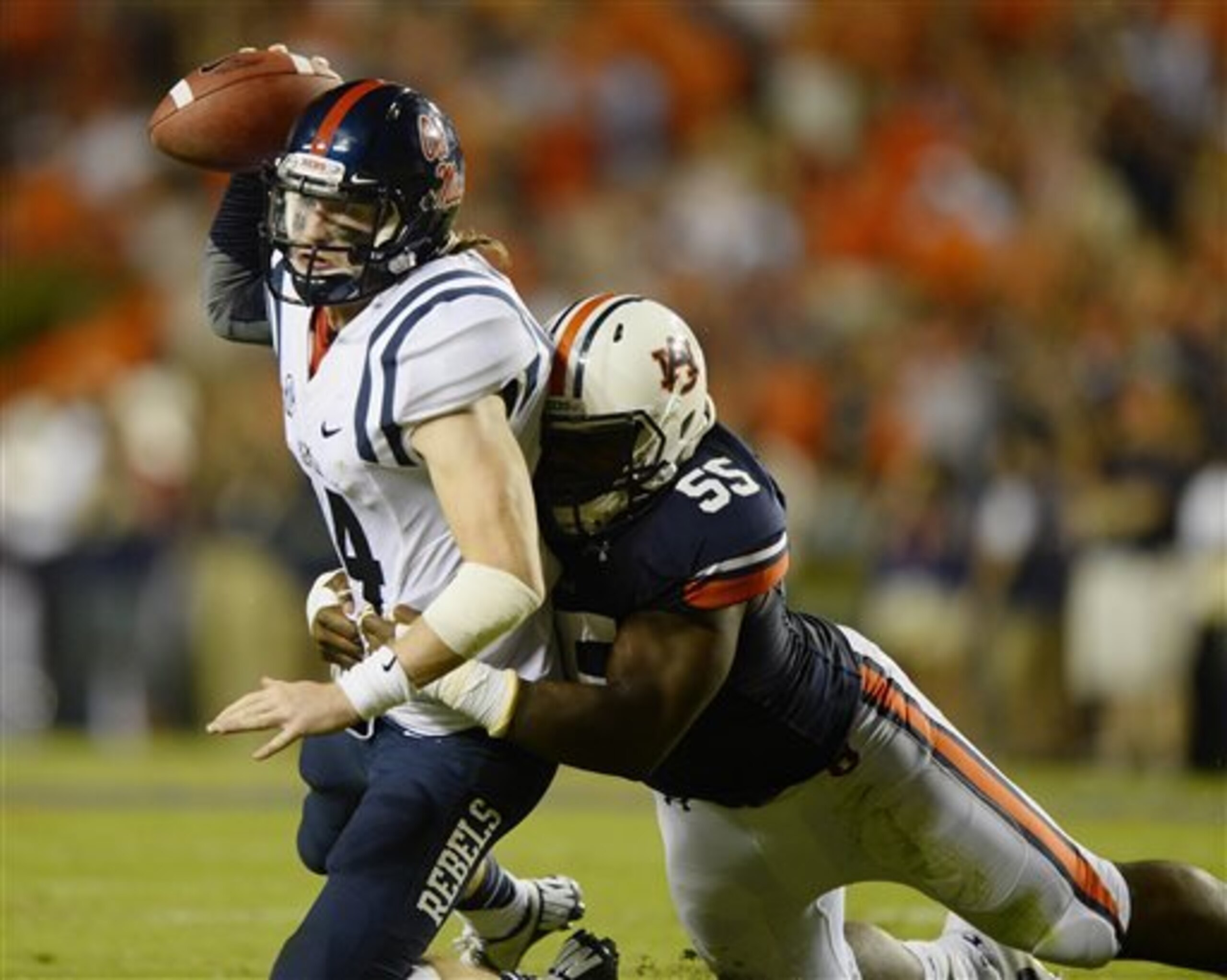
How much did Auburn miss Carl Lawson in 2014? The Tigers were tied for 94th nationally with only 21 sacks, compared to the year before when they had 32. Lawson only had four of those as a freshman, but before suffering a knee injury that caused him to miss all of last season, he was expected to make a huge leap into Auburn's top pass-rusher.
Now that he's back and ready to contribute, we'll see just how effective he can be disrupting quarterbacks and at least making it so they don't have "enough time to pitch a tent in the pocket, take a nap, wake up and find open receivers," as Bleacher Report's Barrett Sallee described Auburn's pass rush last year.
Dak Prescott, QB, Mississippi State
20 of 25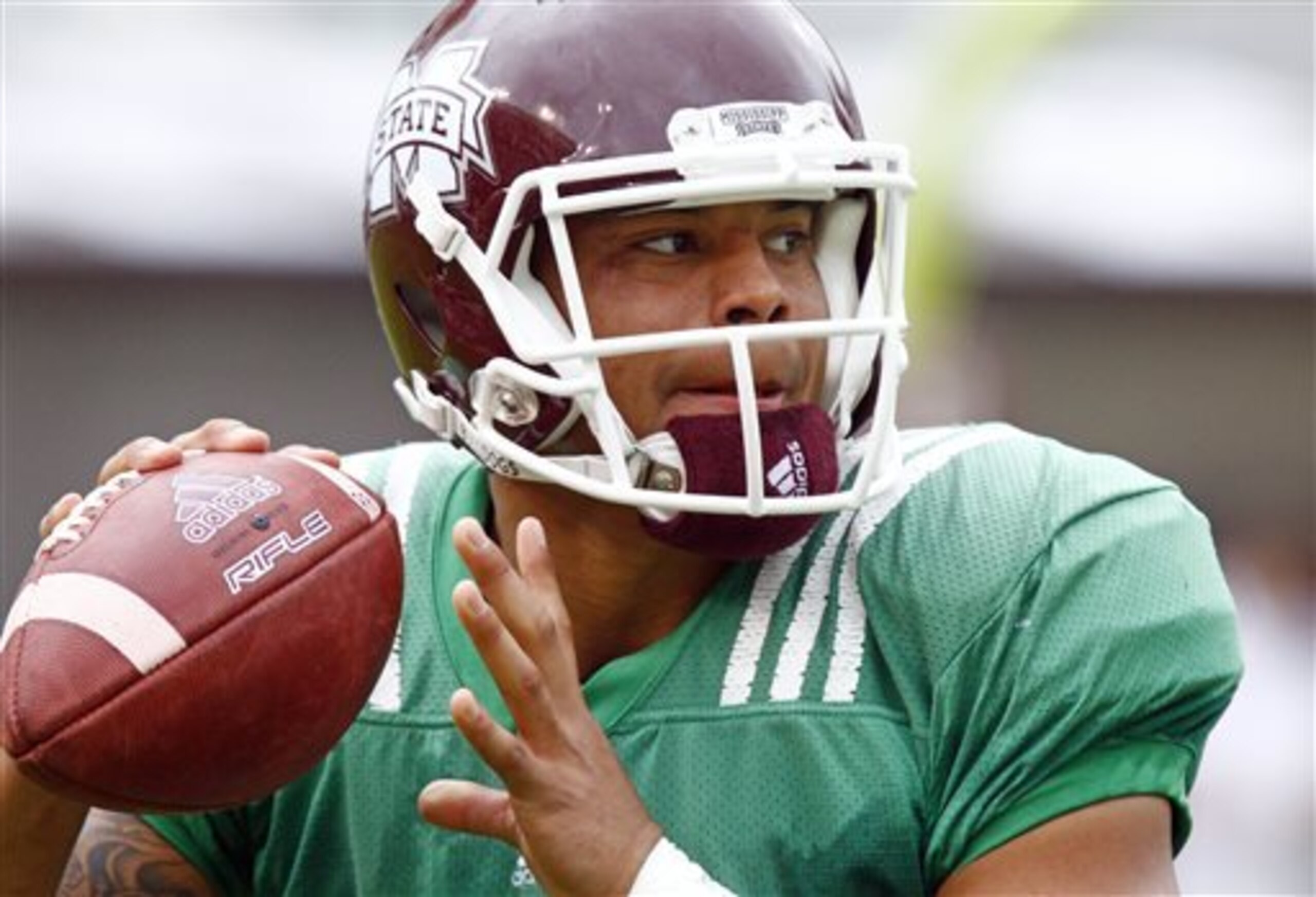
With less than half of its starting lineup back from 2014's breakout team that began 9-0 and reached No. 1 in the nation, Mississippi State returns less experience than nearly every other FBS teams. It would be far worse for the Bulldogs had Dak Prescott not decided to forgo the NFL draft and play his senior year in Starkville.
Prescott was responsible for 4,470 yards and 42 touchdowns last season, had more carries than leading rusher Josh Robinson and had four games with at least 200 passing yards and 100 rushing yards. He somehow managed to avoid injury, despite so many touches, and his return this fall is all that's keeping projections of an MSU regression from being any more severe.
While the Bulldogs' record this year might be the only thing that keeps Prescott from winning the Heisman, it's fair to say he is all that stands between them having a good year and having one that results in a spot at the bottom of the SEC West standings.
Keenan Reynolds, QB, Navy
21 of 25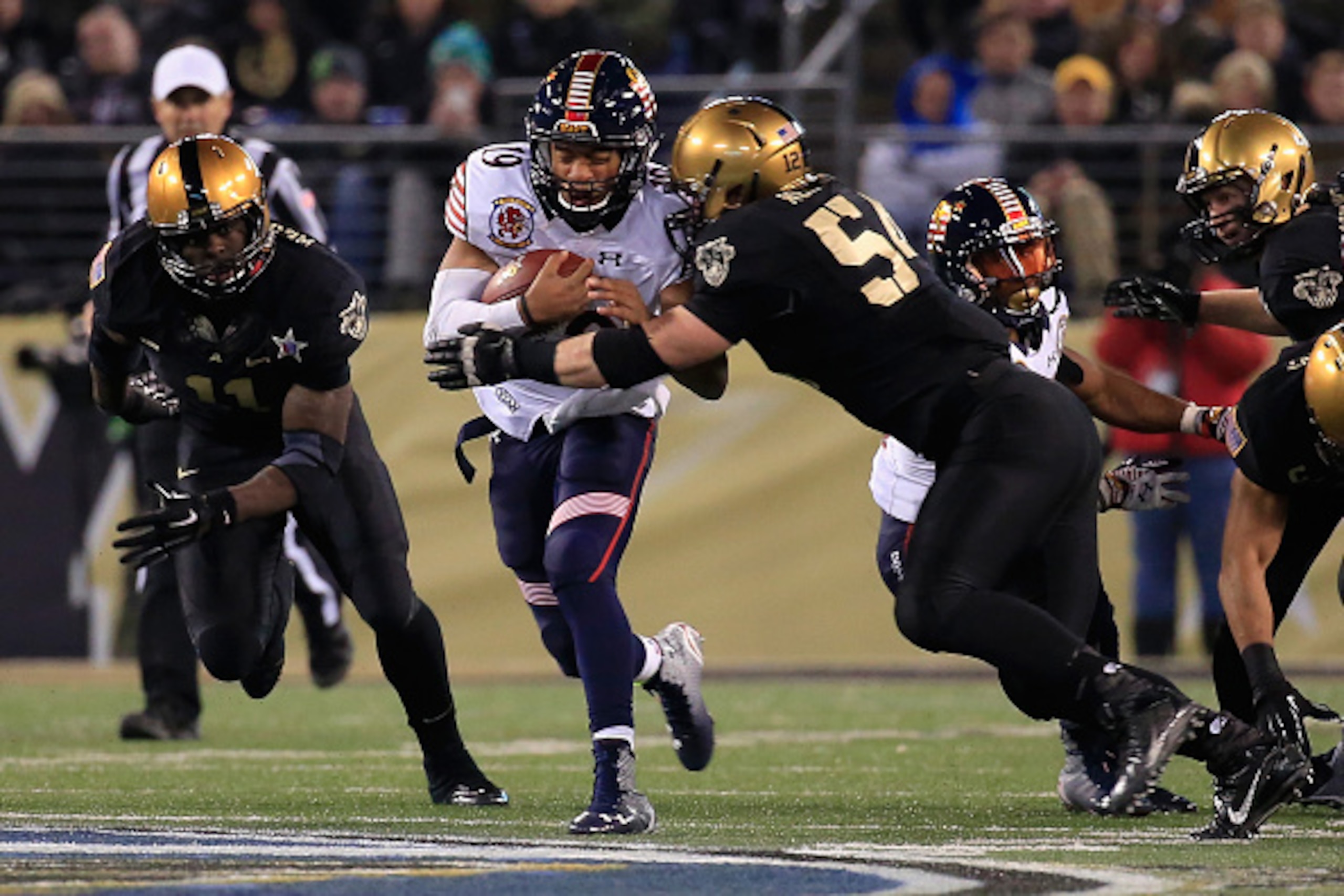
When his career is over, Keenan Reynolds is likely to be the all-time FBS leader in rushing and total touchdowns. His 64 rushing TDs are already the most by a quarterback, and with 14 more he'll surpass former Wisconsin running back Montee Ball for the overall rushing record.
The total TD mark of 83, also held by Ball, is also well within reach, seeing as Reynolds ran for 31 TDs as a sophomore in 13 games, and he had another 23 last year, despite missing two games because of injury.
Navy was able to win both games without Reynolds' services, but without their leading rusher, the triple-option offense was more reliant on the scheme than the player. Now that the Midshipmen have moved into the American Athletic Conference and will be vying for loftier postseason goals than as an independent, they can ill afford to have him miss any more time.
Justin Thomas, QB, Georgia Tech
22 of 25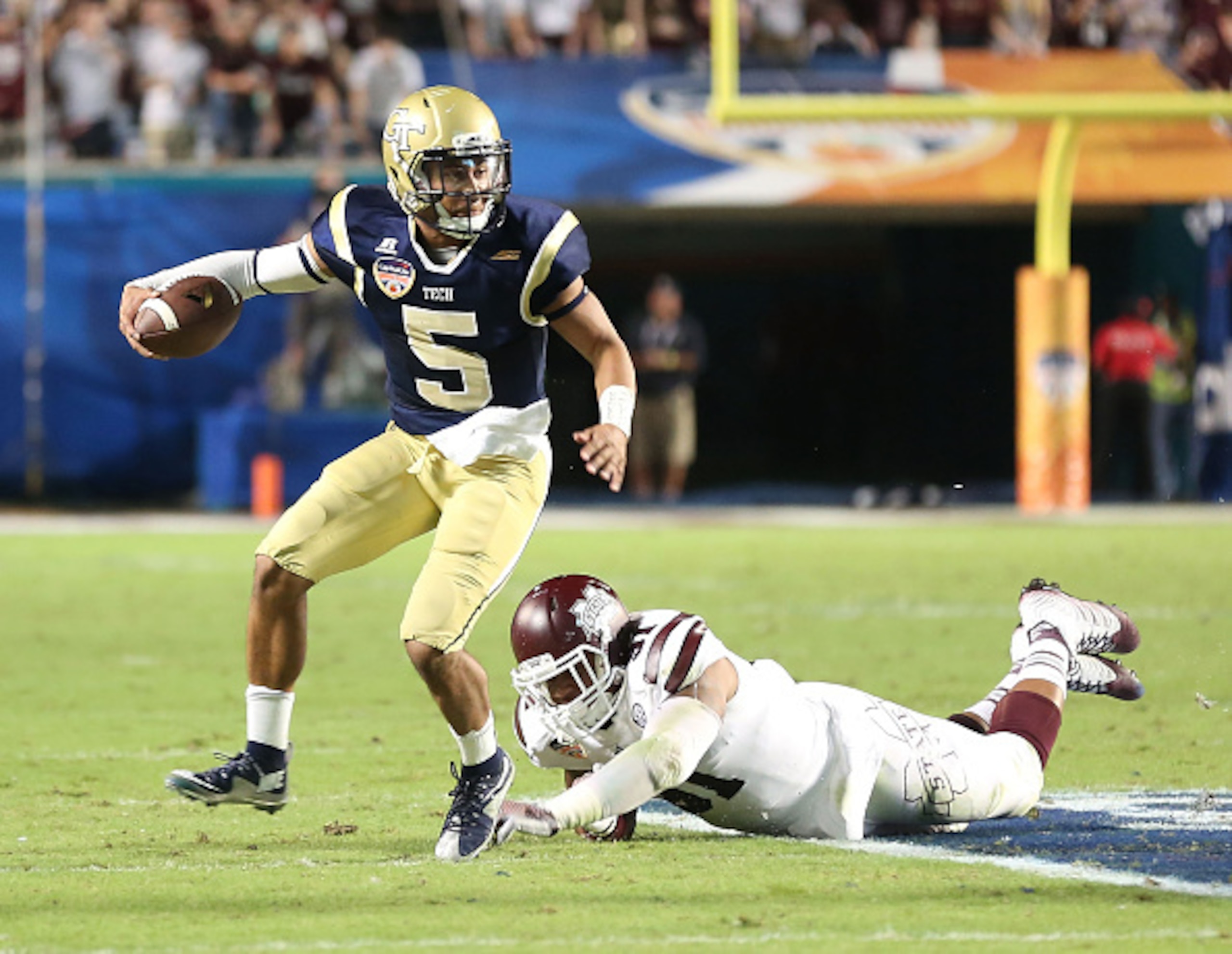
Paul Johnson is as devoted as any FBS coach to his offensive system, refusing to tinker much with an option format that's normally used by service academies and programs that can't compete with the big boys rather than ones in power conferences.
Yet Georgia Tech saw its offense improve dramatically from 2013 to 2014, and as a result the Yellow Jackets won 11 games and reached the ACC title game before knocking off Mississippi State in the Orange Bowl. The difference? Justin Thomas.
Thomas took over for Vad Lee, who transferred out of the program following the 2013 season. While Lee seemed uncomfortable making the quick-trigger decisions necessary to run the option, Thomas has thrived in that role. He knew when to keep it or when to give to his slew of ball-carriers and also made good choices in the passing game to keep defenses honest.
Tech graduated nearly every significant offensive weapon from last year, other than Thomas, making him even more integral to success in 2015.
Laquon Treadwell, WR, Ole Miss
23 of 25
To fully understand how indispensable Laquon Treadwell is to Ole Miss, just look at how the Rebels' 2014 season played out. They started 7-0 and were still a top-10 team when Treadwell suffered a gruesome leg injury as he was tackled (and stripped) just short of the end zone late in a home loss to Auburn.
Treadwell was lost for the year, and Ole Miss split its final four games. Take out the 48-0 win against FCS Presbyterian and its offense averaged 11.3 points (with a shutout and a three-point performance) and 325.7 yards per game compared to 31.9 points and 426.3 yards with Treadwell available.
He was still the team leader in receptions (48), despite missing four games, and his return this season is essential for the Rebels to be able to keep pace with the rest of their league full of potent offenses.
Deshaun Watson, QB, Clemson
24 of 25
Clemson won 10 games for the fourth straight season in 2014, but it wasn't by the same means as in previous years because of an offense that wasn't able to play with any consistency. More than anything else, that was because Deshaun Watson wasn't always available.
The true freshman made the Tigers considerably better, but because of three injuries that caused him to miss all or part of seven games, there was a distinct difference between when he was on the field and when he was sidelined.
A broken hand suffered early against Louisville resulted in Clemson winning, despite gaining only 229 yards, and as he missed the next three games the Tigers scored 67 total points (with 34 coming against last-place Wake Forest). He came back against Georgia Tech and produced 61 of their 190 yards of offense before suffering a knee injury in the 28-6 loss.
Watson also missed the Russell Athletic Bowl after undergoing knee surgery. Clemson had a season-low 68 rushing yards.
Scooby Wright, LB, Arizona
25 of 25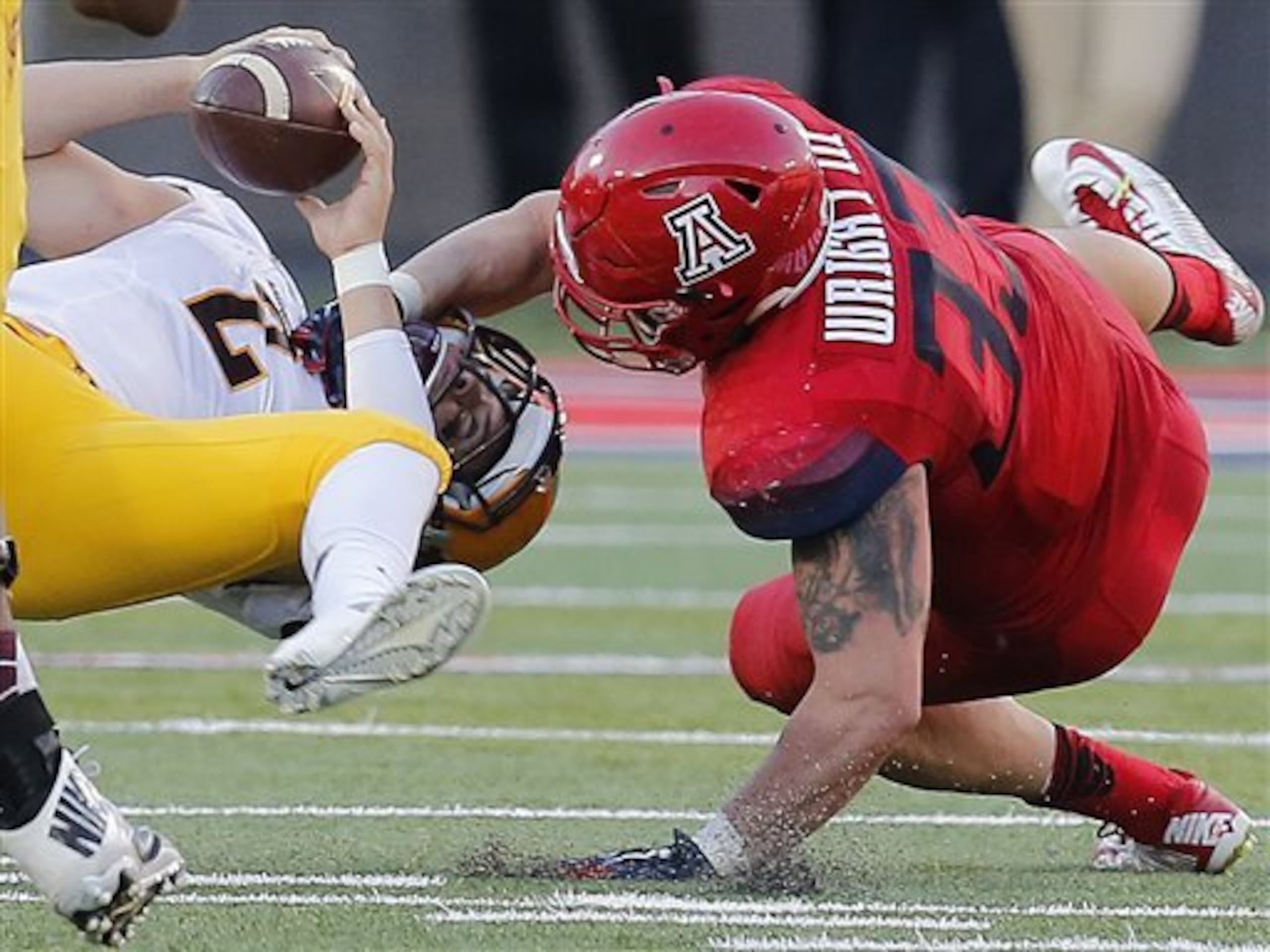
It's rarely a coach's preference to have one player be so much more essential to a game plan than everyone else, but sometimes this is unavoidable. Arizona would like its defense to be more balanced and not so reliant on Scooby Wright to make all of the plays, but the alternative could be not having the nation's most decorated defensive player.
Wright won three major national awards last season after leading the FBS in tackles, tackles for loss and forced fumbles. In a unit that tried to cycle in fresh bodies as often as possible to remain fresh, Wright rarely ever left the field, and his numbers show that.
An injury to this superstar would decimate the Wildcats, who weren't very good overall on defense to begin with.
Stats are courtesy of CFBStats.com, unless noted otherwise.
Follow Brian J. Pedersen on Twitter at @realBJP.



.jpg?w=2560 "Raiders Could Start Mendoza")

.jpg?w=2560 "Rodgers Iced Out on Plane 💎")

.jpg?w=2560 "Packers Safety Slams Refs 🤬")