


Individual matchups make the NBA playoffs go round.
The first segment of the 2015 postseason is drawing to a close, and while its departure is bittersweet, it leaves us with a great many memories to hold near and dear.
Like, when LaMarcus Aldridge and Zach Randolph went nose to nose for five games. Or when Draymond Green tried to impede the unstoppable Anthony Davis.
Or when a 26-year-old Blake Griffin dared to tussle with a 39-year-old Tim Duncan.
Those are the individual showdowns on which we now reflect. The ones that matter most. The ones that feature big names, provocative stat lines and surprise performances.
Only one rule applies as we begin collecting these intangible first-round trinkets: selected players must man the same position. More consideration will be given to those who guarded each other on a regular basis, but off-beat defensive schemes will not preclude any one battle from being eligible.
In that same vein, everything matters, from the stat lines, to the status of included players and coaches, to the importance of said matchup to the series outcome. And once our pool of candidates is in order, we sort them accordingly, by increasing significance, aiming to answer one question: Which high-profile prize fight was the most evenly matched?
8. Michael Carter-Williams vs. Derrick Rose
1 of 8
Who needs to lament the absence of a Russell Westbrook-Stephen Curry first-round dance after Michael Carter-Williams and Derrick Rose went toe to toe for six games?
To be honest, we all might. That's how polarizing a Westbrook-Curry meeting would have been. But that's not the point. Rose and Carter-Williams evolved into must-see TV during the latter half of their series.
Rose spent most of the first three games bombing atomically. When he was scoring, he didn't stop. When he wasn't scoring, he was getting into the lane and taking three or four Milwaukee Bucks with him.
Carter-Williams would go on to play a crucial role in slowing Rose the rest of the series. The Chicago Bulls point man shot just 34 percent from the floor through the latter three tilts and was even worse during his stints against his sophomore counterpart.
The intrigue level reached fever pitch in Game 5. Carter-Williams did his best Magic Johnson impression in what was most definitely a "Hey! I'm here, too!" performance. As CBS Sports' Zach Harper explained afterward, the kid went above and beyond:
"He hadn't done much in this series, and mostly was outplayed by Derrick Rose. Game 5 was a lot different and happening on the Bulls' home floor in an elimination game makes it even more impressive. He scored 22 points while making 10 of 15 shots to go with nine assists, three blocks, and eight rebounds. MCW still didn't show a jumper, but he scored all 10 baskets in the paint. He showed the potential people imagine when thinking how Jason Kidd's point-guard expertise can shape Carter-Williams' future.
"
Pay no attention to his below-average player efficiency rating, or his no-show for Game 6, or his disastrous net rating (minus-18.1). Carter-Williams offered glimpses of the player he could become, on the NBA's biggest stage, all while helping keep a hyperaggressive Rose at bay for a good chunk of this series.
7. Jason Kidd vs. Tom Thibodeau
2 of 8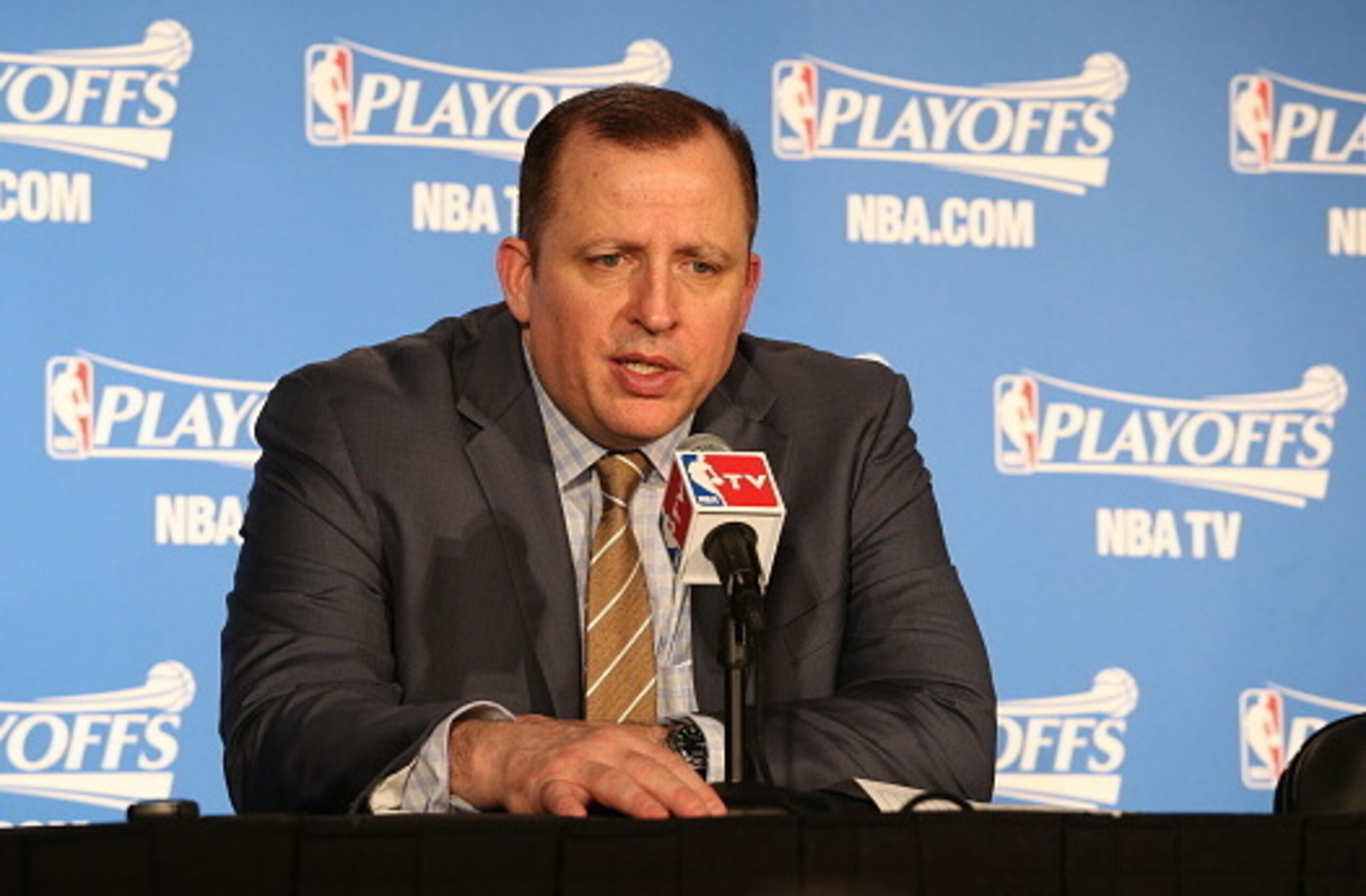
You wouldn't know it after watching the Bulls clinch a second-round berth with a 120-66 shellacking of the Bucks in Game 6, but the Tom Thibodeau-Jason Kidd clipboard X-and-0 Show was real.
On one side, there was Thibodeau, a veteran head coach tasked with steering a perceived title contender deep into the playoffs. On the other, there was Kidd, a sophomore sideline-stalker guiding an upstart rebuilding project that, in theory, had no business making a playoff appearance.
When the Bulls jumped out to a 3-0 series lead, this coaching matchup wasn't even a blip on the radar. Thibodeau was allowing his best players to beat the Bucks into submission, and Kidd found himself coaching a team that was neither talented nor experienced enough to hang with its opponent.
Then Games 4 and 5 happened.
Kidd dedicated everything he had to suffocating Derrick Rose and running positionless lineups that capitalized on the Bulls' lack of defensive versatility up front. Thibodeau, meanwhile, assumed the role of a kindergarten teacher, trying to ensure his Bulls remained on point, took Milwaukee seriously and didn't become the first NBA team to ever forfeit a 3-0 lead in a best-of-seven series.
The more talented squad prevailed in the end. But Kidd and the Bucks made this non-series a series, while Thibodeau and the Bulls showed they're strong enough to withstand even the most unexpected scares.
All those involved deserve a high-five. Kidd and Thibodeau each deserve a bro hug (or 50).
6. Patty Mills vs. Chris Paul
3 of 8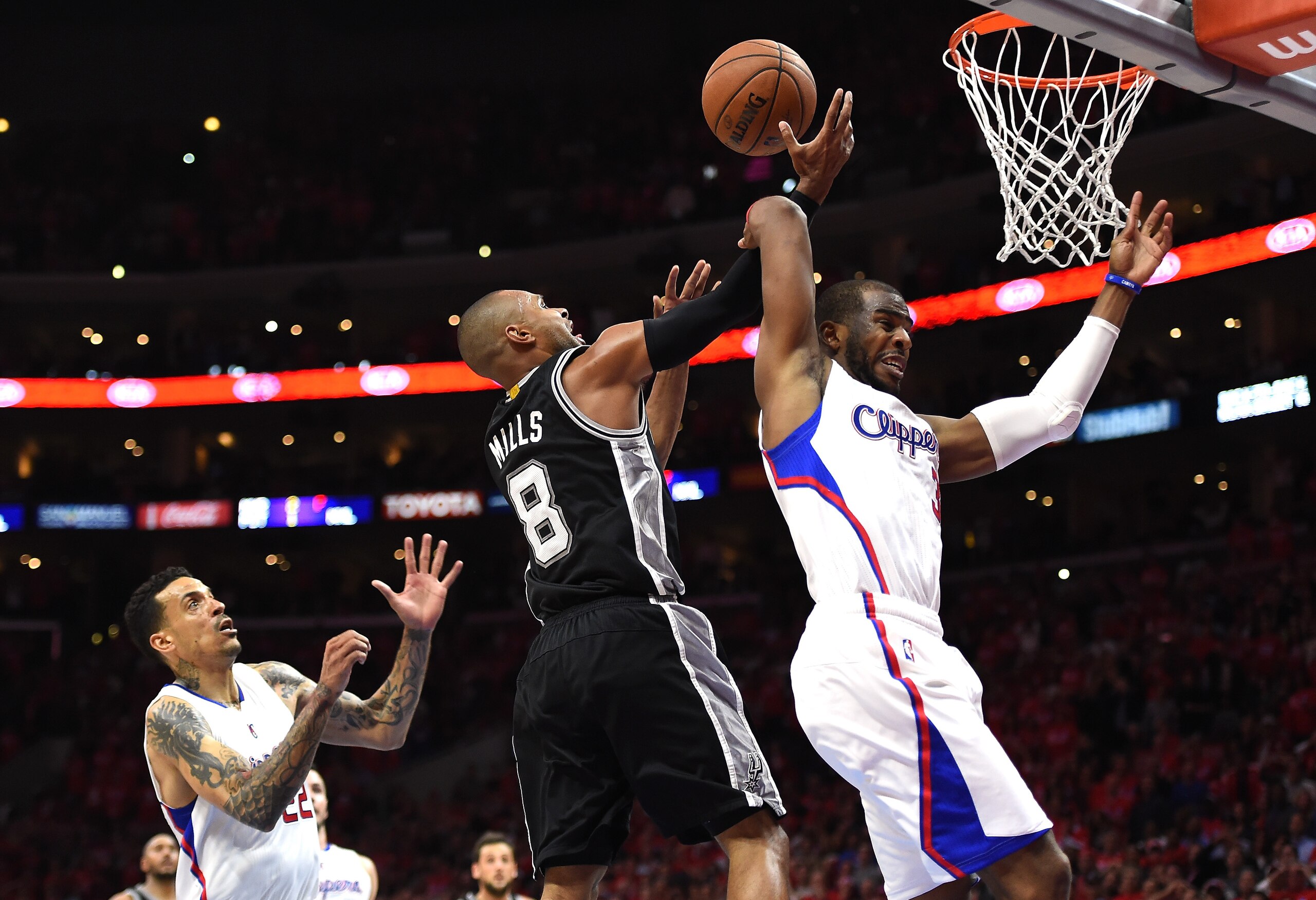
Tony Parker and Chris Paul should be the attention-grabber here. But the battle between Paul and Patty Mills, while brief, has been exceptional.
Paul's field-goal percentage is admittedly lower when Parker is on the floor compared to when Mills runs point. But it's Mills, not Parker, who actually defends Paul. The San Antonio Spurs are more inclined to throw Kawhi Leonard or Danny Green on Paul, or send all kinds of help and traps, when it's Parker matching up against the Los Angeles Clippers' megastar.
Mills is quicker than Parker when backpedaling and making sharp lateral movements. He's also not banged up like his fellow point man, making him more equipped to funnel Paul into the paint on his own, at which point the Spurs' bigs can converge without worrying about covering for someone else on the perimeter.
During a series in which Parker and Green are building a fort out of bricks, Mills is also providing the impetus on offense. He is shooting 52.8 percent from the field, including 58.3 percent from deep, and has sparked more than one fourth-square scoring onslaught.
It should come as no surprise, then, that the Spurs offense and defense are statistically superior with Mills in the game during this series, or that they're outscoring the Clippers by 17.1 points per 100 possessions when he's on the floor.
Little about this matters, of course. Paul is still averaging 22 points, 8.2 assists and two steals per game and posting a true shooting percentage of 68.2 in the fourth quarter. For all the Clippers' late-game follies, he's been their fourth-quarter knight, hitting big shot after big shot.
At the end of Game 6, with the Clippers' season on the line, after missing all seven of his first-half shots, he exploded. He went for eight points and four assists in the third quarter and made sure the ball found Griffin in the fourth.
Knowing full well there is no stopping Paul, the Spurs will have to plan accordingly for Game 7. And letting Mills loose—thus allowing this shocking, yet totally thrilling individual encounter to unfold even further—is a good place to start.



5. Monta Ellis vs. James Harden
4 of 8
Monta Ellis and James Harden did not disappoint during their five-game clash. They also didn't guard each other too much.
Both shooting guards drew the attention of the opposition's best-available wing defender most of the time. The Dallas Mavericks threw Al-Farouq Aminu on Harden, and the Houston Rockets placed Trevor Ariza on Ellis.
Neither player could be kept in check for the entire series, though. Even when they were struggling, both represented a lion's share of their offense's production.
Harden struggled to find nylon through the latter two games, shooting a regrettable 9 of 28 from the floor, including 2 of 9 from deep. But he still mustered 24 points in both Games 4 and 5. Because, free throws.
Ellis, by comparison, caught fire after Game 2. He was able to play more freely following Rajon Rondo's departure, returning to his aggressive self. He averaged 30 points and 6.3 assists on 54.2 percent shooting through the final three tilts.
Where the Rockets defense was able to come up with key stops, though, the Mavericks had no answer for Harden's dribble drives and pick-and-roll initiations with Josh Smith and Dwight Howard. They hacked and whacked him every time he entered the paint and found out the hard way that his step-back jumper isn't just tough to defend. It's unguardable.
Five-game series are seldom competitive on a collective scale, and the Rockets' 4-1 romping of the Mavericks was no different. Yet, in a short period of time, Harden and Ellis still delivered a salient offensive skirmish worthy of a series much better than the one they were playing.
4. Gregg Popovich vs. Doc Rivers
5 of 8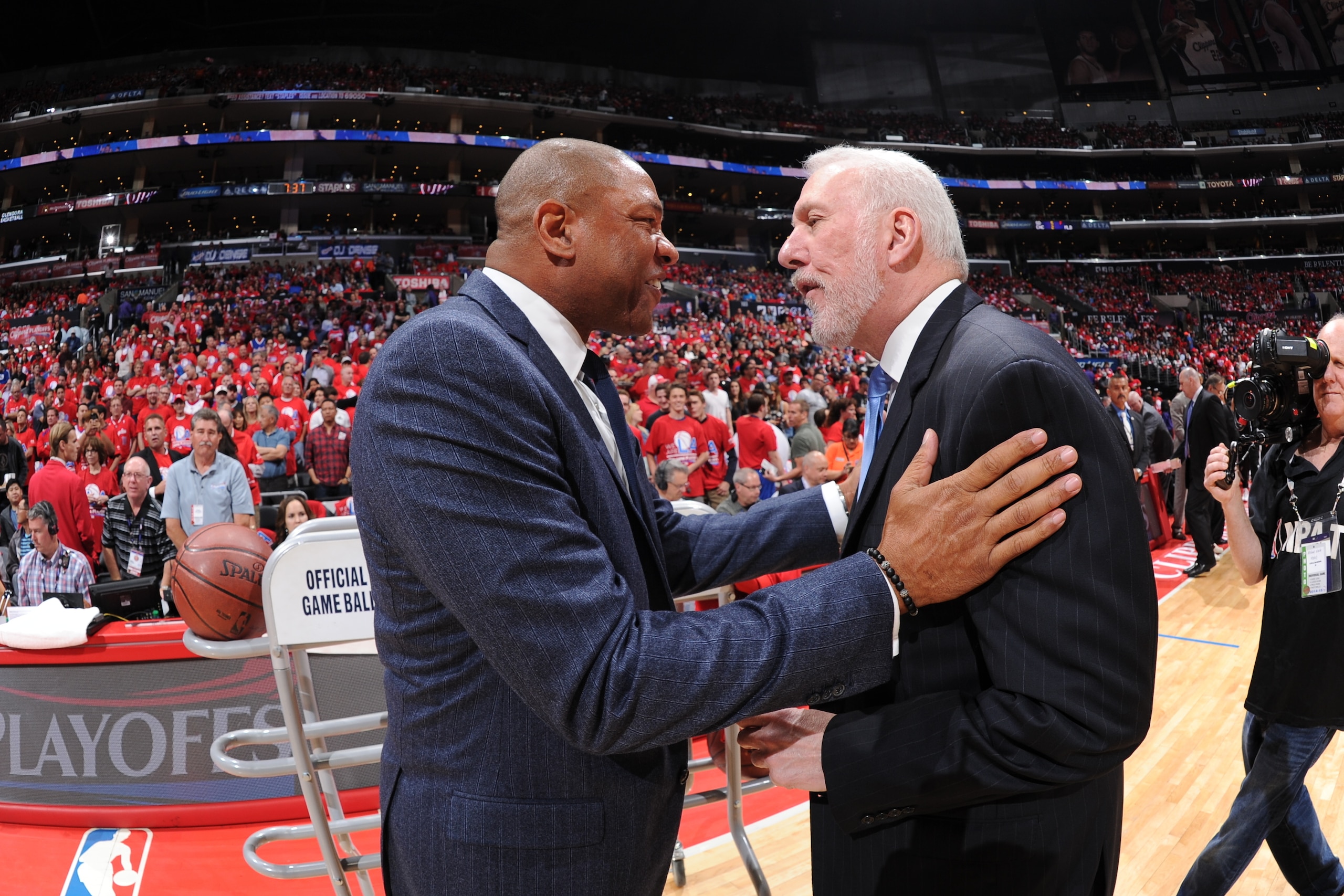
Doc Rivers and Gregg Popovich are helping show why first-round basketball can be sexy. These are two preeminent tacticians and motivators going adjustment for adjustment in a head-to-head sparring for the ages—one so incredible, it shouldn't even be happening this soon.
"It's ridiculous that it's a first-round series," Rivers told Yahoo Sports' Marc J. Spears. "That was the first thing Pop said to me before Game 1, and I said the same thing. But we both decided, 'What the hell, it is what it is.' But this is ridiculous."
Ridiculous indeed.
This is a matchup that has seen Popovich frequently try to exploit DeAndre Jordan's poor free-throw shooting, a strategy to which Rivers won't bend. Though Jordan is shooting under 40 percent from the charity stripe, his head coach seldom pulls him from the action—mostly because he has no choice.
While Popovich continues to employ his Popovich-ian methods, milking those with the hottest hands, Rivers is being forced to lean on his starters. The Clippers' bench remains barren of consistent contributors and is being outscored by the Spurs' second-stringers 308-168 for the series.
Hence the over-reliance on starters. Four members of the Clippers' opening five are logging more than 36 minutes per game and three are north of 38 as Rivers tries to counter San Antonio's depth with the star power of Chris Paul, Blake Griffin, J.J. Redick and Jordan.
Popovich thoroughly outsmarted the Clippers with his rotations late in Games 2 and 5. Rivers took advantage of Popovich's refusal to play Boris Diaw and Marco Belinelli more in the fourth quarter of Game 6.
Back and forth they go, one championship coach attempting to out-maneuver another, into a series-deciding Game 7. And regardless of who wins, know this: This series is what it is because of Popovich and Rivers.
3. LaMarcus Aldridge vs. Zach Randolph
6 of 8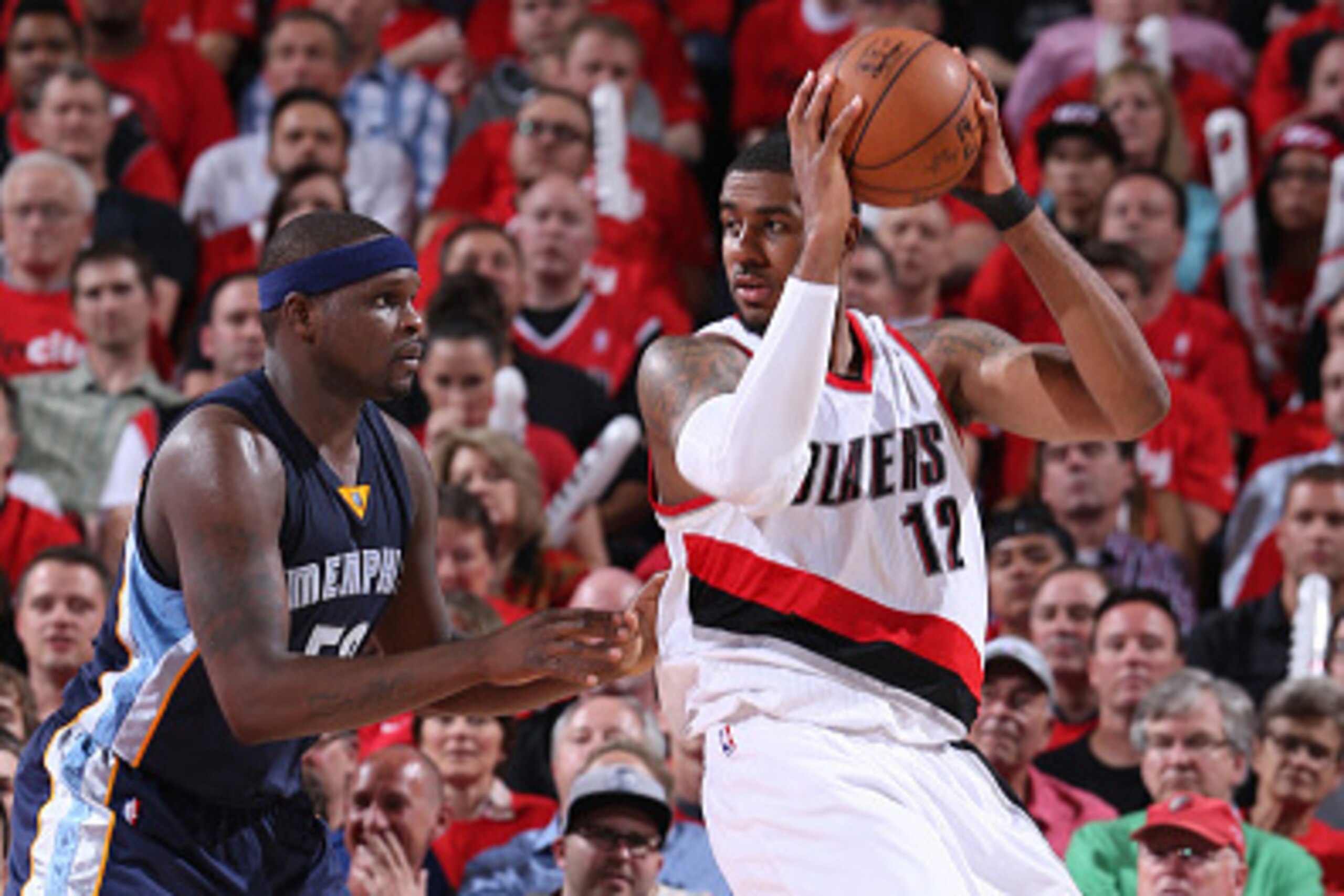
Former teammates going at it is always good theatre, and the reunion between Zach Randolph and LaMarcus Aldridge did not disappoint—insofar as you expected this matchup to decide the series.
Reasons abound as to why the Portland Trail Blazers fell to the Memphis Grizzlies. Damian Lillard's defenseless defense, Wesley Matthews' absence and Nicolas Batum's disappearing acts all appear in the post-series pantheon of excuses.
But the Aldridge-Randolph battle looms largest. Not because their nightly bouts became offensive slugfests, but because they didn't.
Despite shooting under 35 percent from the floor, Randolph did a number on Aldridge. A bulk of his court time was devoted to defending him, and he made it so the Grizzlies rarely had to send help, collapse or implement traps—not even as Aldridge repeatedly returned to his sweet spot on the left block.
Randolph played a physical brand of defense instead, one that's typical of the Grizzlies, but borderline atypical of the power forward himself. He set his feet, maintained his position in the post and rarely bit on up-fakes, head-fakes or single-foot pivots.
"The old Z-Bo would've been cussing people out, throwing headbands in the stands, but the new Z-Bo, as long as they're winning, I think he's good," Aldridge said, per ESPN.com's Baxter Holmes. "That's been great for this team because he's changed so much."
By the end of Game 5, Aldridge had amassed 109 points on 112 shots. That's 0.97 points per attempt. He averaged 1.17 points per shot during the regular season.
So yeah, this matchup was big. Great, even.
One of the best.
2. Anthony Davis vs. Draymond Green
7 of 8
Not even should-have-been Defensive Player of the Year Draymond Green (Love you, Kawhi) managed to contain Anthony Davis. Yet, to his credit, he did defend him like a boss.
"Anthony Davis was nothing short of spectacular in his playoff debut for New Orleans, but Green was key to keeping Davis in (relative) check and not letting him take over the series," wrote NBC Sports' Kurt Helin. "One key stat: Davis was +35 when playing while Green sat, -55 while Green was on the court at the same time. That’s series-changing impact."
Never has a series-changing impact been so obvious, yet so utterly difficult to accept.
Anthony Davis did Anthony Davis things for all four games, notching stat lines that boggled the mind, showcasing an all-everything arsenal that is new to planet Earth. He averaged 31.5 points, 11 rebounds and three blocks per game, postseason benchmarks only Kareem Abdul-Jabbar has ever reached before.
Still, Davis shot noticeably worse with Green in the game. His net rating also swung 100 points—yes, 100—in the wrong direction per 100 possessions. That's not a coincidence and, drastic sample-size shifts in mind, cannot be ignored.
All in all, Davis did Davis while Green did Green. It was awesome.
It also ended much too soon.
1. Tim Duncan vs. Blake Griffin
8 of 8
Griffin and Duncan are waging statistical warfare without pause or regard for our fast-beating hearts. It's almost as if they're two of the foremost authorities on frontcourt greatness, because that's exactly who they are.
Duncan is ageless. He just turned 39, but he's ageless, unaffected by the laws of logic. Father Time comes to him for workout tips.
Through six contests, it's shown. Duncan enters Game 7 averaging 16.3 points, 11.7 rebounds, 3.7 assists, 1.5 steals and 1.7 blocks on 56.8 percent shooting. No, that's not a typo. It's a true fact. He has also beat the Clippers in transition and logged more minutes than any other Spur besides Leonard.
Youth is cool, too. That's the message a 26-year-old Griffin is sending, as he continues to carve up a normally stingy Spurs defense. He's averaging 21.1 points, 11.5 rebounds, 6.1 assists, 1.5 steals and 1.5 blocks through six games, shouldering a taxing workload that usually gets the best of anyone who isn't a futuristic android.
Although Griffin and Duncan aren't always matched up against one another on the defensive end, they'll be forever linked to this series. Duncan shouldn't be leading a championship charge at 39. Griffin shouldn't be playing this well while exceeding 40 minutes regularly and being forced to rebound from costly miscues (turnovers, offensive goaltends, etc.).
But Duncan is the lifeline of a contender nearly two decades into his career. And Griffin is proving that star power and versatility can transcend fatigue. And both are playing the type of basketball that could decide the postseason fate of the other.
Individual matchups don't get any better.
Or, for that matter, more important.
Stats courtesy of Basketball-Reference.com and NBA.com unless otherwise cited.
Dan Favale covers the NBA for Bleacher Report. Follow him on Twitter: @danfavale.

.jpg?w=2560 "Raiders Could Start Mendoza")

.jpg?w=2560 "Rodgers Iced Out on Plane 💎")
.jpg?w=2560 "Packers Safety Slams Refs 🤬")
.jpg?w=2560 "🚨 Week 8 AP Top 25 Poll")

