
Realistic Draft Trade Possibilities for the Carolina Panthers
Months of NFL mock draft speculation is usually rendered moot about 15 minutes into any given draft, when the trades start flying. Most mocks lock teams into their original draft location, possibly including one or, at most, two major trades to shake up the board. That’s not the case at all in real life, however.
Last year, nine first-round picks were made by teams that didn’t originally have the pick in question, including four of the top 10 picks. The year before, it was 11. It’s simply unrealistic to assume everyone will sit in neat-like and make their selections in the order prescribed to them.
The Carolina Panthers haven’t been too busy on draft day with trades in recent history. Last year, they made only one deal, moving up in the fifth round to select cornerback Bene Benwikere at the expense of a seventh-round pick. The year before that, they made zero draft-day trades of any kind. You have to go back to 2010 and the reign of much-maligned general manager Marty Hurney. Panthers fans can be excused for not wanting to remember Hurney’s drafts.
Is it likely that the Panthers will be busier this year during draft day? Not particularly.
They only have two extra draft picks thanks to compensatory selections, and those are untradeable. They don’t have a particularly enticing pick or position in the first round that would cause other teams to want to shoot up to their selection. Combined with general manager Dave Gettleman’s general draft strategy, you don’t get the sense that the Panthers are planning a flurry of activity.
However, just because it would be out of character doesn’t mean it won’t happen. Nor does it mean that there aren’t some potentially great moves the Panthers could make. Let’s take a look at some realistic trades the Panthers could make over the three days of the 2015 NFL draft—and a look at a few less realistic, more dramatic ones to boot.
Trade 1: Vaulting to the Top
1 of 6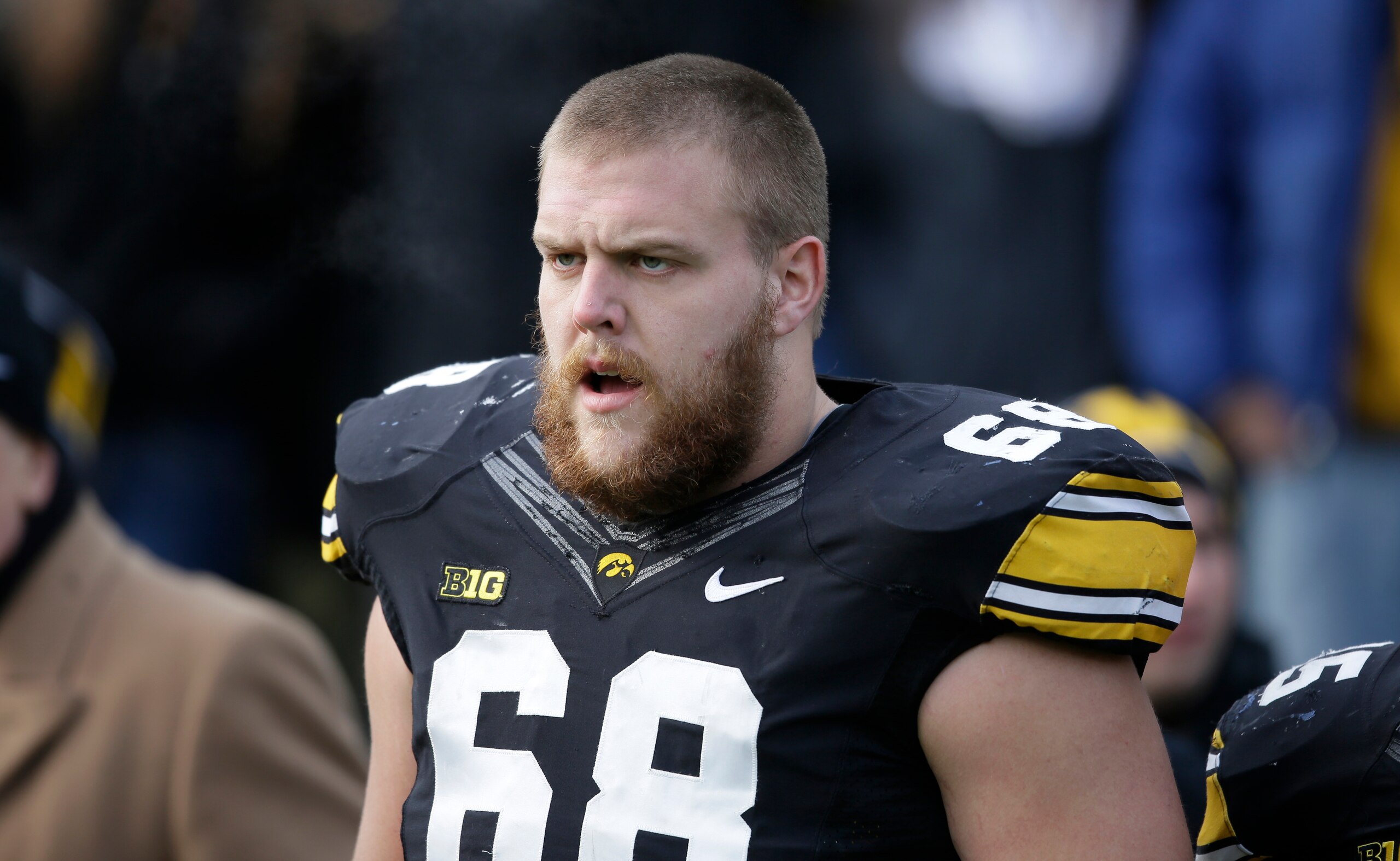
Carolina trades: 1st-round (No. 25), 2nd-round (No. 57), and 2016 1st-round picks
NY Giants trade: 1st-round (No. 9) and 4th-round (No. 108) picks
If the Carolina Panthers could take any player in the 2015 NFL draft, it would most likely be Iowa offensive tackle Brandon Scherff. Scherff is the consensus top offensive lineman in this year’s draft, even if there’s some concern about whether he projects as a franchise left tackle or “merely” an All-Pro guard in the NFL. The Outland Trophy winner is one of the most powerful tackles in the draft. He’s certainly the most NFL-ready lineman in this year’s class and has Pro Bowl potential from day one.
All this is shorthand for “there’s no way on Earth he’ll fall to the Panthers at pick 25.” Scherff is a likely top-10 pick. In the Bleacher Report community mock draft, he actually went fifth overall to Washington. He’s as close as you’ll get to a surefire prospect in this year’s draft.
If the Panthers fell in love with Scherff, who fills the team’s biggest need, they’d have to make a seriously dramatic move to go get him, shooting all the way up into the top 10. It would almost certainly require giving up next year’s first-round pick and a day-two pick in this year’s draft to make the swap. That’s a hefty load.
If, however, you knew for sure that Scherff was going to become a decade-long starter and multiple-time All-Pro, it would be worth next year’s first-round pick to get him. For as much as we like to declare things with certainty in the run up to the draft, you can count on a quarter or so of the first-round picks being busts, and around another half not living up to the breathless hype that surrounds them at this point. Offensive linemen buck that trend somewhat, with first-round picks being generally safer than similar players at, say, quarterback or receiver.
In absence of a time machine or a crystal ball, I think that such a move would be short-sighted. It would, however, be the biggest splash the Panthers could make in this year’s draft.
Trade 2: Cutting to the Front of the Line
2 of 6
Carolina trades: 1st-round (No. 25) and 3rd-round (No. 89) picks
Cincinnati trades: 1st-round (No. 21) and 4th-round (No. 120) picks
If the Panthers want a better class of offensive lineman than they can get at the back half of the first round, but don’t want to sell the farm entirely like it would take to get Scherff, they could make a more restrained move up a handful of picks to ensure themselves a better selection.
LSU’s La’el Collins is often selected somewhere between pick 15 and the low 20s in mock drafts. Stanford’s Andrus Peat is generally mocked somewhere between picks 20 and 24, often to Cincinnati or Detroit. Miami’s Ereck Flowers is another tackle who often goes in the upper 20s, as is Pittsburgh’s T.J. Clemmings. The early 20s, then, seem something like the hot spot for tackles.
The odds are at least one of them will fall to the Panthers at pick 25. In the community mock draft, that was Flowers, though I think Clemmings or D.J. Humphries are more likely names. However, that’s the equivalent of sorting through scraps after other needy teams have gotten their prime cuts.
A minor trade, jumping up four or five picks in exchange for a swap of middle-round selections, would move Carolina closer to the front of the line and give it a better selection of tackle from which to choose. If its targeted player starts slipping—I think that would be Stanford’s Peat, if anyone—then this trade would allow the Panthers to go up and grab solid value before another lineman-needy team can cut them off. That’s probably not worth losing a draft pick overall, but downgrading a later pick for a better first-round selection would pay off.
It’s a relatively minor move, but sometimes that’s worth the difference between getting the player you want, like Peat, and getting the player you’re stuck with, like Humphries.
Trade 3: After You, I Insist
3 of 6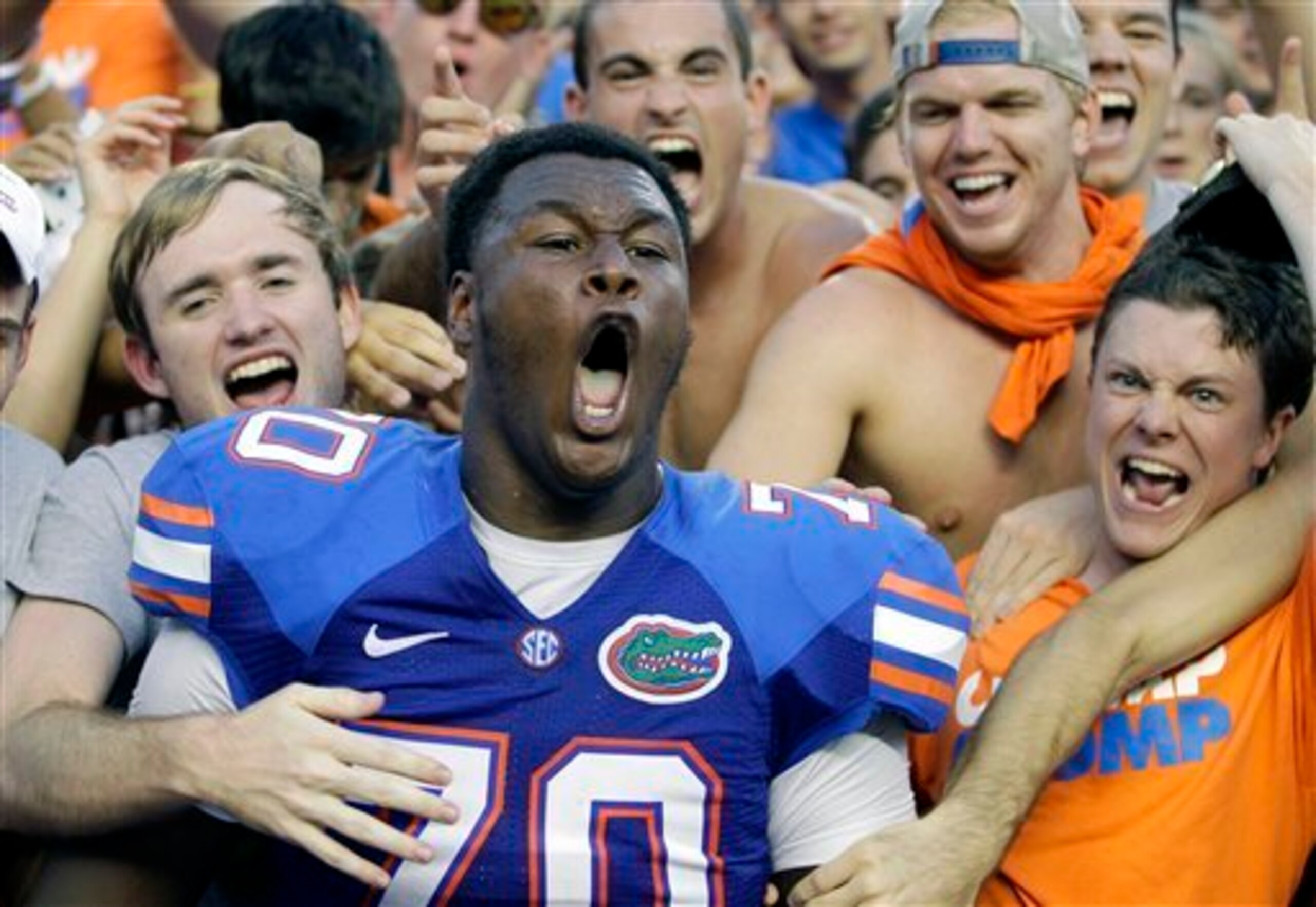
Carolina trades: 1st-round pick (No. 25)
New England trades 1st-round (No. 32) and third-round (No. 96) picks
The previous trade implies that the Panthers have a strong preference when it comes to the middle group of offensive tackles. That might not be the case, however. It’s conceivable that they think that grouping of four or five tackles all end up roughly at similar talent levels. If they don’t particularly care which one they get, why not trade back, pick one up and add an additional draft pick?
For example, I don’t think Florida offensive tackle D.J. Humphries will fall off the board before the end of the first round, thanks to some rough technique and poor hand action. Those are things that can be taught, however, while his combination of athleticism and mental toughness really can’t be. He’d have the luxury with the Panthers to come in as a right tackle while he’s being coached up, moving to the left if and when he’s ready. He’d be a great fit in Carolina’s zone-stretch system, with very nice footwork.
If Humphries does go before the end of the first round, that likely only means another talented lineman has fallen—perhaps Ereck Flowers or T.J. Clemmings. The point is that there is likely to be some solid player available at the end of Round 1, and if the Panthers don’t particularly have a preference as to which one they get, they can move back and still fill the need.
The extra third-round pick would come in handy, as well. A pick at the end of the third round could be a receiver like East Carolina’s Justin Hardy or William & Mary’s Tre McBride. It could be a running back like Alabama’s T.J. Yeldon or South Carolina’s Mike Davis. It could be a bruising in-the-box safety like Samford’s Jaquiski Tartt.
With four picks in the first three rounds, the Panthers could find long-term answers at tackle, receiver, running back and safety, effectively filling their most notable holes before the third day of the draft even kicks off.
That’s the benefit of drifting back and taking the last of a clump of similarly talented prospects. This is probably the best individual trade the Panthers could make in this year’s draft.
.jpg?w=2560 "Chiefs Giants Football")
.jpg?w=2560 "Titans Colts Football")
.jpg?w=2560 "Eagles Jaguars Football")
Trade 4: Who Needs the 1st Round?
4 of 6
Carolina trades: 1st-round pick (No. 25)
Cincinnati trades: 2nd-round (No. 53), 3rd-round (No. 85) and 2016 2nd-round picks
This is the inverse of the first trade we looked at, a massive drop down the draft ladder to stock up on mid-round picks. It seems to be all the rage among high-profile teams nowadays; the Seattle Seahawks, for example, last used a first-round pick in 2012, with their highest selections being 62nd and 45th overall in the last two years. They don’t have a first-round pick again this year. The strategy doesn’t seem to have significantly harmed their ability to compete.
Obviously, the Seahawks are in a slightly different position talent-wise than the Panthers are, but the strategy still makes sense. Drafting is really hard. Five years ago, players like Rolando McClain, Brandon Graham and Derrick Morgan were considered first-round talents, and none has really paid off. The Panthers have used first-round picks on the likes of Jeff Otah, Rashard Anderson and Jason Peter in the past 20 years, so you can see that not all first-rounders are guaranteed to be superstars.
If there’s such a high variance in draft picks, it’s a great idea to get as many draft picks as possible. If each pick has, say, a 50 percent chance of succeeding, it’s better to have two later picks than one early pick.
Obviously, it’s not quite that dramatic. There is a correlation between how high a draft pick is and how good a player becomes; otherwise, they’d scrap the draft and try something new. However, using one pick on a player is like having all of your eggs in one basket, while trading back allows you to spread your risk over multiple players. While it decreases the odds that a team would find one surefire superstar, it increases the chances that it would find multiple contributors—a way to get some value out of the pick, even if one of the players doesn’t live up to expectations.
This trade back would give the Panthers four top-100 picks in this year’s draft, as well as at least four in next year’s contest. With those picks, the Panthers could conceivably end up with the following plunder:
- Pick 53: Cedric Ogbuehi, OT, Texas A&M
- Pick 57: Nelson Agholor, WR, USC
- Pick 85: T.J. Yeldon, RB, Alabama
- Pick 89: Anthony Harris, S, Virginia
Is passing on the combination of Ogbuehi and Yeldon, as well as a player to be named next year such as Rutgers’ WR Leonte Carroo, really worth it if all the team is getting in return is a first-round tackle like Clemmings? I’m not convinced.
This is perhaps a bit too dramatic of a trade to be realistic, but as a general rule of thumb, I find multiple second-round picks preferable to a single first-round selection.
Trade 5: Fixing the Mistakes of the Mock
5 of 6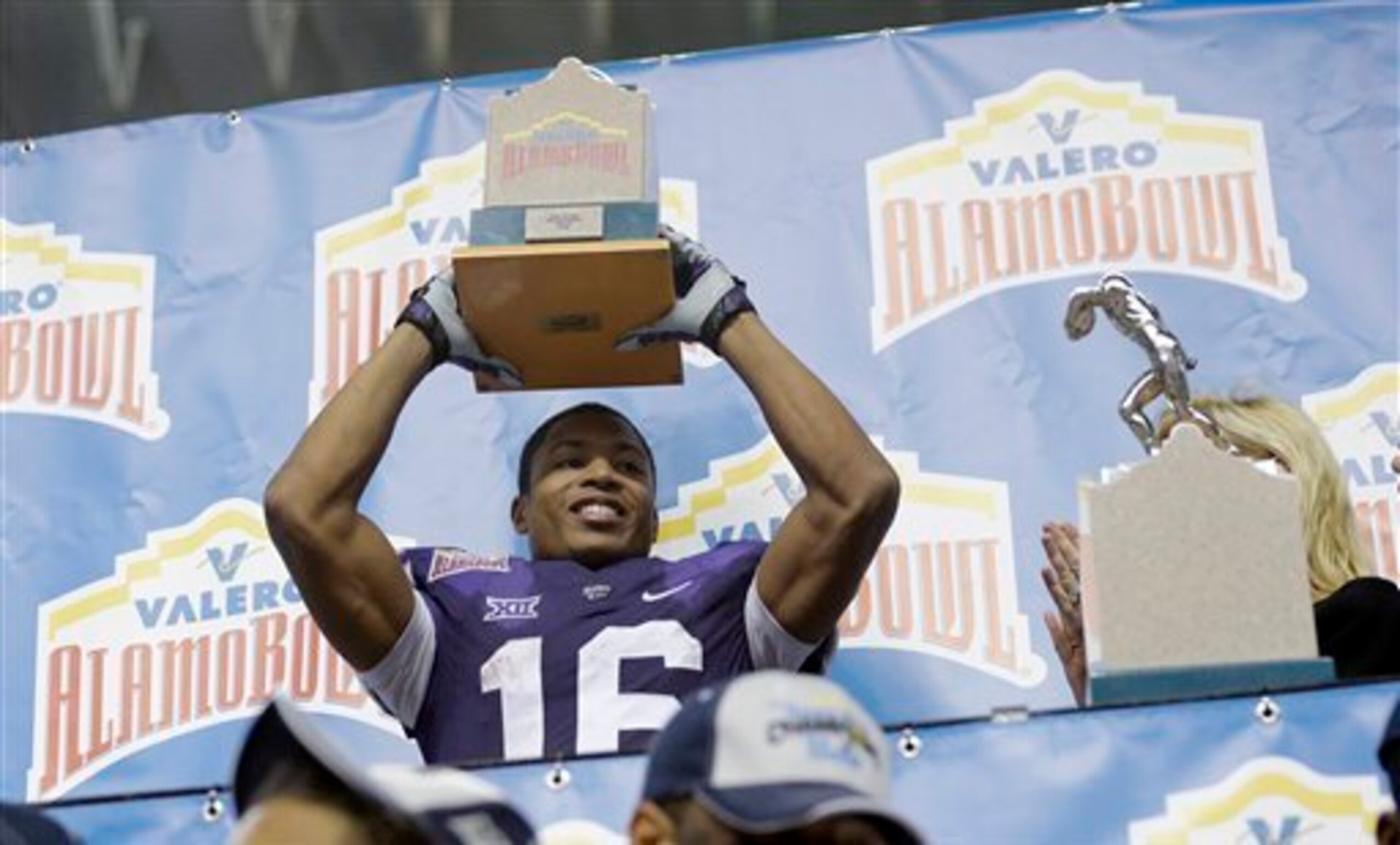
Carolina trades: 3rd-round (No. 89) and 4th-round (No. 124) picks
Kansas City trades: 3rd-round (No. 80) pick
In the Bleacher Report community mock draft, I was happy with the eventual haul the Panthers brought in, with one notable exception—a receiver never fell to the team.
All the picks are justifiable individually. The first round saw Ereck Flowers fall, and offensive tackle is a position of bigger need. The top 10 receivers were all off the board in Round 2, so Boise State running back Jay Ajayi is a better value pick. Yet more receivers were gone by the time the third-round pick came along, so I ended up simply taking the best player available at the time, defensive tackle Mike Bennett.
In the real draft, the Panthers won’t simply be stuck looking at the board as receiver after receiver goes past them. Had trades been allowed, I would have moved up in the third round ever so slightly and grabbed a receiver.
Just 10 picks earlier, the Kansas City Chiefs took Kansas State receiver Tyler Lockett, who I was really hoping would fall to the 89th pick and the Panthers. This trade would allow the Panthers to jump up and take Lockett for themselves, nabbing a speedy, intelligent receiver and return man for the long term. I’d also expect, in the real draft, that this could be a spot for Florida State’s Rashad Greene as well.
One way or another, the real Panthers wouldn’t have to sit on the clock and watch as all their targets slip past them. They can be proactive and grab the player they want.
Trade 6: Who Needs Rookies?
6 of 6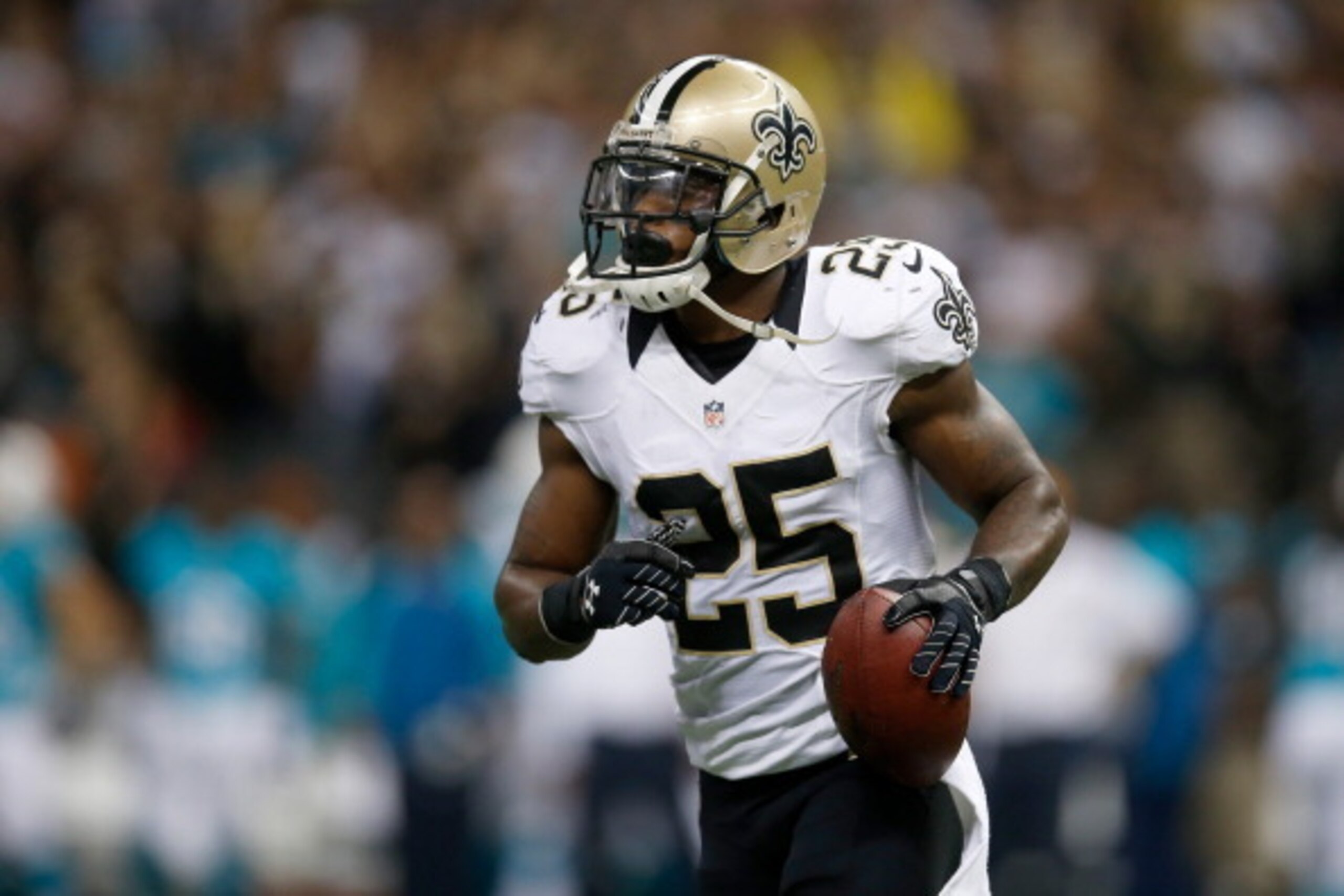
Carolina trades: 4th-round (No. 124) pick
New Orleans trades: SS Rafael Bush
Of course, there’s nothing that says the Panthers have to trade draft picks for draft picks. They could grab a veteran that a team may no longer need, planning to plug him into their own starting lineup.
The New Orleans Saints are still in salary-cap trouble. They’ve had a practical fire sale this past offseason, getting rid of Jimmy Graham, Ben Grubbs and Kenny Stills. They’re still only $3.9 million under the cap, according to OverTheCap.com, and have the fourth-worst projected cap space for 2016. That’s before signing this year’s draft class, as well, which OverTheCap projects to cost them $3.2 million thanks to multiple first-round selections. They still could use some more space.
Rafael Bush is a more than serviceable safety, with experience playing both in coverage and in the box. He started seven games for the Saints this past season but mostly has been a productive third safety for them behind Kenny Vacaro and Jairus Byrd.
He’s also slated to count $1.95 million against the cap this season—not an unreasonable number, but every penny helps the Saints' situation. That’s a lot for a third safety when you have no breathing room on your cap.
Bush could come in and at least compete with Roman Harper for the starting safety spot across from Tre Boston, and likely would win it outright. That’s more than a fourth-round pick would be likely to accomplish in year one. Bush could also be signed to a long-term deal, which the Saints can’t afford to offer him. It’s a potential win-win-win situation for both teams and the player in question.
Bryan Knowles is a Featured Columnist for Bleacher Report, covering the Carolina Panthers during the NFL Draft. Follow him @BryKno on twitter.
.jpg?w=2560 "Colts Football")
.jpg?w=2560)