Matching San Francisco 49ers' Defensive Needs with Top 3 Picks in 2015 NFL Draft
So after declaring why the San Francisco 49ers must select a wide receiver with their first pick in the 2015 NFL draft, why not turn right around and argue why the Niners must use each of their first three picks toward defensive needs?
Come again?
Seeming contradiction aside, that’s the beauty of breaking down the draft.
TOP NEWS
.jpg?w=2560 "Chiefs Giants Football")
Mahomes Told Teammate to Leave Meeting
.jpg?w=2560 "Titans Colts Football")
5 Teams Eyeing Jonathan Taylor
.jpg?w=2560 "Eagles Jaguars Football")
NFL investigating Eagles
All 32 teams—from the defending Super Bowl champion New England Patriots to the self-sabotaging and former contending 49ers—have several roster holes that they must address each season. No matter how good or how bad, the draft continually offers need-eliminating prospects at multiple positions that general managers can’t pass up.
And outside of receivers and running backs in this incoming class, defensive linemen, linebackers and, to a lesser extent, cornerbacks are in particularly ample supply.
Throw that all together, and matching the 49ers’ personnel deficiencies on defense with their top three picks becomes an amicable marriage.
The venerable Mel Kiper hit the nail on the head when he designated inside linebacker, defensive end and cornerback as three of the Niners’ biggest needs.
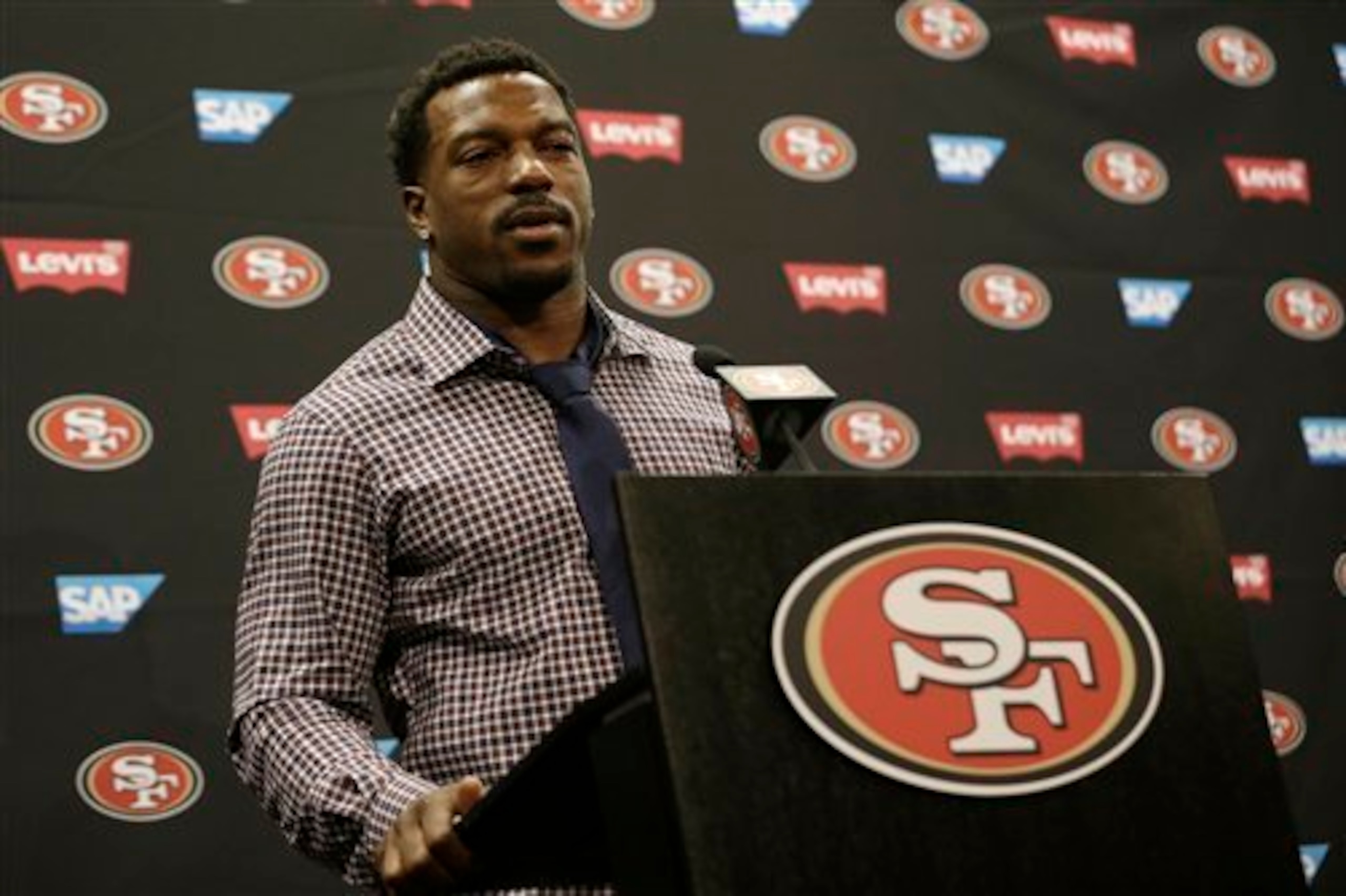
San Francisco lost Patrick Willis and Chris Borland to soul-crushing retirements and cut Ray McDonald due to numerous off-the-field transgressions. Justin Smith, meanwhile, has all but called it quits after a legendary 14-year career. And Perrish Cox and Chris Culliver, the team’s top two corners last season, signed lucrative deals elsewhere in free agency.
Now, the 49ers still boast a formidable front seven. Free-agent acquisition Darnell Dockett, rising third-year man Tank Carradine and an injury-free Glenn Dorsey and Ian Williams solidify the line. The return of a healthy NaVorro Bowman and re-signing of Michael Wilhoite help stabilize the inside linebacker corps as well.
The issue, of course, is depth—and the fact that you don’t remove a collection of Pro Bowlers and All-Pros and expect continued greatness.
The state of San Francisco’s cornerbacks is equally, if not more, worrisome.

Save for the return of former No. 1 cover man Tramaine Brock, this positional group is full of question marks. Last year’s No. 30 pick Jimmie Ward was a liability when healthy, fellow rookie Dontae Johnson faltered greatly down the stretch and Kenneth Acker and Keith Reaser didn’t log a single play in their first NFL season.
Furthermore, interceptionless veteran Chris Cook recorded just 48 snaps, while free-agent pickup Shareece Wright ranked 105th out of 108 corners graded by Pro Football Focus in 2014. Only two guys earned lower marks in coverage than Wright’s minus-16.4 as a member of the San Diego Chargers.
Put simply, the 49ers need a legitimate corner from the college ranks who can man the No. 2 or No. 3 spot in his first year at the next level.
With all that in mind, let’s take a look at one prospect in each round who will best fill a roster hole and provide optimal value for the red and gold.
Round 1 (No. 15 Overall): Marcus Peters, Cornerback, Washington
If he’s worried more about “winning with class” than actual on-field talent, Niners CEO Jed York may want to cover his eyes if this first pick comes to fruition.
Former Washington cornerback Marcus Peters is one of the most talented but troubled prospects in this 2015 draft.
The 6’0”, 197-pounder possesses a muscular frame and the athleticism needed for the NFL level. He earned above-average scores in cover skills and instincts/recognition, not to mention an exceptional grade in ball skills, from ESPN Insider. Here is an excerpt from those scouts’ evaluation:
"Displays strong overall awareness and recognition skills...Flashes above-average anticipation in man coverage. Has quick and active eyes in zone coverage deciphering route combinations...Possesses quick feet along with very good agility and change-of-direction skills...Natural playmaking instincts...Plays strong in contested situations...and shows good body control to high-point throws.
"
Rob Rang of NFL Draft Scout, per CBS Sports, noted that “Peters plays the receiver very well, turning back toward the ball as the wideout does and frequently knocking the ball away or intercepting it.” Rang compared him to Aqib Talib and said there’s no doubting the “cornerback’s length, aggression and ball skills.”
Lance Zierlein of NFL.com highlighted that Peters surrendered a mere 38.1 completion percentage and notched 24 pass breakups and eight interceptions for the Huskies between 2013 and 2014.
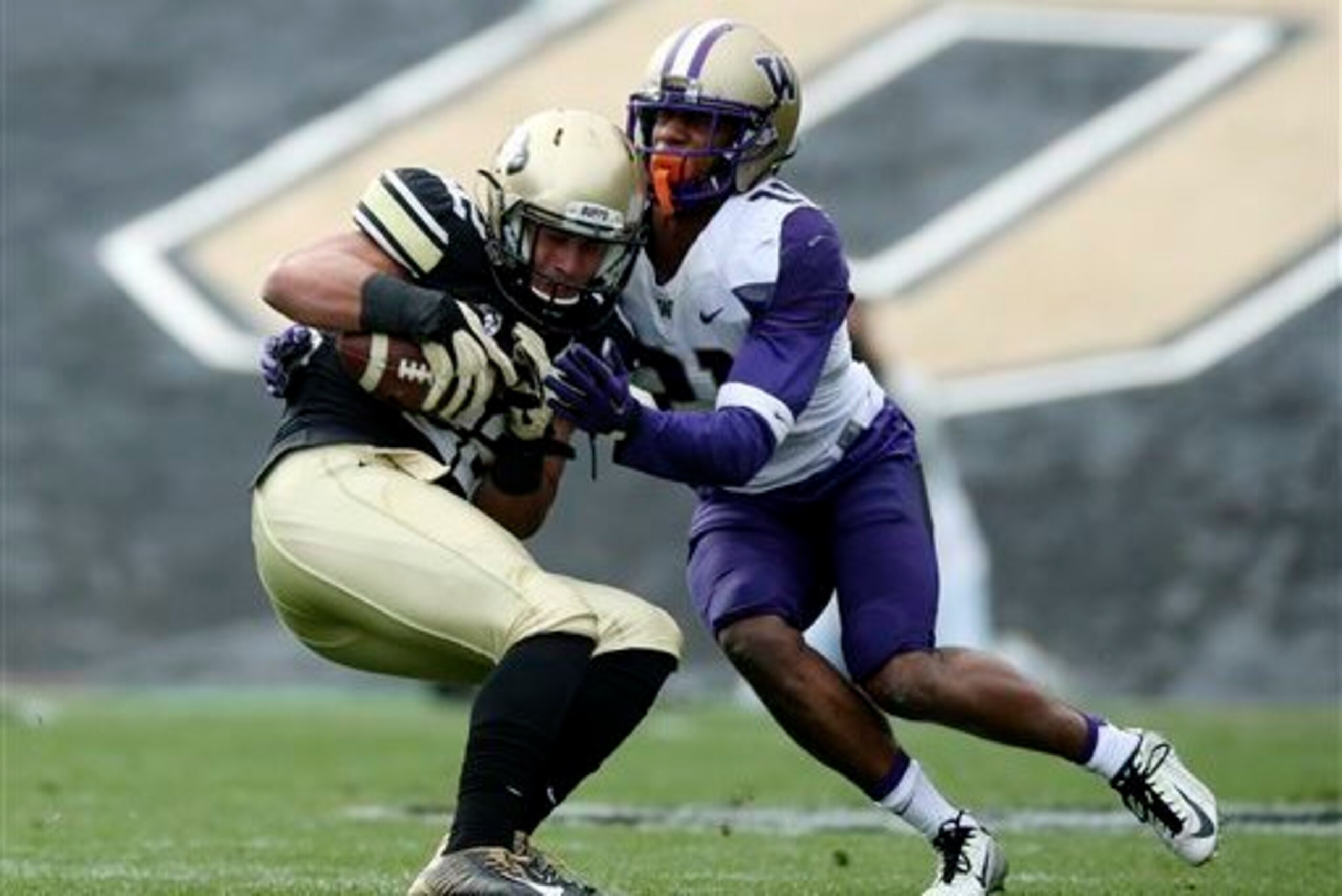
But Zierlein, along with Rang and ESPN Insider, acknowledged Peters’ extensive character concerns. The latter docked him with a marginal grade in intangibles and outlined his “laundry list of off-field incidents” in great detail. Zierlein, however, offered a more succinct breakdown: "Suspended for one game in 2014 by head coach Chris Petersen for a sideline tantrum that followed personal foul penalty. Was ultimately dismissed from team over multiple run-ins with coaching staff. ... Doesn’t take to coaching."
So why would the 49ers take a chance on such a highly skilled yet controversial prospect?
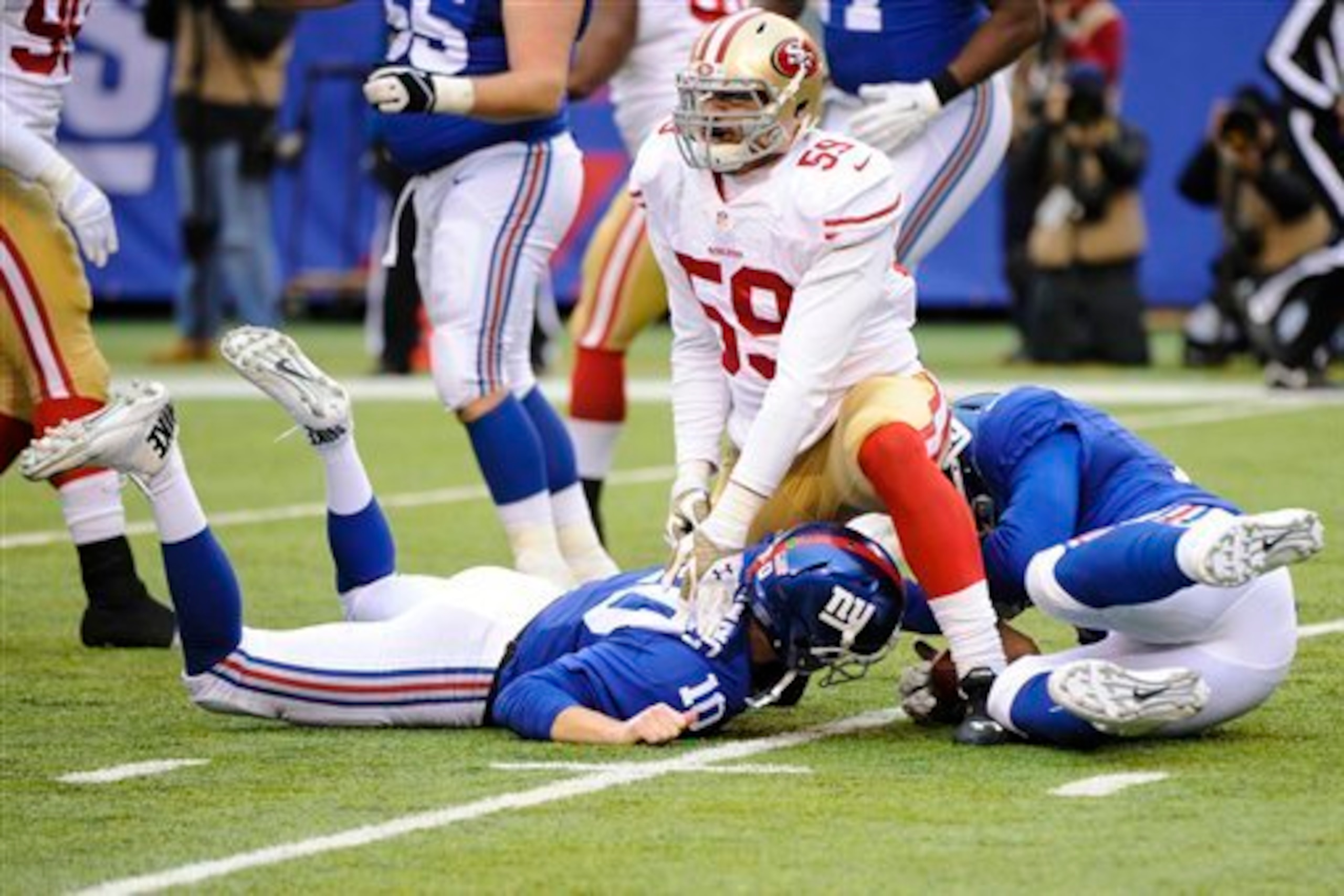
Because general manager Trent Baalke, despite what his boss would have the world believe, takes chances on these types of college players. Albeit in the fifth round, he did so just last year with rookie sensation Aaron Lynch—the outside linebacker who also scored marginally in intangibles.
We’ll rest easy if Baalke opts instead for a cornerback like Trae Waynes or Kevin Johnson in the first round. They both bring quality skill sets and strong character makeups.
But the 49ers’ need for a future shutdown corner and lower-depth-chart contributor this season is substantial enough to warrant the higher-ceiling Peters at No. 15.
Plus, it’s not like Bleacher Report’s own Matt Miller pegs him as the No. 6 player in the entire 2015 draft class or anything.
Round 2 (No. 46 Overall): Eric Kendricks, Inside Linebacker, UCLA
Certain prospects transcend visible limitations due to less tangible qualities like character, football IQ and instincts.
The 49ers, for their part, have had direct experience with such a player.
The now-retired Chris Borland received a below-average grade in the height-weight-speed category from ESPN Insider prior to the 2014 draft. The slow and short-armed 5’11” inside linebacker, however, also earned exceptional scores in instincts/recognition, intangibles and statistical production at Wisconsin.
All of that translated to Borland falling to San Francisco at No. 77 in the third round—oh, and a rookie year filled with a team-leading 107 tackles in just 14 games and a No. 4 positional ranking by Pro Football Focus.
Fast-forward to this year’s draft, and a similar player emerges.
Per ESPN Insider, Erik Kendricks of UCLA “lacks prototypical measurables for an ILB prospect.” The 6’0”, 239-pounder is “built more like a [weak-side linebacker]” and has “smaller-than-average arm length (32.5”),” according to those scouts.
Yet like Borland, he also earned exceptional marks in production, intangibles and instincts/recognition. The winner of the 2014 Dick Butkus Award and Ronnie Lott Trophy led the nation with 101 solo tackles and finished his college career as the NCAA leader with 308.
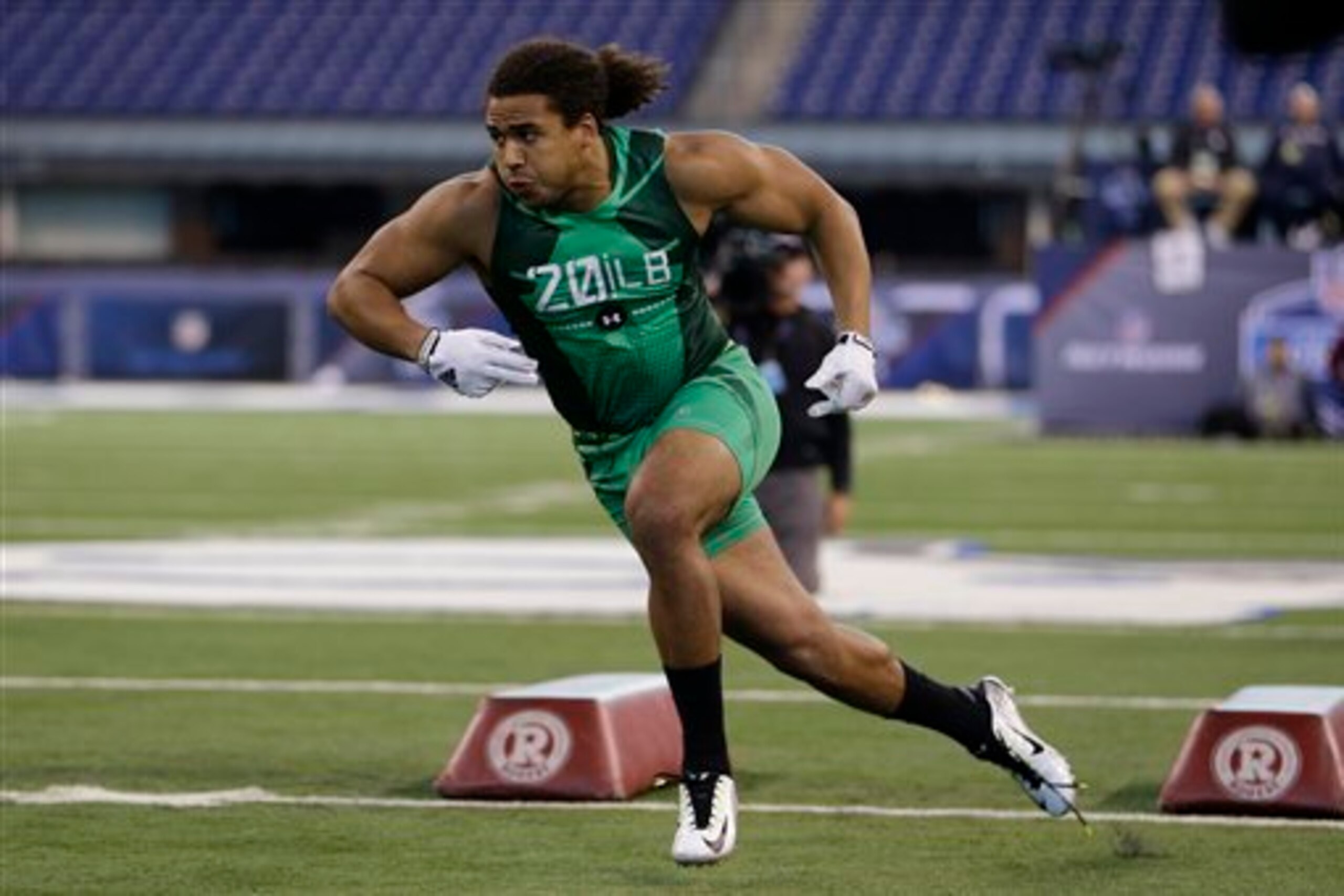
Zierlein of NFL.com summarizes his strengths in this excerpt:
"Confident with a downhill, attacking mindset. Good feet to slide, follow and burst to developing run plays. Can turn and chase sideline to sideline. Diagnoses quickly and attacks run fits while avoiding blockers. Is always around the play. One of the most productive tacklers in college football over the last three years. Outstanding at sinking hips and changing direction. Exhibits good play speed and is able to cover man-to-man in space. Good zone awareness and makes plays on the ball.
"
That tremendous ability in coverage is what makes Kendricks a superior prospect to Borland. Dane Brugler and Rob Rang of NFL Draft Scout, per CBS Sports, added this tidbit to what Zierlein and ESPN Insider described as exceptional third-down capabilities:
"Like big brother Mychal (Eagles), Eric is instinctive, aggressive and a more explosive hitter than his frame suggests. Closes quickly and with force. Light on his feet. Has good agility, flexibility and balance, especially as a pass rusher. Has the quickness and fluidity to be effective in coverage.
"
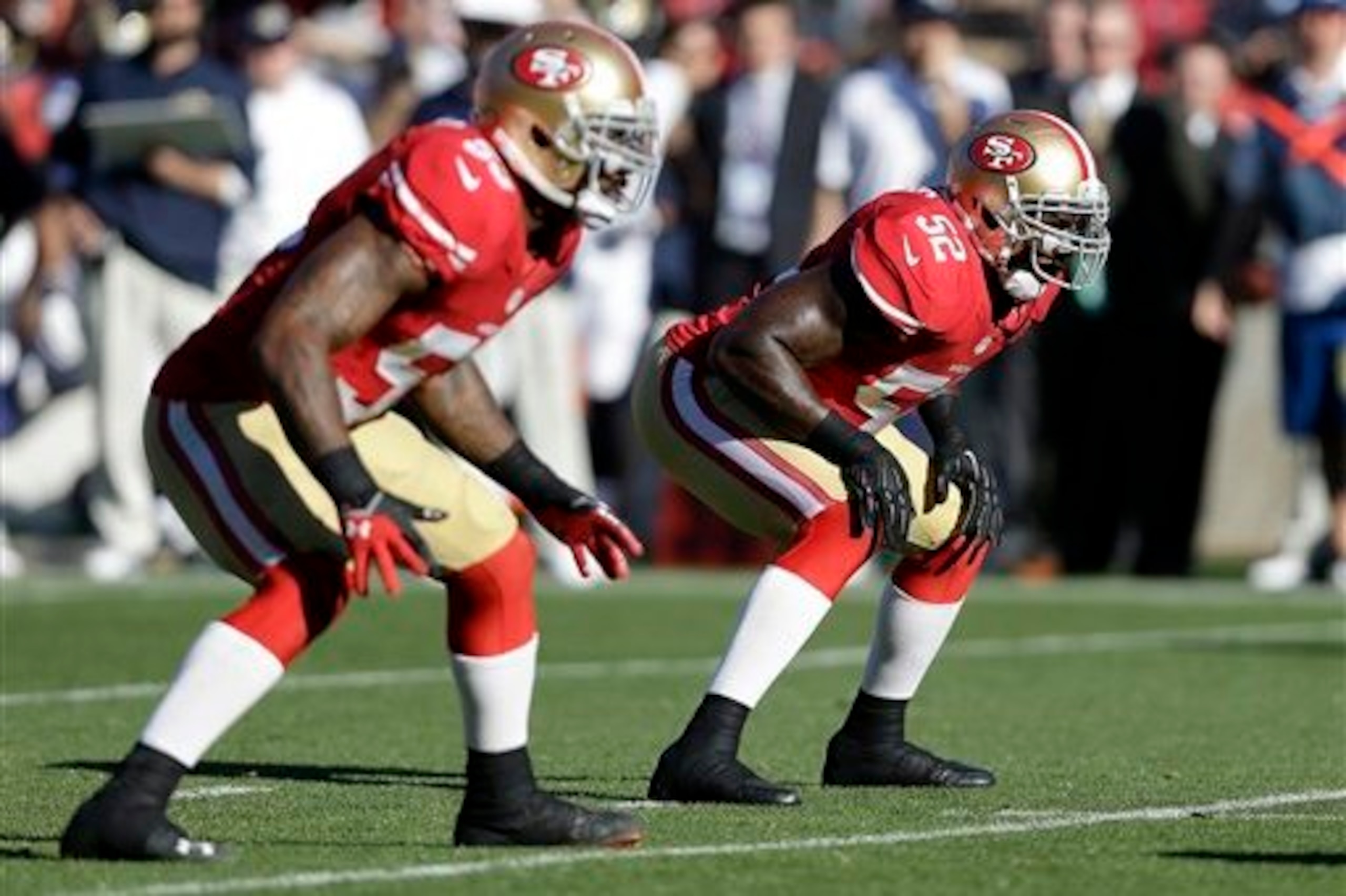
Most notably, Brugler and Rang compared him to Bobby Wagner, the outstanding middle linebacker for the Seattle Seahawks: "Too small for some schemes, but Kendricks' instincts, physicality and improved awareness in coverage make him a true three-down defender with the potential to earn Pro Bowl recognition in the right defense."
And that defense belongs to the 49ers.
The unit that consistently ranks in the upper echelon of the NFL would materialize as a great landing spot for Kendricks. Plug him next to Bowman and let the All-Pro and “mad scientist” defensive assistant Jason Tarver mold him into shape.
Seeing that both Rang and Brugler project him to the Miami Dolphins at No. 47 overall, the 49ers will find themselves in prime position one pick earlier.
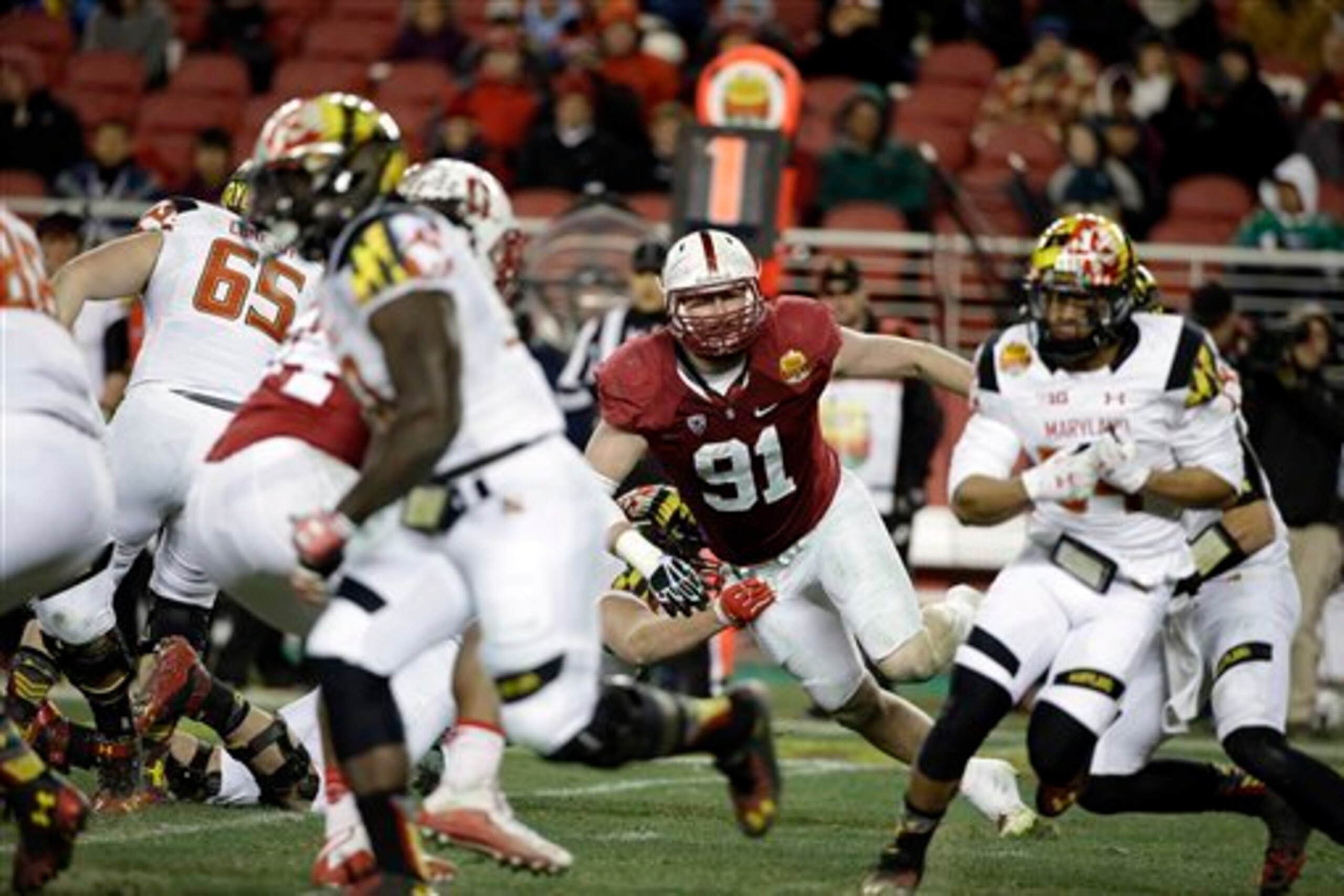
Round 3 (No. 79 Overall): Henry Anderson, Defensive End, Stanford
Perhaps the one and only benefit of Jim Harbaugh leaving town is that the 49ers can now select qualified prospects from The Farm.
The Niners former head coach seemed averse to Stanford players. San Francisco didn’t select a single one from Harbaugh’s coaching alma mater with any of its 40 draft picks from 2011 to 2014.
Past aversions aside, Henry Anderson is yet another solid asset coming out of Palo Alto. The 6’6”, 294-pounder totaled seven pass breakups, 17 sacks and 32 tackles for loss over his last three seasons. He earned first-team All-Pac-12 in 2014 after leading the Cardinal with 8.5 sacks and 13.5 tackles for loss.
Scouts at ESPN Insider awarded Anderson with above-average marks in production, intangibles, pass-rush skills, run defense and instincts/motor. They deemed him “big, long and strong enough to play 3-4 DE,” an alignment that the 49ers also employ. Rang and Zierlein agreed with the projection.
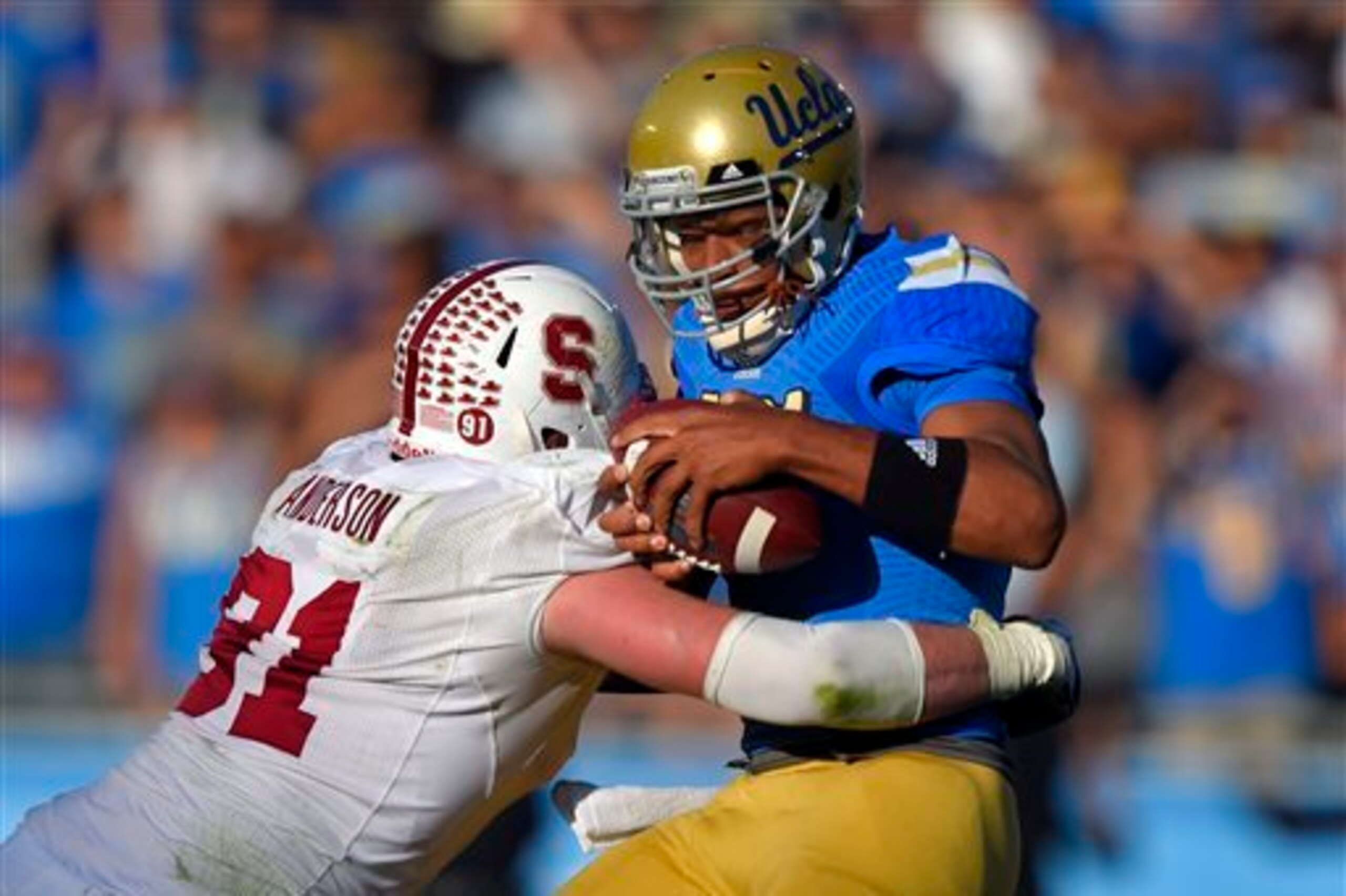
Rang also praised his “functional strength,” while Brugler offered that Anderson “is built like a tree with good length and powerful hands to extend and meet blockers, shredding bodies and disrupting the pocket.”
Zierlein expanded on his high football IQ, leadership qualities and versatility along the front line but also added the following about the third-round prospect:
"Data driven teams will be intrigued by Anderson’s stuffs, impact tackles and total pressures, but the tape doesn’t validate his potential to produce these numbers on the pro level. The body type screams 3-4 defensive end if he can bulk up and add power, but he might lack the balance and toughness to make it there. Anderson might just be a “tweener” without a clear NFL position fit.
"
Now, the “tweener” designation can translate in both good ways and bad. Such players can either become effective hybrids or not fit into a system.
But seeing that 49ers new head coach Jim Tomsula excels in developing defensive linemen, we’ll go with the former. He’ll extract the most out of Anderson, maximizing his strengths and coalescing them within the Niners system.
And while we’re on the topic of future development, it’s worth noting that no front-line defender the 49ers select will earn extensive playing time this year. Unless Baalke moves up into the top three and drafts Leonard Williams of USC, any guy he takes will serve as a backup to Dockett, Carradine and Dorsey.
The same is true if the Niners draft Oregon’s Arik Armstead at No. 15, as Mel Kiper and Todd McShay of ESPN, Pete Prisco of CBS Sports and Daniel Jeremiah, Charles Davis, Bucky Brooks and Zierlein of NFL.com all predict.
The point is that Armstead, Anderson or any other lineman will sit more than he’ll play in 2015. That’s why Baalke must select a cornerback, inside linebacker and 3-4 defensive end, in that exact order, in the first three rounds.
Knowing his track record for defying outside projections, it’s doubtful that Baalke will abide by such a strategy.
But like the Grinch and his inability to steal Christmas, the Niners often-surly general manager won’t stop us from making our NFL Christmas, err, NFL draft predictions.
All team and player statistics courtesy of Pro-Football-Reference.com and Sports-Reference.com unless otherwise noted. Advanced metrics provided by Pro Football Focus.
Joe Levitt is a featured columnist for Bleacher Report, waxing academic, colloquial and statistical eloquence on the San Francisco 49ers. Follow him on Twitter @jlevitt16.
.jpg?w=2560 "Colts Football")
.jpg?w=2560 "Bills Rams Football")