


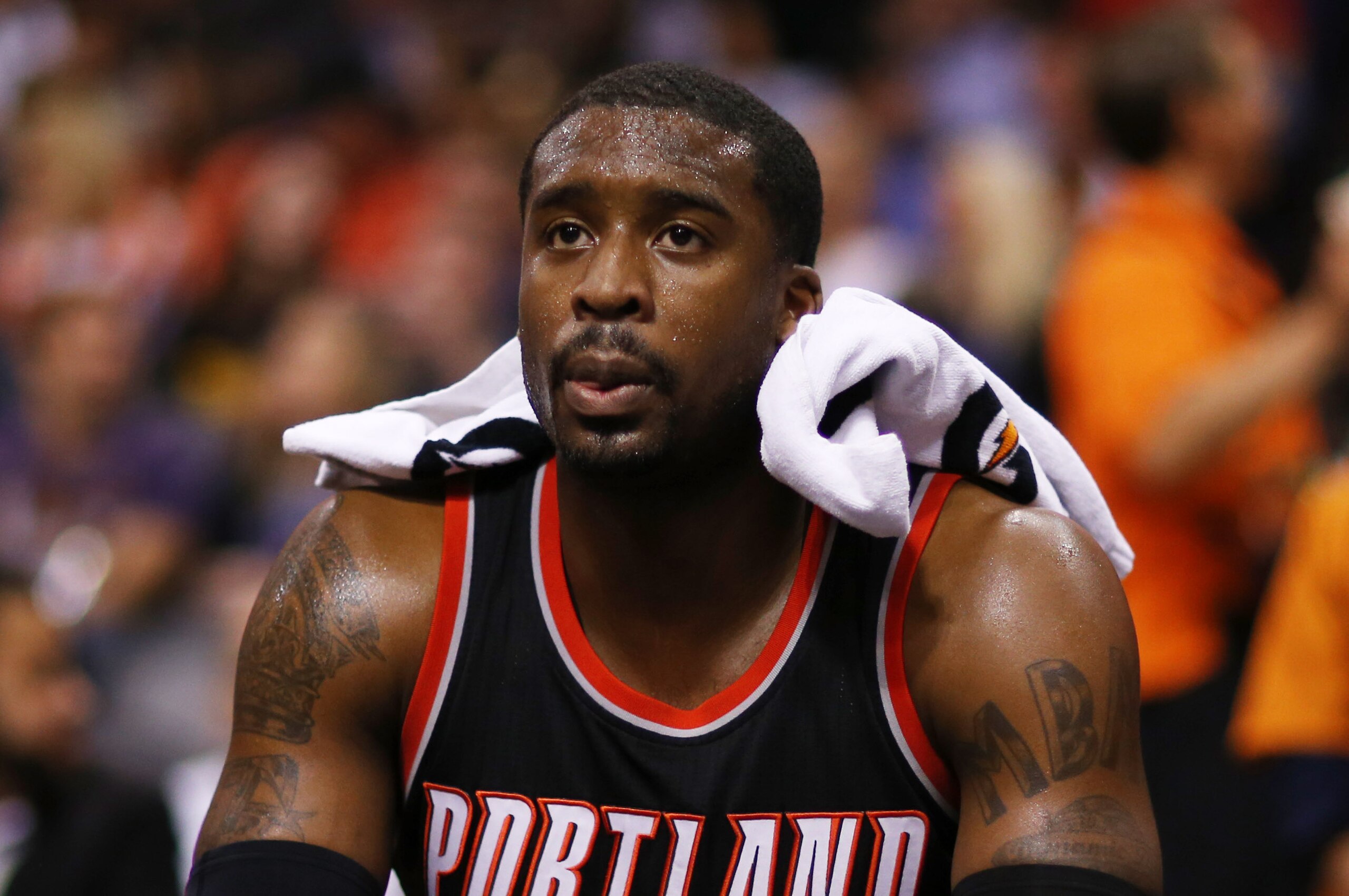
The Portland Trail Blazers and their loyal supporters know this feeling all too well.
Rip City has once again been ripped apart by injury. But there's still a way for this tragedy to turn triumphant with the right blend of patience, fortune and some ongoing player development.
TOP NEWS

Brown with an all-time summary of relationship with Tatum

Heat, Giannis were down by 20+ in each of their 3 losses
Worst NBA Predictions 🫣
Before that bridge can be crossed, though, the Blazers have to find their way out of this familiar river of misery.
Injury Problems Dash Championship Hopes
| Before Matthews' injury | 41-19 | 104.5 (10th) | 99.3 (3rd) | Plus-5.2 (5th) |
| After Matthews' injury | 10-12 | 108.4 (T-6th) | 107.0 (24th) | Plus-1.4 (15th) |
LaMarcus Aldridge tried snapping this sad chain before it wrapped itself around the organization.
The All-Star forward made it his mission to combat the trend that took down former and would-be franchise faces like Bill Walton, Sam Bowie, Greg Oden and Brandon Roy. On the heels of an uncertain venture into unrestricted free agency, Aldridge opted to delay surgery on a torn ligament in his left thumb.
It was an extraordinarily courageous call, one potentially powerful enough to reverse the Blazers' curse.
But it wasn't enough to keep the injury bug at bay. That vengeful beast roared back into the picture, first lashing out at three-and-D swingman/emotional leader Wesley Matthews (torn Achilles), then biting forward Dorell Wright (fractured hand) and finally attacking Matthews' replacement Arron Afflalo (shoulder strain).
The Afflalo injury seemed particularly cruel. He arrived from the Denver Nuggets at the trade deadline as a possible cure to the Blazers' bench woes, then immediately became Portland's emergency plan when Matthews went down.
However, losing Matthews was the real gut punch. The Blazers' championship credentials crumbled as soon as he went down on March 5.
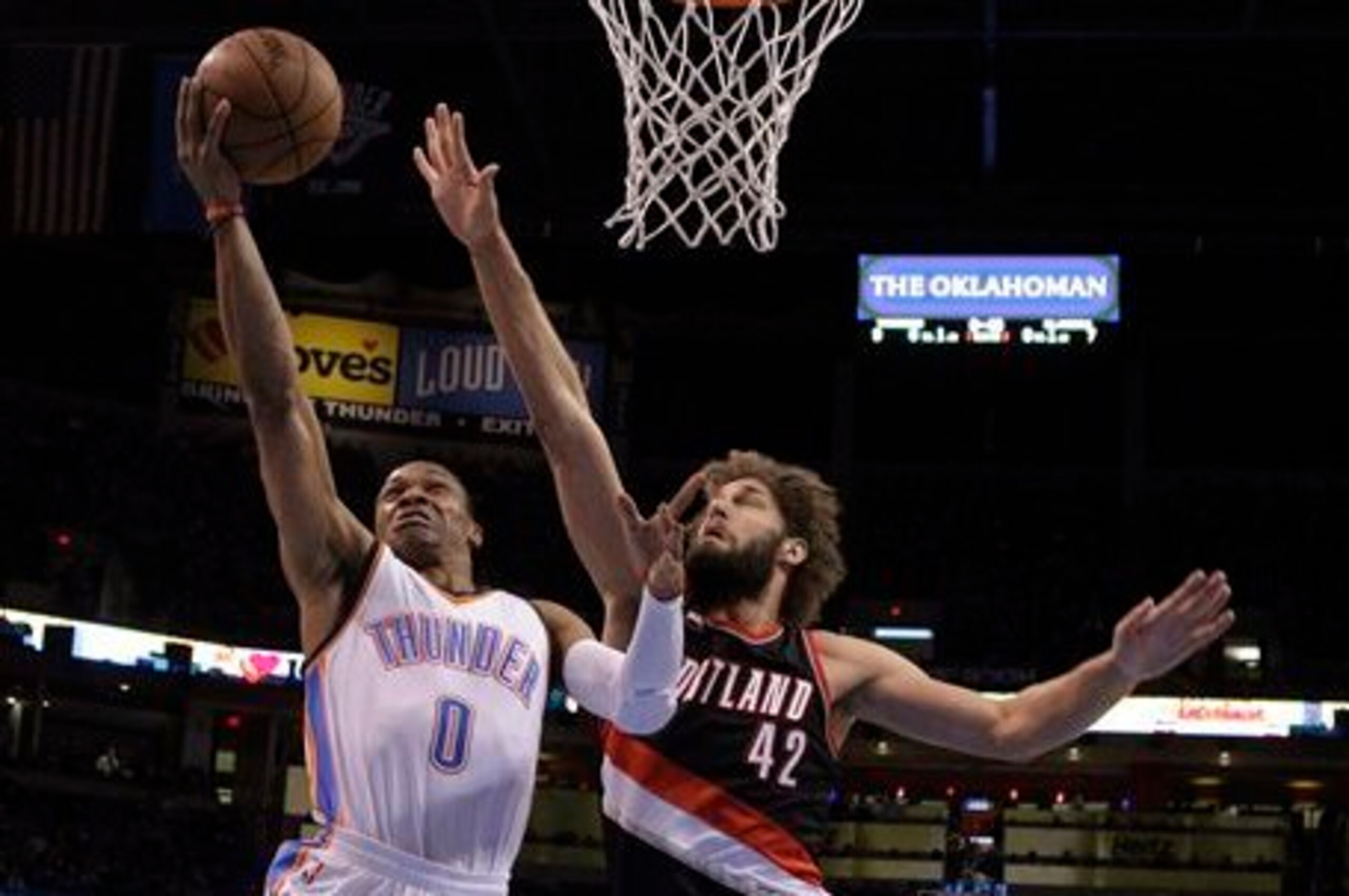
The overall damage is even worse than it looks. The Blazers lost a lot more than 3.8 points per 100 possessions.
Portland's record sans Matthews speaks for itself. It's not about the numbers that Portland lost, but where those declines originated. The Blazers went from fielding an elite defense to trying to cover for one of the NBA's worst.
Since history speaks to the importance of two-way execution, Portland's splintered defense appears as nothing short of a fatal flaw.
In April alone, the Blazers allowed: 41 points and 17 assists to Chris Paul; 32 points to Brook Lopez; 45 points and 10 assists to Stephen Curry; 39 points to Trevor Booker (!); and 36 points, 11 boards and seven dimes to Russell Westbrook.
Defense is a requirement for postseason success, and Portland hasn't found even a respectable level of it without Matthews.
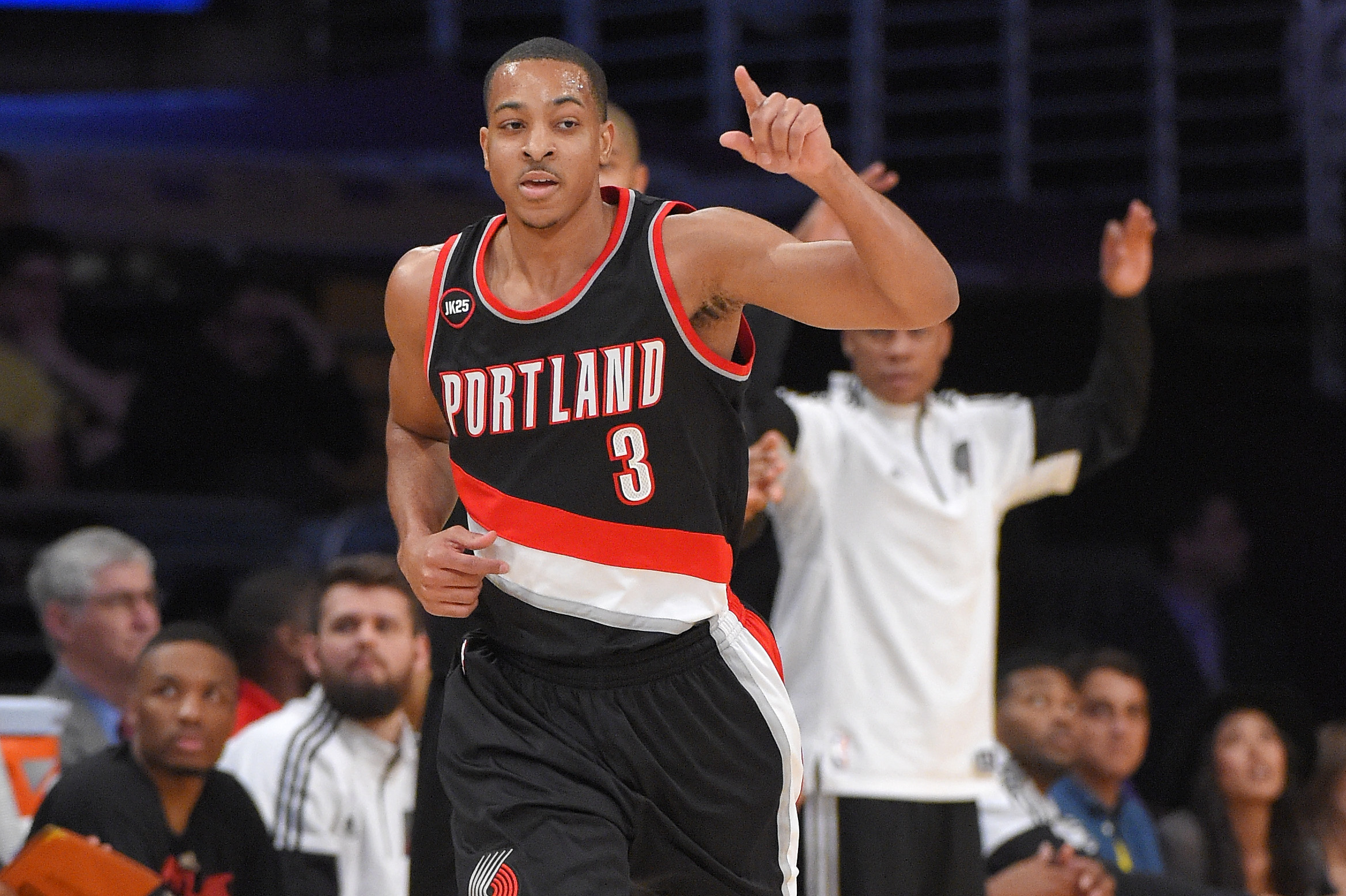
The present looks appropriately cloudy (this is Portland, after all).
But this late-season slide could pave an unlikely road to redemption.
Finding Missing Pieces
The Blazers are quietly building a bench before our eyes, potentially solving their biggest problem, one that existed long before these injury issues.
At the center of this construction project is C.J. McCollum, a slippery second-year combo guard who's been enjoying a ceiling-shattering stretch. Playing a prominent role for the first time in his career, he's starting to showcase the explosive offensive arsenal that convinced Portland to pluck him out of Lehigh University with the 10th overall pick in 2013.
Prior to mid-March, he'd neither made an NBA start nor enjoyed a 20-point game. He's since had three of each. His last 15 outings overall have been unlike anything Blazers fans have seen from the crafty 6'4" scorer.
Part of this spike comes from external forces. Had injuries not forced Matthews and Afflalo out of McCollum's way, the sophomore might still be waiting for coach Terry Stotts to call his name.
But some of this is internal, too.
McCollum is a better player now than he was before, and the evidence of that growth is seen in more than his surging shooting percentages. He's striking the balance between leading Portland's second team and playing a supporting role alongside the starters.
"McCollum says he is learning to pick his spots when playing with [Damian] Lillard, Aldridge and [Nicolas] Batum, deferring to the team's stars," wrote Jason Quick of The Oregonian. "And when he is in with more second-unit players, he becomes more aggressive."
The numbers tell the same story.
With Damian Lillard on the floor this season, McCollum averaged 18.1 points, 15.1 field-goal attempts and 2.3 assists per 100 possessions. When the All-Star point guard sat, McCollum's stats jumped to 24.4, 21.4 and 4.0, respectively.
When surrounded by Portland's premier players, he thrived as an offensive safety valve. He shot 40.7 percent on catch-and-shoot threes, which meant that teammates could always look to him and defenders had to respect him.
When he's had to create his own shot, he's done that, too. He converted 51.1 percent of his field goals on drives to the basket—the same percentage as Lillard.
More importantly, McCollum has adjusted to the quickness of this league. When the ball hits his hands, it doesn't stick there for long.
"Early in my career, I'd take too many dribbles," he told Grantland's Zach Lowe. "I wouldn’t make a decisive choice. That's the biggest thing for me: When you see a closeout, it's shoot, drive or pass—right away."
The Blazers have needed an off-the-dribble creator on their reserve unit for years. They might have finally found one in McCollum, and he isn't the only up-and-comer breathing new life into this bench.
Meyers Leonard has continued increasing the value of his growing stock. The former No. 11 pick has hinted at a blindingly bright future thanks to a newfound three-point stroke (47-of-112, 42.0 percent) and the stone wall he's built around the basket (42.3 opponent field-goal percentage at the rim).
"Leonard has finally stopped being a punching bag and started to fulfill his immense potential," wrote Joe Freeman of The Oregonian. "His development from a naive 20-year-old rookie has taken a significant turn this season."
Portland landed a productive placeholder in Chris Kaman last summer. But Leonard's continued climb (11.7 points and 8.0 rebounds over his last six games) suggests the Blazers might have a long-term solution on their second-team frontcourt.
With McCollum and Leonard in tow, Portland might be transforming its biggest weakness into a strength.
Dream Ending To This Nightmare?
This season is already in the process of unraveling. A favorable first-round draw with the similarly struggling Memphis Grizzlies might delay Portland's playoff demise, but both clubs are probably playing for the right to be the Golden State Warriors' second postseason victim.
Having McCollum and Leonard around isn't going to change that, but the pair could play a significant part in getting Portland better prepared for its next playoff run.
The Blazers have some work to do first. They can't lose Aldridge, Matthews or Robin Lopez to unrestricted free agency. Ideally, they'd still have enough funds to cover Afflalo ($7.75 million player option), Kaman ($5 million team option) and Steve Blake ($2.1 million player option), but the key is keeping this elite starting lineup together.
It's the same one that has dominated the past few seasons despite lacking the security of a stable reserve unit (Portland ranked 27th in bench scoring this year and finished 30th in each of the previous two seasons, per HoopsStats.com).
Contending now is always preferable to contending later, since no one knows what the future holds. But that option is officially off the table—and may not have ever been there with Portland's bench problems.
If the Blazers can retain their key players and keep bringing their prospects along, they might emerge from this nightmare even stronger than they entered it.
Unless otherwise noted, statistics used courtesy of Basketball-Reference.com and NBA.com. Salary information obtained via HoopsHype.com.



.jpg?w=2560 "5 Teams Eyeing Jonathan Taylor")
.jpg?w=2560 "Mahomes Told Teammate to Leave Meeting")



.jpg?w=2560 "NFL investigating Eagles")
.jpg?w=2560 "Jonathan Taylor Landing Spots 📍")