Do High-Tempo Offenses Equal More Wins in College Football?
Football is a game of advantages. It doesn't matter if you're a college football blue blood like Alabama or a smaller program trying to win at the Division I level like Western Kentucky. No one just lines up and plays. And if they tell you that, they're lying. If you believe it, you're gullible.
Everyone does something to try to get ahead.
One of the more common advantages a team can employ is running tempo on offense. The core purpose of tempo is to stress the defense to the point where it can't react quick enough or well enough to make a stop. Along those lines, many teams have stopped huddling to keep defenses on their toes. Arizona coach Rich Rodriguez called huddling "the biggest waste of time in football" in 2013, per Tom Fornelli of CBSSports.com.
TOP NEWS

Unranked CFB teams cause chaos in Week 8

More top teams upset and more takeaways from CFB Week 8

Arch Outduels Chambliss 😈
Of course, tempo and the no-huddle offense are no longer gimmicks used by teams smaller and less talented. Just about everyone in college football runs tempo at some point or another.
And the teams that run the most plays aren't always the ones you think; they don't have to be of the hurry-up, no-huddle variety. Michigan State, for example, actually ran two plays more per game than Oregon in 2014 (76.5 to 74.5) and roughly four plays more per game than Auburn.
Idaho—Idaho—ran about 80 plays per game.
There are variables that play into that, like time of possession and defensive efficiency, but those are some interesting raw stats for sure.
But do more plays actually help a team win more games? The numbers might make coaches like Arkansas' Bret Bielema, an outspoken critic of hurry-up offenses, smile.
The First Group
Below is a table of the fastest 20 offenses in college football based on plays run per game. (For what it's worth, Buffalo ran 73.9 plays per game, the median for FBS schools.) For context, each team's yards per play, number of explosive plays and points per game were listed as well.
| Baylor (11-2) | 87.5 | 6.64 | 48.4 | 19.5 |
| Washington State (3-9) | 84.5 | 6.12 | 31.8 | 20.7 |
| West Virginia (7-6) | 84.4 | 5.92 | 33.5 | 17.3 |
| Colorado (2-10) | 83 | 5.29 | 28.5 | 14.7 |
| East Carolina (8-5) | 82.3 | 6.48 | 35.8 | 21.1 |
| Arizona (10-4) | 81.3 | 5.70 | 34.5 | 15.6 |
| Cal (5-7) | 81.3 | 6.09 | 38.3 | 17.3 |
| BYU (8-5) | 80.8 | 5.70 | 37.1 | 16.1 |
| Idaho (1-10) | 80.1 | 5.21 | 25.0 | 15.4 |
| TCU (12-1) | 79.9 | 6.68 | 46.5 | 19 |
| Tulsa (2-10) | 79.3 | 5.17 | 24.7 | 14.1 |
| Bowling Green (8-6) | 78.8 | 5.50 | 30.0 | 14.7 |
| Arkansas State (7-6) | 78.8 | 6.05 | 36.7 | 17 |
| UAB (6-6) | 78.4 | 5.51 | 33.2 | 13.7 |
| Northwestern (5-7) | 78.4 | 4.50 | 23.0 | 12.3 |
| Fresno State (6-8) | 78.3 | 5.19 | 26.5 | 14.5 |
| Memphis (10-3) | 77.8 | 5.49 | 36.2 | 15.2 |
| North Carolina (6-7) | 77.3 | 5.56 | 33.2 | 16 |
| Air Force (10-3) | 77.1 | 5.43 | 31.5 | 12.2 |
| Mississippi State (10-3) | 77.0 | 6.67 | 36.9 | 18.2 |
There are some usual suspects in the chart, like Arizona, Baylor, Washington State and West Virginia. However, teams you wouldn't expect, like Memphis and Northwestern, made the cut as well.
(As an interesting note, none of the four playoff teams from last season ranked among the top 20 teams in plays per game.)
Why is that? From a raw data standpoint, the gap between No. 1 and No. 20 in terms of plays per game is big—about 10 per game. When it comes to running tempo, there are teams from practically every walk of life.
TCU, which could very well have been a playoff team, ran nearly 80 plays per game because it could with a ton of success. Idaho, whose lowly single win came against New Mexico State, likely had to play catch-up against everyone. Sure enough, the Vandals were awful on defense, giving up 6.93 yards per play and 37.3 points per game.
As mentioned above, running a lot of plays per game not only puts stress on the opposing defense, it puts stress on your own defense. Not every defense is equipped to handle that. This is when offensive efficiency is important.
It's no surprise to see Baylor put up gaudy stats and have success doing it, but teams like Tulsa, Northwestern and the like also ran a lot of plays without nearly the same level of success.
Tulsa had one of the most ineffective offenses in college football—behind Florida and Michigan in yards per play—and lacked the explosiveness (plays of 10 or more yards) you saw from teams like East Carolina and Washington State.
In other words, teams like Tulsa had a lot of wasted plays. Again, playing from behind probably had something, if not a lot, to do with that.
Granted, one of the great things about running more plays per game is that you can move on from a bad play quickly. Psychologically, this can be good for players, as Baylor coach Art Briles told Spencer Hall of SB Nation in a 2013 interview.
"The great thing about young people is that they have short memories," Briles told Hall. "They're living in the now, the moment."
Like everything else, though, there are limits to that. There's throwing away a bad play and moving on, and then there's having difficulty moving the ball.
The Next Group
Here are the next 20 offenses ranked by plays per game. As you can see, the number of plays between the 21st team and the 40th team is much tighter and closer to the national average:
| Team (Record) | Off. Plays Per Game | Off. Yards Per Play | Points Per Game | Explosive Plays (10+ Yards) Per Game |
| New Mexico State ( 2-10) | 76.8 | 5.48 | 24.5 | 13.3 |
| Texas State (7-5) | 76.7 | 6.06 | 33.8 | 16.3 |
| Northern Illinois (11-3) | 76.6 | 5.76 | 31.5 | 15.7 |
| Michigan State (11-2) | 76.5 | 6.55 | 43.0 | 16.8 |
| Hawaii (4-9) | 76.4 | 4.77 | 20.9 | 13.1 |
| UCLA (10-3) | 76.3 | 6.13 | 33.5 | 16.2 |
| Clemson (10-3) | 76.2 | 5.36 | 30.8 | 13.4 |
| Texas Tech (4-8) | 76.2 | 6.62 | 30.5 | 18.6 |
| Iowa State (2-10) | 76 | 4.90 | 23.2 | 14.3 |
| Western Kentucky (8-5) | 75.8 | 7.05 | 44.4 | 19.5 |
| Boise State 12-2) | 75.7 | 6.53 | 39.7 | 17.6 |
| USC (9-4) | 75.7 | 6.04 | 35.8 | 17.3 |
| Tennessee (7-6) | 75.2 | 4.93 | 28.9 | 14.1 |
| San Jose State (3-9) | 75.3 | 5.24 | 19.3 | 13.3 |
| Arizona State (10-3) | 75 | 5.90 | 36.9 | 16.8 |
| Toledo (9-4) | 74.8 | 6.55 | 36.6 | 16 |
| Oregon (13-2) | 74.5 | 7.34 | 45.4 | 19.3 |
| Akron (5-7) | 74.3 | 5.03 | 22.6 | 14.7 |
| Louisiana-Monroe (4-8) | 74.3 | 4.90 | 20.1 | 10.8 |
| Nevada (7-6) | 74.3 | 5.35 | 29.2 | 14 |
In all, the gap from top to bottom is about 2.5 plays per game.
Here's where things get interesting. The primary question is whether running tempo increases your chances of winning.
"I just read a study that said players in the no-huddle, hurry-up offense play the equivalent of five more games than those that don’t," Bielema recently told Matt Hayes of the Sporting News. "That’s an incredible number."
More opportunities don't automatically mean more chances to win. In fact, based on raw numbers, the answer is actually the opposite. You have a better chance of winning if you run fewer than 77 plays per game.
Averaging the numbers of the two tables together, teams that ran between 76.8 and 74.3 plays per game actually won roughly a half-game more per season than teams that ran at least 77 plays per game. Figure in rounding—there are technically no "half wins"—and one game could mean the difference between bowl eligibility and staying home for the holidays. It could mean the difference between playing for a conference championship or not.
Generally, the teams in the latter chart were a touch more efficient on offense and averaged roughly the same number of points per game. The biggest difference was in the number of explosive plays per game. As you'd expect, the teams in the first chart averaged more.
| Teams | Record (rounded) | Plays Per Game | Yards Per Play | Points Per Game | Explosive Plays Per Game |
| No. 1-20 | 6.9 wins, 5.9 losses | 80.3 | 5.75 | 33.6 | 17.7 |
| No. 21-40 | 7.4 wins, 5.3 losses | 75.6 | 5.82 | 33 | 15.6 |
There are, of course, multiple variables at play that have to be taken into consideration. If you have an awful defense, like Idaho or Tulsa, then it might not matter if you run 80 plays or 60.
There are also factors that play into a team's offensive strength that can't be charted as easily, if at all, like strength of schedule, injuries, bad officiating calls, etc.
Take Clemson and quarterback Deshaun Watson. The Tigers offense looked like a completely different group when Watson was behind center instead of Cole Stoudt. As a freshman, Watson played in eight games with five starts. Without a doubt, Clemson's offense would have been more prolific if Watson had been healthy all season and started every game.
Going Slow Doesn't Win the Race
What about teams that grind out a game? Do they have a better chance of winning?
Put it this way: Going slow doesn't help.
Of the 20 slowest offensive teams in terms of plays per game—New Mexico was the slowest at 61.3 plays—only six ended the season with a winning record. Compare that to 11 teams in the top 20 table and 13 in the next 20. Four teams among the slowest 20 offenses—Minnesota, Navy, Rutgers and Stanford—hit a ceiling of eight wins.
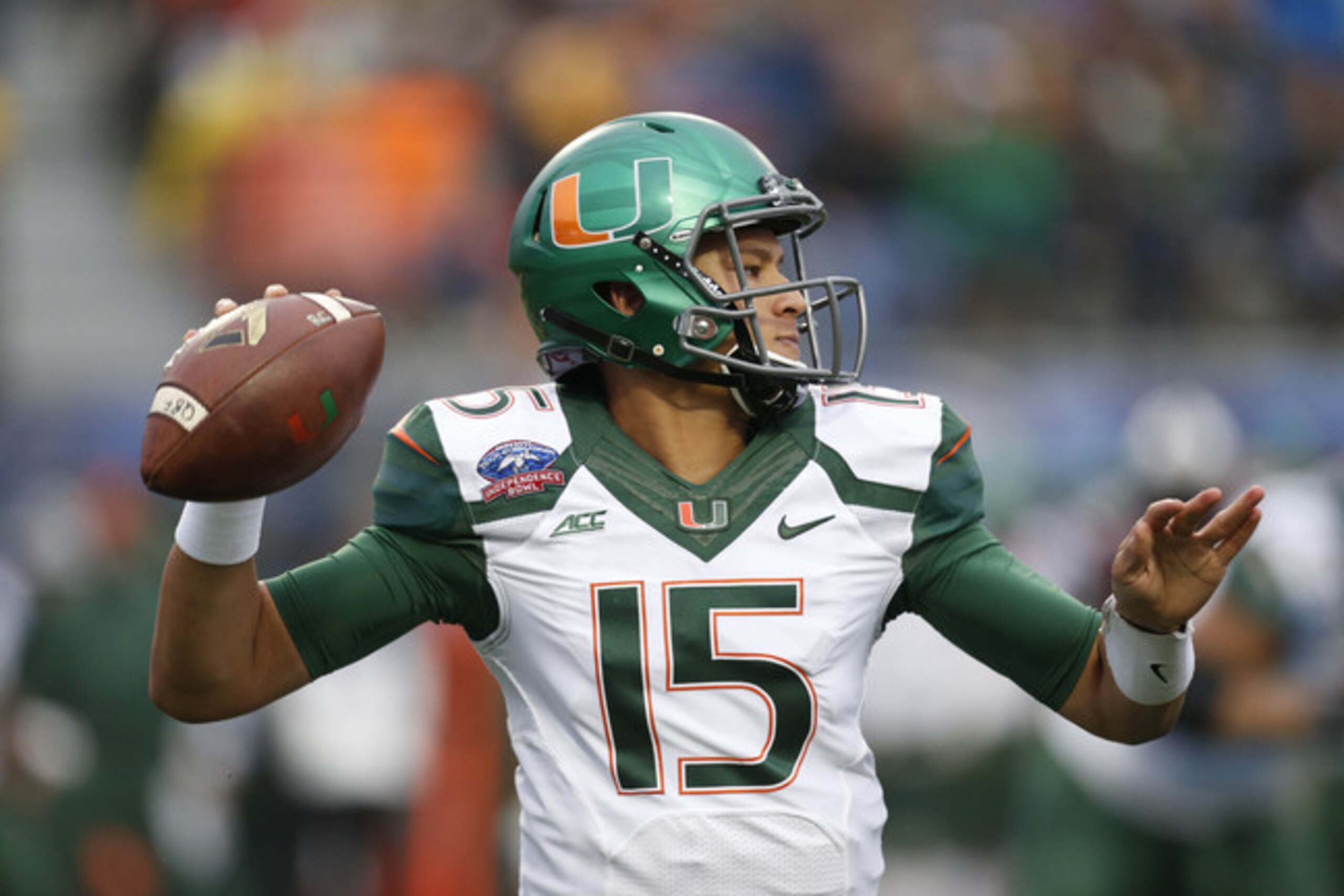
The offensive numbers aren't much better. Miami (Florida) averaged 6.68 yards per play—tied with TCU for 11th in the country—but was the best in that category at 64.4 plays per game. Navy (6.36), Rutgers (5.99) and Stanford (5.89) had success to a lesser extent. Generally, though, slower offenses were less efficient and designed to shorten the game by grinding out victories.
And, generally, that didn't work.
There are success stories with offenses that run tempo all the time, but they're also few and far between. Teams like Baylor and TCU have top-notch athletes and defenses that do well enough to prevent teams from beating them at their own game.
Not everyone else can match that type of effectiveness on the recruiting trail or on the field. Simply running tempo or averaging more plays per game doesn't help in the win column. If anything, it hinders your chances, even if by only a little.
Ben Kercheval is a lead writer for college football. All stats courtesy of CFBStats.com.

.jpg?w=2560 "Mahomes Told Teammate to Leave Meeting")
.jpg?w=2560 "5 Teams Eyeing Jonathan Taylor")


.jpg?w=2560 "NFL investigating Eagles")
.jpg?w=2560 "Jonathan Taylor Landing Spots 📍")