
Upgrade or Downgrade: Making the Call on Patriots' Offseason Additions
NFL free agency is generally an exercise in impatience. Players want piles of guaranteed cash before they’ve played a down under their new contract, while organizations and fans want results as soon as the pen hits the dotted line. Perhaps unsurprisingly, free agency has proved historically irrelevant in the win-loss record of a team the following season.
Like most other stable franchises, the New England Patriots have traditionally done their best to sidestep the quagmire of guaranteed dollars and big cap hits inherent in free agency. Apart from the Adalius Thomas disaster and the odd Monty Beisel, most of the Pats’ free-agent failures have comprised of low-risk veteran gambles like Fred Taylor and Chad Johnson (nee Ochocinco).
Still, that hasn’t stopped Pats Nation from working itself into a tizzy this spring after the departures of four cornerstone pieces from the Super Bowl roster. Most of the free-agency focus surrounding New England has honed in on its inability to keep the likes of Darrelle Revis and Vince Wilfork, but as a result, the players Bill Belichick did sign have been largely overlooked.
With that in mind, let’s give some of the newest Patriots their due attention. None are foundational superstars like Revis was, but just as Brandon LaFell and Patrick Chung did in 2014, several of these additions could play key roles on a future Super Bowl contender.
Camp Bodies and Special Teamers
1 of 7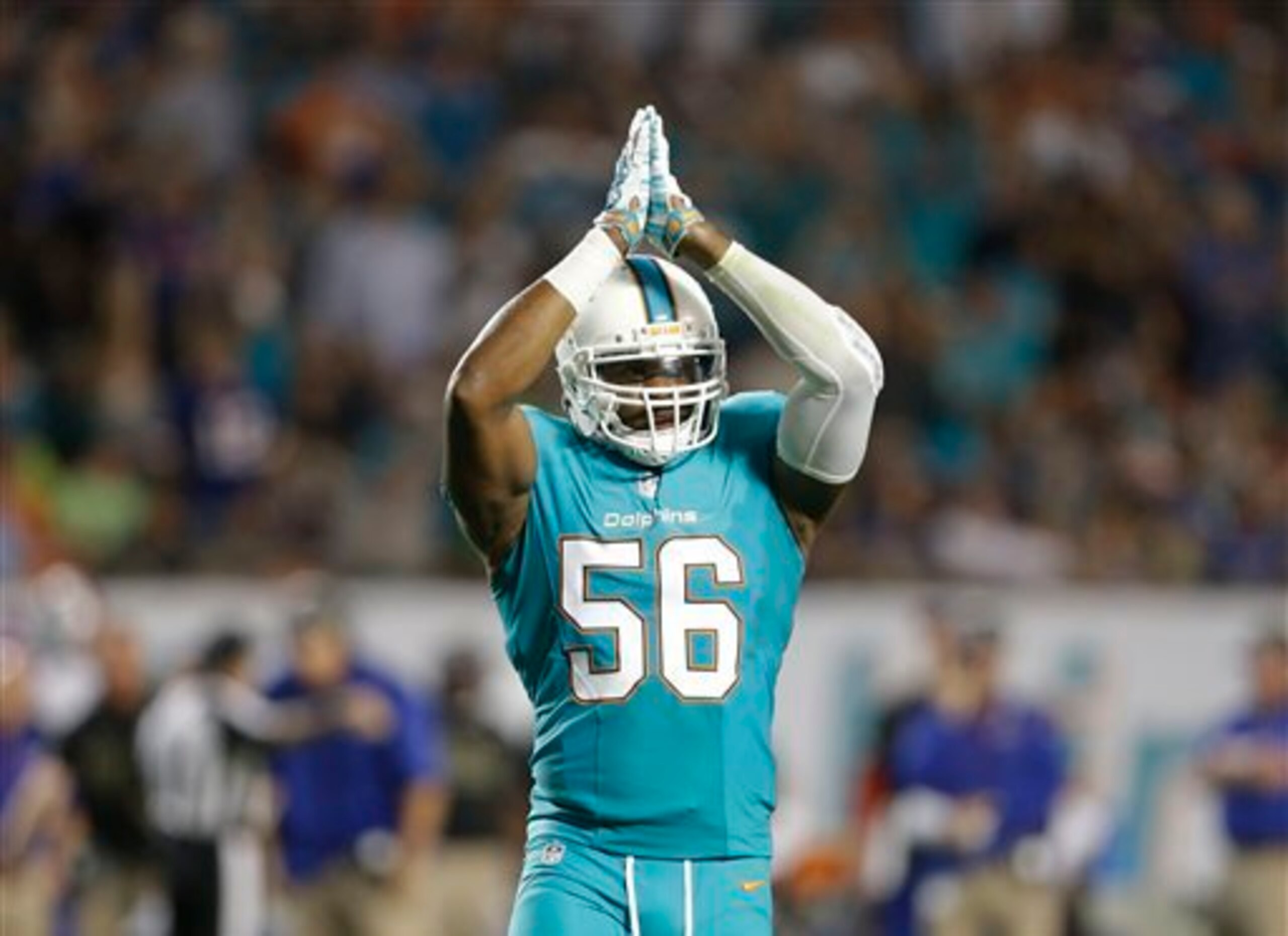
LB Jonathan Freeny
CB Chimdi Chekwa
WR Kevin Dorsey
None of these three are locks to even make the 53-man roster, and if they do, the majority of their contributions will likely arrive on special teams. Combined, this trio received $90,000 in guarantees this offseason, making them no-risk depth additions for training camp.
Freeny seems likeliest to make the final roster because of New England’s lack of linebacker depth. A career special teamer throughout his four years in South Beach, 14 of Freeny’s 42 defensive snaps last year came in the Dolphins’ Week 1 meeting against the Patriots, per Pro Football Focus, so perhaps Belichick saw some upside in the 25-year-old. At the very least, Freeny should fill Jonathan Casillas’ role as a “Core Four” special teamer.
Chekwa is a former fourth-rounder who never scaled Oakland’s meager cornerback depth chart, partially due to injuries. He has played just 32 out of a possible 64 games over the past two seasons and fell behind rookies T.J. Carrie and Keith McGill on the depth chart last year. The Pats are probably taking a flier on Chekwa’s size (6’0”, 190 lbs), but he’ll need to pass several players to make the final roster.
Dorsey did well to make the Green Bay roster as a seventh-rounder two years ago, but he has just one career reception. Like Freeny and Chekwa, he figures to provide camp depth more than anything, with the majority of his contributions coming in the third phase.
These players aren’t really “replacing” anyone from the 2014 roster, per se, especially if the Pats add more linebacker depth to push Freeny down the depth chart. Therefore, it doesn’t make much sense to grade this as any kind of upgrade or downgrade.
Final Call: N/A
CB Robert McClain
2 of 7
Robert McClain arrives with some veteran pedigree—more than most of the other defensive backs currently on the Patriots roster can claim. A 5’9” slot corner who figures to push Kyle Arrington, McClain is a solid flier on a cheap one-year, $1.25 million pact.
The 26-year-old struggled in Atlanta last year, grading out at minus-8.1 overall and conceding receptions every 8.1 snaps in coverage, which was the 10th-worst mark among all qualified corners, according to Pro Football Focus. McClain actually lost the slot corner job midseason to Josh Wilson, before Wilson’s own struggles allowed McClain to reclaim the role through the end of the year.
Without the benefit of film study, it’s hard to decipher how many of McClain’s issues stemmed from the Falcons’ porous pass rush. Apart from budding star corner Desmond Trufant, Atlanta largely fielded a miserable all-around defense last year. Injuries at safety to starters William Moore and Dwight Lowery probably didn’t help either.
Moreover, McClain actually performed rather well the previous two years as Atlanta’s slot man, especially in 2012. That year, he graded out at plus-8.2 while allowing a scanty 0.91 yards per route run from the slot, the fourth-best figure in the league. Two seasons seems like a lifetime in the NFL, but there’s undeniable upside in the track record of a relatively young corner.
There’s no real one-for-one replacement in this case. Apart from Arrington, Darrelle Revis and Patrick Chung actually played the most slot snaps for New England last year, and those largely came in shadow man-coverage situations. Logan Ryan was the closest thing to a slot backup last year, and he’ll almost certainly compete for an outside starting spot this year. Thus, McClain adds new depth at an affordable price tag.
Final Call: Upgrade
WR Brandon Gibson
3 of 7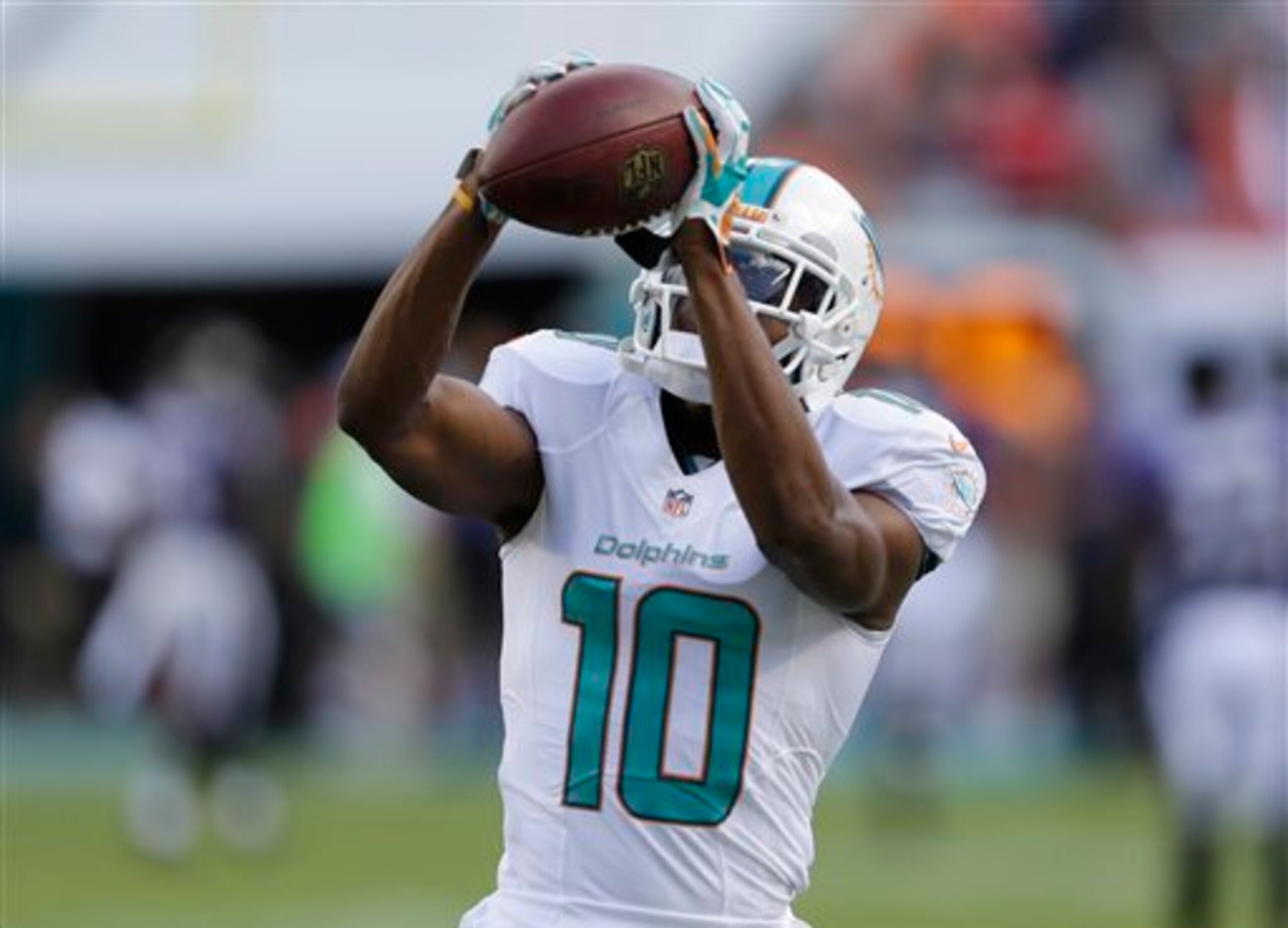
Since arriving as an anonymous sixth-rounder in 2009, Brandon Gibson has had a quietly fine career, compiling 233 receptions and 13 touchdowns over 46 starts with the Rams and Dolphins. However, after a promising start to his Miami tenure in 2013, Gibson tore his patellar against the Patriots, a debilitating setback that has sidetracked him ever since.
Now, New England will give Gibson a chance to reconstruct his once promising career. He was Miami’s primary slot receiver in 2013, running 94.9 percent of his routes from an inside alignment and compiling a 70.7 percent catch rate, which ranked 18th in the league. However, the addition of precocious rookie Jarvis Landry minimized Gibson’s role in the offense last year, as he ended with a career-low 29 receptions.
Similarly to McClain, Gibson represents a low-risk reclamation stab from the Patriots. At 6’0” and 210 pounds, Gibson is bigger than most receivers on the Pats roster. He also possesses experience as a perimeter threat, a role he occupied in St. Louis; that versatility surely appeals to a Patriots offense that often asks its receivers to move around to create mismatches with corners sticking to a single area of the field.
Maybe I’m reaching, but this feels similar to the vibe surrounding LaFell’s arrival last offseason. Neither player received much fanfare upon signing, with most figuring that he would be buried on the depth chart. But just as the Pats were higher on LaFell than most, ESPNBoston’s Mike Reiss suggested that Belichick viewed Gibson as Miami’s best receiver in 2013 and centered his defensive game plan on him.
This isn’t apples-to-apples: LaFell received a three-year deal with $3 million in guarantees, while Gibson signed a one-year, $825,000 deal with almost no guaranteed cash. Still, he provides versatile depth at the slot, flanker and split end receiver spots, an important niche the Patriots didn’t employ last year.
Final Call: Upgrade

.jpg?w=2560 "Cardinals Giants Football")
.jpg?w=2560 "Titans Giants Football")
RB Travaris Cadet
4 of 7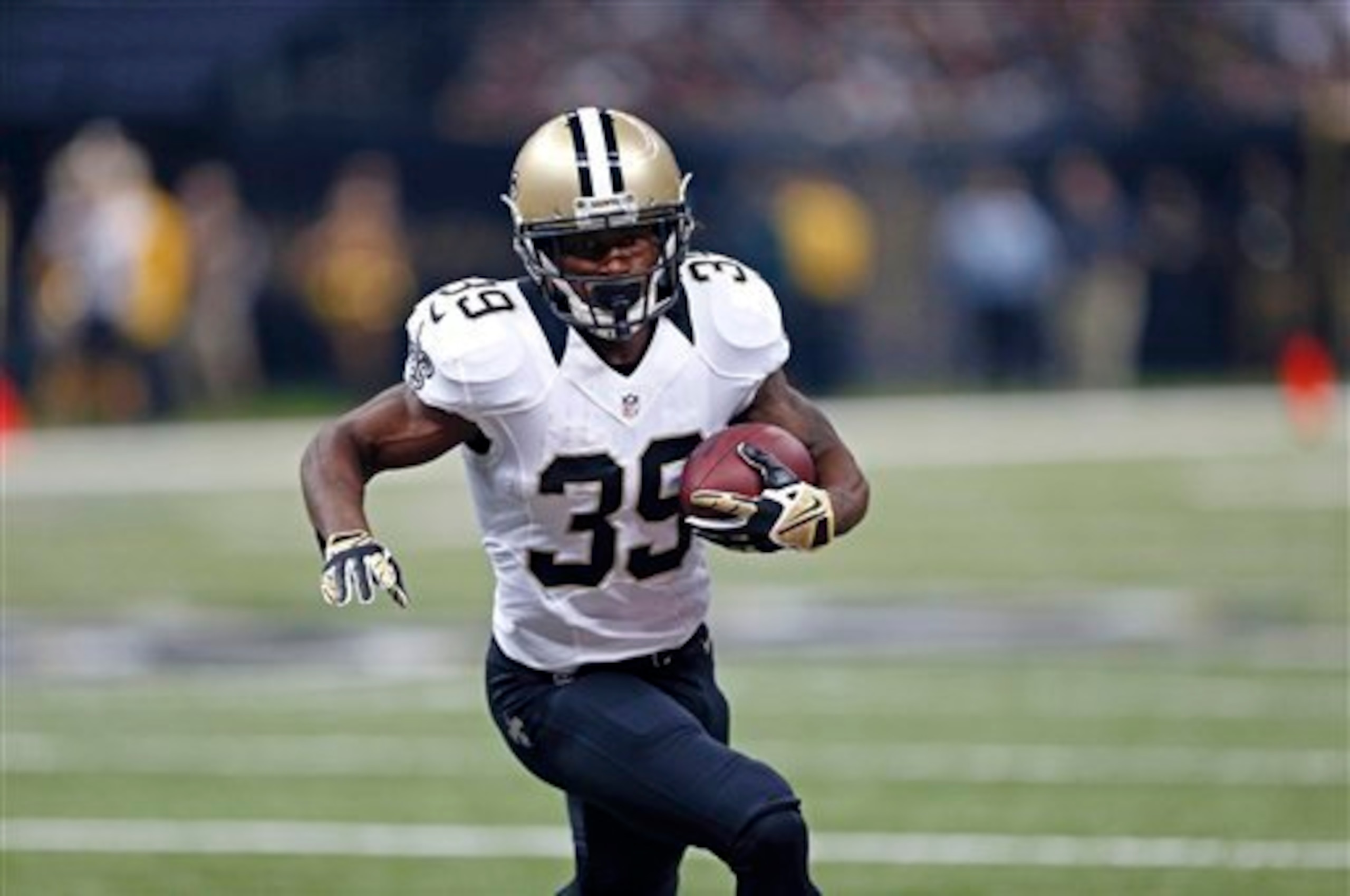
The only constants in life are death, taxes and productive passing backs in the Brady-Belichick era. Between Kevin Faulk, Danny Woodhead and Shane Vereen, the Pats have perennially employed a versatile running back capable of creating mismatches for Tom Brady to cherry-pick in the short passing game.
While 2014 fourth-rounder James White figures to inherit that role in the long run, Travaris Cadet could play a prominent 2015 role as White eases himself into full-time duty. I covered Cadet in a larger space a couple of weeks ago, so head over there for a deeper dive into his game.
The CliffsNotes version is that despite scarce usage, Cadet was essentially a receiver with the versatility to align all over the formation. He was a Kordell Stewart “slash” type at Appalachian State, playing quarterback, running back, wide receiver and kick returner. That probably stunted his development as a running back, and as Cadet’s old coach Sean Payton relayed to the Boston Herald’s Jeff Howe, pass protection will be the key toward unlocking more playing time:
"He was a receiver coming to us, so it’s a work in progress with regards to protection. He’ll know who to have, but he just hasn’t had the snaps or the experience that so many of the other running backs have because he hasn’t played the position that long...That’s the first thing that keeps them from playing that position. They scan and see the guy that’s free. The problem with that is when the guy they are supposed to block doesn’t come and they’re in the backfield still and you have a flare-control issue...It will just be a matter of technique.
"
Belichick won’t tolerate a third-down back who can’t pass-protect; Vereen only received extended playing time when he became an adequate blocker. It’s not really fair to expect Cadet to replicate Vereen’s production. The best-case scenario probably entails a redux of the 2012 season, when Danny Woodhead (424 snaps) eased the transition to Vereen (162 snaps), much like Cadet will attempt to do with White this year.
Final Call: Downgrade
CB Bradley Fletcher
5 of 7
Few players received as much vitriol last year as Bradley Fletcher, whose struggles in man coverage made him the poster child for the Philadelphia Eagles’ second-half collapse out of the postseason. Now, as they did with Chung last year, the Patriots will try to take a maligned Eagles defensive back and transform him into a surprisingly valuable starter.
Fletcher’s struggles are well-documented to this point: His minus-8.4 grade ranked 92nd out of 108 corners, and his whopping 1,072 receiving yards conceded was easily the worst mark in the league. Things weren’t much better on a per-snap basis, as Fletcher gave up 1.79 yards per coverage snap, the fourth-worst mark in the league among corners.
But while he’s never been a true No. 1 corner, Fletcher’s 2014 campaign is far out of whack with his career track record, during which he’s been a solid No. 2 corner. Excluding the 2011 season in which he played just four games before tearing his ACL, Fletcher has posted relatively consistent coverage stats since becoming a starter in 2010. It’s easy to see which year stands out like a sore thumb:
| Year | PFF Grade | QB Rating | Snaps/Rec. | Yds./Route |
| 2010 | +4.2 | 68.6 | 12.9 | 0.98 |
| 2012 | +3.8 | 55.8 | 16.5 | 0.52 |
| 2013 | +2.8 | 82.1 | 10.1 | 1.22 |
| 2014 | -8.4 | 107.6 | 9.8 | 1.79 |
Chip Kelly openly admitted Fletcher’s crisis of confidence last year, which makes sense when considering how psychological the cornerback position is. Though he possesses nice size (6’0”, 200 lbs), Fletcher doesn’t have the hip flexibility or short-space agility to press and run with receivers. Playing more off-coverage hybrid man-zone principles, which the Pats figure to employ in 2015, could be beneficial for him.
Look, you knew this was a downgrade from Darrelle Revis before even reading this piece. But at the price tag of one year for $1.5 million (with incentives up to $2.5 million), Fletcher is a bargain compared to the exorbitant deals given to other middling free-agent corners. The Pats secondary won’t be sound until the team drafts and develops a long-term solution at corner, but Fletcher is a nice short-term stopgap.
Final Call: Downgrade
TE Scott Chandler
6 of 7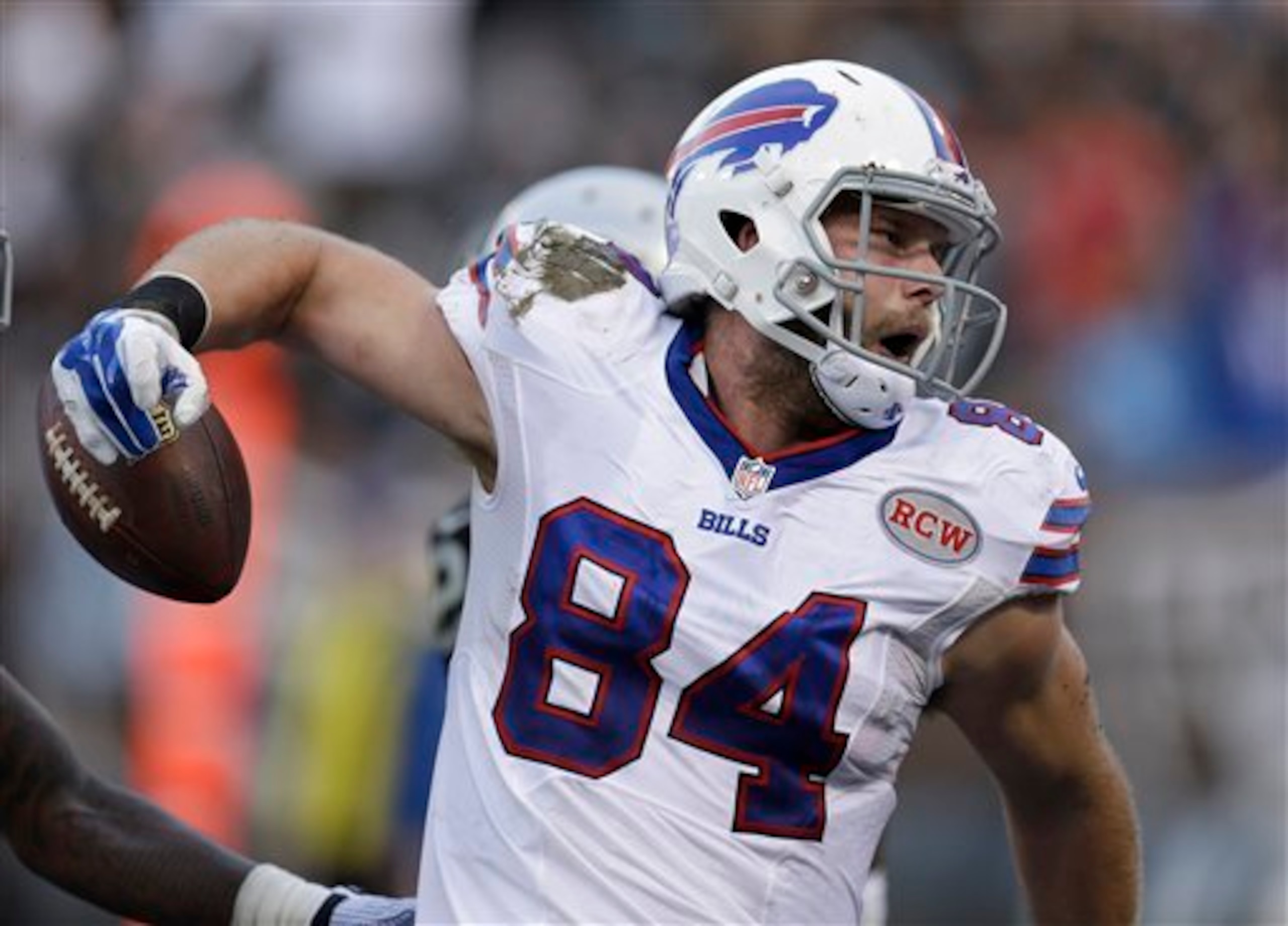
The Pats have made a habit of poaching role players who have experienced success against them, as we’ve already seen from a couple of the signings covered earlier here. Given that Scott Chandler has terrorized New England as much as any tight end over the past few seasons, it’s hardly surprising that the Patriots made a move to sign him away from their AFC East rivals.
In nine career games against the Pats, Chandler has compiled 28 catches for 384 yards and four touchdowns, all highs against any single opponent. At times, such as last year’s Week 6 meeting between the two squads, Chandler represented Buffalo’s only viable target in the passing game amid the Bills’ wretched quarterback play.
However, it’s probably overstating things to suggest that Chandler is going to add a new element to the Patriots’ passing game. Based on yards per route run, a per-snap receiving efficiency metric, Chandler has never ranked higher than 15th among tight ends. Last season, he ranked last in YPRR out of the 19 tight ends who played at least 50 percent of their teams’ offensive snaps.
Granted, some of Chandler’s uninspiring numbers are the byproduct of receiving passes from Kyle Orton, EJ Manuel, Thad Lewis and Jeff Tuel the past two seasons. Chandler possesses nice movement skills for a player his size (6’7”, 260 lbs), and coupled with Rob Gronkowski, New England’s “12” personnel could be deadly in the red zone.
But it’s questionable as to whether Chandler was a necessary addition given the promising signs Tim Wright exhibited as a second-year player in 2014. He’s hardly an expensive problem, as Chandler’s $2.65 million annual average ranks 25th among tight ends. Still, it feels as though Chandler or Wright is destined for an ancillary role as a situational No. 2 behind Gronk, so let’s call this a wash for now, with the caveat that we’ll revisit this competition during training camp.
Final Call: Even
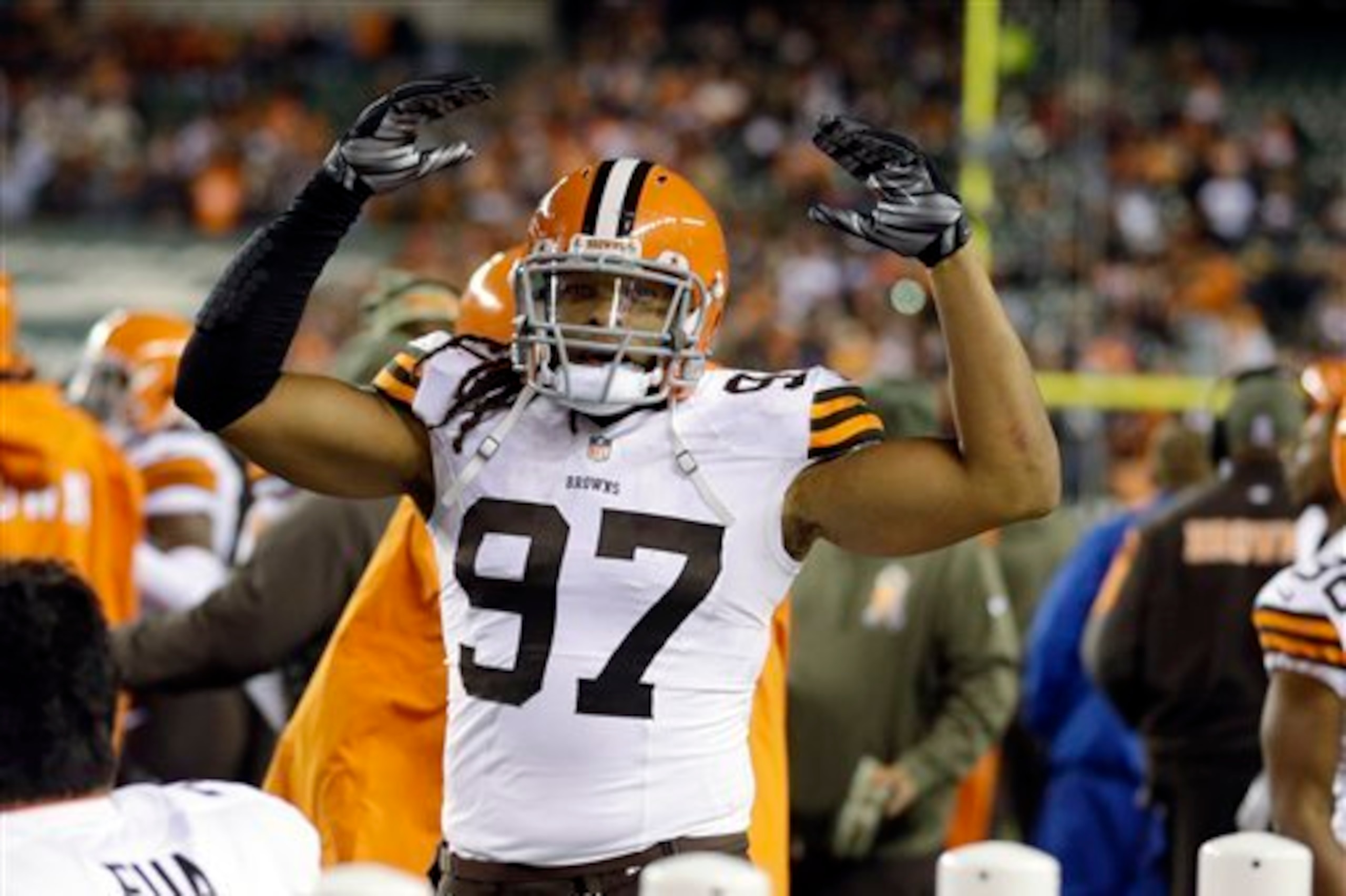
EDGE Jabaal Sheard
7 of 7
Sometimes an underrated player becomes so heavily publicized as such that he actually becomes overrated. There’s some danger in that with Jabaal Sheard, New England’s biggest free-agent addition, as numerous media outlets have hailed Sheard’s two-year, $11 million pact as one of the spring’s best signings.
But while Sheard isn’t about to morph into Reggie White, he does add a critical three-down component to New England’s edge defenders. With no viable backups, Chandler Jones and Rob Ninkovich have carried an abusively heavy workload the past two years. Jones and Ninkovich ranked first and second in total defensive snaps in 2013, based on counts from Football Outsiders, and Ninkovich played the second-most snaps last year behind only J.J. Watt.
That’s an untenable workload for nearly any player, and when Jones went down with a hip injury last year, the Pats were forced into trading for Akeem Ayers. While they may have gained nice value from that particular deal, Sheard’s presence ensures that they won’t need to execute another midseason desperation move at the position next season.
Despite declining sack totals in each of his four NFL seasons, 2014 was really the only subpar year for Sheard. Playing through a foot injury, he finished with just two sacks and ranked 25th out of 29 qualified 3-4 outside linebackers in pass-rushing productivity. In 2013, he ranked 14th in the category, and as a 4-3 defensive end from 2011-12, he compiled 15.5 sacks.
Moreover, the former second-rounder made significant strides against the run in Cleveland and finished first at his position in run-stop percentage last year (8.9 percent). Regardless of whether or not he actually starts, Sheard will play the majority of the defensive snaps given the league-wide reliance on sub-package personnel.
He’s no Revis-esque savior, but Sheard is a crucial diversifying addition to the front seven. The fact that his salary ranks alongside the likes of Justin Tuck and Brian Robison only makes the deal sweeter.
Final Call: Upgrade
*Unless otherwise cited, all stats via Pro Football Focus, and all salary info via Spotrac.



.jpg?w=2560 "Ward Nearly Walks Out of Presser 😳")
