

How the Pittsburgh Steelers Can Improve Their Red-Zone Scoring
The 2015 NFL season will present a daunting task for the Pittsburgh Steelers. They have the hardest schedule based on the 2014 win-loss record of their upcoming opponents, who boast a combined .579 record. Eleven of their 16 games will come against teams with winning records in the previous season, including nine contests against playoff teams.
Now, the Steelers are a 2014 playoff team themselves. They also have one of the most productive offenses in the NFL, ranking seventh in points scored and second in yards earned last year. There are questions—large questions—that loom on defense. Though, many of them can be answered well through this month's draft.
TOP NEWS
.jpg?w=2560 "Chiefs Giants Football")
Mahomes Asked OT to Leave Meeting
.jpg?w=2560 "Colts Football")
Jonathan Taylor Landing Spots 📍
.jpg?w=2560 "Titans Colts Football")
5 Teams Eyeing Jonathan Taylor
However, the Steelers left even more points on the field last year. It's been a common problem for the team—field goals kicked instead of touchdowns scored, both at home and on the road.
In 2014, the Steelers had an average of 3.4 red-zone scoring opportunities per game. They only came away with touchdowns just 51.72 percent of the time. At home, they were better, with touchdowns scored on 61.29 percent of their red-zone appearances. But on the road they faltered, with touchdowns scored just 40.74 percent of the time.
| 2010 | 52.46% | 55.56% | 48.00% |
| 2011 | 50.91% | 58.06% | 41.67% |
| 2012 | 55.10% | 50.00% | 60.00% |
| 2013 | 52.83% | 42.31% | 62.96% |
| 2014 | 51.72% | 40.74% | 61.29% |
Generally speaking, the Steelers have had at least three red-zone attempts per game since 2010. Some years, like 2013, they were better at coming away with touchdowns on the road, doing so 62.96 percent of the time versus 42.31 percent at home. But they have not cracked above 55 percent red-zone touchdown scoring in the past 10 years.
Eighteen teams did better than the Steelers in the red zone last year, from the expected (Green Bay Packers, Denver Broncos, New England Patriots) to the less so—the Oakland Raiders, Atlanta Falcons and the Kansas City Chiefs, a team that did not record a touchdown pass thrown to a wide receiver all year long.
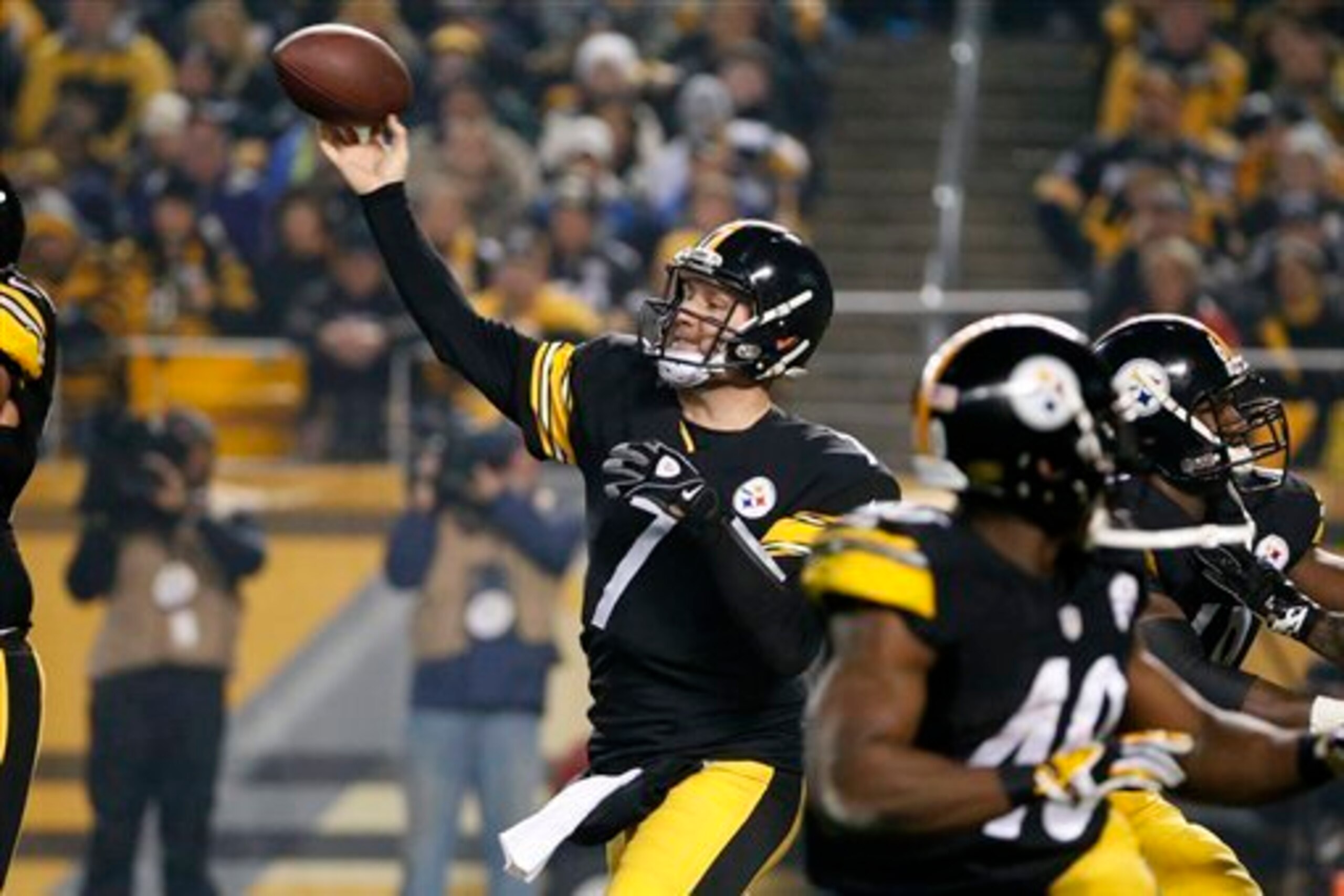
It's not that the Steelers lack the manpower to score touchdowns. Quarterback Ben Roethlisberger is coming off the best season in his career, and he tied Drew Brees for the most passing yards for the season. Running back Le'Veon Bell was the league's second-leading rusher. Antonio Brown led all receivers in yards and has a 32-game streak of at least five catches for at least 50 yards per game. Fellow receiver Martavis Bryant scored eight touchdowns on just 26 catches.
All told, the Steelers offense ranked seventh in points per game in 2014, at 26.6. However, they averaged only 1.8 red-zone touchdowns per game, all while averaging an offensive total of 2.9 total touchdowns per game. Given the daunting schedule set for them in 2015, the red zone needs to be more productive for the Steelers.
The problem is predictability. The Steelers scored only 10 rushing touchdowns in 2014 to 33 passing touchdowns (32 by Roethlisberger). However, Roethlisberger's red-zone quarterback rating was just 89.9 for the 2014 season, or 19th in the league.
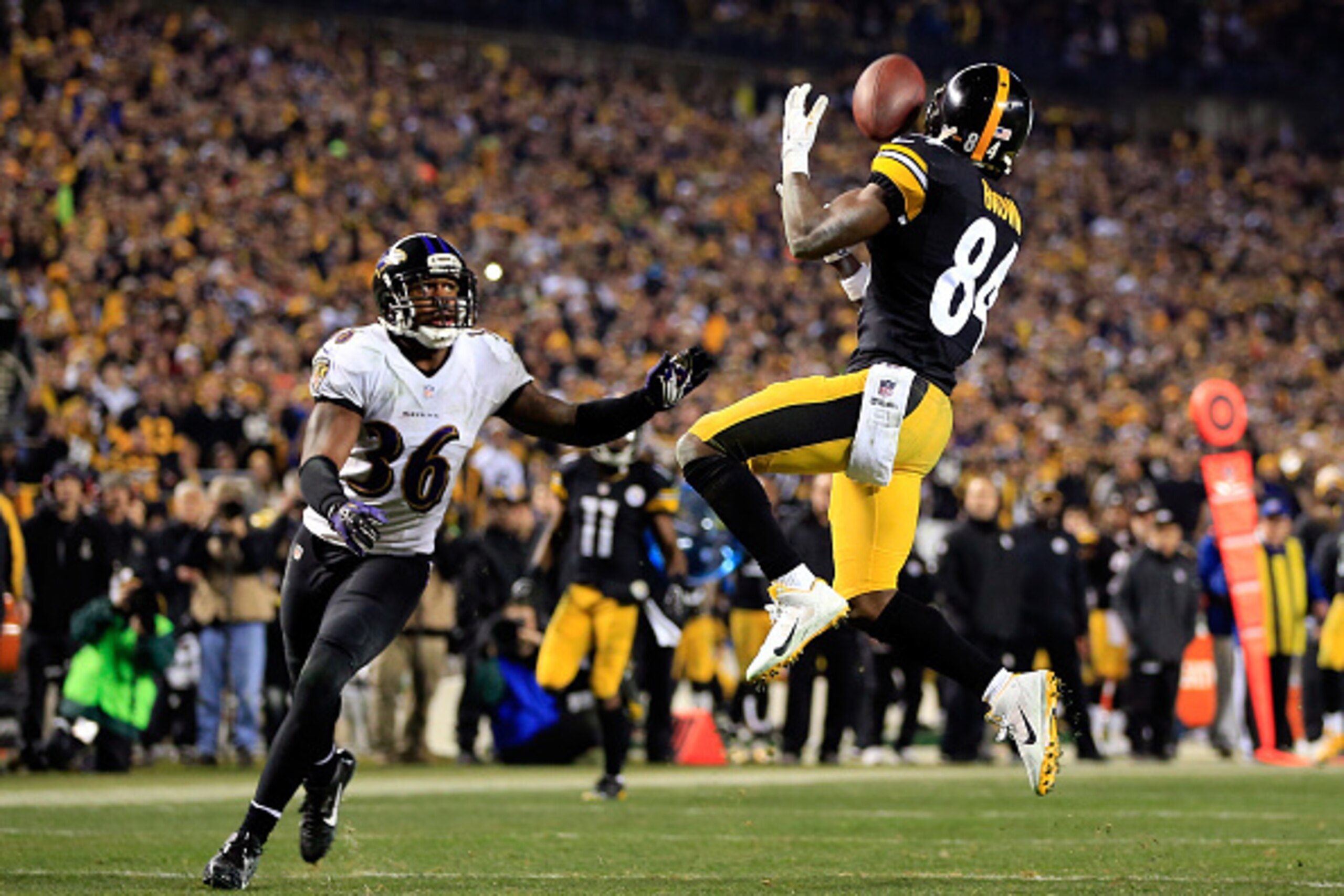
The bigger problem is who Roethlisberger is throwing to in the red zone: Brown, and almost exclusively. Brown was the NFL's second-highest-targeted player in the red zone in 2014, with 33 passes thrown to him. He earned 19 receptions on those targets but scored only nine touchdowns in that area of the field.
Steelers will have to vary their targets. Yes, Brown is an incredible talent, but there are other players to whom Roethlisberger can throw the football.
Tight end Heath Miller, a perennial red-zone scoring threat, had just three touchdown receptions last season. He had 18 red-zone targets and 12 red-zone receptions, but only those three scores. However, that equates to one touchdown on every four red-zone catches; increase his targets and, at least on paper, his touchdowns would also rise. Further, it would be far less predictable than force-feeding Brown.
This isn't to say that the Steelers didn't try to run the ball in the red zone—they did. Bell tied for fourth in red-zone rushing attempts in 2014 with 45. However, it only yielded six touchdowns.
Whatever they tried simply wasn't working with any consistency. Whether that's an issue with Bell—which seems unlikely given his incredible patience and ability to read the field—or a blocking-scheme problem, this is something the Steelers must fix in 2015. Bell should be the kind of back to total 10 or 12 rushing touchdowns in a year, especially in the red zone.
The challenge facing the Steelers in 2015 is very real. Strength of schedule can seem like a game of smoke and mirrors—no team, even a Super Bowl winner, is exactly the same as it was a year later. But, as CBS Sports' John Breech points out, the Raiders had the toughest on-paper strength of schedule in 2014 and ended the year actually having played the toughest slate of games in the league.
Things change, but not so drastically that 11 of the Steelers' 16 opponents in 2015 are going to play markedly worse than they did the season prior. Not only will they be facing better offenses that they will have to keep pace with, they will also face stronger defenses that will make red-zone appearances all that harder to get and even more difficult to convert into touchdowns.
So the Steelers must spread the ball out more when passing in the red zone, and they must find ways to get a push for Bell so that his numerous red-zone rushes don't result in a field-goal try instead of six points. Life is about to get more difficult for the Steelers, and they must respond accordingly. Playing 2014's offense in 2015's tougher-schedule reality will not result in a second consecutive 11-5 season or an AFC North title.
.jpg?w=2560)
.jpg?w=2560 "Cardinals Giants Football")






