
Minnesota Vikings Top Needs, Fits for 2015 NFL Draft to Build for the Future
Every year, the NFL draft brings in its fair share of tantalizing prospects, and for a team with a lot of needs, like the Minnesota Vikings, there are a number of players who can fit with their team and best build for the future.
The Vikings won't find starters at every position of need, or even fill in the important depth spots on their roster with the draft, but they can begin to build for the future with the 2015 NFL draft. Some of these players may be the key.
For now, despite certain proclivities about where the Vikings like to draft certain positions, we'll look at players that either have at worst a second-round grade by CBS or are in Matt Miller's top 64, unless they simply don't fit.
Linebacker
1 of 7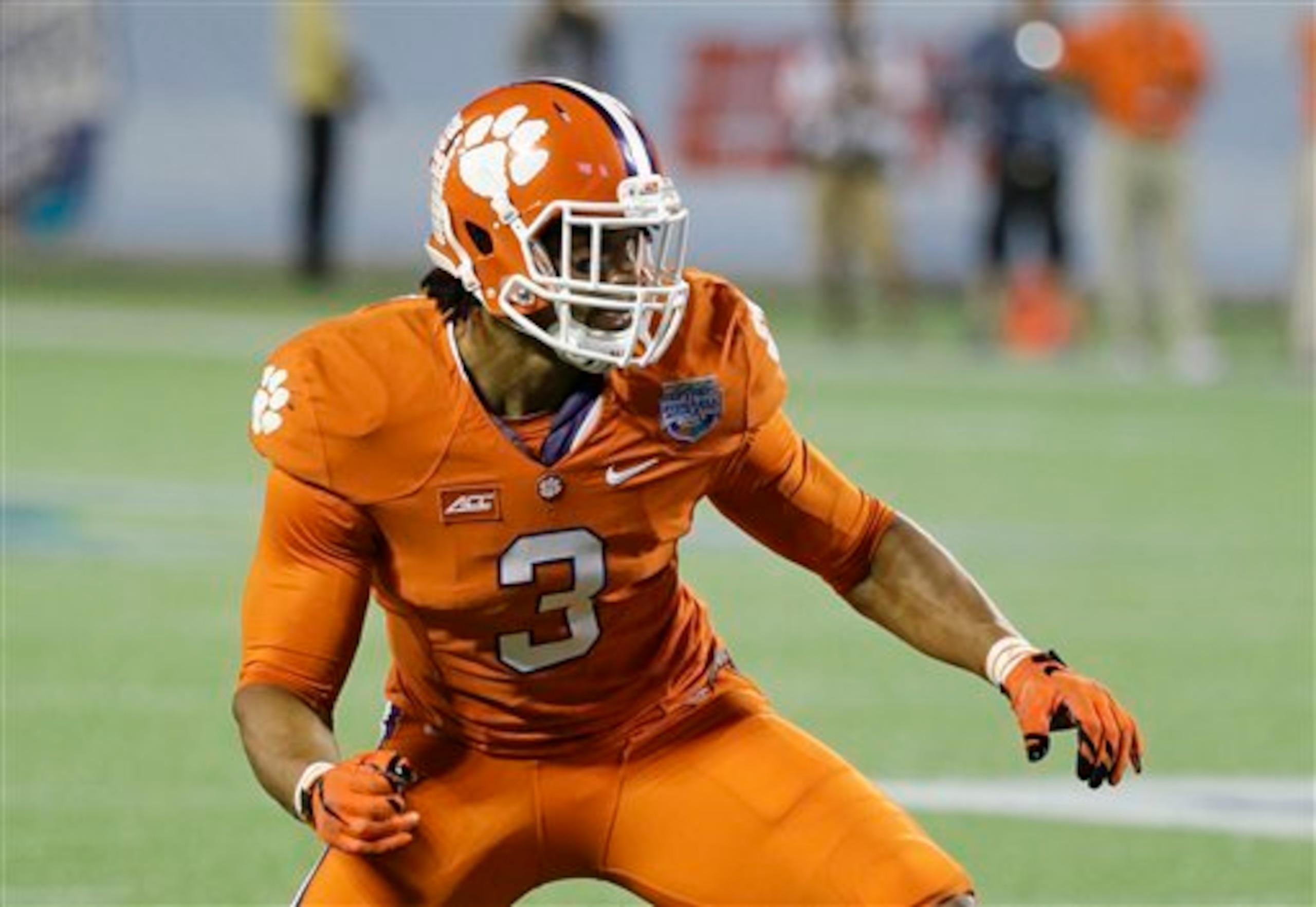
The Vikings have uncertainty at their middle and outside linebacker spots, and though it is difficult to fill two of those positions in one go, the depth of the linebacker class is admirable, especially if one expands the list of potential 4-3 linebackers to 3-4 converts, just like Anthony Barr was with the Vikings last year.
Success in that conversion isn't guaranteed, but finding athletic linebackers who have fluidity, length and instinct will be the basis for any conversion. Even without converting 3-4 players to 4-3 players, there are a number of potential linebackers that could fit the Vikings' needs.
Don't be surprised by a late-round linebacker option, either. Audie Cole, Brandon Watts and Michael Mauti were all picked in the seventh round.
Dante Fowler, OLB Florida
All but a lock to go before the Vikings pick at 11, Fowler is probably the top edge-rusher in the class. That doesn’t mean he’s not a candidate for a position switch, but he may not be as well suited as some others. Regardless, he’s explosive, fluid and instinctive, even if he’s quite raw. He’s moved around a lot in college and adapted well, however, and this may be the next such move in his career, even if he’d rather not.
Vic Beasley, OLB Clemson
Beasley’s biggest knock—his build—won’t matter if the Vikings see him as a linebacker. He has the speed and the length to make Minnesota a nightmare to deal with over the middle if he develops like Anthony Barr did, and his instincts are more obvious than are Fowler’s. With that comes a dominant combine performance that showed off his speed and agility. He has fantastic click-and-close ability, and showed coverage skills and hip mobility in those limited snaps he was asked to cover.
Randy Gregory, OLB Nebraska
Though it’s fair to worry about a player who couldn’t pass a scheduled combine drug test, Gregory could fall to Minnesota because of it. He will need to play with faster instincts if he wants to be an off-ball linebacker, but at 235 pounds, that could be his best bet at the next level—the same weight as first-round pick Keith Rivers was for Mike Zimmer in Cincinnati.
With Vikings defensive coordinator George Edwards putting Gregory through linebacker drills at his pro day, that could be what Minnesota is thinking. His pursuit ability, understanding of running angles and reactiveness could be what Zimmer wants in a linebacker, though he will need more experience in coverage. More than being able to take on guards in the run game, that is.
Eric Kendricks, ILB UCLA
Perhaps the quickest to react of any linebacker in the draft, Kendricks has a phenomenal first-step and elite awareness as a player, though this wasn’t as much of a feature of his in 2013. Perhaps the best coverage linebacker of anyone not being considered for a switch to safety, Kendricks is a constant pain in the side of NFL quarterbacks.
He has a great nose for the ball and is constantly around it. He has great take-on strength, but needs better technique in meeting blocks, and his size may be an issue. Though an inside linebacker for UCLA, his size may make him only a “Will” linebacker in the NFL.
Shaq Thompson, OLB Washington
Moving between safety and linebacker for Washington, it’s sometimes difficult to evaluate Shaq Thompson’s play because he is asked to attack downhill on some plays and let plays develop on other snaps. Still, there are legitimate questions about his reactiveness, even if he shows excellent reaction time on some snaps.
But aside from that, he’s explosive and quick, perhaps faster on the field than any other off-ball linebacker in the draft, including combine superstar Stephone Anthony. He shows great discipline in defending cut-back lines while still showing aggressiveness in pursuit.
A phenomenal coverage defender, Thompson needs to answer questions about his size and take on blocks better. Unlike Kendricks, he doesn’t show much strength at the point of attack and also exhibits poor technique.
Bernardrick McKinney, ILB Mississippi State
If length is what Mike Zimmer wants (and drafting Anthony Barr may have proven that), then McKinney is exactly who will end up on the Vikings’ radar. Tall and powerful, McKinney has shocking athleticism for his size and seems to be the opposite of players like Kendricks and Thompson, showing better technique and strength at the point of attack than other off-ball linebackers in the draft.
Unlike those two, however, he’s a big liability in coverage and shows even more stiffness on the field than his lackluster combine numbers would indicate. He may be stuck as a two-down option and can’t overcome the limitations that come with his build.
Stephone Anthony, ILB Clemson
Another player who blew up the combine, he has high-level agility scores to go with his astounding explosion and speed scores. He’s a good tackler and a good zone defender, but he misses with a lot of the fundamentals of linebacker play.
He tends to run around blocks instead of through them (or under them) and is poor in man coverage. Though he moves quickly, he guesses more than he relies on instinct and it burned Clemson often. A high-effort player with good character, he will need to react faster on the field in order to be a great NFL linebacker.
Paul Dawson, OLB TCU
Talked about as a borderline first-round prospect despite rumors of a bad work ethic and poor practice habits, Dawson’s stock tumbled after a terrible combine and a poor pro day. It’s rare to see a linebacker do well in the NFL after putting together awful weight-adjusted speed scores, but the exception (Vontaze Burfict) happened to have played for Mike Zimmer.
Known for his instinctiveness, there’s still a tentative quality to his game and he sometimes does a poor job reading his keys. He doesn’t exhibit discipline with his assignments, but he is an excellent coverage defender. He can get blown off of blocks, but generally exhibits high-level fluidity and agility to avoid them. He still reacts far faster and more accurately than most of the linebackers in the draft.
Other players, like Miami's Denzel Perryman, could conceivably be selected in the top two rounds but were not in either CBS' top 64 or Matt Miller's. Kentucky's Bud Dupree could be considered as another position convert, but his weight (269 pounds at the combine), fluidity and instincts make him more ideal as a pass-rushing defensive end than an outside linebacker.
Wide Receiver
2 of 7
The Vikings are a one-dimensional receiving team, filled with more deep threats and screen players than they are conventional route-runners. Minnesota could either double-down on this strategy (and after visiting offensive mastermind and head coach of the Colorado School of Mines, Bob Stitt, that may be their goal) or diversify their offense with some of the top receiving options in the draft.
It’s a good draft to need a receiver; while it likely won’t live up to the heights of the 2014 draft, it’s an extremely talented group. Like other positions, we’ll look at receivers who have either a second-round grade from CBS or are in Matt Miller’s top 64, but there are other pass-catchers that have worked their way into early round consideration.
Amari Cooper, WR Alabama
An astounding route-runner and the most polished receiver of the class, the Alabama receiver has been losing some pace in the receiver conversation because of perceived upside. While his combine performance was in the upper tier of receivers, it still drags him down. Regardless, it is rare to find a receiver as explosive out of breaks and ready to play as Amari Cooper.
Kevin White, WR West Virginia
Already poised for a pick in the top 16 of the NFL draft, Kevin White’s combine pushed his stock to the very top. If Oakland or another top team starts cooling on the workout performance and keeps him on the board at the same spot they had him before, then the Minnesota Vikings could be poised to grab the raw route-runner who excels at jump balls and vastly improved his hands.
Though he still has a lot of work to do to translate his workout performance to on-field play, White has an enormous ceiling and isn’t as raw as most who traffic on upside.
DeVante Parker, WR Louisville
The third and oft-forgotten receiver considered a lock for the first round, Parker’s weaknesses have been made higher-profile than they were not too long ago. Probably a better jump-ball receiver than Kevin White and possessing a little more polish—though not much—Parker suffers from a lack of game strength and doesn’t do as well against traffic as many would like to believe.
Still, while lacking crisp routes, Parker is a smart receiver who adapts well to the game around him and should do more in his first year than White.
Jaelen Strong, WR Arizona State
Scouting reports almost never fail to mention Strong’s basketball background, and it certainly shows up on the field. He's another player, like Parker and White, who lives on 50-50 passes. While better than Parker at getting off of press coverage or dealing with physical receivers, he’s far less diverse in terms of his route tree and usage patterns.
Strong was largely used on deep routes or screens, and he lacks the suddenness of the top three receivers. Without that agility, he may not reach the heights of the other three—but of course if he masters what he’s good at, he could be Vincent Jackson.
Breshad Perriman, WR Central Florida
A polarizing prospect, Perriman has been seen in the middle of the first round to the top of the third. His speed was well-known, though the 4.25 40-yard dash at his pro day was still surprising. That alone doesn’t encompass his abilities, as he’s fluid throughout routes and has the height and weight (6’2”, 212 pounds) to make his speed truly dangerous.
But his ability to deceive defensive backs is poor and he doesn’t sync with his quarterback well. His catch radius is large, but his ability to actually reel in the ball is massively inconsistent and a bigger part of why his stock varies wildly from analyst to analyst.
Dorial Green-Beckham, WR Oklahoma
Riddled with off-field issues the NFL has become increasingly wary of, Green-Beckham represents the pinnacle of “what-could-be” with NFL drafting. His height and weight (6’5”, 237 pounds) point to a dominant receiver, and his speed only helps. With that comes a fantastic ability to position himself for the ball and possess an enormous catch radius.
But he combines it with very poor route-running and often provides cornerbacks with an instructional map to his destination. He doesn’t separate as well as he should, and there’s reason to believe his weight doesn’t show up on the field, as he doesn’t bully corners much lighter than him.
Sammie Coates, WR Auburn
Perhaps the most athletic receiver of the draft, Coates is different from Parker, White, Strong and Perriman in that he really doesn’t possess the high-point ability that helps beleaguered quarterbacks out in pressure situations. Coates can get open in a flash, and though he is known for astonishing speed and fantastic quickness, he also happens to be one of the strongest skill players in the draft.
Unfortunately, he has terrible hands and is inconsistent about his speed in routes. He doesn’t track the ball well and though he shows agility with the ball in his hands, he doesn’t show any of that elusiveness in routes, playing stiff and deliberate.
Nelson Agholor, WR USC
While the draft is riddled with athletes who need to develop, Agholor is more in the mold of Amari Cooper than he is Breshad Perriman. Agholor understands angles on the field and wins with leverage and a keen understanding of space. He gets open with quickness and burst, runs precise routes and adjusts extremely well to the defense around him. His excellent hands should make him a high-value move-the-chains option down the road.
He doesn’t have top-end speed, however, and can get pushed around in routes—enough that he’s not in first-round consideration. His height and weight don’t point to the kinds of dominant traits NFL teams like.
Devin Smith, WR Ohio State
A speed demon known for getting open deep, Devin Smith is vastly undervalued for his underneath play even though Ohio State saw fit to mostly target him when he was playing vertical. Despite his slight frame, he does a fine job against press coverage. He needs to do a better job selling routes, however, and his quickness and precision won’t be enough to win those later-developing routes against NFL defenses. He needs better hands and concentration, and will need to add to his frame at the next level.
Rashad Greene, WR Florida State
A player who needs to attack the ball better to complete his game, Greene is still a smooth route-runner who operates well in timing offenses. In general, his positioning on the ball is what will hold him back, but he still possesses NFL-level acceleration, quickness and separation ability, often doing a lot of little things to create advantages in tighter coverage. Q
uick and strong, he has improved his hands in his time at FSU and has a large catch radius for his size. Without the height and weight of the typical split end, he’ll be pushed down the draft, but he’s still a very good player.
Devin Funchess, WR Michigan
Once considered more of a tight end than a receiver, Funchess has proven to most NFL teams he deserves to be playing on the outside (and his blocking weaknesses don’t help). Funchess is still raw as a receiver but flashes high-level skill at different times, including fluidity not befitting his size (6’4”, 232 pounds).
He still has to work too hard to cut in routes and catch the ball, but his high-pointing ability is hard to come by (in most drafts at least). Even then, he still has issues with hands and needs to do a better job consistently deceiving defensive backs.
Phillip Dorsett, WR Miami (FL.)
Considered the fastest upper-tier receiver in the draft by many, Dorsett was one of many Miami players who didn’t fulfill his potential in college. Unlike players like Funchess and Beckham, he doesn’t take time to get up to full speed. He also has quickness befitting his speed, and he can run routes better than most vertical threats, though he needs to work on deception, relying more on his acceleration and deceleration. While he has good ability to track the ball deep, he still needs more consistent hands technique.
Cornerback
3 of 7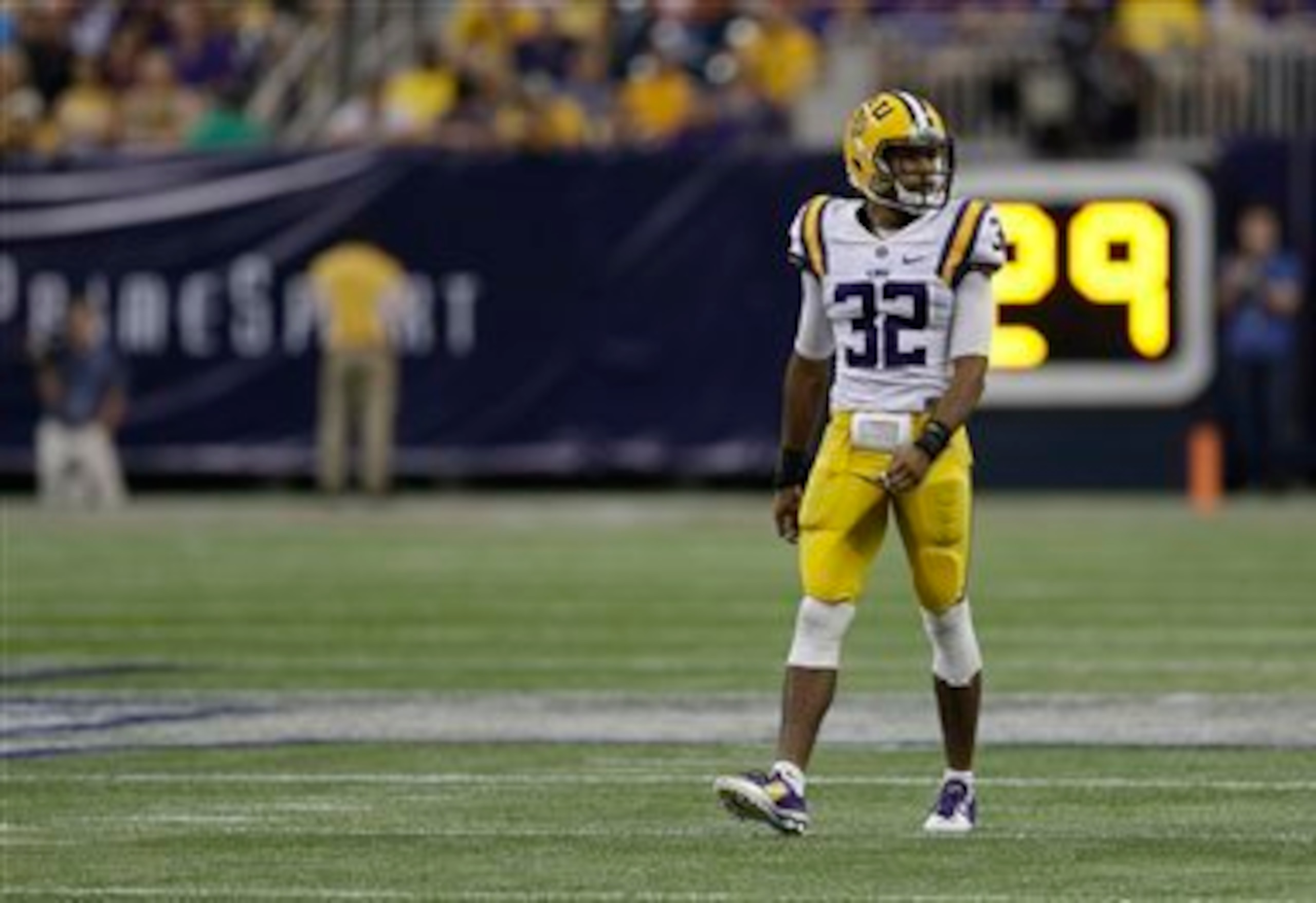
Minnesota’s pass defense was certainly subpar after giving up the 10th-worst passer rating in the NFL, though their run defense (25th in run defense DVOA) was worse. Though more help in the passing game than running game, good corner play can help with both, especially given how often cornerbacks are expected to help out in run defense in Mike Zimmer’s scheme.
There are a number of cornerbacks that made Matt Miller’s top 64, which speaks to the depth in the draft at that position.
Marcus Peters, CB Washington
Probably the best player at cornerback in the draft, the former Washington player would be atop many more boards were it not for off-field problems that saw him dismissed from Washington. Fluid and fast, Peters plays with excellent recognition. He does well in many different scheme responsibilities, and fits as an excellent zone corner as well as a man coverage corner and shows fantastic physicality throughout routes and at the catch point. He rarely loses even the fastest receivers in coverage.
He has some issues maintaining press coverage and for some reason loses a lot of his attitude and physicality against the run.
Trae Waynes, CB MSU
Waynes is a difficult evaluation given the scheme he operated out of at Michigan State, a rare Cover-4 that gave him significantly less inside responsibility and a smaller zone to operate out of. His incredible combine speed shows up on the field, but so do his mediocre combine agility scores (4.39-second short shuttle and 7.06-second three-cone).
His improved pro day agility scores don’t prevent scouts from questioning his stiffness on field. He has great length and because he can combine it with excellent deep speed, he is difficult to throw on deep. He has powerful tackling and forces incomplete passes with his hits. He’s a heavily penalized player, however, and his inability to transition with receivers in-route will cause enormous issues in the NFL.
Jalen Collins, CB LSU
Long and fast, Collins has the prototypical build of an NFL cornerback, especially after the Seattle model of cornerback demanded more from defensive backs in terms of length and height. His recognition isn’t nearly as good as Waynes’ or Peters’, but that doesn’t make it below-average for an NFL draft prospect.
He could show more agility and acceleration, but otherwise shows the physical capability of an NFL corner, with good recovery speed. His footwork is extremely raw and he could be a liability in Year 1, but his athletic potential is worth gambling on. Collins does show issue tracking the ball, but the mere fact he’s shown high-level competitiveness without technical sophistication means a team will buy in on him.
Ronald Darby, CB Florida State
Though he didn’t run the fastest combine at his position, Darby may be the fastest corner in the draft, with athleticism that should impress anyone who likes watching skill players. With explosive capability, he’s got larger range than his 5’11” frame would otherwise suggest and he can play on the outside or inside. He has much better change-of-direction skills than other fast players and his technical ability is impressive.
He still needs better footwork and patience (both in press and at the top of routes) but could be underrated in the draft. Like Waynes, he has grabbiness issues, though they are not as bad.
P.J. Williams, CB Florida State
A bookend to Darby, he could drop out of the second day entirely because of a recent DUI arrest that magnifies already existing off-field issues for the former Seminole. A little taller and longer than Darby, his speed isn’t on the same level. Either way, the physical attributes are somewhat comparable, even if Darby’s speed should put him over the edge.
On the other hand, Williams’ physicality shows up far more often, which can be both good and bad, but more often benefits the defense. Williams has fantastic timing and recovery speed, but is plagued with effort issues.
Kevin Johnson, CB Wake Forest
If Kevin Johnson can add weight (188 pounds), he could end up as the best NFL player out of the prospects in the draft, though of course he’s up against stiff competition. Johnson shows phenomenal technique, both with his feet and hands. While savvy receivers can generate small separation with hand-fighting throughout the route, Johnson is savvy enough to beat it or recover.
He shows excellent speed, burst and agility and has a good enough understanding of passing windows to shut down receivers. Sometimes he plays too physical and gets flagged for targeting, but that physicality doesn’t always show up successfully in the running game, most likely because of his weight. His awareness could improve, and he doesn’t always read routes well or track the ball.
Byron Jones, CB Connecticut
By some measures, one of the five most athletic players to ever come into the NFL since combine testing data became available in 1999, Byron Jones’ “freakiness” is more than Aaron Donald’s phenomenal combine last year or the press Bud Dupree earned as an athletic phenom. Running fast at 269 pounds is extremely impressive, but it’s no world record. He’s more than just athleticism, as quarterbacks had a passer rating of just 26.3 when targeting him (per Steve Palazzolo of Pro Football Focus).
Jones is a high-character player noted for his instinctiveness and intelligence on the field. He has incredible on-field recovery speed and great quickness, to go along with his stunning vertical ability (which he times well). He does need to do a better job showing consistency in his intermediate game, as his quickness is sometimes stifled by his stance, and his footwork is lacking. He also needs to play with more physicality throughout the route and in the run game.
.jpg?w=2560 "Chiefs Giants Football")
.jpg?w=2560 "Titans Colts Football")
.jpg?w=2560 "Eagles Jaguars Football")
Safety
4 of 7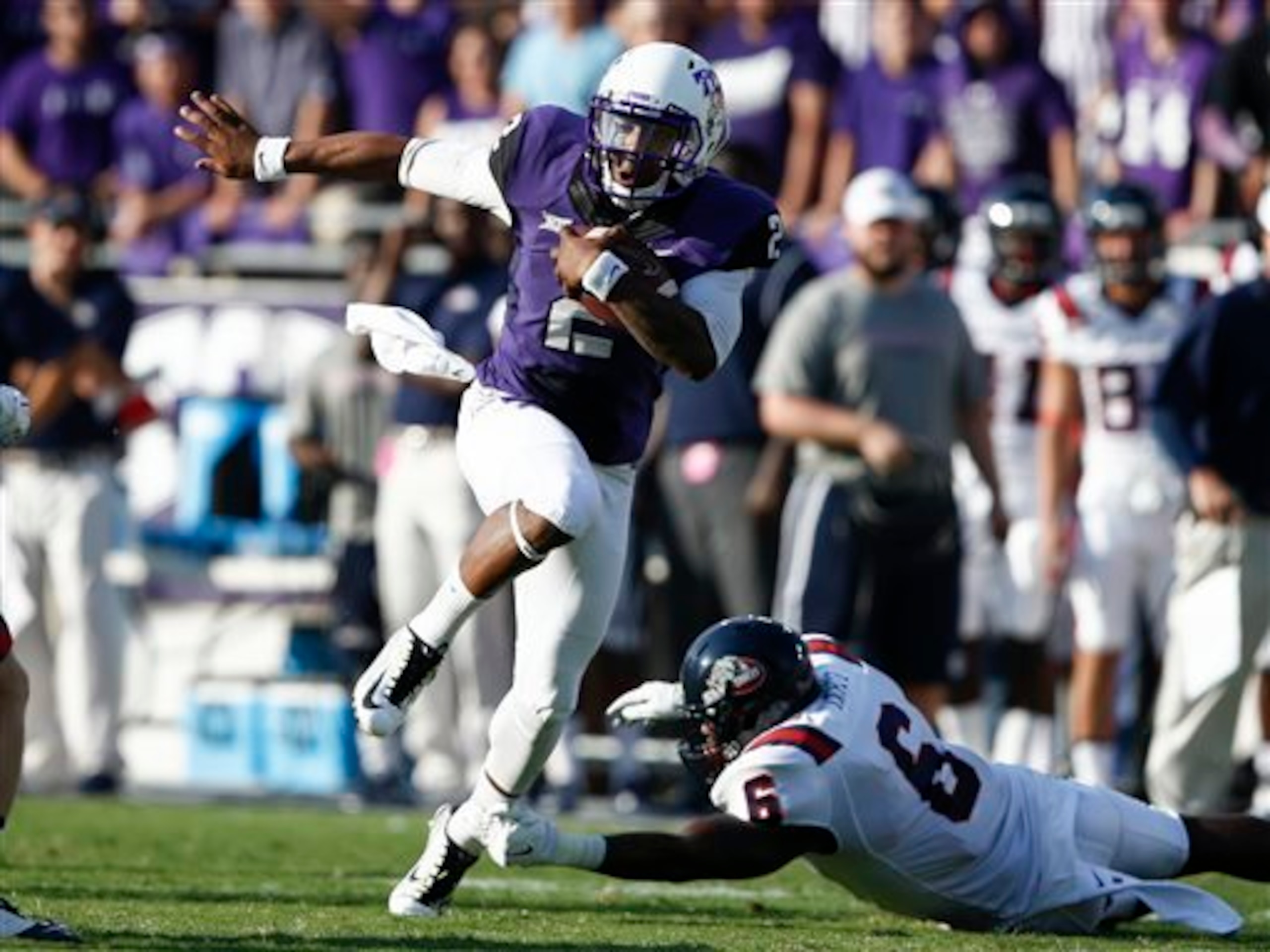
There aren’t a lot of safeties that are receiving top billing as clear first- or second-round picks, but the Vikings have as great a need there as any, and so will be digging deep on the players that could fit the bill in Minnesota’s defense next year. Deep coverage is a concern, but so is a floundering run defense that could use better and more physical tackling from one of the safety positions.
Landon Collins, S Alabama
Perhaps more of a nickel linebacker that could see time as an OLB more than a safety, Collins is the epitome of the old-school strong safety that roamed the box and made running backs pay. His reaction time is on-point and his instincts are excellent when it comes to diagnosing plays.
The Alabama product plays with discipline and aggression, a great combination. In coverage, he’s hit or miss, but mostly a miss. While he mans up well against tight ends on occasion, he’ll lose himself in coverage and often loses out because of his lack of speed and agility.
He’ll never be able to roam deep center field, and with Harrison Smith dropping into the box more and more often, that would be a requirement of any Minnesota safety. Generally speaking, his huge liabilities as a coverage safety may overshadow his stellar play against the run.
Gerod Holliman, S Louisville
If one could combine the best features of Holliman and Collins, one would immediately have an All-Pro-caliber safety. Holliman is phenomenal in coverage and as a playmaker, with good instincts for the ball and great hands and timing.
Unfortunately, Holliman is allergic to tackling, and could be the least physical player projected to go in the first two days—at any position. Not only is he hesitant to tackle, he has poor form and misses an astonishing number of them.Still, his production and coverage capability can’t be ignored and his ability to read offenses comes at a high level.
He still needs to do a better job with misdirection, but Holliman will live on the extremes—perhaps the best coverage player in the draft, combined with the worst run defender.
Cody Prewitt, S Ole Miss
While we can speculate about what would happen if we combined the best qualities of Holliman and Collins, we have the outcome of what would happen if one merely averaged their traits together in Cody Prewitt. An extremely instinctive player, Prewitt has a good sense of where to be and why, without getting tricked too often, but doesn’t possess the speed or agility to always get there in time. His tackling is average and he’s not explosive out of his stance, which shows up in his zone defense, too. Still, sometimes it’s better to have a jack-of-all-trades instead of just a specialist, and that’s what Prewitt can be, even if he’s a liability against speed and quickness.
Offensive Line
5 of 7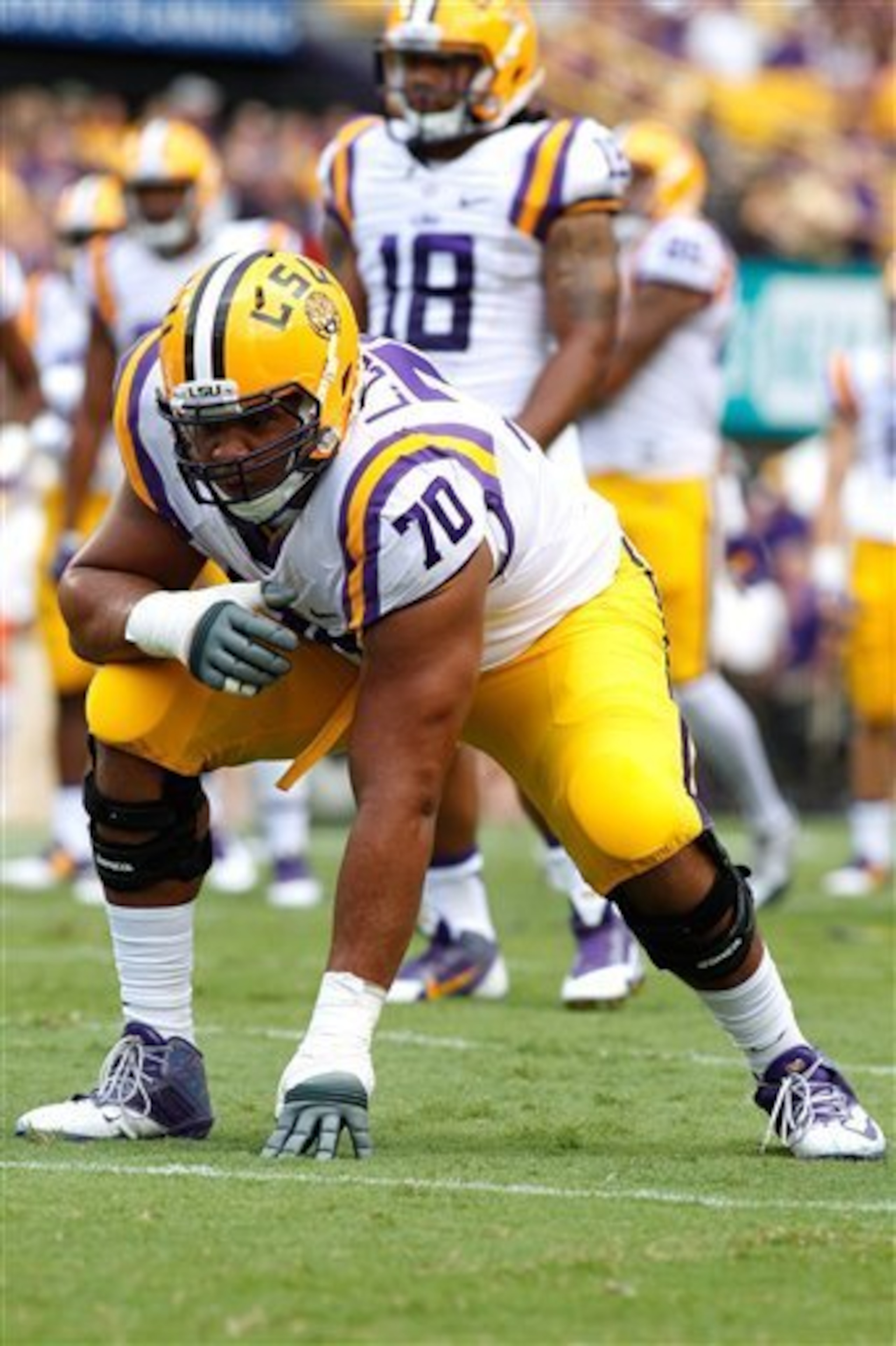
The Vikings have had issues both at guard and tackle, but with Matt Kalil on the last year of his guaranteed contract (unless the Vikings exercise an expensive fifth-year option), the Vikings will likely not spend a high pick on a player that could bounce back based on his end-of-year play and extremely promising rookie showing.
Still, that doesn't mean the Vikings shouldn't invest in a player with guard-tackle flexibility. Those players tend to hold high value, but may hold particularly high value for a team looking to upgrade both positions, and may hold higher value for a team looking for insurance in case tackle doesn't work out.
On the other hand, Rick Spielman so far has shown clear tendencies, among them an unwillingness to draft a guard early on. Either way, the top players may fall, so it’s worth checking them out here.
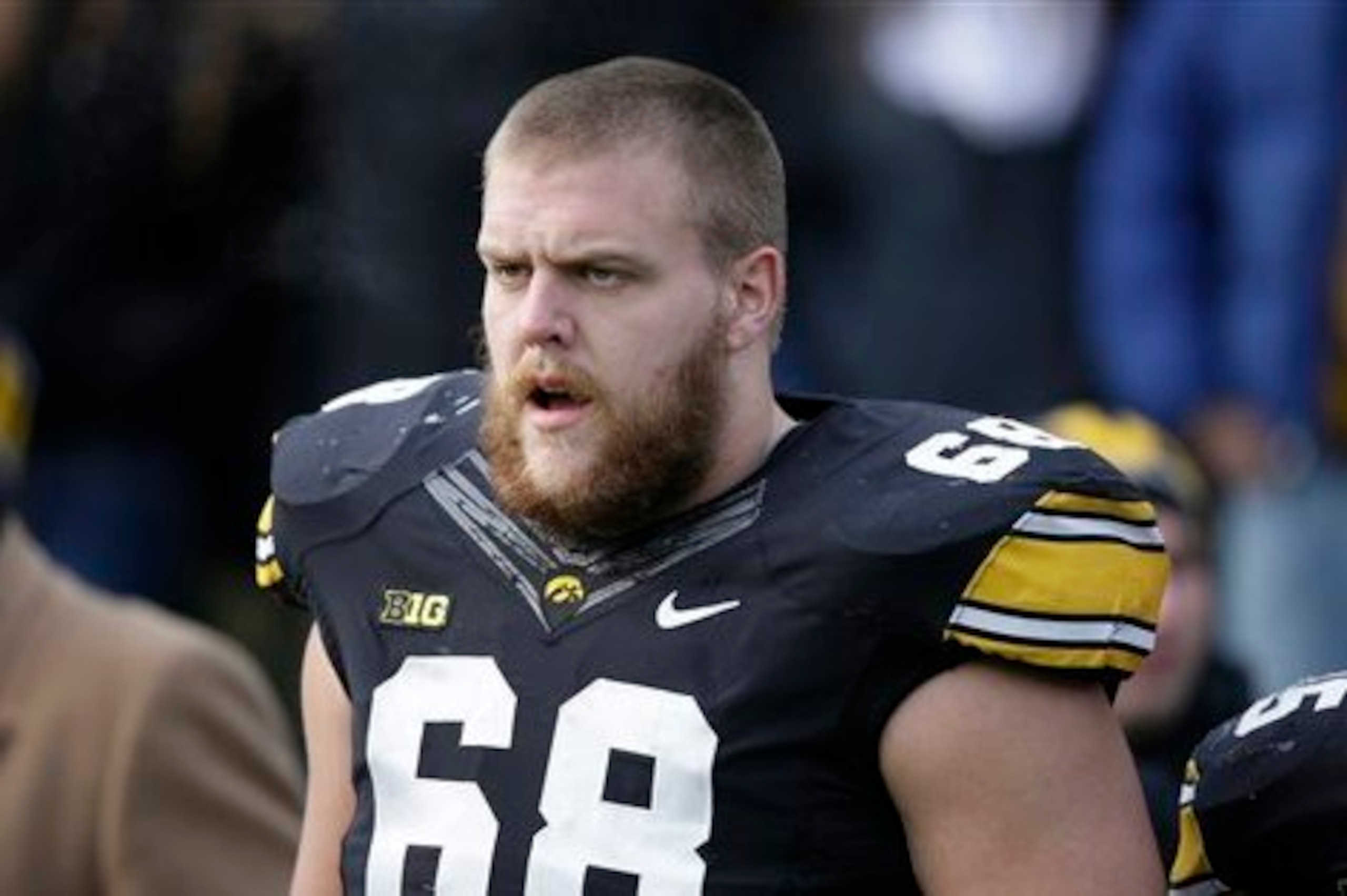
Brandon Scherff, OT Iowa
Pegged as a guard-only prospect by some, Scherff more than held his own as a left tackle at Iowa before knee injuries robbed him of his effectiveness at edge protection late in the season. Scherff is known for his astounding athletic ability, and may be the strongest player in the draft.
At any rate, he doesn’t’ win on the edge with quickness as much as he does awareness and strength. He’s a very good run blocker when he has players head-up against him, and is adequate at the second level. There’s the possibility edge speed could get the better of him in the NFL, which is why many NFL teams view him as a guard.
La'el Collins, OT LSU
Another possible guard-tackle, Collins has shown a little more quickness than Scherff, but not as much strength—though it is still considerable and in the upper tier of players at his position. Collins plays a bit nastier than Scherff as well and loves to finish blocks.
With a bit more length, he can mirror pass-rushers much better than the Iowa lineman but doesn’t show nearly the same technique either with his hips or hands. Balance is a problem for Collins as is his hand technique. With the right coaching he can be very good, but some of his problems are very significant.
A.J. Cann, OG South Carolina
The top guard on a number of boards, Cann has the requisite size, speed, strength and agility to play guard at a high level, but he doesn’t show the instincts or technique of some of the top guards who went in the first round of previous drafts.
Still, he is a powerful player who can do a lot of damage when he does get his technique correct. He’s a very good drive blocker, but needs to do a better job in pass protection where he’s often too passive and not reactive. He sometimes has balance problems, but can be coached well there if he has the will.
Cedric Ogbuehi, OT Texas A&M
Less of a guard convert than other tackles, Ogbuehi has to demonstrate more consistent strength if he’s going to be anything more than a wall-out or finesse run blocker. Injury worries should drop him significantly in the draft, but if he falls far enough, he’ll be a huge steal.
He has excellent quickness and speed, but not the strength befitting his size (6’5”, 308 pounds) despite playing as a guard for a significant amount of time for the Aggies. He needs to work on timing and balance, but his anticipation and mirroring ability is top-notch.
D.J. Humphries, OT Florida
Though there are huge balance issues that may take him out of the second round, Humphries nevertheless has excellent physical tools NFL teams may be intrigued by. He plays with excellent length and speed, getting to the edge quickly and anticipating interior moves from top-level pass-rushers.
Though he needs better footwork, he does play with strength and a nasty attitude. His leverage issues will need to be fixed and he shows variable flexibility.
Jake Fisher, OT Oregon
The most athletic tackle at the combine, he’s likely going to go higher as a result of it, though his play on film at Oregon wasn’t bad by any means. He probably mirrors better than any other of the offensive linemen in the draft, but he still needs to do a better job applying his natural strength in both the passing and running games.
He doesn’t exhibit much functional strength but has the potential to unlock it. He does a good job anticipating and has a very good understanding of angles. He plays with better technique than given credit for, but needs better timing.
Laken Tomlinson, OG Duke
A better player on the field than on paper, Tomlinson’s lack of athleticism is clear, but it still doesn’t prevent him from being a high-level guard. Though he doesn’t always get up to the second level with requisite quickness, his technique and anticipation usually gets him there.
More interesting, a player not known for his quickness hadn’t allowed a sack in the past two years, and he often uses his strength to rock defensive tackles back, and can hold his own one-on-one against the strongest players in the draft. He’s not a fit for zone schemes, which may rule him out for the Vikings, though they have drafted less-than-quick players before (none of whom played for very long).
T.J. Clemmings, OT Pitt
Clemming scan be a polarizing prospect, and that may be a result of the worst footwork of offensive linemen projected to go in the first round. Clemmings has very little experience on the line and is often hesitant in his assignments.
Nevertheless, he’s extremely agile in every phase of the game and plays with the right attitude. He has very good strength and may end up being the best developmental player early on in the draft but needs a lot of seasoning. The good news is he’s learned quickly throughout his career.
Ereck Flowers, OT Miami
Another raw player with strength and speed, Flowers shows a little more to his game than Clemmings though he possesses marginally less upsides. He has integrated his movements better, but has to play with more balance and flexibility. He often has to hold in order to make up for his deficiencies as a blocker. Still, he’s extraordinarily quick and plays with a lot of strength.
Andrus Peat, OT Stanford
Long. More than anything else, it’s easy to recognize Peat as a long, tall player. Unfortunately that length isn’t paired well with edge protection as he doesn’t often set well against speed rushers on the edge. Still, with quick feet and agility, it’s certainly coachable. He has excellent awareness and good anticipation of edge-rushers, while showing the strength to take on bull-rushing plays. Though his raw speed is there, he doesn’t have high-level balance or change-of-direction, and that may limit him.
There are other offensive linemen worth noting, including a favorite of mine in Ali Marpet. For now, these are the top players at the position.
Defensive End
6 of 7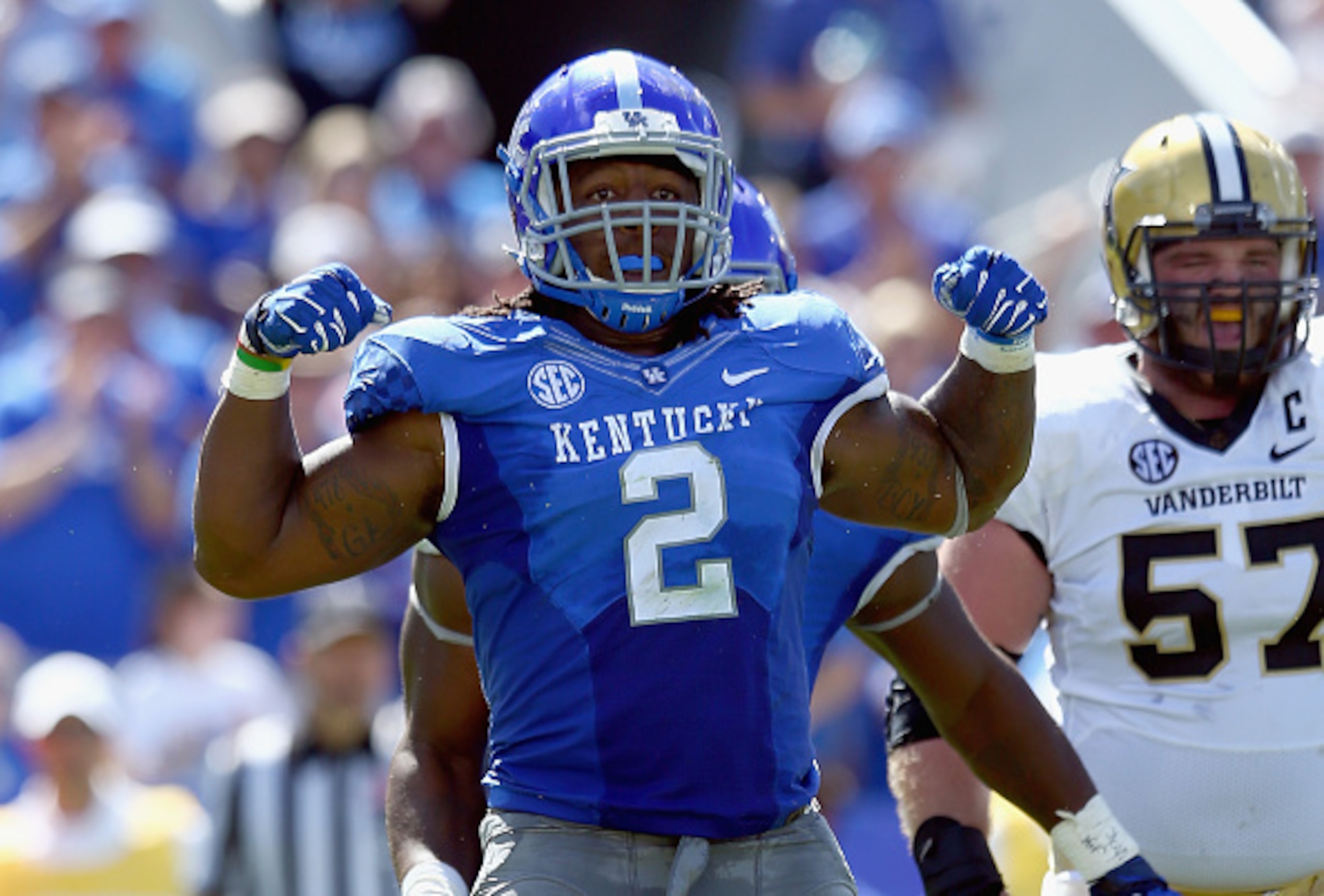
The Vikings need a backup defensive end with the departure of Corey Wootton and the uncertainty of Scott Crichton as well as the wanting play of Brian Robison. It’s unlikely they draft a defensive end early, but given the focus head coach Mike Zimmer places on the defensive line, anything is possible.
Developmental options exist throughout the draft, but the emphasis teams have placed on the pass rush has pushed some of them to the first and second rounds. The Vikings may miss out on this strong class if they wait too long.
Dante Fowler, OLB Florida
Already profiled as a linebacker, Fowler’s later reaction time may mean he’s a better fit at defensive end for the Vikings. He’s shown an ability to change wait throughout his career, so his 261 pounds may not mean much, especially because it’s already not too far off a playing weight for a 4-3 defensive end anyways.
Fowler has shown incredible adaptability in his career and though he’s not been asked to be a pure pass-rusher for very long in his career, he’s added a number of moves to his pass-rushing arsenal. He’s too focused on moves and not enough on winning the rush, but that will come with time. He has very good strength and that should help him hold up at the point of attack, though he’s inconsistent in the run game.
Bud Dupree, DE Kentucky
Dupree was a productive pass-rusher, but a lot of it came from scheming for him rather than relying on his talent. Dupree’s physical ability is astounding, but it took him some time to develop pass-rushing moves, and that slow development curve may continue in the NFL.
Already one of the best pound-for-pound athletes on the planet, it may not take much refinement for his game to excel in the NFL, but it should still be concerning his productivity came more from misdirection than it did his ability. Still, his burst is phenomenal, and he shows more ability than given credit for, while also showing savvy in his pass-rushing. His coverage instincts are surprisingly good and he can be fluid there, albeit not for extended periods of time.
Owamagbe Odighizuwa, DE UCLA
“Owa” is much more of an explosion player than he is someone who can bend the edge. His strength is fantastic, but without that flexibility he may be limited in what he can do. On the other hand, players like Brian Orakpo have succeeded without that flexibility.
A very good run defender, he will need to show the speed and quickness to win the pass-rush at the next level. He also lacks pass-rush technique, and will need to shore that up in order to have a complete game.
Preston Smith, DE Mississippi State
A surprising entry into the category of pass-rushing athletes known as force players, Preston Smith has risen in part because of his combine performance. He’s not as sudden as he needs to be, but he does have burst. Smith needs to do more to translate his combine performance into on-field play, because he doesn’t always show flexibility when rushing the edge or rush with power. Still, he has great hands and an excellent frame to go with it.
Danielle Hunter, DE LSU
It may get tiring to hear the word “freak” when applied to combine athletes, but aside from Vic Beasley and Bud Dupree, Hunter best deserves the title in a class full of athletic wunderkinds. Hunter isn’t reactive and doesn’t have a counter, but he does have the size and raw power to get home more often than the average college pass-rusher.
He has excellent play against the run, and may be one of the better run-defending edge-defenders in the draft. Extremely raw but with high motor, he may explode onto the scene after iffy college production, like Ezekiel Ansah or Jason Pierre-Paul.
Running Back
7 of 7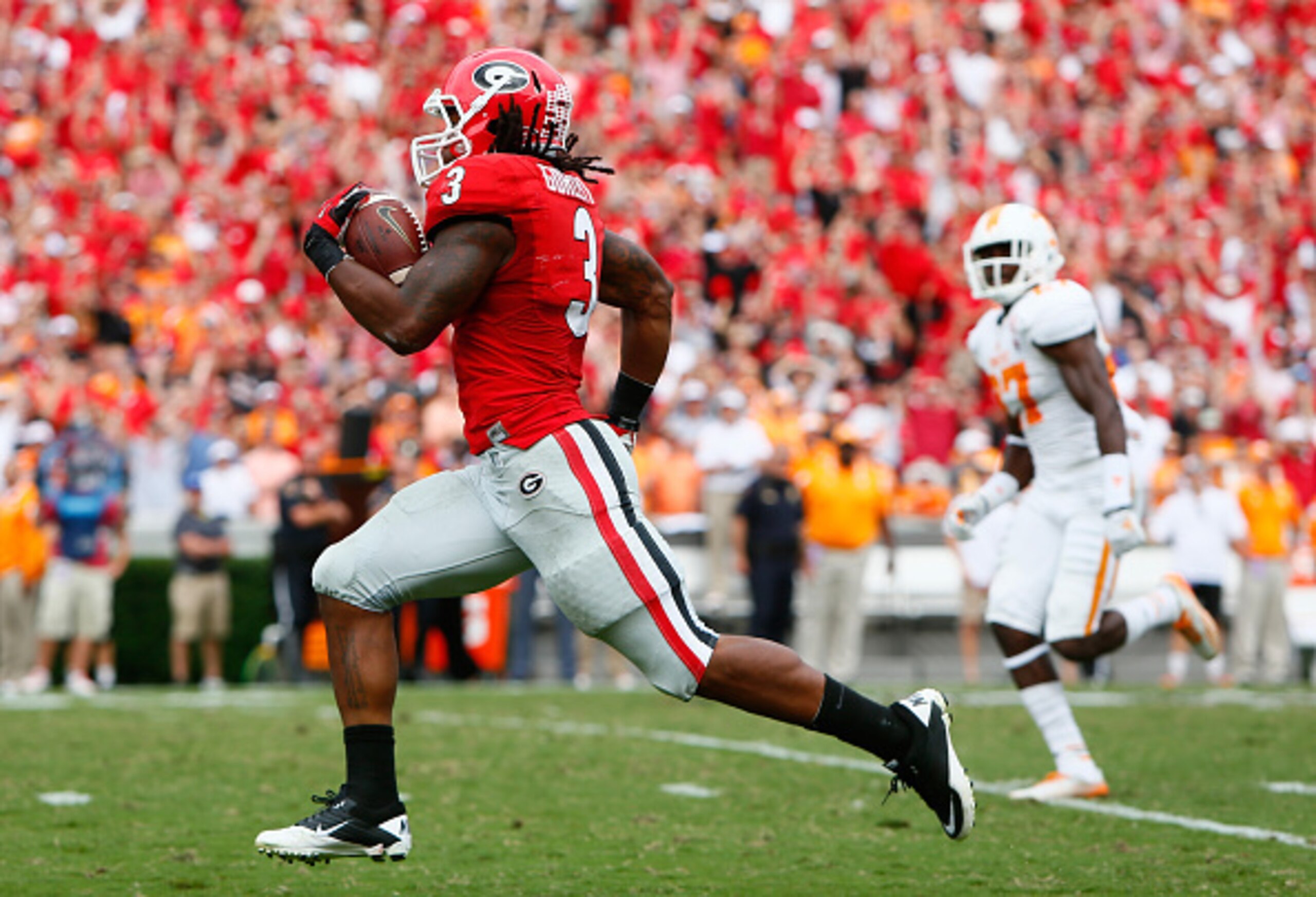
The Vikings don’t really know if they truly need a starting-quality running back this year, but if the Adrian Peterson situation plays out favorably, they can wait while Jerick McKinnon continues to add strength to his frame. If they need a replacement sooner rather than later, this is a fantastic draft to find one, either to complement McKinnon or find a feature back outright.
Todd Gurley, RB Georgia
The first thing people may note is Gurley’s knee injury, which needs to be checked out sooner rather than later for stability and recovery. If he is on excellent pace for recovery, NFL teams will see a running back that combines speed, power, patience, agility and vision. Though his vision is not often propped up as billed, it’s still NFL-quality, and can more than take advantage of his physical talents.
While he doesn’t often freelance outside of the play (both good and bad), he can create big gains because of his speed and power. His strength and agility allow him to break all sorts of tackles, and he knows how to press the lane to create more space. He also shows good hands and adequate pass blocking.
Melvin Gordon, RB Wisconsin
The presumptive number two on everyone but Matt Miller’s board, Melvin Gordon suffers from some of the same knocks as Gurley (difficult to evaluate vision given the prowess of his offensive line). Gordon is a shiftier, more creative runner. He doesn’t play with as much strength and often relies on his creativity more than he should (with a willingness to bounce runs to the outside far more than is appropriate in the NFL).
His cutting ability is excellent and he has underrated patience. Gordon has more strength than he’s given credit for, but it’s true he does a better job winning with agility. His hands are average in the small sample of reception targets we can evaluate.
Ameer Abdullah, RB Nebraska
There are two “undersized” power backs in the draft, and Ameer Abdullah is one of them. Despite his size (5’9”, 205 pounds), Abdullah runs with leverage, attitude and strength. More than that, he balances running within the constraints of the play with creativity, which Gordon and Gurley don’t manage (at different extremes).
Abdullah’s play isn’t just marked with speed, as many expect a 205-pound player to work with, but with patience and fantastic vision to go along with strength. He has any number of evasion techniques: jump-cuts, spin moves, stutter steps and so on and he knows when and why to use them.
His biggest issue is his abysmal fumble rate, but at least that has improved as time has gone on. Beyond that, he has small hands and is a concern in the passing game as a receiver, and he has to improve his pass-blocking technique in a big way.
Duke Johnson, RB Miami (FL.)
The other undersized power back is Duke Johnson, though he may get more play with his agility and speed than Abdullah does. Johnson shows, like Abdullah, a fantastic ability to turn negative plays into positive ones and knows how to read the play to get the most out of his blocking. Like Abdullah, he suffers from fumble issues, though didn’t improve at nearly the same rate the Nebraska product did.
To make up for this, he has shown better receiving ability and the ability to pass-block with more technique, but does freelance more often than Abdullah. Johnson also has a larger injury history to work with, and that pushes him down many boards. Still, he’s a mature runner with a variety of moves and surprising power.
T.J. Yeldon, RB Alabama
There’s no shortage of talented running backs whose evaluations are clouded by their stellar offensive line, and Yeldon is no different. Unfortunately, Yeldon also carries the failures of Trent Richardson and Mark Ingram with him even if it is a bit unfair. Unlike those two running backs, Yeldon has shown more capability dealing with messy situations in the backfield and happened to run behind a marginally less talented line.
He shows a lot of talent at moving the pile in goal-line situations and is a fantastic pass blocker. All of those things are true of traditional power backs, but Yeldon also shows agility and burst, as well as a decisiveness that often was missing from Richardson’s game. That combination of power, agility and vision should serve him well.
Tevin Coleman, RB Indiana
A productive back out of the Big Ten, Coleman’s high yardage total has moved him to the top of some boards, though not everyone’s buying. Coleman may be more limited by scheme than some of the other top running backs, in large part because he’s more of a straight-line runner than the other ones.
His agility doesn’t show up on field when it comes to navigating blocks and he looks confused at times about what he wants to do. Often that’s hesitation and not patience and it can get him in trouble. On the other hand he has a lot of natural tools he’s just learning to use.
Though he doesn’t have the power of many other running backs, that’s more an issue of leverage than it is natural strength and he can develop that in the NFL. Still, it means he’s not a top pick because of it. If Coleman were more decisive, he could be an easier-to-project running back, but in the Vikings’ diverse running scheme, that could be a problem.
Jay Ajayi, RB Boise State
With Ameer Abdullah and Duke Johnson, you had small running backs who played big. With Jay Ajayi, you have a big running back who plays small. In both cases they’re compliments, because they give the runners in question something to their game you wouldn’t otherwise find, but for Ajayi, he will need to show more willingness to run inside the tackles in order to prove his worth in the NFL.
As a pass-blocker, he has issues generating power, but as a runner, he has more power than is popularly ascribed to the small-school back. He’s aggressive and willing to hit players, but he just thinks the offense does better when he bounces to the outside.
A very good receiver, Ajayi has the potential to be a complete back. There are a lot of occasions where Ajayi will show patience as blocks develop, so it’s certainly not a lost cause. There's every reason to think Ajayi ends up as the best back of the class, so long as he trusts his blocking.
This doesn’t represent the overall quality of the class, as talented running backs like David Cobb, David Johnson and Josh Robinson represent complementary or starting options immediately.
.jpg?w=2560 "Colts Football")
.jpg?w=2560)