
San Francisco 49ers' Top Needs, Fits for 2015 NFL Draft to Build for the Future
Will the San Francisco 49ers base their draft priorities on need? That’s the key question.
The Niners have pressing needs, some more pressing than others. Like inside linebacker. The Niners need one desperately. Patrick Willis and Chris Borland retired, and NaVorro Bowman still is rehabbing a torn ACL and a torn MCL.
Will the Niners “reach” for an inside linebacker in Round 1 or draft a better player at a different position? Reaching for a player can weaken the starting lineup for years. Reaching is bad. The Niners should take the best player available, regardless of position, especially in the early rounds.
With that in mind, here are the best players available at nine positions.
Wide Receiver
1 of 9
In the short term, the 49ers need a No. 3 receiver to replace Stevie Johnson. In the long term, they need a No. 1 receiver to replace Anquan Boldin. Boldin turns 35 in October, and he will be a free agent in 2016.
The 49ers probably won’t get top wide receiver prospect Kevin White from the University of West Virginia—draft experts expect teams to take him within the first five picks. The Niners have a better chance to get one of the other top wide-receiver prospects.
Amari Cooper, University of Alabama
Cooper was a better college player than White. White is bigger and more athletic, but Cooper is a better route-runner. Cooper creates acres of separation. He makes cornerbacks look silly.
The 49ers probably would have to trade into the top 10 picks to get Cooper. The Niners are happy to do that, according to Matt Miller of Bleacher Report. Trading into the top 10 would probably cost the 49ers their second-round draft pick.
DeVante Parker, University of Louisville
Parker isn’t as good as Cooper, but he’s close. Last season, Cooper averaged 123 receiving yards per game; Parker averaged 122 receiving yards per game. But Cooper played in 14 games, and Parker played in only seven.
Parker broke his left foot during a practice in August and missed the first six games of the season. His second game back, he caught eight passes for 214 receiving yards against Florida State.
He would be a terrific pick if he falls to the Niners at No. 15.
Breshad Perriman, University of Central Florida
Perriman might have more raw talent than any receiver in the draft. He is a freak—6’2”, 212 pounds, 4.24 40-yard dash. Seriously.
Perriman caught only 115 passes in three seasons at UCF, but 16 of those catches were touchdowns—one touchdown every seven receptions. He also averaged 19.5 yards per catch.
Skeptics say Perriman has bad hands—he dropped seven passes last season. But he wasn’t trying to catch the ball with his chest. Perriman tries to snatch the ball out of the air with his hands. He has the right idea. Maybe his eyes are the problem. Maybe he needs contact lenses.
Jaelen Strong, Arizona State University
Strong played with bad quarterbacks for two seasons at ASU. He still caught 157 passes for 2,287 receiving yards and 17 touchdowns.
Some draft experts argue Strong doesn’t create much separation, that he has to fight the cornerback for the ball. Experts said similar things about Jordan Matthews last year. He went on to catch 67 passes for 872 yards and eight touchdowns his rookie season with the Philadelphia Eagles.
Matthews and Strong almost are identical players. Matthews was a second-round pick last year. Strong might be a first-round pick this year.
Dorial Green-Beckham, University of Oklahoma
Some draft experts consider Green-Beckham the most talented receiver in the draft. But he might not be a No. 1 receiver. He might be a complementary receiver, like Torrey Smith.
Green-Beckham didn't play in 2014. In 2013, he played at the University of Missouri, and he was not the team's No. 1 receiver. Missouri's leader in receiving yards was L'Damian Washington. Heard of him?
Cornerback
2 of 9
The Niners starting cornerbacks aren’t much better than their backups.
The starters are Tramaine Brock and Shareece Wright. Brock played in three games last season. He has never started more than seven games in a season. Wright started for the San Diego Chargers the past two seasons and gave up a passer rating of 101.5, according to Pro Football Focus.
Chris Cook and Dontae Johnson might be better and more reliable than Wright and Brock.
But Cook and Johnson aren’t special, either. The Niners don’t have one special corner on the roster. They can find a few special ones in the draft.
Marcus Peters, University of Washington
Peters probably is the best corner the Niners can get. Bucky Brooks of NFL.com compares Peters to Aqib Talib, one of the best corners in the NFL.
Peters is big (6’0”, 197 lbs, per NFL.com), so he can jam wide receivers at the line of scrimmage. But he’s also quick like a small cornerback, so he can play off wide receivers and break on passes before they do.
The 49ers defense features press-coverage and off-coverage, not one or the other. The Niners need cornerbacks who do everything. Peters does everything. He should be available when the Niners pick in Round 1.
Trae Waynes, Michigan State University
Waynes is the best press-corner in the draft. He would be a perfect fit on the Seattle Seahawks defense, or any defense that features press-coverage.
Waynes might not fit the 49ers defense because he hasn't played much off-coverage. He's a press-coverage specialist. If the Niners draft him, they might consider changing the defense to accommodate his skills. He’s worth accommodating. He's a future Pro Bowler.
Kevin Johnson, Wake Forest University
If both Waynes and Peters are drafted before the 15th pick, Johnson is a good fallback option for the Niners.
Johnson isn’t as big as Peters or as fast as Waynes, but Johnson might be better than both of them in man coverage. Johnson's technique is more refined, plus he’s quick, so he can cover the slot.
But he’s a poor tackler. The 49ers like cornerbacks who tackle well.
Jalen Collins, Louisiana State University
Collins does not have a refined skill-set like Johnson, Waynes and Peters. Collins started just 10 games in college. But he’s bigger and more athletic than those three.
Collins is 6’1” and 203 pounds—almost the size of a safety. He runs a 4.48 40-yard dash. He has the size and speed to cover wide receivers or tight ends. Of all the corners in the draft, Collins matches up best against the Niners’ new division rival—Seahawks tight end Jimmy Graham.
Offensive Line
3 of 9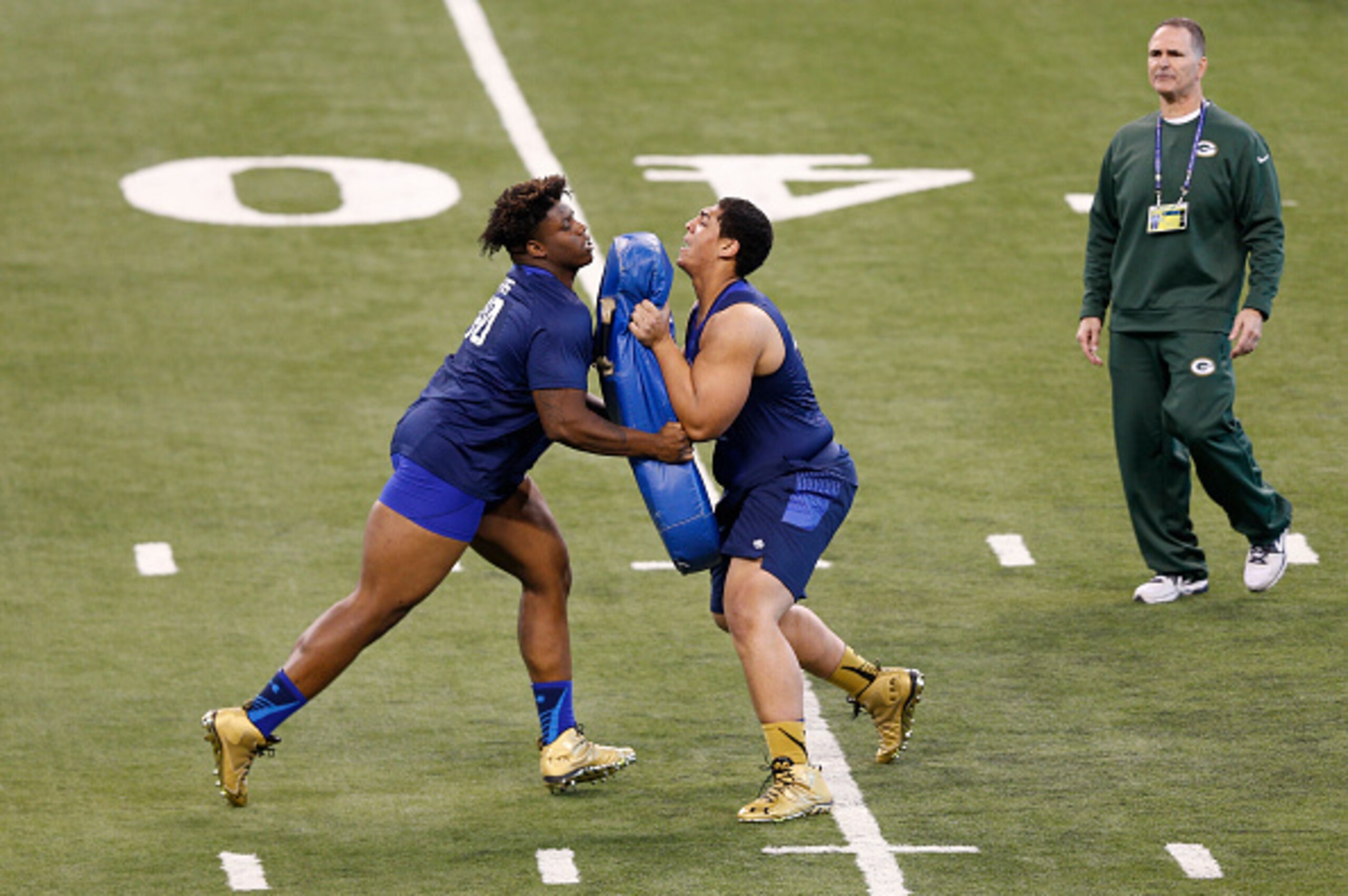
The 49ers offensive line gave up 52 sacks last season—tops in the NFL. They have injury concerns at tackle, guard and center. The starting right guard, Anthony Davis, missed nine games last season. The starting center, Daniel Kilgore, also missed nine games last season. And the starting left guard, Brandon Thomas, missed all 16.
The Niners need to draft an offensive lineman who can play more than one position.
Andrus Peat, Stanford University
Peat is the best left-tackle prospect in the draft. He’s huge (6’7”), long (34 ⅜-inch arms) and young (21), per NFL.com.
The Niners still have one of the best left tackles in the NFL—Joe Staley. When he retires, Peat can take his place. In the meantime, Peat can play left guard. If Anthony Davis gets hurt like he did last season, Peat can move to right tackle and the offense won’t miss a beat. The offense fell apart last season when Davis went down.
Cameron Erving, Florida State University
Erving probably isn’t quick enough to play left tackle in the NFL. But he can play right tackle, right guard, left guard or center.
Erving played tackle and center in college. He is one of the strongest offensive linemen in the draft (30 bench-press reps of 225 pounds), plus he has long arms (34 ⅛ inches), per NFL.com. San Francisco general manager Trent Baalke covets players who have long arms.
Cedric Ogbuehi, Texas A&M University
Ogbuehi has go-go gadget arms. They’re 35 ⅞ inches long, per NFL.com.
He played left tackle, right tackle and right guard in college, and he was a third-team All American in 2014. Scouts question his strength, but he can get stronger in an NFL strength-training program.
Ogbuehi tore his ACL during the Liberty Bowl in January. If the Niners fail to get Peat or Erving, they can get Ogbuehi later in the draft and develop him for the future.
.jpg?w=2560 "Chiefs Giants Football")
.jpg?w=2560 "Titans Colts Football")
.jpg?w=2560 "Eagles Jaguars Football")
Tight End
4 of 9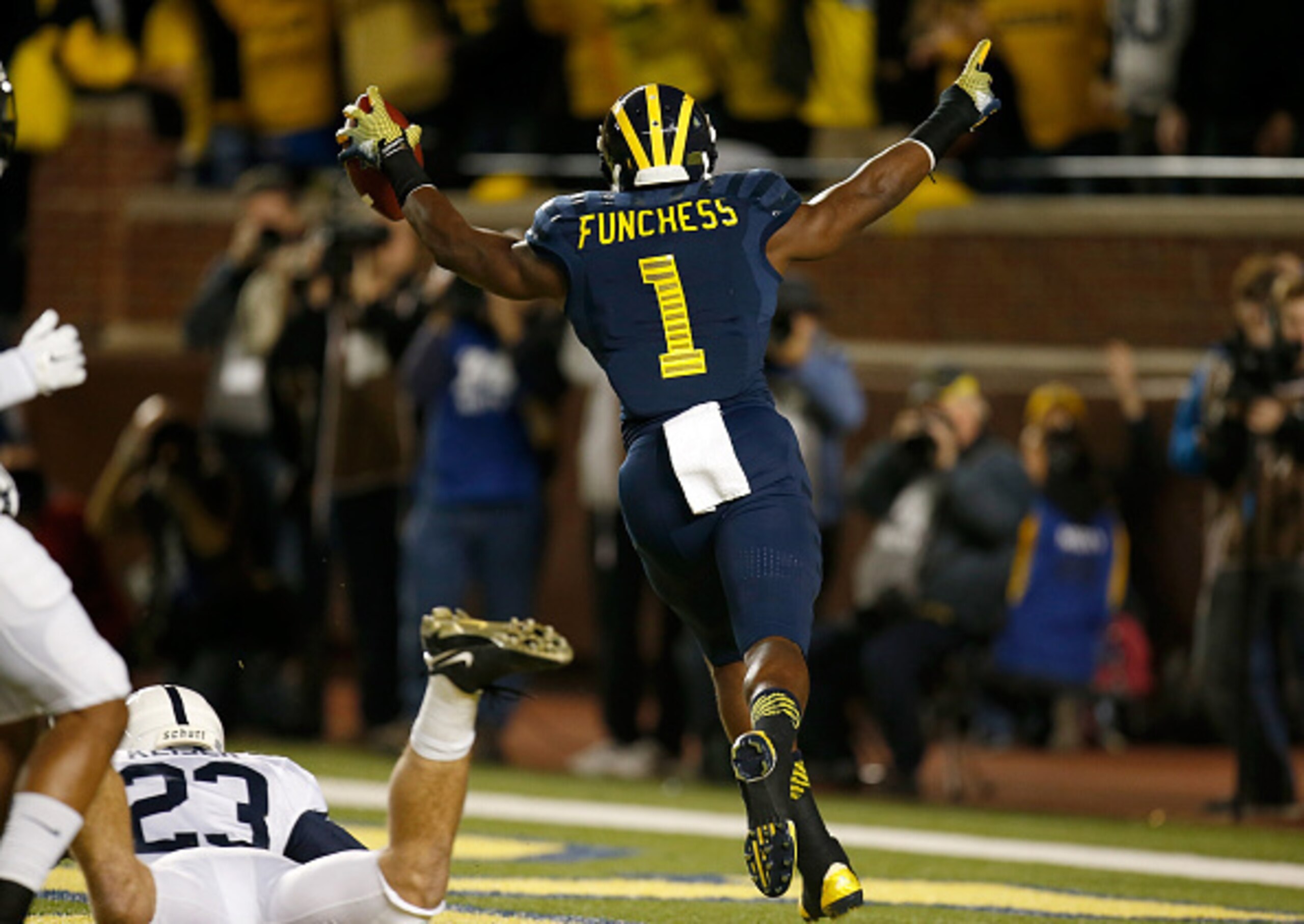
Vernon Davis has just one year left on his contract. He might sign with another team in 2016, or he might retire.
Davis used to be extremely strong and fast. In his prime, he was a devastating blocker and a dangerous deep threat. Last season, he was neither. He was slow and passive. He seemed like he was going through the motions.
His backup—Vance McDonald—is one heck of a blocker who can’t catch. He’s only a partial replacement for Davis. The Niners need a tight end who can catch.
Maxx Williams, University of Minnesota
Williams is the best pass-catching tight end in the draft. He was a deep threat and a scoring threat who averaged 16.2 yards per catch and caught 13 touchdown passes in two seasons at the University of Minnesota.
Williams is a bad blocker, though. He’s basically a big, slow wide receiver. Baalke tends to turn his nose up at players like that.
Clive Walford, University of Miami
Walford is an effective blocker and an effective receiver. He’s the best all-around tight end in the draft. He has long arms and big hands, and he’s strong and explosive.
Walford is similar to former Oakland Raiders’ tight end Zach Miller, a Pro Bowler in 2010. If the Niners want to draft a replacement for Davis, Walford should be available in Round 2.
Devin Funchess, University of Michigan
If the Niners feel they already have Davis’ replacement, if they don’t want to give up on McDonald as the tight end of the future, they can draft a receiving tight end—an “H-back”—someone like Delanie Walker.
The Niners drafted Walker in 2006. He was a wide receiver in college. So was Devin Funchess. They both ran 4.47 40-yard dashes at their pro days. Funchess is 6’4”; Walker is only 6’1”. But Walker weighed 240 pounds when he was coming out of college. Funchess weighs only 232 pounds.
Funchess will never be a great straight-ahead blocker. As he adds weight, he can become an effective “wham” blocker, like Walker was for the Niners. A “wham” is a block a defensive player doesn’t see coming. The defender rushes up field, and, “Wham!”—a tight end hits him from the side.
Inside Linebacker
5 of 9
Michael Wilhoite can’t replace Patrick Willis and Chris Borland.
Wilhoite is a bad run-defender. Pro Football Focus gave him a minus-6.5 run-defense grade last season, the second-worst run-defense grade on the 49ers. Wilhoite lacks inside-linebacker instincts. He’s a special teams guy. He played safety in college. He can play defense in passing situations against teams that have mediocre tight ends, but he can’t cover the good ones. He’s not a starter.
Stephone Anthony, Clemson University
Anthony has the speed (4.56) to cover the best tight ends on pass plays and the size (243 lbs) and strength (23 bench-press reps of 225 lbs, per NFL.com) to take on blocks from offensive linemen on run plays. He’s the total package—a rare three-down inside linebacker, like Willis was.
Anthony may not have instincts like Willis, though. Anthony made just 75 tackles his senior season. Willis’ senior season at Ole Miss, he made 137 tackles.
If the Niners trust Anthony’s instincts, they can get him in Round 2.
Paul Dawson, Texas Christian University
Dawson is the most instinctual inside linebacker in the draft.
He knows where the action will be almost before it happens. He made 136 tackles—20 for losses—his senior year at TCU. He plays like NaVorro Bowman.
Dawson might be too small to replace Willis, though. Dawson weighs only 235 pounds. He might be too small to take on NFL guards, although he took on guards in college.
If the Niners draft Dawson, they can play him at Bowman’s position—“Jack”—and move Bowman to “Mike,” which was Willis' old position. The “Jack” doesn’t take on guards, so the “Jack” can be a little lighter than the “Mike.”
Eric Kendricks, University of California, Los Angeles
Kendricks is even smaller than Dawson.
Kendricks weighed 232 pounds at the combine. Like Dawson, Kendricks probably would have to be the “Jack” on the Niners defense. But Kendricks might not be as good as Dawson. Kendricks is faster than Dawson (he ran a 4.61 at the combine, Dawson ran a 4.75 at his pro day), but Kendricks is a weaker run-defender. In four seasons at UCLA, Kendricks made just 26 tackles for losses. He may be a passing-down linebacker and a special-teams specialist like Wilhoite.
Denzel Perryman, University of Miami
Perryman and Kendricks would complement each other. Perryman is a run-stuffing specialist who cannot cover.
Perryman has the strength to play "Mike" linebacker in running situations. If the Niners draft him, they'll have to replace him with Michael Wilhoite in passing situations.
Outside Linebacker
6 of 9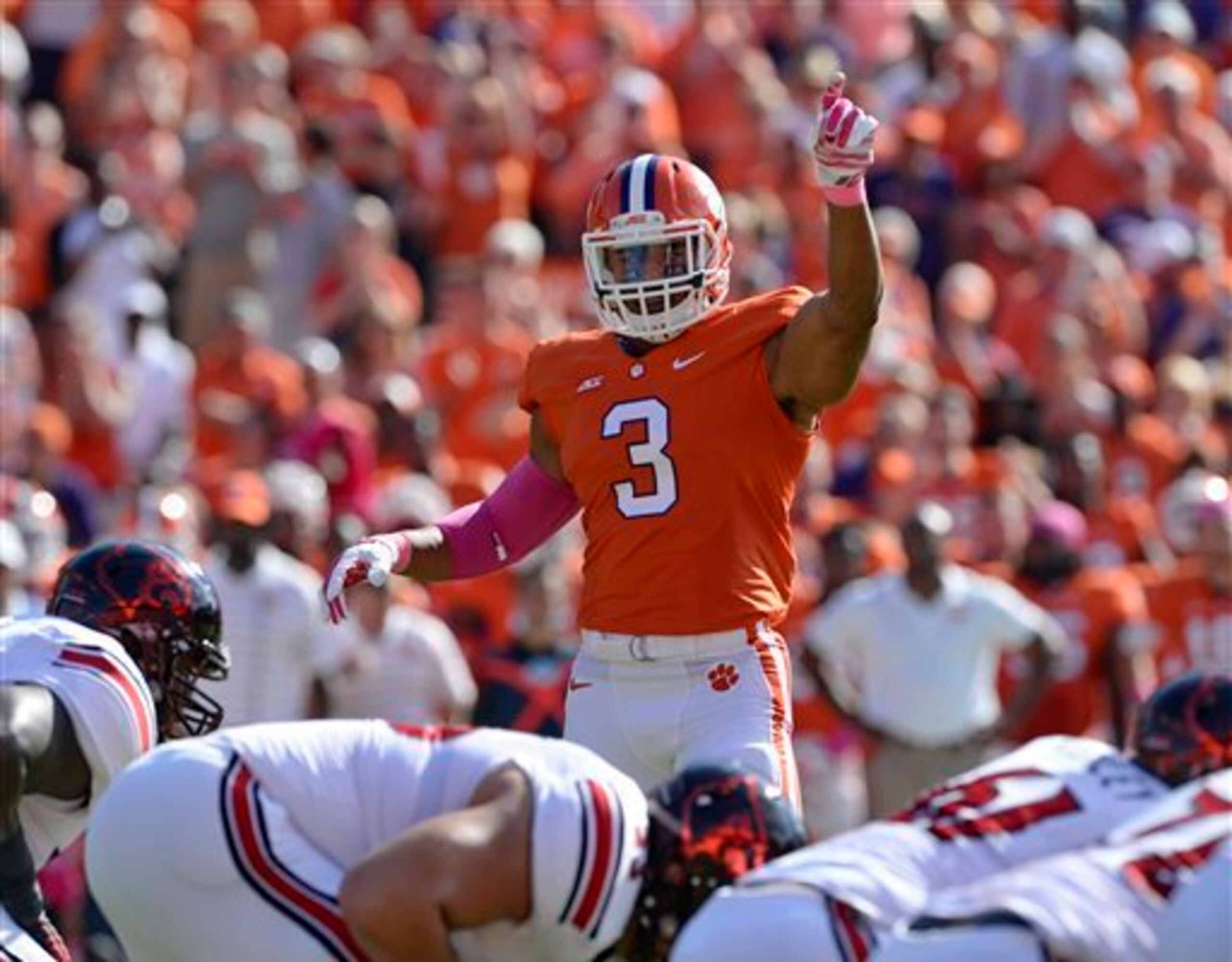
Until further notice, the 49ers have one good edge-rusher—Aaron Lynch.
Corey Lemonier is a dud. Ahmad Brooks is 31 and overweight—he weighs 270 pounds according to Matt Barrows of The Sacramento Bee.
And Aldon Smith was no good last season. He had two sacks in seven games. But he was suspended for the first nine games and couldn’t practice. It seemed he wasn’t in football shape when he returned. Maybe he’ll be in football shape next season.
Even if he is in shape, next season might be his last with the Niners. His contract expires in 2016.
Another edge-rusher couldn’t hurt.
Vic Beasley, Clemson University
Beasley is the best edge-rusher in the draft, even better than Dante Fowler, whom experts expect to get picked before Beasley. Fowler had 14.5 sacks and 33.5 tackles for losses in three seasons at the University of Florida. Beasley had 33 sacks and 52.5 tackles for losses his final three seasons at Clemson.
Beasley is a flat-out great athlete who can play every linebacker position. If Beasley falls to the Niners in the first round—long shot—he can fill two roles for the Niners his rookie season. In the base defense, he can play inside linebacker next to Bowman. In the Nickel defense, Beasley can play defensive end opposite Lynch, and Smith can move to defensive tackle.
Randy Gregory, University of Nebraska
Gregory is the second-best edge-rusher in the draft. He’s tall (6’5”), he’s fast (4.64) and he has 34-inch arms, per NFL.com. Remember, Baalke likes players with long arms.
Gregory’s problem is he weighs just 235 pounds. The Niners outside linebackers typically weigh about 260 pounds. Gregory isn’t big enough to play outside linebacker in the 49ers’ base defense.
He can be a pass-rushing specialist in the nickel defense until he gets bigger. Experts expect a team to pick Gregory in Round 1.
Alvin “Bud” Dupree, University of Kentucky
Gregory is a better pass-rusher than Dupree. But Dupree might be the better player.
Dupree is a solid pass-rusher—21.5 sacks the past three seasons at Kentucky. He probably won’t become a great pass-rusher, but he’s blazing fast for his size (4.56, 269 lbs, per NFL.com). He’s like a young Ahmad Brooks, but faster. Dupree should rack up six or seven sacks a season while playing great run-defense for whichever team drafts him in the first round.
Running Back
7 of 9
The 49ers are one injury away from becoming a finesse passing team.
Carlos Hyde is the only power running back on the Niners. If Hyde gets hurt, his replacements are small scatbacks—Kendall Hunter and Reggie Bush. They can’t run up the middle. Without Hyde, the Niners would have to change their entire offense.
They need another running back who can run between the tackles.
Melvin Gordon, University of Wisconsin
If the Niners draft Gordon, he will start and Hyde will back him up. Gordon is that good.
Gordon rushed for 2,587 yards last season, and the season before he rushed for 1,609. He’s as talented as DeMarco Murray and Le’Veon Bell—the leading rushers in the NFL last season.
If the Niners want Gordon, they must draft him in Round 1. He might be the best player available at pick No. 15. Would it be smart of the Niners to spend their first-round pick on a running back?
Todd Gurley, University of Georgia
Some draft experts—most draft experts?—prefer Gurley to Gordon.
Gurley is more powerful than Gordon. But Gurley hasn’t proven he can carry an offense. Gurley couldn’t stay healthy in college. He had only 510 carries in three seasons at Georgia. Just last season, Gordon had 343 carries. If Gurley’s body couldn’t withstand the pounding of college football, how will his body hold up in the NFL?
Maybe Gurley just was unlucky, a victim of fluky injuries. If that’s what the Niners think, they can get him in Round 1. He probably won’t fall to Round 2.
Jay Ajayi, Boise State University
Ajayi can carry the Niners offense if Hyde gets hurt. Ajayi carried the ball 347 times last season, more than any running back in college football.
Ajayi also can block and catch passes. He caught 50 in 2014. But he fumbled 12 times in three seasons, and he played in the Mountain West Conference. He faced mediocre competition most of his career. That’s why he’ll be available in Round 2.
T.J. Yeldon, University of Alabama
Like Gurley, Yeldon kept breaking down in college, although he missed only three games. He played through his injuries. But he carried the ball only 576 times in three seasons. He split carries with Eddie Lacy in 2012, and he split carries with Derrick Henry in 2014.
Yeldon probably won’t be a fulltime starter in the NFL, but he will be a terrific backup. He’s 6’1”, 226 pounds, he ran 4.52 at his pro day, per NFL.com, and he’s a terrific runner in a zone-blocking scheme. The 49ers might be transitioning to a zone-blocking scheme next season. Yeldon will probably be picked in Round 3.
Cameron Artis-Payne, Auburn University
If the 49ers prefer to wait until Round 4 to draft a running back, they can get Cameron Artis-Payne, the SEC's leading rusher last season. Artis-Payne is short and compact. He can run between the tackles or bounce runs outside, kind of like Frank Gore when he was younger.
Artis-Payne turns 23 in June. He is one of the older running backs in the draft. He probably will fall to Round 4.
Defensive Line
8 of 9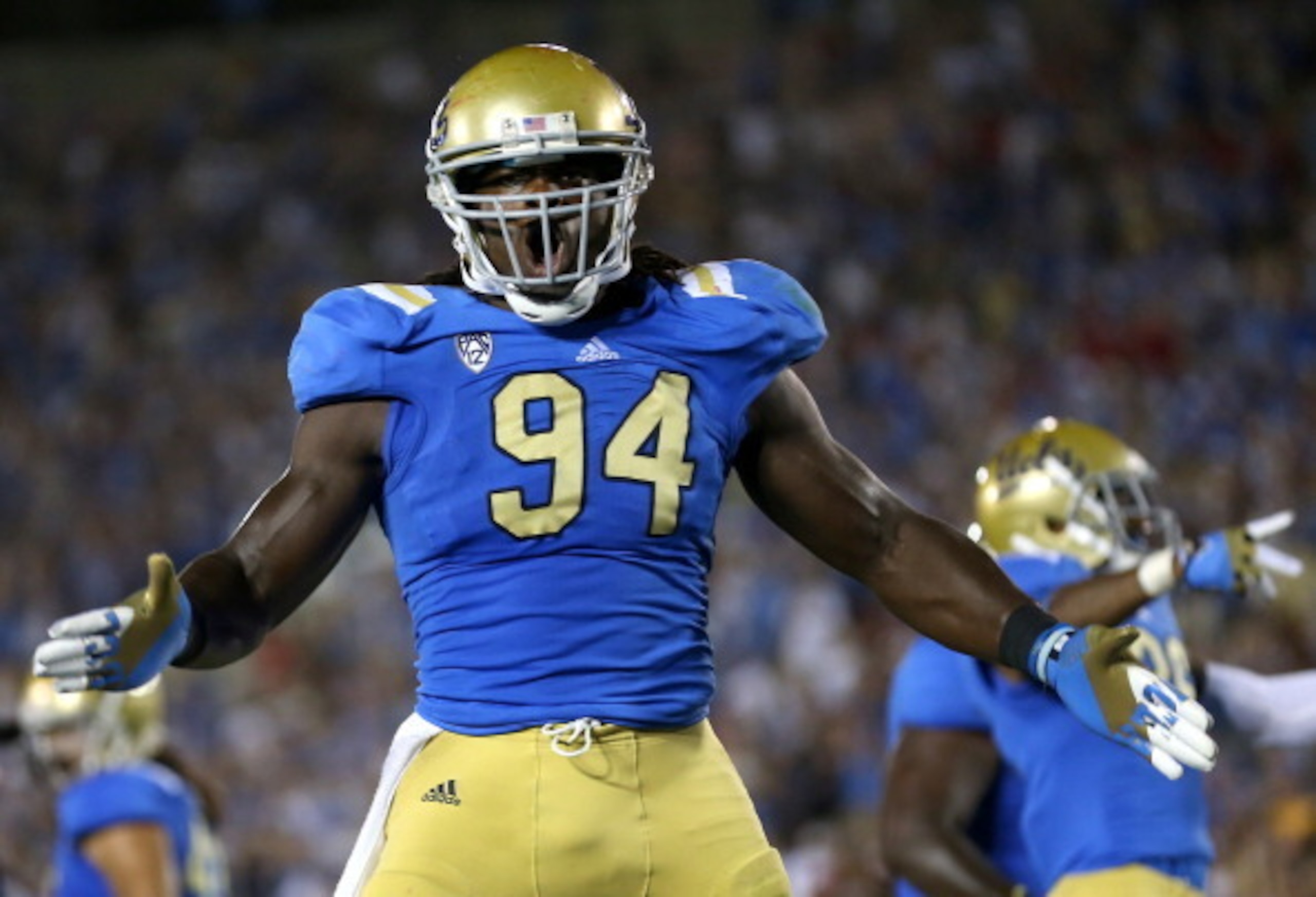
If Justin Smith retires, the 49ers’ starting defensive linemen will be Darnell Dockett, Ian Williams and Quinton Dial. Not bad, but not great.
Last season, Dockett missed 16 games with a torn ACL. Williams has started just 10 games in four NFL seasons. And Dial has started just six games in two NFL seasons.
The Niners could use an upgrade at all three spots on the defensive line.
Danny Shelton, University of Washington
On the Niners, Shelton would play nose tackle, or 1-technique, as the Niners coaches say. Shelton would line up between the center and the right guard.
Nose tackles typically are run-stuffers. Shelton might be more than that—he had nine sacks last season. But seven of those sacks came against three bad teams: University of Hawaii, Eastern Washington University and Georgia State University. In three seasons at Washington, Shelton had just 3.5 sacks against Pac-12 opponents.
Shelton is expected to be a first-round pick. He’d be worth a first-rounder if he were more than just a run-stuffer.
Arik Armstead, University of Oregon
Armstead is a different kind of run-stuffer than Shelton. Shelton is short and squatty (6’2”, 339 lbs., per NFL.com). Armstead is tall and relatively lanky (6’7”, 292 lbs., per NFL.com).
Armstead doesn’t play nose tackle. He plays Ray McDonald’s old position, left defensive end. Football coaches call it “5-technique.” The 5-technique takes on the right tackle, usually a tall player with long arms. Armstead has the height and arm-length to match up with right tackles.
Like Shelton, Armstead probably isn't a pass-rusher—Armstead had just four sacks in three seasons at Oregon. He might not be worth a first-round pick, although experts expect teams to take him the first round.
Owamagbe Odighizuwa, University of California, Los Angeles
Odighizuwa isn’t the next Justin Smith, but compare their combine numbers:
Odighizuwa: 6’3”, 267 pounds, 4.62 40-yard dash, 127-inch broad jump, 39-inch vertical jump, 25 bench-press reps of 225 pounds (per NFL.com).
Smith: 6’4”, 267 pounds, 4.64 40-yard dash, 117-inch broad jump, 34-inch vertical jump, 26 bench-press reps of 225 pounds (per nflcombineresults.com).
It's spooky how similar they are. They’re both “high-motor” players who never give up on a play.
But they have differences. Smith was 21 when he was drafted—Odighizuwa is 23. And Smith was a more skilled pass-rusher than Odighizuwa is. But Smith was the fourth pick in the 2001 draft. Odighizuwa probably won’t get taken until Round 2.
If the Niners draft him, he can play outside linebacker or defensive end his rookie season. He can move to “3-technique” defensive tackle—Justin Smith’s position—as he puts on weight.
Quarterback
9 of 9
At the very least, the Niners need a backup quarterback. Blaine Gabbert doesn’t count as one. He is a placeholder until the 49ers draft a real backup quarterback.
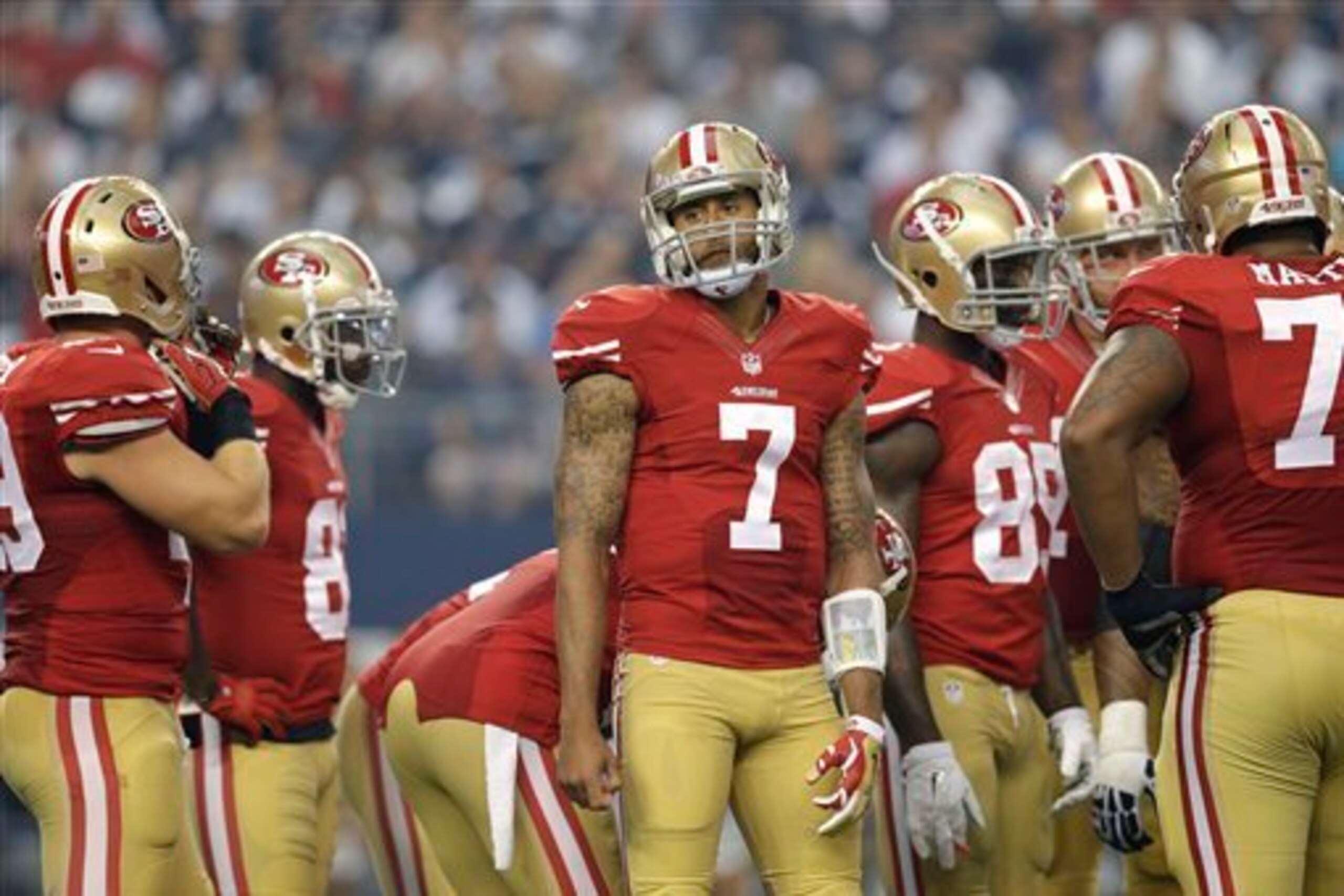
The Niners might need a starting quarterback, too. Colin Kaepernick turns 28 in November. His numbers have gone down every season he has been a starter in the NFL. If he continues to regress, the 49ers should cut bait next offseason.
Bryce Petty, Baylor University
Petty is a big quarterback who can move and throw downfield. He has the traits to become a starting NFL quarterback.
Some draft experts are down on Petty because he played in Baylor’s spread offense and didn’t call plays or take snaps under center. It seems unfair to judge a prospect for his coach’s system. Just because Petty learned and mastered one system, he can’t learn and master another one? Sure, he can.
But he’ll need a season to sit on the bench and learn a pro-style offense. He can do that on the Niners. He can back up Kaepernick in 2015 and then replace him in 2016 if Kaepernick needs to be replaced.
Petty should be available in Round 2.
Garrett Grayson, Colorado State University
Grayson is the opposite of Petty. Draft experts love Grayson because he played in a pro-style offense at Colorado State. It was Jim McElwain’s offense. McElwain was recently hired to be the head coach at the University of Florida. McElwain is the real deal.
Grayson is not. He is small (6’2”, 220 lbs.), and he doesn’t have a strong arm. He is a product of McElwain’s system. Before McElwain coached Colorado State, he was the offensive coordinator at the University of Alabama. He coached Greg McElroy, practically a carbon copy of Grayson.
McElroy is out of the NFL. Grayson probably won’t last long in the league, even though he’s considered one of the best quarterbacks in the draft. The Niners should pass on him, and Grayson should send McElwain a check when he gets picked.
Bryan Bennett, Southeastern Louisiana University
Bennett is more physically gifted than Grayson or Petty.
Bennett has a rocket arm, and he’s a quick, tough, instinctual runner. He shares some traits with Kaepernick. Like Kaepernick, Bennett played in a spread offense in college. Two spread offenses, actually. He initially was a backup quarterback at the University of Oregon and then he transferred to Southeastern Louisiana. He was the starting quarterback there for two seasons.
Bennett is a small-school sleeper who needs one or two seasons to develop. The Niners can probably get him in Round 7.
Brett Hundley, University of California, Los Angeles
Hundley is a better athlete than Bennett. As a pocket passer, Hundley makes Kaepernick seem like Tom Brady.
Hundley never learned to read a defense, never improved at UCLA. He took a beating. He got sacked 125 times in just three seasons. He became skittish and started scrambling even when he didn't face pressure. He probably won't be a successful quarterback in the NFL.
.jpg?w=2560 "Colts Football")
.jpg?w=2560)





