

Why the 2015 Draft Is a Make-or-Break Class for NY Giants GM Jerry Reese
There won’t be any mulligans for New York Giants general manager Jerry Reese if the Giants' 2015 draft class turns out to be a dud.
Nor should there be, as some of the decisions made by Reese and the personnel department have so hamstrung this organization that it's sometimes a wonder the Giants haven't finished the last two seasons with records worse than what they have.
The good news is that Reese and Company seemed to get the last two draft classes right. That's a good start; the next class, though has to come as close as possible to producing the same kind of contributors as Reese got from the 2007 group, his first class as general manager.
.jpg?w=2560 "Cardinals Giants Football")

.jpg?w=2560 "Jets Dolphins Football")
There are many reasons, among which include the edicts by co-owners John Mara—who was first with his indirect yet clear issuance of a “win or else” ultimatum at the end of last year’s disappointing season—and Steve Tisch, who, per Jordan Raanan of NJ Advance Media, shares Mara's sentiments.
Besides the threat of potentially losing his job if this next draft class should bomb, what Reese and the Giants do or don’t do a month from now when commissioner Roger Goodell declares the 2015 NFL draft open for business can have significant repercussions on the franchise’s direction for years to come.
Simply put, if this draft class doesn't yield three or four quality players who can become part of the team's fabric, the Giants are in deep trouble.
The Draft: A Team’s Lifeline
In early March of this year, Andy Benoit of The MMQB wrote an outstanding article entitled “Buyer Beware,” which looked at the dangers of relying too heavily on using free agency as a way to supplement a roster.
Benoit noted that while not all free agents are bad, usually it’s a safe bet to assume that a free agent who reaches free agency has some sort of caution flag attached to his name, which makes investing in the player a risky proposition.
That’s why the team that drafts well—that doesn’t have to rely as heavily on free agency—is usually going to be a perennial competitor in the postseason. These are the teams who can find players, develop them and retain them.
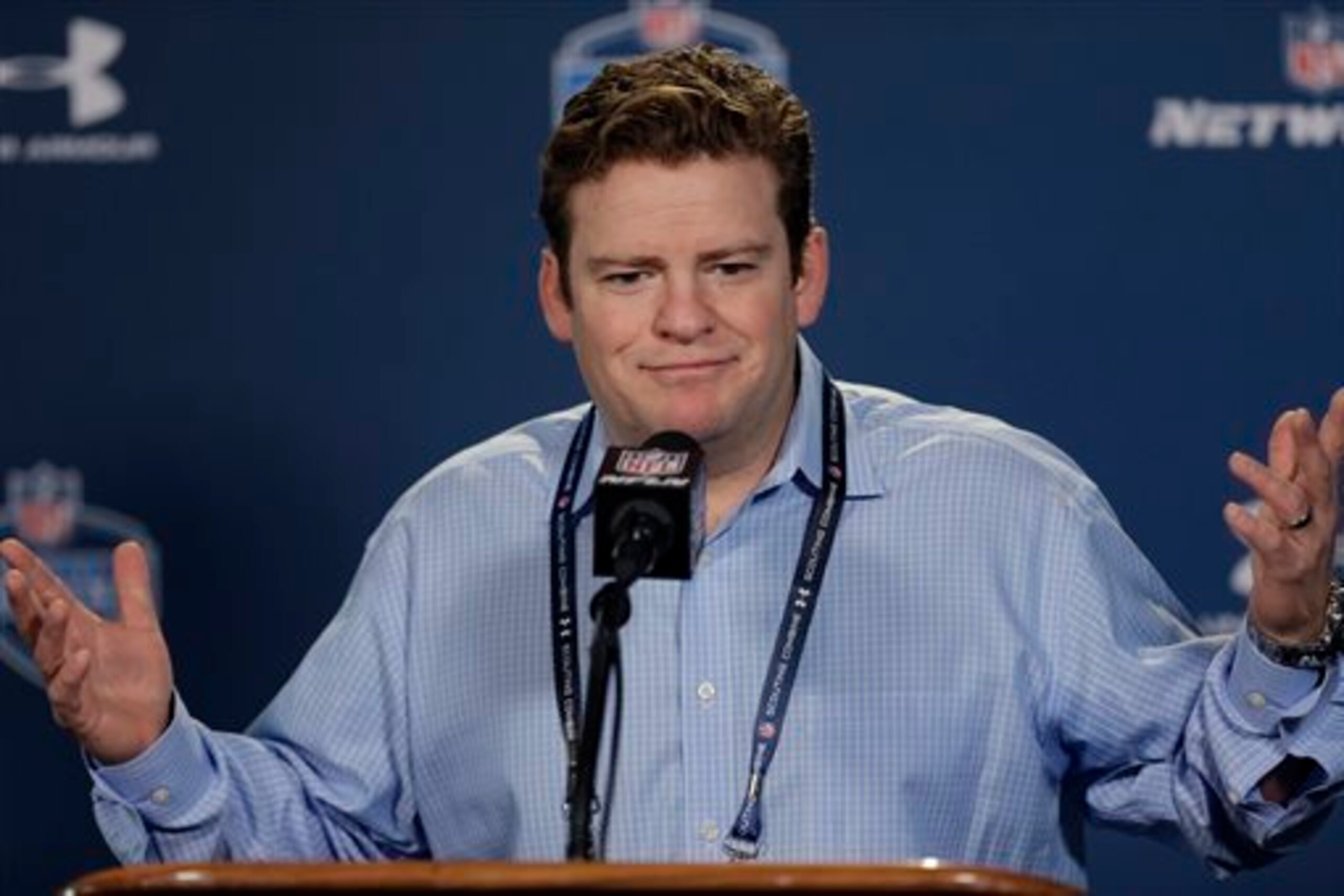
In a 2014 study by Ben Volin of The Boston Globe, teams such as the Seattle Seahawks and New England Patriots are among the strongest of the drafting teams who also qualify for the playoffs, while teams such as the Oakland Raiders, Jacksonville Jaguars and Chicago Bears—all teams who haven’t even had a sniff of the playoffs—are among the worst.
The Giants? Let’s look at some cold, hard facts about their draft classes from 2009 through 2012, since each class has now had a chance to establish its legacy in team lore.
The following table looks at where the Giants personnel stands as of the conclusion of the 2014 season. If a player was on injured reserve, he is counted in the appropriate column—e.g., cornerback Prince Amukamara will still be counted as a starter for the 2011 class even though he was on injured reserve last year.
Also, any player who didn’t make the 53-man roster but who did make the practice squad is counted as being “out of the league,” since he was unable to contribute on game day (and this isn’t counting players who were signed off the practice squad late in the year due to injuries).
| 2010 | 7 | 1 | 0 | 1 | 5 | Jason Pierre-Paul |
| 2011 | 8 | 2 | 2 | 1 | 3 | Prince Amukamara |
| 2012 | 7 | 1 | 4 | 1 | 1 | Rueben Randle |
There are three conclusions to be taken from the above stats.
First, the Giants have had four draft picks out of 22 selections develop into starters. Yes, injuries have played a part of that.

For example, 2012 first-round pick David Wilson, a running back who was viewed as potential starter, was forced to retire prematurely.
Safety Chad Jones, a third-round pick in 2010, never got his football career off the ground due to injuries resulting from an offseason car accident that occurred before the start of his first training camp.
Still, with there being 22 starting jobs available (11 on defense and 11 on offense), only 18 percent of the Giants' starting roster consists of picks from the 2010-2012 class, all of whom should have been hitting their stride by the 2014 season.
Second, if you look at the alarming number of Giants draft picks who are out of the league, it becomes clear why the team has not only had to rely on free agency more so in 2013 and 2014.
Over that period, New York has signed 27 free-agent players from other teams, 11 of whom contributed to the 2014 team in some way and seven of those 11 being starters at their respective positions.
When a team has to keep devoting money to free agents, who are generally going to earn more than draft picks, it is no wonder why the Giants seem to have to massage their cap space every year.
Third, look at the Giants’ regular-season record from 2010-2013. In that span, they have gone 35-29, with only one season (2010) in which they recorded double-digit wins.
They have only made one postseason appearance—that in 2011, when they won the Super Bowl after winning the NFC East with a 9-7 record.
At a Crossroads
It’s certainly fair to say that the Giants’ 2013 and 2014 draft classes have yielded much more fruit than the classes discussed in this analysis.
Using the same criteria as that in evaluating the 2010-2012 classes, here is a look at the last two years, which shows gradual improvement in the return on investment made on the draft picks.
| 2013 | 7 | 2 | 4 | 0 | 1 | Justin Pugh, Johnathan Hankins |
| 2014 | 7 | 3 | 3 | 0 | 1 | Odell Beckham Jr., Weston Richburg, Devon Kennard, Andre Williams |
The takeaways? First, 35 percent of the draft picks have developed into starters, a significant improvement over earlier classes.
Also, just two players—offensive lineman Eric Herman and cornerback Bennett Jackson—failed to earn spots on the 53-man roster coming out of camp (Herman twice so far), though both will have another chance to rectify that this coming summer.
However, this team and, in particular, Reese, the personnel department and the coaching staff are all at a crossroads thanks to the “win or else” mandate the otherwise patient owners have issued.
For as much progress as the Giants have made, the upcoming draft class is going to be critical in terms of potentially pulling this team out of a mediocre state and bringing it back to prominence.
Why is this important? Currently the Giants have three key pieces of their roster entering the final years of their respective contracts: defensive end Jason Pierre-Paul, quarterback Eli Manning and cornerback Prince Amukamara.
According to Over the Cap, the Giants are tentatively set to have $60.44 million in cap space based on a projected $150 million salary cap.
Those three contracts alone could potentially eat up a chunk of that cap space, especially if the Giants have to apply the franchise tag to any of the three (Pierre-Paul or Amukamara would probably be the most likely candidates for the franchise tag next year barring their arrival at a new multiyear deal before then).
The point is that the Giants can’t keep relying on free-agent acquisitions to step in and make up for the depth and future starters they were supposed to get from their draft classes.
This vicious cycle of having weak drafts puts them into a corner, not just in terms of not having quality depth in the event of a rash of injuries, but also regarding their own free agents they might want to retain—players who will hopefully start to be their own homegrown draft picks from prior years.
Patricia Traina covers the Giants for Inside Football, the Journal Inquirer and Sports Xchange. All quotes, stats and other information obtained firsthand unless otherwise sourced.
.jpg?w=2560 "Titans Ravens Football")


.jpg?w=2560 "NFL investigating 2 referees for separate viral exchanges")

