

Stan's 5-Point Stance: English Clubs Are Now Complacent, Liverpool Have Utd Edge
In this week's five-point Stance, Stan Collymore analyses Premier League teams' failure in Europe, looks ahead to two big games in England and Spain this weekend—and offers some insight into Tim Sherwood's promising start at Aston Villa.
1. Premier League teams have become bloated and complacent, and Europe has exposed that
Arsenal’s exit in the Champions League this week, and to a lesser extent Manchester City's, is a symptom of a greater issue within English football, which now has no teams left in Europe's biggest club competition.

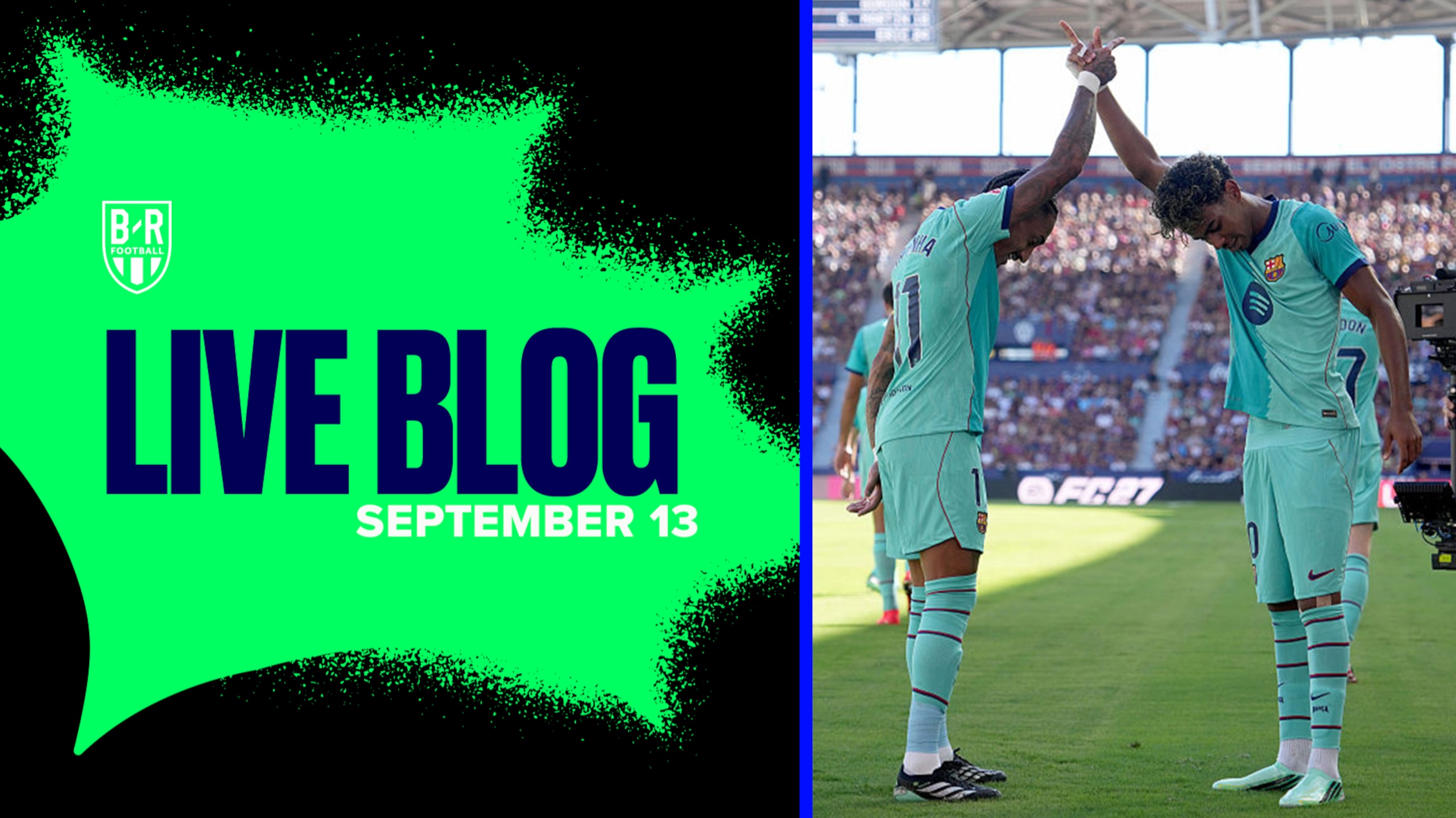

I think there is an attitude now within the English game, because of all the money that is coming into it and the wages we are now able to pay, that we are attracting the best talent—but I'm not sure that is true. I’m not sure the quality of the players we have actually reflects that top-end money being paid.
If you look at some of the players who have come to the Premier League recently and become high-paid stars, many of them have been let go by Barcelona and Real Madrid—and those sides remain the European benchmark. Yaya Toure, Mesut Ozil, Alexis Sanchez; they are all great players, but you would not necessarily put them in the very top bracket, yet we are paying them like that.
I think that is a worrying problem, and it might only get worse when the new TV deal kicks in. We are going to sign more and more players just under that very top level, paying them world-class wages.
You look at someone like Radamel Falcao—he is one of the world’s highest-earning players, yet he has hardly played in the Champions League for the last five seasons. For the sort of money he is earning, you would expect him to have been the Champions League's top scorer for the last three seasons. It’s a bit concerning the wages we are throwing at players who are not the very best in the world.
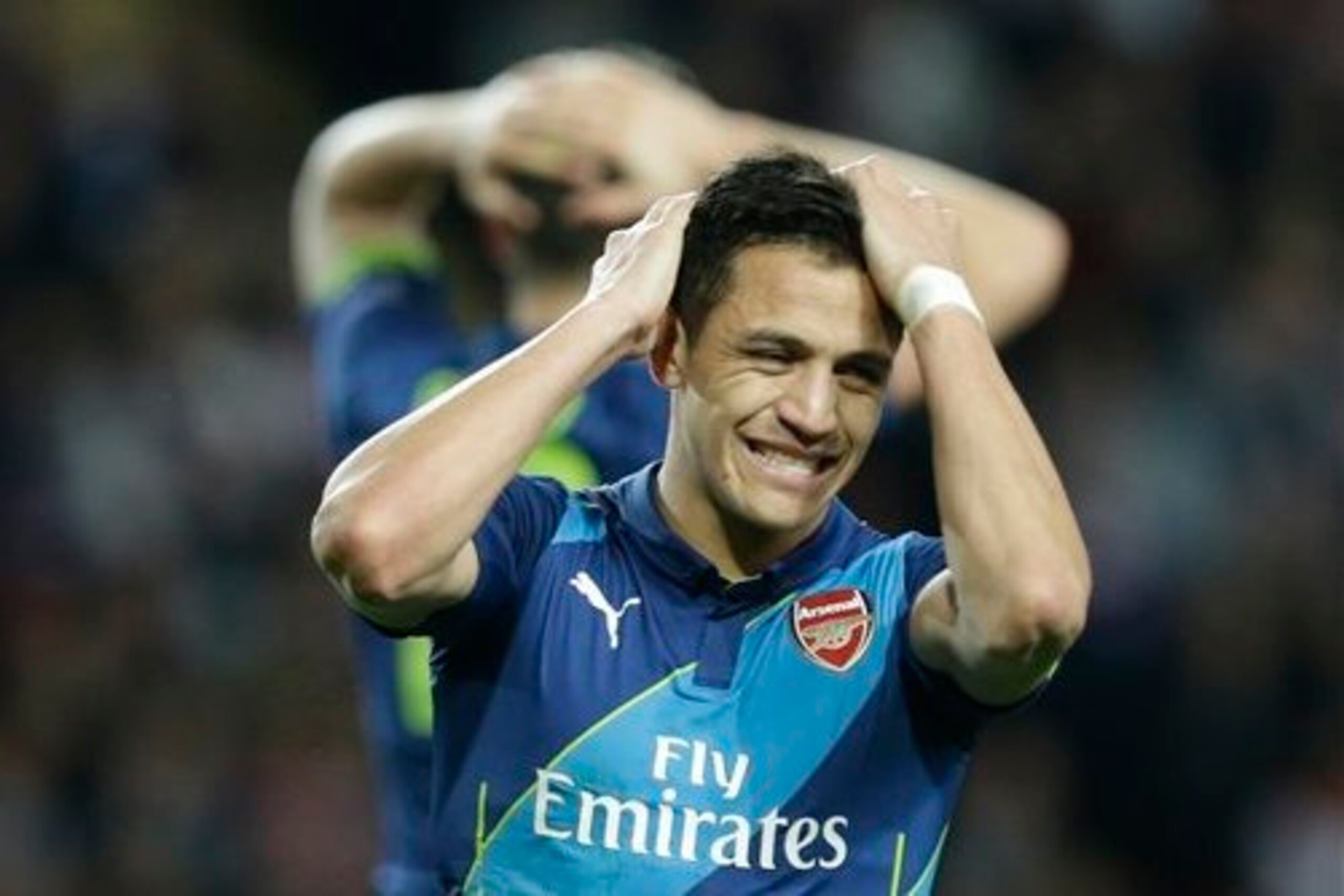
I think that is a complaint that can be levelled at all the English teams, even Chelsea (they are paying a lot for Cesc Fabregas). All those players I’ve mentioned are probably earning in excess of £150,000 a week, and yet the two clubs in Spain that let them go are probably not shedding many tears about their departure.
The Europa League is a similar but slightly different situation. The old chants of "Thursday night, Channel 5" still linger, I think, but on the continent this remains a great and respected competition. Diego Maradona has won it; Jose Mourinho won it for his first continental trophy in management.
I went to Seville last season, and I watched them in a qualifying tie against Mladost Podgorica. They treated that seriously, treated every round seriously and ended up winning the competition. They could do it again this season. No English club would treat it with the same respect.
Maybe it’s an island mentality; maybe it’s complacency. Maybe it’s all a hangover from the 2008 Champions League final between Manchester United and Chelsea, where I think many thought English football had made it. I remember being there and speaking to other members of the press who said "This is it now, every Champions League final is going to have at least one English team."
But we’ve stagnated since, become a bit bloated and greedy on the money, and other countries and teams have made huge strides.
We need to rethink quickly because otherwise it might not be too long before the Italian teams overtake us in the co-efficient and suddenly we only have three teams in the Champions League. But that is still a few seasons away, so we have time to rectify things.
2. Loser between Manchester United and Liverpool will end up being story of the season
Manchester United go to Liverpool on Sunday, and it’s now quite a simple scenario that faces both teams. I've been saying for three months now that fourth is between those two teams, and if Liverpool win, they leapfrog their rivals with eight games remaining.
Whoever wins the game will have a key advantage—and whoever ends up missing out on the Champions League will end up being the story of the season.
For Liverpool to miss out, after qualifying last year and all the new hope that brought, it would be a massive step back for them. But for Manchester United to miss out again, after all the money they have spent, the new manager they have brought in and the new sponsors they continue to add, that would be a massive story, too.
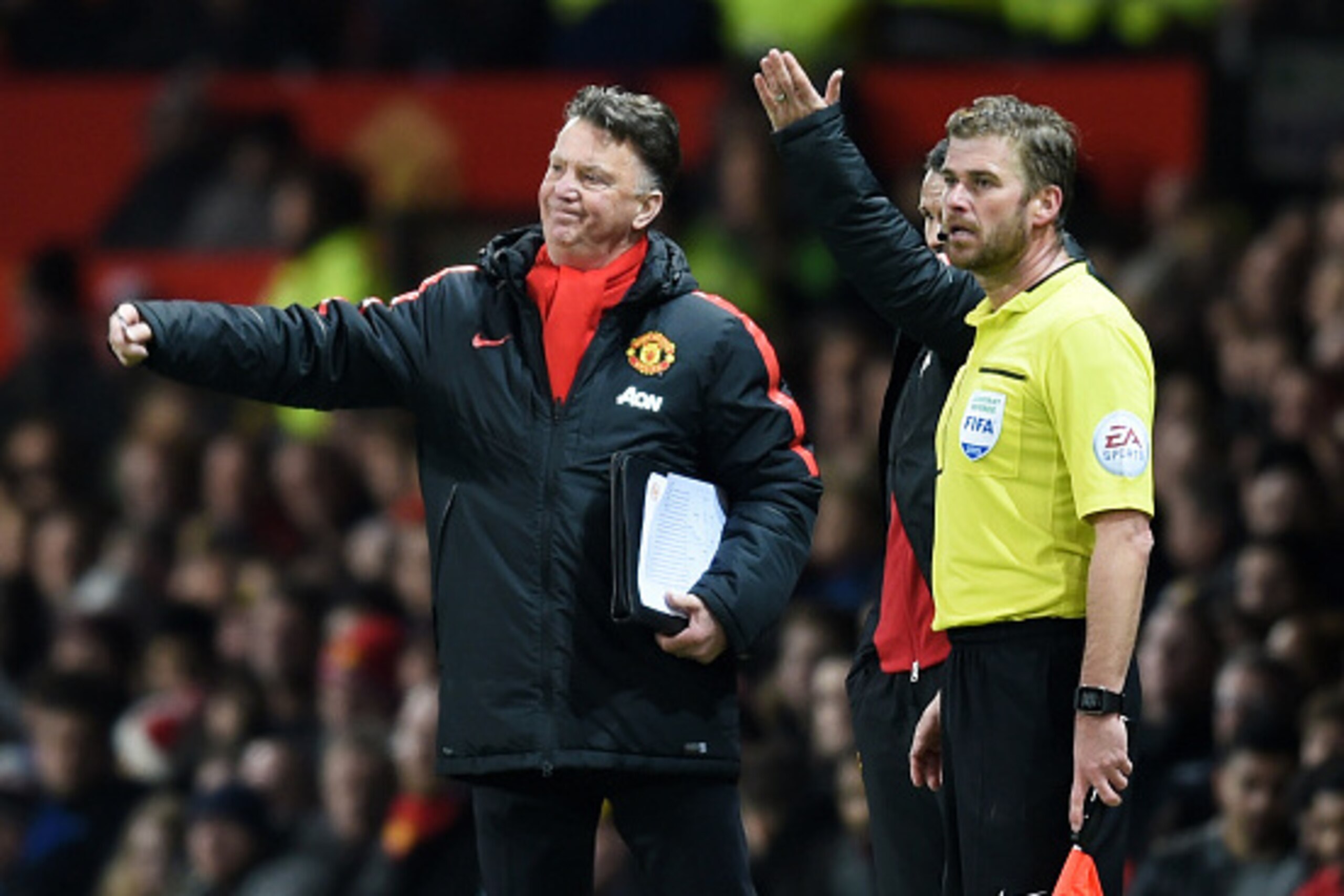
That narrative will begin at Anfield, but I think Liverpool have the edge. They perhaps have a slightly more favourable run-in than their opponents, which could be decisive. If I’m right, that would be massive for United to miss out on the Champions League—especially with such an experienced and successful manager. How will that affect their spending in the summer?

On the pitch, I don’t think it is a game that Steven Gerrard has to start. I think most of Liverpool’s best performances this season have come without him in the team, and I wonder if sometimes his influence and importance, after more than 10 years as a pivotal player, has a detrimental effect. Sometimes when he's on the pitch, the team tries to play through him more than they need to, deferring to him unnecessarily.
Jordan Henderson, Raheem Sterling and Philippe Coutinho have all flourished in Gerrard’s absence, so perhaps Brendan Rodgers should continue with that.
On the other hand, Manchester United have to keep Wayne Rooney as their main striker. He got to double figures in goals playing in a deeper role this season, but we saw against Tottenham what he can do from a more central position in attack. That was as close as we’ve seen from United, particularly in the first half, to the teams of old.
As I said last week, I’d get rid of Robin van Persie and Radamel Falcao in the summer, put an arm around James Wilson and then perhaps buy someone like Christian Benteke—a "mid-priced" striker who can be a third option—to round things out.
I give Liverpool the edge on Sunday, particularly because they’ve been keeping a lot of clean sheets recently, but having watched, played and commentated on these games, I know they tend to be very close.
I’ll go 1-0 Liverpool.
3. Tim Sherwood's simplified approach has given Aston Villa confidence
When Tim Sherwood took over and Aston Villa got off to a difficult start, you thought that they’d already wasted that fabled "new manager bounce." Once that has happened, suddenly you are gambling the next 10 games on a new manager who perhaps doesn’t even know himself how good he really is.
I talked to him on the phone last week, and I have to admit that with his enthusiasm and his cockiness, he really is incredibly persuasive. As a footballer in the dressing room, as much as the tactical side is important, when you are in a relegation situation, the key thing is confidence.
I spoke to goalkeeper Shay Given after the previous game against West Brom, and he had told me how the gaffer hadn’t been happy at half-time—Given said the chalkboard went flying, and one or two home truths were mentioned. And that’s when they were winning, and playing quite well!
So when I spoke to Tim, I asked him: "What are you like as a manager?" He said: "I give one or two a little tickle, and one or two a smack around the head."

I think that sort of simple approach from a manager creates an environment in which you just need to impart a few clear, simple instructions to the players before the game and underline your belief that they can do that, and they will go out and believe it. The differences in performances from the start of the season, it’s light and shade. The attacking forwards are playing with confidence, and that’s a huge difference.
When you look at the other teams down there, it is looking a lot better for Villa now. It remains to be seen what Dick Advocaat can bring to Sunderland. That was just pure panic from the club, but that seems to be the way things are going now.
First you had the phenomenon of a manager being sacked one year into a three-year contract, and then you had the manager sacked on the eve of the transfer window so the new man had time to bring in his own players. Now we have the third phase, where clubs sack managers just to try and get that "new manager bounce."
Soon clubs will be sacking managers with two or three games left, just as a final roll of the dice.
Advocaat has a decent reputation, especially on the continent, but then so did Felix Magath at Fulham—and look what happened there. Does he know any of the players? If he’s asking his assistants for information on players and their strengths and their weaknesses in training, how is he going to make a real impact in eight weeks? How is he going to know which players to give a kick and which to give a cuddle? These are important details.
Sunderland might still have enough to stay up—their defence is generally OK, and that might save them—but that could end up being as much to do with the weakness of other teams as Advocaat’s impact.
For Villa, the next key game is Swansea at home. If they beat Swansea at home—a genuinely good side, whereas the games they’ve won so far were either derbies or against struggling teams—that will show they have the quality required and give the fans real belief. But they are still in a relegation scrap, and none of the teams will know their fate until the final few weekends.
4. Barcelona’s consistency once again gives them Clasico edge
It is interesting how things have changed in Spain. At the start of the season, as Real Madrid started so brilliantly, we were talking about them going on and being "modern invincibles"—they just looked unstoppable as they were dispatching teams by three or four goals and producing some blistering attacking football.
But more recently they have struggled for consistency and a number of key players have gone off the boil. Iker Casillas, Pepe, even Cristiano Ronaldo—they’ve all looked under par, and their body language has not looked right. If Barcelona win that game, on the back of a Champions League win against Manchester City, that will be ominous for the remainder of the season.

I’m not going to say that Barcelona are back to the dominance of three or four years ago, but the consistency of performances has certainly improved—as has Lionel Messi. It just seems with Barcelona that the lows are never quite as low as they are with Real Madrid, while the highs tend to be more consistently high.
Luis Enrique took his hits at the start of the season, but he seems to have learned from those and is quickly finding a rhythm, as is his team.
You can’t say the same of Real Madrid, and it’s worrying when you see how things are with Ronaldo and Gareth Bale. Now the common consensus is that Carlo Ancelotti will go at the end of the season—perhaps returning to PSG—and you wonder if a few others could end up departing the club with him.
After winning La Decima last season, which is such an important moment for the club and a similarly significant one for a lot of the players, you wonder: "What else there is to do?!" After climbing that summit, you wonder if some of the players need a new challenge, if that hunger that you need to be the very, very best has started to fade.
Perhaps a new challenge is needed for a few key individuals. Barcelona don’t seem to be afflicted with that issue any more, if they ever were in that period after Pep Guardiola's departure. I can see them winning the game, perhaps reasonably comfortably.
5. Ajax, one of football’s most romantic and successful stories, offer a blueprint for all
This week I’ve been spending time in Amsterdam, meeting my old friend (and team-mate) Bryan Roy and having a look around Ajax again.
I’ve always been a huge fan of the club, its philosophy and what it stands for. I’ve been lucky enough to see its working from the inside a couple of times now, to sit in the war room with the manager and his staff and see how they do things from the junior age groups up to the senior squad.
Obviously Johan Cruyff lit the blue touchpaper for the club, instilling many of the principles that Barcelona also share. Those two clubs have the blueprint for all football academies, I think, and now we are seeing a number of English clubs trying to emulate that same approach. Ajax's academy is certainly a prodigious production line for talent.
Whether they have a golden generation, like the team that won the Champions League in the 1990s, or the slightly less talented collection of young players they have today, the thing with Ajax academy products is they all play the same way, they are always well-educated (on and off the pitch), and they always know how to read the game tactically and play it efficiently.
That’s why they will always have suitors around the continent, because any club knows they will be able to slot into a system efficiently, and that's why the top players—like Christian Eriksen, for example—are capable of enhancing any team in the world.
I’m looking forward to watching the latest crop in action in the Europa League on Thursday night, and being in the stands as this great club celebrates its 115th birthday.




.jpg?w=2560 "Sports Leagues Ask for Protections from Bettors' Threats (AP)")




.jpg?w=2560 "Mahomes Reacts to Bettors Vid 😂")