
Ranking the Top 25 USMNT Players in the Last 25 Years
The end of the year always brings reflection. And for American soccer fans, as they prepare for the excitement of co-hosting the 2026 FIFA World Cup, they might also take the end of 2025 to reflect on the winding path of the U.S. men's national team over the last 25 years.
The Yanks have had considerable highs and lows over that stretch, from the stunning run to the 2002 World Cup quarterfinals, to the heartbreaking failure to qualify for 2018, to the redemptive return to the 2022 field.
Along the way, we've seen the number and quality of national team contributors grow substantially since the 1990s, when most agree the program's modern era began.
So before we look forward, let's look back at the Top 25 national team contributors from the last 25 years. And two quick notes:
- Legends like Alexi Lalas, John Harkes, Eric Wynalda, Cobi Jones and Tony Meola were not considered because their contributions came mostly before 2000.
- Players currently in the national team picture were ranked based on their contributions to date, not on how they are projected to complete their careers.
25. Tony Sanneh
1 of 25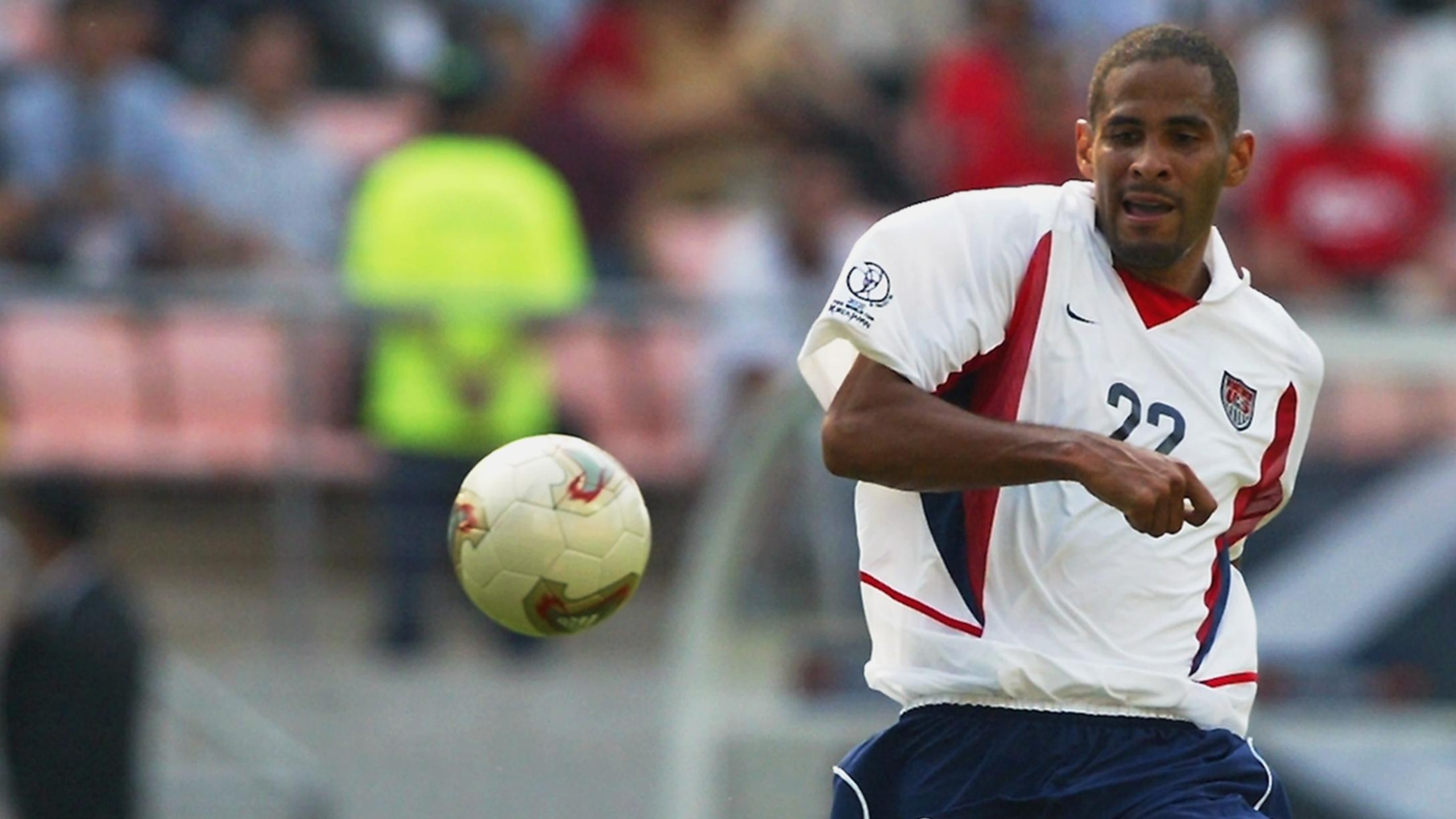
Caps: 43
Goals: 3
World Cups: 1 (2002)
Tony Sanneh is not nearly as household a name as some on this list, through little fault of his own.
His was a problem of timing, having already turned 25 before he got the chance to play first-team MLS minutes in the league's inaugural 1996 season. Even there, the versatile midfielder's exploits with D.C. United were somewhat overshadowed by the magic triangle of Marco Etcheverry, Jaime Moreno, and Raul Diaz Arce.
By the turn of the millennium, he was good enough to earn regular Bundesliga minutes when very few Americans could, and at age 31, he was one of only four field players to play all 450 minutes of the USA's run to the 2002 World Cup quarterfinals.
Perhaps more than any other player on this list, Sanneh's story is also of what might have been had he been able to develop in a professional academy environment at a younger age.
Even so, his contributions are significantly underrated, and his positional flexibility would only have been more prized today.
24. Pablo Mastroeni
2 of 25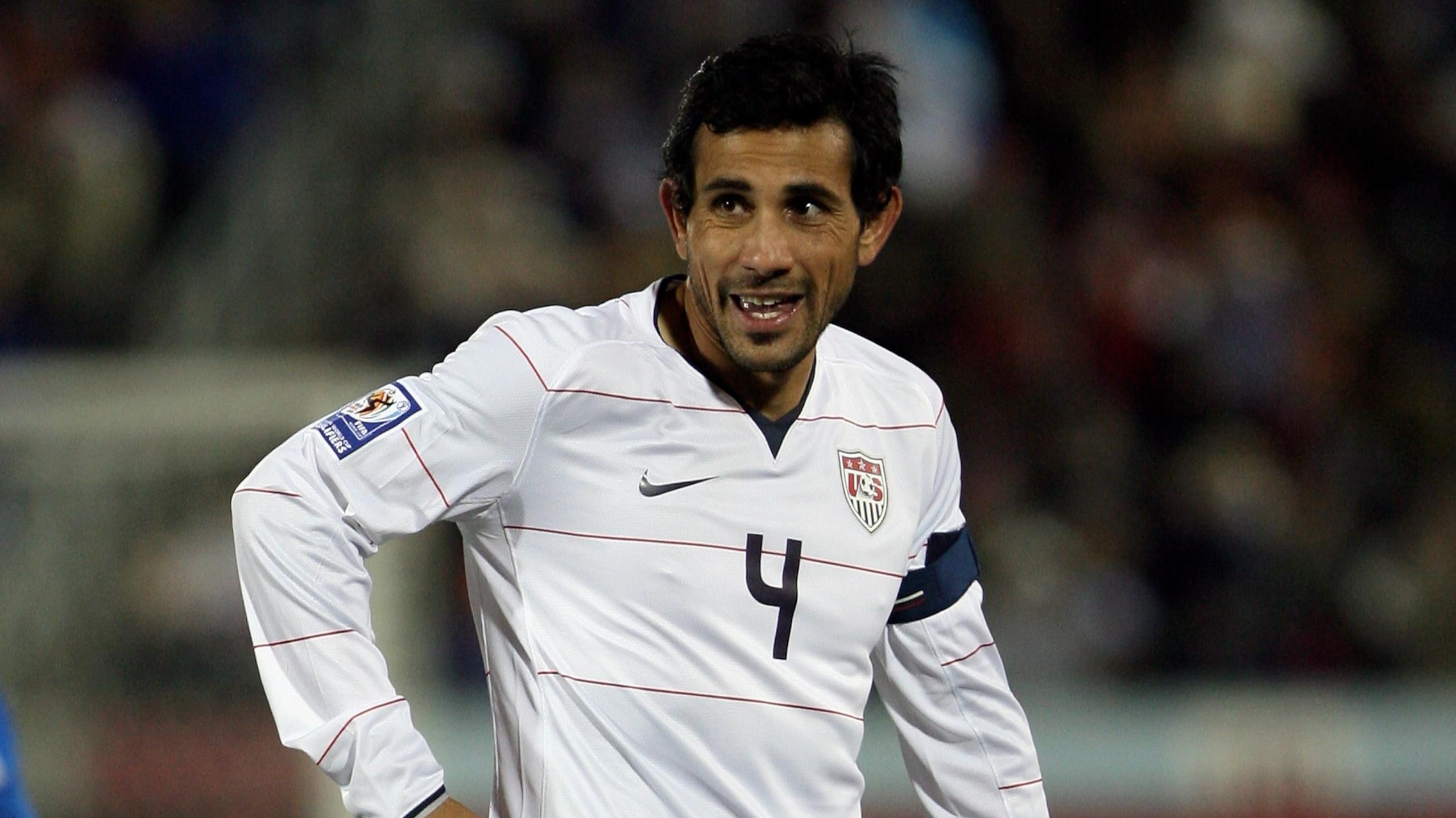
Caps: 65
Goals: 0
World Cups: 2 (2002, 2006)
Today, most MLS fans know Pablo Mastroeni as the tenacious and at times contentious manager of Real Salt Lake. He was exactly the same guy in his playing days.
Mastroeni was the epitome of the kind of player you loved if he was on your team, and hated if he wasn't. And while the No. 6 wrecking-ball midfielder never tried his luck at playing in Europe, that may have ultimately been a wise decision.
On the other side of the ocean, his natural intensity, combined with a much more crowded fixture list, might have been a recipe for overuse injuries. In MLS, he remained a regular well into his mid-30s while contributing to three World Cup cycles.
He started five matches across two World Cup finals appearances.
He would've all but certainly earned a sixth start had he not been suspended for the 2006 group finale against Ghana after he was one of three players -- and two Americans -- sent off in a 1-1 draw against Italy.
23. John O'Brien
3 of 25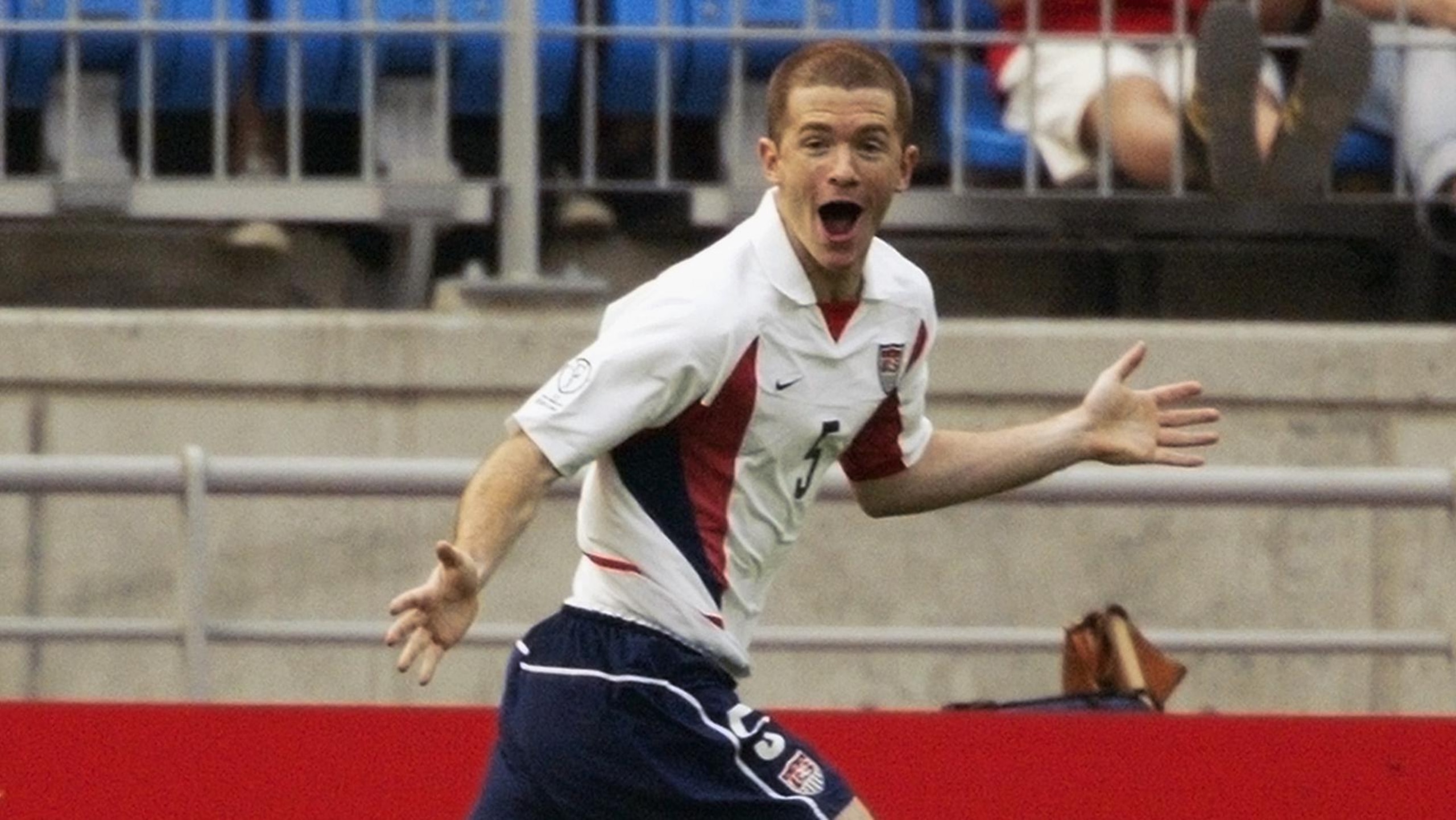
Caps: 32
Goals: 3
World Cups: 1 (2002)
John O'Brien was a pioneer among American kids who took the plunge to join European youth academies, leaving home at age 16 to become part of the vaunted Ajax Amsterdam setup.
By the 2001-2002 season, he was a regular starter for a Dutch League champion and still just entering his prime. And he was arguably the most technically proficient player on the 2002 World Cup squad.
Unfortunately, injuries prevented him from ever replicating the form he showed in the Netherlands that year or Korea/Japan that summer. If they hadn't, it's very possible we'd be discussing O'Brien toward the back end of this list rather than the front.
Even so, he was important as a proof of concept that some elite American players could go to Europe before adulthood and thrive, a practice that would become far more commonplace over the next 25 years.
Not to mention a critical piece of the best American team ever to appear in a modern era World Cup.


22. Kasey Keller
4 of 25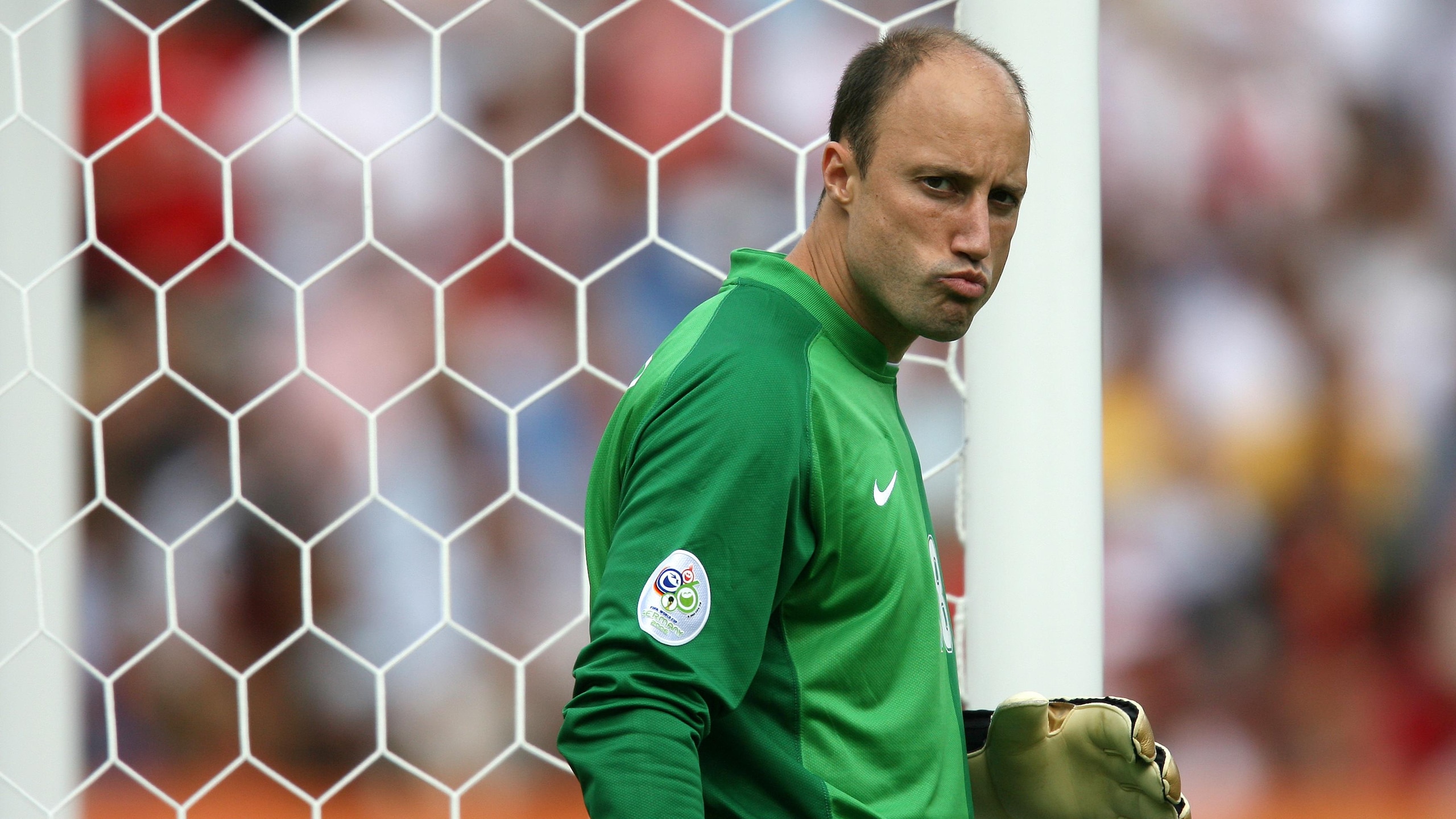
Caps: 102
Clean Sheets: 47
World Cups: 4 (1990, 1998, 2002, 2006)
Kasey Keller is one of several national team contributors on this list whose final ranking suffers in part because a significant portion of his exploits came in the previous centruy.
Even so, he deserves inclusion for being one of the three goalkeepers who helped the Yanks maintain a decisive goalkeeping advantage over every team in Concacaf for the better part of three decades.
In total, he made 22 starts in World Cup qualifying after the turn of the century, and three more at the 2006 World Cup proper, regaining his spot as the USA No. 1 after serving as the backup in 2002.
At the club level, he has the rare honor of being an American who played at the top levels in Spain, England, and Germany, with memorable stints at Leicester City, Tottenham Hotspur, Ray Vallacano, and Borussia Monchengladbach.
At the end of his career, his return to MLS with the Seattle Sounders helped commence a new era of more ambitious signings among some American clubs targeting successful USMNT players.
21. Eddie Lewis
5 of 25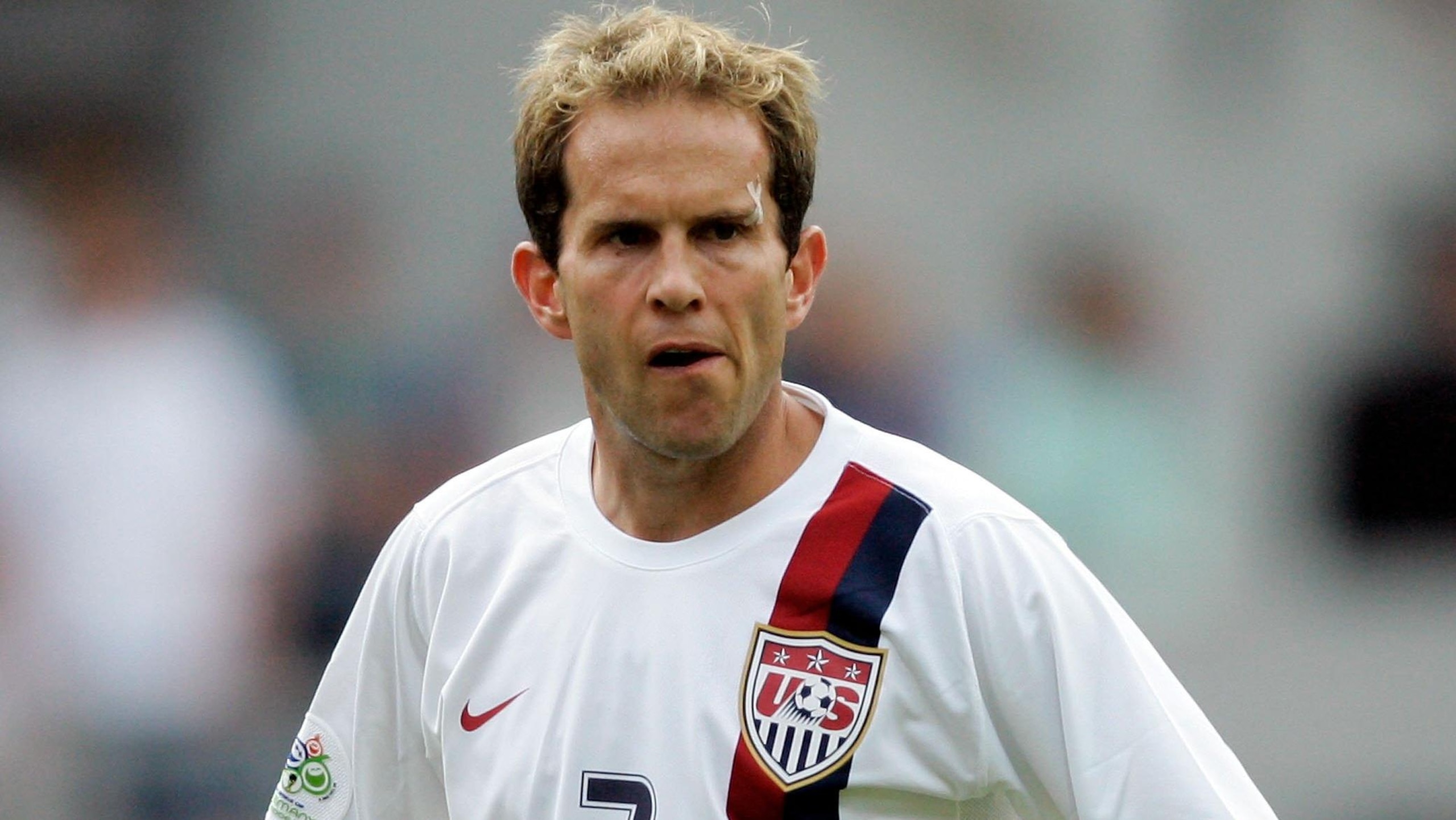
Caps: 82
Goals: 10
World Cups: 2 (2002, 2006)
Eddie Lewis is sometimes overshadowed by other members of the famous 2002 USMNT squad that reached the quarterfinals, but he was a critical glue guy for both squads.
Three of his 10 goals for his country came in World Cup qualifying duty (two in the 2006 cycle and one in 2010), and he proved a true servant of the program by being willing to adapt from a box-to-box midfield role to an outside back position at the international level, particularly later in his career.
Professionally, Lewis spent most of his career between MLS and the EFL Championship, but had one season of regular Premier League action with a Derby County side that unsuccessfully fought relegation during the 2007-08 campaign.
He finished his club career alongside his former USMNT coach Bruce Arena, one of David Beckham's LA Galaxy teammates, helping the Southern Californians win the 2010 Supporters' Shield in his final campaign.
20. DeAndre Yedlin
6 of 25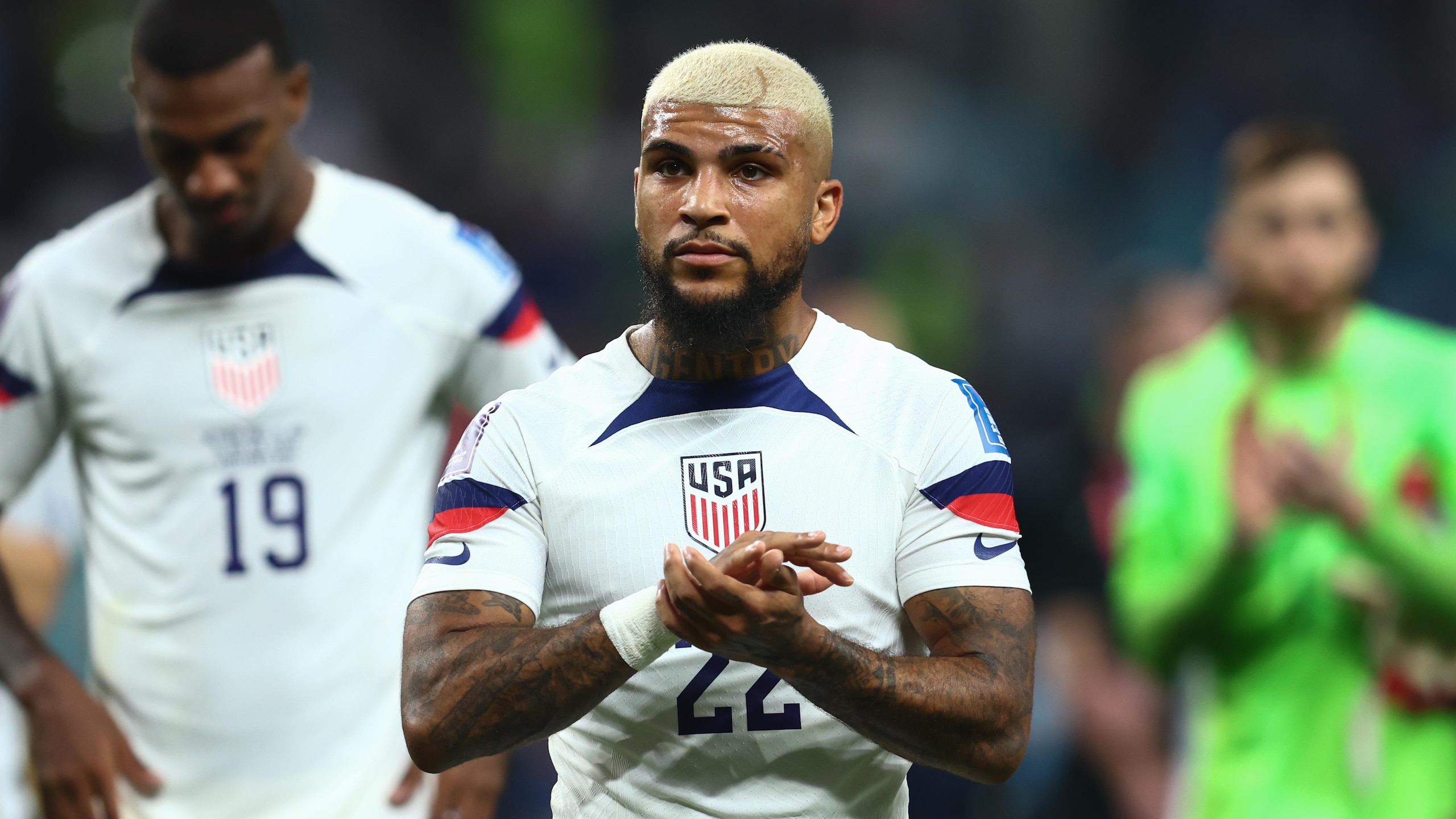
Caps: 81
Goals: 0
World Cups: 2 (2014, 2022)
DeAndre Yedlin is the lone player on this list who managed to appear in both the 2014 and 2022 World Cups, surviving the carnage in between and failing to qualify for the 2018 tournament.
That durability earns him a place on this list even while he is rarely thought of as a core piece of any of the three World Cup cycles in which he participated.
The hype around Yedlin coming out of the Seattle Sounders was so high that merely establishing himself as a Premier League regular for four seasons at Newcastle United was seen by some as a disappointment.
But he was always a useful player as an international outside back, and is still one of the better MLS fullbacks well into his 30s.
Yedlin hasn't received a cap under current manager Mauricio Pochettino, and the switch to a 3-4-3 as the Americans' primary formation means it's unlikely he will. But at just 32 years old, there's still a remote chance he could return to the USMNT picture if there's an injury crisis.
19. Oguchi Onyewu
7 of 25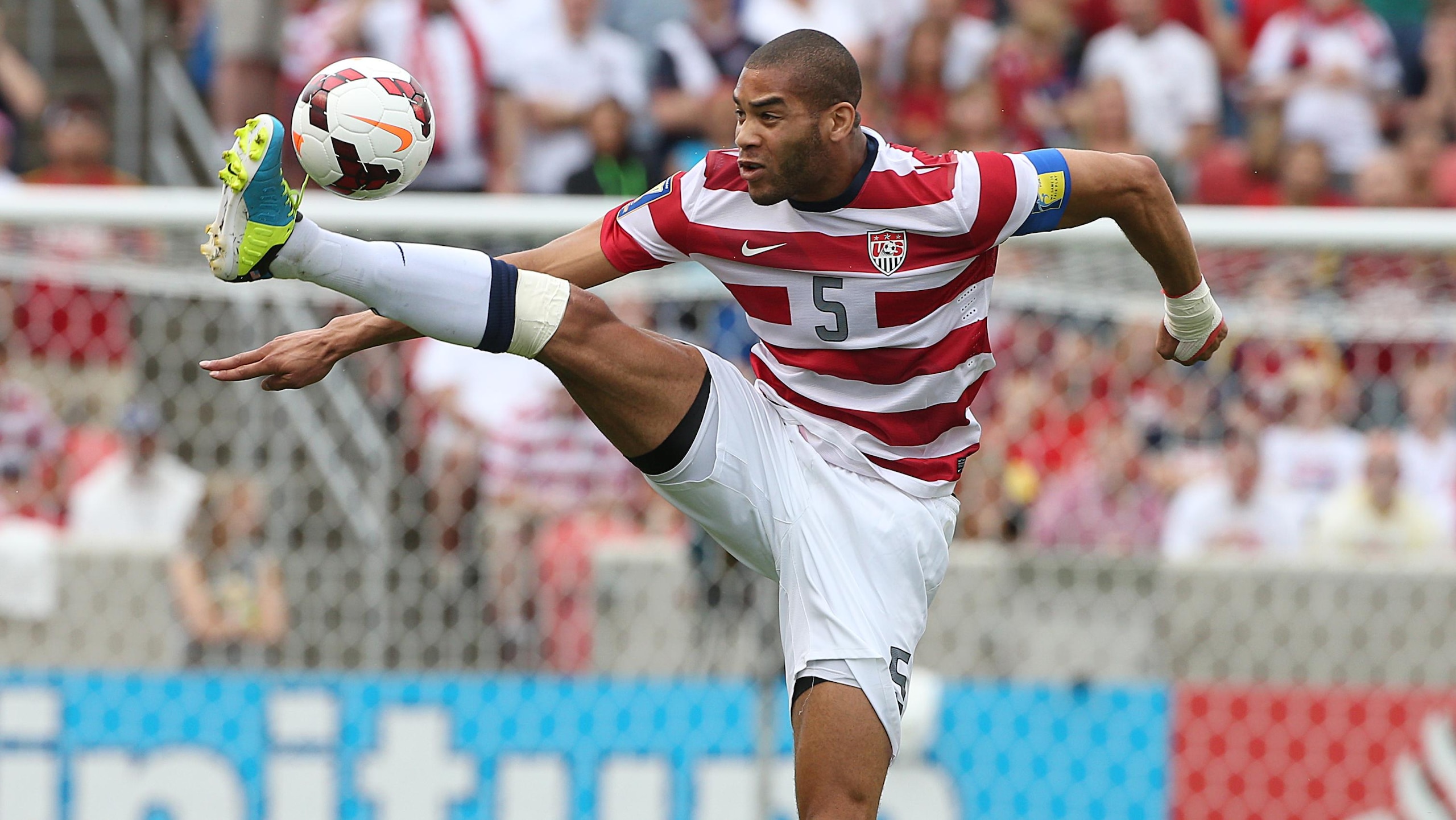
Caps: 69
Goals: 6
World Cups: 2 (2006, 2010)
What if our best American athletes played soccer?
It's always been somewhat of a misguided rhetorical question, since the fitness and mobility demands of soccer are quite different from those of American football or basketball. But for the better part of a decade, Oguchi Onyewu gave a glimpse of what it might look like if more kids with traits that suited the gridiron pursued the beautiful game instead.
Arguably the most imposing figure ever to put on a USMNT jersey, Onyewu started on the back line for both the 2006 and 2010 World Cup squads, and during that time also enjoyed a run as an established starter at Standard Liege, where he won two Jupiler League titles.
Injuries and declining mobility prohibited him from establishing himself as a regular in a Big Five league, though he made a couple of attempts at it later in his career.
And at times, it appeared his brawny frame and considerable athleticism actually hurt him with referees who weren't used to officiating players with such a profile, punishing him simply for emerging as the stronger player in a 50-50 duel.
18. Geoff Cameron
8 of 25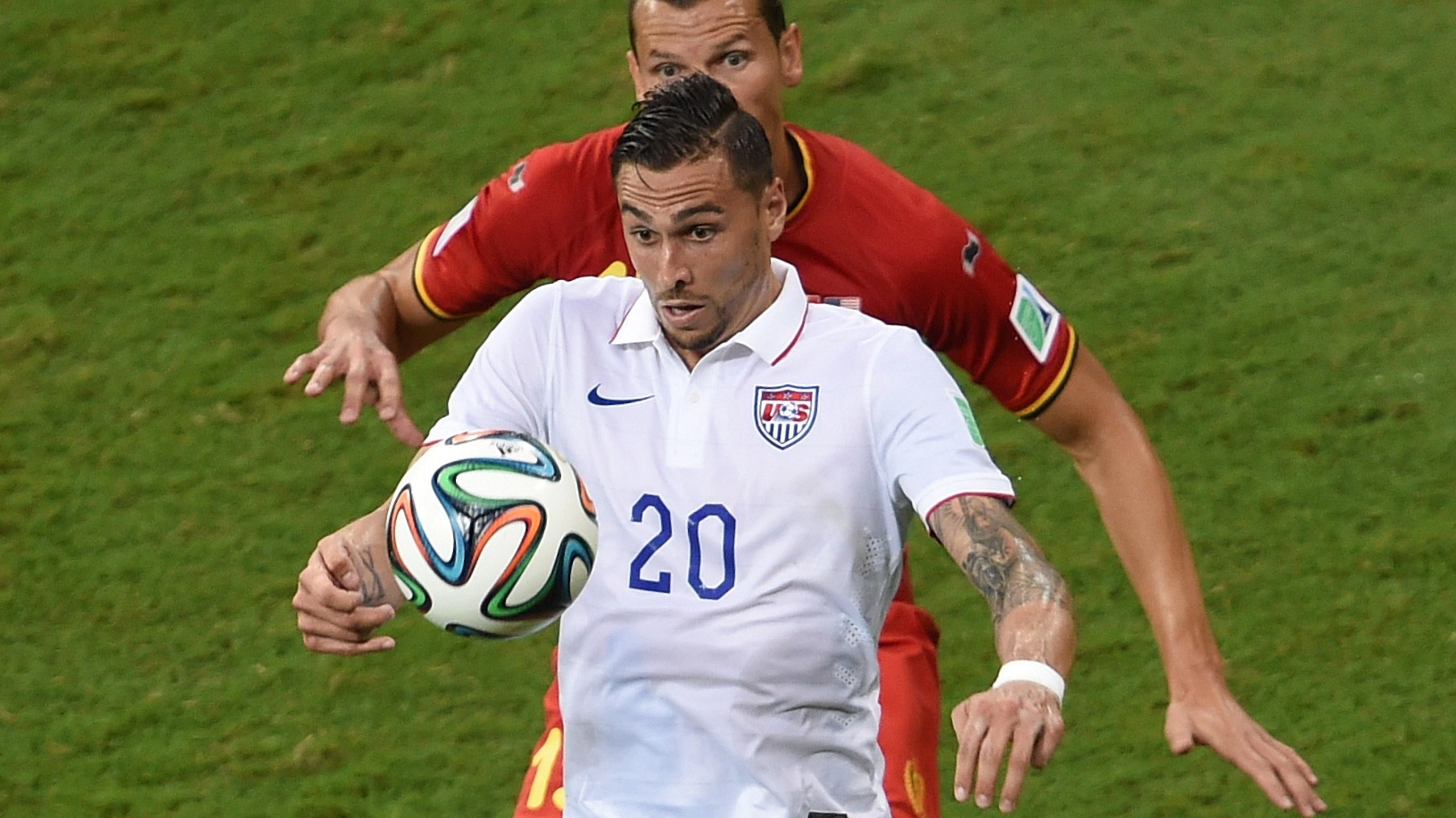
Caps: 55
Goals: 4
World Cups: 1 (2014)
Geoff Cameron was arguably the best active American center back for a six- or seven-year stretch, and the United States' failure to qualify for more than one World Cup during that time was hardly his fault.
His career took off in the immediate aftermath of the USA's 2010 World Cup appearance. And in the 2018 qualifying cycle, he was surprisingly omitted by manager Bruce Arena from the squad that famously lost in Trinidad and Tobago with a place in Russia on the line. Arena cited Cameron's recent recovery from a hamstring injury, but he had already returned to action for his club.
In the aftermath of that qualifying failure, Cameron was one of the more outspoken critics of a dressing-room divide between MLS and European-based players, a sentiment that wasn't super popular but probably needed airing.
At the club level, Cameron played six Premier League seasons with Stoke City, appearing in at least half of the Potters' games in every campaign.
Several years later, he finished his career with two seasons at FC Cincinnati, helping to set the foundation of a club that has become a regular Eastern Conference contender.
17. Jermaine Jones
9 of 25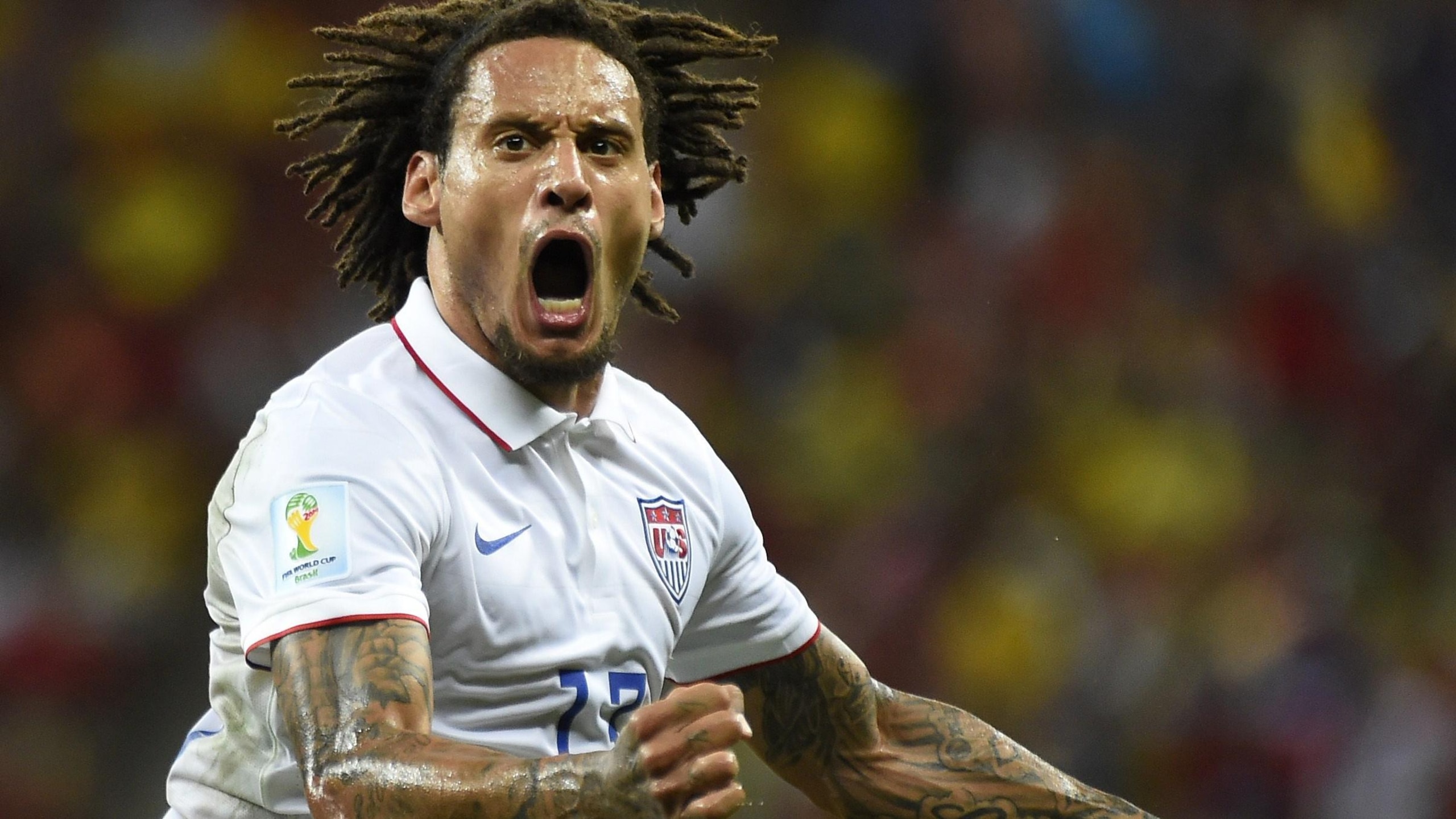
Caps: 69
Goals: 3
World Cups: 1 (2014)
A dual national who spent most of his football upbringing in Germany, Jermaine Jones faced skepticism from fans over his motives when he made his one-time switch to the USMNT in 2009.
Injuries would ultimately prevent Jones from joining the 2010 squad that played in South Africa. And based on the effort he gave for the Stars and Stripes four years later at the age of 32, the Americans had been missing out.
The longtime Bundesliga regular proved to be the heart and soul of a 2014 squad that escaped a Group of Death that included Ghana, Portugal, and Germany. His thunderbolt of a strike in an enthralling 2-2 draw against Portugal also proved to be one of the goals of the tournament.
As impressively, Jones proved committed to the project of American soccer in a way other dual nationals from the Jurgen Klinsmann era didn't, playing his final four professional seasons in MLS with New England, Colorado and the LA Galaxy.
16. Weston McKennie
10 of 25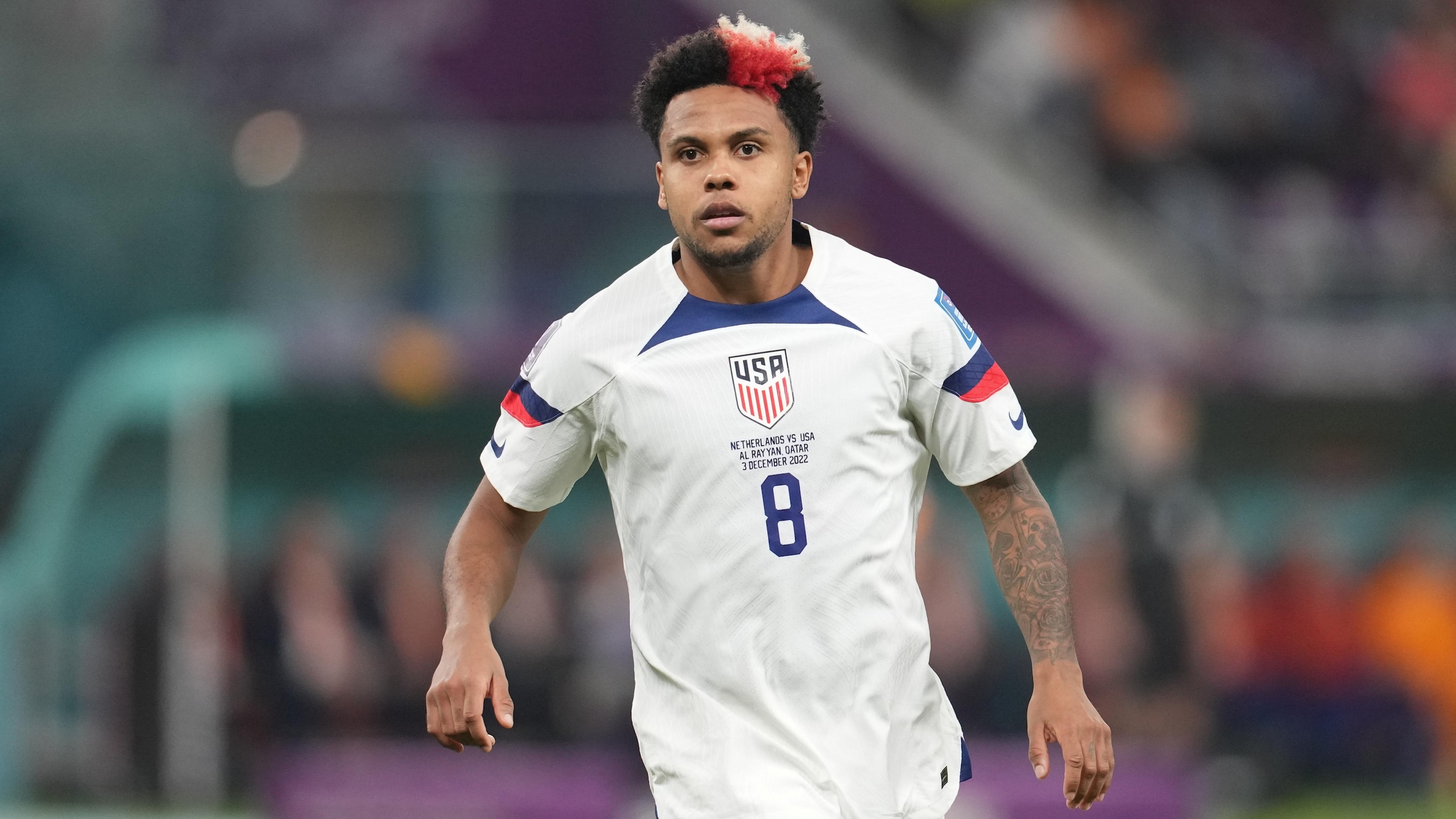
Caps: 62
Goals: 11
World Cups: 1 (2022)
The second member of the 2022 squad to appear on this list, Weston McKennie is another player whose malleability is sometimes held against him.
The longtime Juventus and former Schalke 04 regular has never been truly elite at a single position. And he doesn't have the prototypical body type of a central midfielder, at times facing criticism for a lack of fitness based on appearance rather than data.
But he's above average in several roles, which is one reason he's stuck in Turin for several years despite several cycles of rumors suggesting a departure.
For the USMNT, availability issues and a disciplinary saga early on limited him to only seven appearances in 2022 qualifying, but he returned to start every match in Qatar for the Red, White, and Blue.
In the years since, he's mostly avoided extended injury layoffs for club or country, something that can't be said for most of the rest of the current USMNT core.
Pochettino has opted not to use McKennie heavily during 2025, perhaps to keep him healthy. But it would be shocking if he's not again part of the USMNT core in 2026.
15. Brad Friedel
11 of 25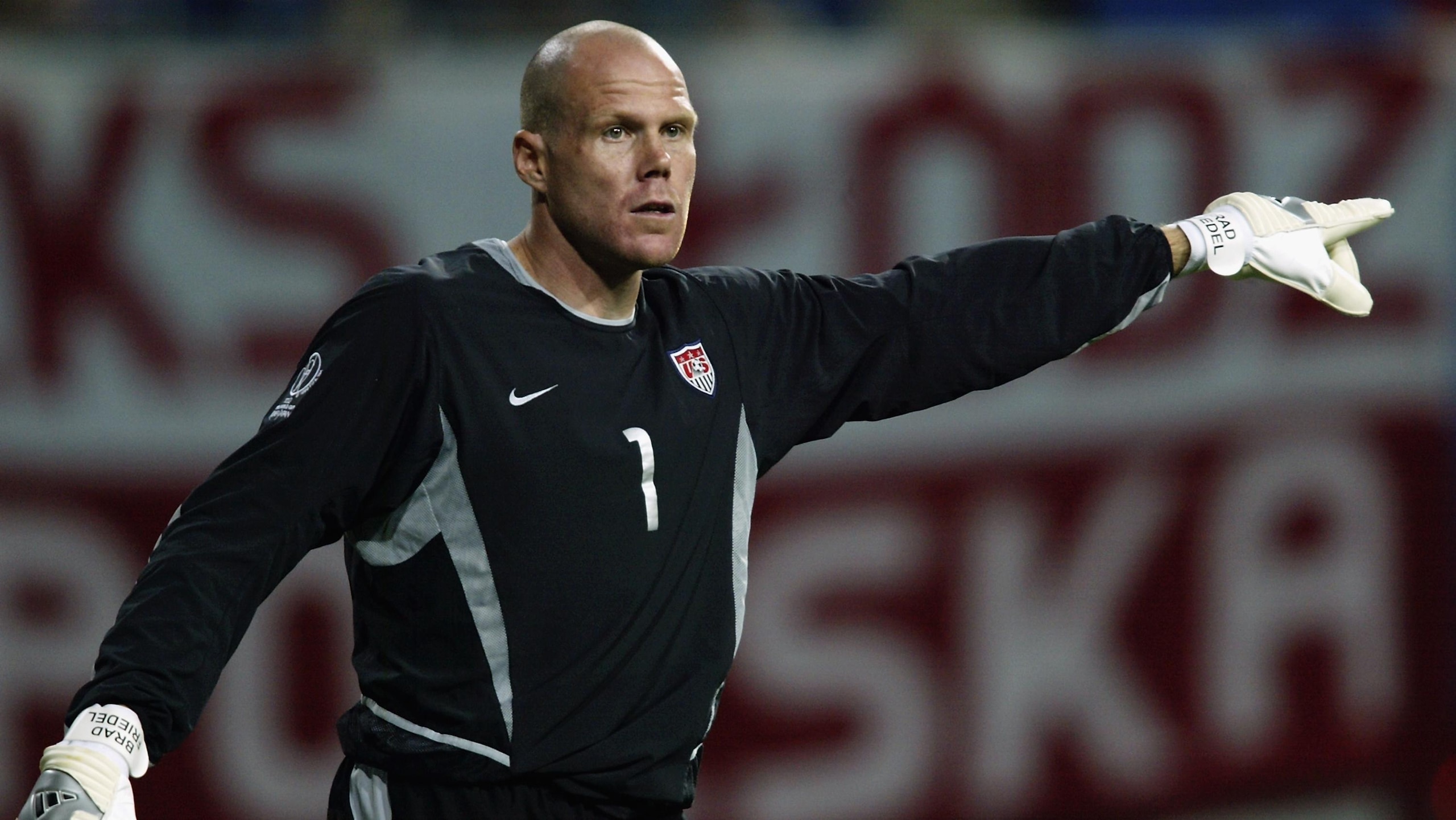
Caps: 82
Clean Sheets: 24
World Cups: 3 (1994, 1998, 2002)
Brad Friedel served as the true American No. 1 at only one World Cup, but oh, what a World Cup it was.
The Ohio native and longtime Premier League stalwart was a critical part of the USMNT's unlikely run to the quarterfinals. In particular, he gave heroic performances against Portugal and South Korea in the Americans' first two group-stage matches, helping the Yanks earn a critical four points.
It was a cruel irony when the Americans were ultimately shut out in the quarterfinals by one of the few goalkeepers who had a better tournament, Germany's Oliver Kahn.
Even so, Friedel's 2002 showing vaults him above Keller in our overall consideration, despite Keller's larger body of work at the international level.
And Friedel might have surpassed Keller in that regard had he not retired from international play in 2005. It was a curious decision given that he continued to play in the Premier League for eight more seasons, six of those as an every-match starter.
14. Tyler Adams
12 of 25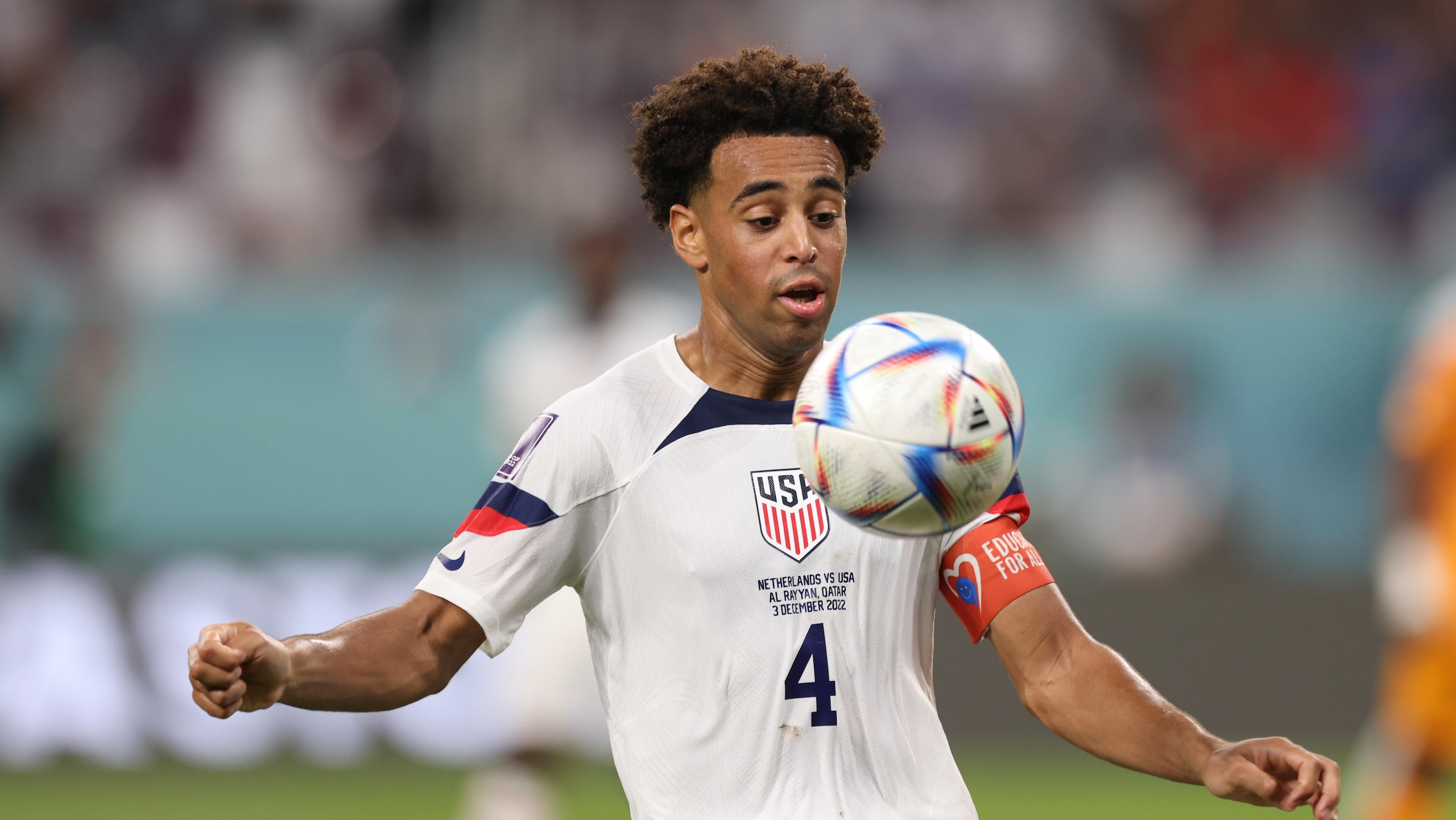
Caps: 52
Goals: 2
World Cups: 1 (2022)
Injuries have been a recurring issue for Tyler Adams over the last several years, and there is some question as to whether he can be the same player at the 2026 World Cup as he was in 2022.
But in Qatar, he was a critical piece of the American machine, a constant disruptor of opponents' attacks. That skill set will be vital again in 2026, particularly in the later stages of the tournaments, where the Americans will eventually have to slay one or two traditional powers if they want to make a deep run.
And while he's still not exceptional at progressing the ball forward, he has shown real improvement in that regard in his time at Bournemouth. There also might be less need to do that from his position in the 3-4-3 that Pochettino has adopted, with more of the burden falling on the outside wingbacks.
Adams isn't the best American in Europe, but he's in that discussion and the most obvious vocal leader among that group.
13. Eddie Pope
13 of 25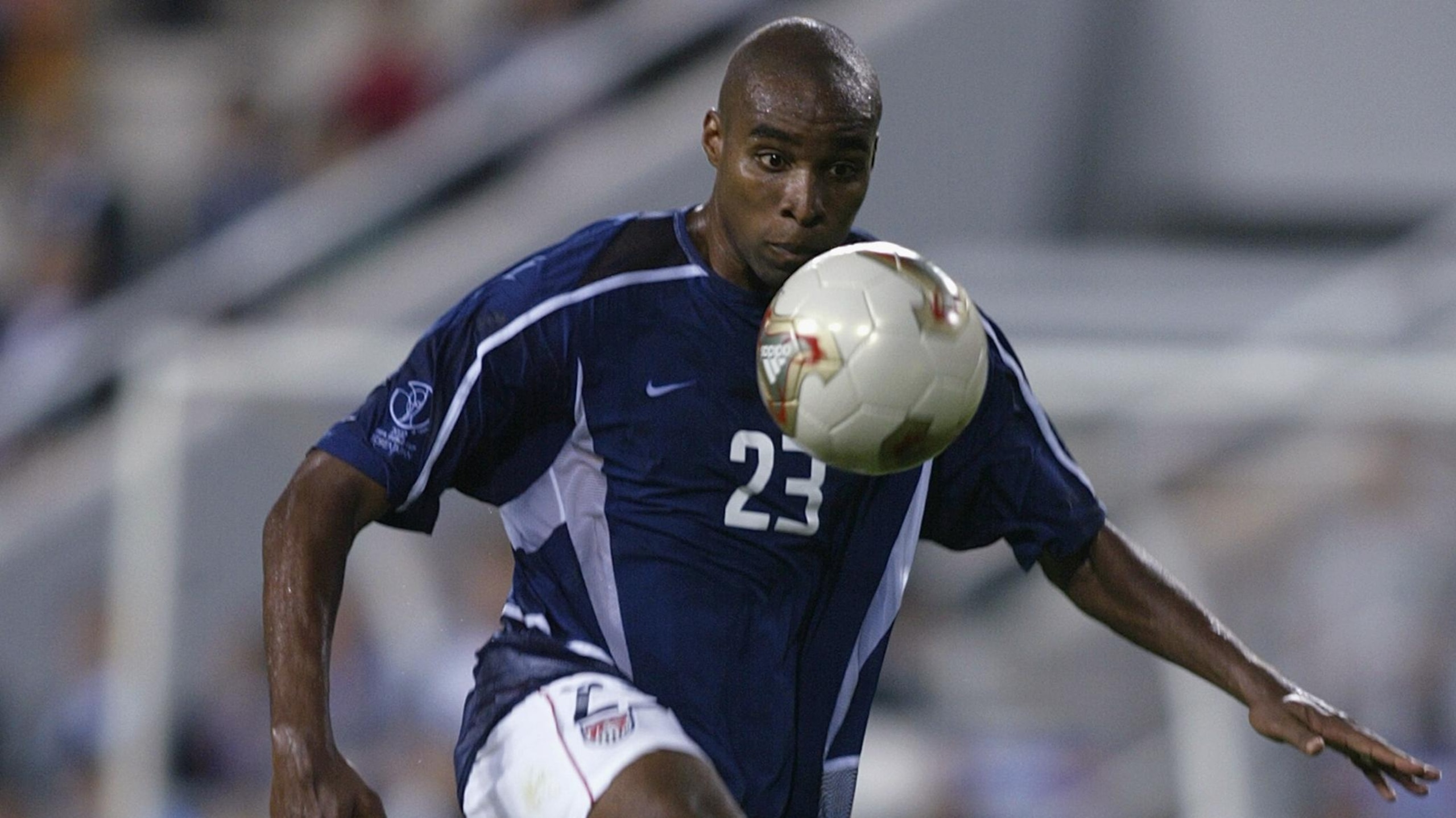
Caps: 82
Goals: 8
World Cups: 3 (1998, 2002, 2006)
Arguably the best American player never to play outside MLS, Eddie Pope was a fixture of the U.S. back line for three World Cup cycles. And you can bet he'd be higher on his list if half of that international career hadn't occurred in the 1990s.
Even so, he started every match (and played all but 11 minutes) for the 2002 U.S. squad that reached the quarterfinals.
While he was an excellent defender, Pope also had a back for scoring meaningful goals in the air, such as his 1996 MLS Cup-winning tally for D.C. United. He also scored nearly three times as frequently when representing his country compared to when playing in MLS.
Pope had plenty of interest from European clubs during his career, but never felt strongly enough to leave the league as one of its founding players.
That was good news for the clubs that employed him, where he won three MLS Cups with D.C. United, and was named MLS Best XI on four occasions, twice with D.C. and twice with the NY/NJ MetroStars.
12. Antonee Robinson
14 of 25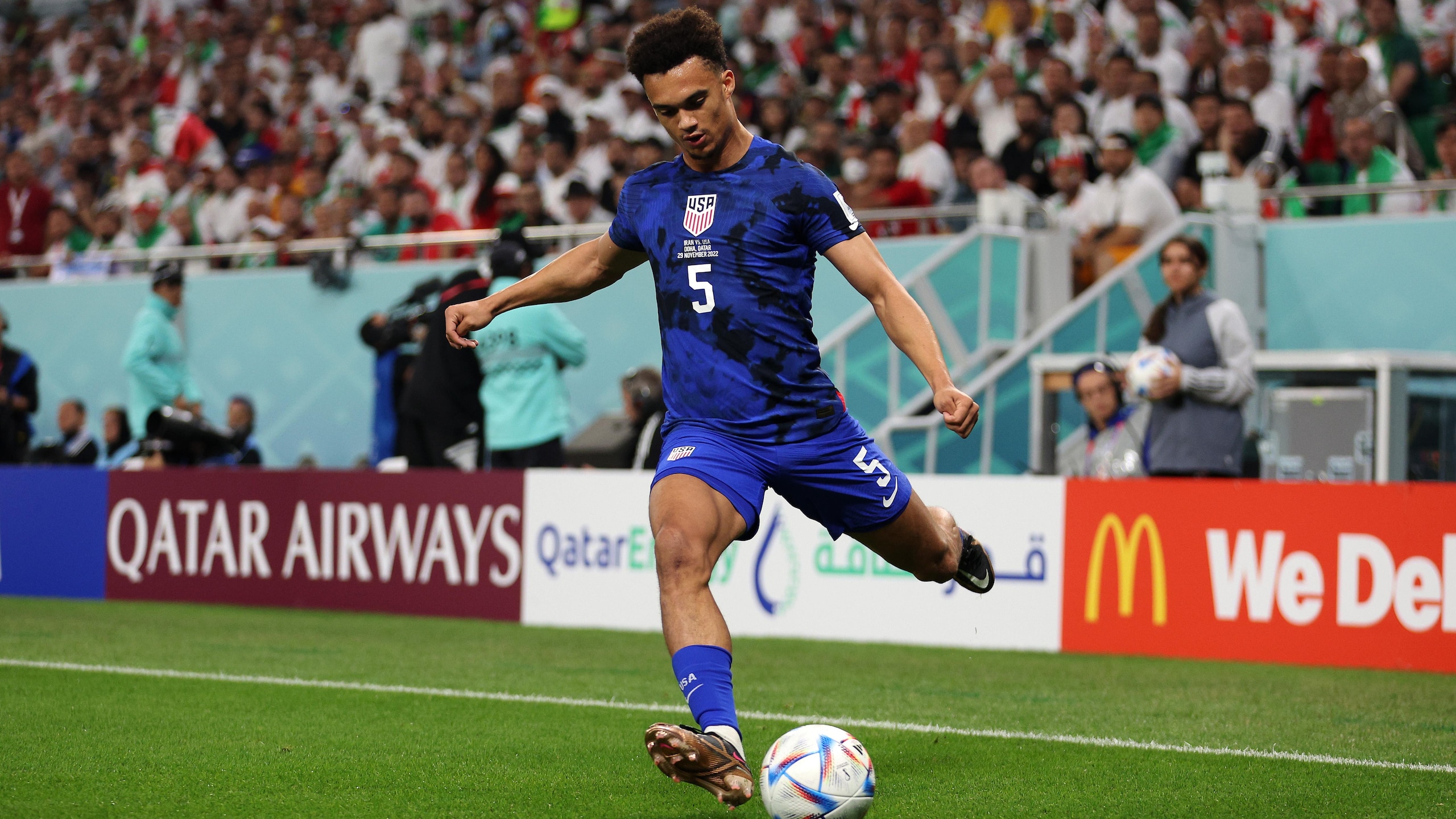
Caps: 50
Goals: 4
World Cups: 1 (2022)
The British-born Antonee Robinson took a less conventional path to the USMNT. But he's the most talented left back ever to play for the Americans, and by some considerable distance, helping him land this high on our list despite his relatively short tenure.
The 28-year-old rarely scores, but is a critical weapon as a provider from wide positions in games where the US is more ball-dominant. He's also a well-above-average defender in games when the Americans don't have the ball as much.
Eventually, that attacking skill has surfaced in the Premier League and not just in international play. For Fulham, he had six league assists in the 2023-24 campaign and 10 in 2024-25.
Recovery from offseason surgery has limited Robinson this campaign, and he has yet to feature in Pochettino's 3-4-3. But the idea of him being free to roam further forward should be exciting for American fans if he can contribute this summer.
11. Brian McBride
15 of 25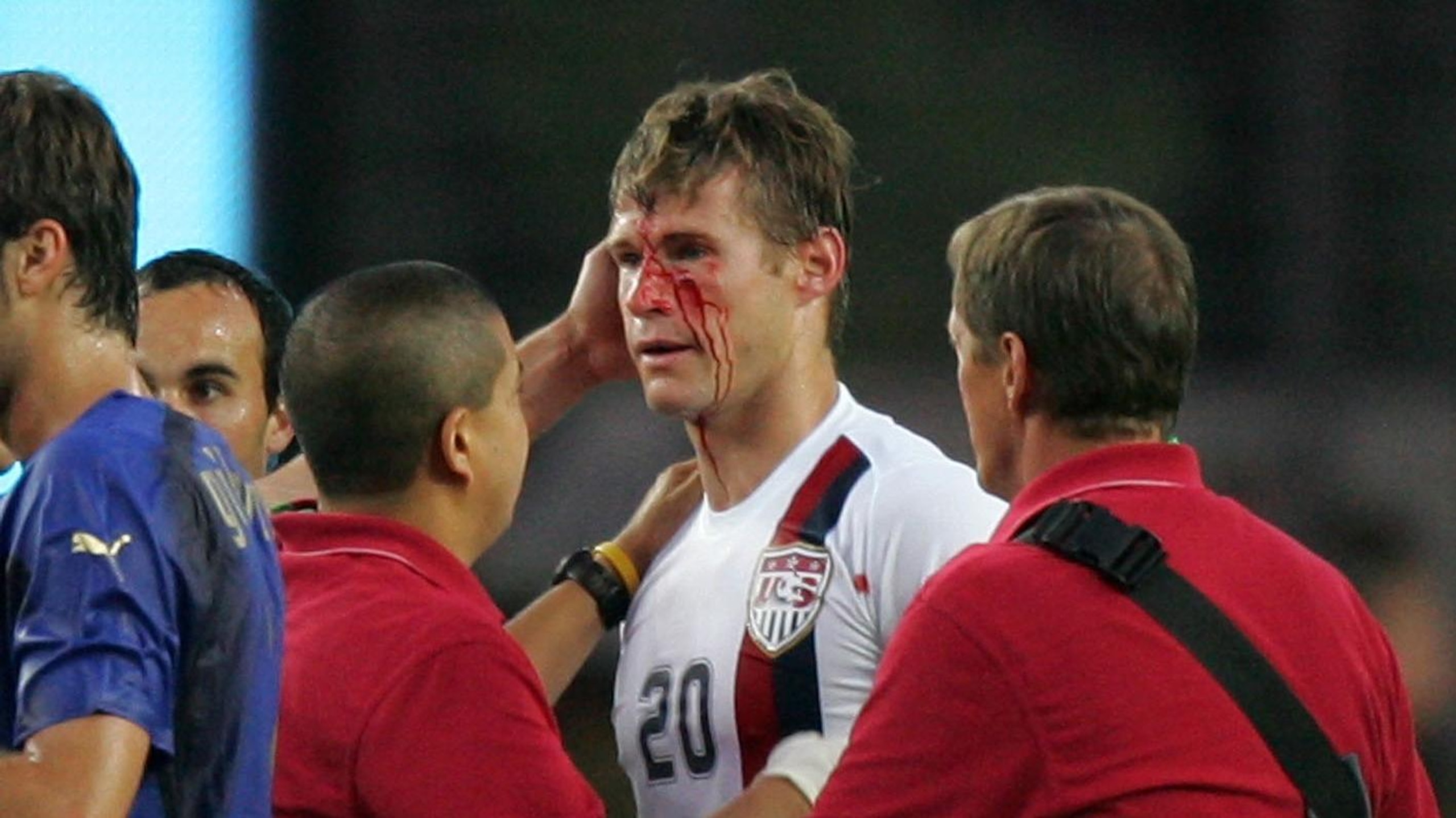
Caps: 95
Goals: 30
World Cups: 3 (1998, 2002, 2006)
Brian McBride never posted the gaudiest numbers for his club, aside from one 17-goal season early in his Columbus Crew career. But his aerial power and pure grit were extremely well-suited for the international game, where he became the first American to score in multiple World Cups.
Ironically, his most iconic moment may not have been one of his goals, even though scoring the eventual winner against Mexico in the 2002 round of 16. It came four years later, when he withstood a vicious elbow from Italy's Daniele De Rossi -- rough enough to get the Italian sent off -- and remained in the match despite a bloodied face to help the Americans to a 1-1 draw.
At the club level, McBride was the first in the modern era of USMNT players to prove that American attackers, in particular, could succeed in the Premier League, scoring 36 EPL goals in 148 appearances.
All but four of those tallies came during his four-and-a-half season tenure with Fulham, though he got his Premier League start with Everton.
10. Steve Cherundolo
16 of 25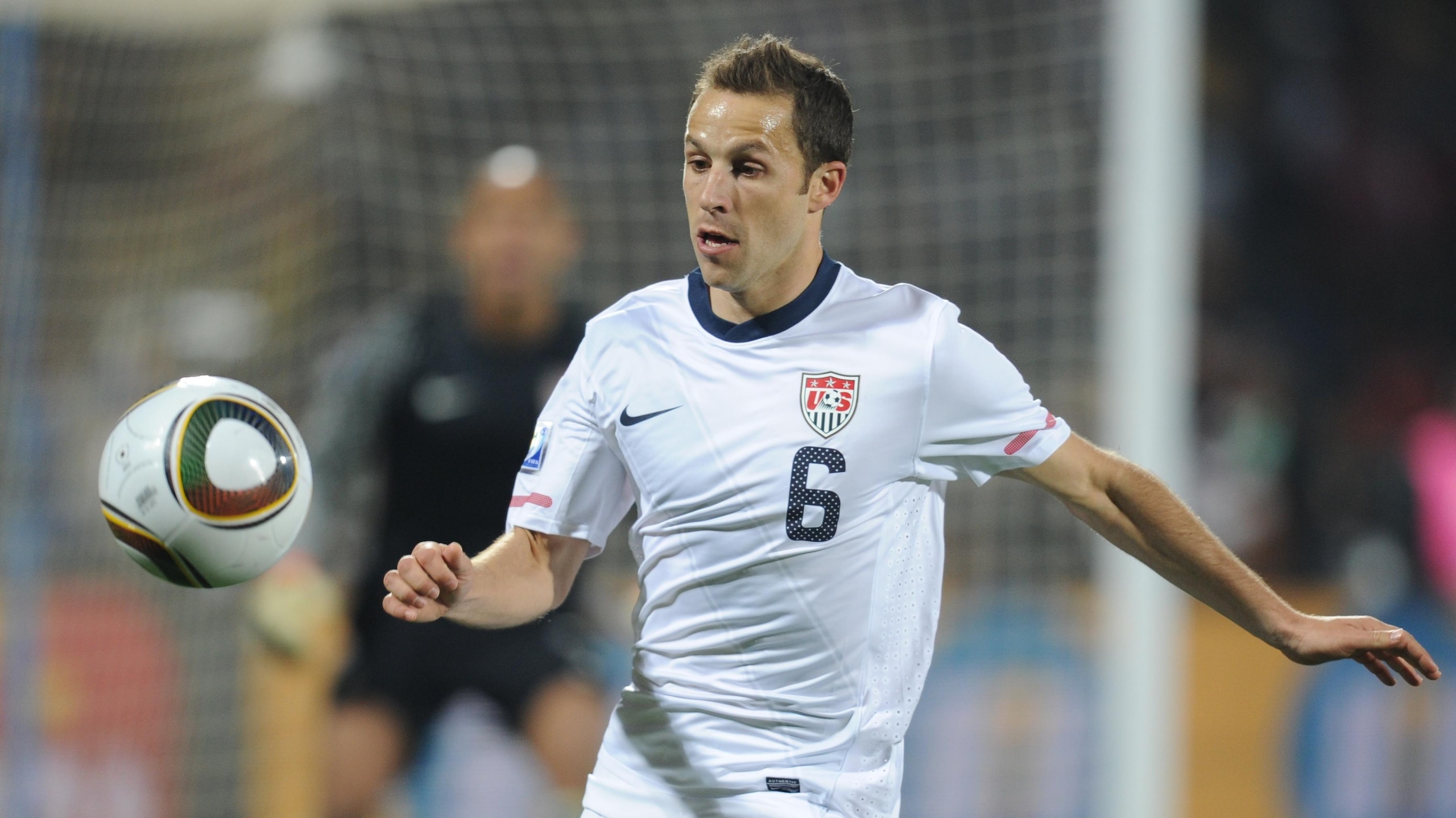
Caps: 87
Goals: 2
World Cups: 2 (2006, 2010)
At the club level, Steve Cherundolo earned the unofficial title of "Mayor of Hannover" for his lengthy, steady career with Hannover 96 in the Bundesliga. And while he was never the most visible star of the USMNT, in many ways, his presence with the national team was similar.
For two World Cup cycles, Cherundolo's spot in the lineup was one of the easiest for his managers to write in ink. He started every American match of the 2006 and 2010 tournaments after being a bench player in 2002.
Even more impressively, he made 26 qualifying appearances over four separate World Cup cycles before finally retiring in March of 2014.
After taking a job at Hannover's youth academy to begin his coaching career, Cherundolo eventually worked his way up to become a successful MLS coach in four seasons with LAFC.
He left the Black-and-Gold following this season to return to Germany with his German-born wife and children for family reasons. Even so, he is probably the most likely player on this list to someday manage the USMNT.
9. Jozy Altidore
17 of 25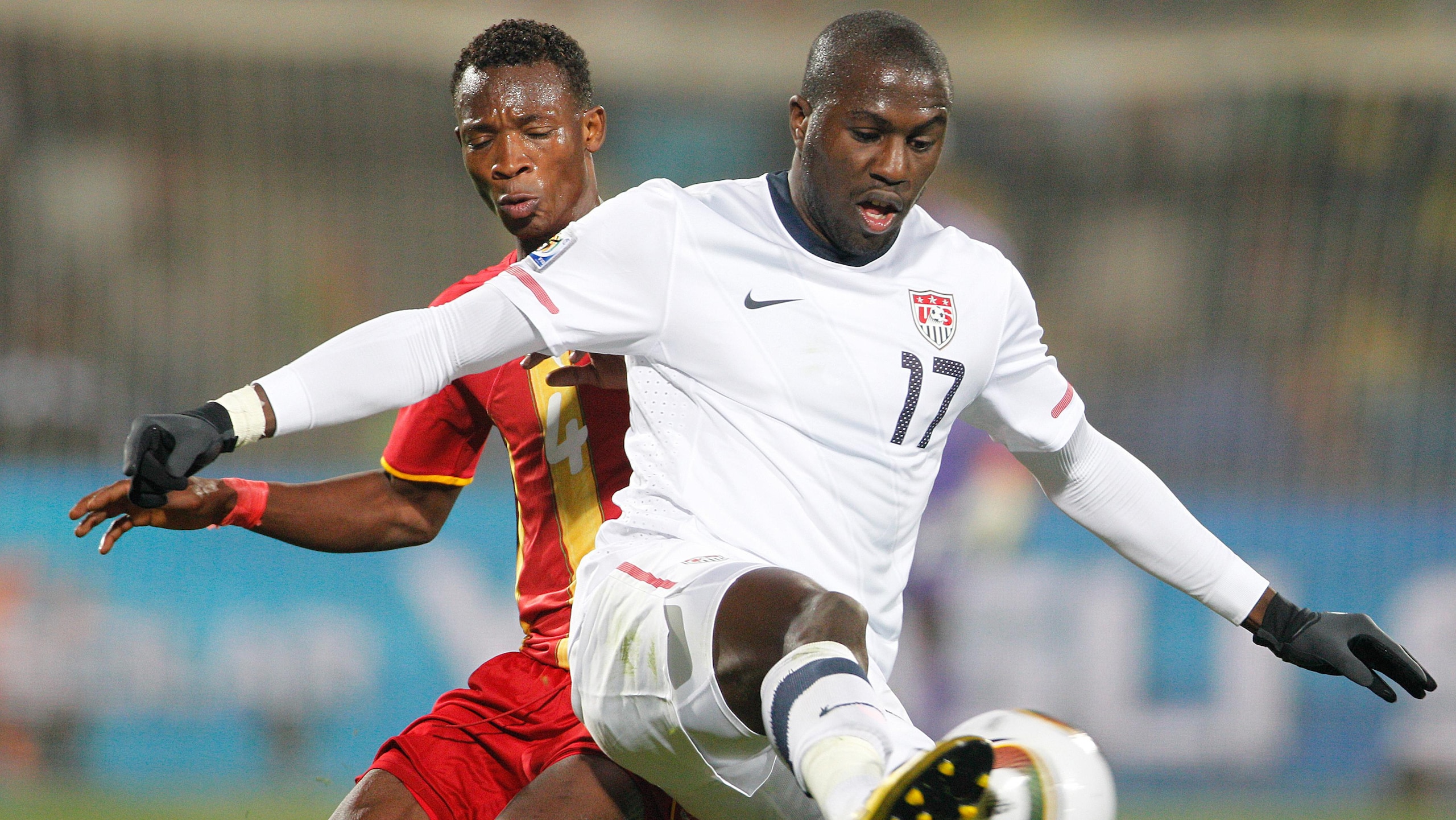
Caps: 115
Goals: 42
World Cups: 2 (2010, 2014)
Among the most polarizing figures in American soccer history, Jozy Altidore deserves more credit than he gets for his ability to consistently score for the Red, White, and Blue in regional competition, even if it rarely translated to the global stage.
Despite being the third-highest goal scorer in USMNT history, Altidore never scored at a World Cup. But he was still only 20 years old when he played a somewhat unheralded role in the 2010 tournament, and he was injured only minutes into a 2014 competition that many hoped would be his international breakout.
Though he received plenty of blame, it wasn't his fault that the overall quality of the USMNT roster in the 2018 cycle was the worst in at least 20 years, robbing him of another chance to prove his quality to the world.
At the club level, Altidore's struggles at every European stop other than AZ Alkmaar, where he scored 38 league goals in two seasons, must also be considered within the context of his age; He was done with Europe by 25, an age when many center forwards only begin to figure out how to consistently succeed.
8. Carlos Bocanegra
18 of 25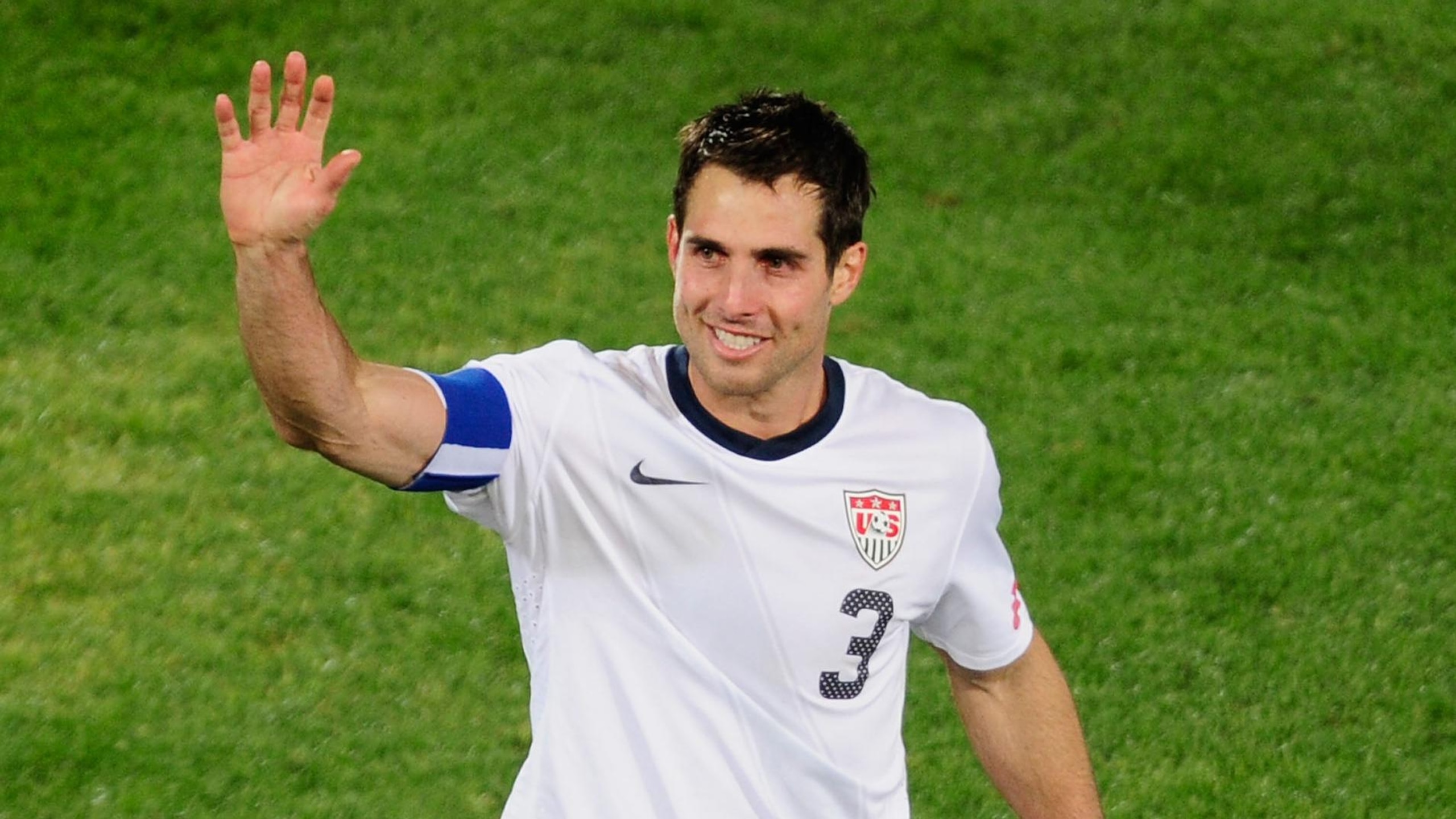
Caps: 110
Goals: 14
World Cups: 2 (2006, 2010)
The highest-ranked defender on the list, Carlos Bocanegra has easily been the most consistent presence on the U.S. back line during this century, even though Pope -- whose USMNT career began in the 1990s -- had the slight talent edge.
And while he was an important defender for the U.S., he was also a scorer of big goals, with five of his tallies coming in World Cup qualifying.
Bocanegra also tested the European waters that Pope would not, jumping directly from the Chicago Fire to Fulham in the Premier League, then two stops in Ligue 1 for two seasons each.
From a legacy perspective, Bocanegra also played for the United States while eligible to play for Mexico, at a time when most such dual-nationals may have made the opposite choice.
He was also more flexible than most American center-backs, at times playing as a left fullback for club and country. Of all the now-retired defenders on this list, his traits might be best suited to the modern-day Americans' 3-4-3 setup.
7. Michael Bradley
19 of 25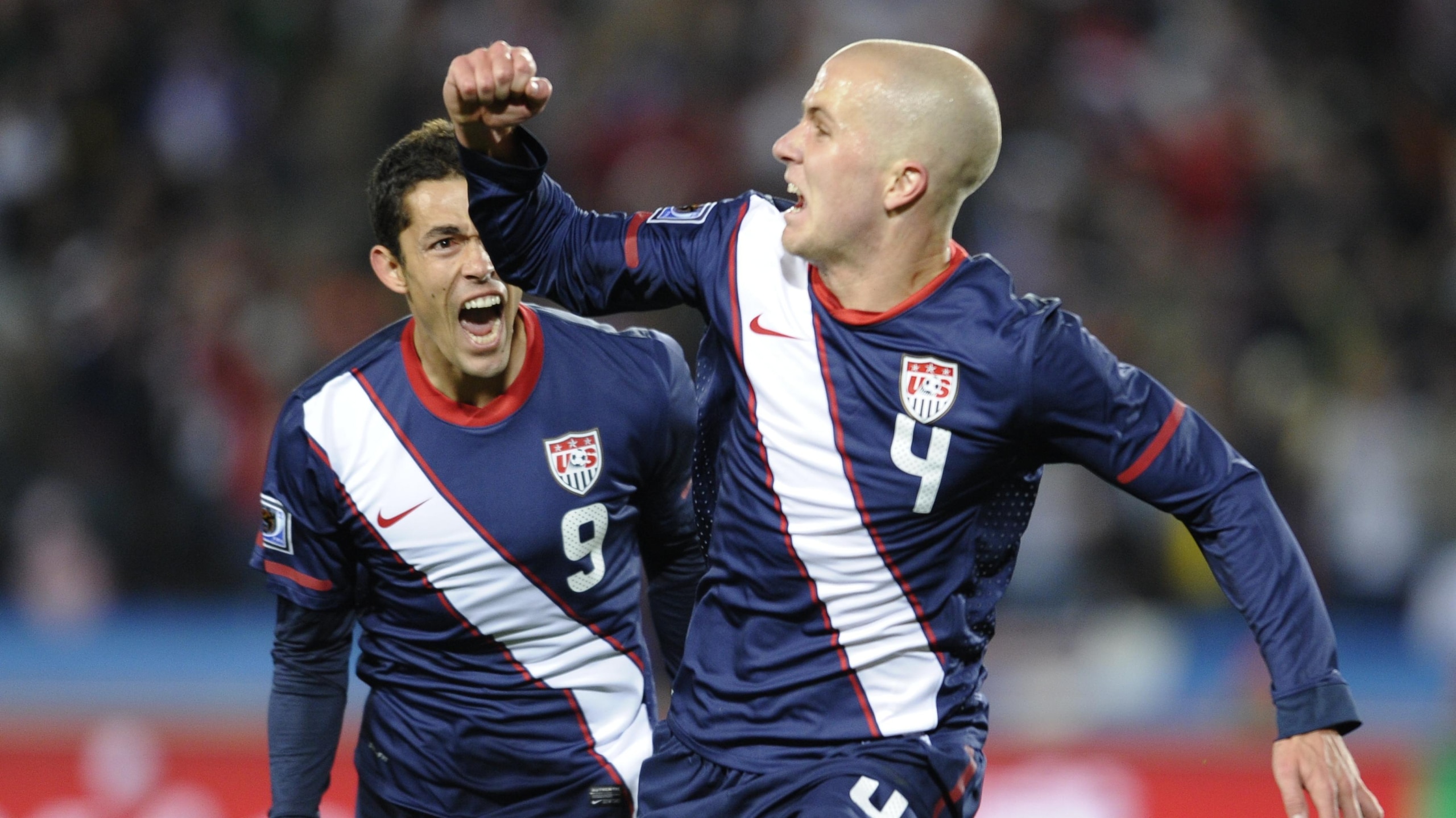
Caps: 151
Goals: 17
World Cups: 2 (2010, 2014)
Fans sometimes had trouble figuring out Michael Bradley's value to the American squad as a true box-to-box midfielder who most often played the pass before the final pass.
His managers never had that problem; Bradley was in the American squad for two World Cups, and he played every minute of both, a testament to both his tactical flexibility and his impeccable fitness in his prime. He is currently his nation's third most-capped player of all time.
Unfortunately, he, like Altidore, weathered a large portion of the blame for the Americans' failure to reach the 2018 tournament in Russia, when the real culprit was a talent-poor pool and a diminished supporting cast.
Fans also punished Bradley for his decision to return to MLS in his mid-20s rather than remain in Europe after falling out of favor at Roma.
But it's hard to blame him for wanting to be a centerpiece of a project as big as Toronto FC's, which resulted in three MLS Cup final appearances, one MLS Cup title, and one trip to the Concacaf Champions League final.
6. Claudio Reyna
20 of 25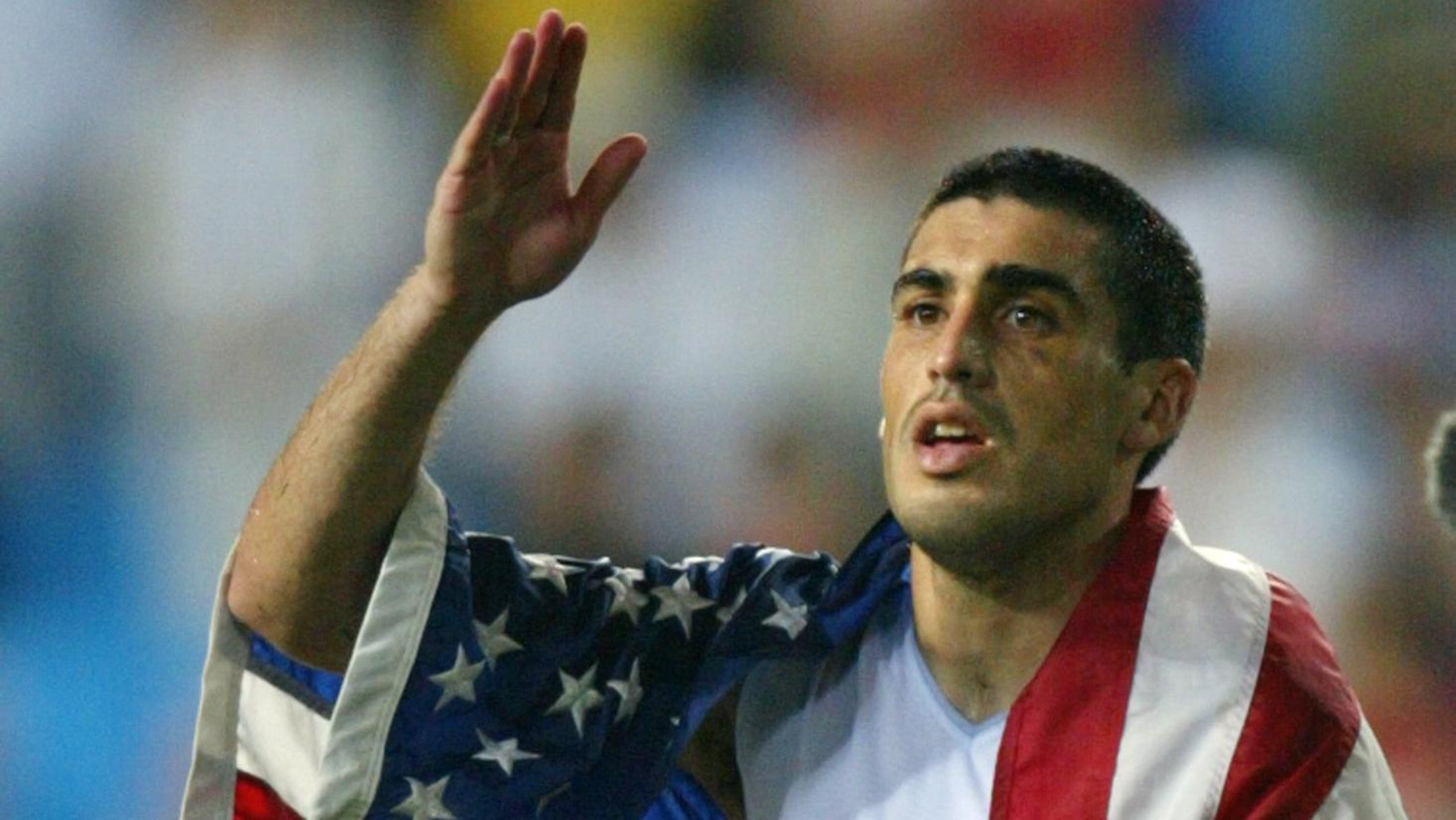
Caps: 112
Goals: 8
World Cups: 3 (1998, 2002, 2006)
Today, most American fans know Claudio Reyna for his role in an unseemly scandal involving his son, Giovanni Reyna, and former USMNT manager Gregg Berhalter.
Long before that, though, he was arguably the best American player of his generation and the captain of the team that gave the program's best performance in the modern era.
After missing the 2002 group opener against Portugal with a minor injury, Reyna went on to play every minute of the final four games for the Americans. His best performances were his last, where he orchestrated the US midfield in a 2-0 win over Mexico and a 1-0 loss to Germany.
On the club level, Reyna was talented enough to overcome his development in the imperfect landscape of college soccer and land in the top levels of European football by his early 20s. By the time it was done, he had played with Bayer Leverkusen, VfL Wolfsburg, Glasgow Rangers, Sunderland, and Manchester City.
5. DaMarcus Beasley
21 of 25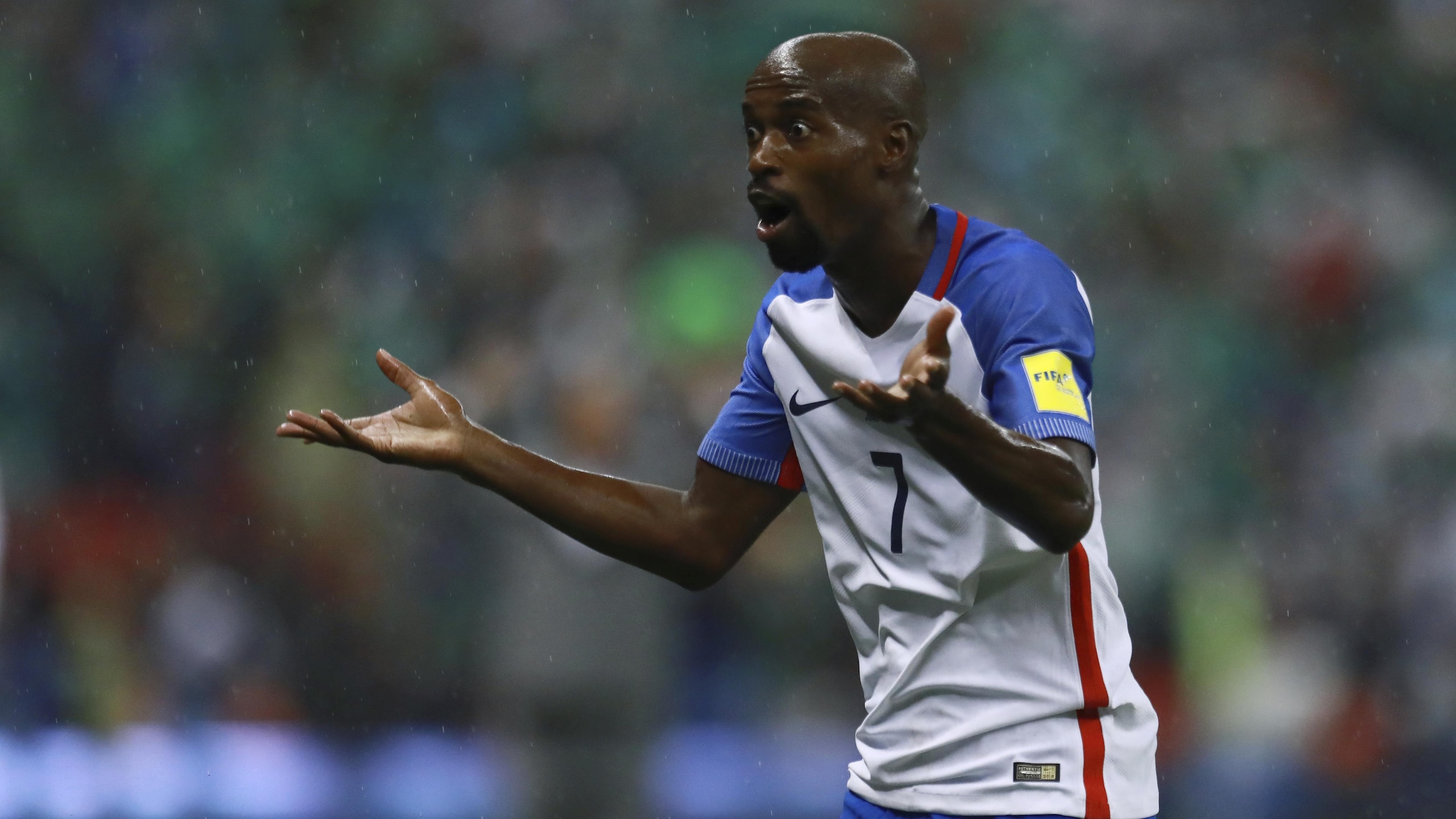
Caps: 126
Goals: 17
World Cups: 4 (2002, 2006, 2010, 2014)
No one embodies the true spirit of service to the USMNT program more than DaMarcus Beasley, who significantly extended his international career by reinventing himself as a veteran.
Beasley began his career as an attacking winger, then grew into a more versatile two-way midfielder, and finally, in his later career, morphed into a fullback. When it was finally over, he had appeared in 11 World Cup matches and an incredible 35 qualifiers across four cycles.
Unfortunately, his most memorable moment in an American shirt, an apparent go-ahead goal against Italy in 2006, was called back for being offside, and the match finished as a 1-1 draw.
He was also one of the first players to establish that teenage success in MLS could translate into a long and substantive European career.
While Beasley didn't have a ton of appearances in the big five leagues, he enjoyed extended successful spells with PSV Eindhoven and Glasgow Rangers. He was also a rare non-Mexican American to enjoy an extended Liga MX stint with Puebla before closing his career with the Houston Dynamo.
4. Christian Pulisic
22 of 25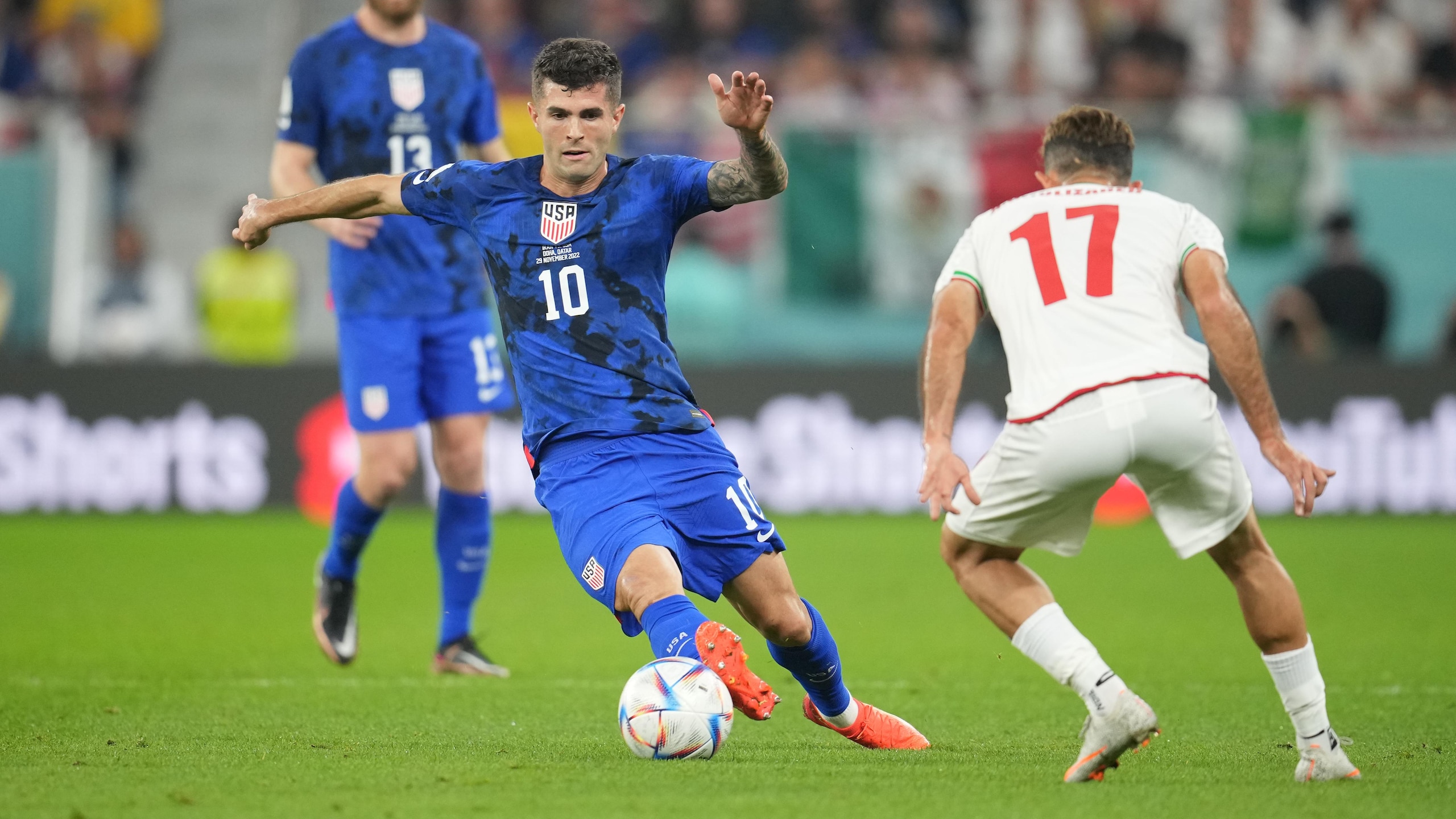
Caps: 82
Goals: 32
World Cups: 1 (2022)
Christian Pulisic never became the vocal leader of the new USMNT generation that some hoped. Frankly, that wouldn't be in keeping with his personality.
But he has risen to the occasion on numerous occasions for the Red, White and Blue while carrying the responsibility of restoring the program's honor following its failure to qualify for the 2018 World Cup.
He came through with the game-winning goal against Iran to send the U.S. to a 1-0 victory that clinched a return to the knockout phase, but sustained an injury in the process that required a brief hospitalization. And in Concacaf World Cup qualifying, he has averaged 0.68 goals per 90 minutes across his 23 appearances in two cycles.
He's also enjoying his best extended run of club form with AC Milan, scoring eight goals and assisting two more as the Rossinieri attempt to respond to a rare year outside European football by winning a 20th Scudetto.
If Pulisic can stay healthy, he still has a good chance to be considered the greatest American player of all time when it's all over, even if he's not as demonstrative as some hoped.
3. Tim Howard
23 of 25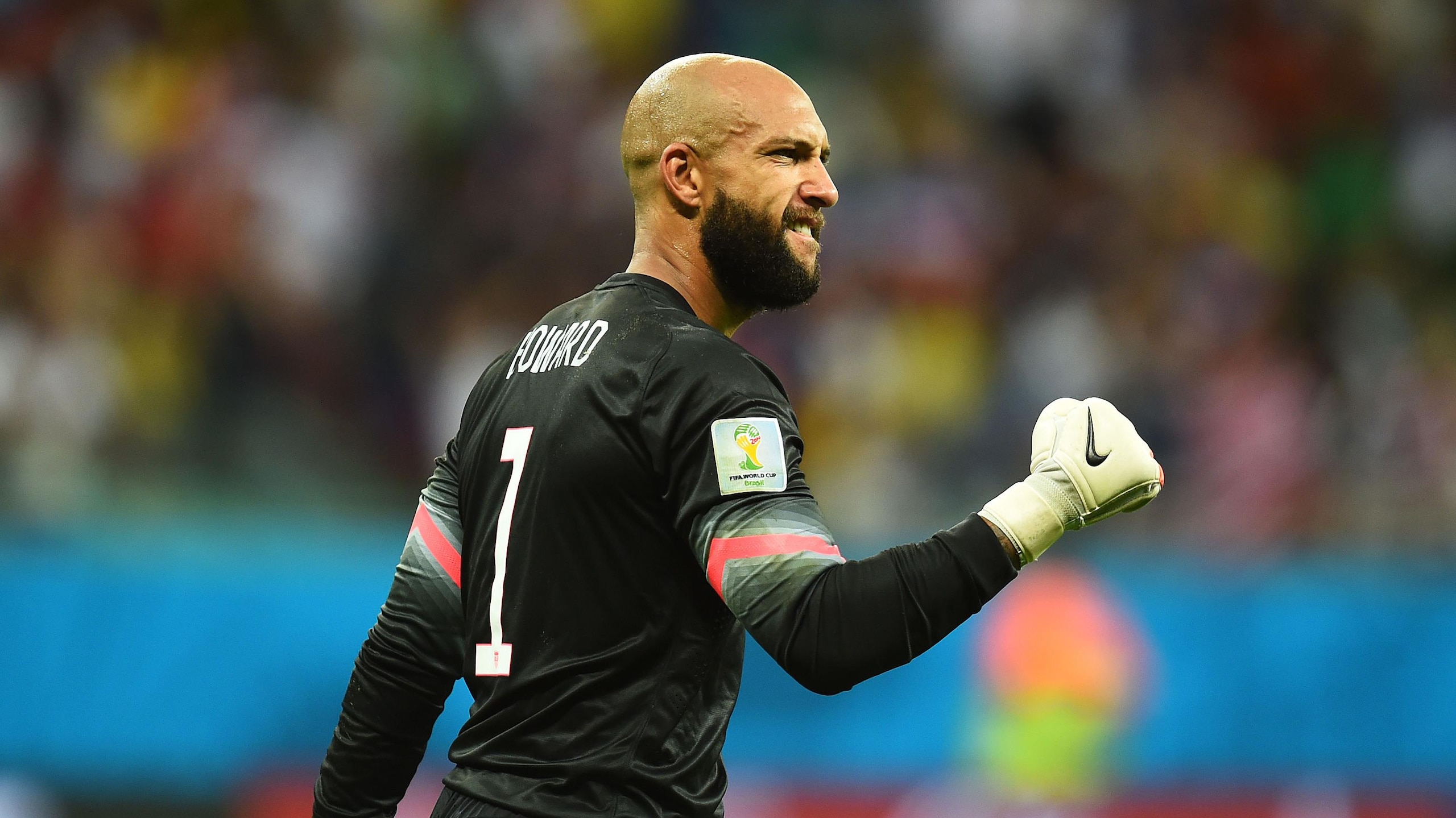
Caps: 121
Clean Sheets: 42
World Cups: 2 (2010, 2014)
Tim Howard is the all-time caps leader among U.S. goalkeepers and one of only two to be the unquestioned starter at two consecutive World Cups.
That only begins to describe the New Jersey native's outsized influence on the program over a decade, during which the Americans transitioned from a nation that merely hoped to qualify for the World Cup knockout phase to one that expected to.
And fittingly, Howard saved his best World Cup performance for his last, when he made a World Cup-record 16 saves to keep the Americans in the game in a 2-1 extra-time defeat to Belgium in the 2014 round of 16.
Howard also appeared in 39 World Cup qualifiers over four cycles. And at club level, Howard made history by earning the No. 1 job at Manchester United for a season-and-a-half. He spent most of his Premier League career at Everton, where he spent a decade in the Goodison Park goal.
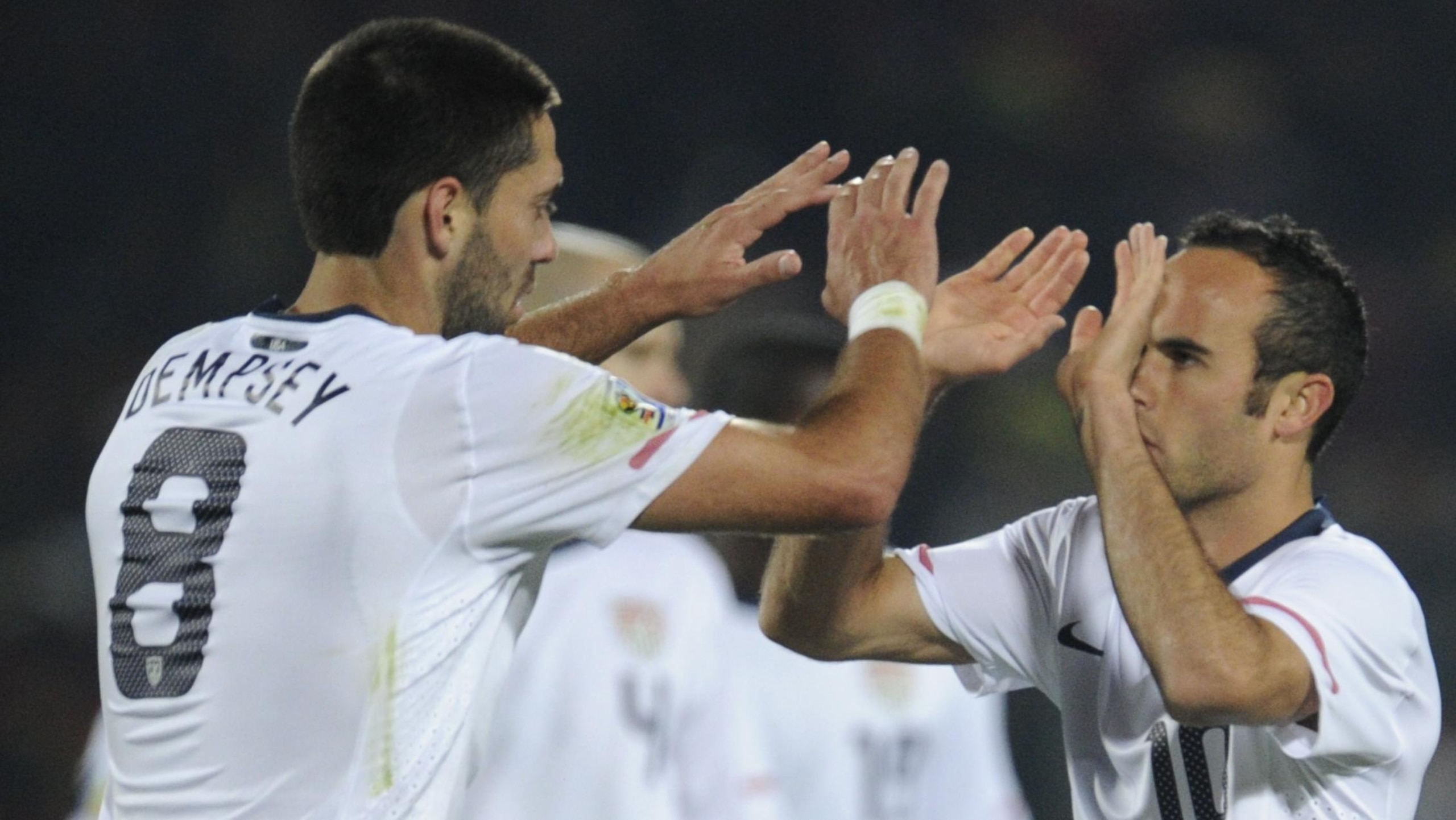
2. Clint Dempsey
24 of 25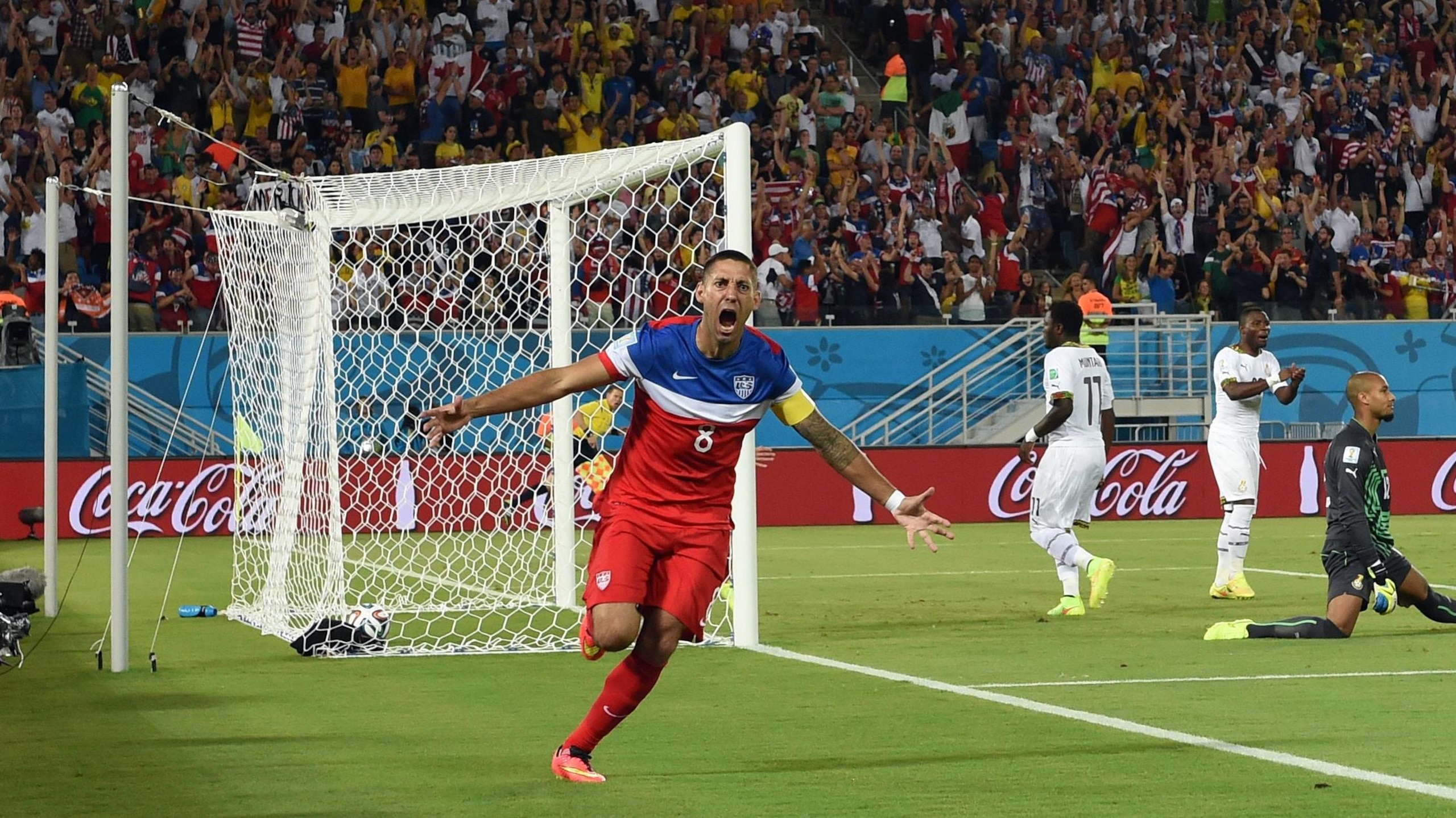
Caps: 141
Goals: 57
World Cups: 3 (2006, 2010, 2014)
Clint Dempsey is the joint American all-time scoring leader. With his opening goal against Ghana in 2014, he became the only American to score goals in three World Cups.
On the club level, he produced arguably the greatest European season ever by an American attacker when he found the net 17 times for Fulham during the 2011-2012 Premier League campaign.
And after beginning his pro career in MLS with New England, he helped grow the league in his final chapter with a blockbuster move to the Seattle Sounders that eventually led to a 2016 MLS Cup title and two appearances in the final.
But Dempsey's biggest legacy may have been the way he played. In the famous words of his former national team manager Bruce Arena, "he tries s--t."
Dempsey's improvisational approach made it OK for American players to adopt an interpretation of the sport that originated somewhere other than middle-class suburbia, the way most of the world had played the peoples' game for centuries.
1. Landon Donovan
25 of 25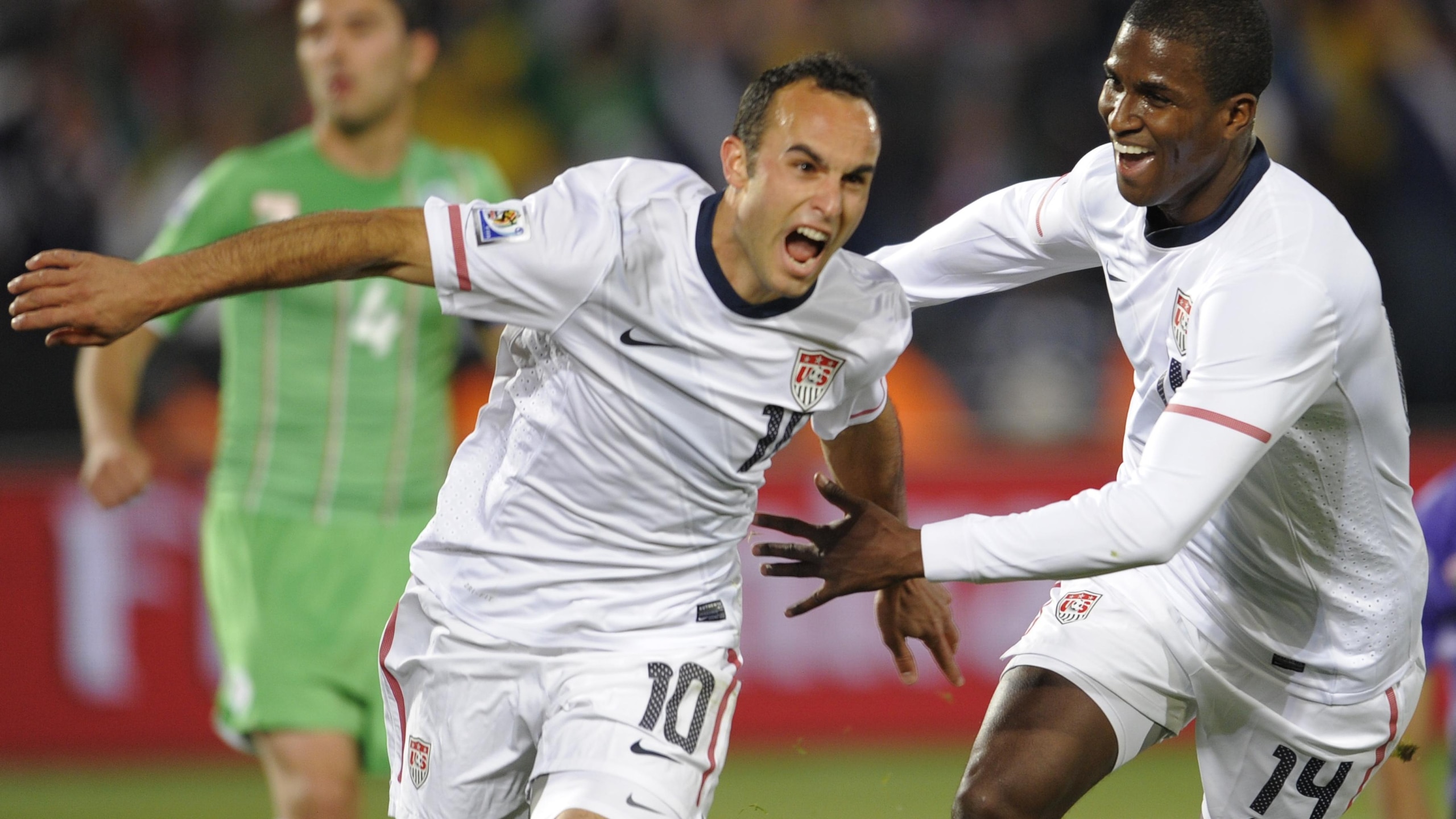
Caps: 157
Goals: 57
World Cups: 3 (2002, 2006, 2010)
There is an insidious sentiment in some corners of American soccer fandom suggesting Landon Donovan was not a world-class player because he never enjoyed extended European success. It's a damn shame.
True, his early stints at Bayer Leverkusen and Bayern Munich fizzled out. But two short-term loans to Everton proved that Donovan had what it took to excel at the highest club level, even though he preferred to stay in California with the LA Galaxy over the long term. His Premier League assist rate of 0.42 per 90 minutes in 17 league appearances is the definition of elite.
For his country, there was never any doubt. It's easy to forget how important he was to the 2002 squad as a 20-year-old, retroactively earning the tournament's Best Young Player award and joining a club that includes Pelé, Beckenbauer, Müller, Pogba, and Mbappé.
But we all remember where we were when he scored his last-gasp winner against Algeria. And Jurgen Klinsmann's decision not to include him in 2014 continues to look more indefensible with each passing year.
Maybe Donovan could've used one more tournament to truly cement his legacy as the greatest American player ever. But as his nation's joint all-time leading scorer and author of its most memorable World Cup moment, he didn't need it.
.jpg?w=2560 "Ravens Titans Football")
.jpg?w=2560 "Breaking News")