George Hill Building Dark-Horse Case to Win 2015 Most Improved Player Award
George Hill has a case for the NBA's Most Improved Player Award, even if he does not look like your typical candidate.
He's 28 years old. He's wrapping up his seventh NBA season and his third as a full-time starting point guard. He's averaging a mere 14.3 points per game for a team that is fighting just to make the playoffs.
In theory, none of those things should matter. In practice, the Most Improved Player Award usually goes to a young player still at the beginning of his career who steps forward and dramatically increases his scoring average. That was essentially the case for Ryan Anderson, Paul George, Kevin Love, Danny Granger, Monta Ellis and countless others.
TOP NEWS
LeBron Scolded Embiid 😯

'Over-Under' Predictions for Every NBA Team's Record 🔮

Trades That Should've Happened During NBA Offseason 🏀
Goran Dragic broke that mold somewhat last year, and Hill is the same kind of candidate—reinventing himself as he enters his prime. Hill's numbers are not as dramatic as Dragic's were last season, but Hill has steadily been building a case as one of the most improved players in the league this year.
Hill missed much of the beginning of the season with injury—first a knee injury and then a strained groin.
He's still played just 743 minutes in 28 games—probably the biggest knock against his chances of winning this award. Still, his full-time return to the lineup at the end of January coincided with the Indiana Pacers turning into a world-beating juggernaut. They've gone 17-7 since January 25, with a point differential of plus-5.5 per 100 possessions.
Talking with Zak Keefer of the Indianapolis Star, Frank Vogel pointed to Hill as one of the big reasons for the turnaround: "We've been close a lot of the year; we just needed a little extra boost in a lot of those games. He's been the guy of late to get us over that hump."
With the departure of Lance Stephenson and the injury to Paul George, there was space for Hill to step into a bigger and more ball-dominant offensive role. We didn't get to see it until he was healthy, but he's finally delivering.
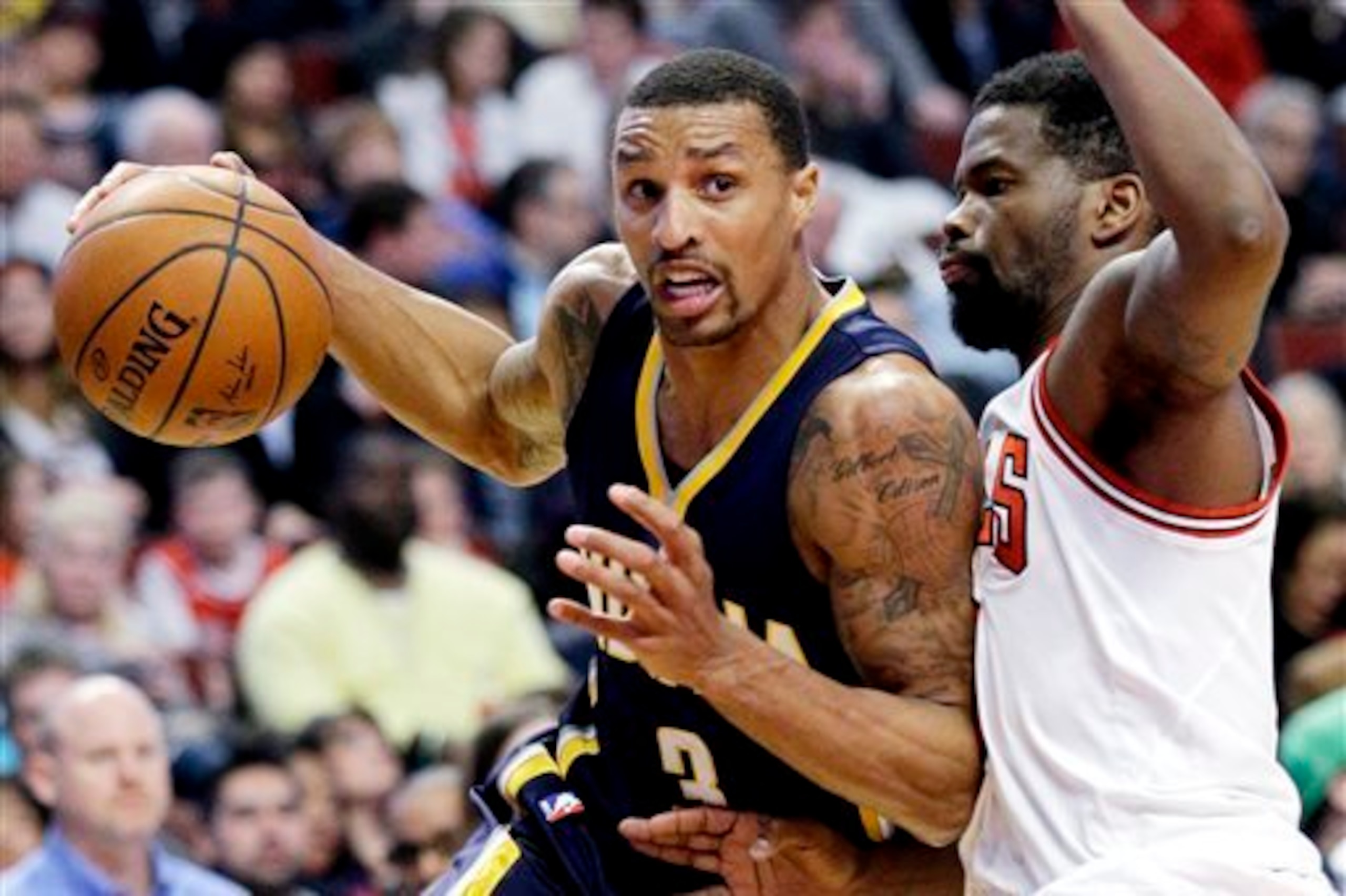
Hill's per-game numbers are not dramatically different this season.
| PTS | REB | AST | FTA | FG% | 3PT% | |
|---|---|---|---|---|---|---|
| 2013-14 | 10.3 | 3.7 | 3.5 | 2.3 | 44.2% | 36.5% |
| 2014-15 | 14.7 | 3.7 | 4.5 | 3.5 | 44.8% | 33.3% |
However, those stats are somewhat misleading. The team has been judicious with his minutes after all the health problems to begin the year, and Hill has been playing just 26.5 minutes per game compared to 32.0 last year.
Because of those different minute totals, his per-36 minute statistics are a better indication of how much more productive Hill has been this season.
| PTS | REB | AST | FTA | FG% | 3PT% | |
|---|---|---|---|---|---|---|
| 2013-14 | 11.6 | 4.2 | 3.9 | 2.6 | 44.2% | 36.5% |
| 2014-15 | 19.9 | 5.0 | 6.1 | 4.7 | 44.8% | 33.3% |
The sum total of those improvements is even more striking in an all-in-one metric like Basketball-Reference's Box Plus-Minus (BPM). This metric is a box score-derived estimate of a player's overall production, expressed as net points per 100 possessions. A score of 0.0 represents an average player.
Hill's BPM went from plus-2.4 last season to plus-4.5 this year. That mark ranks 17th among all players who average at least 20 minutes per game and have played in at least 20 games this season.
What's really interesting is to compare Hill to the rest of the top 20 on that list by his improvement in BPM this season.
Rudy Gobert is a monster, going from minus-4.3 to plus-6.0. Tyson Chandler also looks great, bouncing back from a down year with the New York Knicks.
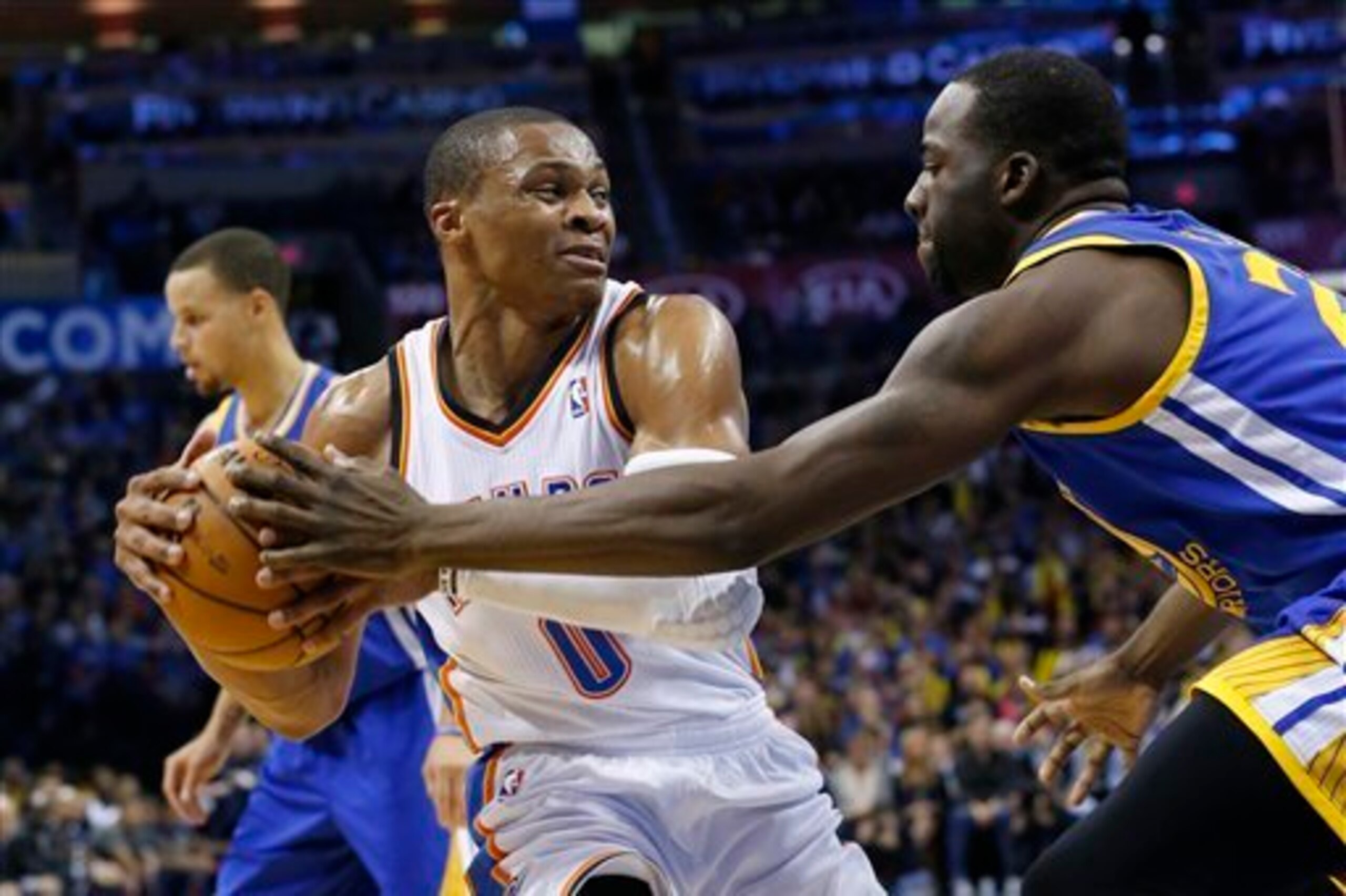
But after those two, Hill's rate of improvement is at least as impressive as Damian Lillard, Russell Westbrook, Draymond Green and Jimmy Butler—the players who would probably be considered front-runners for the Most Improved Player Award.
Hill's case for the award is about more than just the dramatic team turnaround he sparked or his own statistical improvements. It's about how much the size and style of his role on this team has changed.
For the past few seasons, Hill had been a point guard in name only. He shared ball-handling responsibilities with both George and Stephenson. A great deal of his "offensive initiation" was simply dumping the ball into David West or Roy Hibbert in the post and then retreating to the corners. Last year, a third of his shot attempts were catch-and-shoot jumpers.
This season he is working far more on the ball—catch-and-shoot jumpers make up less than a quarter of his shots this season.
Take a look at some more granular and descriptive statistics that reflect how Hill has been better and different. From the NBA's SportVU Player Tracking Statistics:
| Potential Assists per 36 | Drives per 36 | Frontcourt Touches per 36 | |
|---|---|---|---|
| 2013-14 | 8.2 | 3.0 | 65.2 |
| 2014-15 | 12.4 | 7.5 | 79.5 |
Hill is much more involved on offense and spends far more time with the ball in his hands. With that added offensive responsibility, he is penetrating more than twice as often while generating nearly 50 percent more scoring opportunities for his teammates.
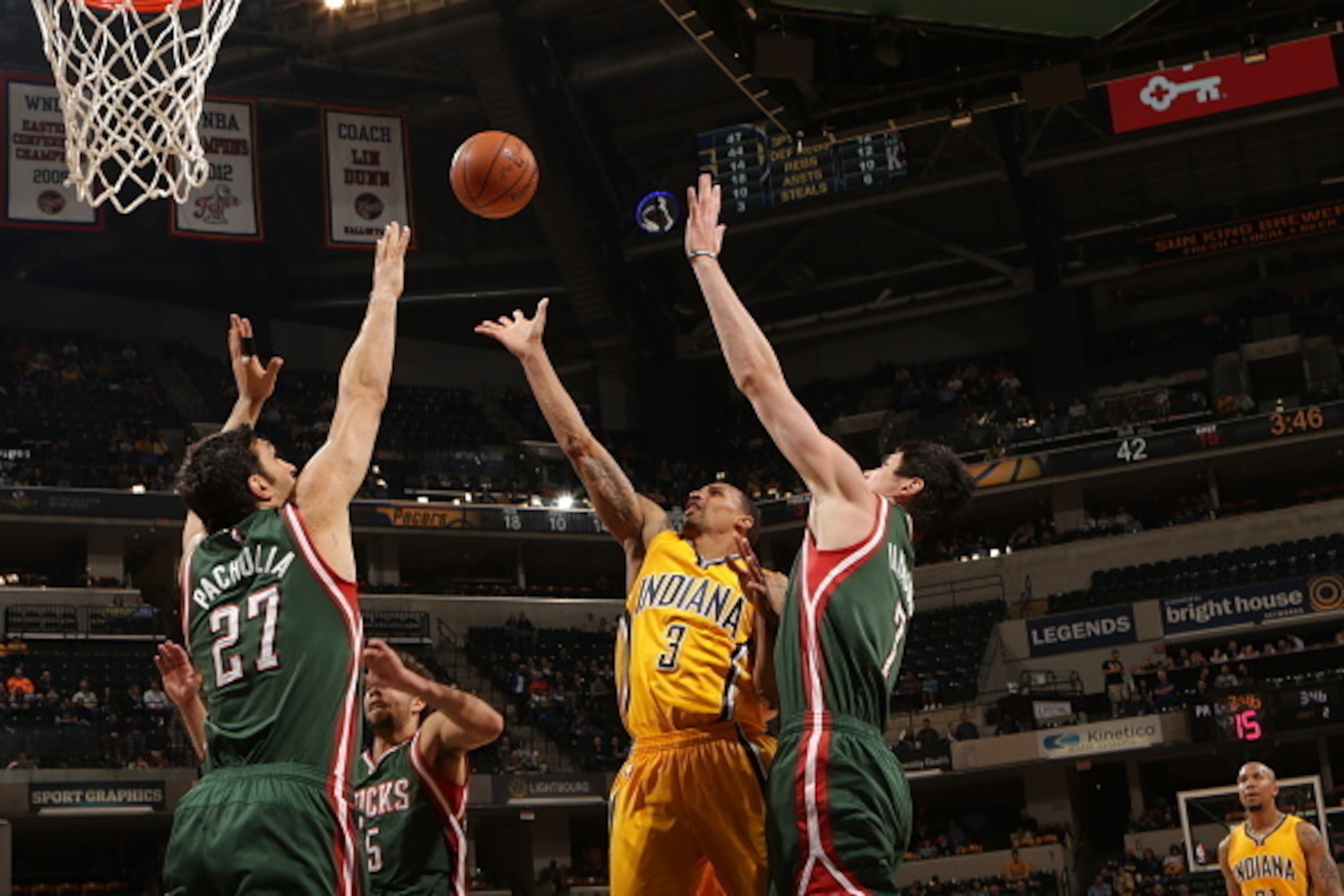
In his breakdown of the surging Pacers, Sports Illustrated's Rob Mahoney singled out Hill and his development as an on-ball creator:
"No longer is Hill a mere game manager for a post-centric outfit, but a genuine creator who draws more than 40 percent of his own possession usage from the pick-and-roll, per Synergy Sports. In those scenarios, Hill maxes out his efficiency not through explosion, but precision. Only one other player in the league to tally 50 pick-and-roll possessions or more has registered as low of a turnover rate on those plays as Hill.
"
The vaguely defined nature of the NBA's awards often makes it difficult to point to a definitive candidate. The MVP debate and eventual winner is the most obvious example of this. Everyone sees a slightly different meaning in the award—most impressive player, most dominant player, most important to his team, did the most with the least help, best player on the best team, etc.
If you are someone who sees the Most Improved Player Award as recognition for a young player increasing the slope of his development curve, then Hill is probably not your guy.
The case for Hill requires digging deeper than per-game averages.
Everyone gets to make their own choices about the word "most," but this season Hill is dramatically different and radically better.
He deserves the recognition.
Stats courtesy of NBA.com unless otherwise indicated.

.jpg?w=2560 "Terrell Owens Being Sued for Defamation")

.jpg?w=2560 "CJGJ Shares Cryptic Post 🤔")