
Grading the Washington Redskins' Free-Agency Moves so Far
Positive grades are inevitable since the Washington Redskins pushed the boat out to bolster last season's 30th-ranked scoring defense. That's despite those signings requiring a leap of faith in new general manager Scot McCloughan's blueprint for turning a perennial loser around.
It's easy to be an early believer after McCloughan made it his focus to build from the trenches. That's how teams do the smartest rebuilding jobs.
A late splurge on a woeful secondary is another plus point in McCloughan's favor. Things would have looked different had he made the mistake of overlooking the Achilles' heel of this roster.
Find out grades for Washington's current free-agency moves on the following slides.
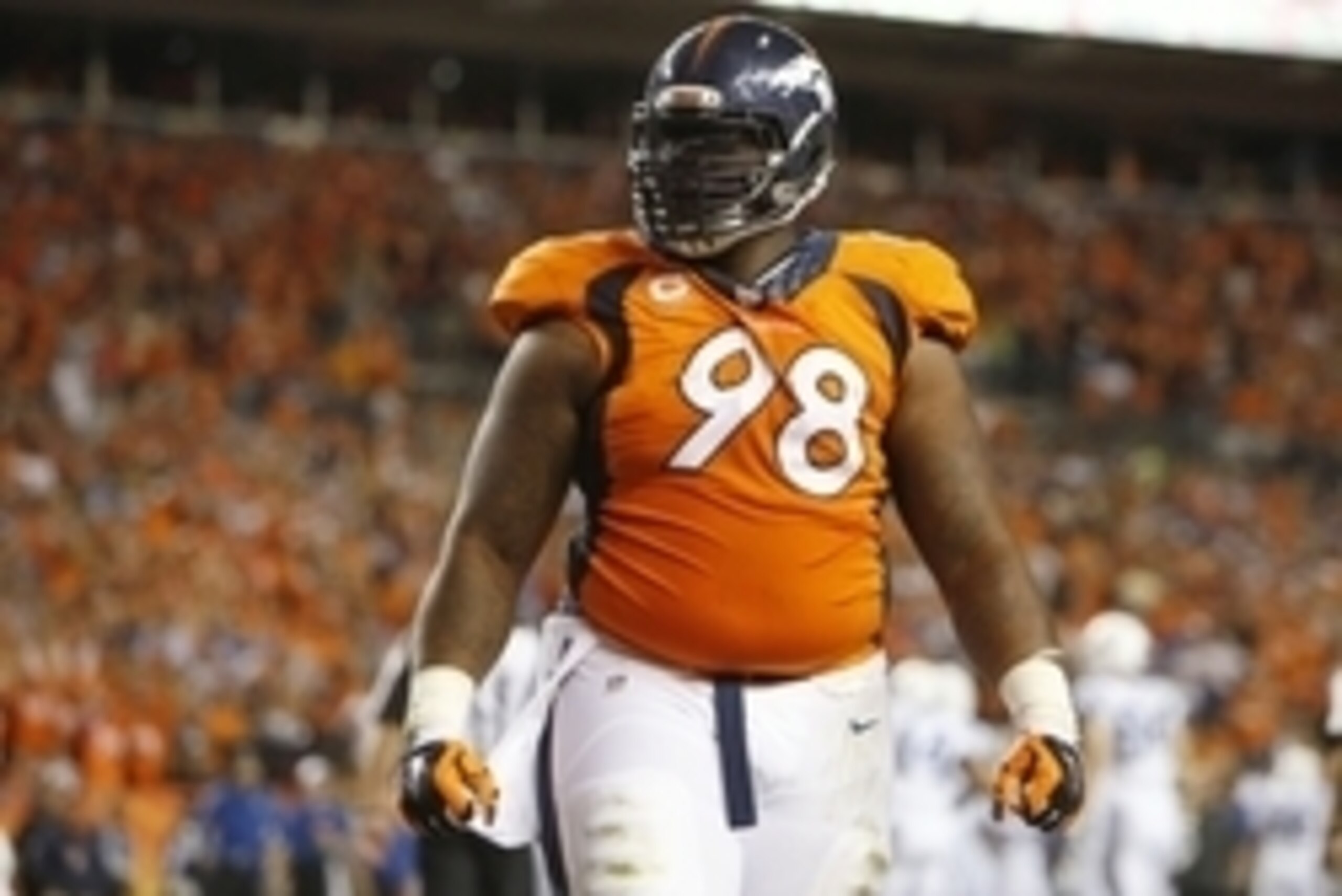
Stephen Paea, DT
1 of 9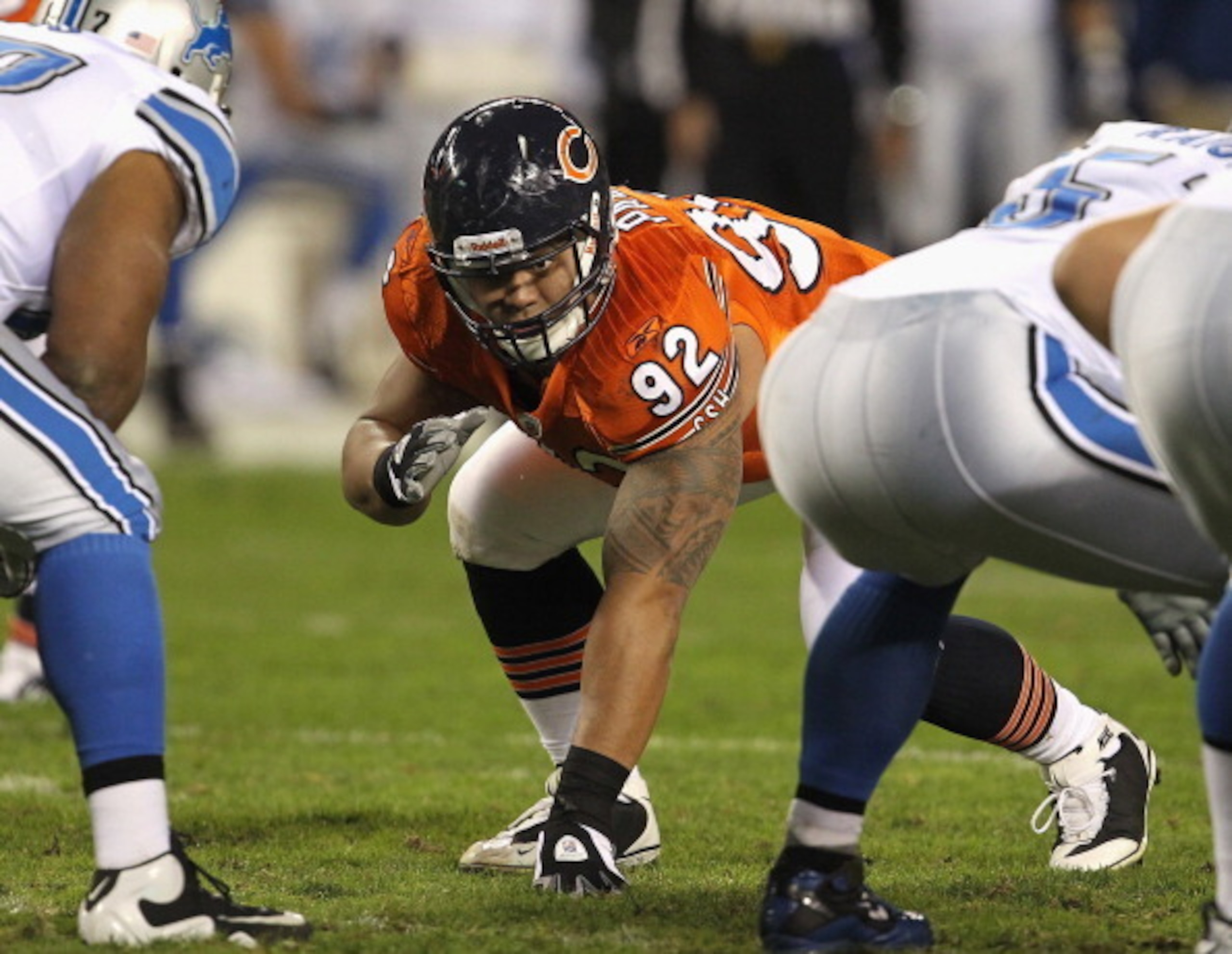
It was a mild surprise when Washington moved quickly to agree to a deal with Stephen Paea. After all, he's spent his first four seasons in the pros operating in a 4-3 defense.
Putting 4-3 personnel into a 3-4 has been a familiar pattern since the Redskins made the switch back in 2010. It hasn't always worked, so it makes sense to be wary about Paea's arrival.
Of course, the crossover isn't supposed to be as big as in recent seasons—not with the defense switching to fewer two-gap principles.
In this context, Paea fits naturally as a 3-technique end on base downs. Making room for a 3-tech on the base front has become common for modern 3-4 schemes that incorporate hybrid principles.
The concern with asking Paea to play that role is that he won't be the only one. The Redskins already have Jason Hatcher to shade into individual gaps on early downs.
There's a risk of leaving the base front weak against the run. New defensive coordinator Joe Barry has just come from a one-gap 3-4 team familiar with that problem.
Barry coached linebackers for the San Diego Chargers in 2014. Those linebackers often found it tough to escape opposing blockers because 3-technique ends Corey Liuget and Kendall Reyes were getting upfield instead of controlling the line of scrimmage.
The Chargers and their lightweight front ranked 26th against the run last season, after allowing 124.1 yards per game. Both Liuget and Reyes are in the barely 300-pound range, just like Hatcher and Paea.
Will Paea be able to keep linebackers such as Keenan Robinson and Ryan Kerrigan clean? That's a relevant concern in a division featuring 1,000-yard runners such as DeMarco Murray and Ryan Mathews.
Yet any struggles holding up against the run could be offset by Paea's skill in rushing the passer. The 26-year-old logged a career-high six sacks in 2014, and pressuring the pocket is where his real value will lie in Washington.
Bleacher Report analyst Matt Bowen told Mike Jones of The Washington Post the Redskins are paying Paea to create interior pressure. It's easy to believe that a nickel front featuring both Paea and Hatcher will cause a lot of problems on football's money down.
Washington paid Paea $21 million over four years with $15 million guaranteed, according to ESPN Redskins reporter John Keim. That's big money for a player who might not fit the base front and can get rocked back in the running game.
The pass-rush potential is certainly intriguing, although it's worth noting four of Paea's six sacks in 2014 came during the first six weeks of last season.
It's smart to be cautiously optimistic with this move.
Grade: C
Ricky Jean Francois, DT
2 of 9
McCloughan wants you to trust him when he asks you to believe Ricky Jean Francois can make an impact in D.C. He gave the former San Francisco 49ers and Indianapolis Colts rotational lineman $9 million for three years with $4 million guaranteed, per NFL Media Insider Ian Rapoport.
That's more than solid money for a 28-year-old who's never been dominant since entering the NFL in 2009. Like Paea, Francois has trouble occupying blockers and isn't a force against the run.
Yet he is versatile, able to flip-flop between end and nose tackle. He couples that flexibility with pass-rushing skill.
Francois has logged 8.5 sacks during his career, 7.5 of which have come during the last three seasons. Adding another interior pressure specialist offers a big cue about the character and makeup of 2015's defense.
One obvious drawback to the new front is a line that's getting smaller at the edges. Paea is 6'1", 300 pounds, while Francois is 6'3", 297 pounds. Meanwhile, Hatcher is 6'6", 299 pounds.
Going lighter in the trenches is a risk in the NFC East. Current division champions the Dallas Cowboys boast a powerful front five that can be dominant on the ground. Meanwhile, the Philadelphia Eagles are also beefy and skilled along the offensive line.
McCloughan obviously still believes in the player he drafted in the seventh round in 2009. But Washington could prove a tough testing ground for Francois.
Grade: D
Terrance Knighton, NT
3 of 9
Talk about scoring big. That's exactly what the Redskins did when Terrance Knighton agreed to sign a single-season contract worth $4 million, per ESPN's Josina Anderson.
It represents a smart bargain deal for a physically dominant, natural nose tackle. That description bears repeating: a physically dominant, natural nose tackle.
Excuse the enthusiasm brought to you by repetition, but Washington has waited five long seasons for the right player to anchor this defense. No 3-4, regardless of whether it's one-gap or two-gap in nature, can effectively function without a consistently disruptive, powerful presence over center.
That's exactly what Knighton is. Remember all of the potential issues surrounding Paea and Francois? You should, since you're only three slides in.
Well, all of those potential problems go away with Knighton at the heart of this defense. There's no need to expect a redefinition of stout run defense from the series of 3-techniques who may be rotating on the outside. Not when Knighton and his 6'3", 331-pound (and the rest) frame act as the focal point of the run defense.
That's how it worked for the Denver Broncos the past two seasons. During that time, their Knighton-led defensive front ranked eighth and second against the run, respectively.
Every member of the front seven around and behind Knighton will be more productive as he gobbles up double-teams.
In a playing sense, you can't fault this deal. The same is true when breaking down the numbers.
Pro Football Talk reporter Mike Florio provided these details:
"Per a source with knowledge of the contract, Knighton’s one-year deal (reported widely as being worth $4 million), pays out $2.95 million guaranteed. Another $500,000 is tied to per-game roster bonuses, and another $450,000 will be paid based on his ability to comply with specific weight clauses.
Another $100,000 can be earned by participating in the team’s workout program.
"
The conditioning-related clauses are smart safeguards. They are also an inducement for Knighton to play his best football in burgundy and gold.
If he does, he will transform the Redskins defense.
Grade: A+
.jpg?w=2560 "Chiefs Giants Football")
.jpg?w=2560 "Steelers Buccaneers Football")

Chris Culliver, CB
4 of 9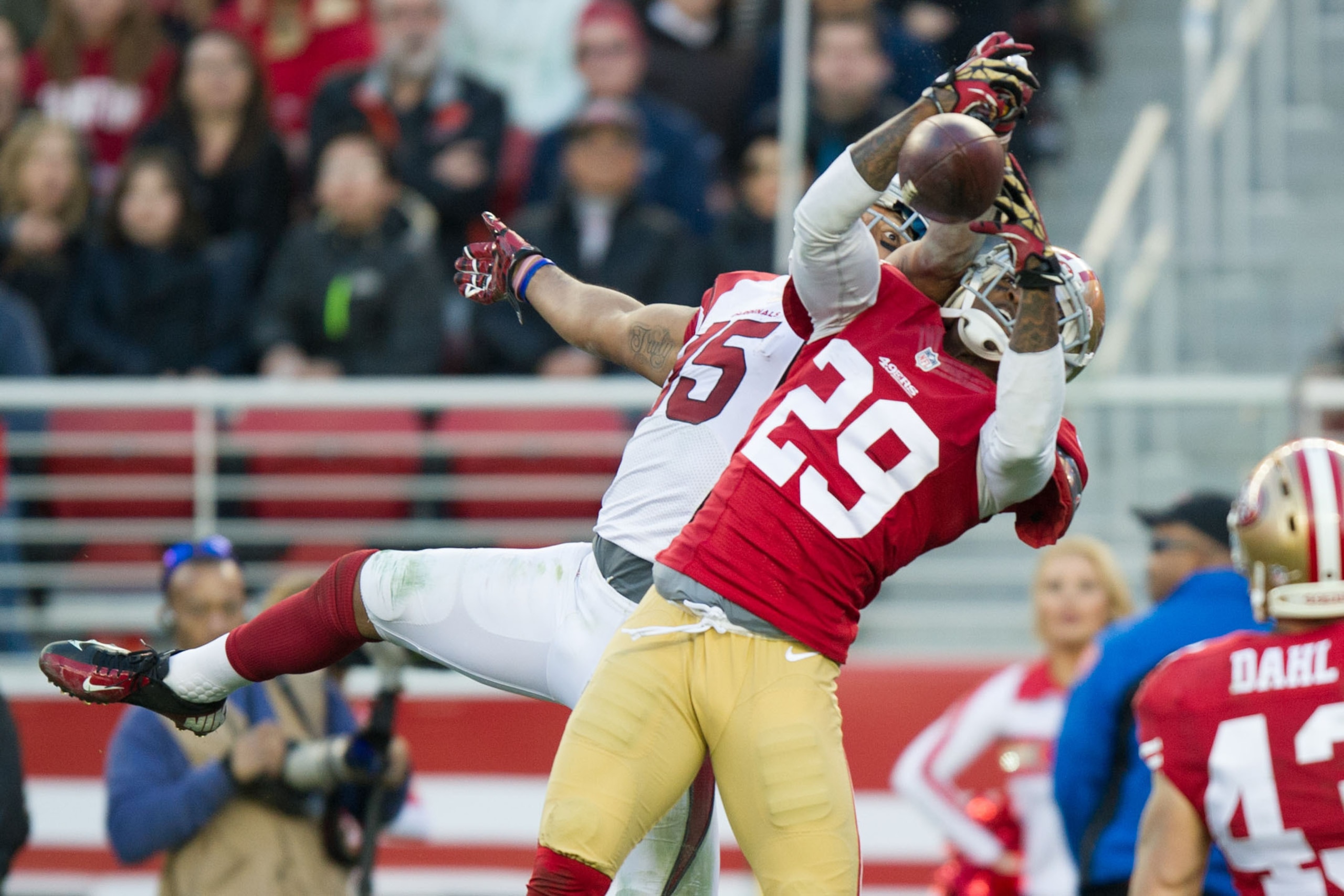
McCloughan just couldn't let the offseason pass by without upgrading a porous, talent-short secondary. Safety was the most obvious concern, but it couldn't distract from the need for help at cornerback.
The Redskins knew that when they agreed to pay Chris Culliver $32 million over four years, per Aaron Wilson of the National Football Post. That's a hefty contract, which indicates Culliver's role in the pass defense will be significant.
He's earning a starter's salary, so struggling 2013 second-round pick David Amerson should be concerned. So should veteran Tracy Porter.
The former's rookie campaign was a mixed bag. But rather than progressing during his second season, Amerson was toasted by virtually every quarterback on the schedule in 2014.
At the same time, Culliver was enjoying his breakout year at the pro level. The 26-year-old picked off four passes and broke up 14 more for the San Francisco 49ers.
Those numbers reflect a level of playmaking skill Washington's secondary lacked on the outside. But Culliver could also have tremendous value in the slot.
At 6'0", 199 pounds, he has the size to play inside. It's a position the Redskins have struggled to fill for some time now, with Porter representing the latest failed experiment. Perhaps another new arrival with solid tackling skills and the frame to play press underneath will finally be the answer.
The concerns with Culliver and his new deal are obvious. He missed all of 2013 due to a torn ACL. That's a major injury at any position, but last season's strong recovery is at least a good omen.
However, Culliver's off-field baggage is extensive, particularly given the scope of his new contract.
McCloughan has rolled the dice that Culliver will not only stay out of trouble but also prove to be a so-called "ascending" talent, rather than a one-season wonder.
Grade: C+
Jeron Johnson, S
5 of 9
Why did it take so long? For a team that should have dove in early to court every quality safety on the market, the Redskins took their sweet time adding to the weakest position on the roster.
As the hours passed, free agents such as Antrel Rolle, Rahim Moore, Kendrick Lewis and Ron Parker came and went. When McCloughan did finally act, he opted for a safety with one career start in four seasons.
That didn't stop Washington from giving Jeron Johnson $4 million over two years, according to NFL Media Insider Ian Rapoport. It's another smart deal, but one that asks a career backup to take a major step forward.
As a natural strong safety, Johnson will have every chance to win a starting job at a position that's wide open. CSN Washington writer Rich Tandler believes the job will belong to Johnson once the real action begins in September.
Worryingly though, Tandler also stated the 26-year-old is viewed as a "short-term" solution. Thinking in the short term at safety has let the position decay for so long.
This may not have been the strongest market for safeties, but Washington still overlooked a number of veterans with a greater body of work. Despite Johnson's special teams crossover, it's easy to believe the Redskins could and should have done better.
Grade: C
Re-Signing Secondary Depth
6 of 9
Washington may not have bolstered the secondary with marquee talent, but McCloughan at least ensured there's plenty of depth. He brought back safety Duke Ihenacho, per Mike Jones of The Washington Post, along with safety Trenton Robinson and cornerback Justin Rogers, per separate reports from the team's official site.
None of these players is about to blossom into a sudden, impact starter, but they all offer cover at key positions.
Just as importantly, they are each useful on special teams. Rogers and Robinson have return skills, while Ihenacho can help the coverage units.
Grade: C+
Niles Paul, TE
7 of 9
It made perfect sense to bring Niles Paul back. He enjoyed a career year in 2014 and offers an invaluable alternative at a key position on offense.
Paul caught 39 passes for 507 yards last season. He filled in admirably, while dynamic but brittle tight end Jordan Reed predictably spent time on the sideline.
Paul responded well to head coach Jay Gruden's schemes. Gruden and offensive coordinator Sean McVay moved him around formations to take advantage of Paul's athleticism and experience as a wide receiver.
When you combine his niche move skills with a key role on special teams, Paul was worth the three-year deal paying just short of $10 million, per NFL Media Insider Ian Rapoport.
Grade: A
Tom Compton, OT
8 of 9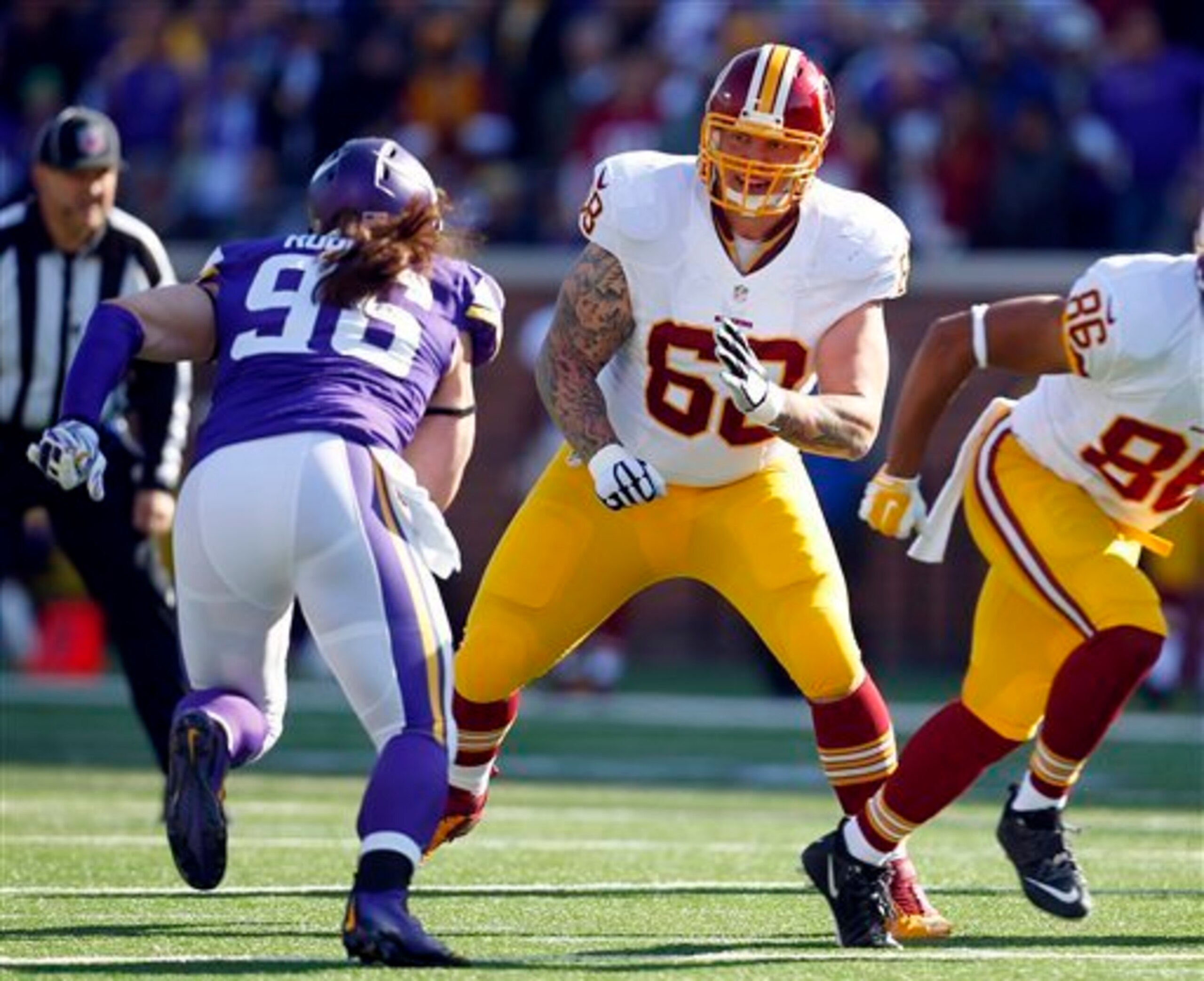
It never hurts to have a versatile swing tackle who can provide cover at both sides of the O-line. That was surely the thinking behind the decision to retain Tom Compton.
The 2012 sixth-round pick didn't exactly sink when he was thrust into a starting role on the right side last season. But he also didn't make anybody think Washington finally had an accomplished bookend to go with left tackle Trent Williams.
ESPN Redskins writer John Keim reported Compton's return. He also detailed how a player whom coaches believe is solid at knocking open holes for the run remains raw when protecting the passer.
This offensive line still needs a lot of work. In fact, not adding to the front five is the one blot on McCloughan's copybook during this market.
But any group needs worthy depth. As a flexible lineman who's progressed into seeing more playing time, Compton just about merits his new deal.
Grade: C-
Overall
9 of 9
So far the book on McCloughan reads relatively well. His focus on defense is encouraging considering the unit's issues during the last two years.
McCloughan has retooled the line with younger, quicker trench warriors who can make a new, more aggressive scheme work. He also scores marks for paying attention to the secondary, especially for not leaving the cornerback rotation short.
Those moves aren't quite overshadowed by the lack of activity along the offensive line. But standing pat with a group that surrendered 58 sacks in 2014 seems like an unnecessary risk.
Even after bringing back a playmaker like Paul, McCloughan may struggle to justify sticking with familiar blockers if he can't find marquee upgrades in the draft.
Still, all his signings so far are under 30 years old, and it's easy to fall in love with how some of these contracts have been tailored to protect the team.
Grade: B-
All statistics and player information via NFL.com.
.jpg?w=2560 "Eagles Jaguars Football")
.jpg?w=2560)
.jpg?w=2560 "🚨 Week 8 AP Top 25 Poll")


.jpg?w=2560 "CFP Bracket After Week 8 🏆")
.jpg?w=2560 "Steelers Roll Saints in Paris")