

Can the Milwaukee Bucks Fix Their Offense Before the Playoffs?
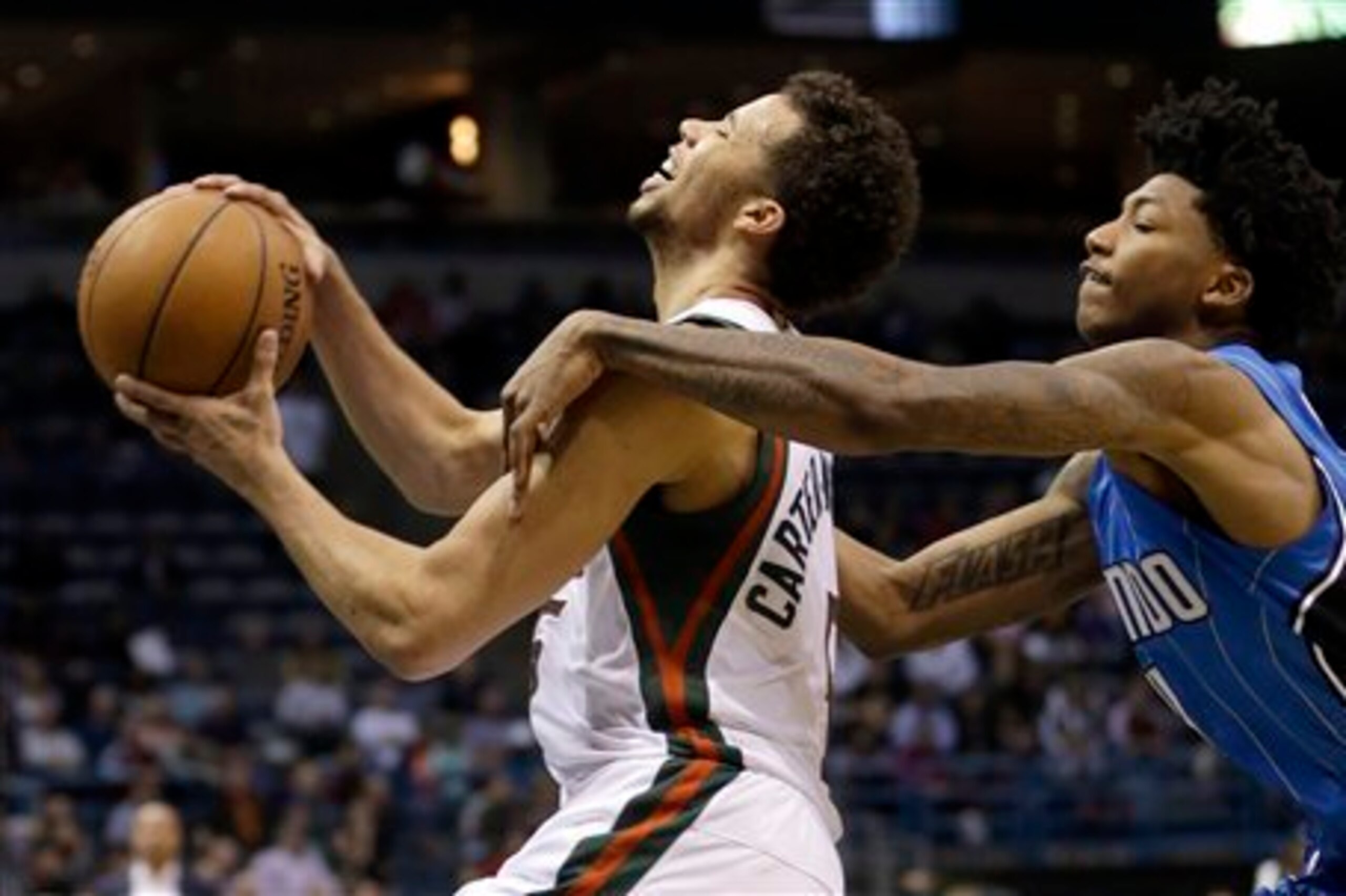
Offensive inconsistency has plagued the Milwaukee Bucks all season, but ever since dealing for Michael Carter-Williams at this year's trade deadline, the team is just 3-7 and has appeared to struggle more than even it is accustomed to.
What exactly has changed since trading Brandon Knight, arguably the team's best and most consistent offensive threat at the time? Are they worse off from a scoring standpoint without him? Is it just a chemistry issue? Or are there other factors at play?
In short, it's probably a bit of everything.


The offense isn't clicking, the team continues to adjust to Carter-Williams' different style of play, and the efficiency numbers that have been so strong all year have started to dip since the move.
And considering the latter was one of the biggest concerns about Carter-Williams himself when the deal was made, that's where they must begin when attempting to get this offense back on track.
Efficiency
While the Bucks have struggled to put a lot of points up on a consistent basis, the scoring they do is typically done with great efficiency.
On the year, they're shooting 45.8 percent from the floor, which ranks seventh in the league, and have often been able to overcome low-scoring games by converting in crunch time, when the game is at its most crucial point.
Since trading Knight, though, the Bucks are hitting just 42.7 percent of their field-goal attempts and an even worse 32.1 percent of their threes. Neither of those numbers are very conducive to winning games against any team, let alone the likes of the Golden State Warriors and New Orleans Pelicans.
Providing an explanation for the struggle is a bit tricky.
Carter-Williams is asserting himself as a playmaker by turning in a 31.1 assist percentage, and from watching the team play, it's clear he has the ability to penetrate the paint and create plays from there. In fact, that number is higher than the 29.0 assist percentage Knight was posting.
However, Carter-Williams is suffering from the same problem he had with the Philadelphia 76ers in that he's struggling to become an efficient scorer. His attempts are down and his percentage is slightly up, but at 40.6 percent, it's still not an encouraging number.
In order for the Bucks to fix their offense, he absolutely must improve on that and continue to make plays while limiting his turnover number, which sits at 3.7 per game. But Carter-Williams turning things around isn't the only way for the team to fix its offense.

In fact, John Henson plays a big role in it as well.
Henson is averaging 7.2 points in just 18.3 minutes per game, while shooting 58.0 percent from the floor. With that level of efficiency, the third-year forward should not only be playing more, but also getting more touches in the paint.
Undoubtedly the team's most talented player on the block, Henson is hitting 50.6 percent of his hook shots and finishes 68.9 percent of his shots at the rim.
Jump shooting comes and goes, and when a team does not have a go-to player on the interior, that's a problem. But until Henson is given more ample opportunity, we may never know if he can be that player.
Chemistry

Comparing the Bucks to the Cleveland Cavaliers is asinine in most discussions, but when delving into team chemistry, it's actually a relevant example that makes plenty of sense.
When the calendar year turned over to 2015, the Cavs found themselves with a record of 18-14, and that was a far cry from where some people expected them to be after the major moves they had made over the summer.
And while the Bucks don't have the talent the Cavs do, it's relevant in that it shows just how vital chemistry is to success.
Carter-Williams has appeared in just 11 games for the Bucks and, without question, is still getting used to his new home.
Change isn't easy, and adapting to a new environment isn't always a quick process.
Simply put, it's too early to question whether or not the trade failed. This new-look roster hasn't spent nearly enough time together to properly gauge what may or may not be wrong with their ability to put points on the board.

From a numbers standpoint, nothing too drastic has changed since the move, outside of the team's inability to knock down shots. While some of that falls on Carter-Williams' shoulders, it's unfair to say he's solely responsible.
If the defense were struggling, suggesting the Bucks pick it up on that end would be an option.
However, that's not the case either.
If the offense is indeed broken, the team will have to fix it by getting better shots and getting back to its efficient ways from earlier in the season. That means better ball movement, interior offense and not turning the ball over.
So, can the Bucks fix it? Absolutely.
Will they? We'll soon find out.
Unless otherwise noted, all statistics courtesy of Basketball-Reference and current through March 19




.jpg?w=2560 "Love's Body Already 'Tired'")

.jpg?w=2560 "Tyreek Deal May Come Soon")
.jpg?w=2560 "Ward Nearly Walks Out of Presser ▶️")
