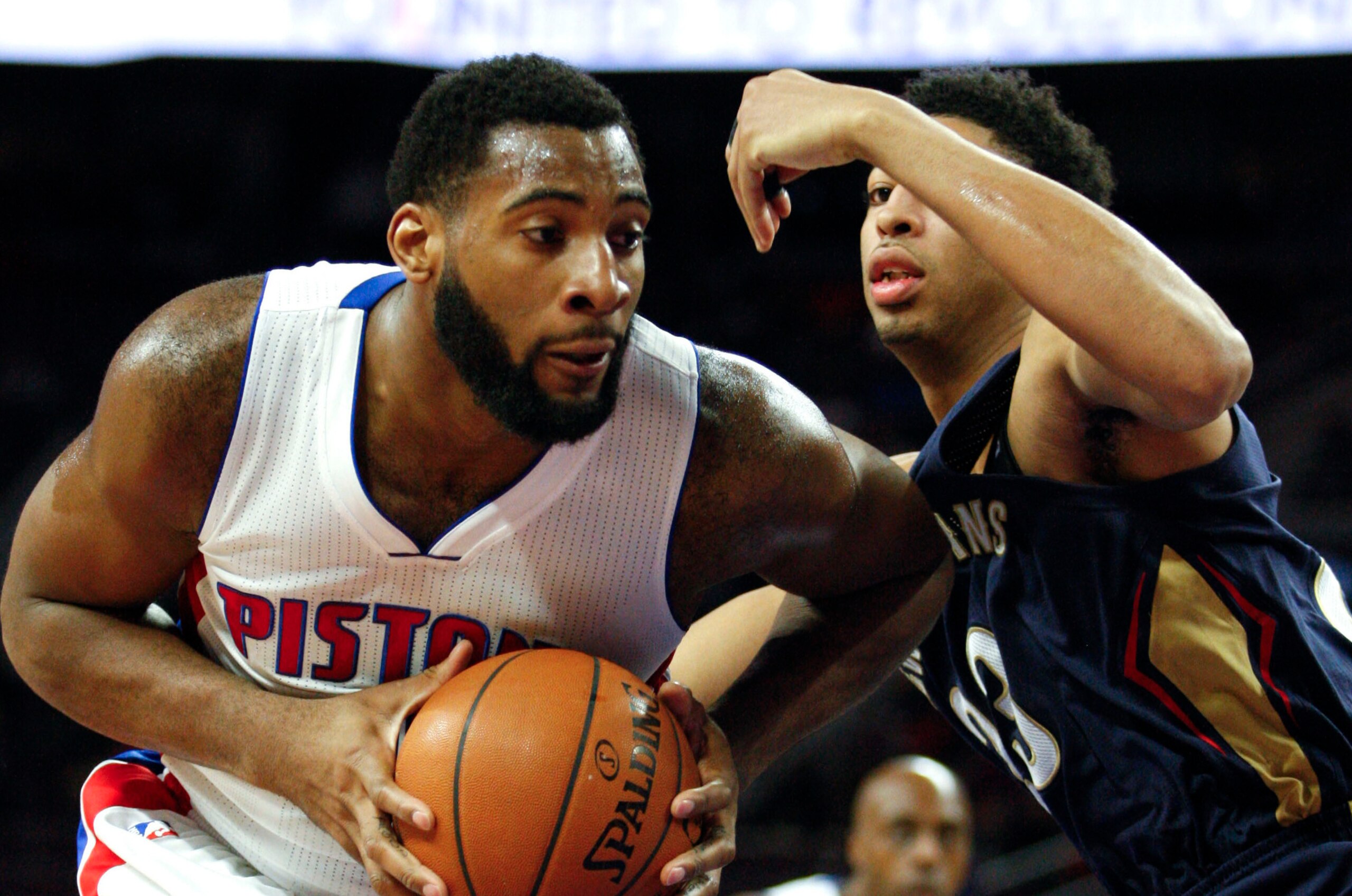


Certain NBA players are able to watch the NCAA's March Madness unfold with intense feelings of longing, a single, pressing thought piercing through their brains.
This could have been me.
Many or most of those players will, in turn, look at their bank statements, eradicating any possibility of lingering doubt. But the crux of our point remains: There are plenty of NBA talents who could still be playing college ball.
Knowing this, we clearly have to rank them, because knowledge is power is ranking responsibility.
Eligible young guns must have actually attended college, disqualifying some promising overseas prospects (shout-outs to Giannis Antetokounmpo and Rudy Gobert). They also must still be able to attend college, meaning we're dealing strictly with players who left school as freshmen in 2012, freshmen or sophomores in 2013 and anything other than seniors in 2014. Finally, they must have logged at least one minute of action this season (sorry, Joel Embiid).
Statistics and injuries will impact player placement, but neither one is a define-all measurement (You're welcome, Julius Randle). Potential matters a whole lot here. We're not dealing with graying veterans, so future outlooks—parts of which will invariably be based off collegiate performances—will play a part in determining who lands where.
Other than that, there's only one thing left to say: Let's rank.
25. Jordan Clarkson, Los Angeles Lakers, PG
1 of 25
Age: 22
Years Pro: Rookie
(Most Recent) College: Missouri
Would-Be Class: Senior
2014-15 Per-Game Stats: 9.6 points, 2.7 rebounds, 2.5 assists, 0.7 steals, 43.0 percent shooting
Watching some of the NBA's bottom-feeders isn't too hard. They have a foundation, a core of worthwhile youngsters, a foundation upon which they can build.
Subjecting one's self to the Los Angeles Lakers is nothing like that. If there's a productive preview of the future in what's happening now, it's limited, infrequently sandwiched between a prehistoric offense and painfully porous defense.
Jordan Clarkson is the lone potential exception with Randle done for the season and Ed Davis playing his way out of Los Angeles' price range. He's far from prolific, but he's proving serviceable at a point guard position that's betrayed the Lakers eight times over.
Through 23 games as a starter, he's averaging a tidy 14 points, 3.8 rebounds and 4.1 assists. He's also one of just two healthy Lakers (Jeremy Lin) assisting on more than 15 percent of all made baskets when on the floor.
Naturally, then, head coach Byron Scott is preparing to start Lin ahead of Clarkson before the season is out, per the Los Angeles Daily News' Mark Medina. After all, why roll with someone who factors into the future when you can start someone who, you know, does not?
24. Otto Porter, Washington Wizards, SF
2 of 25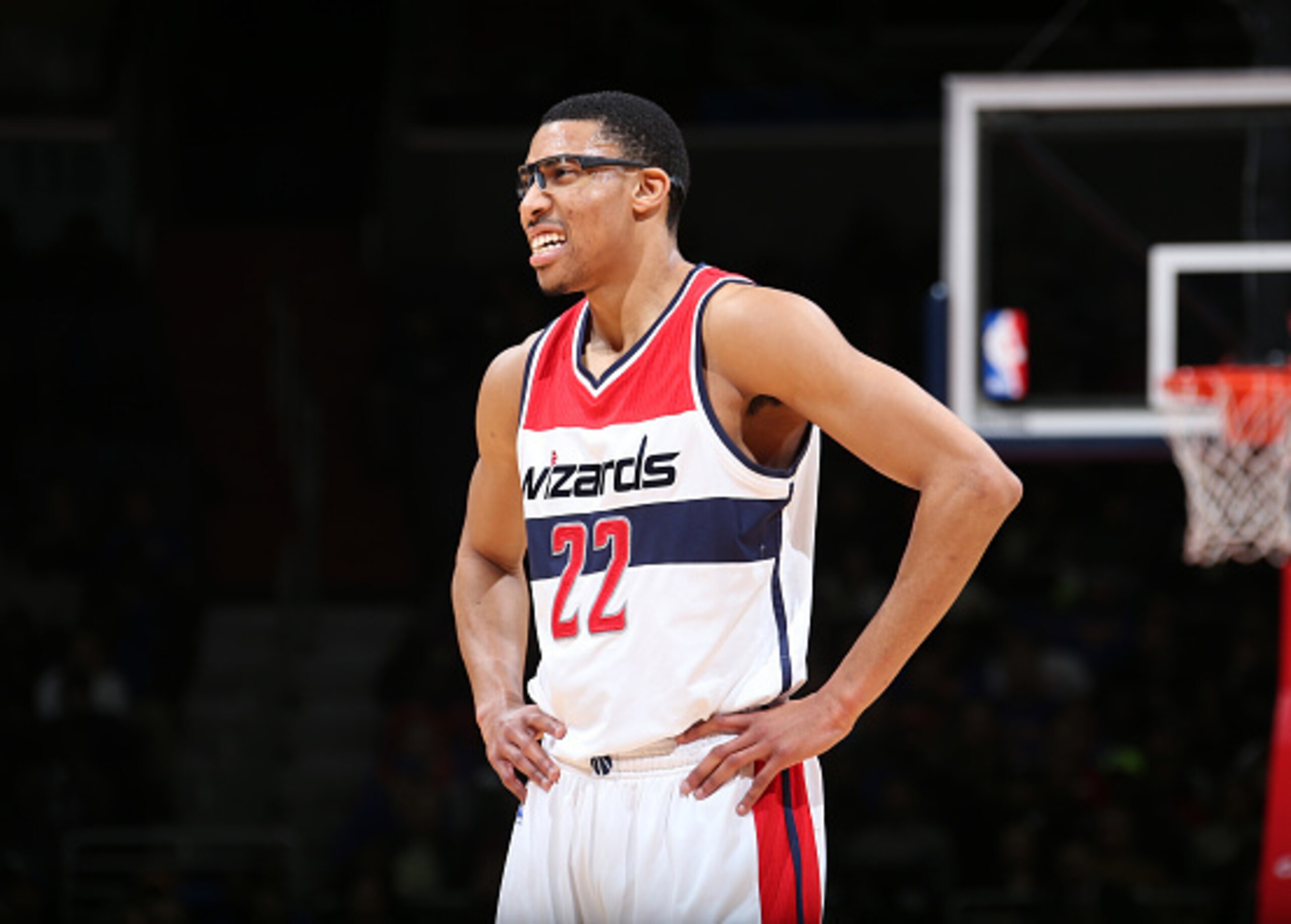
Age: 21
Years Pro: 2
College: Georgetown
Would-Be Class: Senior
2014-15 Per-Game Stats: 5.9 points, 2.9 rebounds, 0.6 steals, 44.1 percent
Otto Porter's numbers won't grab you, mostly because they're not supposed to. The Washington Wizards don't ever run their offense through him, and he's been unable to establish himself as that hot-shooting spot-up assassin who orbits the perimeter and noticeably helps clear lanes for the incisive John Wall.
By and large, Porter hasn't dominated defensively against rival second units, either. The Wizards rank among the NBA's 10-best points-preventing squads, but they're markedly worse with him on the floor, zoned-out, ball-gazing sets and all.
Consider, though, that in comparable playing time, Porter is averaging more win shares per 48 minutes than Bradley Beal, Washington's "second star." That's more indicative of how overrated the third-year shooting guard has become, but it's an individual victory for Porter, who's basically still in rookie mode after an injury-plagued 2013-14.
Not even one-third of his would-be collegiate peers can say they're everyday contributors for a playoff team. Cracking the Wizards' rotation (March 16's did not play notwithstanding) is something—good enough to also crack this list.
23. Mitch McGary, Oklahoma City Thunder, PF
3 of 25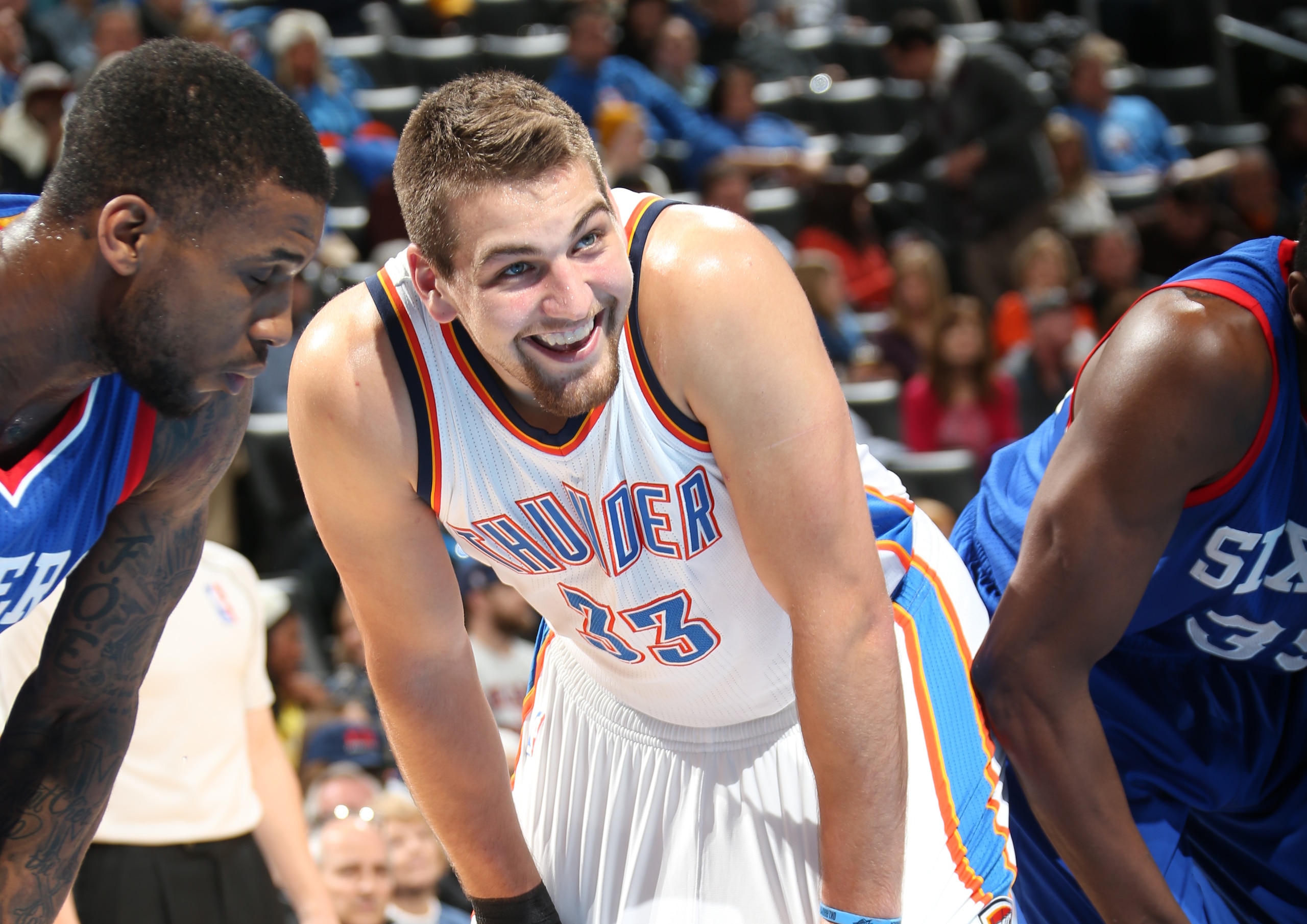
Age: 22
Years Pro: Rookie
College: Michigan
Would-Be Class: Junior
2014-15 Per-Game Stats: 7.1 points, 5.3 rebounds, 0.4 steals, 0.5 blocks, 52.4 percent shooting
Mitch McGary is a per-36-minute stud.
Aided in large part by limited action (274 total minutes), he's averaging 16.8 points, 12.5 rebounds, 1.1 steals and 1.2 blocks per 36 minutes. Again, small samples and stuff. But the Oklahoma City Thunder offense is statistically much better with him in the game, and he's pure energy on both ends of the floor, even if he remains something of a defensive enigma.
"The thing I like about Mitch is he plays with an enthusiasm that you want your bigs to play with," head coach Scott Brooks said of his rookie, per NWI.com's Al Hamnik. "(Joakim) Noah plays with that same type of enthusiasm here."
"We're trying to get a lot of consistency out of him but I love his energy," he continued. "I love his effort. He's going to continue to improve. He's only 23 years old."
Only 23. The Thunder have a knack for developing players from within, and McGary has an opportunity to be special if he can stretch his offensive range beyond 16 feet. Given the right lighting, he also has the opportunity to pass as Ryan Anderson of the New Orleans Pelicans, but that's neither he nor there.


22. Rodney Hood, Utah Jazz, SG
4 of 25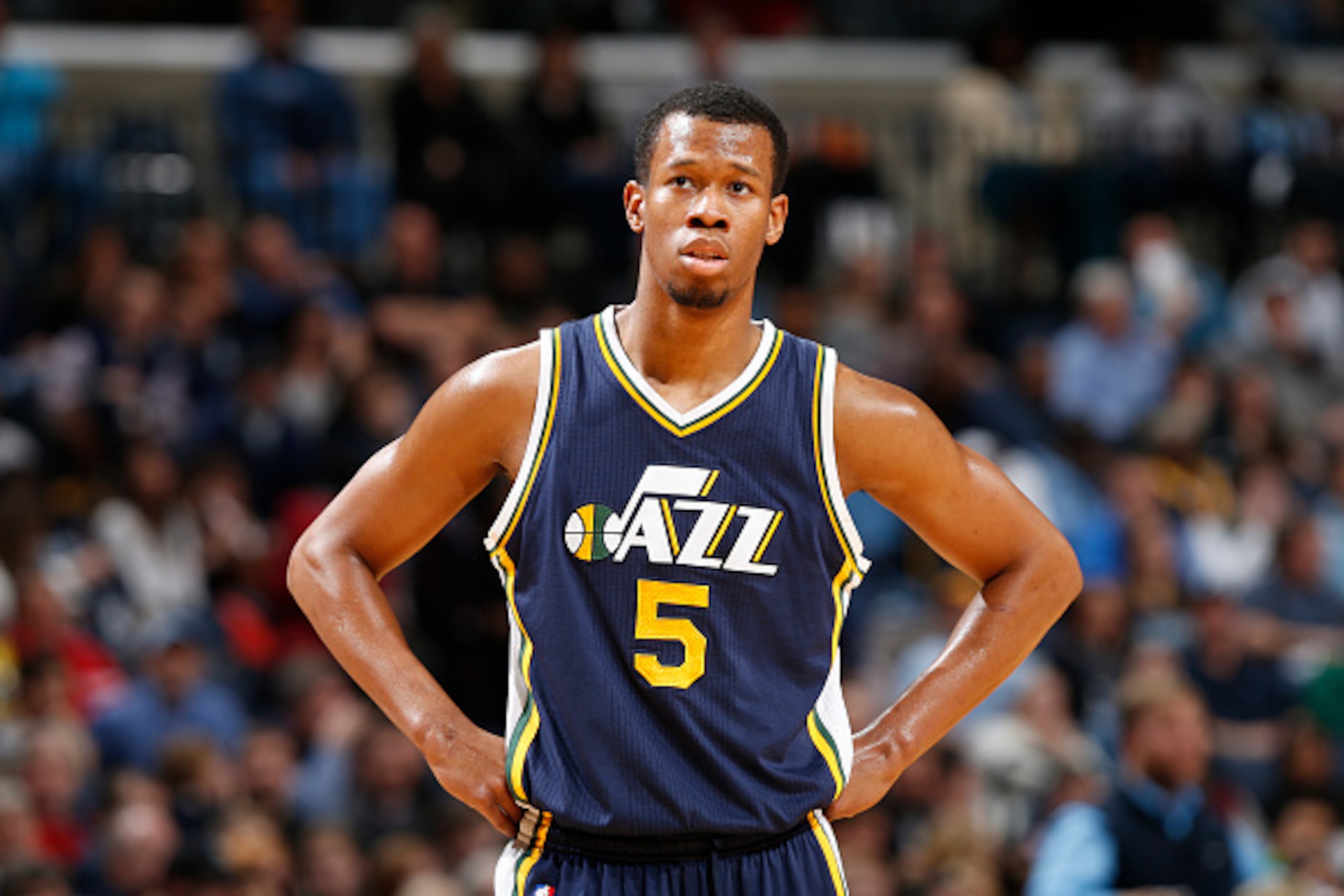
Age: 22
Years Pro: Rookie
College: Duke
Would-Be Class: Junior
2014-15 Per-Game Stats: 7.2 points, 2.3 rebounds, 1.3 assists, 0.5 steals, 39.4 percent shooting
Injuries have delayed Rodney Hood's progression, turning much of his rookie campaign into an amalgam of inconsistent usage and erratic jumpers. But he's carved out a steadier role of late, averaging well over 20 minutes per game for the month of March.
More impressively, his shooting touch no longer eludes him. His accuracy has been on and off all season, but he's putting in 50 percent of his long balls since January, and his overall field-goal percentage exceeds 50 percent for March.
Hood's comfort level is rising considerably within Utah's passing-packed offense. He's making quicker decisions, understanding that his primary responsibilities include ferrying the ball over to waiting hands or firing away from deep off the catch.
Long the afterthought in a backcourt carousel that includes Trey Burke, Dante Exum and the injured Alec Burks, Hood projects as one of those electric guards who dabbles in small forward-y and complements the stylings of Utah's other ball-dominant wings. This is to say, he's a keeper.
21. Ben McLemore, Sacramento Kings, SG
5 of 25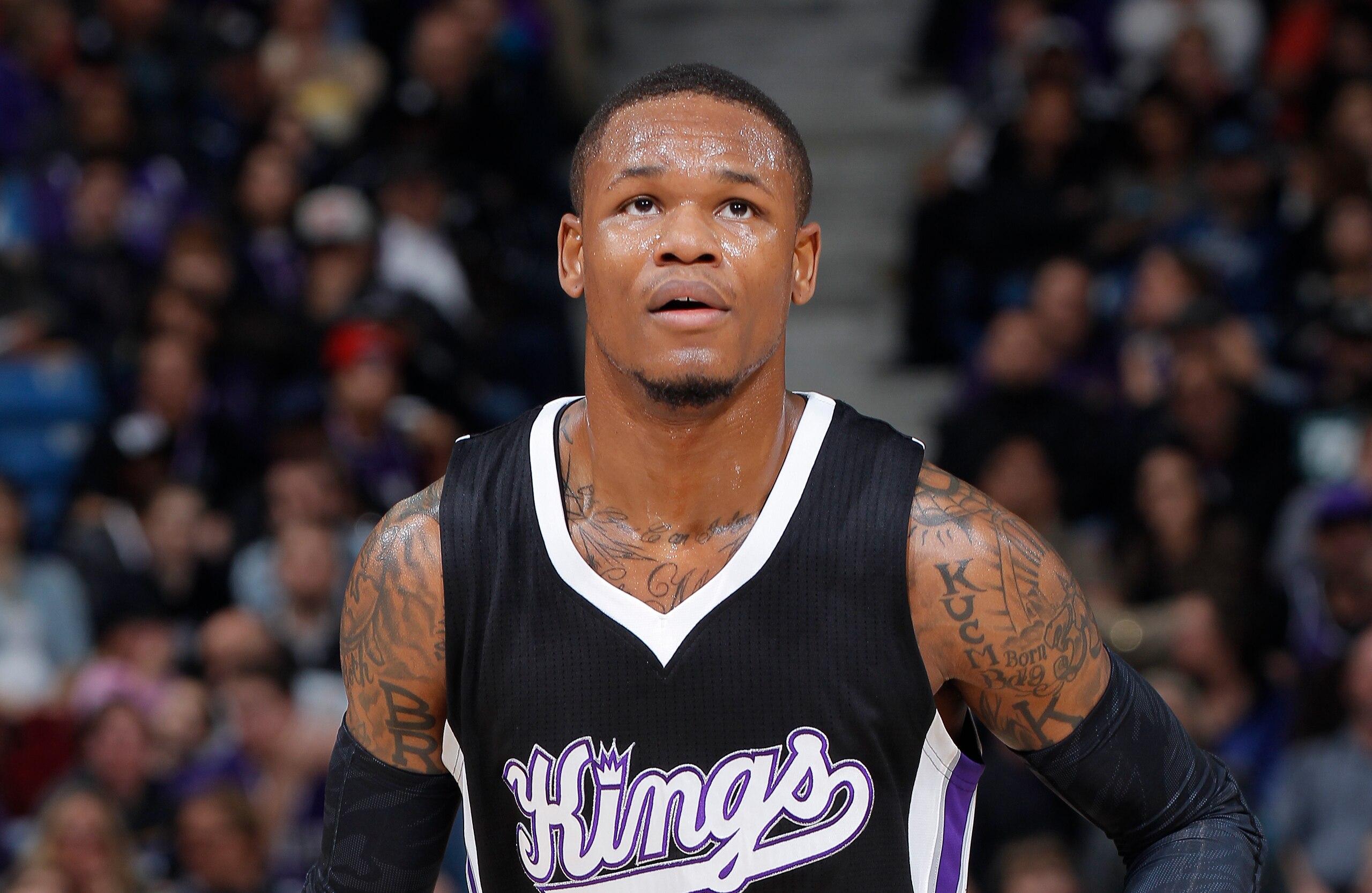
Age: 22
Years Pro: 2
College: Kansas
Would-Be Class: Junior
2014-15 Per-Game Stats: 11.9 points, 2.9 rebounds, 1.5 assists, 43.0 percent shooting
Deemed the second-coming of Ray Allen before his NBA career even began, Ben McLemore has been a disappointment.
His shooting percentages have waffled between average and ugly, and what little momentum he gained before the All-Star break has disappeared. He's under 39 percent overall since George Karl took the coaching reins, and just under 33 percent from deep.
Performances like that against the Charlotte Hornets on March 11, in which he dropped 27 points on 10-of-16 shooting, have been sprinkled throughout the season. He's even hitting on a respectable 35.3 percent of his spot-up treys, which account for around 40 percent of his scoring opportunities. But he remains a project.
Myriad offensive systems haven't helped. McLemore is playing for his third head coach of the season, and his usage rate has dipped as a full-time starter.
All of which leaves him right where he started last season—talented yet unpolished, trying to be someone more than an athletic specialist with seesawing shooting percentages.
20. Aaron Gordon, Orlando Magic, PF
6 of 25
Age: 19
Years Pro: Rookie
College: Arizona
Would-Be Class: Sophomore
2014-15 Per-Game Stats: 5.2 points, 3.1 rebounds, 0.4 blocks, 50.4 percent shooting
Aaron Gordon is the definition of raw. Think of him as a Thomas Robinson- or Andre Drummond-like project...but with a semblance of range on the offensive end. He's drilling 36.7 percent of his threes on the season, in addition to shooting a ridiculous 61 percent inside 10 feet.
Limited playing time has prevented him from posting gaudy stat totals. Injuries hit him at the beginning of the season, and the Orlando Magic's rotation personifies inconsistency; his minutes have actually gone down since James Borrego assumed control of the team.
Orlando is also statistically much worse with him on the defensive end. Opponents are knocking down shots at average rates against him, but aside from the occasional, show-stopping block, he's mostly a low-key bystander. And yet, he's pure energy. Picture Kenneth Faried with a defensive conscience. And three-point range. And shot-blocking potential.
Actually, just picture Gordon, whose skill set, even now, when he's conspicuously unrefined, has him on track to be one of the league's most well-rounded stretch 4s.
19. Zach LaVine, Minnesota Timberwolves, PG
7 of 25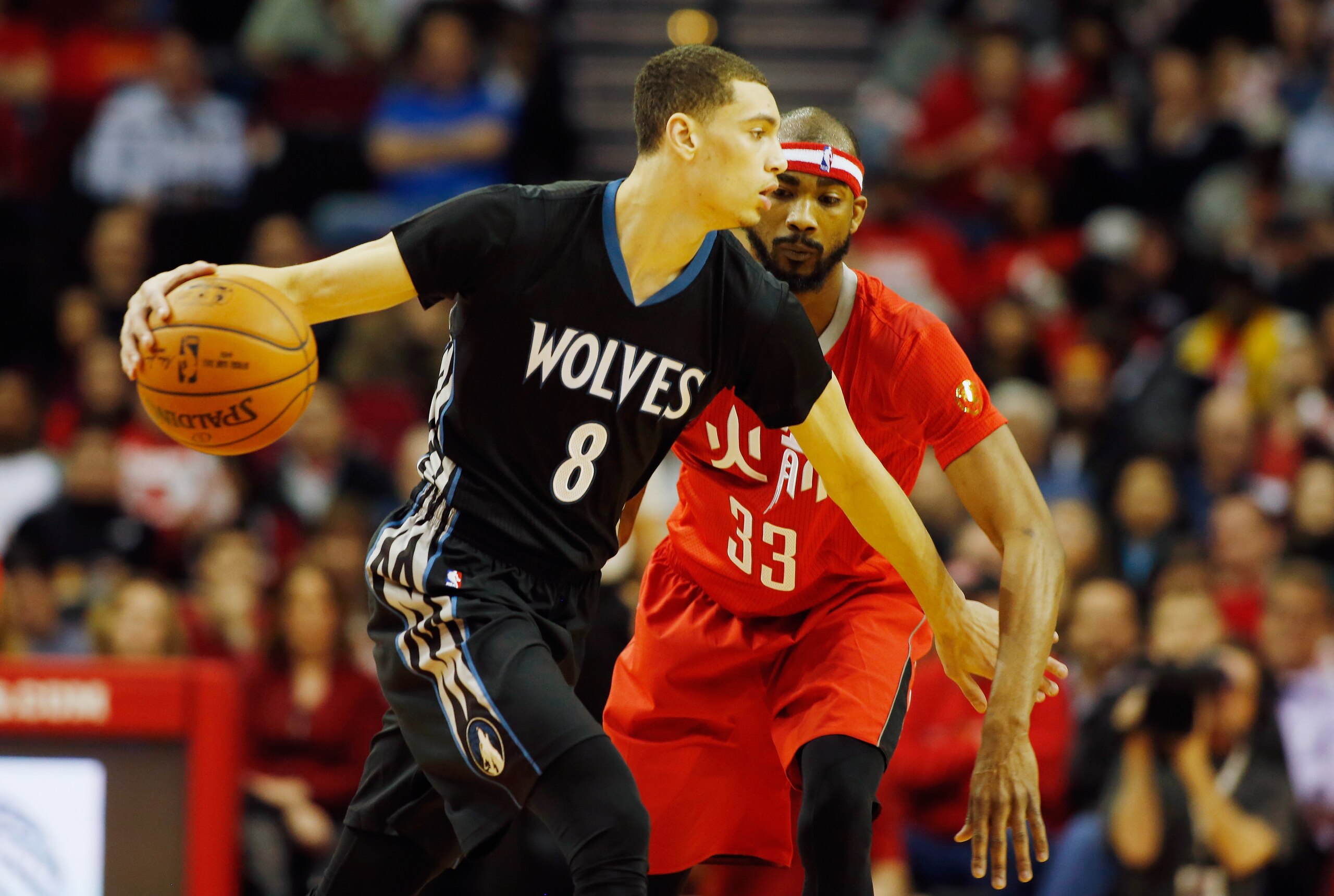
Age: 20
Years Pro: Rookie
College: UCLA
Would-Be Class: Sophomore
2014-15 Per-Game Stats: 7.9 points, 2.2 rebounds, 3.1 assists, 0.7 steals, 42.1 percent shooting
At this point, the Minnesota Timberwolves are just waiting for Zach LaVine's skills to even out and his production to mean something.
Although the team is noticeably worse on both ends when he's in the game, LaVine is averaging 13.5 points, 3.8 rebounds, 5.3 assists and 1.2 steals per 36 minutes. Only two other players over the last five seasons, aged 20 or younger, have reached those benchmarks while seeing more than more than 1,200 minutes: Kyrie Irving and Wall.
Minutes disparities aside, LaVine's rookie campaign stacks up quite nicely against Wall's inaugural crusade:
| 12.0 | 13.2 | 45.1 | 49.7 | 5.4 | 20.5 | |
| 13.4 | 15.6 | 42.7 | 49.4 | 7.9 | 23.8 |
This isn't a fair comparison now, but in many ways, Minnesota's rookie is similar to the Wall of yesteryear. His jump shot is a work in progress, he relies on speed and athleticism to get by, and he's been blindsided by the plethora of All-Stars at the point guard position defensively, forcing head coach Flip Saunders to limit his minutes against elite-level floor generals.
Still, it's impossible to look at LaVine without seeing an equally, if not more, explosive version of Wall—one the Timberwolves can only hope rivals the real Wall in status (not jump-shot acuity).
18. Marcus Smart, Boston Celtics, PG
8 of 25
Age: 21
Years Pro: Rookie
College: Oklahoma State
Would-Be Class: Junior
2014-15 Per-Game Stats: 7.6 points, 3.4 rebounds, 3.3 assists, 1.4 steals, 35.5 percent shooting
Marcus Smart and the Boston Celtics are pushing the bill together.
While the point guard's shooting percentages are scary low, head coach Brad Stevens is forcing him to expand his offensive range. Draining 32.7 percent of attempted three-balls won't get you invited to Stephen Curry's tree-top clubhouse, but it's better than Rajon Rondo's career high, and he's already adjusting to playing off the rock.
With Isaiah Thomas, Avery Bradley and Evan Turner all commanding touches, Smart doesn't have the ball in his hands as much as other starting point guards. He's learning to operate off screens when others have possession as a result, burying more than 43 percent of his spot-up opportunities, including 36.6 percent from long range.
Credit has to be doled out for his defense as well. He's holding his own at the league's deepest position, able to force turnovers when guarding off-the-dribble moves. He's actually on course to post a top-10 steal percentage among all who rookies who have played at least 1,300 minutes over the last five seasons.
Put in the simplest terms, Smart is rookie, playing against starters, who makes the Celtics, a potential playoff team, better on both ends of the floor. The returns on his arrival, while still in their early stages, are already paying huge dividends.
17. Julius Randle, Los Angeles Lakers, PF
9 of 25
Age: 20
Years Pro: Rookie
College: Kentucky
Would-Be Class: Sophomore
2014-15 Per-Game (Preseason) Stats: 8.8 points, 5.8 rebounds, 1.1 assists, 45.6 percent shooting
Most of what we know about Randle's NBA tenure comes from a small eight-game sample size in the preseason. He suffered a broken leg 14 minutes into his regular-season debut and was only recently cleared for non-contact practice, per the Los Angeles Times' Eric Pincus.
During those brief on-court glimpses, Randle frequently became overwhelmed, specifically on the defensive end. But he was also an end-to-end force of nature, crashing the glass, pushing the pace and, at times, playing point forward—versatility he never even showcased while at Kentucky.
That dedication to development, that effort, hasn't died with his season. As Bleacher Report's Kevin Ding writes, Randle is swiftly transcending his age off the court, from monitoring his diet to testing his bodily limits:
"It took the Lakers' last teenage draft investment, Andrew Bynum, years to get out of the McDonald's drive-thru and hotel minibar. The Lakers' current leading scorer, Nick Young, is 29 and still having to be urged to apply video study to game preparation.
Randle even got stronger mentally in testing himself to deal with physical pain. He stopped taking the prescribed painkillers three days after breaking his leg and dealt with what he admitted was "terrible" pain for several weeks.
"
What he's done thus far, both on and off the court, isn't a lot. But it's enough to know that he belongs here.
16. Trey Burke, Utah Jazz, PG
10 of 25
Age: 22
Years Pro: 2
College: Michigan
Would-Be Class: Senior
2014-15 Per-Game Stats: 12.5 points, 2.6 rebounds, 4.4 assists, 0.8 steals, 36.6 percent shooting
Trey Burke: Confusing the state of Utah since 2013.
Nothing the Jazz do is able to get their point man going. He's been mostly coming off the bench since late January, during which time his shooting percentages have improved. The thing is, no matter when or where he plays, his conversion rate still dips below 37 percent.
Utah's reign of terror hasn't even helped him. The Jazz are 13-6 and posting the league's fourth-best net rating since Feb. 1, but they've been demonstratively better with Burke on the bench, outscoring opponents by 12.2 points per 100 possessions.
Putting Burke here, despite his lack of progress, is twofold. First, there aren't a lot of other options. Second, and most importantly, the Jazz have a winning record when he shoots at least 45 percent from the floor. And for all his warts, he makes relatively good decisions. He doesn't turn the ball over a lot, and his shot selection isn't infuriating.
Growing pains are the primary culprit here. Burke is trying to find his place within a system that demands he play outside his comfort zone, often off the ball, while leading a second unit that isn't yet built score. At only 22, not even two full seasons into his career, playing as part of an unproven point guard stable, there's still time for him to find that place.
15. Alex Len, Phoenix Suns, C
11 of 25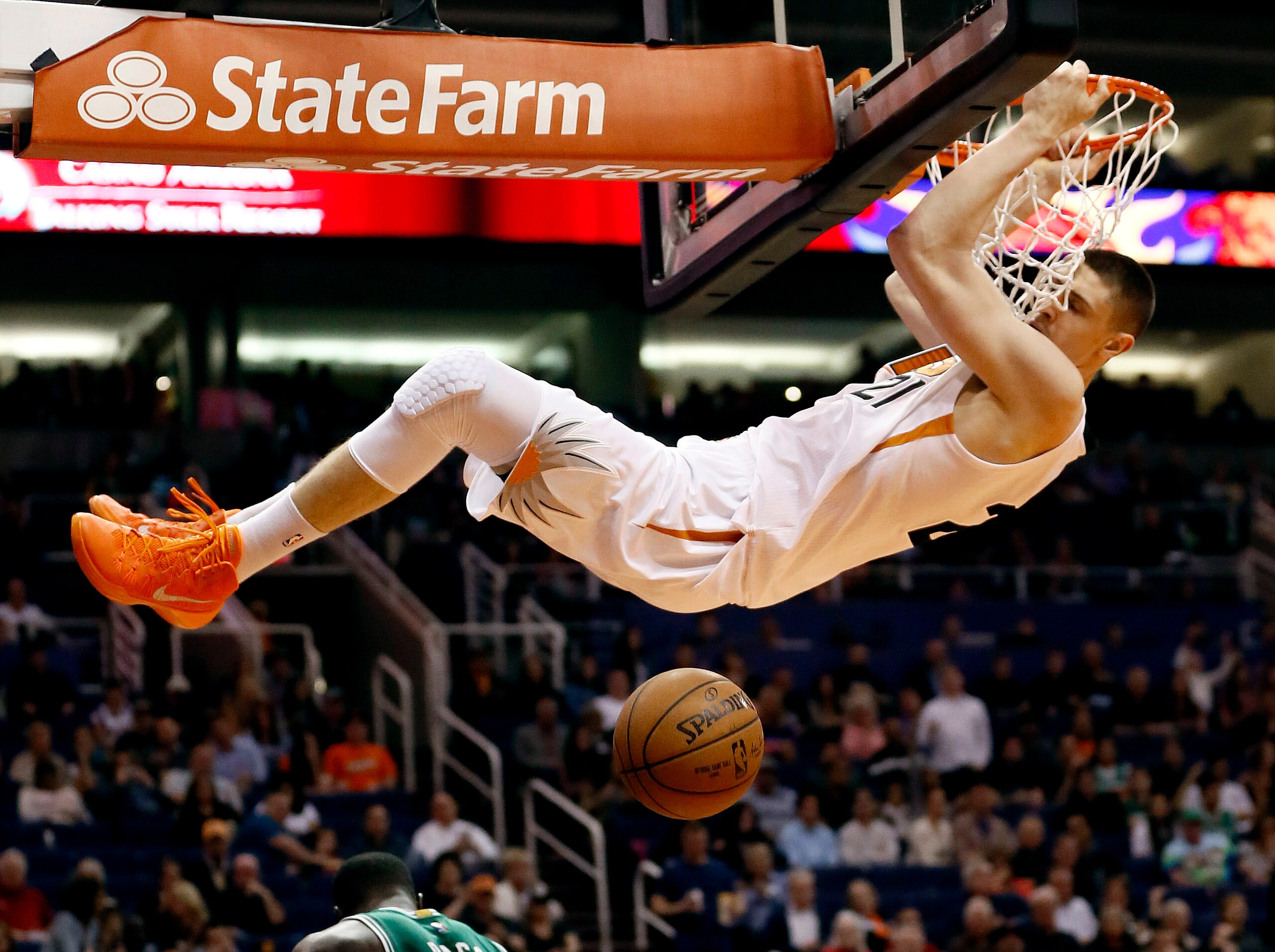
Age: 21
Years Pro: 2
College: Maryland
Would-Be Class: Senior
2014-15 Per-Game Stats: 6.3 points, 6.6 rebounds, 0.5 steals, 1.5 blocks, 52.1 percent shoot
Despite a vast array of setbacks, from ankle injuries to tapered minutes totals, Alex Len is ahead of schedule.
Yes, his offensive game lacks polish, but he is mobile enough to at least exist within the Phoenix Suns' fast-paced system and has some range on his jumper; nearly 30 percent of his shot attempts have come outside 10 feet.
On the size-starved Suns, though, Len's value is most evident on defense. Opponents are shooting 6.1 percentage points below their season average when being defended by him, and he continues to block shots and grab rebounds in volume, joining exclusive, per-36-minute company.
Len is one of three players (minimum 1,300 total minutes) averaging at least 10 points, 10 rebounds and 2.5 blocks per 36 minutes; the other two are Anthony Davis and Gobert. And while Len is more Gobert than Davis, that just means he's more double-double and shot-blocking machine than inter-galactic megastar.
Phoenix'll take it.
14. Kentavious Caldwell-Pope, Detroit Pistons, SG
12 of 25
Age: 22
Years Pro: 2
College: Georgia
Would-Be Class: Senior
2014-15 Per-Game Stats: 12.0 points, 3.0 rebounds, 1.2 assists, 1.1 steals, 39.2 percent shooting
Kentavious Caldwell-Pope is getting there.
Detroit Pistons head coach Stan Van Gundy has started the process of transforming the NBA sophomore from a ball-bearing shot creator to a circling spot-up weapon who lives on the perimeter. His already shaky efficiency is suffering amid this transition, but his usage rate has increased by more than 36 percent compared to his rookie crusade.
Almost 62 percent of his looks come outside 16 feet, of which he's hitting around 34 percent. Entire plays are also being dedicated to letting him work, as Van Gundy tries to strike a balance between Caldwell-Pope's ability to score off the catch and create for himself.
Playing beside Reggie Jackson has, in a way, stunted his growth. He's better off within floor-spacing lineups, next to point guards (like the injured Brandon Jennings), who not only drive-and-kick, but keep lanes open by nailing threes themselves.
Not surprisingly, Caldwell-Pope's shooting percentages plummet when playing with the perimeter-poor Jackson. So while his iffy accuracy is a harbinger of elevated usage, the Pistons don't yet employ talent he can truly complement. That he's flashing offensive potency at all is bittersweet proof of the potential he can still tap into.
13. Shabazz Muhammad, Minnesota Timberwolves, SG
13 of 25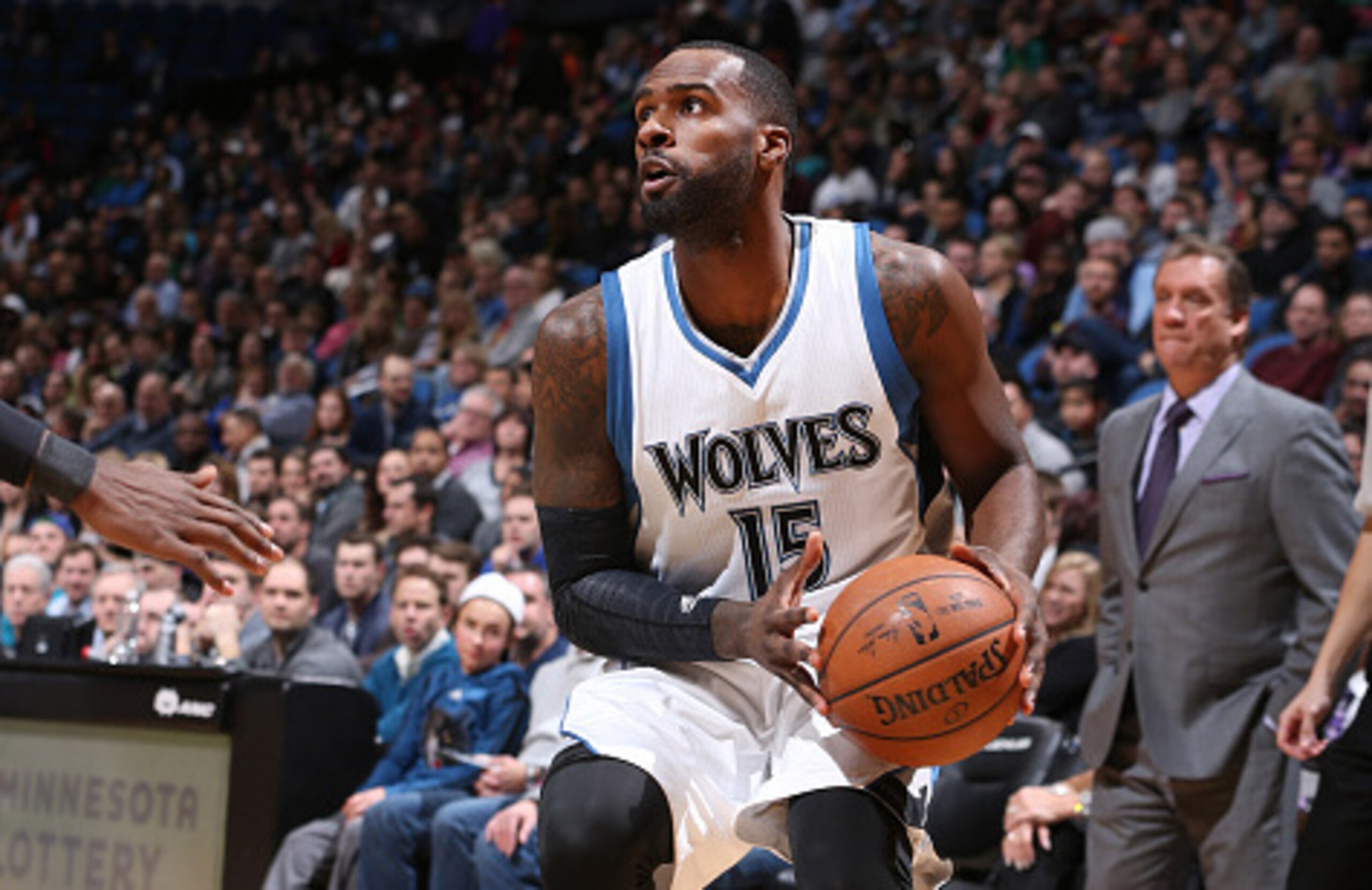
Age: 22
Years Pro: 2
College: UCLA
Would-Be Class: Junior
2014-15 Per-Game Stats: 13.5 points, 4.1 rebounds, 1.2 assists, 48.9 percent shooting
Shabazz Muhammad's second NBA season has been an unequivocal success, despite it already ending after he underwent surgery on his left middle finger.
Tallying 13.5 points in under 23 minutes of action is just absurd, and it makes for provocatively prorated lines. Here's a list of the last five NBA sophomores to average at least 21 points per 36 minutes while seeing at least 800 minutes of total playing time:
- Shabazz Muhammad
- Anthony Davis
- Kyrie Irving
- DeMarcus Cousins
- Kevin Durant
It's not that Muhammad projects as a superstar; it's that his offensive exploits appear sustainable. He can score off the catch and the dribble, has established himself as an authentic three-point threat and, at 6'6", has showcased some bully ball skills in the post. Even his individual defense and fervor for chasing loose balls are improving.
Consistent playing time, as both a starter and reserve, has really buoyed his stock. When he returns next season, he will do so as a featured offensive option opposing defenses must plan around.
12. Cody Zeller, Charlotte Hornets, C
14 of 25
Age: 22
Years Pro: 2
College: Indiana
Would-Be Class: Senior
2014-15 Per-Game Stats: 7.7 points, 5.8 rebounds, 1.6 assists, 0.8 blocks, 46.5 percent shooting
Cody Zeller is making the most of a more prominent role with the Charlotte Hornets.
Persisting shoulder pain has kept him on the sidelines of late, but he's already surpassed last season's minutes totals, and his offensive numbers have improved across the board despite a declining usage rate.
Much of his value, in fact, has come on the offensive end. He's passing far more frequently than Bismack Biyombo, starting to find his touch outside of 10 feet and posting the second-highest offensive rating of any Hornets player to appear in at least 10 games.
That he doubles as a viable rim protector makes him one of Charlotte's lone two-way fixtures. Opponents are shooting more than five percentage points below their season average when he contests shots inside six feet of the cup.
Both the Hornets offense and defense are better with him in tow. Subsequently, the team's net rating when he plays (plus-1.1) exceeds that of the postseason-bound Milwaukee Bucks. So yes, with more 1,400 minutes of playing time to his stat sheet, Zeller's impact is real.
11. Tony Wroten, Philadelphia 76ers, SG
15 of 25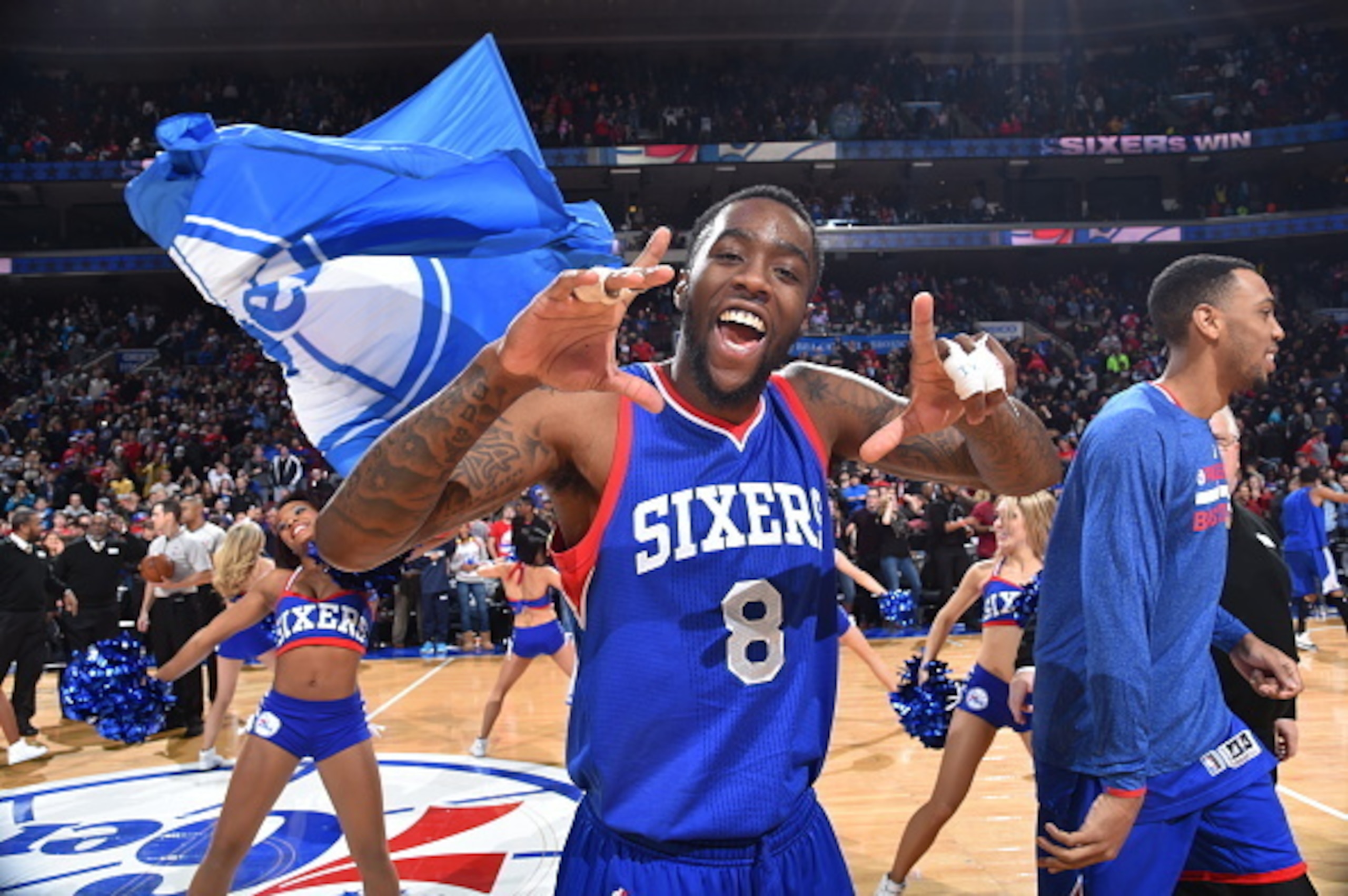
Age: 21
Years Pro: 3
College: Washington
Would-Be Class: Senior
2014-15 Per-Game Stats: 16.9 points, 2.9 rebounds, 5.2 assists, 1.6 steals, 40.3 percent shooting
Two things prevent Tony Wroten from sneaking into the top 10: He is done for the season after having surgery on a partially torn right ACL and, more detrimentally, plays for the Philadelphia 76ers.
Evaluating young talent is inherently harder when teams are losing and selling off what were thought to be core puzzle pieces. The Sixers have one of the league's worst offenses ever, and Wroten makes them worse on defense, an area in which they excel overall.
Holes in mind, there's something to be said for a guy who uses the summer league to improve, and then carries that improvement over to the regular season.
Wroten remains one of just nine players clearing 16 points, 2.5 rebounds, five assists and 1.5 steals per game. He has the lowest true shooting percentage of that small bunch, but unlike many—or rather, most—of his teammates, it looks as if he has a meaningful future ahead of him.
Incredible still, that future might even be in Philadelphia.
10. Elfrid Payton, Orlando Magic, PG
16 of 25
Age: 21
Years Pro: Rookie
College: University of Louisiana (at Lafayette)
Would-Be Class: Senior
2014-15 Per-Game Stats: 8.4 points, 3.9 rebounds, 6.0 assists, 1.5 steals, 41.5 percent shooting
Elfrid Payton, all of 21, is the real freaking deal on both ends of the floor.
Matt Graber of the Orlando Pinstriped Post will now be grabbing the mic:
"Payton is a skilled and crafty passer, and he's looked about as comfortable as you could expect a rookie point guard running point for a lottery team to be. Given the Magic's lack of shooting, it's actually impressive that he's managed to pile up as many assists as he has...On the other end of the court, Payton plays energetic and occasionally disruptive defense, and he's already a strong rebounder for his position.
"
Even with a broken jumper, Payton's other numbers speak for themselves. He leads all rookies in assists, more than doubling the total of his closest contender (LaVine). He's also second in steals, trailing only Nerlens Noel, putting him in position to join some distinguished company.
Assuming his current output holds, he will become just the second rookie over the last 10 seasons to play more than 1,500 minutes and record an assist rate north of 30 and a steal rate above 2.5. The other?
9. Jabari Parker, Milwaukee Bucks, F
17 of 25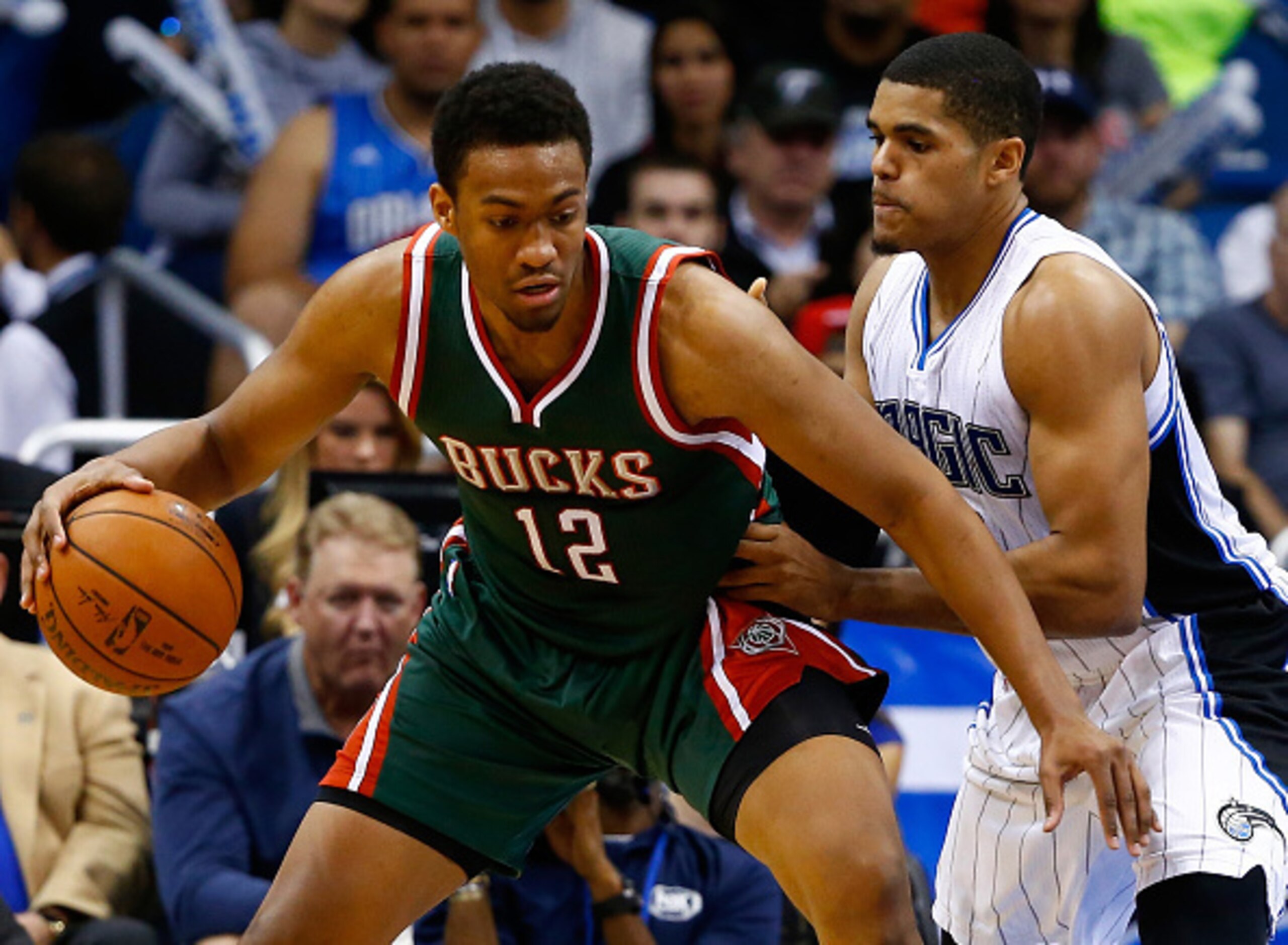
Age: 20
Years Pro: Rookie
College: Duke
Would-Be Class: Sophomore
2014-15 Per-Game Stats: 12.3 points, 5.5 rebounds, 1.7 assists, 1.2 steals, 49 percent shooting
Jabari Parker hasn't played since Dec. 15 after suffering a torn ACL in his left knee, and yet he still ranks highly on most meaningful rookie scales, cracking the top 15 of points, rebounds, steals and win shares.
Prior to injury, he lived up to his reputation as an offensive dream. He still needs to develop a more consistent three-point shot, but he piled points efficiently and in volume, scoring at will inside three feet of the basket, complementing a (semi-)efficient mid-range game that would leave the rookie version of Carmelo Anthony smitten.
Missing most of his rookie season is indeed concerning, but this time off the floor is giving Parker an opportunity to reinvent his body and perfect his polished play style.
As Bucks' head athletic trainer Scott Barthlama told Sports Illustrated's Jamie Lisanti: "Jabari was able to realize he had an opportunity to change a lot of things that will make him better in the future. Now we are concentrating on correcting bad movement patterns and rebuilding him from the ground up."
Translation: Sophomore Jabari is going to be scarier than rookie Jabari.
8. Bradley Beal, Washington Wizards, SG
18 of 25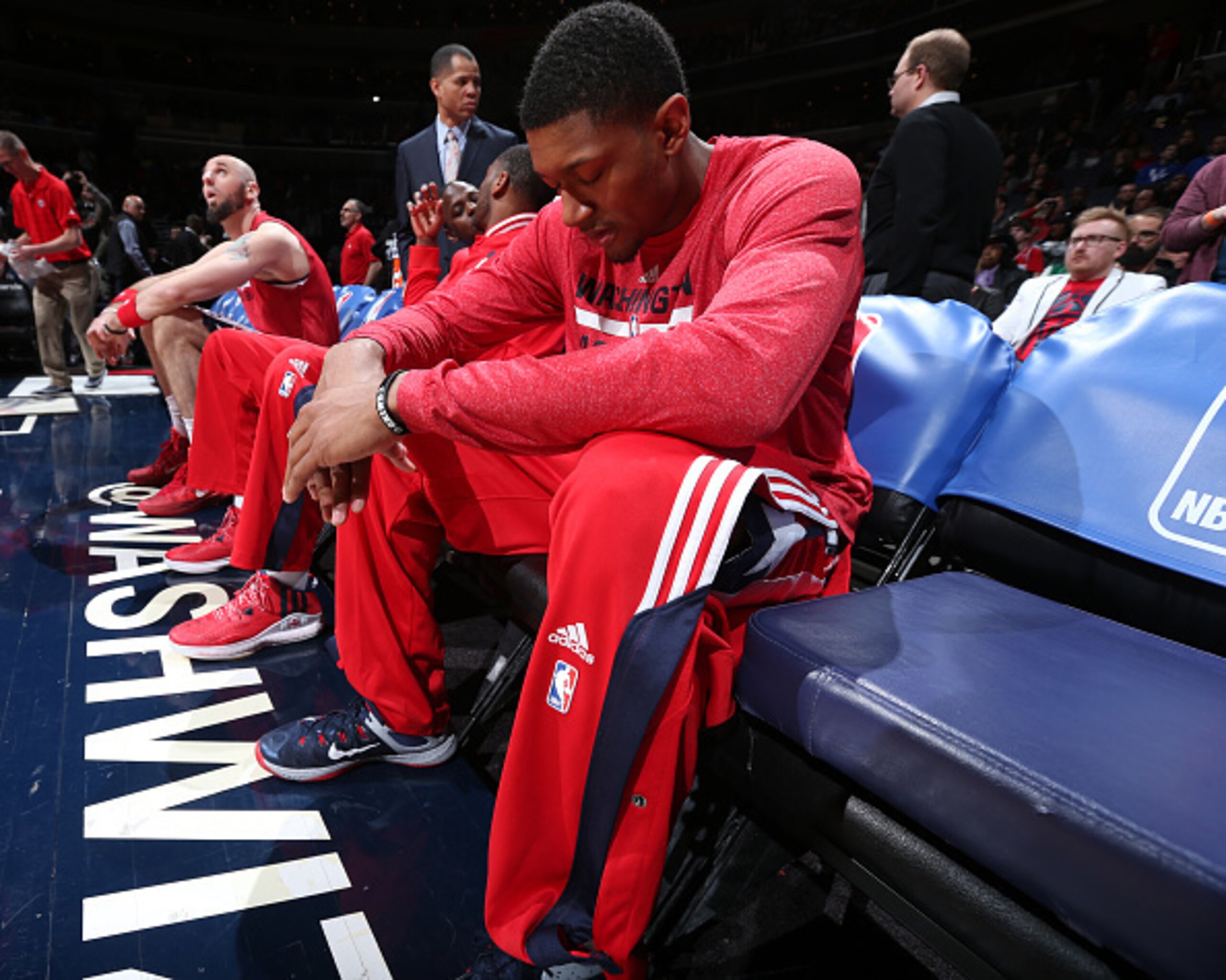
Age: 21
Years Pro: 3
College: Florida
Would-Be Class: Senior
2014-15 Per-Game Stats: 14.9 points, 3.9 rebounds, 3.2 assists, 1.2 steals, 42 percent three-point shooting
Beal is tough to rank.
Those who understand the importance of making big-time plays won't soon forget his 2014 playoff run, through which he averaged 19.2 points, five rebounds, 4.5 assists and 1.6 steals. The only other player aged 20 or younger to do the same is Kobe Bryant.
It's not like his sweet shooting hasn't translated to the NBA level, either. As of now, he's the ninth player to attempt at least 750 three-pointers through his first three seasons and find nylon at least 40 percent of the time.
Accompanying those flattering factoids, though, is a below-average career player efficiency rating, and an inability to help the Wizards build upon a middling—and therefore unsettling—offensive attack.
Uninventive sets in no way do his offensive game justice. That much falls on head coach Randy Wittman. But the third-year shooting guard, a supposed star in waiting, ranks 10th in win shares per 48 minutes on his own team. And that much falls on Beal, displacing him from what should, in theory, be top-five consideration.
7. Steven Adams, Oklahoma City Thunder, C
19 of 25
Age: 21
Years Pro: 2
College: Pittsburgh
Would-Be Class: Junior
2014-15 Per-Game Stats: 7.5 points, 7.4 rebounds, 1.3 blocks, 54.8 percent shooting
Steven Adams' monster preseason predictably proved unsustainable, but he's playing enough to where his per-36-minute escapades can no longer be chalked up to short-burst bias.
The 7-footer is averaging a double-double per 36 minutes to go along with an insane block rate. He sends back 4.1 percent of every shot he contests, which ranks eighth among all players to log at least 1,300 minutes of playing time.
Referring to him as a defensive pest wouldn't even begin to do his diligence on that end justice. He's a perpetual annoyance, policing the paint with endless vigilance, deterring dribble drives before they start and picking up those gutsy enough to challenge him, be they bigs or guards.
All that's really left for him to do is develop a more menacing trash-talking game. Only then will he be everything the Thunder need him to be.
6. Michael Carter-Williams, Milwaukee Bucks, PG
20 of 25
Age: 23
Years Pro: 2
College: Syracuse
Would-Be Class: Senior
2014-15 Per-Game Stats: 14.9 points, 5.8 rebounds, 7.1 assists, 1.6 steals, 38.9 percent shooting.
Important housekeeping note: Michael Carter-Williams is making positive contributions to a good basketball team.
Such a notion couldn't have been further from true mere weeks ago, when the second-year point man was haphazardly padding his stat lines with the win-averse Sixers. As it turns out, though, he can do some pretty cool things when a majority of his teammates aren't playground walk-ons.
Carter-Williams still has no three-point stroke to speak of, and he presently has the sixth-worst true shooting percentage among every NBA player to ever average 14 or more shot attempts during the three-point era. But his field-goal success rate and PER have soared with the Bucks, and he's a defensive plus for one of the league's stingiest squads.
Playing under Jason Kidd, a future Hall of Fame point guard, will only expedite his development. There's still loads of work to be done—specifically on the offensive end—but Carter-Williams is, without question, on the path to becoming someone special in Milwaukee.
5. Michael Kidd-Gilchrist, Charlotte Hornets, SF
21 of 25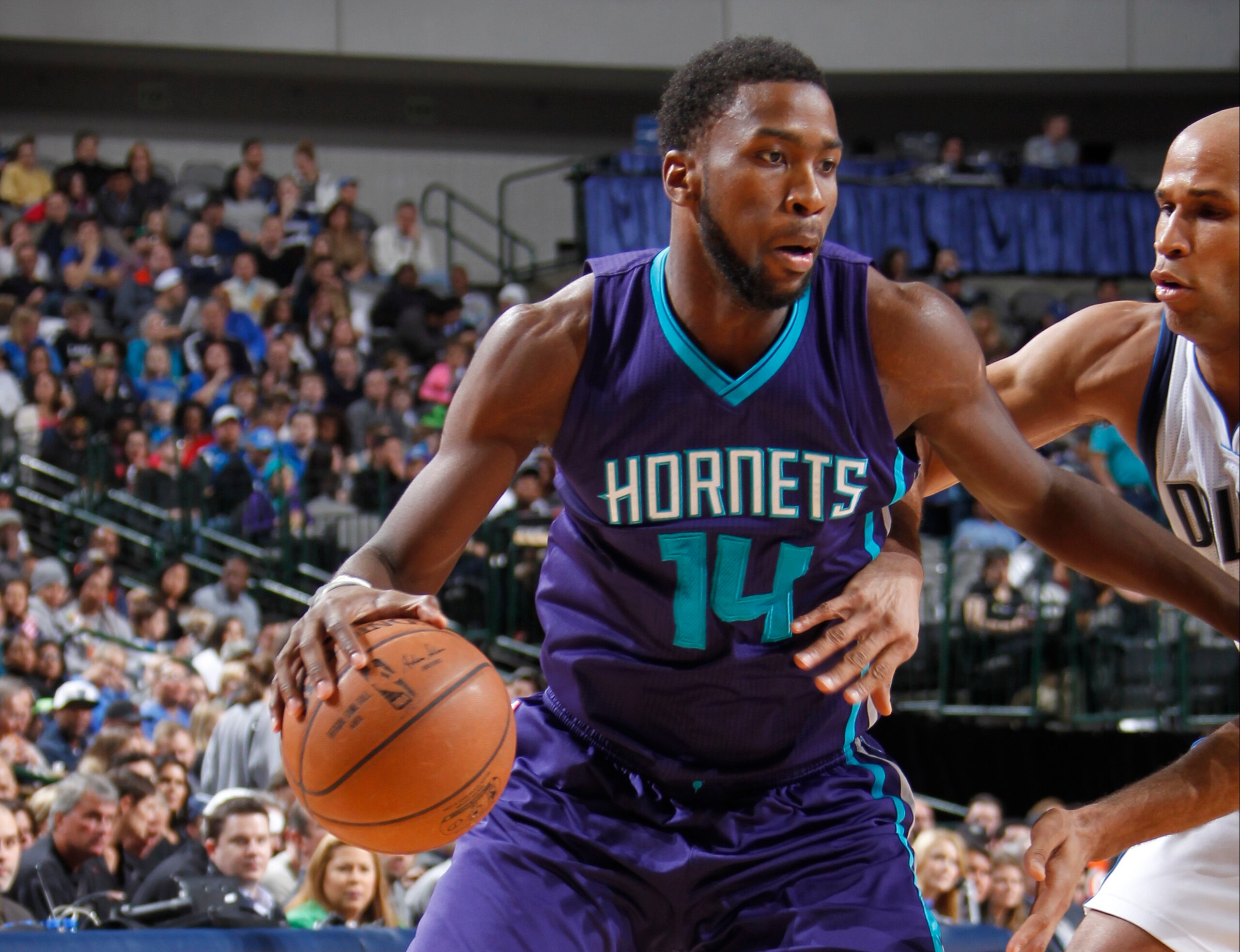
Age: 21
Years Pro: 3
College: Kentucky
Would-Be Class: Senior
2014-15 Per-Game Stats: 10.9 points, 7.5 rebounds, 1.4 assists, 0.6 steals, 46.6 percent shooting
What happens when sheer will marries endless energy? Michael Kidd-Gilchrist.
Zach Lowe of Grantland has more:
"He’s another Mirror Guy, only with even more in-your-jersey ferociousness. He wants to be the greatest defender in NBA history. That’s his goal — not to score 20 per game or make 10 All-Star teams, but to be the best defender ever. How can you not root for that? The Hornets saved their season by buckling down on defense in January when Al Jefferson got hurt, and MKG has kept them humming on that end since.
And he never stops competing, to the point where you almost worry for his physical health. He rebounds on both ends like a power forward, and the Hornets have used him a bit there with Al Jefferson hurt again. He is a superhuman transition defender, chasing plays on which others would quit.
"
We could say opposing small forwards stand a chance against Kidd-Gilchrist. Then again, we could also say the New York Knicks' rebuilding model is idiotproof. That doesn't make it true.
Rival 3s are posting PERs and effective field-goal percentages so far south of OK when being guarded by him, according to 82games.com, that they leave the court smelling of fire and brimstone. And when he's on the floor, Charlotte fields the equivalent of the NBA's best defense.
This is all in addition to a more aware offensive game. He avoids the three-point line like it's infested with cooties, but he's shooting better than 41 percent between 10 feet and just inside the arc, taking yet another step towards reaching complete-player status.
4. Nerlens Noel, Philadelphia 76ers, PF/C
22 of 25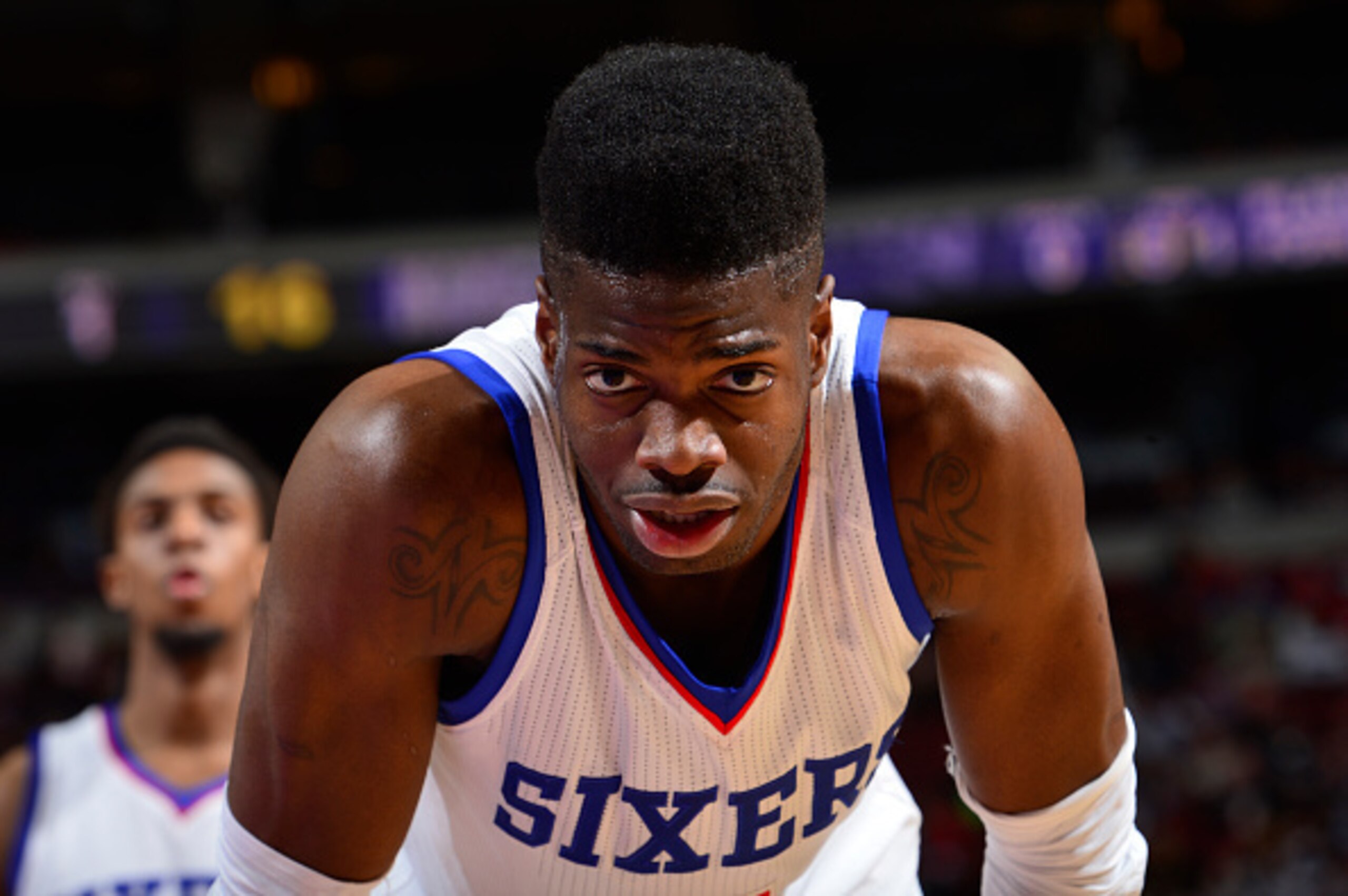
Age: 20
Years Pro: Rookie
College: Kentucky
Would Be-Class: Junior
2014-15 Per-Game Stats: 9.2 points, 7.8 rebounds, 1.7 assists, 1.8 steals, 1.9 blocks, 45.2 percent shooting
Jokes are often made at the Sixers' expense, and rightfully so. Their offense is beyond bad. Their defense, on the other hand, is—well, it's awesome, in large part because Noel is proving to be worth the wait.
Less than a full season into his NBA career, he's headlining a top-12 defense, changing the way in which we view towering defenders. Yes, he's protecting the rim like it's his precious; he ranks eighth in that category among the 70 qualified players contesting at least five point-blank opportunities per game.
But he's so much more than blocked shots. He's aggressive and composed on the glass, and he's able to play the passing lanes and force turnovers off the dribble, allowing him to switch onto ball-handlers much smaller than himself.
In the event his numbers hold steady, Noel will post the third-best defensive box plus/minus of any NBA rookier ever, trailing only Manute Bol and Mark Eaton. On top of that, he would be just the second rookie to ever finish the season averaging at least nine points, 7.5 rebounds, 1.5 steals and 1.5 blocks.
At that point, he would share a piece of history with a 24-year-old David Robinson who, legend has it, turned into a halfway decent player.
3. Andre Drummond, Detroit Pistons, C
23 of 25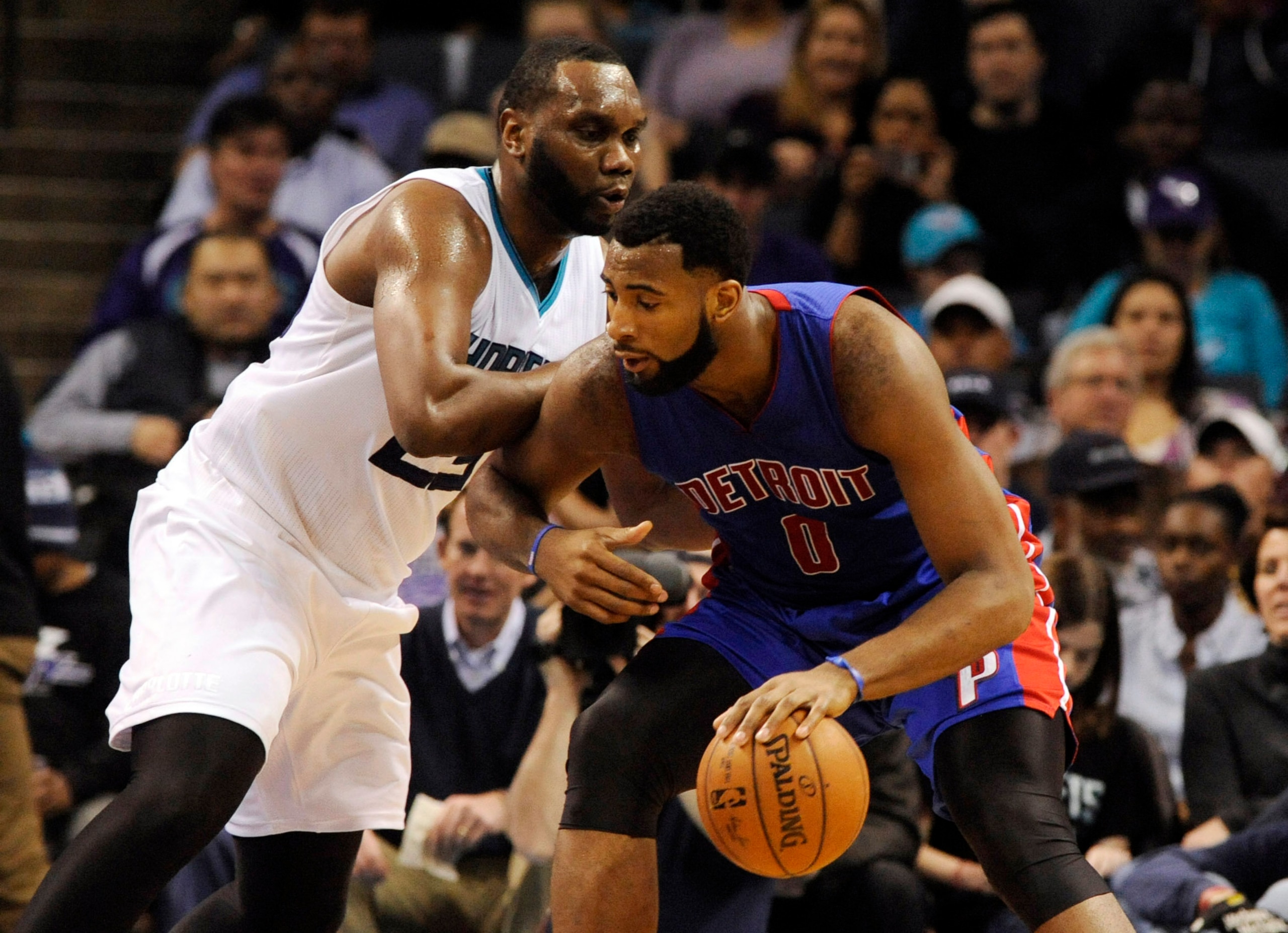
Age: 21
Years Pro: 3
College: UConn
Would-Be Class: Senior
2014-15 Per-Game Stats: 13.0 points, 13.2 rebounds, 0.9 steals, 1.8 blocks, 50.2 percent shooting
Pinpointing exactly where Drummond should lie within his group of youngsters is surprisingly difficult. He has the statistical clout to challenge for the No. 2 spot, but big men are seldom primary pillars anymore, rendering him an outlier.
After that, you realize how important he is to the Pistons franchise. And then after that, you realize how far he still has to go before becoming a finished product. Writing for the Detroit Free Press, Dan Feldman expands on everything:
"Drummond needs to become a better free throw shooter. He needs to polish his post moves. He needs to become more consistent defensively, both on and off the ball.
Van Gundy has helped in most areas, though Drummond's free throw shooting has regressed. The work continues these last 22 games, and it could shape the franchise for years.
"
That last tidbit is especially important. Drummond is the Pistons' only surefire building block. Greg Monroe could leave in free agency this summer, Jackson has underperformed and there's no telling how effective Jennings will be next season after he has recovered from his Achilles injury.
There is only Drummond at this point, a reality Van Gundy has accepted and embraced this season, force-feeding the big man down low to the point where his efficiency has suffered from the dramatic increase in volume. And while the results have been stellar, they're not yet sterling.
Drummond looks like he'll become the first player in league history to clear 13 points, 13 rebounds and 1.5 blocks while averaging under 30 minutes per game. But the Pistons are still stuck in the lottery, trying to surround him with the right supporting cast, hoping their talented project is closing in on fortunes-turning stardom.
2. Andrew Wiggins, Minnesota Timberwolves, SG/SF
24 of 25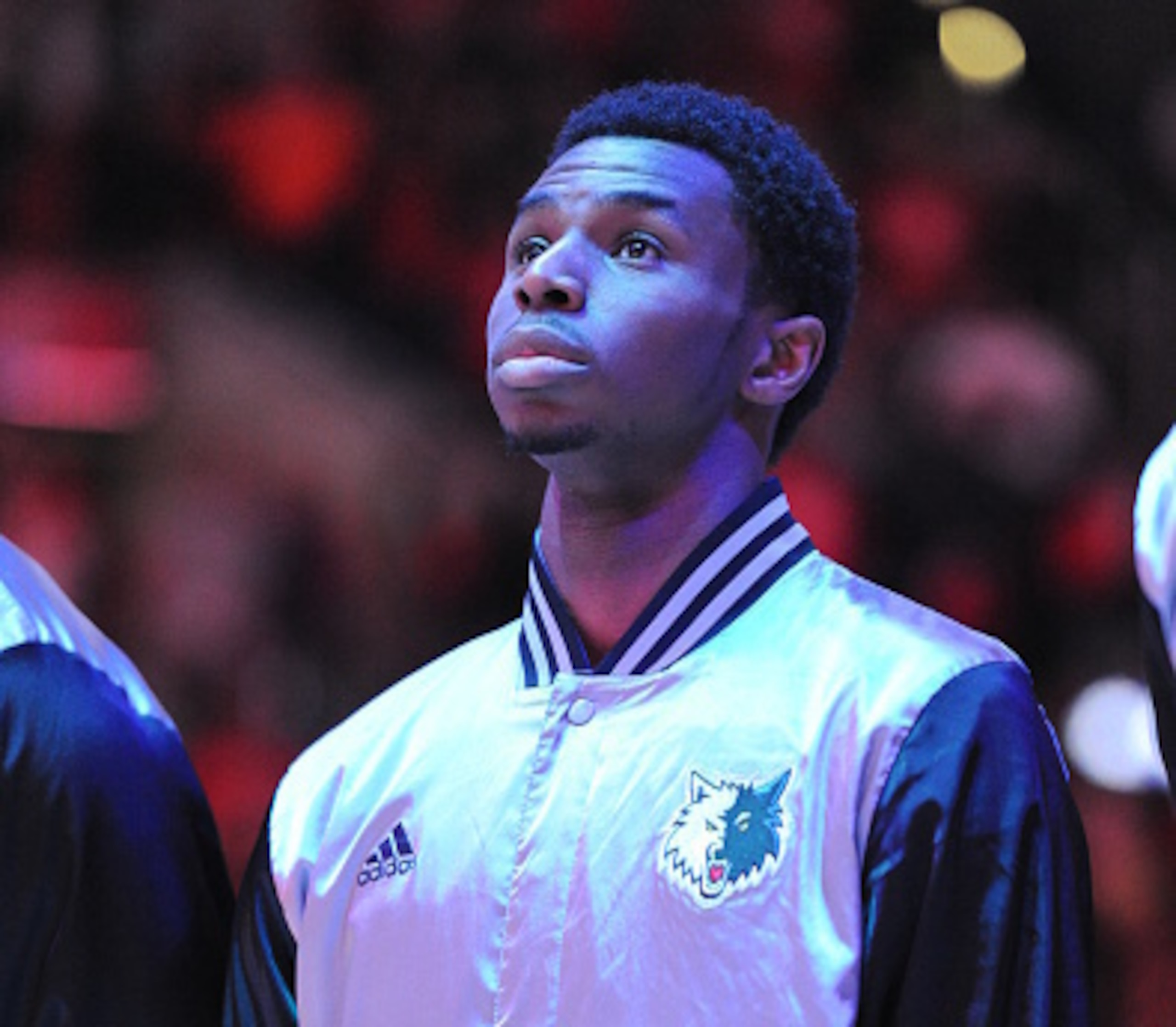
Age: 20
Years Pro: Rookie
College: Kansas
Would-Be Class: Sophomore
2014-15 Per-Game Stats: 15.7 points, 4.3 rebounds, 1.8 assists, 1.1 steals, 43.5 percent shooting
Serious question: Would you rather your favorite NBA franchise build around Andrew Wiggins or Kevin Love?
If you answered "Andrew Wiggins," you must be wearing your smart pants. You also should be able to understand why the 20-year-old prodigy is here, ahead of other, more established youngsters like Kidd-Gilchrist and Drummond.
Wiggins still has room to improve, and it's important to note he's playing for the league's second-worst team. But he has exceeded every possible expectation, scoring with the consistency and ferocity of a No. 1 option, never once backing down from defensive matchups that frequently demand he wage basketball war with superstar wings.
No specific number of words can adequately encapsulate what he's doing or, more importantly, where he's headed. Instead, consider this: More than 80 percent of the way through his first campaign, Wiggins is still on pace to surpass 1,200 points, 350 rebounds, 75 steals and 45 blocks.
Only one player who began the season as a teenager has ever done that before: LeBron James.
1. Anthony Davis, New Orleans Pelicans, PF
25 of 25
Age: 22
Years Pro: 3
College: Kentucky
Would-Be Class: Senior
2014-15 Per-Game Stat Lines: 24.7 points, 10.9 rebounds, 1.7 assists, 1.4 steals, 2.9 blocks, 54.6 percent shooting
Entire months could be devoted to contextualizing Davis' greatness.
He is flirting with the prospect of posting the best PER in NBA history. Catastrophic slump aside, he's going to average the highest number of win shares per 48 minutes of any player under the age of 22 (as of Feb. 1 for that season), easily eclipsing the previous record held by Shaquille O'Neal.
He is a legitimate MVP candidate in only his third season.
He has the injury-invaded, talent-thin New Orleans Pelicans within a breath of their first playoff birth since 2011.
He is that player who could simultaneously lead the Association in points, rebounds, steals and blocks. That player who puts video-game fantasies to shame.
That player who, assuming health, is destined to be one of the greatest ever.
*Stats courtesy of Basketball-Reference and NBA.com unless otherwise cited and are accurate heading into March 17's games.

.jpg?w=2560 "Mahomes Told Teammate to Leave Meeting")
.jpg?w=2560 "🚨 Week 8 AP Top 25 Poll")

.jpg?w=2560 "Baker Gets Glove From Rays 🧤")
.jpg?w=2560 "Steelers Roll Saints in Paris")
.jpg?w=2560 "NFL investigating Eagles")
.jpg?w=2560 "5 Teams Eyeing Jonathan Taylor")
.jpg?w=2560 "Updates from EVERY Game")