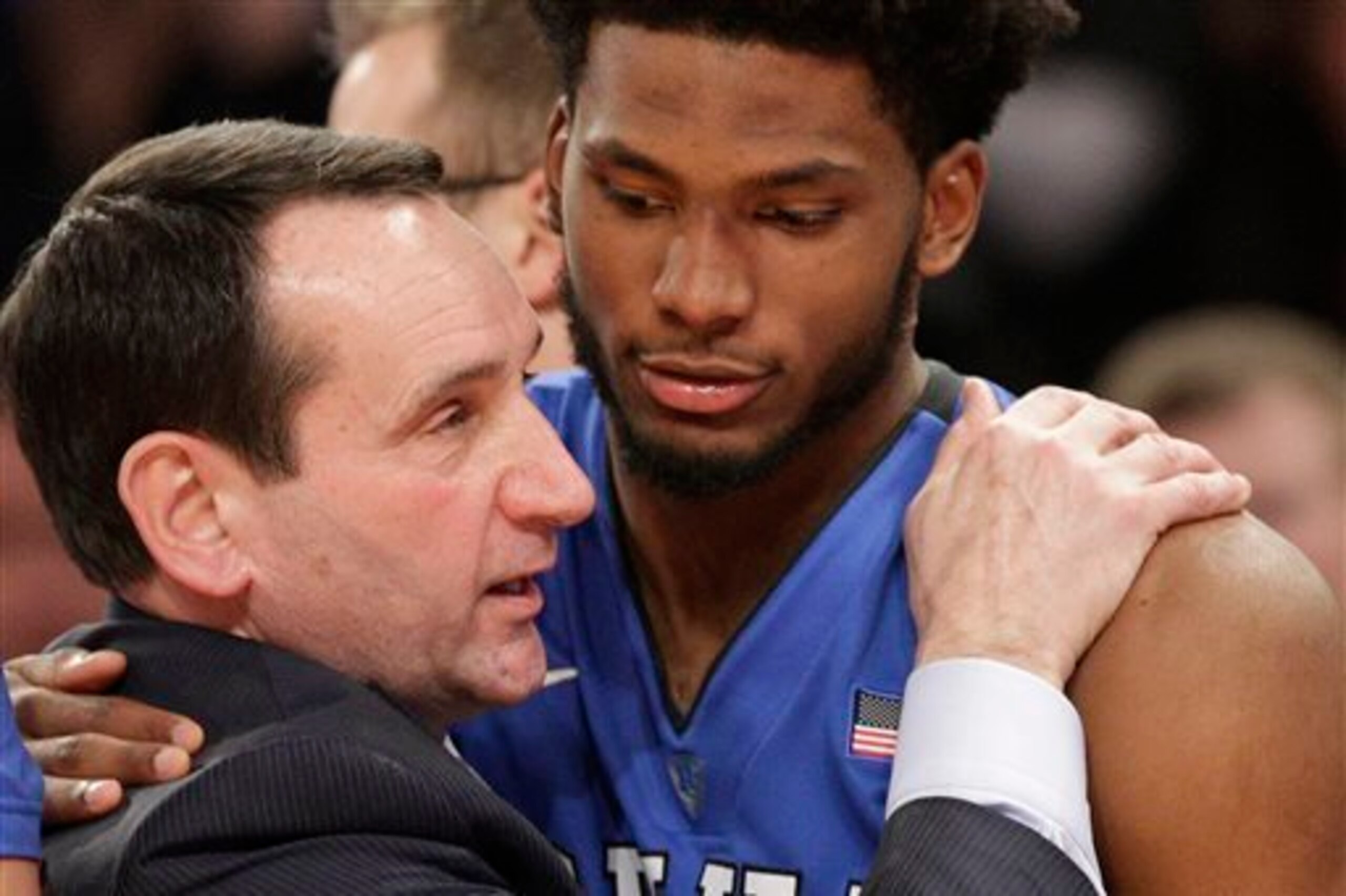

2015 NBA Draft Prospects the Detroit Pistons Should Already Be Considering
The Detroit Pistons have fallen back in the Eastern Conference playoff race, and barring a major turnaround, they are looking forward to a lottery pick in June.
Eight straight losses have all but ended their postseason chances, and soon the prospects of the draft will be all the Pistons have to anticipate. If the season ended today, they would have the 7th-best odds of getting the No. 1 pick in the draft.
There is a glaring hole on the roster they can look to address with their pick. Their top two small forwards are 35-year-old Tayshaun Prince and 34-year-old Caron Butler. Prince's contract is expiring, and Butler's is non-guaranteed, so there could be a complete overhaul at the 3 in the offseason.
With point guards Brandon Jennings (25) and Reggie Jackson (24), shooting guard Kentavious Caldwell-Pope (22), power forward Greg Monroe (24) and center Andre Drummond (21) all on the roster, there is young talent to build around at every other position, making small forward the direction to go.
Unless Monroe leaves as an unrestricted free agent.
If coach and team president Stan Van Gundy senses that Monroe will not return to Detroit, then he could choose to look at the other forward position in the draft. With their lack of shooting ability, Drummond and Monroe are not an ideal fit next to each other anyway. This could give Van Gundy the opportunity to find a better frontcourt partner for his center.
Either way, it would be a surprise if the Pistons looked beyond the forward positions when commissioner Adam Silver announces their selection in the draft.
Kevon Looney, F, UCLA
1 of 6
The Pistons could look to get versatility between the two forward spots by selecting UCLA freshman Kevon Looney.
At 6'9" and 220 pounds with a 7'3" wingspan, he has the length to play either position at the NBA level—as long as he adds some strength and weight to his lanky frame.
Looney has shown great rebounding ability, averaging nearly 10 per game for the Bruins. And he has the three-point range (44.4 percent) to play as a modern-day stretch 4. That spacing would allow the Pistons to spread the floor around Drummond, much like Van Gundy did in Orlando around Dwight Howard with Rashard Lewis and Hedo Turkoglu at power forward.
At 4.6 free-throw attempts per game, Looney's ability to draw fouls has also been impressive. He has strong ball-handling skills for a big man, having played point guard in high school. And he has shown good activity defensively, averaging one block and 1.3 steals.
His pro comparisons have been wide-ranging. ESPN's Chad Ford and Kevin Pelton suggest Lamar Odom and Kawhi Leonard, respectively. NBADraft.net sees him as Al-Farouq Aminu. Ricky O'Donnell from SBNation believes he could be similar to the guy drafted with what was originally Detroit's pick in the 2014 draft: Noah Vonleh.
"Vonleh went No. 9 after one year at Indiana and put up similar numbers to what Looney is posting right now," O'Donnell said. "Vonleh is certainly bigger and even longer, but Looney plays with more energy. Both show the early signs of a face-up game, but not one that's fully developed."
Whether Monroe leaves or not, Looney could give Van Gundy shooting, defense and flexibility at the forward positions.
Mario Hezonja, SF, Croatia
2 of 6
If the Pistons want someone with big upside on the wing, they could look overseas to Croatian Mario Hezonja.
He turned just 20 years old in February, but Hezonja is already playing rotation minutes at Barcelona—one of Europe's top teams. He has shot well in 23 games this season, with shooting splits of 55.6/41.9/83.3.
Hezonja is an excellent athlete and could be a future star, as NBADraft.net wrote when he was just 16, "[Hezonja] probably is the best European prospect at his position since Drazen Petrovic and honestly has more potential." He has good size, at either 6'7" or 6'8" and between 200 and 215 pounds. The thought of he and Caldwell-Pope forming an ultra-athletic, sweet-shooting wing duo for the next 10 years is enough to induce salivation.
But his youth does matter, as this could be the Pistons' sixth straight season without making the playoffs and Hezonja won't be the most NBA-ready prospect available. And the franchise has selected only one international player (Jonas Jerebko in 2009) since 2003, when it infamously took Darko Milicic No. 2 overall.
That was a different regime, and international scouting has improved dramatically in 12 years. But the Pistons front office may have to decide whether the risk of waiting for Hezonja to develop is worthwhile.
Kelly Oubre, SF, Kansas
3 of 6
The Pistons could also stay stateside and take a look at another high-upside wing: Kansas small forward Kelly Oubre.
The freshman was fourth in scoring for the Jayhawks in the regular season at nine points per game, adding more than five rebounds and one steal per night as well. He has fantastic length at 6'7" with a 7'2" wingspan, and he uses his physical gifts to be aggressive on both ends.
"Oubre just keeps constantly attacking at all times," said CBSsports.com's Sam Vecenie. "He knows no other way. He attacks defenders off the dribble, attacks the glass hard, attacks ball-handlers and passing lanes on defense."
That relentlessness is something the Pistons don't have right now at small forward, and it is something they lacked previously when Kyle Singler was starting at the 3 (before being traded to the Oklahoma City Thunder).
Putting Jackson, Caldwell-Pope and Oubre on the perimeter would give them tons of length, athleticism and some of the aggressiveness they have lacked in recent years.



Justise Winslow, SF, Duke
4 of 6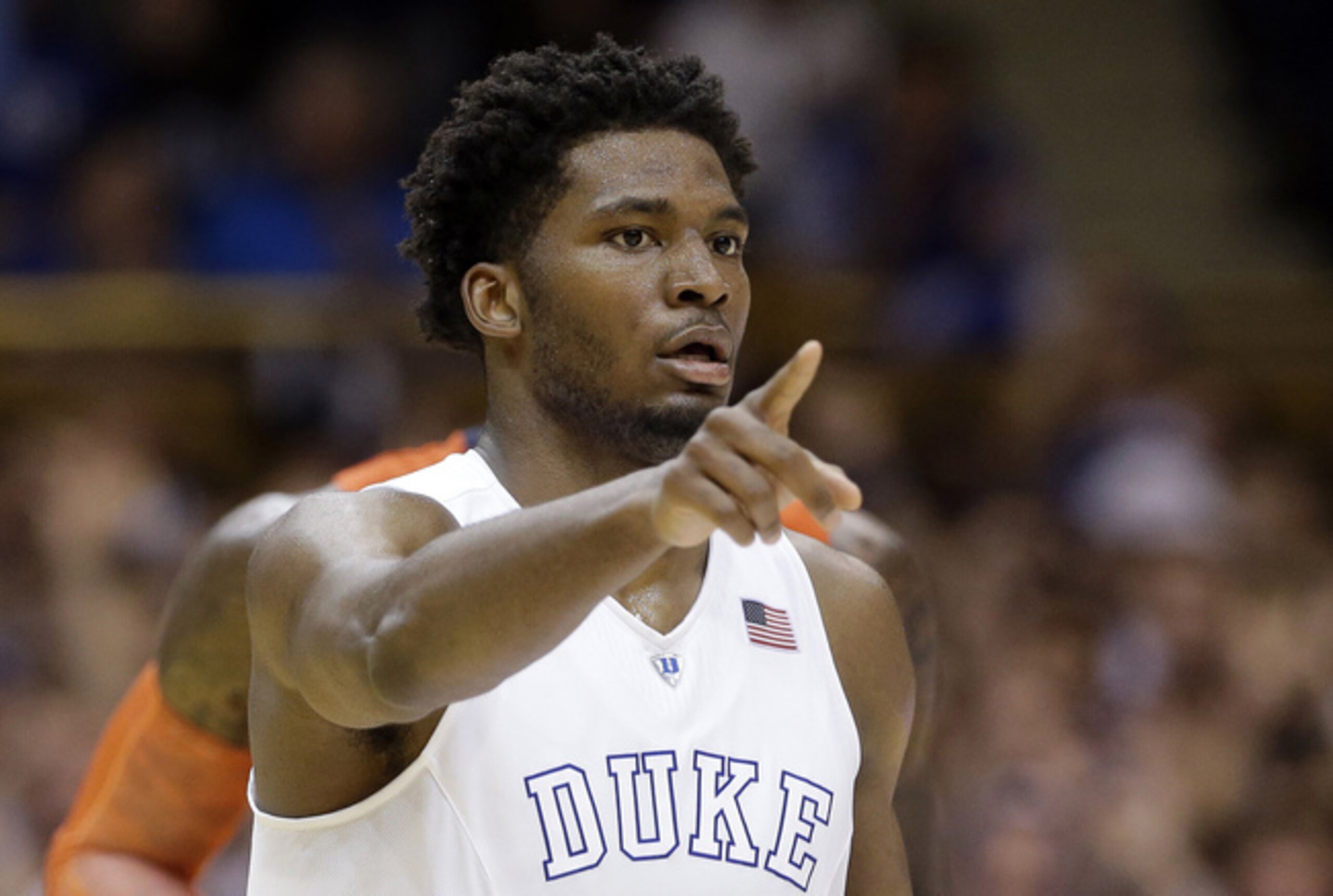
The Pistons could address their perimeter defense if Duke freshman Justise Winslow declares for June's draft.
Winslow is just 6'6", but at 220 pounds with a 6'10" wingspan and excellent athleticism, he has the physical tools to be an elite stopper. He rebounds well for a small forward, at 5.8 per game, and he also averages more than one steal.
"Winslow is an obvious lottery talent even if he's probably no better than the fourth option on his college team," CBSSports.com's Gary Parrish said. "Worst-case scenario, he develops into a lockdown wing defender and great glue guy at the professional level."
Where Winslow could struggle is on the other end, as his 59.8 free-throw percentage is a red flag. If the Pistons keep Jackson and Monroe around, that would potentially leave four below-average shooters (with Drummond and Winslow) in the starting lineup.
But nearly 40 percent from the college line is manageable, and the possibility of a Grant Hill-like defender should entice Detroit. His offensive game can develop—just ask Michael Kidd-Gilchrist.
Myles Turner, PF, Texas
5 of 6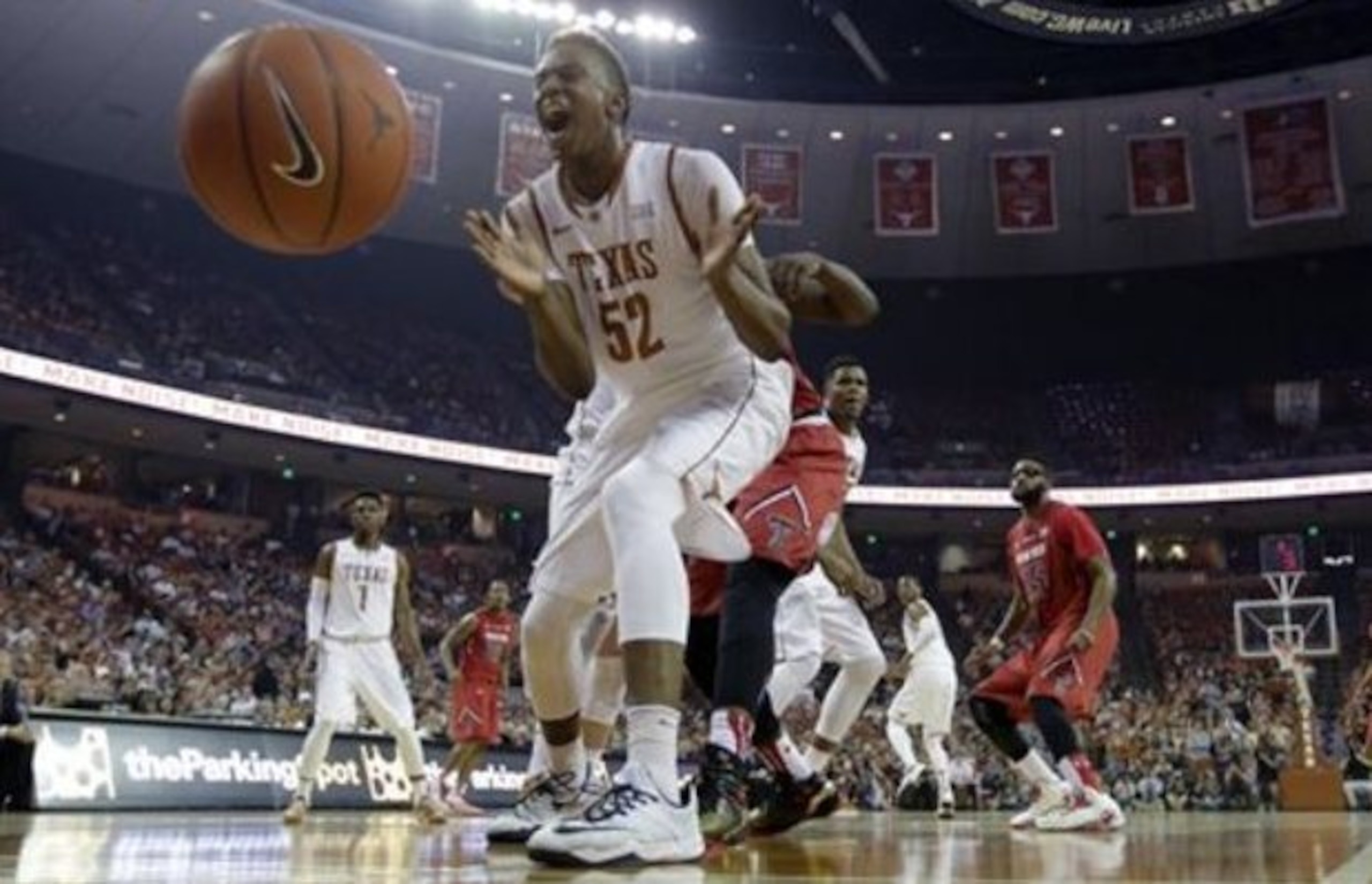
The ideal power forward to pair with Drummond would be able to knock down outside shots and defend a variety of big men.
Texas freshman Myles Turner could be that guy.
Drummond is at his best protecting the rim defensively and operating around the basket on the other end. Turner has the range to knock down college threes, and at 6'11" and 240 pounds, he has the size to defend power forwards and centers. Both Ford and NBADraft.net compare him to the NBA player who might theoretically be the best fit next to Drummond: LaMarcus Aldridge.
The potential pairing may not be perfect, as some project Turner as a 5, and the two-center lineup of Drummond and Monroe has been less than ideal. Turner's ability to defend quicker power forwards is a big question mark, as is his overall NBA readiness.
If Monroe is heading out of town and Turner is still on the board when the Pistons are on the clock, then the prospect of drafting the next Aldridge will be enticing. In the meantime, his play in the postseason may reveal more about whether he is ready enough to help a pro team right now—something Detroit desperately needs.
Stanley Johnson, SF, Arizona
6 of 6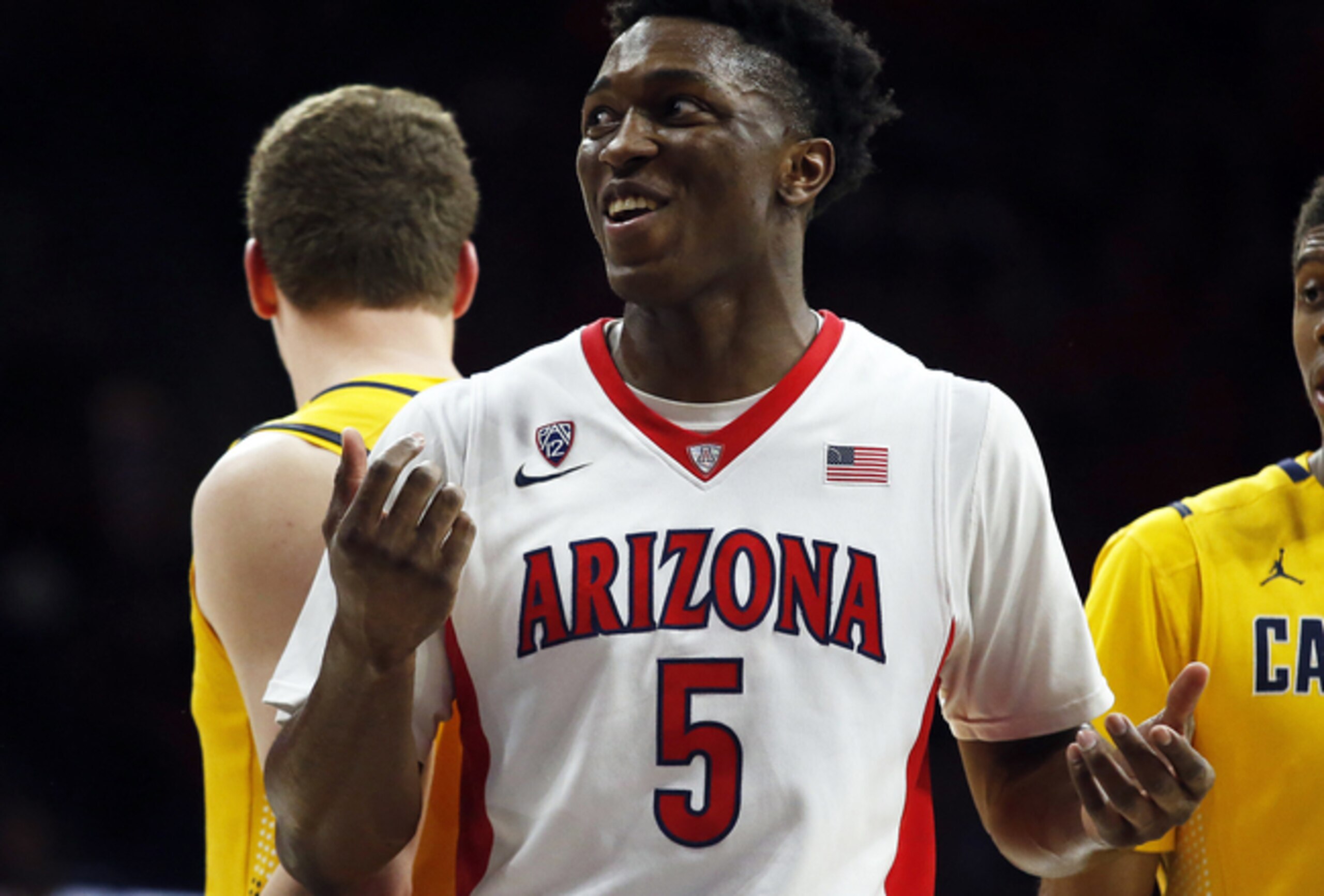
If NBA readiness at small forward is the top quality Van Gundy is looking for, then he will give Arizona's Stanley Johnson a strong look.
Even as a freshman, Johnson leads the 28-3 Wildcats in both points (13.9) and rebounds (6.6) per game. He came into college as one of the nation's top prospects, and he has lived up to the hype.
Offensively, he has good range, knocking down 35.3 percent of his triples. He is also aggressive when attacking the basket and takes 5.2 free throws per game.
It is on the other end of the court where he is expected to make the bigger impact upon reaching the NBA. He is similar in height to many of the other small forward prospects at 6'7", but his 237-pound frame makes him a much more physically imposing player. NBADraft.net compares him to Metta World Peace, who was the 2004 NBA Defensive Player of the Year.
"The first two things that jump out are [Johnson]'s incredible football player-like body and his competitiveness," Rick Fois said. "He's a standout with his on-ball defense where he is able to use his huge chest to muscle any offensive threat."
The Pistons have many question marks heading into next season, particularly at both forward spots. The predraft process will reveal more, but Johnson seems ready to make a difference right away if Van Gundy makes him the pick.
All records and statistics accurate through March 11, 2014, and from NBA.com unless otherwise noted.
Jakub Rudnik covers the Detroit Pistons as a Featured Columnist for Bleacher Report. Follow him on Twitter.




.jpg?w=2560 "Love's Body Already 'Tired'")

.jpg?w=2560 "Tyreek Deal May Come Soon")
.jpg?w=2560 "Ward Nearly Walks Out of Presser ▶️")
