

Stevan Ridley Is Hidden Gem in NFL Free Agency
Much was made of LeGarrette Blount's return to the New England Patriots during their Super Bowl run this past season. Yet, that story likely wouldn't have happened if it weren't for a very unfortunate injury to Stevan Ridley.
During a Week 6 game against the Buffalo Bills, Ridley took the ball on a counter play before breaking to the outside.
As Ridley attempted to reach the sideline, physical cornerback Stephon Gilmore advanced past the line of scrimmage. Gilmore had shook Brandon LaFell in space before putting himself in perfect position to set the edge. Because of his positioning, Ridley attempted to sidestep away from Gilmore, leaving his right knee exposed for a heavy hit.
.jpg?w=2560 "Rams Raiders Football")

.jpg?w=2560 "Steelers Saints Football")
That hit tore Ridley's ACL and MCL, sidelining him for the rest of the season. He had carried the ball just 94 times for 340 yards, 3.6 yards per carry and two touchdowns. His poor production was largely a result of inconsistent play from the Patriots offense as a whole during the first month of the season.
Ridley's production for his career as a whole is more reflective of his individual talent level.
Over four seasons with the Patriots, the 26-year-old has averaged 4.3 yards per carry on 649 carries. He has scored 22 touchdowns while catching only 23 passes. The most prominent number for the early stages of Ridley's career is nine.
Ridley has nine fumbles on his 672 touches during the regular season. When you add in his postseason touches, he has 11 fumbles on 730 touches. At one point, Bill Belichick made Ridley inactive because of his fumbling problems.
Belichick's sitting Ridley down and focusing on fixing his fumbling problems did appear to have an impact. He had one fumble during the preseason before 2014, but through six games in 2014, he didn't lose the ball.
Losing the football once every 66 touches is losing the football once too often. That is how often Ridley has lost the football through his career. Despite those struggles, he still remained a featured part of Belichick's offense, a coach who typically doesn't give his players more chances unless they truly deserve them.
It's easy to replace running backs in today's NFL. It would have made sense for Belichick to move on from Ridley before his injury in 2014. Why didn't he? Simply because Ridley is a very talented back in the prime of his career.
His production can be replicated, but his ability on the field isn't so easily recreated.
Unlike Blount or Shane Vereen, Ridley carries a well-rounded skill set. He may not catch the ball very often, but that is largely because of the offense he has played in and the players he has played with. By Pro Football Focus' measure, Ridley has only been targeted 34 times throughout his four-year career.
While his receiving ability has largely been masked within the offense, his versatility as a runner has repeatedly been highlighted.
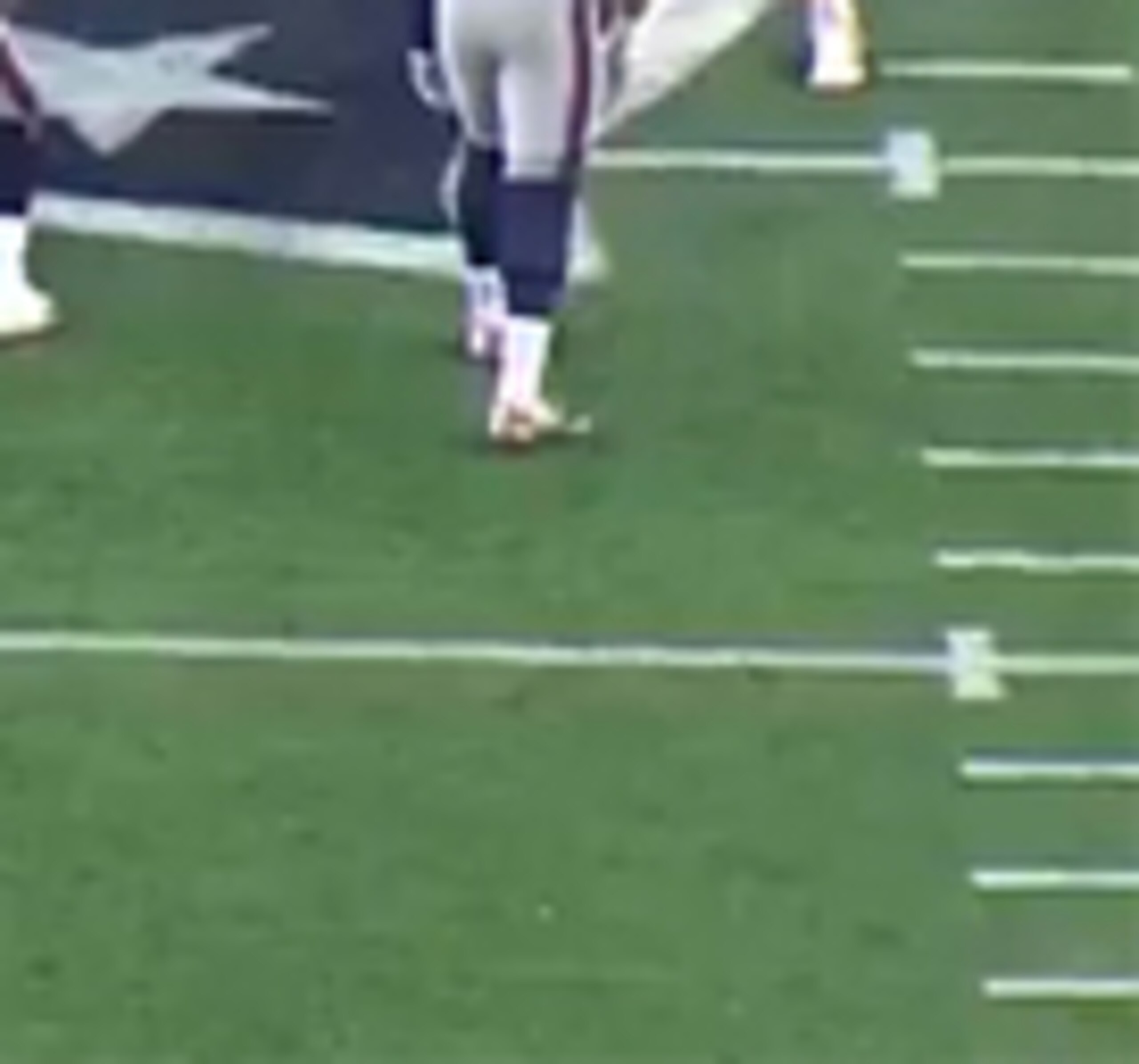
Ridley isn't a big back or a small back. He is listed at 5'11" and 220 pounds, and that is how he plays. The benefit of being that size with good athleticism is that Ridley can use his speed to run away from defenders in space, his agility to sidestep them in tight areas and his size to run over defenders.
On this play, Ridley shows off his explosiveness with impressive quickness, acceleration and long speed.
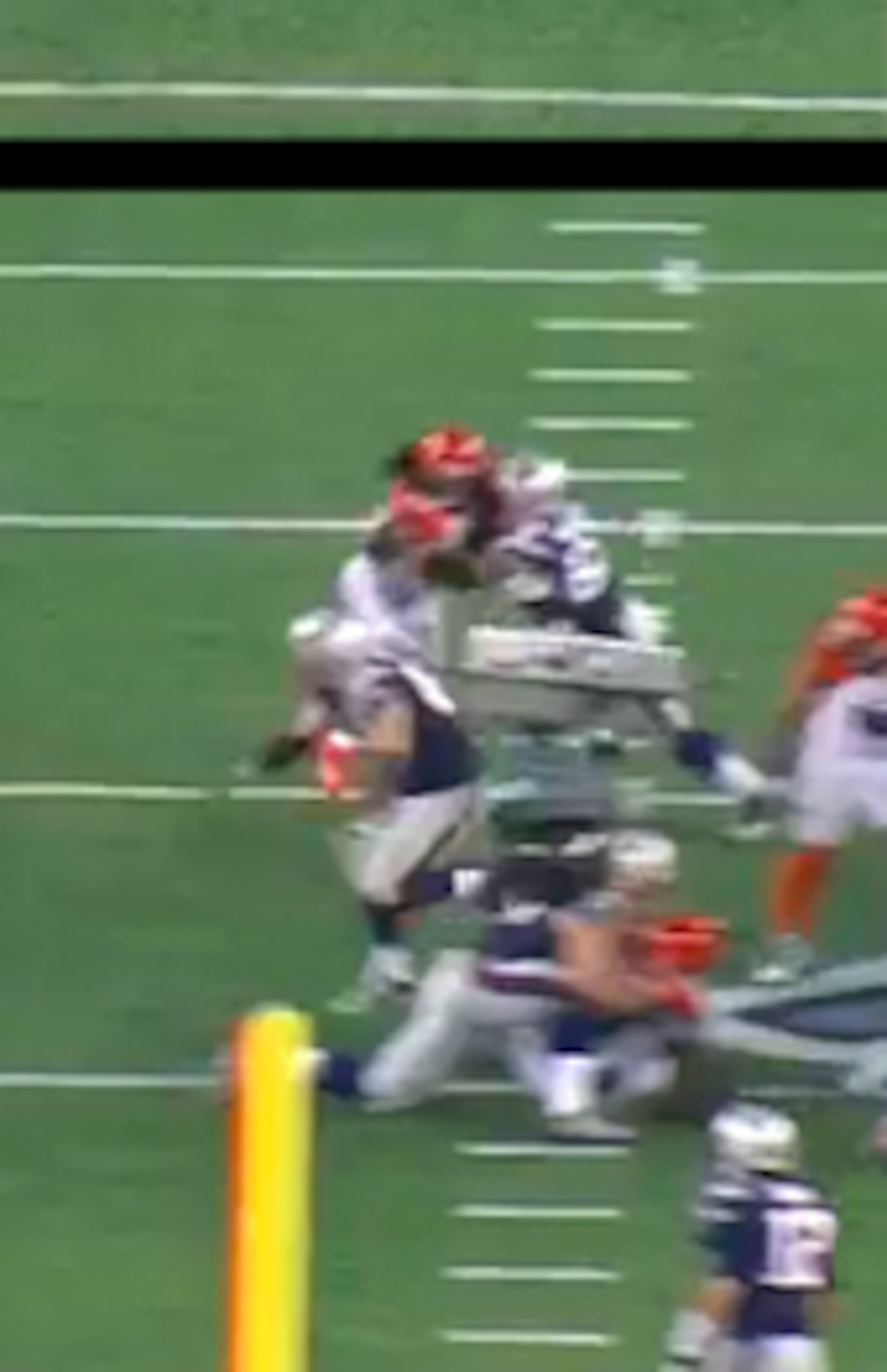
The Bengals edge defender on the right side of their defense makes this an easy play for Ridley. He allows himself to be clamped down inside by Nate Solder, creating space to Ridley's left as soon as he gets the football.
Ridley quickly cuts past the outside shoulder of his left tackle before surveying the defense in front of him.
A defender isn't immediately in position to tackle Ridley, but one is quick in pursuit, coming from the middle of the field; another defender is working through the block of Tim Wright. Ridley is ultimately forced to angle further toward the sideline and accelerate to get to the edge.

Once he successfully turns the corner, Ridley is running directly toward a cornerback in space. That cornerback can't simply be run away from, so Ridley needs to shake him before attacking the sideline. With subtlety, the running back plants his foot and pushes off so he can run away untouched.
Although he had to run perpendicular to the sideline, Ridley was still able to find his way to the sideline to run downfield for a 43-yard gain.
That was the longest run of Ridley's whole career. Forty-three yards is a big run, but it's not the kind of run that would be long for a home-run-hitting back. Ridley obviously doesn't have Chris Johnson or Jamaal Charles' kind of speed.
He doesn't need to be that explosive, though; he just needs to be explosive enough to be effective and consistently threaten the defense 20-plus yards downfield.
Big plays are an added bonus with Ridley. His value is built on the rest of his skill set, as he shows off outstanding vision, intelligence and aggressiveness when working between the tackles. On this play against the Minnesota Vikings, Ridley shows off all the different elements of his running ability.
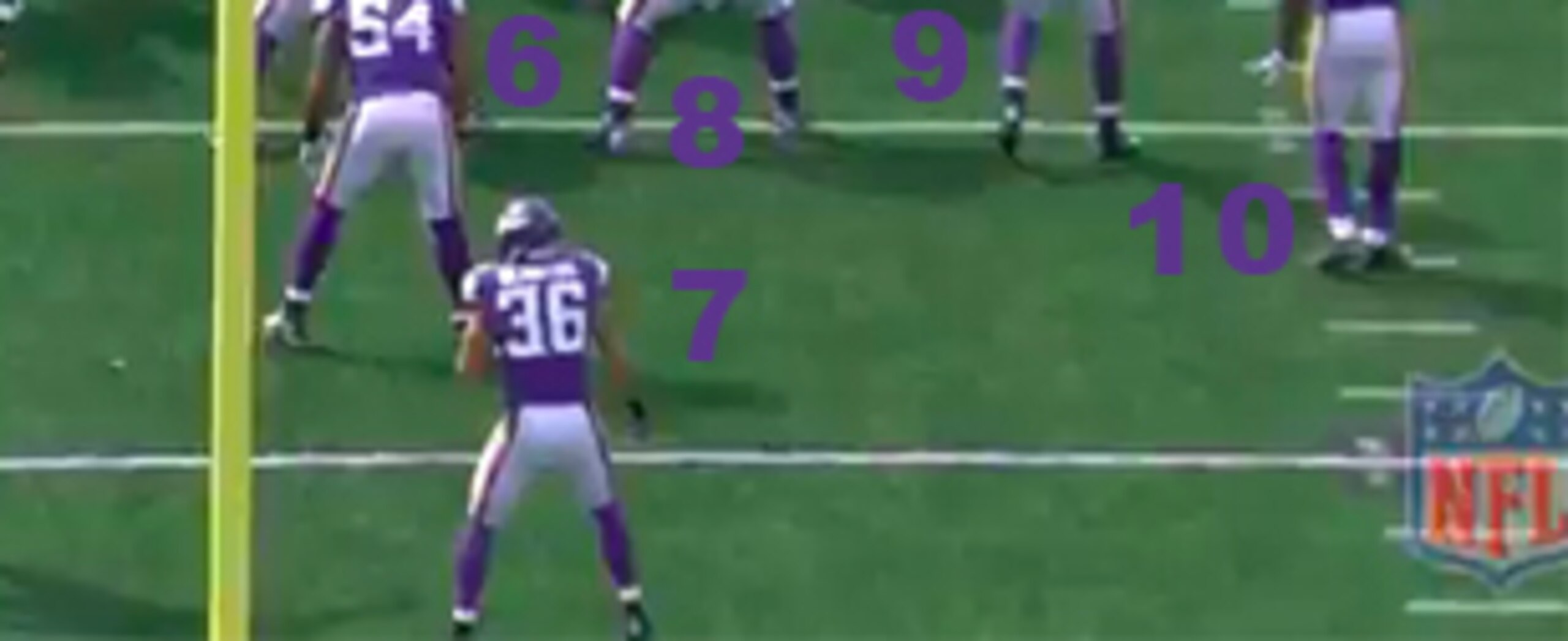
It was 3rd-and-2. As most teams in the NFL do in this situation, the Patriots went to a tight formation that brought the defense toward the line of scrimmage. The Vikings have 10 defenders in position to attack the line of scrimmage when Ridley gets the ball.
As is often the case in these situations, the running back is going to be put under pressure to create yardage at the line of scrimmage.

The Patriots pull two offensive linemen from the right side to act as lead blockers for Ridley moving toward the left tackle. This movement ultimately creates a crack for the Vikings to send a linebacker into the backfield.
Ridley does very well to anticipate the movement of that linebacker. This gives him time to slide toward the outside and away from the linebacker before he can even come close to making a tackle attempt.

At this point, Ridley is drifting laterally toward the edge of the defense. He has his eyes on the defense's No. 29. As soon as that defender shifts his momentum to move toward the outside, Ridley cuts upfield past the inside shoulder of his left tackle.
Ridley doesn't have a clean running lane, but he is able to get first-down yardage before aggressively running into a two-person tackle attempt.
Despite the combination tackle attempt, Ridley attacks the inside defender to gain forward momentum through the point of contact. Ridley is able to stay on his feet through the tackle attempt and drag a pile of defenders forward for an extra yard or two.
These are the kinds of plays that Ridley can make on a consistent basis. He is talented enough to create yardage between the tackles while still being athletic enough to attack either sideline with success.
If Ridley is healthy for the beginning of next season, and he should be, then there would be no reason to devalue his potential as a feature back for a new franchise. As is often the case with knee injuries, Ridley is ahead of schedule in his rehab, per Shalise Manza Young of The Boston Globe:
Knee injuries aren't as significant as they used to be. They are still concerning, especially for running backs, but Ridley's injury was the direct result of a hit rather than him going down untouched. That could work in his favor in selling his durability to potential suitors moving forward.
With DeMarco Murray, Mark Ingram, Ryan Mathews, C.J. Spiller, Justin Forsett, Frank Gore and teammate Shane Vereen all sharing this free-agent class, Ridley is definitely a hidden gem.
.jpg?w=2560 "Cowboys Packers Football")




.jpg?w=2560 "🚨 Week 8 AP Top 25 Poll")
.jpg?w=2560 "Fantasy Waiver Wire Stars 🤩")