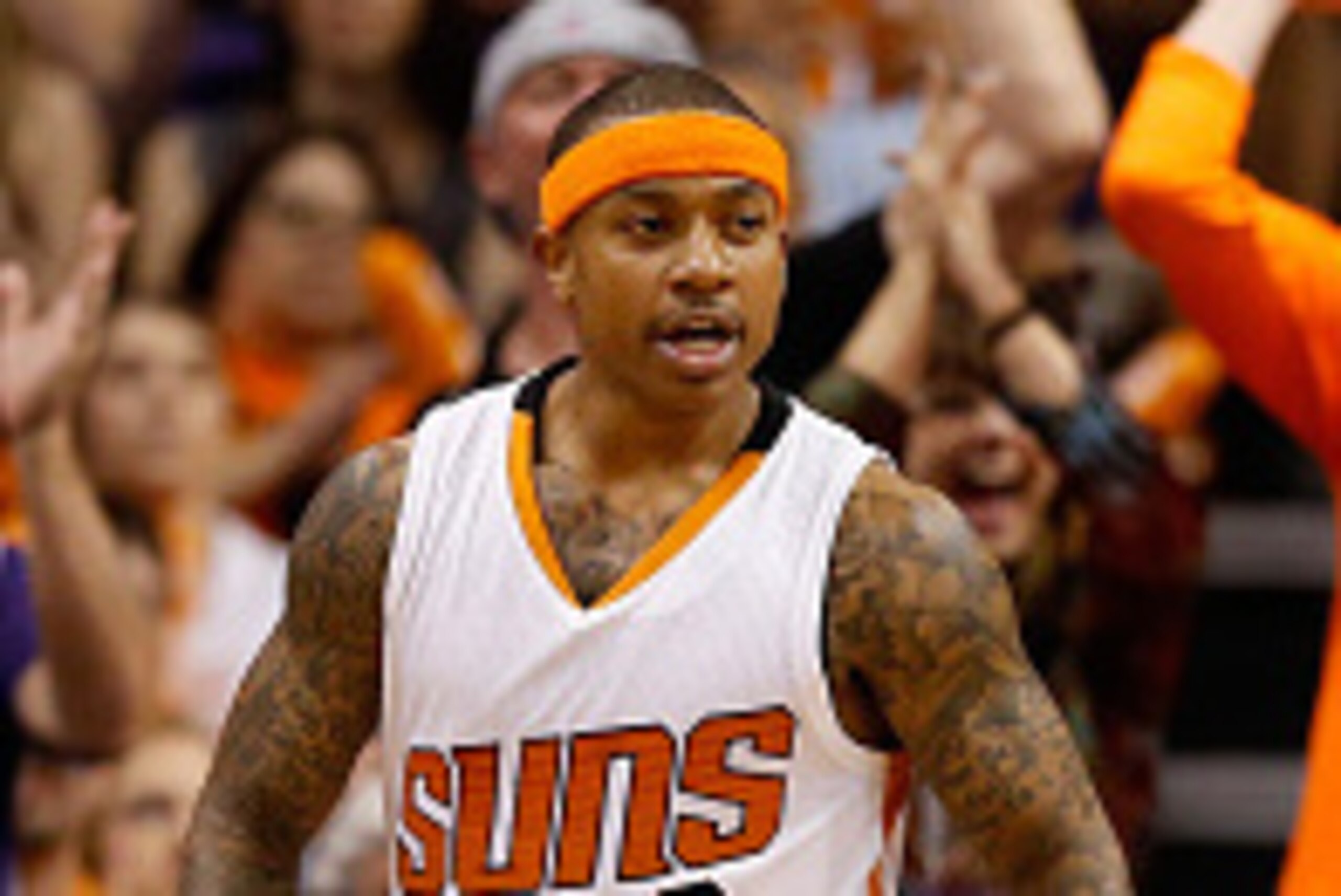

Best Potential Trade Packages, Scenarios and Landing Spots for Isaiah Thomas
The Phoenix Suns' preference to trade Isaiah Thomas so they can restore Goran Dragic's major role in the rotation, as reported by ESPN's Marc Stein, indicates one of two things.
Either Suns general manager Ryan McDonough takes the Taco Bell Skills Challenge very, very seriously (Thomas was eliminated in the first round on All-Star Saturday), or the organization recognizes the need to balance out the roster.
Let's assume it's the latter.
Thomas is a valuable scoring guard who can hit a three, break down the defense and, most remarkably, finish well in the lane despite his small stature. Defensively, that lack of size makes him a liability, and he's not particularly attentive on that end either.
On balance, Thomas is a terrific asset, made more valuable by his bargain of a four-year, $27 million contract. Normally, that's the kind of player you'd hold onto, but Phoenix's glut of guards and Dragic's willingness to explore free agency this summer, per the Houston Chronicle's Jonathan Feigen, has created an urgency to deal.
Though Dragic has had a bit of a down season (which may have something to do with losing touches and minutes to Thomas), he was an All-NBA performer last season. Keeping him and making sure his role is maximized down the line are important to the Suns.
So, if Thomas is to be the odd man out, where might he end up? And what might it take to spring him from Phoenix's overcrowded guard rotation?
Charlotte Hornets
1 of 5
The Trade
Charlotte Hornets Get: Isaiah Thomas
Phoenix Suns Get: Gerald Henderson and 2015 second-round pick
You might think the Charlotte Hornets addressed their point-guard needs when they brought in Mo Williams in a trade with the Minnesota Timberwolves. But Williams isn't the kind of game-changing spark the Hornets need in place of Kemba Walker—not if they want to hold onto a low playoff seed in the East and scare whomever they wind up facing in April.
You could make the case that Thomas is a better player than Walker, who just signed a new extension. Thomas, after all, boasts a higher player efficiency rating, per Basketball-Reference.com, and shoots the ball more accurately than the incumbent in Charlotte.
Maybe that's a good thing, though. A little healthy competition could benefit both.
If Phoenix looks like it's getting the short end here, remember: The Suns will redistribute Thomas' minutes between Eric Bledsoe and Dragic, which should constitute an overall improvement—especially on defense. By getting Henderson to slash, work off the ball and defend, Phoenix also shores up a weakness on the wing.
And if keeping Dragic happy by giving him back his bigger role results in him signing a new deal with the Suns this summer, all the better.
Indiana Pacers
2 of 5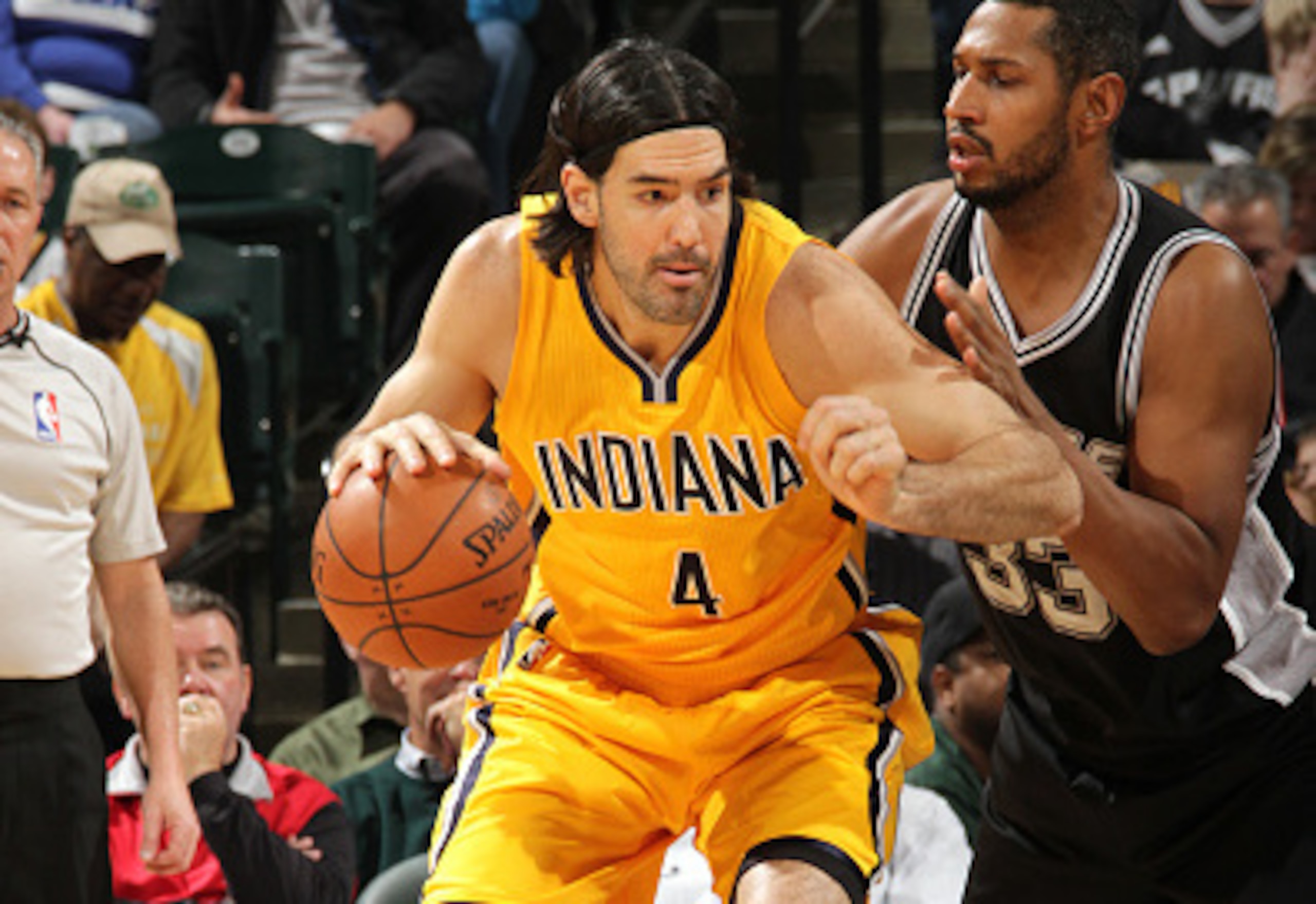
Indiana Pacers Get: Isaiah Thomas
Phoenix Suns Get: Luis Scola, C.J. Miles, protected first-round pick*
The Indiana Pacers don't owe a single pick to any other team, per Real GM, which is a rarity in today's swap-happy NBA. That means they can get creative in their dealings.
In both the short and long term, Indy needs somebody to create offense. It was a problem last year, it's a problem now and it figures to be a problem as long as George Hill is the primary playmaker in a very conservative offensive scheme.
Hill brings a lot to the table as a starter, both in terms of defense and his familiarity with head coach Frank Vogel's sets. But he's not exactly a dynamic playmaker. Thomas could be the boost off the bench Indiana has been missing.
To get him, the Pacers must surrender Scola and Miles, two solid scorers who aren't keys to the future and, most importantly, a protected first-round pick. It's harder to sell the Suns' side of this exchange, but if you consider they get scoring punch on the wing and on the block (where they really lack offensive skill), and the possibility of a late first-rounder sometime in the next three drafts, you'd have to think they'd consider it.
"I think our roster balance is a little off, and that's my fault," Suns GM Ryan McDonough told Burns and Gambo on Arizona Sports 98.7 FM. "We are a little too backcourt heavy, especially in terms of guys who, you know, I think you'd define primarily as scorers in the backcourt. So I think at some point we'll need to balance that out, try to get a little more size, a little more frontcourt scoring and rebounding."
This move would restore the balance in Phoenix's scoring attack while giving the Pacers a new offensive dimension.
*Protected 1-16 in 2015, 2016 and 2017. Reverts to an unprotected second-round pick in 2018.
Boston Celtics
3 of 5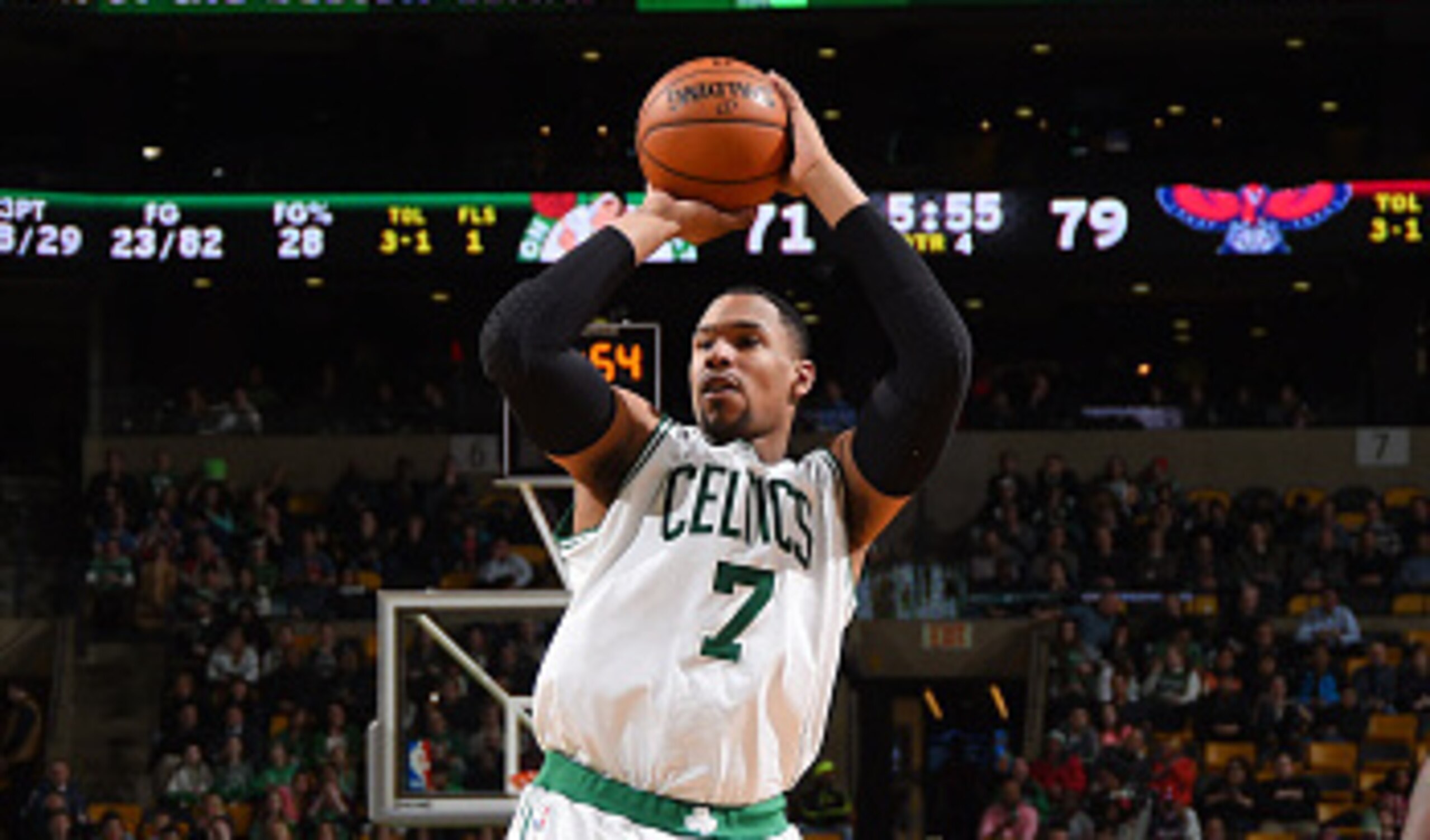
Boston Celtics Get: Isaiah Thomas
Phoenix Suns Get: Jared Sullinger, Marcus Thornton, 2015 first-round pick (via Los Angeles Clippers)
Though it's difficult to envision a world in which the pick-hoarding Boston Celtics would actually relinquish one of their prized selections, maybe the chance to get a proven backcourt scorer on a below-market deal would be enough to make them consider it.
Thomas would fit nicely alongside either Marcus Smart or Avery Bradley in the Celtics' backcourt of the future, as both current Boston guards have no problem checking opponents at either the 1 or the 2. Thomas could hide on the easier matchup while also providing the offensive punch and penetration neither Smart nor Bradley can.
Giving up Sullinger and what'll likely be a pick in the mid-20s of the first round this summer sounds reasonable when you consider the needs Thomas would address. It's hard to ignore the lack of backcourt firepower in Boston. If Kelly Olynyk is the kind of floor-stretching big Boston seems to think he is, losing Sullinger (for whom health and conditioning may continue to be concerns) will be easier to stomach.
As for Thornton, well, he's salary filler. Sorry, Marcus.
The Suns get a big who can rebound, score a little bit inside and, perhaps, might someday mix efficiency with high volume from the perimeter. With the pick included, Phoenix does nicely here.


Three-Team Trade
4 of 5
Phoenix Suns Get: Greg Monroe*, Jonas Jerebko and Joe Ingles
Utah Jazz Get: Gerald Green and Miles Plumlee
Detroit Pistons Get: Isaiah Thomas, Enes Kanter and 2015 second-round pick (UTA)
OK, deep breath.
Phoenix goes big with this one, swapping out its undersized point guard for a beast in the lane, a floor-stretching forward and the underrated, crafty Ingles on the wing. The danger of losing Monroe in free agency is very real, which is why the other two players are involved as minor sweeteners.
Green gives the Jazz an athleticism rental on the wing, and Plumlee is a very serviceable third big man to put in the rotation behind Derrick Favors and Rudy Gobert. The biggest plus for Utah here is getting live bodies for Enes Kanter, who told Aaron Falk of The Salt Lake Tribune he wanted to be traded by the deadline.
"A team interested in Kanter would have to give up assets while simultaneously assuming the risk and uncertainty involving the big man's future salary," Falk noted.
Because Kanter made his desire to exit known ahead of free agency, getting anything for him is hard.
That's where the Pistons come in, essentially giving up one free agent for another. The difference here is that Kanter's perimeter stroke might make him a better fit alongside Andre Drummond—not to mention the fact that the former No. 3 overall pick likely won't command the kinds of offers Monroe will.
There's also Thomas, of course, who gives the Pistons an affordable, quality point guard going forward. Brandon Jennings' torn Achilles tendon compromises his future effectiveness, and though D.J. Augustin has been stellar as his replacement, Thomas could offer the speed and creativity Augustin lacks.
*Because Monroe signed a qualifying offer with the Pistons, he must consent to any trade this season. He'd also lose his Bird rights if moved, so he'd really have to like his destination to approve a deal.
Wait It Out
5 of 5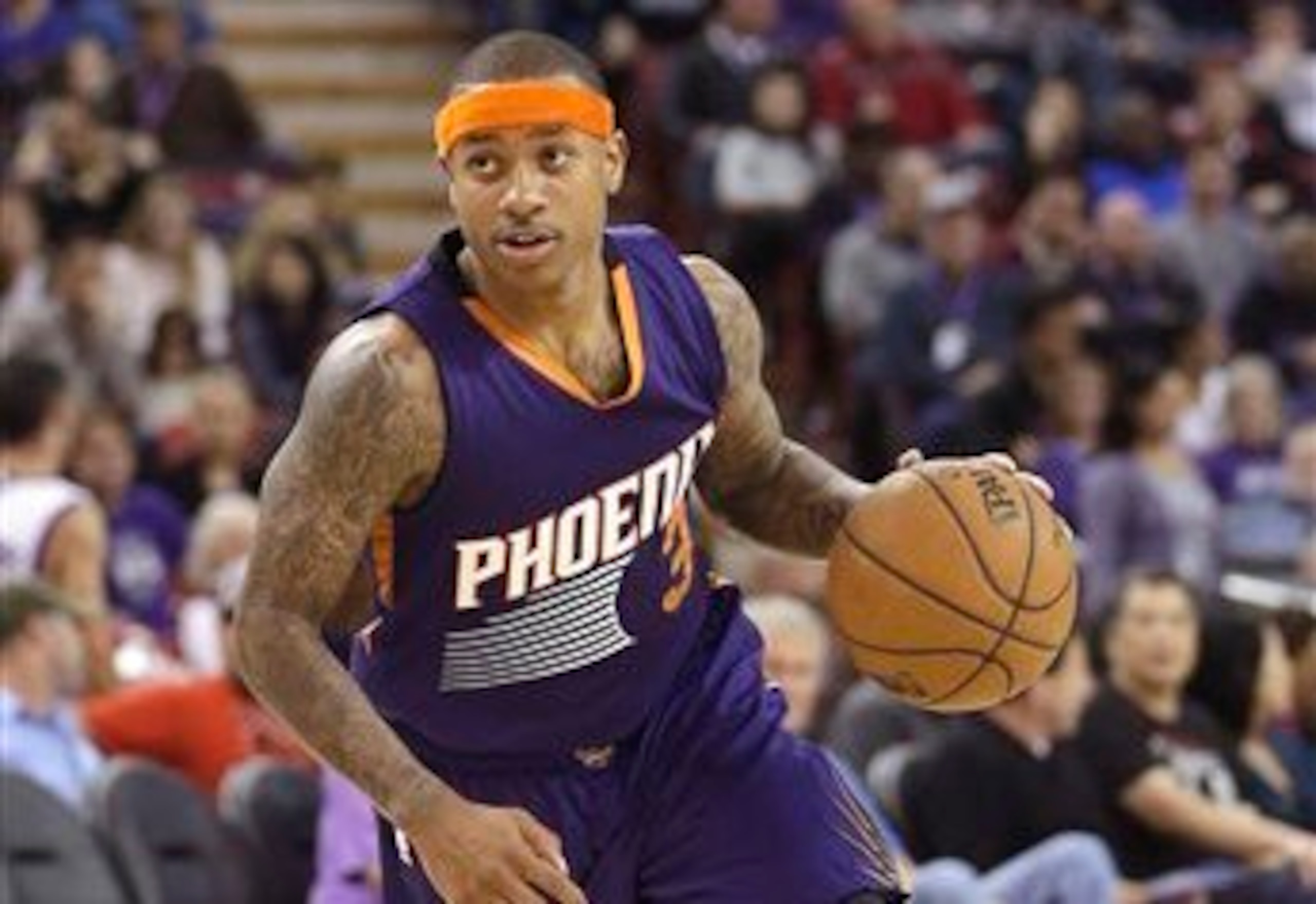
When the Suns originally signed Thomas, it looked like he was more of an insurance policy than a core part of the team's future plans. Bledsoe's return on a new deal was questionable at best last summer, and Phoenix made sure it was ready for a worst-case scenario.
When Bledsoe decided to stay, the Suns ended up with the three-headed monster they have now.
Another such scenario awaits this summer; only this time, the Suns won't have the advantage of using restricted free agency to retain their asset. Dragic will hit the open market in July, and Phoenix can't match any offer sheet he signs because Dragic is unrestricted.
If he wants to leave, there's nothing the Suns can do about it.
Trading Thomas now is a good idea if the Suns get early assurances from Dragic that he'll come back. But if Phoenix ships out Thomas as a gesture of good faith and then loses Dragic for nothing, it'll go from having too many backcourt options to not having enough.
The Suns can always trade Thomas later. Or keep him; the three-man unit of Dragic, Bledsoe and Thomas owns an offensive rating of 116.7, per NBA.com, the highest of any trio on the Suns. Maybe finding the right defensive pieces at the other two positions should be Phoenix's priority.
And if the Suns are thinking of moving Thomas for a short-term boost to this year's roster, they'd probably better think again. Phoenix is a solid team, but barring a massive overhaul, it's not equipped to do more than lose a first-round series to a high seed in the West.
This is a team that needs to make more moves and add more pieces before it's fit for contention. A lottery pick this summer (added, perhaps to the one that might be coming from the Los Angeles Lakers) would be worth more than a one-and-done postseason.
It's tempting to make a move before the deadline, but the Suns might be better off standing pat.


.jpg?w=2560 "Grading WWE Raw 🔠")
.jpg?w=2560 "Viral Rams Coach Vid 🖕")
.jpg?w=2560 "Injury-stricken Seahawks signing veteran RB")
.jpg?w=2560 "Bijan's INSANE 1st Half 🤩")
.jpg?w=2560 "2 NFL Officials Suspended")
