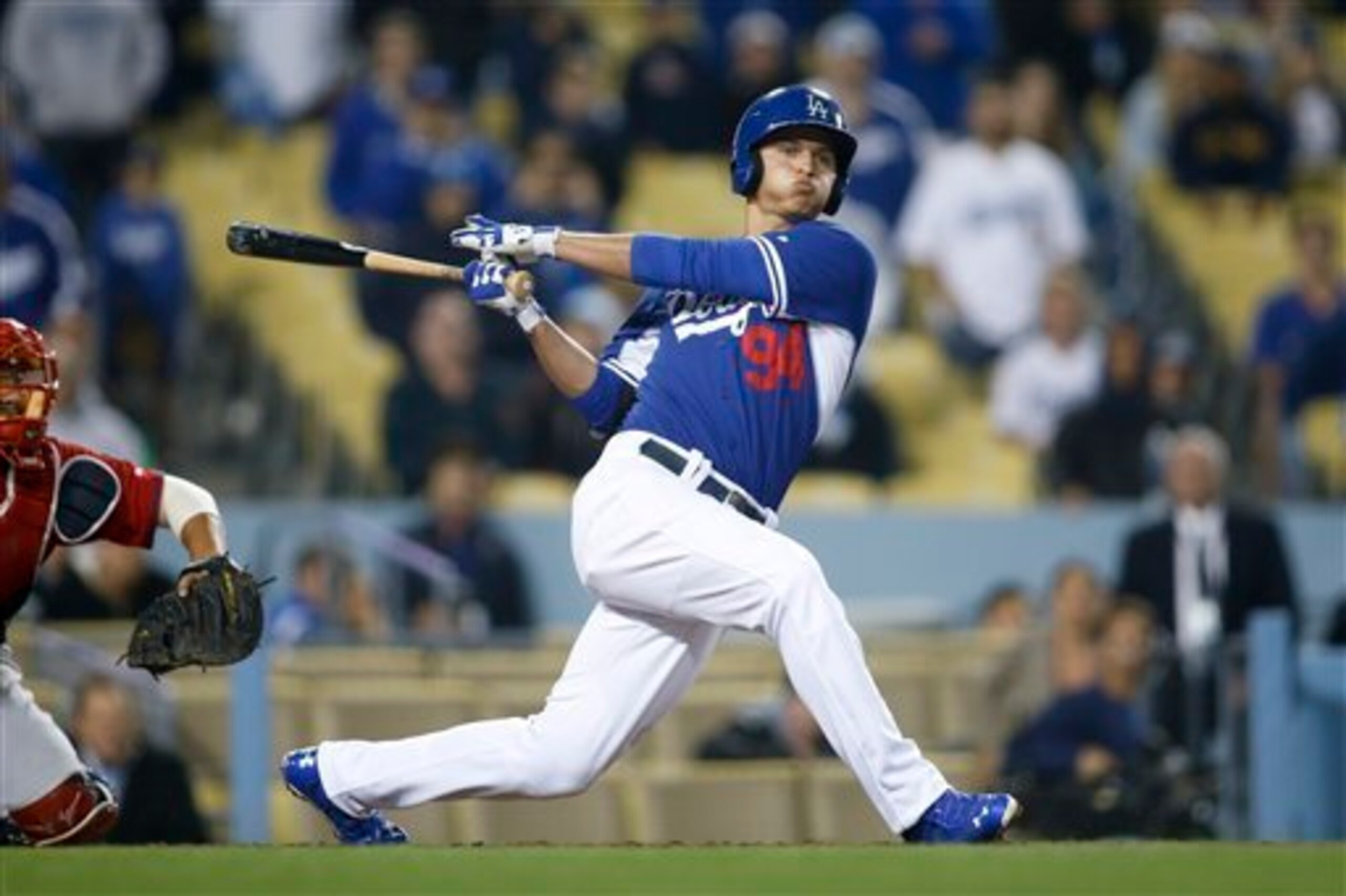

The Los Angeles Dodgers' Top Hitting Prospects and Their MLB Comparisons
There is no general consensus on exactly what the top 10 of the Los Angeles Dodgers’ farm system should look like. Four of the main outlets—Baseball America, Baseball Prospectus, ESPN and MLB.com—have their own methodology and their own results.
For this piece, I will use the five hitters who showed up most often in those lists, as there is no way to satisfy everyone’s idea of a top prospect. Corey Seager and Joc Pederson are on several top-100 lists, and Alex Verdugo appeared on the back half of each these four. Scott Schebler and Darnell Sweeney also appeared on a couple of the lists.
The most important note here is that I am neither a scout nor a projection system. I do, however, have access to scouting reports that the above websites make public. I will use that information and combine it with my understanding of major league players to find an easily accessible comparison.
Corey Seager, SS
1 of 5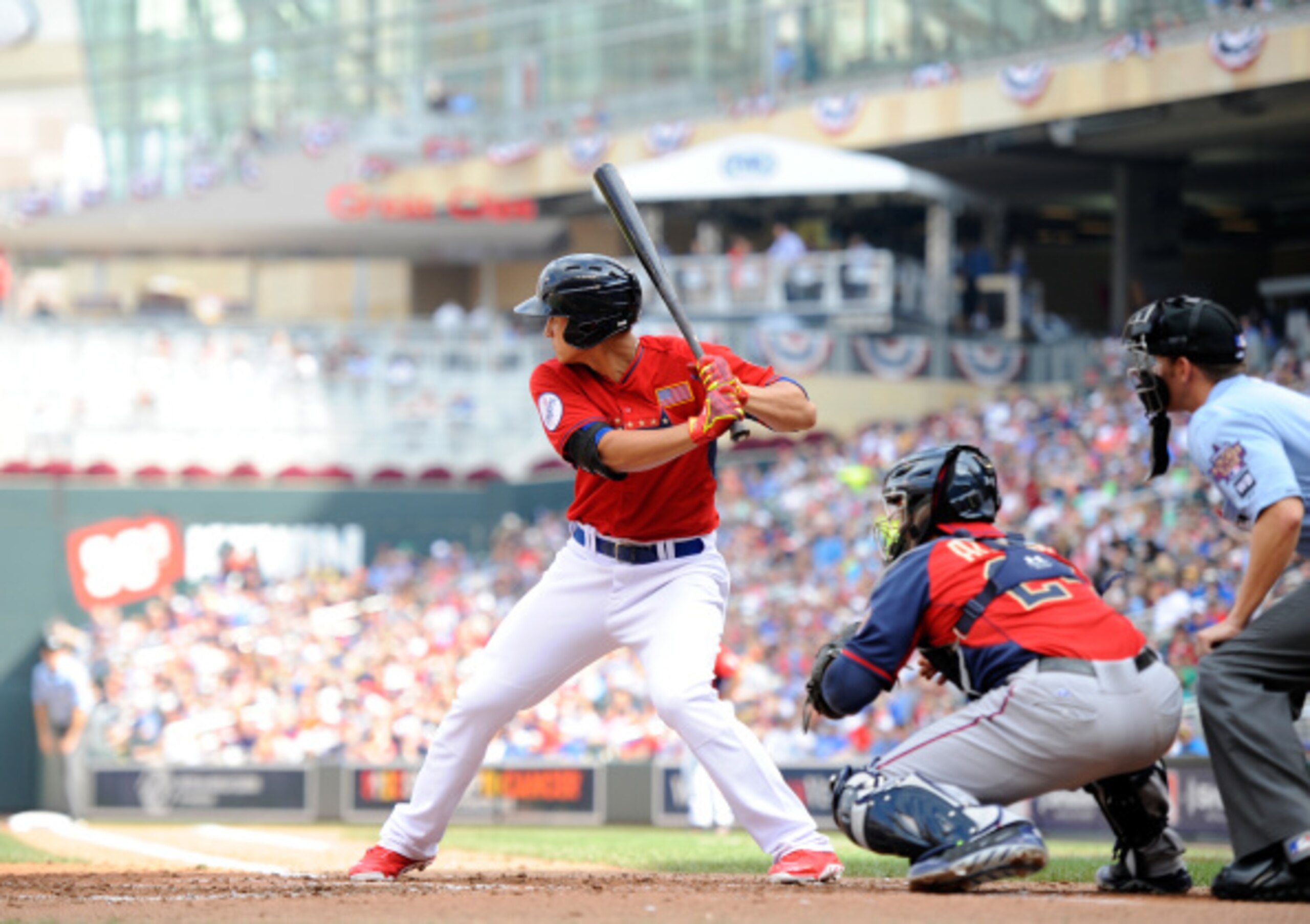
Seager is a big shortstop who likely won’t stay at the position for very long into his big league career, but at the moment, he is one of the top prospects in the game because of his position up the middle and his bat. For the moment, he is the cream of the Dodger system.
A possible big league comparison is Jhonny Peralta. Like Seager, Peralta is big (listed at 6’2”, 215 lbs) and can hit. He has posted at least a 120 wRC+ in three of the last four seasons, and if Seager is as good a hitter as reports suggest, he should be able to post that type of number.
The main difference is probably that Seager won’t remain a shortstop for as long as Peralta has. MLB Pipeline’s scouting report states that Seager is “expected to eventually move to third base.”
Joc Pederson, CF
2 of 5
Pederson will (hopefully) be the Opening Day center fielder, and expectations are justifiably high after he posted a 30-30 season in Triple-A last year. He appears to be a solid defender and a good hitter with some speed, but he strikes out a lot. His ability to stay on the big league roster will depend on his adjustments and whether he can translate his pedigree and minor league performance into major league production.
Early-career B.J. Upton is probably an optimistic comparison for Pederson. He was slightly better than league average as an overall hitter, but he had strikeout rates above 20 percent each season. Additionally, he was worth several runs above replacement as a defender.
Alex Verdugo, OF
3 of 5A second-round draft pick in 2014, Verdugo has above-average tools across the board, according to both Baseball Prospectus and MLB Pipeline. Given that he is so far away from the major leagues, though, it is difficult for me to competently profile him at this time. As he develops, we will have a better understanding of what he might turn into.
For the purposes of this slideshow, though, I will be relatively optimistic. His tools need to develop before he turns into a legitimate big league prospect. If all goes well, though, he could become a version of Nick Markakis. He could be a good hitter and defender with enough arm to play right field but not a ton of power.


Scott Schebler, OF
4 of 5Schebler is much closer to the big leagues than Verdugo, so we have a better understanding of what he can be. MLB Pipeline has him as an average hitter with average power and a well-below-average arm, which means that he will be limited to left field and his big league future is dependent on his bat.
The big leaguer that most fits that mold is Dustin Ackley. FanGraphs’ Steamer projects him to be a league-average hitter (102 wRC+), and he has proven to be a pretty good defender once he was moved to left field. If Schebler can provide that kind of value, it would be considered a win.
Darnell Sweeney, 2B
5 of 5
Sweeney is a fascinating prospect because he can hit a bit, run a little more and can’t do much else. However, he went 15-for-31 on stolen base attempts in 2014, so he would lose a significant amount of value if he can’t actually steal bases at the big league level.
Overall, though, as with most prospects, his big league future will likely depend on his ability to hit. His career .814 OPS in the minor leagues bodes well, as does his .284 batting average. If this translates to the big league level, he could be Omar Infante—a second baseman who makes contact but doesn’t have a ton of power, can steal a few bases and plays competent defense.

.jpg?w=2560 "Grading WWE Raw 🔠")



.jpg?w=2560 "2 NFL Officials Suspended")
.jpg?w=2560 "Viral Rams Coach Vid 🖕")
