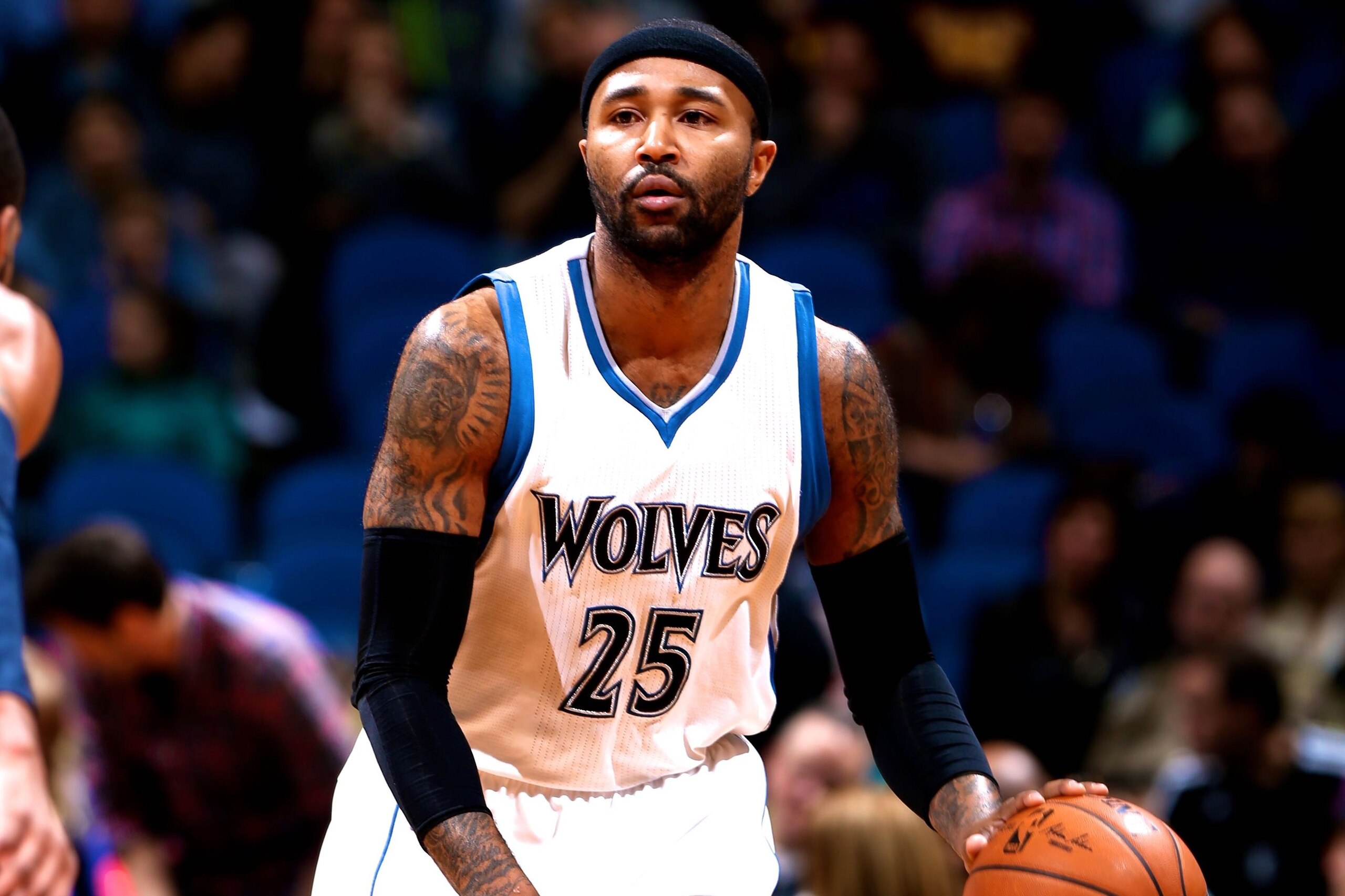

Grading Mo Williams, Adreian Payne Trades Between Wolves, Hawks, Hornets
In their latest effort to secure a playoff spot in the Eastern Conference, the Charlotte Hornets pulled off a trade with the Minnesota Timberwolves to bring in one of only four players to score at least 50 points this season: Mo Williams.
Apparently, Stephen Curry, Klay Thompson and Kyrie Irving were unavailable.
Adrian Wojnarowski of Yahoo Sports broke the news and has the details:
TOP NEWS

LeBron's Special Helicopter Deal

MJ Makes Record-Setting Donation 🙌
Shams: KAT, Hart Could Be Trade Names
Though this particular swap isn't a league-wide landscape-alterer, it should have an impact on the bottom portion of the postseason race in the East. And the Wolves got themselves a pick for a vet they didn't need, so, nice job, everyone!
Charlotte Hornets Get: Mo Williams and Troy Daniels
Grade: B+
Williams hasn't shot the ball efficiently this season, with field-goal and three-point accuracy rates of 40.3 and 34.7 percent, respectively. But he's been better than Gary Neal, whose frosty 29.3 percent from long range has really hurt a Hornets team in need of perimeter shooting.
Neal is a journeyman whose movement at the deadline has become something of an NBA ritual, per Eric Koreen of the National Post:
Charlotte needed depth at the point with Kemba Walker sidelined by knee surgery, and Williams' presence will allow it to either move Lance Stephenson further down the depth chart or, perhaps, out of town entirely. Stephenson has taken on increased ball-handling duties with the second unit after flaming out with the starters earlier this year, and it seems the Hornets still aren't satisfied with him—even in this diminished role.
Williams can play some shooting guard when Walker returns as well, so long as the Hornets aren't concerned about defense. Small, not particularly quick and generally disinterested, Williams isn't stopping anybody.
But if there's a team that can sacrifice a little stopping power in the interest of scoring, it's the Hornets, who've allowed just 97 points per 100 possessions since Jan. 1, by far the league's best defensive rating, per NBA.com.
Williams pumped in 52 points against the Indiana Pacers on Jan. 13, giving him the second-highest single-game total on the year. Only Irving, who went for 55 two weeks later, has gone bigger.
The Hornets are likely to enter the playoffs as a seventh or eighth seed, which means they'll be overmatched in whatever first-round pairing they draw. Now, in Williams, they've got a weapon capable of winning a game (and perhaps swinging a series) all by himself.
And who knows? Perhaps playing for a team that is still competing for something this season will liven Williams up, increasing the chances of another scoring outburst.
Marc Spears of Yahoo Sports relayed Williams' excitement:
Yes, Williams is a flawed player overall. But there's value in having a guy who might just land a haymaker at the right time. And he's on an expiring contract, which means there's no long-term commitment necessary in exchange for a puncher's chance in the playoffs.
Daniels is an afterthought, but the former NBA D-League standout had his own huge moments (very, very briefly) for the Houston Rockets in last year's postseason.
This is a move designed to secure a postseason berth and then make the most of it, which is all you can ask of a team in Charlotte's position.
Minnesota Timberwolves Get: Gary Neal, future second-round pick
Grade: B-
A second-rounder isn't the sweetest of sweeteners, and Neal is a downgrade from Williams. So on its face, this deal doesn't look great for the Wolves.

But you have to consider Minnesota's particular circumstances here before passing judgment.
The Wolves have Ricky Rubio back in the rotation, which means there's less of a need for a backup ball-handler like Williams, who isn't the kind of distributor who improves the play of those around him. Rubio is exactly that kind of player, and he'll get more opportunities (perhaps along with Zach LaVine) to handle minutes at the point.
Neal's shooting has been awful this year from deep, but his career mark is 38.1 percent. Maybe he'll thrive in his optimal role as a catch-and-shoot specialist in Minnesota—especially if Rubio is the one finding him for open looks.

Like Williams, Neal's contract expires after this season. So the Wolves haven't taken on any long-term commitments in the bargain.
Though a second-rounder and Neal don't constitute a big haul, the Wolves basically gave away an asset they had no use for (Williams, a veteran, wasn't part of any long-term plans for the rebuilding club) in exchange for a draft pick that might someday be worth something.
If you think about it, Minnesota gave up a commodity that had no value for one that—eventually—might have some. That's a sensible exchange.
In addition, the two-for-one deal opens up a spot on Minnesota's roster, which provides yet another opportunity to take a crack at a young talent, per John Krawczynski of The Associated Press:
And it appears the Timberwolves will fill that spot via trade, according to Chris Vivlamore of The Atlanta Journal-Constitution:
We'll get to that second trade in a moment. First, let's finish up the Williams-Neal swap.
The only reason the Wolves get a B-minus here is because it would have been nice to see them use Williams to bring back a younger player (no matter how raw or unproven) to add to their stable of youth. The secondary deal for Payne addresses that shortcoming pretty well, though.
Overall, this isn't a bad move for Minnesota either. Everyone's a winner!
So, about that Payne deal...
Minnesota Timberwolves Get: Adreian Payne
Atlanta Hawks Get: 2017 first-round pick (lottery-protected from 2017-2020)
Wolves Grade: A-
Hawks Grade: C+
Per Brian Windhorst of ESPN, Minnesota may not be sacrificing much for Payne:
According to Darren Wolfson of ESPN 1500 in Minneapolis, the Wolves' pick may not amount to much—if we assume they'll be a lottery team for the foreseeable future:
Minnesota earns high marks because it got a first-round talent for what'll likely be a second-round pick. Payne's NBA track record is exceptionally short; he's played 19 minutes total. But he's got the bulk to bully power forwards and the stroke to stretch the floor against centers. With so little game experience on which to judge him, we have to rely on the scouting report.
And his mix of size and shooting (he hit 40.9 percent of his treys in 138 collegiate games) looks good.
The Hawks didn't have a spot for Payne, but it feels like a bit of an early concession to give up on this year's No. 15 overall pick so soon. On the plus side, his exit opens up space for another player who might be even more promising down the line, per Wojnarowski:
It's possible the Hawks saw enough of Payne to know he won't fit their future plans. But it's difficult to understand how a player with his package of skills and pedigree is only worth a distant (and maybe not very valuable) future consideration.

.jpg?w=2560 "Grading WWE Raw 🔠")


.jpg?w=2560 "Viral Rams Coach Vid 🖕")
.jpg?w=2560 "Injury-stricken Seahawks signing veteran RB")