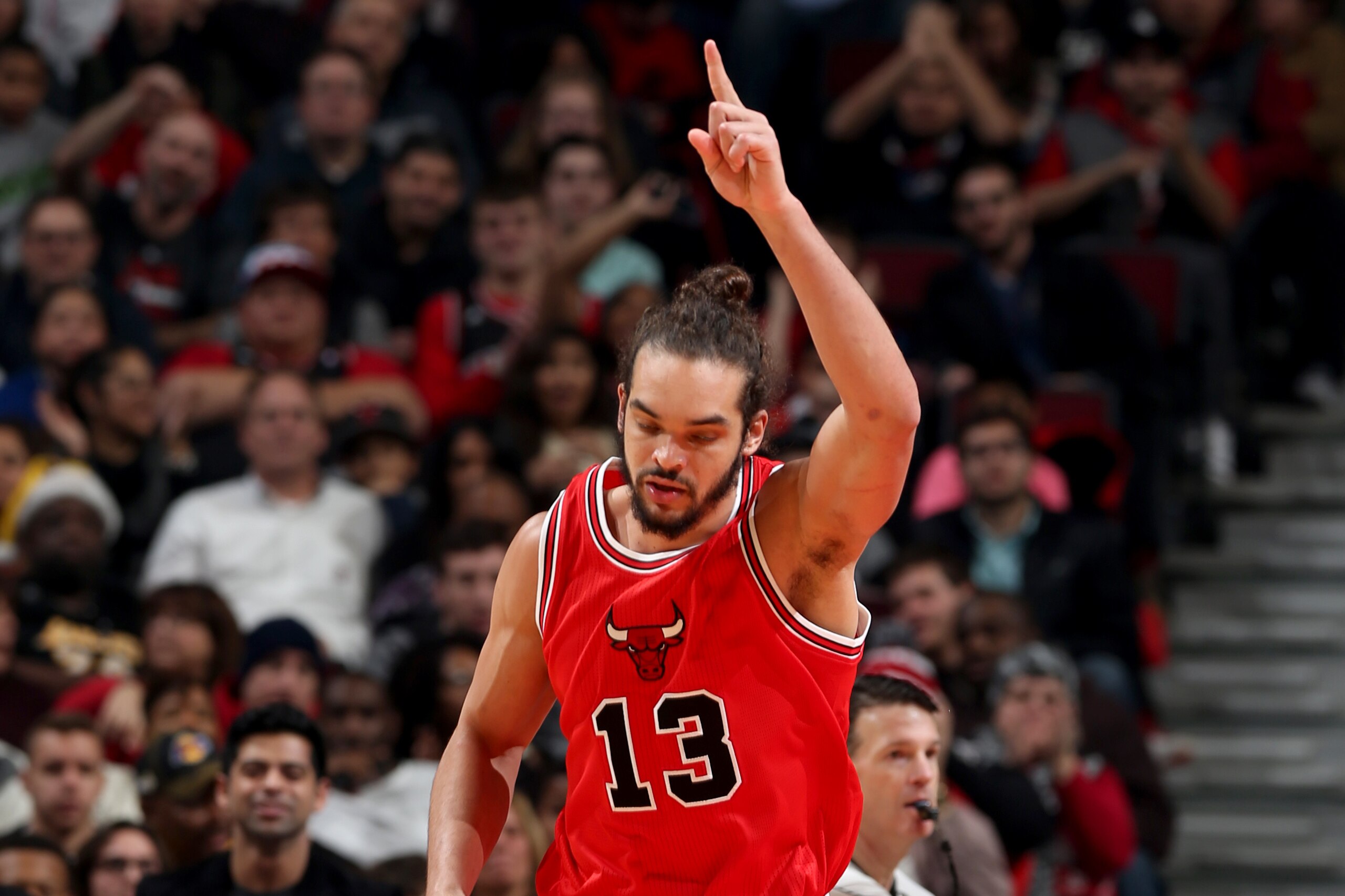

Will Chicago Bulls' Ceiling Be Decided by Joakim Noah's Health?
It's a common belief that the Chicago Bulls will only go as far as Derrick Rose takes them. Joakim Noah has a similar effect.
Coming off a career year in 2013-14, Noah also won the league's Defensive Player of the Year award and had an All-NBA first team appearance. This season has been anything but illustrious for the former Florida Gator, though.
Noah's ongoing knee issues have slowed him down quite a bit, and there have been minor ankle injuries that have forced him to miss a total of 11 games, four of which Chicago lost. He’s labored while on the court, and his once unmatched fire and energy is nearly nonexistent.
TOP NEWS

J-Dub, Wallace May Miss Entire Season
Melo's Quote on Confidence 😎
Celtics at Fault for JT-JB Beef? 🤔
Injuries heal, though, and it looks like Noah might start trending upward a bit. He played a big role in Chicago's recent resurgence, coming up big in wins against the Dallas Mavericks and Golden State Warriors.
Let's take a closer look at how Noah impacts the game on each end of the floor.
Offensive Impact
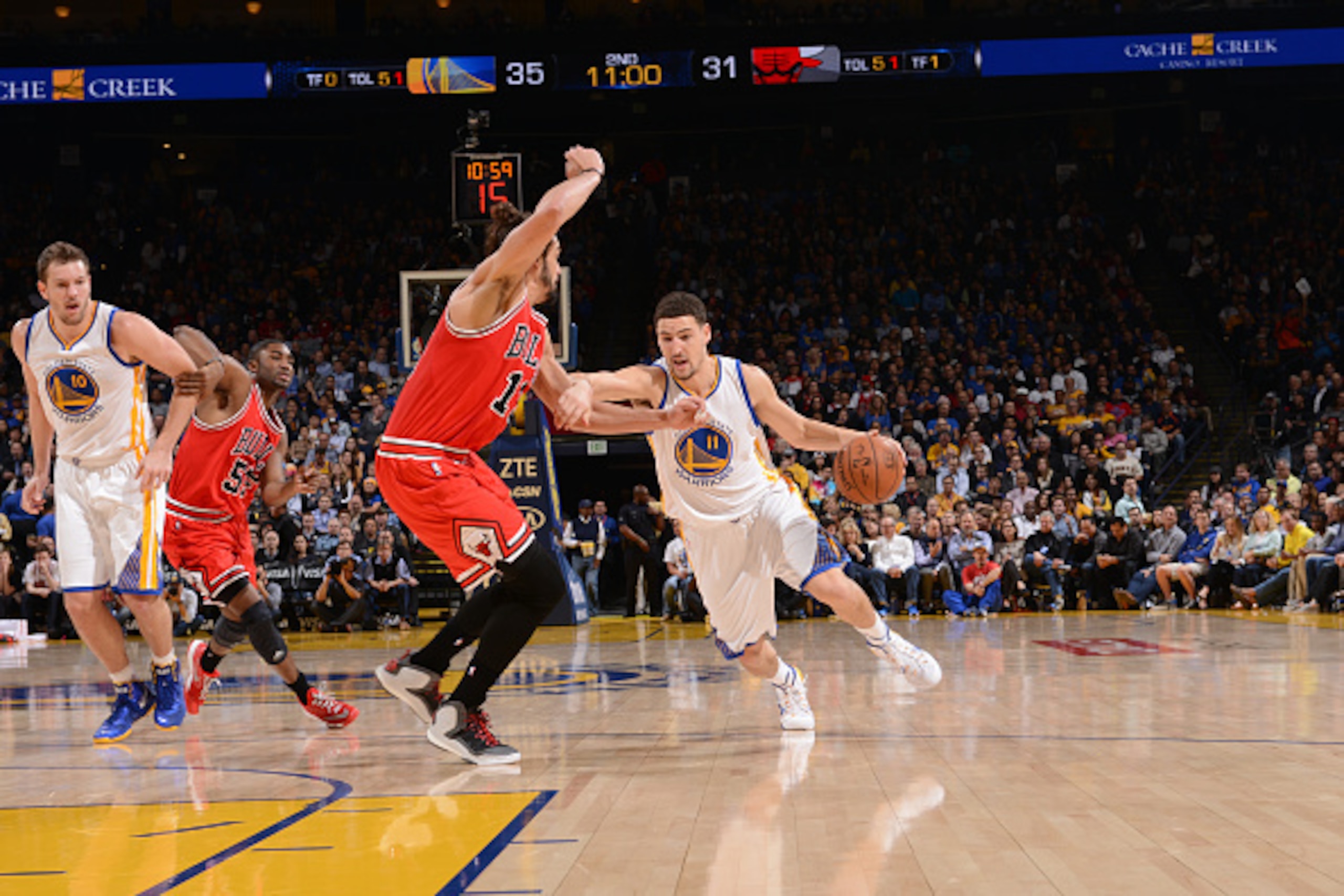
Noah affects the game in a variety of ways, either through his passing, his elite rebounding or by attacking the basket. His offense just hasn't been there this year, and the numbers hint at a more potent Chicago attack when Noah is sitting.
However, the off-court numbers this year are bloated due to his 11 missed games. Noah appeared in 80 of 82 contests last year and played over 35 minutes a night. This season, the Bulls have logged more time without their starting center than with him.
Last year's numbers show how much of an impact a healthy Noah has. The Bulls' offensive rating without their All-Star center would have placed them dead last in the NBA for the 2013-14 campaign. With Noah on the floor, Chicago ranked 22nd, up five spots from its actual ranking.
Even though Noah hasn't scored like last year—he's averaging just 7.8 points per game, nearly a five-point decrease—he's not a top-two or top-three option anymore. With Rose, Jimmy Butler and Pau Gasol, Noah can instead focus on what he does best: rebounding, passing and cutting to the basket.
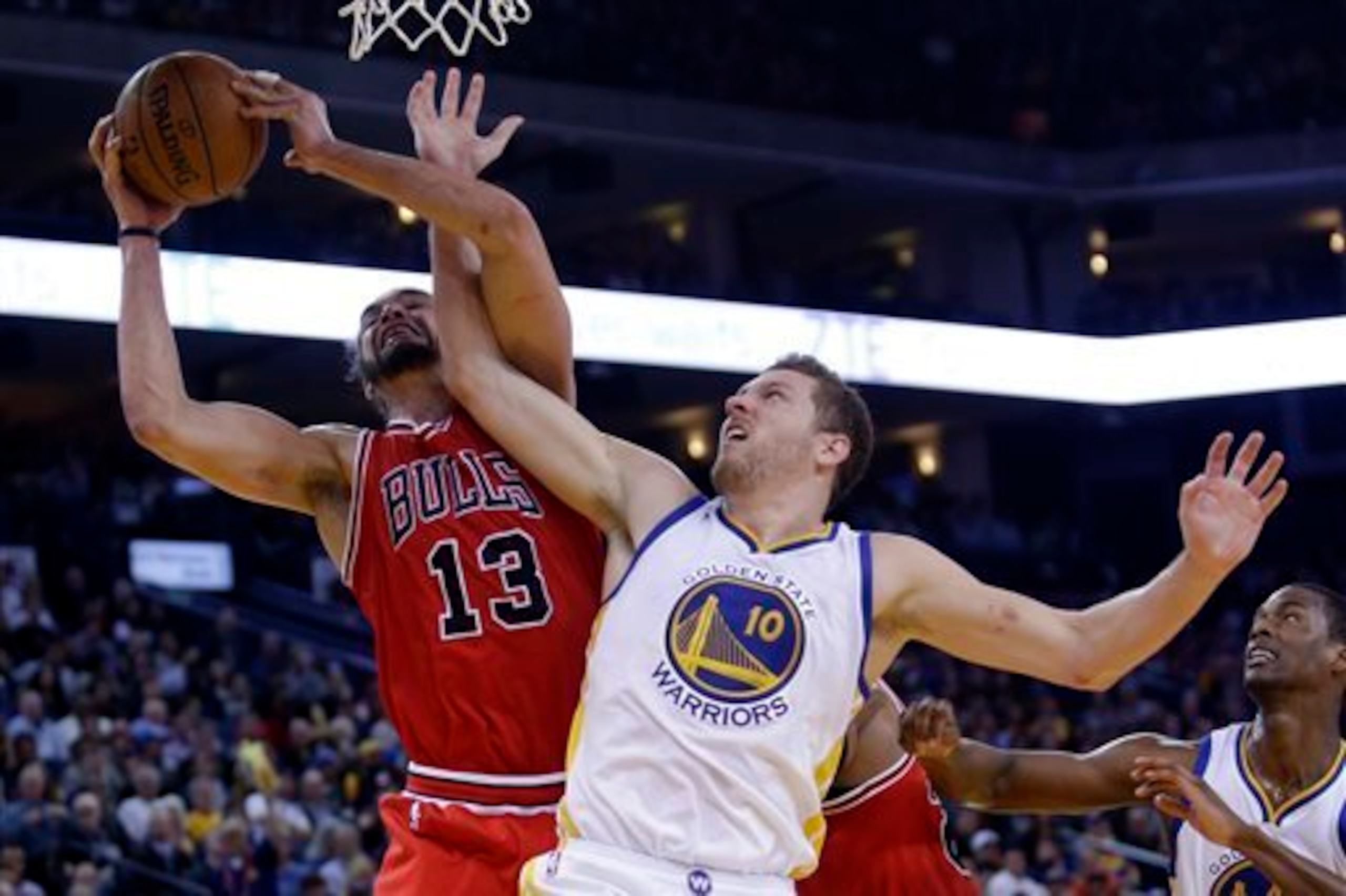
Tuesday night's win over the Warriors was a perfect example of how he can impact a game. He was a monster on the boards (15 rebounds, seven offensive), and 10 of his 18 points came on second opportunities.
The Bulls don't need Noah to score a lot, but he makes them that much better due to his rebounding prowess and ability to get second-chance points. He's so good at it, he makes it part of Chicago's offense.
In games where he's not scoring, though, his defense has to make up for it, and that's really what Chicago needs the most going forward.
Defensive Impact
| Off Rtg | AST % | OREB % | eFG % | True Shoot % | ||
| 2013-14 | On | 101.7 | 67.7 | 27.9 | 47.7 | 52.3 |
| Off | 95 | 59.5 | 25.5 | 45.6 | 50.5 | |
| 2014-15 | On | 103.1 | 60.8 | 27.6 | 48.5 | 53.1 |
| Off | 107.8 | 56 | 28.2 | 49.6 | 54.9 |
The Bulls currently allow 99.4 points per game, a considerable increase compared to their performance since Tom Thibodeau took over in 2010. They rank 15th in the league after being a top-three unit over the past few seasons, allowing no higher than 92.9 points a night (2012-13).
This is where Noah can truly change outcomes. Like the offensive off-court numbers, these are a bit inflated due to his missed games, but there's still something to be said about his on-court impact.
The Bulls are allowing fewer points per game with Noah on the court than they did last year when he won Defensive Player of the Year. As a unit, Chicago's defense hasn't been good, which explains the higher defensive rating and field-goal percentage.
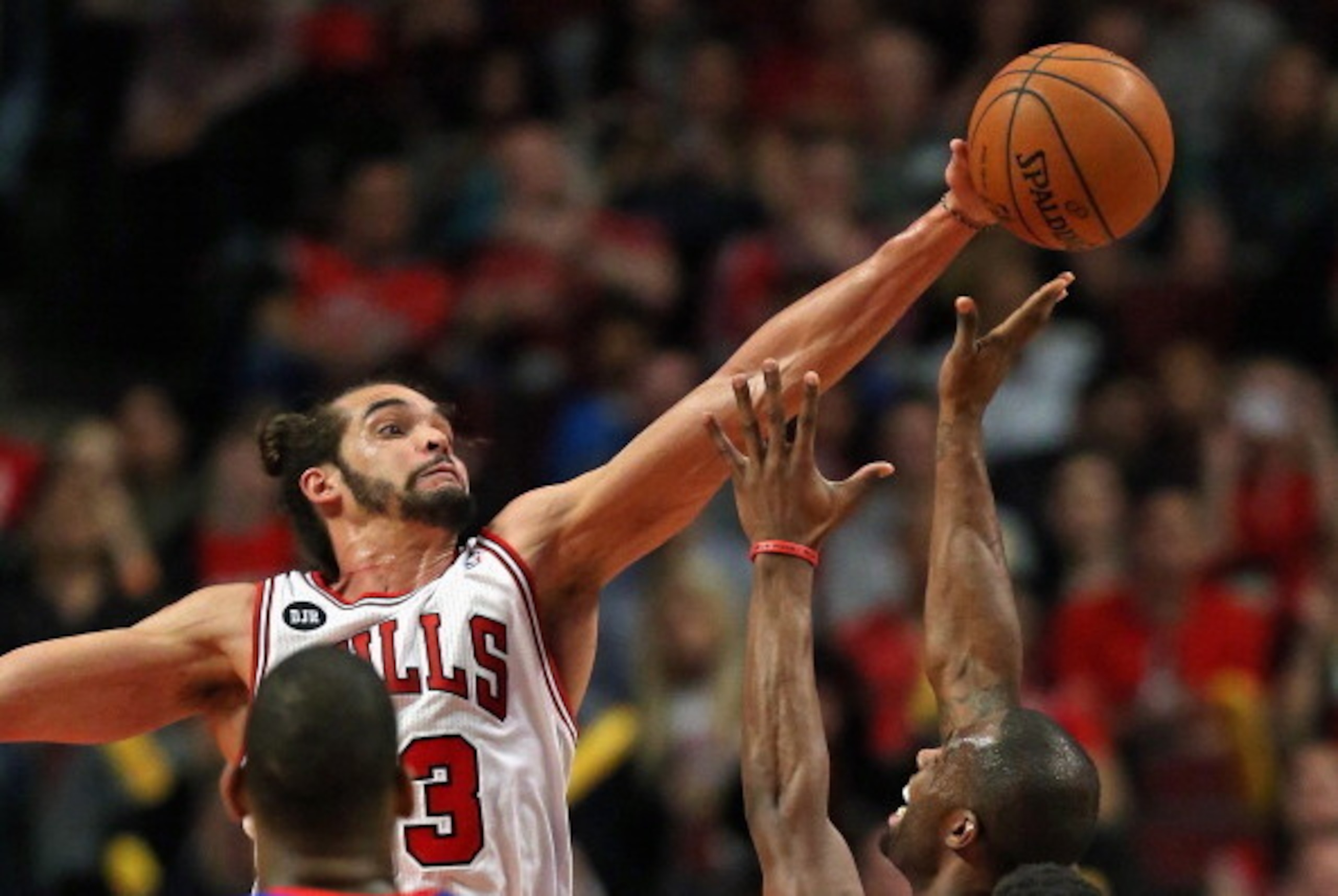
Noah appears like he's coming back to true form, though.
On Jan. 23 against Dallas, Noah's rim protection was as good as it's been all season, holding opponents to 20 percent on shots he defended near the basket. He also posted a 100.5 defensive rating, second-best among starters.
Noah built on his efforts Tuesday night, posting a 92.2 defensive rating and moving incredibly well around the court, rotating and switching exactly when he needed to.
That's one of the biggest things he brings when he's at full strength. Late in games, he's able to switch on guards and small forwards and defend them just as well as anybody. ESPN's Marc Stein described Noah as an "end-to-end menace" after his performance against Golden State.
The two-time All-Star was a bit more modest, though he seemed to recognize how well he played: "I don't want to say anything crazy and then stink it up the next game. I feel like I moved all right. Just have to keep working," said Noah, per K.C. Johnson of the Chicago Tribune.
There definitely are areas where Noah can improve, starting with his rim protection. This season, opponents have shot 51.3 percent at the rim when he is defending, a 4 percent increase from 2013-14.
| Def Rtg | Opp PPG | Opp FG % | ||
| 2013-14 | On | 97.7 | 66.2 | 43.1 |
| Off | 98 | 27.3 | 42.9 | |
| 2014-15 | On | 102 | 62.5 | 45.1 |
| Off | 102.6 | 51.6 | 43.3 |
Chicago's interior defense has a couple of holes, and it's allowing 42 points in the paint per game, 15th in the league. Last season, the Bulls ranked second, holding opponents to just 37 points inside. This could certainly improve if Noah can resemble the elite rim protector he was in 2013-14.
There's more than enough time for Noah to put it all together again. If he can string together a few good games as Chicago heads into the All-Star break, he could be in for a big final stretch as the regular season winds down.
The Bulls will need him to, as their poor defensive efforts during January are troublesome (101.7 points allowed per game). Without its defensive anchor at full strength, Chicago could see its title hopes dwindle.
Stats courtesy of Basketball-Reference.com and NBA.com and accurate as of Jan. 28.

.jpg?w=2560 "Chiefs, Steelers Eye WR Trades")





.jpg?w=2560 "Raiders Sticking with Cousins")