
5 Biggest Takeaways from Boston Celtics' 1st Half of the Season
The biggest takeaway for the 2014-15 Boston Celtics should probably be that ever player on the roster can be had for the right price, but we’ll try to stay away from the most obvious answer here.
Despite being on the outside looking in on the Eastern Conference’s grim playoff picture, Boston has been fascinating this season both as a trade partner and as a study in how to fully commit to a rebuilding year.
After lilting down the stretch in 2013-14 and holding on to Rajon Rondo, the C’s have fully committed to the long haul now, dealing some of their most established players for future assets and stockpiling as many unproven youngsters as possible.
The results of that, led by stellar coach Brad Stevens, have been simultaneously electrifying and infuriating, as the team has looked phenomenal against some difficult Western Conference foes and inept against weaker competition.
The second half of 2014-15 likely won’t be quite as exciting as the first, since eventually this team is going to go into outright tank mode, so let’s reflect on the biggest things we learned about Boston through the season’s first half.
Jared Sullinger Is a Cornerstone
1 of 5
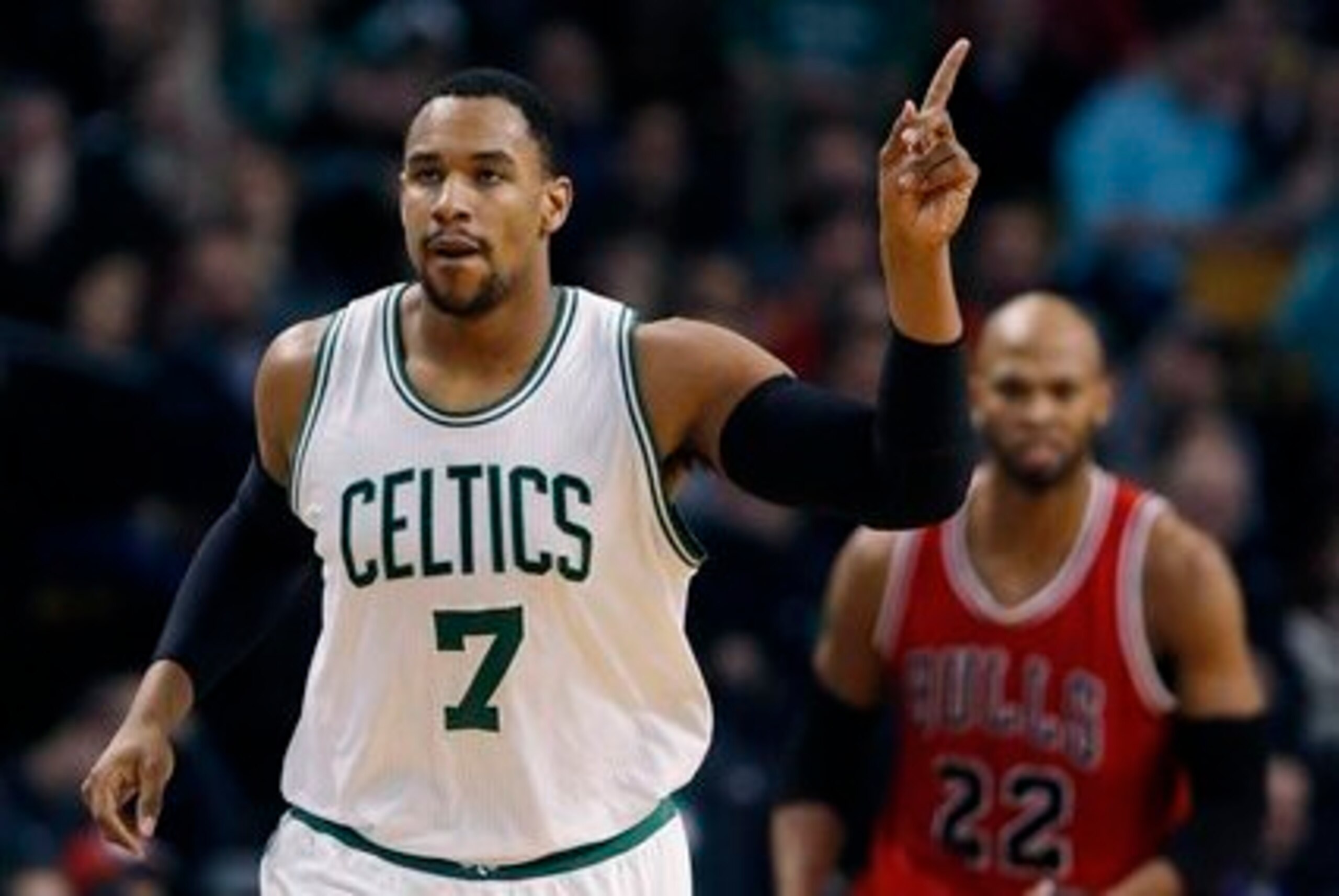
In what has been a pretty bleak season for Boston, third-year big man Jared Sullinger has been a major bright spot.
He has improved nearly every facet of his game—most crucially his long-distance shooting—and emerged as a highly skilled offensive weapon.
Sullinger is averaging 14.3 points, 8.1 rebounds and 2.2 assists while shooting a decent 45.1 percent from the field.
A recent three-point shooting slump has him down to 30.3 percent from beyond the arc, but he has showcased a much-improved outside shot for much of 2014-15.
Sully is also hitting a stellar 45.9 percent of his two-point jumpers beyond 16 feet, per Basketball-Reference.com.
With Jeff Green gone, more shots have been available for Sullinger, and he has responded by averaging 18.2 points and shooting the ball 15.4 times over his previous five contests.
In today’s league, a finesse big man who can also attack the glass is hard to come by, and Sully has shown the ability to do both throughout his career.
Particularly on a team with guards who are hesitant from deep, having bigs with range is essential, and Sullinger has proven he can thrive in the pick-and-pop and also drive past closing defenders.
The biggest issue with Sullinger has been on the defensive end, where he works hard but has some natural athletic limits.
He’s holding opposing 4s and 5s to 16.2 and 16.1 PERs, respectively, per 82games.com, which is above the league average but not terrible given that he is primarily covering starters.
Sully is also not much of a shot-blocker, averaging just 0.7 rejections per game and lacking an impressive vertical.
Still, he’s probably the best young piece Boston has, and if he continues to work on his game, he could become one of the Eastern Conference’s better frontcourt players.
He’ll always have some shortcomings, but the Celtics need pieces to build around, and Sullinger is one of the few currently on the roster they should feel confident about.
The Pace-and-Space Offense Can Work
2 of 5
The fact that Boston’s offense is currently ninth in points per game at 101.9 and third in pace at 99.1 is a testament more to the new offensive system than the talent on the Celtics roster.
Stevens borrowed heavily from the San Antonio Spurs-style pace-and-space offense, which relies on uptempo basketball and shooting threes early and often.
The results haven’t always been pretty, as this roster simply doesn’t have many long-distance gunners or penetrators, but on the whole, Boston’s offense has looked better than anyone could have possibly anticipated.
The Celtics' efficiency has slipped to 21st in the league at 101.3, but that’s to be expected of a team relying on unproven facilitators like Marcus Smart, Avery Bradley and Evan Turner to create the lion’s share of its shots.
The team is shooting a mere 33 percent from three-point range, which obviously hurts in an offense predicated on creating space for driving lanes.
When the C’s offense clicks, as it did in a 111-114 Jan. 25 loss against the Golden State Warriors, it is hitting enough threes to open up the floor and push the pace in order to not rely too heavily on half-court execution.
Smart’s playmaking instincts are still coming along, so asking him to run an NBA offense for 24 seconds usually isn’t going to end well.
Continuity is often a huge part of offense, so the fact that Boston’s scoring has been solid, albeit with a dip since the beginning of the year, proves that Stevens’ system works.
It helps that these Celtics are actually capable of doing work on the offensive boards, and Stevens is encouraging players like Sullinger and Tyler Zeller to crash the glass.
Once Boston finds a replacement athletic wing for Green and potentially snags a legitimate low-post option to dump the ball off to, this team has the potential to be one of the league’s best scoring units—if the first half of 2014-15 is any indication.
Rajon Rondo Should Have Been Traded Earlier
3 of 5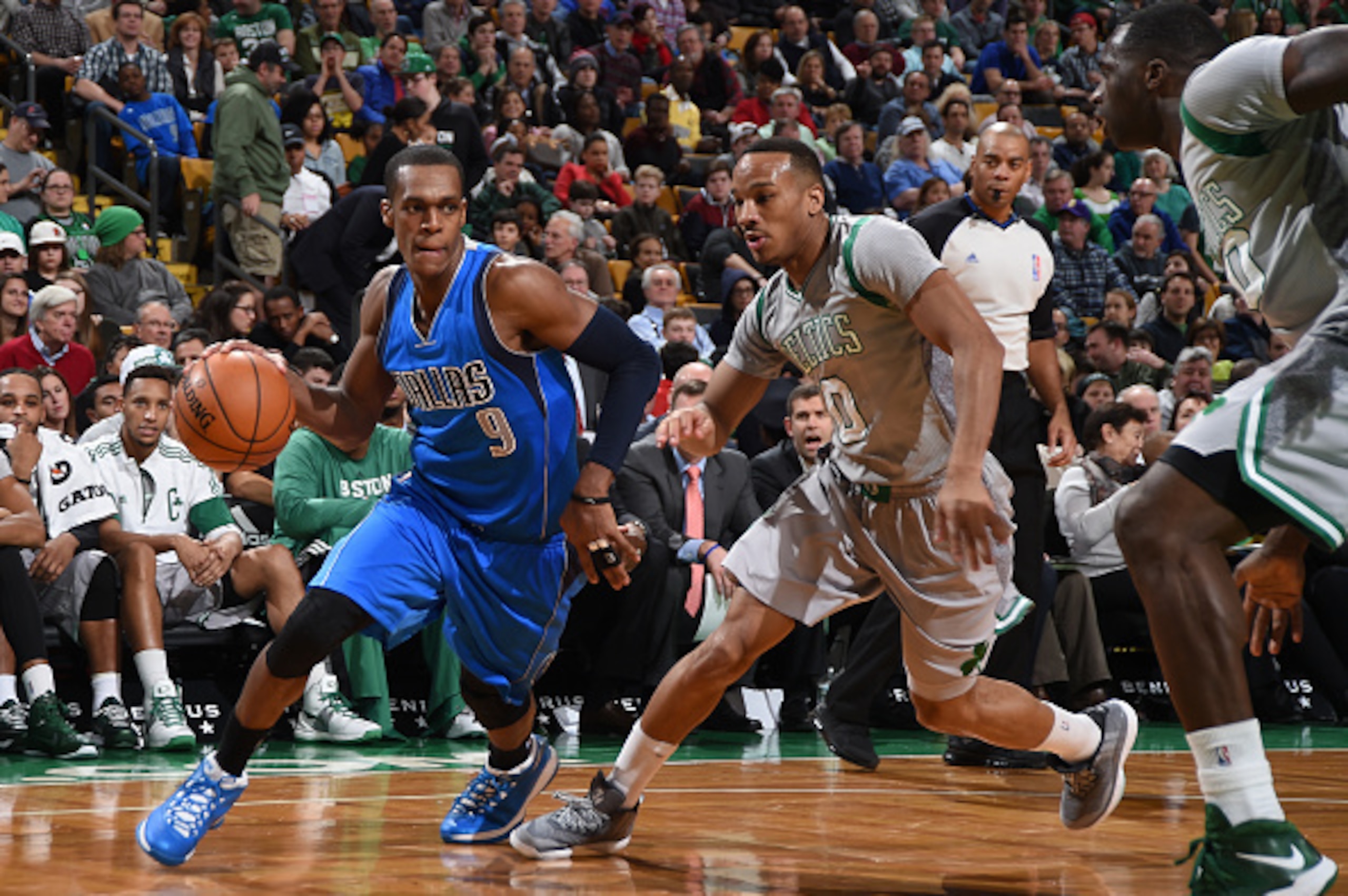
Now that Brandan Wright is on the Phoenix Suns and Jameer Nelson has landed with the Denver Nuggets, the haul for Rajon Rondo looks less impressive than ever.
Getting a first-rounder, albeit a heavily protected one, from Phoenix was nice, but there’s a serious chance that winds up being conveyed as two second-rounders instead, and it seems like the Dallas Mavericks’ draft pick is going to fall in the mid- to low-20s, as many predicted.
Given that the C’s were trading Rondo with half of a season left on his deal and no concrete guarantees about the future, it is hard to fault them for getting what they could, but it’s still disappointing that this was all a rebuilding team could get for a former All-Star.
As Grantland’s Bill Simmons wrote, “Yes, we live in a world in which (a) Mozgov just fetched a better trade haul than Rondo, and (b) it wasn’t totally crazy.”
Rondo hasn’t looked phenomenal in Dallas, averaging 10.8 points, 7.2 assists and 5.2 rebounds (although he’s hitting an absurd 42.9 percent of his threes), but he’s still a top-12 player at the league’s most important position.
There’s no denying that Rondo’s poorly timed ACL tear hurt his trade value, but it’s still hard to believe Boston couldn’t have gotten more than Jae Crowder and two mediocre draft picks for him at some point in the past 18 months.
Ultimately, the C’s have acquired enough assets in the past few years that getting an underwhelming haul for Rondo isn’t crippling, but it just puts further pressure on Danny Ainge and the front office to make the most of their additional picks.

Brad Stevens Is an Elite Coach
4 of 5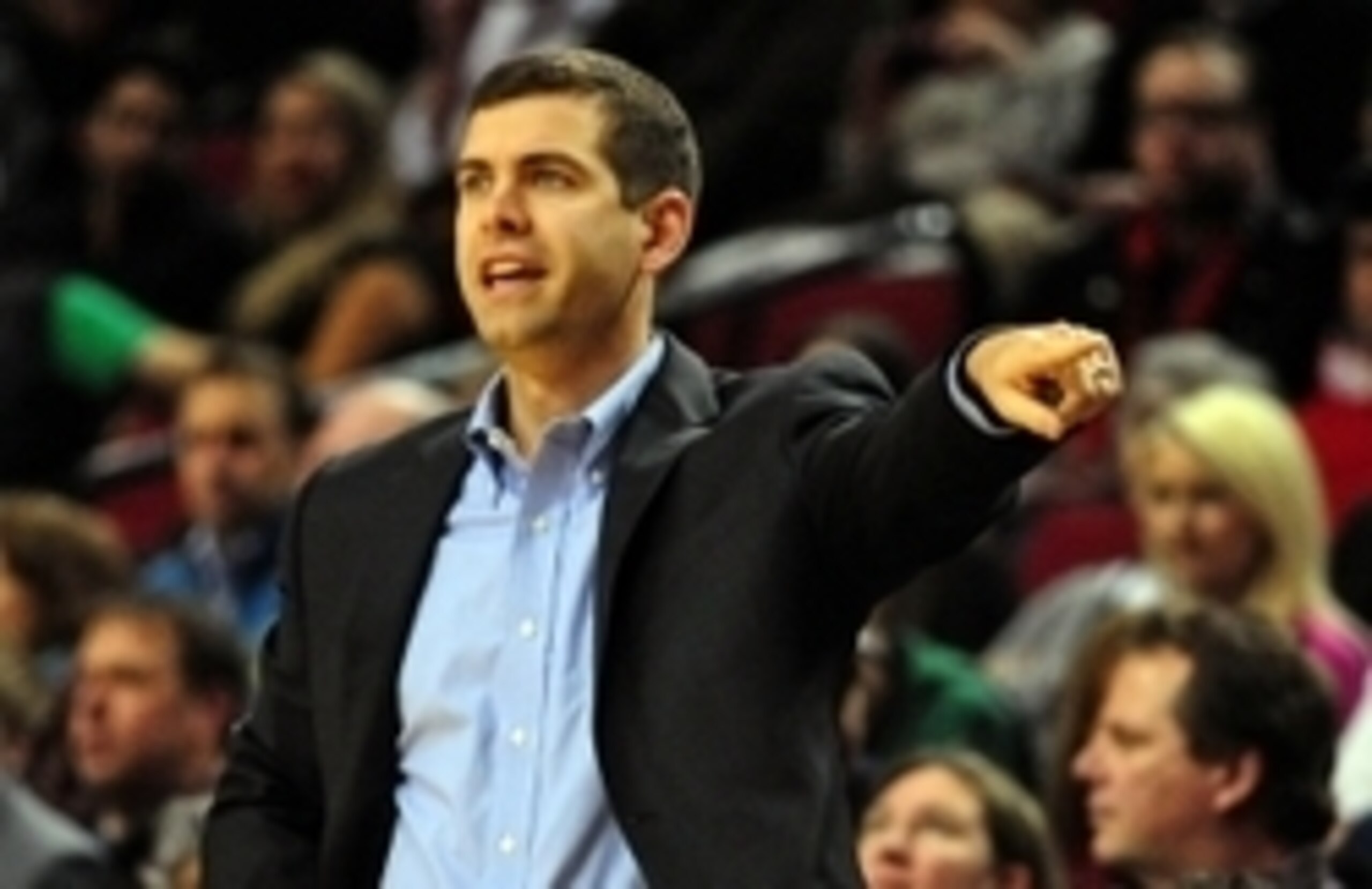
Sure, a 16-27 record doesn’t scream job security, but Stevens has done an absolutely sensational job in his second year coaching the Celtics.
Playing at a talent deficit almost every night, his teams are well-coached and meticulously prepared.
Stevens’ skills have shown on the recent Western Conference road trip where Boston bested an undermanned Portland Trail Blazers squad, narrowly lost to the league-leading Golden State Warriors and defeated a young, scrappy Utah Jazz team.
He has been forced to make adjustments on the fly, as Danny Ainge and the C’s front office constantly maneuver to flip proven veterans for future assets.
As ESPNBoston.com’s Chris Forsberg notes, Boston has made nine trades since the 2014-15 campaign began.
Stevens has had to deal with the loss of starters, the injection of veterans expecting playing time and a slew of one-dimensional pieces, all while giving his young core enough minutes to grow together.
He revamped Boston’s offense (as we discussed earlier), and while his conservative defense hasn’t exactly set the league on fire, part of that is due to shaky rim protection.
While he is still in the thick of a six-year contract, there are some concerns that Stevens could potentially head back to the college ranks in the future.
However, The Boston Globe’s Gary Washburn wrote in December, “Stevens has never even discussed returning to college coaching, and NBA sources said he is totally invested in the Celtics.”
Keeping Stevens happy needs to be of paramount importance.
Coaches of his caliber don’t come along very often, and it will be breathtaking to see what he can do in a few seasons with a roster full of quality NBA pieces.
Acquiring Rim Protection Is Essential
5 of 5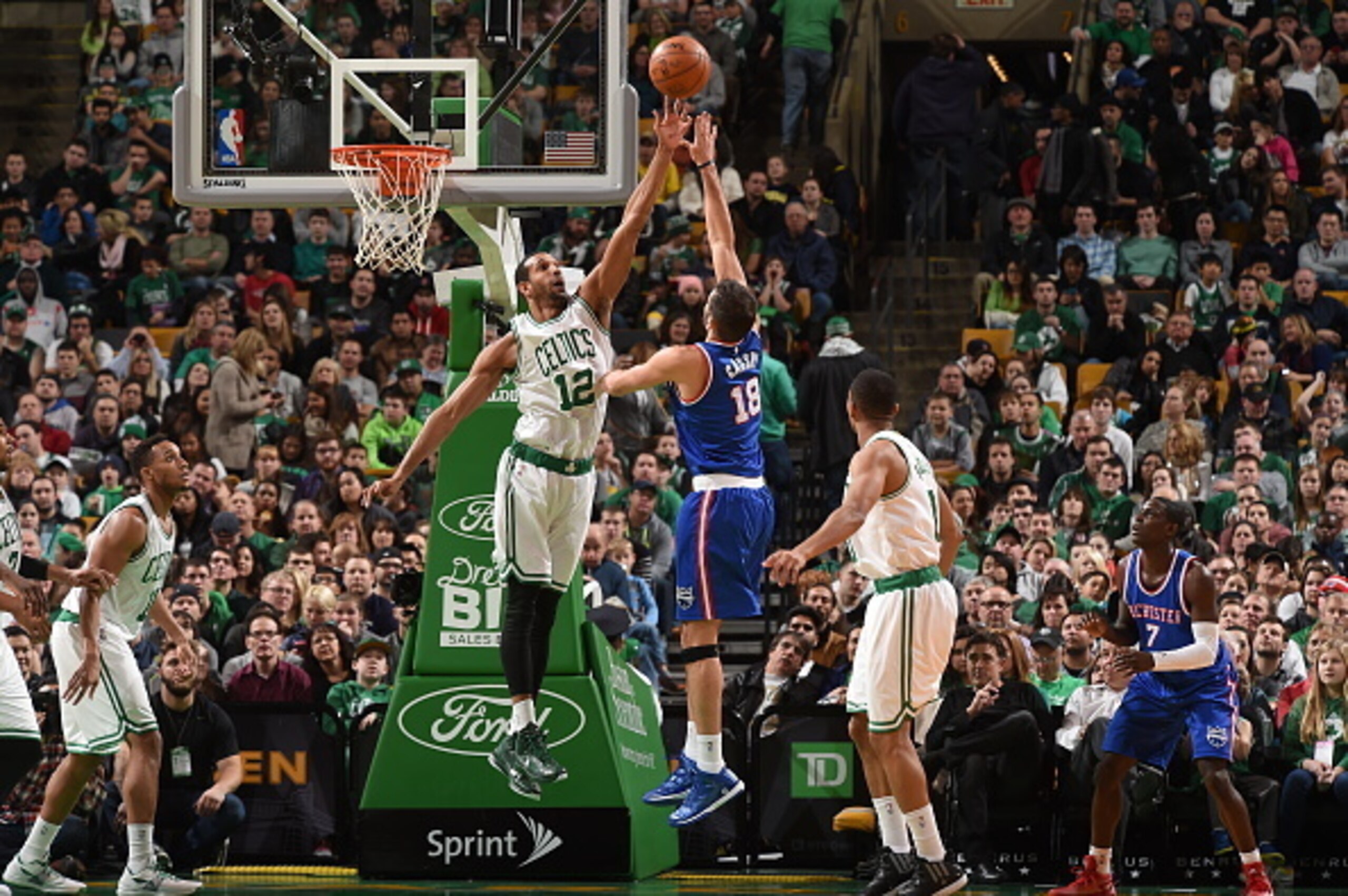
Trading Wright wasn’t necessarily a bad move. He never was a long-term fit with the C’s, and as an unrestricted free agent, he had no guarantee of returning, but it has made Boston’s need for rim protection even more glaring.
Sullinger, Zeller and Kelly Olynyk can’t do much to protect the hoop, and for as good as the perimeter defense is, it becomes moot when a guard can penetrate into the lane.
The C’s are just fourth in the league in blocks per game at 4.1, and while that number alone doesn’t say everything, it also hurts given how Boston struggles to cover the pick-and-roll.
Too often, an opposing point guard is able to get a sliver of space off a screen and launch right at the rim for an uncontested shot.
Sully, Zeller and Olynyk aren’t great at help rotations, and they are often a step late when they do make it there.
None of them have the quick recovery speed, so they need to know where to be ahead of time to make up for that.
Olynyk in particular struggles badly to contest shots without fouling, but Sullinger and Zeller aren’t exempt here, either.
Per TeamRankings.com, Boston is 28th in the league in opponent paint points per game at 45.4.
A game-changing rim protector isn’t going to become available at the trade deadline, but the C’s will fortunately have the chance to pursue one through the draft or free agency.
.jpg?w=2560 "Chiefs, Steelers Eye WR Trades")





.jpg?w=2560 "Raiders Sticking with Cousins")