
Most Intriguing Coaching Changes from College Football Coaching Carousel
The 2014-15 coaching carousel is slowing to a crawl. With national signing day just 10 days away, there is only one FBS head-coaching opening, created when Central Michigan coach Dan Enos left to join Bret Bielema’s staff as Arkansas’ new offensive coordinator. When Central Michigan hires a coach, it’ll be the 15th program to change head coaches this offseason.
There are still a handful of staff and coordinator openings, but the pace has slowed to the point where we can evaluate the changes as a whole. Here’s a look at the most intriguing coaching changes (head coach and assistants) from this season’s round of college football coaching changes.
John Chavis as Texas A&M Defensive Coordinator
1 of 8
For Kevin Sumlin and Texas A&M, the problem has never been offense. The Aggies have a healthy offense, and even without Heisman Trophy winner Johnny Manziel and talented wideout Mike Evans, they averaged 35.2 points per game (No. 28 nationally) and 305.5 passing yards per game (No. 12 nationally). The issue has been stopping people.
In 2014, A&M allowed 28.2 points per game, No. 77 nationally, giving up 48 points to Mississippi State and 59 to Alabama. The Aggies ranked No. 109 nationally in total defense. Sumlin fired defensive coordinator Mark Snyder and got a huge upgrade by plucking John Chavis away from SEC West rival LSU.
Chavis has not been officially announced as the Aggies’ new DC due to negotiations over his buyout, per Ross Dellenger of The (Baton Rouge) Advocate. NOLA.com's Jim Kleinpeter said he left LSU over frustration with the Tigers' stagnant offense.
His arrival will give a struggling defense a major shot in the arm. Chavis has 20 seasons of experience as an SEC defensive coordinator and is regarded as one of the nation’s top defensive coordinators. In six seasons at LSU, the Tigers ranked in the top 12 nationally in scoring defense and total defense four times. This season, they were fifth nationally in scoring defense and ninth in total defense.
His departure is a huge loss for LSU and a big gain for an A&M defense stocked with young players, including standout defensive end Myles Garrett.
If Chavis can get the Aggies defense humming like Sumlin’s offense, the rest of the SEC West will take notice.
Jim Harbaugh as Michigan Head Coach
2 of 8
Michigan’s program needed rejuvenation. The Wolverines needed something different. They needed a Michigan man.
In that sense, Jim Harbaugh was the perfect hire. The tenures of Brady Hoke and Rich Rodriguez (who went a combined 46-42 over the last eight seasons) had cast the program into mediocrity, and Harbaugh is the perfect man to pull it out and back into the spotlight as one of the nation’s best programs.
Michigan had to wait until the NFL season’s conclusion, but hiring Harbaugh (a former Michigan quarterback who grew up in Ann Arbor) was a home run.
Harbaugh has won wherever he’s gone. He is 58-27 as a collegiate head coach and turned a moribund Stanford program into a winner, including a 12-1 record and Orange Bowl victory before taking the San Francisco 49ers’ job.
He led the 49ers to three consecutive NFC title games and a Super Bowl appearance following the 2012 season, but he has never spent longer than four seasons in any one position. Harbaugh is intense, which can quickly wear thin. He and the 49ers agreed to a mutual parting of the ways following an 8-8 season in 2014.
Michigan averaged just 20.9 points per game this season, which ranked No. 112 nationally. Quarterback Devin Gardner and top wide receiver Devin Funchess have graduated, which means immediate success won’t be easy. But with Harbaugh, it’s not a matter of if, but when he’ll turn it around. And a potential rivalry with Ohio State and coach Urban Meyer could be one of the juiciest in college football.
Tom Herman as Houston Head Coach
3 of 8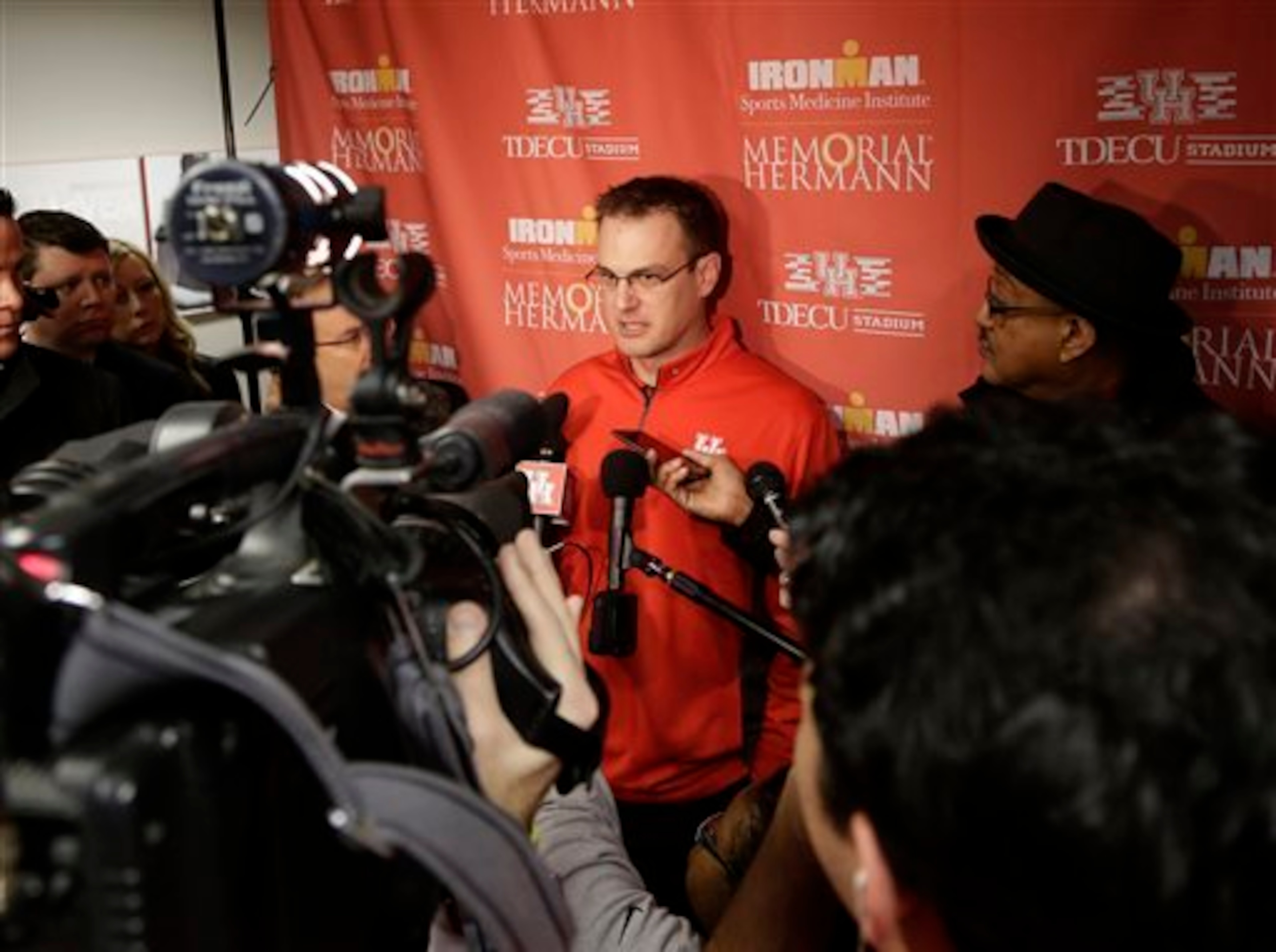
Houston had high hopes for 2014. The Cougars were opening new $120 million TDECU Stadium and needed a big season from the program led by Tony Levine. They didn’t get it. Houston went 7-5 and lost at home to Texas-San Antonio and Tulane. That wasn’t good enough, and Levine was gone after three seasons.
That raised an eyebrow or two, but his replacement, Ohio State offensive coordinator Tom Herman, was an inspired hire. Herman is just 39, and he has Texas ties with assistant coaching stops at Texas, Sam Houston State, Rice and Texas State.
He was a key force behind Ohio State’s national title run. Herman used two quarterbacks (J.T. Barrett and Cardale Jones) and didn’t miss a beat despite Braxton Miller’s season-ending shoulder surgery, averaging 44.8 points per game (fifth-best nationally).
He’ll bring a run-based, fast-paced, high-flying offense to Houston which runs to pass but also allows quarterbacks room to thrive.
If he’s as successful at Houston as he was at Ohio State, he won’t be in town long, but it is an impressive, intriguing hire regardless.
Chad Morris as SMU Head Coach
4 of 8
There are regulars on the coaching carousel, and then there’s Chad Morris. Over the last three seasons, Morris had become more than a regular as one of the nation’s hottest assistant coaches. If he spent another season on the carousel, he’d probably get a horse named after him.
So maybe it’s appropriate that his departure was facilitated by some Mustangs.
SMU’s hire of Morris breathes some much-needed energy into a program which had grown stale under June Jones. The Mustangs went 1-10 this season after Jones’ September resignation, avoiding a winless season with a win over UConn in the regular-season finale. His hurry-up, no-huddle offense is an excellent fit, especially once he upgrades the talent level.
The Texas native enjoyed tremendous success in four seasons at Clemson. From 2011-13, Clemson and Baylor were the only FBS programs with a 3,000-yard passer, a 1,000-yard rusher and a 1,000-yard receiver. From 2012-13, the Tigers averaged over 500 yards of total offense and 40 points per game.
Morris is a noted fan of Red Bull, and he has already thrown his energy into rebuilding the Mustangs’ program and setting high goals. He has installed an empty trophy case in the stadium lobby which will only be filled by a national championship trophy, per USA Today's Paul Myerberg. That’s aiming high, and Morris clearly thinks he can deliver.
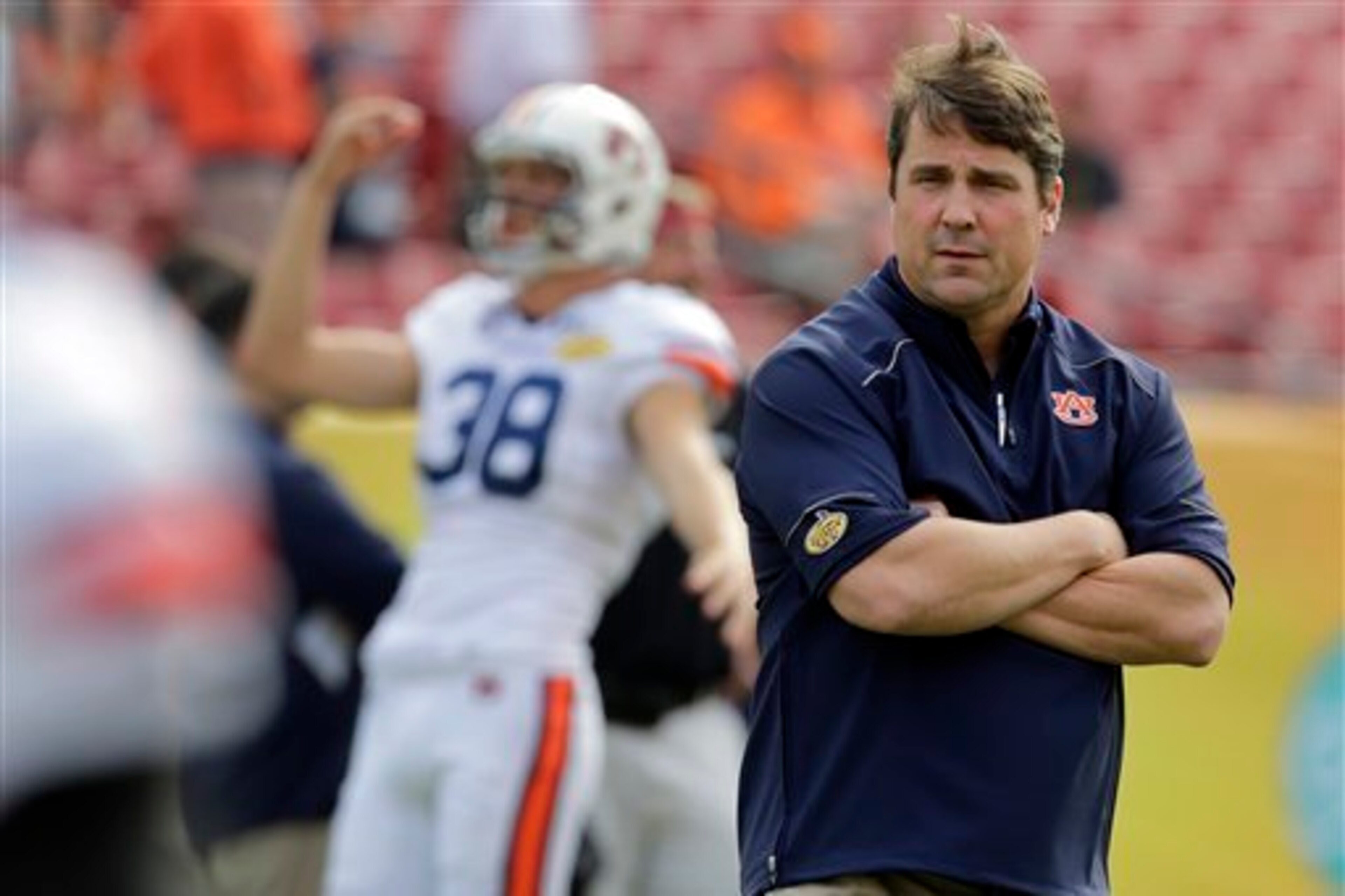
Will Muschamp as Auburn Defensive Coordinator
5 of 8
At Florida, Will Muschamp’s problem was never defense. The Gators always had a salty, competitive unit that kept them in games during Muschamp’s four-year tenure. The problem? Scoring enough points, an issue which ultimately led to his demise as Florida’s head coach following a 28-21 record over four seasons.
That won’t be Muschamp’s purview as Auburn’s new defensive coordinator. Muschamp was hired by Gus Malzahn to improve a defense which had become the Tigers’ Achilles heel, especially when compared to a high-powered, impressive hurry-up no-huddle offense.
"If you look at his track record," Malzahn told Brandon Marcello of AL.com, "wherever he's been he's had a top defense. He'll have a chance to evaluate our guys. He has high expectations just like I do. We expect to win and expect to win championships. I'm looking forward to coaching with him."
Malzahn fired Ellis Johnson after the Tigers defense struggled against SEC foes, allowing at least 31 points to the last six SEC opponents, including 55 in the Iron Bowl against Alabama. Auburn will return seven starters on defense, which doesn’t include talented defensive end Carl Lawson (who redshirted in 2014 with a torn ACL).
Muschamp is a proven defensive coordinator with stops at LSU, Auburn and Texas. He won a national championship with LSU in 2003, and in two seasons at Auburn from 2006-07, his teams allowed 15.4 points per game (third-best nationally in that time span, per his Florida bio). In his five seasons as an SEC defensive coordinator, his teams were always among the top 10 nationally in total defense and in the top 15 in scoring defense.
He’ll have plenty of talent to work with at Auburn, which makes him a fascinating add to Malzahn’s staff.
Pat Narduzzi as Pitt Head Coach
6 of 8
If there’s one thing people associate Pitt football with, it’s probably mediocrity. Here are Pitt’s final records for the last four seasons: 6-7, 6-7, 7-6, 6-7. That’s average to a T (or a P).
The Panthers have gone through three full-time coaches in that span. Mike Haywood was fired before ever coaching a game due to domestic-violence allegations. Todd Graham spent one season before going to Arizona State. And Paul Chryst put together three six-win seasons before returning to Wisconsin, where he had been the offensive coordinator under Bret Bielema.
The program needs someone to break it out of its malaise, and that man is Pat Narduzzi. After building a sterling reputation as Michigan State’s defensive coordinator, the energetic Narduzzi was a perpetual resident of the coaching carousel, but he found something he really liked at Pitt.
He is a native of Youngstown, Ohio, an hour from the Pittsburgh metro area. He’ll inherit a solid roster with great offensive pieces in tailback James Conner, the ACC Offensive Player of the Year, and standout receiver Tyler Boyd.
Narduzzi brings defensive acumen, too. From 2011-13, Michigan State finished in the top 10 nationally in total defense and rush defense in all three seasons, per his MSU bio. The Spartans had a reputation as a hard-hitting, nasty team, which will fit in well at Pitt. In an open ACC Coastal, Narduzzi can take the Panthers to the next level.
Ed Orgeron as LSU's Defensive Line Coach
7 of 8
The loss of John Chavis to SEC West rival Texas A&M was a blow to Les Miles’ staff. And let’s face it: Miles’ hiring of Kevin Steele as the Tigers’ new defensive coordinator was less than inspiring. Steele spent the past two seasons on Nick Saban’s Alabama staff as the director of player personnel and linebackers coach, but his last stint as defensive coordinator (at Clemson from 2009-11) ended poorly.
Steele’s final game running Clemson’s defense was the infamous 70-33 Orange Bowl loss to West Virginia. That season, Clemson finished No. 71 nationally in total defense, with his players often looking out-of-sorts on the field.
That’s why Miles’ addition of Ed Orgeron as the new defensive line coach was so interesting. Orgeron is one of the best recruiters in college football, and his Cajun-fueled personality should be a perfect fit in Baton Rouge.
Orgeron enjoyed a successful run at Southern California, taking over as the Trojans’ interim head coach following Lane Kiffin’s firing in 2013 and leading USC to a bowl game and 10 victories. LSU’s defensive line is already talented, but he’ll make it better through coaching and recruiting and take some pressure off Steele’s return to a coordinator role.
Lincoln Riley as Oklahoma's Offensive Coordinator
8 of 8
At the beginning of Bob Stoops’ Oklahoma tenure, the Sooners passed all over the field with impunity. Following the example set by Mike Leach (Stoops’ first offensive coordinator in 1999), the Sooners used the Air Raid offense with great success, winning a national title in 2000. Over the years, however, Oklahoma drifted away from that system.
This season, it became clear it was time for a change. Oklahoma scored 36.4 points per game (No. 20 nationally) and had a potent running attack, but averaged only 203.5 passing yards per game, No. 83 nationally.
Following a disappointing 8-5 season that wrapped up with a 40-6 whipping at Clemson’s hands in the Russell Athletic Bowl, Stoops undertook a staff makeover, firing co-offensive coordinators Josh Heupel and Jay Norvell. He replaced them with one of the nation’s hottest young coaches in East Carolina offensive coordinator Lincoln Riley.
Riley is a proponent of the Air Raid: East Carolina averaged 371.9 passing yards per game this season, No. 3 nationally, fueled by the potent tandem of quarterback Shane Carden and wide receiver James Hardy. At Oklahoma, he’ll have to figure out how to use talented tailback Samaje Perine, but the most intriguing part will be whether Trevor Knight (who struggled last season in a starting role ) or Texas Tech transfer Baker Mayfield (recruited for an Air Raid system) will emerge as the starting quarterback.
Regardless, Oklahoma’s offense will go back to the future next fall. And that’s a good thing.