San Francisco 49ers: Will Charles Haley Be Elected to the Hall of Fame in 2015?
The Pro Football Hall of Fame will elect the class of 2015 the Saturday before the Super Bowl, and there are two former San Francisco 49ers up for nomination. One is Kevin Greene, who had a 14-game cup of coffee with the 49ers in 1997, between more successful stops in Los Angeles, Carolina and Pittsburgh. The other is Charles Haley.
For the sixth straight year, Haley is one of the 15 modern-era finalists. The bullet-point headline of his case is his five Super Bowl rings, more than any other player in NFL history—three with San Francisco and then two more with the Dallas Cowboys.
.jpg?w=2560 "Seahawks Chiefs Football")


As a member of both the 49ers’ and Cowboys’ dynasties, Haley has a reputation as a legendary player when things mattered most—in the playoffs. That is his main qualification, though 100.5 sacks is nothing to sneeze at.
We’ll find out on Saturday, January 31, whether or not Haley finally makes it into the Hall of Fame, but why wait? Let’s take a look at his resume and decide if he should get in the Hall and then decide whether or not he will. These are two related questions, but they’re certainly not the same—and Haley should get extra bonus credit in the voters' minds, thanks to his championship pedigree.

Super Bowl rings are able to paper over a lot of cracks in a player’s resume.
Does Lynn Swann, with only 336 career receptions, get into the Hall of Fame without four championships with the ‘70s Pittsburgh Steelers? If you put Terry Bradshaw on the Cincinnati Bengals and Ken Anderson on those ‘70s Steelers teams, is Anderson the one in the Hall and Bradshaw the most deserving candidate on the outside looking in?
A great performance in the biggest games of the year do a lot for etching your name into the voters' minds later.
Haley is arguably the greatest sacker in Super Bowl history. His 4.5 sacks in the Super Bowl are the most in history, by a sizeable margin. Yes, the stat only become official in 1982, which excludes any of the Pittsburgh Steelers from making the list, but there’s been quite a few players who have had three or four games to rack up sacks, and none are within a sack and a half of Haley.
You have to consider more than just Super Bowls when looking at a player’s entire career, though. Haley also was a force of nature early in his 49ers' career. Through his age-26 season in 1990, Haley racked up 56.5 sacks or about 11 a year. That’s tied for the fifth-most all time, and every eligible player with more sacks is already in the Hall of Fame.
That 1990 season was his best in the NFL and arguably one of the best linebacker seasons of all time. Haley had a sack a game, finishing with 16, and added 58 tackles and three forced fumbles to his credit. He earned one of his two All-Pro selections that year, as well as one of his five Pro Bowl appearances. At his peak, Haley has to be in the conversation for most feared pass-rusher of all time. That’s why he’s a finalist.
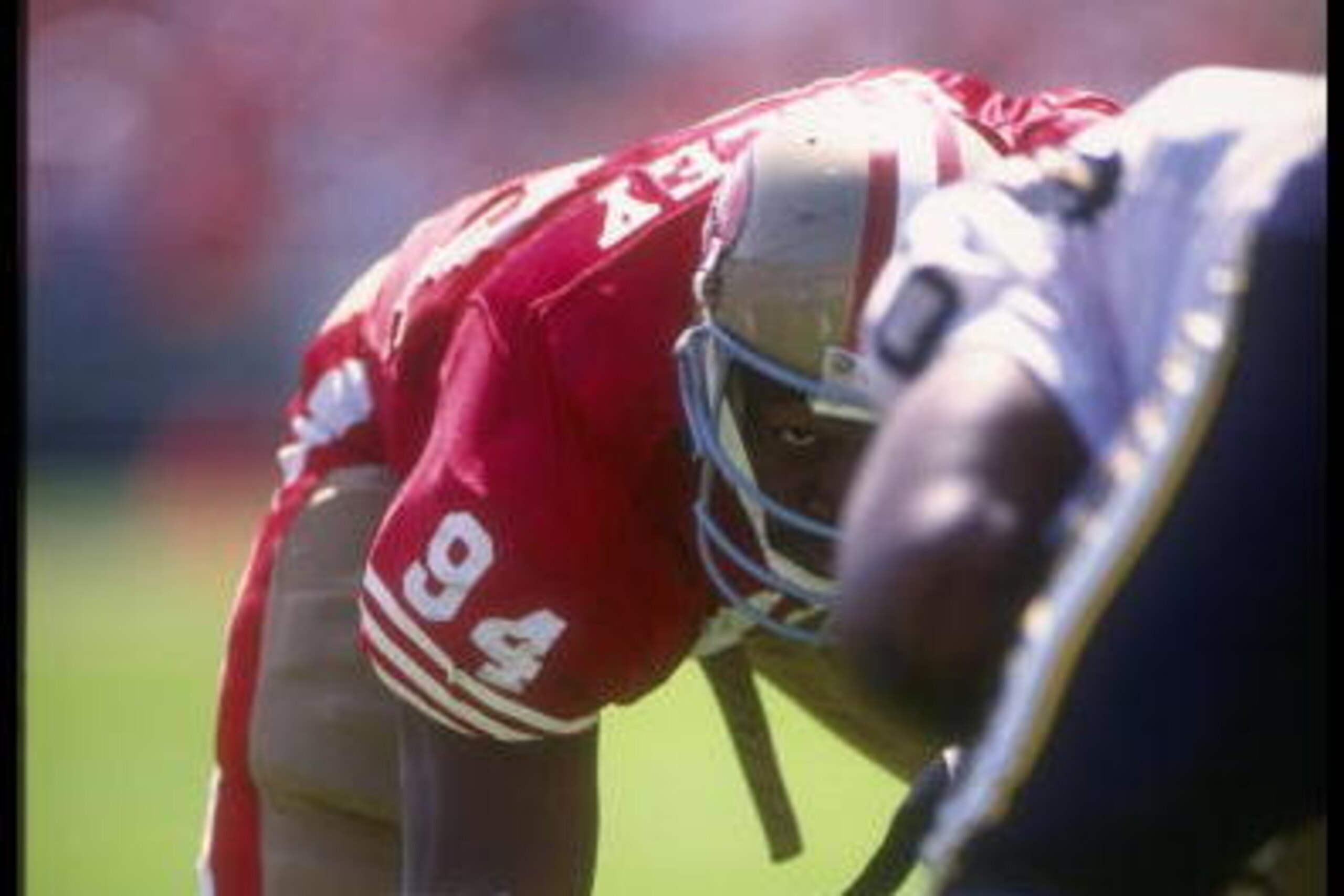
However, Haley’s peak ended. Haley played for 13 seasons, but he was only a Pro Bowler in five of them—and that’s probably a fair number. While he was an absolutely dominating force on those late-‘80s 49ers teams, and had one fantastic season in Dallas, he also had a great number of, frankly, pedestrian seasons once he arrived in Dallas and moved to defensive end.
Let’s look at some numbers.
Haley finished his career with 100.5 sacks. That’s the 29th-most all time, remembering that “all time” in this case only stretches back to 1982. That’s less than, for example, Kevin Greene—one of his competitors for a Hall of Fame slot this year. Other eligible players also have more sacks than Haley does—Leslie O’Neal, Simeon Rice and Clyde Simmons, to name three. None of them reached the finalist list.
OK, but maybe that’s a function of longevity, rather than peak prowess. We’ve already seen that few pass-rushers in the history of the game got off to such a fast start as Haley did—a legendary opening to his career, followed by a solid denouement, would be more-than-enough to qualify him as a Hall of Famer. After all, Gale Sayers only had five full seasons, and he’s in the Hall of Fame.

Here’s the issue with that idea, however. Sayers, as well as Terrell Davis and all the others in the “peak over longevity” arguments, were the best player at their position during their peak. Not so with Haley—from 1986 to 1990, Haley’s true peak, he was only fifth in sacks.
Reggie White, Lawrence Taylor and Bruce Smith, all Hall of Famers, were the true legendary pass-rushers in that era, and Greene (again) was ahead of Haley as well. Both White and Smith recorded more tackles than Haley did as well, meaning they had more value in the run game than Haley did.
Haley also was not always the best defender on his own teams.
He started half of his team’s games in eight seasons, but he only was the undisputed sacks leader on his team in half of those years. He was beaten or tied by the likes of Pierce Holt (1989), Larry Roberts (1991), Jim Jeffcoat (1992-93), Tony Tolbert (1992-93) and Jimmie Jones (1993).
He only led his team in tackles once, in 1989. Once he left San Francisco, Haley was never the key force on a defense; the Cowboys defense of that era was led as much by Tolbert, Darren Woodson and Russell Maryland as it ever was by Haley.
Haley did play through pain, but the result is that his career numbers just don’t stack up to those already in the Hall of Fame. Haley suffered through injuries in his time in Dallas, resulting in him playing just one full season in Cowboys colors. It’s not the "Hall of What Could Have Been"—the injuries slowed him down and kept his full career from having the same kind of impact as his time in San Francisco had.
This isn’t just looking back and dismissing him in retrospect—his contemporaries didn’t seem too dramatically enthused with him, either. Haley only made five Pro Bowls in his career and was only twice named to the All-Pro team. Just looking at his era, that’s fewer times than players such as Leslie O’Neal and Neil Smith, neither of whom have had much of a push to make the Hall.
There’s also this Michael Silver article from 1995, talking about potential active Hall of Famers, which seems highly dubious of Haley’s chances. Here’s the relevant paragraph:
"Charles Haley, the Cowboy defensive end, has four Super Bowl rings, is one of the premier sack artists of his generation and plays through pain. Yet only nine voters would support him if his nine-year career were to end today.
While the voters say that the idea is to keep their debates about players between the lines on the field, Haley's notoriously surly dealings with reporters could be an issue. "Personality isn't supposed to be a factor," says Dave Goldberg of the Associated Press, "but Haley goes over the line."
"
After that article was written, Haley went on to collect just 15.5 more career sacks, so it seems unlikely that the last four seasons of his career would push him over the top.
In the end, I like using something called the Keltner List for determining if someone’s a Hall of Famer or not. It was developed by Bill James to help judge borderline candidates for the Baseball Hall of Fame but can be used, with minor variations, to evaluate borderline candidates for football’s Hall as well. At the end of the day, there are too many questions I don’t think Haley passes for me to put him in the Hall.
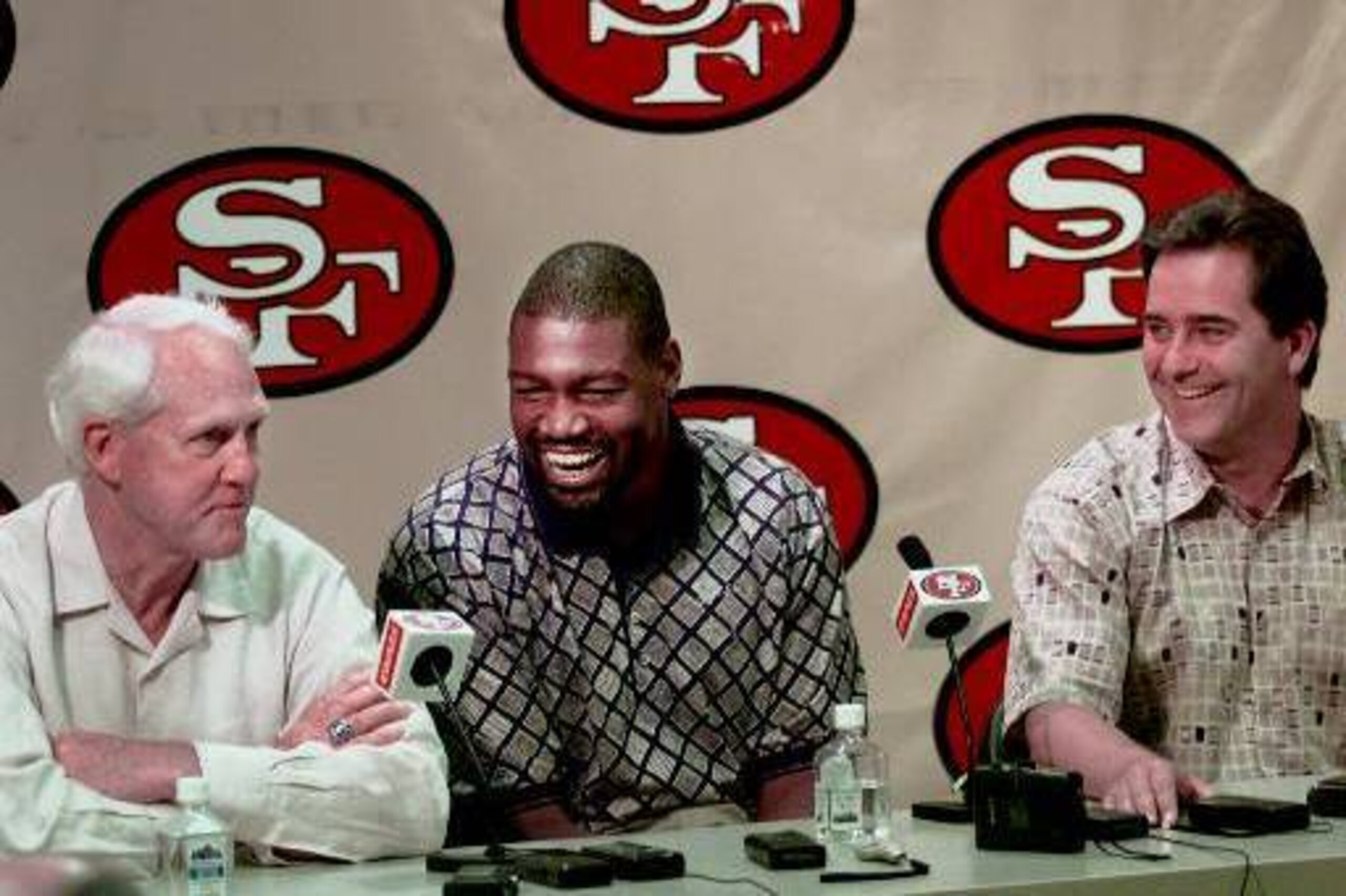
He was never the best player in football, and only in 1990 could you argue he was the best at his position or on his own team. Players with his career sack or tackle totals are not, generally, in the Hall of Fame, and he’s not the best player at his position not in the Hall—not when names such as Junior Seau and Jim Marshall are still on the outside looking in.
He never received so much as a vote for MVP, didn’t get named to an above-average number of Pro Bowls for a Hall of Famer, and he didn’t trailblaze at his position. His contemporaries did not consider him a Hall of Famer, and there hasn’t been anything since his career that would cause me to elevate him higher than his contemporaries did.
If he had kept up his performance in San Francisco throughout the rest of his career, then yes, I think Haley would be a Hall of Fame candidate. However, be it because of injuries or leaving George Seifert’s schemes, he just wasn’t the same player in Dallas as he was in San Francisco. I’d leave him on the outside looking in—a member of the "Hall of Very Good," no matter how many Super Bowl rings he has.
That’s my answer to should he get in. Then again, I don’t have a vote—will the people who actually decide these things put him in the Hall next Saturday?
In last year’s voting, Haley made the final-10 finalists before being knocked out. All five finalists who advanced ahead of him were put into the Hall, so it stands to reason that the final five knocked out would be the top five candidates from the list of players getting their second shot.
You could argue, then, that if there were no new candidates in 2015, those five players make up the logical Hall of Fame class—Haley, Jerome Bettis, Kevin Greene, Marvin Harrison and Will Shields.
Competing with them, then, would be the first-time people on the ballot. There are three such players this year: Junior Seau, Orlando Pace and Kurt Warner.
So that’s eight players for, at most, five slots. Who will the Hall go for?
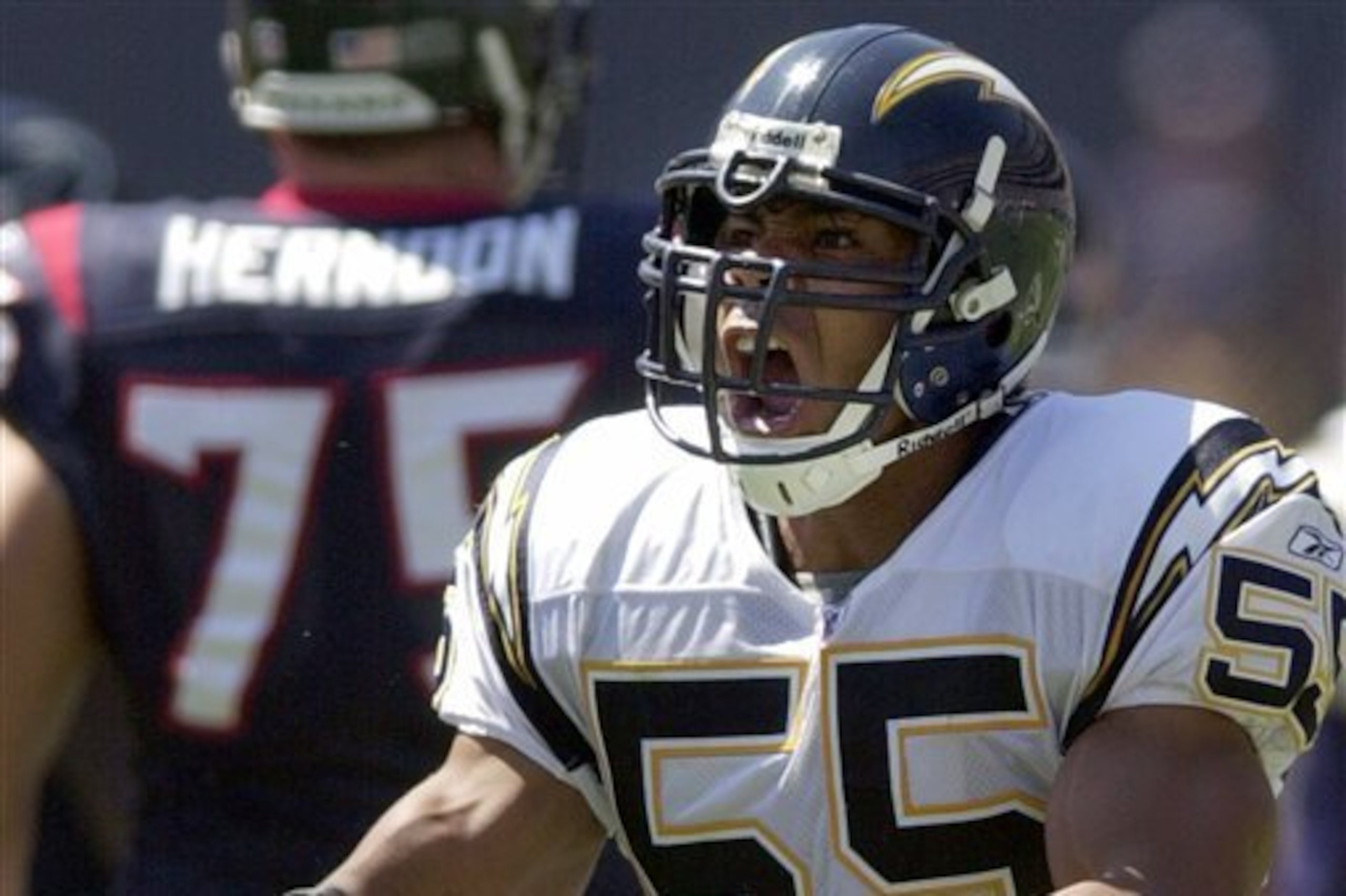
I simply cannot imagine an argument that would keep Seau out of the Hall of Fame. Not only was he far and away the best outside linebacker in football during his peak, but you could also argue that between 1992 and 2001, only Brett Favre would have been a more surefire Hall of Fame lock at any position.
He’s a former Defensive Player of the Year, a member of the 1990s All-Decade team, and an eight-time first-team All-Pro. His on-field resume is enough to get him in, and then you add the opportunity for voters to perhaps make a statement on the effects of head injuries on a player’s life, considering Seau’s tragic suicide. Voting for Seau should take about 30 seconds.
Of course, I would have said the same thing last year about the candidacies of Marvin Harrison and Will Shields, and yet here they are again. In their primes (1999-2006 for Harrison and 1996-2006 for Shields), they were the best players at their positions in football, in my book at least.
You could make an argument for Terrell Owens and Randy Moss over Harrison—but Owens and Moss should be Hall of Famers too, so I’m less concerned about the specific ranking.
There’s a reason why Harrison didn’t make it last year, though. There was already a receiver logjam at the position before Harrison became eligible. Over the past five years, Tim Brown, Cris Carter and Andre Reed were fighting for votes and essentially taking them from one another.
Carter has fallen off the list of finalists, and Reed was finally put in last season, freeing up more votes for Harrison. He waited his turn, and now I believe he will be rewarded with a Hall slot.
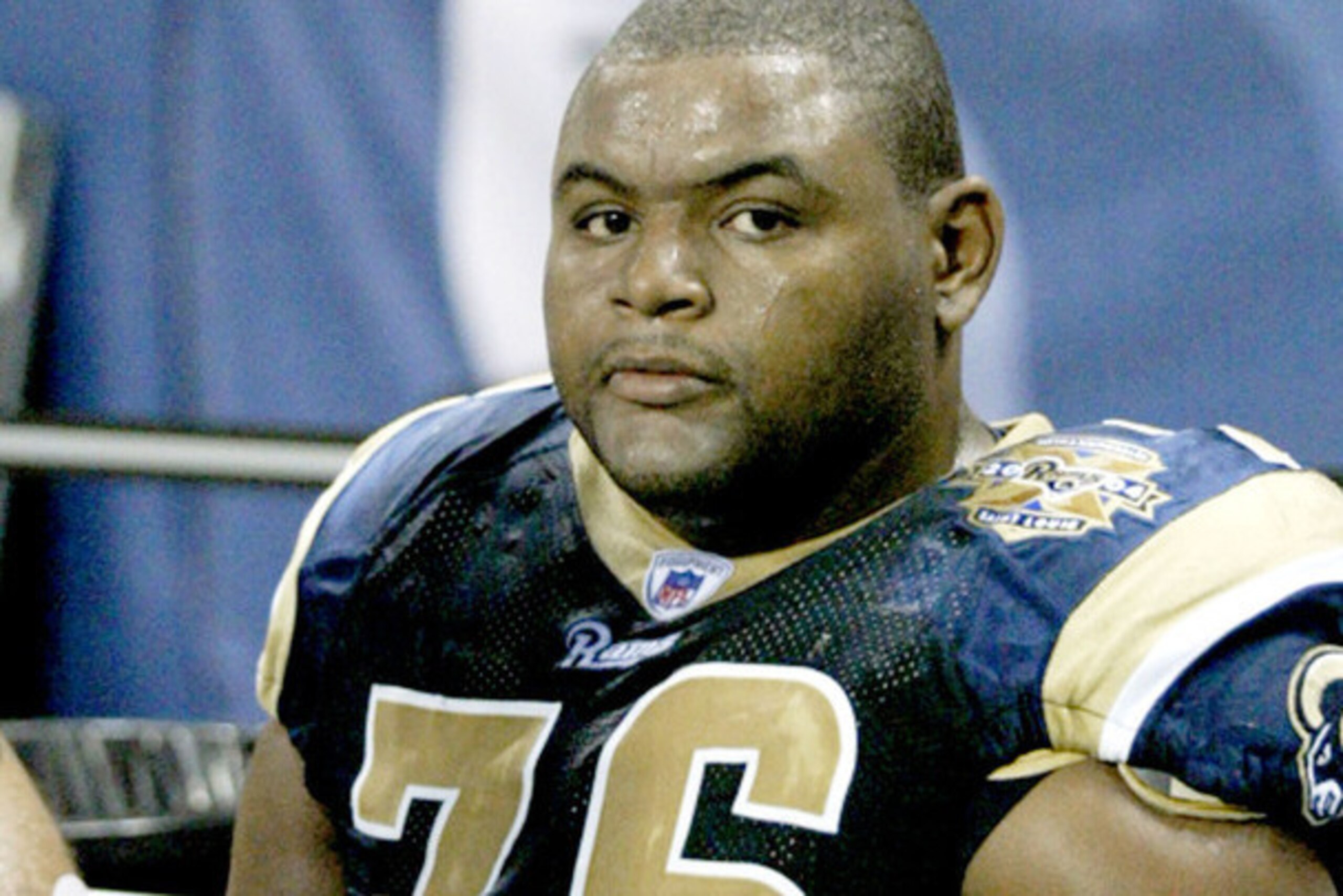
The case for Shields is tougher, thanks to the presence of Orlando Pace. Tackles are, in general, more important than guards, which should swing votes toward Pace and so will his Super Bowl ring, which Shields doesn’t have to his credit.
Both are very deserving candidates, and frankly, both should make it in this year. I would cast my vote toward Shields over Pace, but I think Pace will get the votes if only one offensive lineman makes the Hall this year.
I have the gut feeling that the voters are itching to vote for a quarterback, as well. They haven’t put a quarterback into the Hall since Warren Moon in 2006, and none have even been finalists since then.
Enter Kurt Warner, a two-time MVP, Super Bowl winner and practical folk hero.
We’ve all heard the story of him going from being a stock boy to an Arena Football star to Super Bowl MVP. I’m a bit concerned about the hole in the middle of his career, when he was with the New York Giants, but the fact that he’s arguably the best quarterback in both Arizona Cardinal and St. Louis Ram history is going to count for a lot.
He’s deserving, and the voters will probably fall over themselves to put Warner in the Hall of Fame.
That’s four slots spoken for, with only one remaining. That’s Charles Haley against a member of the All-Decade team of the 2000s in Will Shields, the sixth-leading rusher in history in Jerome Bettis and the player with the third-most sacks in history in Kevin Greene.
I don’t know which player would get the fifth and final slot, but I’m not sure Haley has anything that propels him above all three of the other players. His status as a Super Bowl champion puts him ahead of Shields and Greene but not Bettis.
He’s not a member of an All-Decade team like Greene or Shields. Greene has more sacks than he has, and he doesn’t rank as high on any statistical leaderboard as Bettis does. Shields and Bettis both made more Pro Bowls than Haley did.

That’s not to even consider the possibility of a wild-card person jumping in for the fifth slot. Last year, Ray Guy was put in, so maybe another specialist Morten Andersen will be put in this year. Three great coaches are on the list in Tony Dungy, Jimmy Johnson and Don Coryell. Don’t forget Tim Brown, who’s as deserving a candidate as anyone.
I’m going to go out on a limb and predict Tony Dungy gets the last slot, thanks to his work getting multiple teams to elite status in the NFL. I wouldn’t be surprised if that prediction is wrong, but one way or another, I don’t think this is Haley’s year.
Prediction for the Actual Class: Junior Seau, Marvin Harrison, Orlando Pace, Kurt Warner, Tony Dungy
My Class: Seau, Harrison, Pace, Will Shields, Tim Brown
Bryan Knowles is a featured columnist for Bleacher Report, covering the San Francisco 49ers. Follow him @BryKno on Twitter.
.jpg?w=2560 "Raiders Saints Football")