

Trading Away David Price Makes No Sense for the Win-Now Tigers
The Detroit Tigers can afford to wait. Literally. They have enough money to hold their current line and enough to add to its length.
David Price is going to anchor Detroit's rotation next season. At least that is how it stands as of now, though that can change with a couple of front office phone calls leading to a blockbuster trade.
Rumors have swirled all offseason about the Tigers possibly trading Price, their current ace. However, the win-now Tigers do not need to act as a smaller-market club in need of a return for a pending free-agent pitcher in the way they acquired Price from the Tampa Bay Rays. No, these Tigers are realistically aiming for a World Series, and without Price, that hope is likely dashed.
TOP NEWS
Brewers Take 3-0 World Series Lead
_0.jpg?w=2560 "MLB playoffs")
World Series Game 3 Takeaways ✍️

Bold MLB Predictions For 2026-27 Offseason 🔮
Unless some dopey general manager offers the kind of package it took to move Mark Teixeira from the Texas Rangers to the Atlanta Braves—one of the modern-day one-sided deals in baseball history—the Tigers have to keep Price, pitch him a contract extension and maybe aggressively pursue free-agent starter James Shields. If the extension talks or the pursuit of Shields (or both) fail, the Tigers can go into next offseason with a plethora of rotation options to choose from in free agency.
The Tigers are old. They don’t have a great farm system. Dealing Price won’t replenish it to the point where it is respectable, so they must keep him at the top of their rotation. Deal with the possible ramifications later.
Detroit has already committed to winning now. They are all-in for 2015. Moving Price would be a step away from that.
"The re-signing of Victor Martinez means the Tigers are thinking one thing: Win now. http://t.co/2vmq5zVtNm pic.twitter.com/iFrTtvjc5i
— Sports Illustrated (@SInow) November 13, 2014"
No team is going to be willing to give the Tigers the kind of prospect package that makes it worth it to deal away their No. 1 starter. Maybe they could get more than they gave up to get Price, but only because they surprisingly didn’t have to give up too much. If there were such a team willing to part with a huge haul to pry away Price from the Tigers, Cole Hamels would have already had a new home because he’s been the top option on the trade market all offseason.
Also, as current contract situations stand, Hamels is still the more desired trade commodity relative to asking price, since Price the man won’t be had cheaply.

That is the first downfall to such a trade notion. The second has to do with one of Price’s former rotation mates, Max Scherzer. While there was never even a decent chance of Scherzer re-signing with the Tigers this offseason, it was at least possible. That Scherzer was still available on the open market at least made the idea of trading Price palatable. Had it happened, the Tigers could have made a hard push to re-acquire their former ace.
Now that Scherzer is Washington Nationals property, that option no longer exists. Retaining Price now becomes utterly important.
“When we acquired David Price,” Tigers general manager Dave Dombrowski told James Schmehl of MLive.com, “we did so knowing that we would have a difficult time signing Max, so we knew we'd have a legitimate No. 1 [if Scherzer signed elsewhere].”
The third downfall has to do with another former teammate of Price’s—Shields. While he would be a glowing addition to the Tigers rotation, and there is confirmation that it has been discussed, Shields is not the ace Price is. Shields is a complementary piece at this point in his career, one that would sidle up quite nicely to Price, his best friend in the game.
If the Tigers traded Price, they could not just replace him with Shields as they could have with Scherzer. These pieces are not interchangeable.
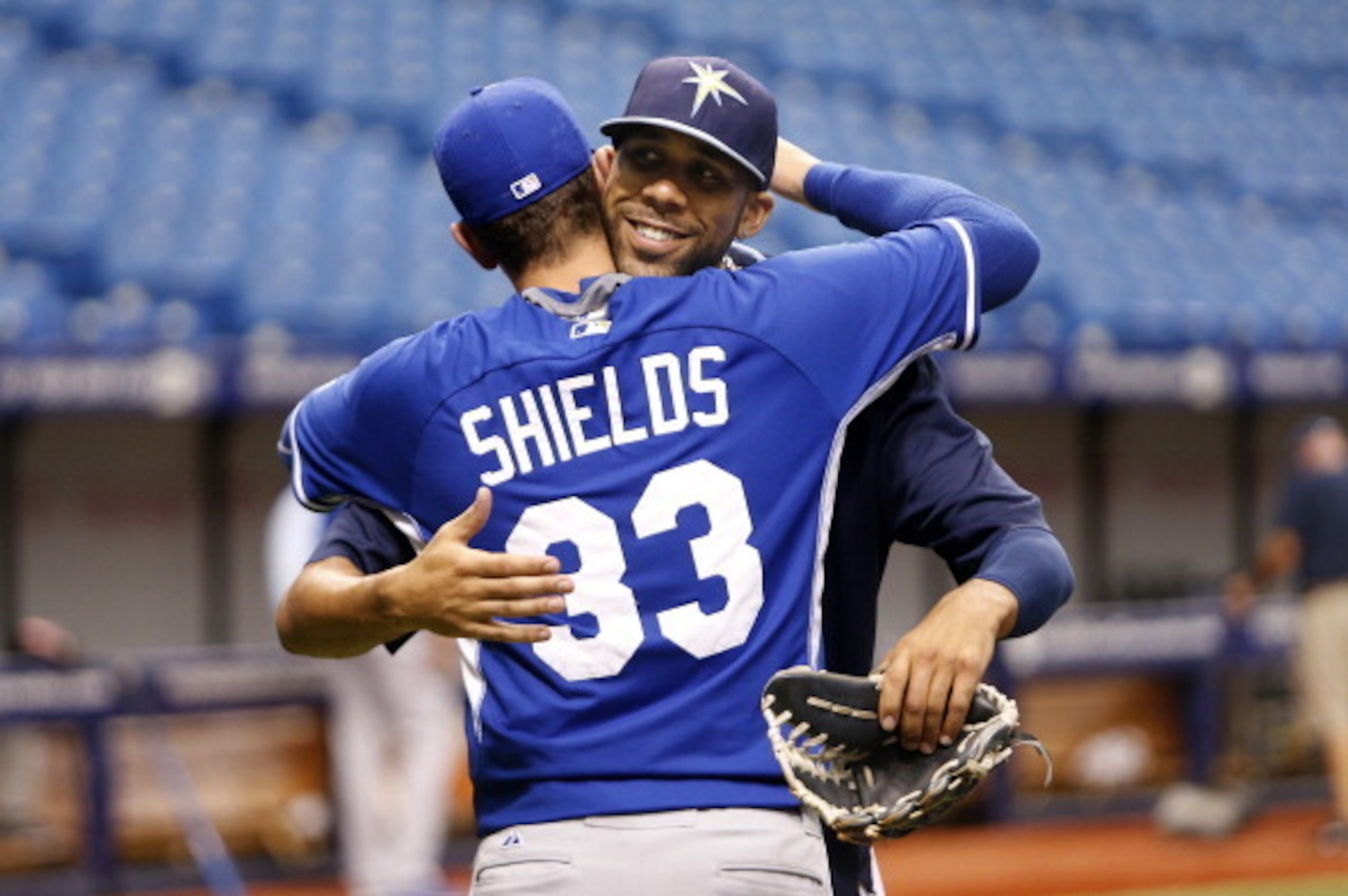
It is possible the Tigers lose on every front possible if they decide to not trade Price. They could not win the World Series. They could not sign him to a long-term extension before the end of next season. They could not land Shields before it starts. This is the worst-case scenario.
If all that happens, which is not impossible or even improbable, the Tigers won’t need to be put out to pasture. They will still be players to sign Price as a free agent next winter. They can also become a shark in the free-agent pool of starting pitchers, one that includes names like Jordan Zimmermann, Johnny Cueto, Doug Fister, Rick Porcello, Yovani Gallardo and possibly Zack Greinke if he opts out of his current contract.
So even in the Tigers’ worst-case scenario when it comes to keeping Price on their roster this year, they still have plenty of viable options for 2016. And in saving the salaries of Scherzer and Price, it’s more than realistic they can add two of those free-agent starters.
The Tigers can figuratively and literally afford to keep Price this season, extension or no extension. With an aging roster and an already hefty payroll, the time for the Tigers to win is now. Trading Price, their lone ace, would be a step away from accomplishing that goal.
Anthony Witrado covers Major League Baseball for Bleacher Report. He spent the previous three seasons as the national baseball columnist at Sporting News, and four years before that as the Brewers beat writer for the Milwaukee Journal Sentinel. Follow Anthony on Twitter @awitrado and talk baseball here.


.jpg?w=2560 "Chiefs, Steelers Eye WR Trades")
.jpg?w=2560 "WWE Raw Live Grades 🔠")


.jpg?w=2560 "🚨Jay-Z Headlining Super Bowl")

.jpg?w=2560 "Cowboys Handle Eagles on MNF 🤠")