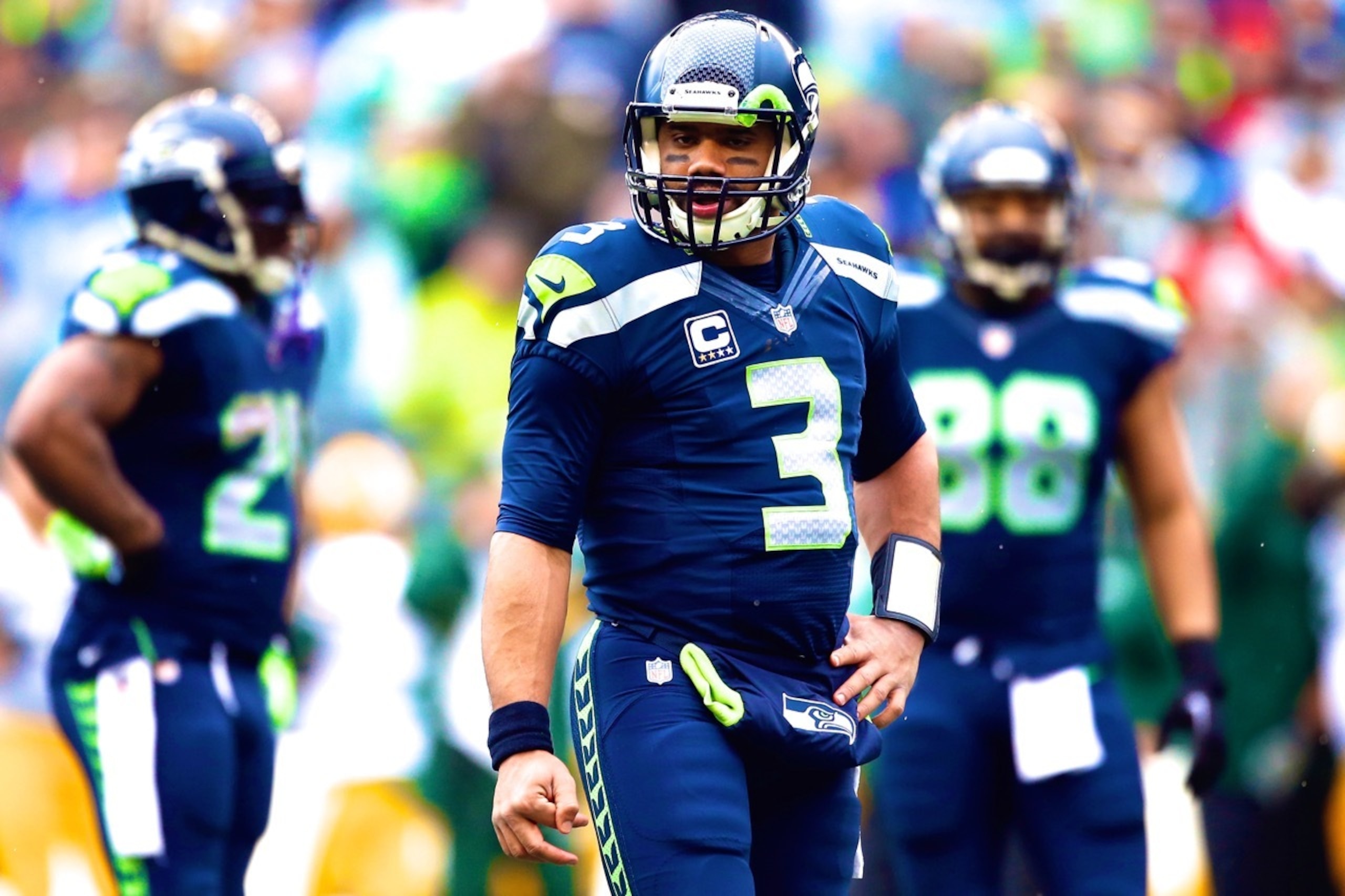

Should Seahawks Be Worried About Russell Wilson After Championship Struggles?
It's not difficult to stand out in the NFL, but it is difficult to stand out for the right reasons.
Entering Sunday's game against the Green Bay Packers, Russell Wilson was coming off his best performance of the season. Wilson dismantled the Carolina Panthers defense by quickly diagnosing coverages and splitting apart defensive backs with perfectly placed passes.
Wilson, as he has done many, many times through his career to this point, stood out for all of the right reasons.
.jpg?w=2560 "Seahawks Chiefs Football")


The harsh reality of the NFL being what it is, the Seattle Seahawks' starting quarterback followed up that incredible high by experiencing his greatest low. Even though his team advanced to the Super Bowl with a 28-22 overtime win, Wilson had the worst game of his career against the Packers in the NFC Championship Game.
For the four quarters that preceded overtime, Wilson was uncomfortable, inaccurate and wildly out of control. He completed just 11 of 26 passes for 129 yards, zero touchdowns and four interceptions. Despite his struggles, Wilson came through in overtime with three completions for 80 yards and a game-winning touchdown.
That can't be discounted, but neither can the first four quarters of the game.
At least one of his interceptions wasn't his fault, and his wide receivers had repeated issues dropping accurate passes, most notably Jermaine Kearse. Yet it would still feel disingenuous to blame Wilson's poor performance on his supporting cast.
The hallmark of Wilson's career to this point hasn't been his athleticism; it's been his intelligence. His intelligence and ability to make good decisions from both inside and outside of the pocket have separated him from just another quarterback who can take advantage of space with his legs.
His transition from college football to the NFL wasn't instant, but it was quick and seamless for the most part.
For most of this year's regular season, Wilson had regressed somewhat as a passer. He developed a hesitation in his decision-making that cost the Seahawks receivers opportunities when they were open down the field. That hesitation didn't return against the Packers.
It would be much easier to explain Wilson's poor performance if that hesitation had simply returned, but instead he had a display that was completely uncharacteristic to the rest of his career.

Wilson's first interception of the game came just three plays into the Seahawks' first drive. It was a 3rd-and-7 deep in Seattle territory. Wilson's pass hit his intended receiver's hands, but the accuracy of his throw isn't the issue on this play.
Instead, Wilson makes a poor decision from the pocket.
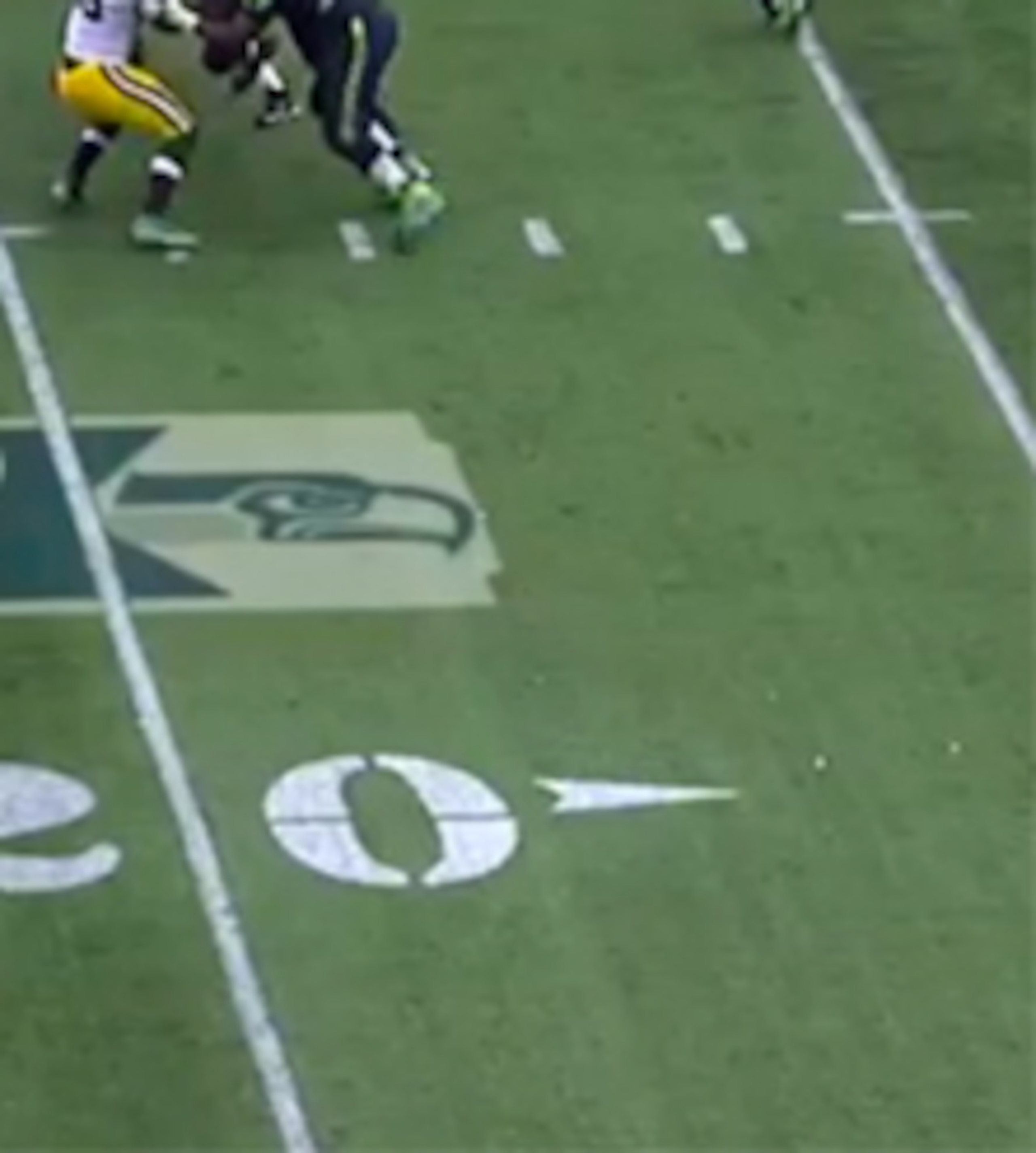
The Packers didn't threaten to blitz at the snap, but they did have a cornerback in position to come off the edge. Ultimately, they rush just four players after the quarterback, using two stunts to try to penetrate the pocket up the middle.
On the back end, the coverage appears to be Cover-1 Robber with one safety rotating into the box and the other dropping deep at the snap.

Wilson isn't given much time, so he has to get rid of the ball quickly if he wants to throw it from the pocket. However, he forces the ball to the wrong receiver. Wilson's pass hits Kearse's hands, but the defensive back is always in position to disrupt him at the catch point.
Because of the coverage that the Packers played, Kearse had to fight through the cornerback from the beginning of the play, and Ha Ha Clinton-Dix was in position to pick off the pass when it was knocked in the air.
As a quarterback, you sometimes have to trust your receiver to win the ball at the catch point against tight coverage. However, those decisions are about risk versus reward. The risk of this throw was much greater than the reward because Kearse was unlikely to get close to a first down, while Wilson was throwing into the thick of the coverage.
This kind of contested-catch decision would have been more acceptable if the receiver had run a route past the first-down marker.

Wilson's second interception came early on during the second quarter. He hadn't completed a single pass yet, and this was the very first play of this particular drive. With their offense stuttering, the Seahawks went in search of a big play off play action to kick them into life.
Throughout his career, Wilson has been an accurate deep-ball thrower, so this was a sound strategy from offensive coordinator Darrell Bevell.
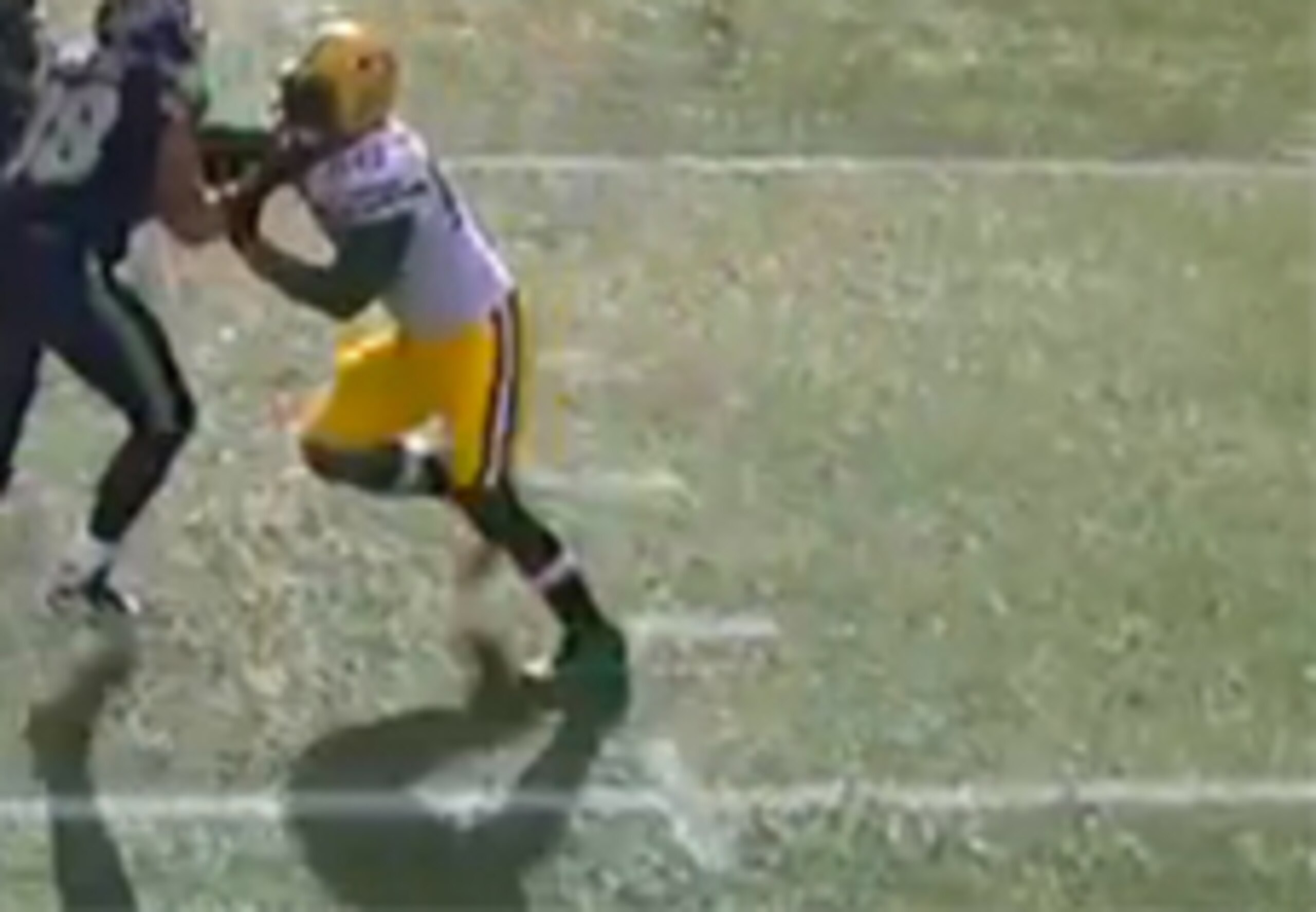
Wilson comfortably gets to the top of his drop and establishes his base in a clean pocket. He brings his eyes to Kearse, who runs down the seam after cutting inside from a wide left position. Crucially, Wilson has another receiver running a crossing route toward Kearse's side of the field.
That receiver appears to cause Wilson to misread Green Bay's coverage because he blocks Clinton-Dix, who is running behind him from a deep safety position.

Kearse is eventually double-covered, and Wilson's pass is so poor that Clinton-Dix actually has to reach backward to make the interception. This wouldn't have been a good pass even if Clinton-Dix hadn't been there, so Wilson both misread the coverage and threw a rare deep pass that lacked precision.
This was the kind of play that a quarterback who panics will regularly attempt.
Wilson didn't show the typical poise and comfort from a clean pocket that has become a catalyst for his success at this level. That was a recurring issue throughout this game, not just on his passes that resulted in interceptions.
Wilson was able to carve the Panthers apart on third downs just a week before the Green Bay game. The Packers didn't do anything that he hadn't seen before in this game; Wilson simply made poor decisions. To compound the contrast between this week and the divisional round for Wilson on third downs, his third interception of the first half came on 3rd-and-7.
Against the Panthers, Wilson completed a 16-yard touchdown pass to Doug Baldwin on 3rd-and-9. That play came against the blitz, when he broke down the coverage quickly to find a preferable matchup down the field. In a similar situation against the Packers, Wilson did the opposite.

Once more, Green Bay didn't blitz. This meant Wilson had time in the pocket. Despite that, he immediately threw the ball up to Kearse, who was running toward the pylon from the slot. Wilson took a shot in a one-on-one situation, but he didn't need to because he had time.
Kearse was covered brilliantly by Sam Shields, but even if Kearse had beaten him, Wilson's pass was badly underthrown. Shields was always going to be the favorite to win this ball in the air because of how he covered Kearse. Wilson simply made it easy for him by heaving the ball up without leading his receiver to any particular point.
Kearse was the target for each of Wilson's interceptions. It's hard (impossible, perhaps) to put all of the blame on Kearse for the first three, but the fourth was definitely his fault. For the fourth, Wilson found him with an accurate pass when he was open over the middle of the field for a first down. However, Kearse let the ball bounce off him.
Before that fourth interception and the eventual comeback victory that Wilson expertly orchestrated in overtime, the quarterback threw the ball directly to Clinton-Dix for a final time. This time, Wilson was fortunate that Clinton-Dix didn't come down with the catch and another interception.

Much like on his first interception, the Packers played man coverage underneath while rushing just four defenders. It's 2nd-and-14 with the Seahawks playing from behind in the fourth quarter. As such, Wilson is looking to aggressively throw the ball down the field.
He is patient initially, holding the ball in the pocket and surveying the defense.
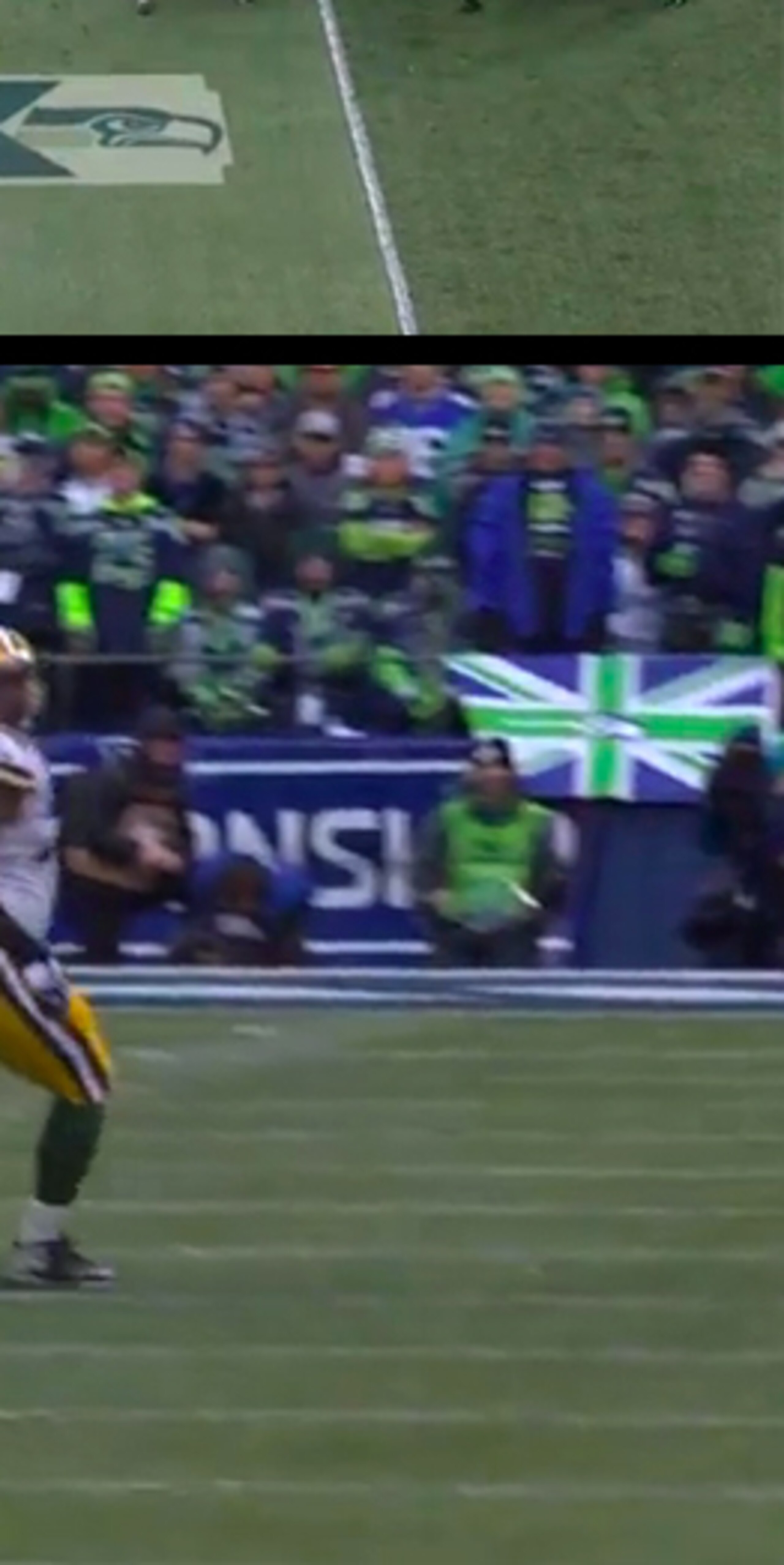
Importantly, the replay shows that Wilson's eyes begin on the right side of the offense before coming across to the middle of the field. This means that when he tries to throw to his receiver running across the middle of the field, he never sees Clinton-Dix breaking on the football from the other sideline.
Wilson's pass goes directly to the safety, but he couldn't make what should have been a relatively simple catch.
During the first four quarters of this game, every single negative presumption that has been made about Russell Wilson throughout his career came through. He couldn't make plays from the pocket that are supposed to be routine for top-tier starters. He ran himself into a sack or two and played a major role in a passing attack that simply stalled.
The poise was absent, the intelligence wasn't evident, and even the arm strength looked concerning.
Wilson took a big hit to the head after throwing an interception in the second quarter, but he wasn't diagnosed with a concussion and his struggles began long before that play either way. His receivers weren't helping him, but they weren't the cause of his poor play either.
The 26-year-old quarterback improved significantly late in the fourth quarter, as he made contributions as a runner to complement Marshawn Lynch while also converting that crucial two point conversion that was the result of some luck and some talent.
In overtime, Wilson reminded everyone watching what he is capable of. Overtime offered us an example of this still relatively young signal-caller's class. All-Pro cornerback and teammate Richard Sherman reiterated that sentiment after the game:
"When the ball didn't bounce his way, he didn't go in the tank and say, 'Woe is me,'...he stepped up when we needed him most and he won the game for us. I'm not sure people get how great he is. I hope they get it now.
"
A 35-yard connection with Baldwin on a 3rd-and-7 preceded a 35-yard touchdown throw to Kearse that ended the game. It was not only fitting that Kearse caught the game-winning touchdown pass after playing an important role in each of Wilson's interceptions, but also that the play was a result of Wilson's intelligence.
This was still the worst game of Wilson's career with all things considered. That may say more about the kind of career he's had to this point than the performance in a vacuum.
It also doesn't say much about how he is going to play against the New England Patriots in the Super Bowl. If Wilson can go from great against the Panthers to bad against the Packers, he can easily swing back to great again versus the Patriots.
Wilson has played well in big games in the past, even if he wasn't in top form during last year's run to the Super Bowl. The Patriots can't count on him underperforming again.