

There's a lot wrong with the Brooklyn Nets.
But not everything, and most of it will pass eventually. Whoever writes a massive check for the franchise will do it because he or she knows all the things that are right will last.
According to Scott Soshnick of Bloomberg News, the bidding can begin now, as he reported: "Russian billionaire Mikhail Prokhorov retained Evercore Partners (EVR) to sell the National Basketball Association team he bought in 2010, according to two people with direct knowledge of the matter."
TOP NEWS

J-Dub, Wallace May Miss Entire Season
Melo's Quote on Confidence 😎
Celtics at Fault for JT-JB Beef? 🤔
This is hardly a stunner. Prokhorov has been something of an absentee owner in his time with the Nets—a figurehead who barged in five years ago with promises of championships.
"How fast can we build a championship team? If everything goes as planned, I expect us to be in the playoffs next season and [win a] championship in one year minimum, and maximum in five years," Prokhorov proclaimed in 2010, via ESPNewYork.com.
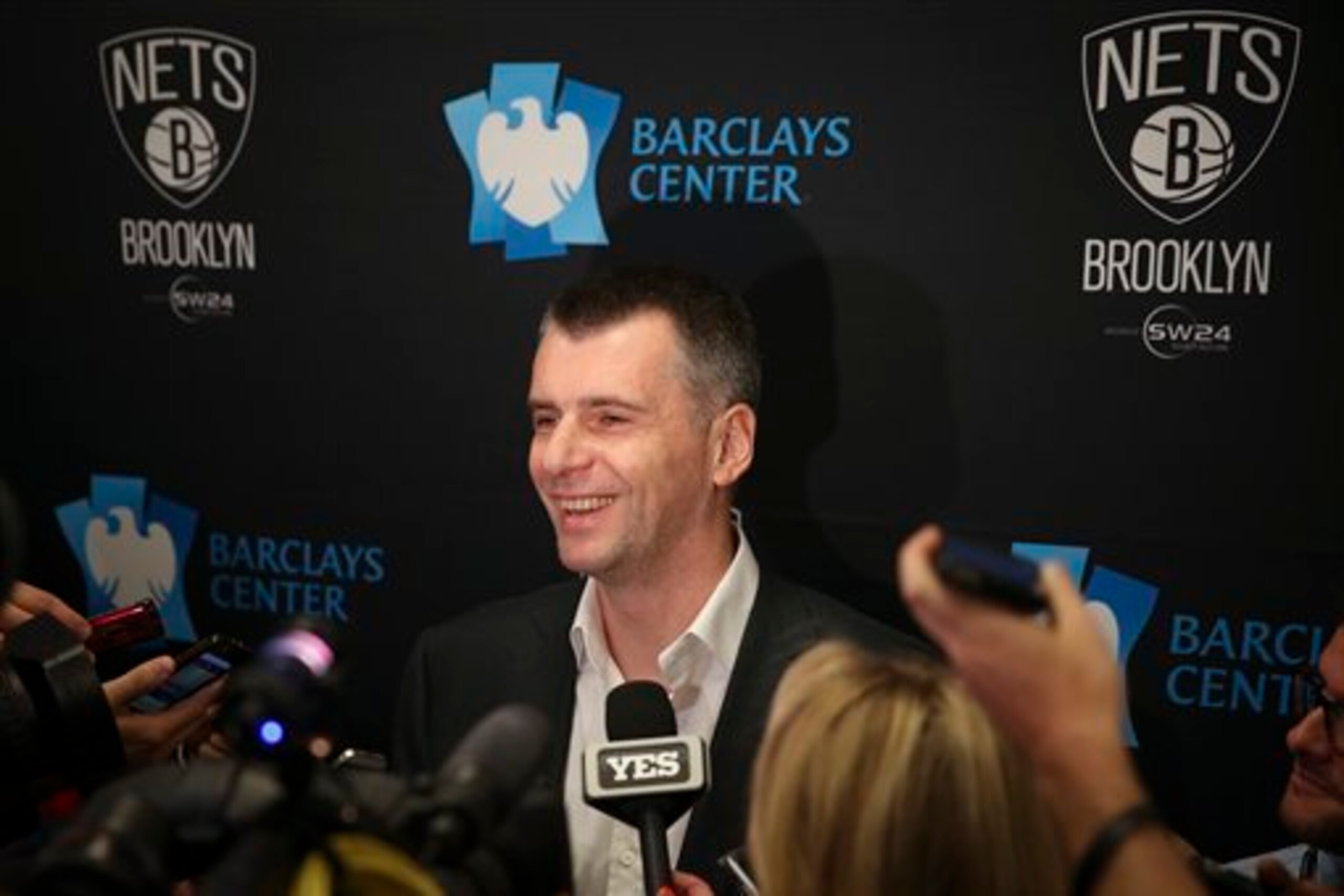
He then spent most of his tenure away from the team.
Per Stefan Bondy and Mitch Abramson of the New York Daily News: "While Prokhorov has juggled his businesses and his political aspirations during an economic crisis in Russia, his nonpresence with the Nets has become almost comical, to the point where most of the players have never met the 49-year-old."
Who can blame him?
When you're richer than god (Prokhorov's net worth is $10.8 billion, according to Bloomberg's Billionaires Index), you don't have to play with toys that aren't any fun—no matter how gaudily expensive they are.
Prokhorov wasn't around much, but his money was. He poured cash into the product, which has turned out to be part of the problem. The roster is full of past-prime and/or injured veterans, led by Deron Williams, Brook Lopez and Joe Johnson, who are still owed a combined $85 million after this season, per HoopsHype.
Those contracts will be hard to move, and the franchise's overall financial situation is similarly bleak in the short term.
According to a confidential league memo obtained by Grantland, Brooklyn lost $144 million last season, $131 million more than the next closest team. Mike Mazzeo of ESPNNewYork.com reported in July that the Nets would spend $94 million on salaries this season, which would incur a luxury-tax penalty of almost $36 million at the end of the year.
Tax payments are based on a team's payroll on the final day of the regular season, so that figure could drop if the Nets move some money. But so far, it doesn't seem likely they'll be able to divest themselves of the real cap-cloggers: Williams, Lopez and Johnson.
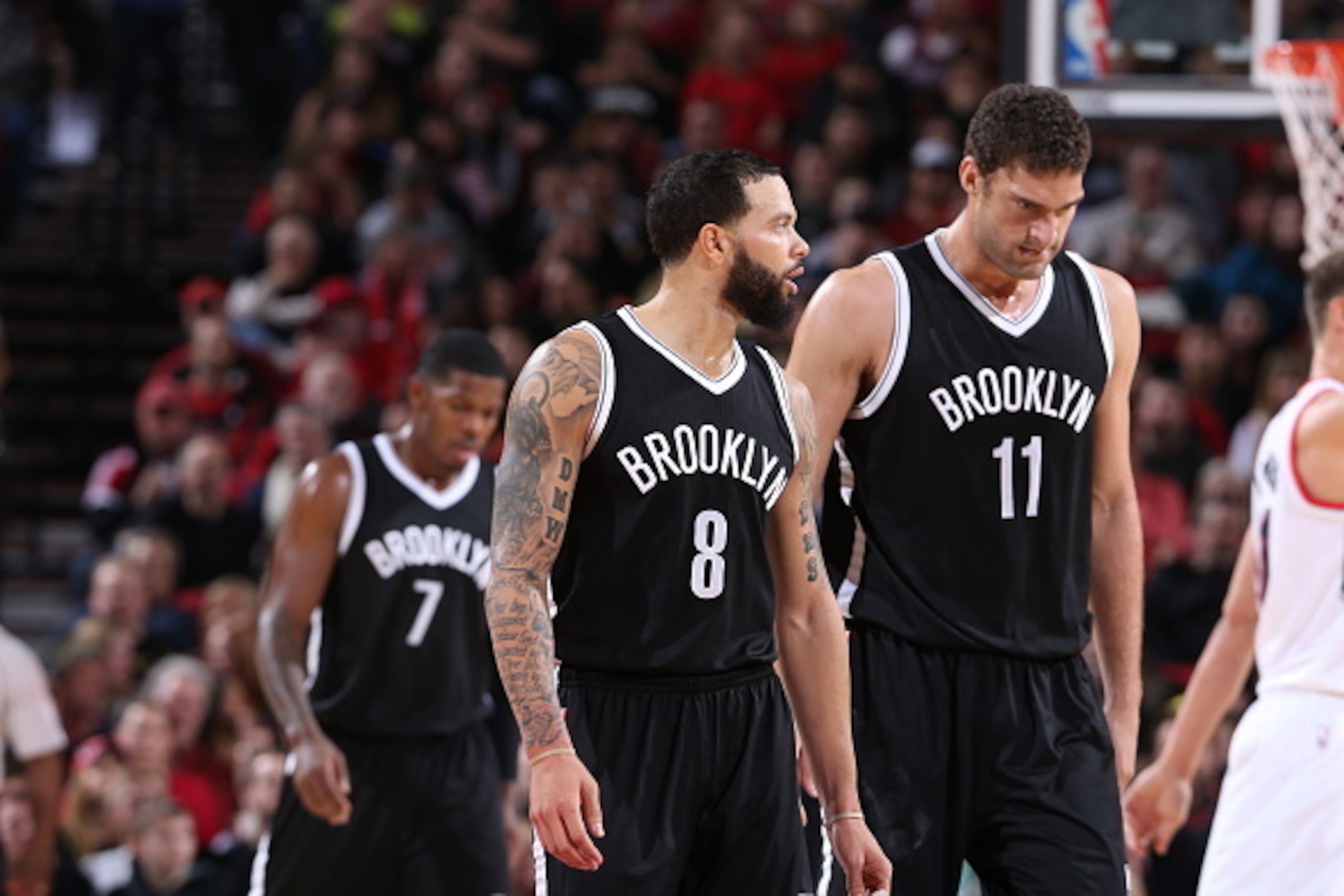
The money problems in Brooklyn are the biggest nose-wrinklers to any buyers sniffing around, but they're not the only ones. The roster needs to be rebuilt. General manager Billy King is responsible for every single penny on the payroll, which means the new regime will re-evaluate his position with a very critical eye. And the public trust in the franchise needs to be repaired.
There are more immediate concerns than those. If a new owner were to step in tomorrow, he or she would be faced with a list of questions in need of answers right away:
- Is head coach Lionel Hollins already wearing out his welcome?
- Can Brook Lopez be traded?
- Will Deron Williams ever get healthy?
- What style of play best suits the current personnel?
- Might there be a buyer for Kevin Garnett?
- How can the Nets restock their empty cupboard of first-round draft picks?
That's not to say buying the Nets is a proposition without value.
First and foremost, the team is cool. Not "cool" in the way you might describe heli-skiing in Turin with Prokhorov, but cool in the commodified sense.
The uniforms are slick—new-age and minimalist. The Barclays Center is a state-of-the-art facility with avant garde architecture. Shop Architects describes the building as if it's actually alive, writing:
"It is legible at multiple scales while maintaining an identity that delights visitors, neighbors, fans, and spectators. Integrated into one of the busiest urban intersections in the NY metro area, the Center will sustain a healthy, interactive dialogue with the surrounding streets and neighborhood.
"
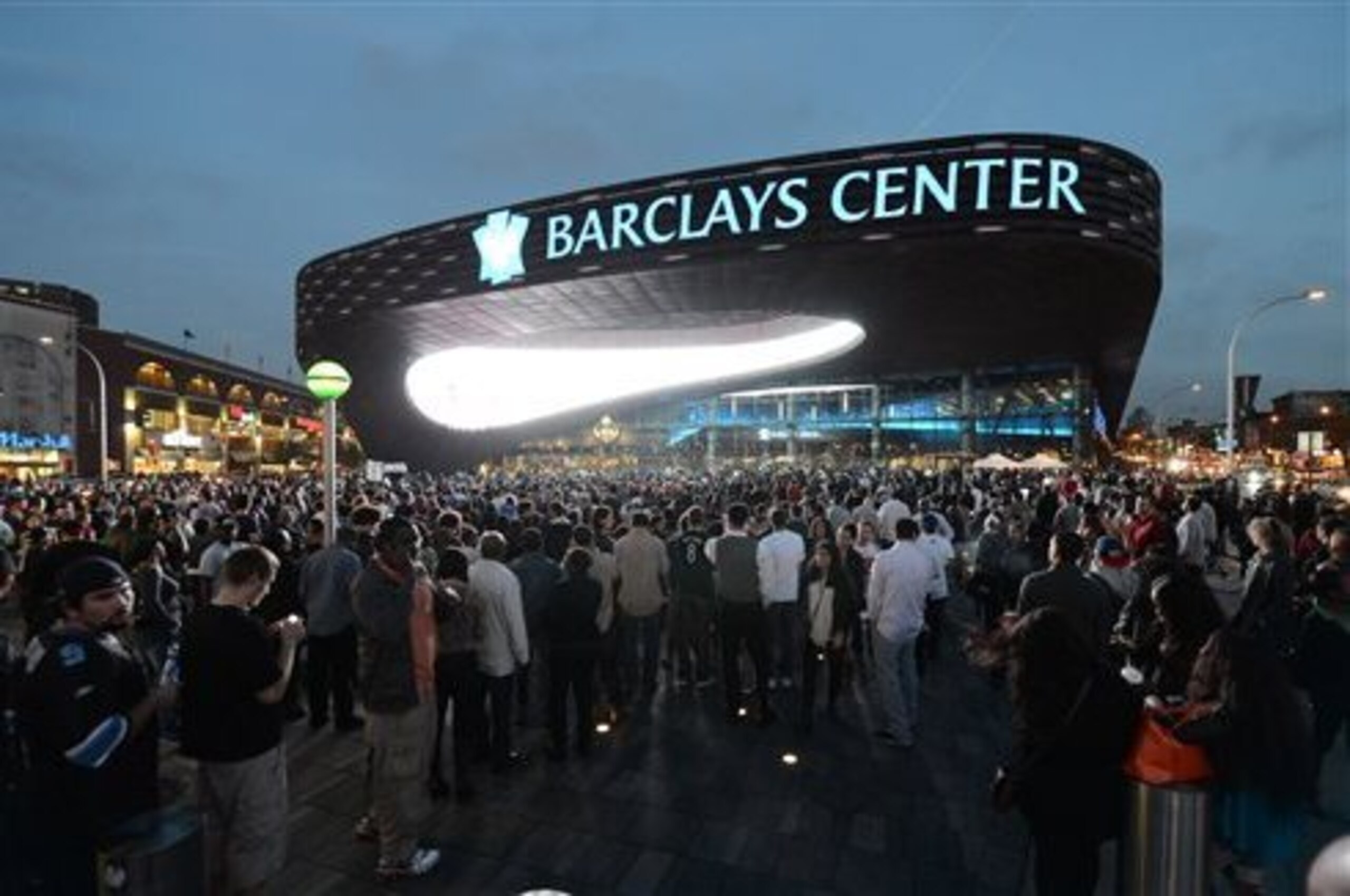
As weird as that is, a building that has an identity and engages in dialogue with the neighborhood seems pretty marketable to me.
Brooklyn itself is cool. And not just in terms of the personalities that show up courtside, like once-owner Jay Z, but in terms of the actual geographical location. It'd take longer to list the trendy artists, writers and hipsters who don't live in the nearby neighborhood of Williamsburg than it would to list the ones who do.
Coolness hasn't meant much at the box office just yet; the Nets have ranked in the middle of the pack in attendance over the past two years, per ESPN.com, selling an average of 95.3 percent of their tickets in 2013-14 and 93.4 percent this season.
The on-court product hasn't been all that good—and it certainly hasn't been fun to watch—during that span, so there's a good chance a better, more exciting team will draw a bigger crowd.
Even with the team as it is, the Barclays Center remains a place to be seen. When international royalty comes to town, it doesn't go to Madison Square Garden. It heads to Brooklyn to treat with domestic kings and queens.
So, the Nets have some issues. There's no doubt about that. But they're not the kind that make for an unsteady foundation. Good location, good building and (I hate myself for using the term unironically) good brand.
The organization, top to bottom, is eminently marketable.
A new owner could come in, wait out the bad contracts and start fresh in 2017 when all the big money on the books goes away. Free agency will be vital because the Nets have sent off as many first-rounders as possible, but that's where the cool factor comes in again.
Whomever ownership hires to run the personnel side will at least be able to sell Brooklyn to prospective free agents. That counts for a lot in an NBA where players are increasingly cognizant of playing in markets where auxiliary streams of income are easier to generate.
And if all the financial concerns attached to the Nets worry potential buyers, consider that Prokhorov spent $223 million for his share of the team in 2010. He's now likely to recoup that money four or five times over, according to valuations expert Peter Schwartz, via Bloomberg:
"Because of their home in the No. 1 U.S. media market, and the infrequency with which marquee franchises become available, the Nets might fetch more than the record $2 billion former Microsoft Corp. Chief Executive Officer Steve Ballmer paid for the Los Angeles Clippers in a frenzied auction sparked by racist comments made by former owner Donald Sterling, Schwartz said.
'The fever of a trophy asset goes beyond financial analysis—as we saw in Los Angeles,' Schwartz said.
"
If recent history is any indication, it's basically impossible not to turn a massive profit on an NBA franchise.
Buying the Nets is a big deal, fraught with risk and demanding of patience. But it's probably also a good one, no matter the cost.

.jpg?w=2560 "Chiefs, Steelers Eye WR Trades")





.jpg?w=2560 "Raiders Sticking with Cousins")