
Despite spending less than three full years in Cleveland, Dion Waiters left a memorable impression on the Cavaliers.
While Waiters certainly wasn't a failure as a player, his fit with the franchise, both rebuilding and contending, was.
In 164 games with the Cavs, Waiters brought 14.3 points, 2.8 assists and plenty of headaches. His potential was off the charts, however.

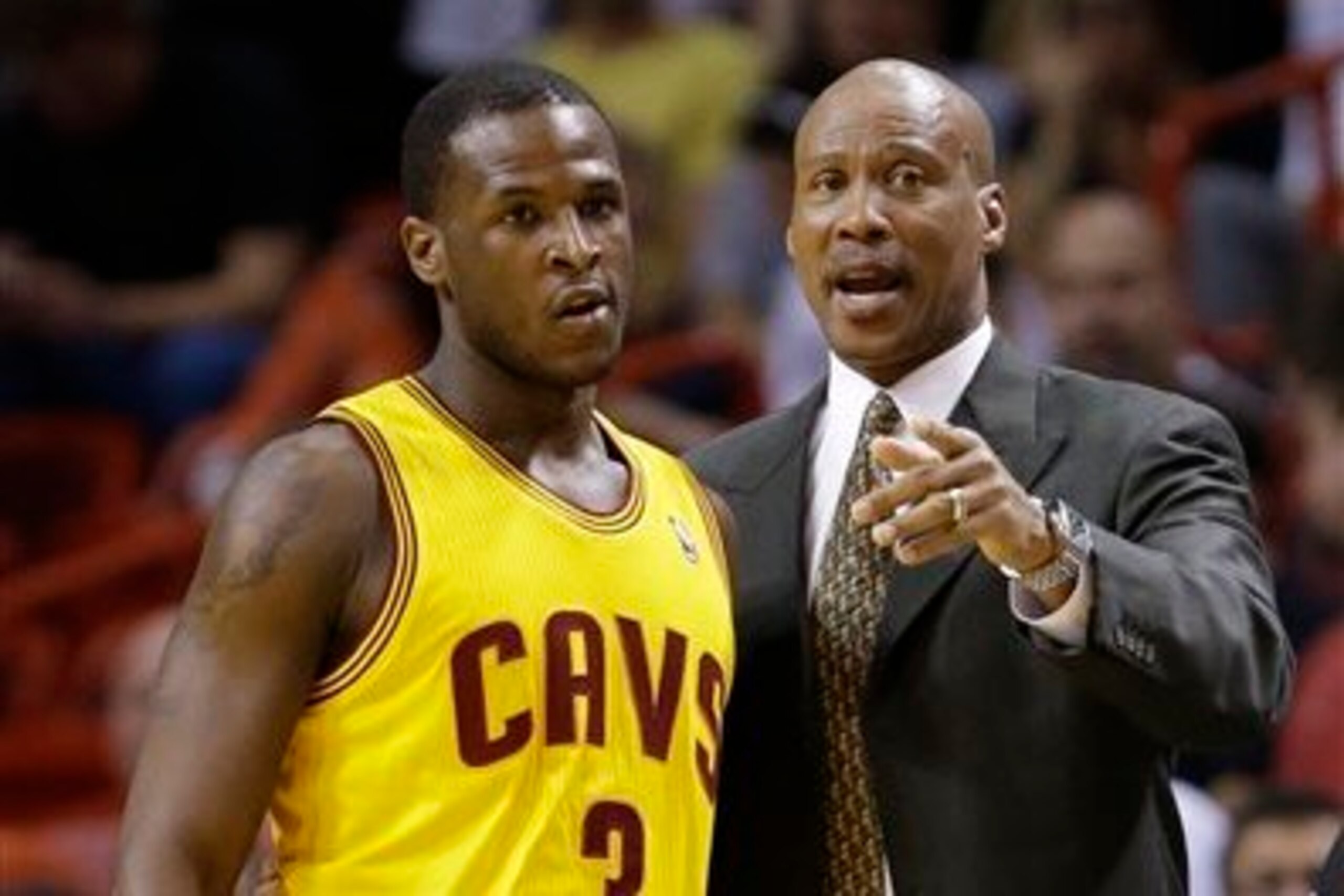
The No. 4 pick of the 2012 NBA draft, Waiters was highly thought of by then-coach Byron Scott. In a draft with Damian Lillard, Bradley Beal, Andre Drummond and Harrison Barnes, Scott told Bob Finnan of The News-Herald that he would have taken Waiters over everyone besides first overall pick Anthony Davis.
While Waiters certainly had his bright spots, chemistry issues and playing styles ultimately doomed his stay in Cleveland.
Reports of team meetings and "buddy ball" accusations began popping up in just his second season. Trade rumors ran wild, fueled by the assumption that Waiters and Cavs' point guard Kyrie Irving couldn't see eye to eye. It got so bad that Irving and Waiters ultimately held a "press conference" together to silence critics who believed they hated one another.
Once a centerpiece of the Cavaliers' rebuilding project, Waiters now stands as a role player with a new franchise and a cloudy future.
For a Cavs' organization that's sometimes struggled to develop players, there are lessons to be learned in this now-failed Waiters era.
Consistency and Role
With a young player fresh into the league, a consistent role and minutes are wonderful things to have.
While in Cleveland, Waiters received neither.
Beginning his NBA career as a starter, Waiters flip-flopped as a sixth man a total of nine different times in less than three full seasons. His role constantly changed, as did the teammates around him.
In terms of pure talent, Waiters was the Cavaliers' second-best player during much of his first two seasons. It was only a clash in playing styles with Irving that found him coming off the bench for 89 of his 164 career games.
In his three years, Waiters also had three different head coaches: Scott, Mike Brown and David Blatt. All gave Waiters a chance in the starting lineup next to Irving. All soon realized he operated better coming off the bench. For Blatt this season, Waiters' starting gig lasted just three games.
His role constantly fluctuated as well. During the Cavaliers' rebuilding years in 2012-13 and 2013-14, Waiters was given the green light to score off the bench. When not taking questionable shots from deep mid-range, he primarily used pick-and-rolls to create offense for himself and others. Waiters was never much of a shooter (32.8 percent from three with Cavs), despite attempting shots from deep over 25 percent of the time.
This season, Cleveland naturally asked him to change things up next to LeBron James and Kevin Love, according to Jason Lloyd of the Akron Beacon Journal:
"It has been made clear to me in recent days by Cavs deep thinkers they’d like Waiters to really concentrate on two areas: defending like crazy and shooting catch-and-shoot 3-pointers.
Waiters is terrific at attacking the basket and he can be good at other things. But in this season of “sacrifice,” of guys needing to do what’s best to help the team, the Cavs have identified two key areas where Waiters can really help them. And if he doesn’t do what they ask, he’ll sit.
"
One of the reasons that Irving has developed into the star player he is today is due to the consistency and role that Waiters never received.
Irving has never come off the bench for Cleveland. From Day 1, he was in the starting lineup and asked to carry the team offensively. His role is altered slightly this season with the new-look Cavs, but not to the point where he had to reinvent his game like Waiters was asked to do.
Irving established part of his game early (three-point shooting, creating off the dribble, finishing at the basket) and has since been able to add other parts while expanding his existing talents. Waiters was forced to alter, change, adapt and conform. He never got to establish a foundation of skills to grow from the way Irving did.
According to Sam Amico of FOX Sports Ohio, this could have ultimately led to some animosity by Waiters.
Consistency is something Waiters needed, especially since he spent four years at four different high schools in three states. He almost left Syracuse after his freshman season after being benched by coach Jim Boeheim, notes Jodie Valade of The Cleveland Plain Dealer.
Due to numerous circumstances, the Cavaliers just weren't able to provide the consistent, reliable role that it was clear Waiters required to succeed.
Fit and Buying In
When the Cavaliers began their rebuilding project with the 2011 NBA draft, they preferred talent over fit.
Cleveland already had Baron Davis and Ramon Sessions at point guard, yet took Irving first overall. At four, the Cavs selected power forward Tristan Thompson, despite having J.J. Hickson and Antawn Jamison at the position.
While it may have seemed questionable at the time, both picks have turned out great. Clearly, drafting for talent over fit was the correct choice.
When the 2012 draft came along, the Cavaliers still needed a shooting guard, small forward and center. Looking back at No. 4, Lillard would have been the best player available, although he and Irving would have also struggled to share the ball.

It was time to draft on the basis of fit, while keeping overall talent in mind.
The Cavaliers' selection of Waiters, a natural 2-guard, was a clear talent upgrade over their existing combination of Daniel Gibson and Manny Harris. Cleveland was in the ballpark with positional need, but ultimately didn't truly address fit in terms of playing style next to Irving.
Oddly enough, Waiters' need for the ball was recognized (and ignored) by Scott, noted Terry Pluto of The Cleveland Plain Dealer shortly after the draft.
"The 6-4 Waiters often took the spot of Jardine, a 6-2 point guard. An issue will be if Waiters can share the ball with point guard Kyrie Irving. Scott admitted that in several of the game films he watched, Waiters had the ball "about 75 percent of time." With the Cavs, it will be Irving who will have the ball that often.
"
If a team drafts a ball-dominant star player and is looking to complement them, they have to get someone willing and able to play off the ball. The Golden State Warriors did this by selecting Klay Thompson to pair with Stephen Curry. The Washington Wizards drafted Beal to go with John Wall.
Going by the numbers, it was clear that Irving played much better when Waiters was out of the game. Here's a look at their last full season together, via NBA.com.
| 2012-13 per 36 Minutes | FG% | 3P% | PTS | REB | AST |
| Irving w/ Waiters | 41.9 | 33.1 | 20.9 | 3.5 | 5.6 |
| Irving w/o Waiters | 43.9 | 37.7 | 21.6 | 3.9 | 6.7 |
While it was expected that scoring may drop with Waiters on the floor, one would think Irving's efficiency numbers would have at least improved.
This just wasn't the case.
Irving was a better player without Waiters beside him. The two didn't complement each other, but instead, may have hurt the others' game.
The final issue came down to Waiters' buying in to the new Cavaliers' plan.
While he said all the right things and even had some really good games off the bench, Waiters never truly became the player the Cavs wanted him to.
Jason Lloyd of the Akron Beacon Journal notes that even though Waiters worked on different aspects, his focus still came down to one area.
"When Waiters stayed behind after the team’s morning shootaround Tuesday and worked out for another 40 minutes, after the bus and rest of the players were long gone, it wasn’t surprising to watch him working primarily on catch-and-shoot 3-pointers. Yet when I asked him about focusing on that this season, he dismissed it.
“That’s not my game,” he said. “I can do it, but you know what I’m effective at: pick-and-roll and things like that.”
"
Cleveland needed Waiters to defend and knock down the catch-and-shoot three-pointer. Instead, 32.3 percent of his offense still came via the pull-up shot (per NBA.com), often killing any offensive flow. Just 23.8 percent of his shots were in catch-and-shoot situations, where he converted a lowly 25 percent of his threes.
Again and again, Waiters continued to take the same step-back, mid-range jumper he'd done so often for two years prior. He would emphatically call for the ball, even when James or Irving was in a favorable offensive position. Waiters' body language was often sour, and his head would slump following a missed shot.
Far too often it appeared he was more interested in his own performance rather than what was best for the team. When acquiring future players, it's important that they buy in to whatever the franchise wants them to do.
And so, the Waiters era in Cleveland is over. While it may not have lasted as long as we first anticipated, the time was certainly never dull.
Hopefully, Waiters gets a chance to develop into the star player he has the potential to become. His fit on the Cavaliers just wasn't right, as it was time for both parties to move on.
Waiters gets a fresh start on a good Oklahoma City Thunder team. For Cleveland, the lessons of what to do next time remain.
Greg Swartz has covered the Cleveland Cavaliers for Bleacher Report since 2010.
All stats provided by Basketball-Reference.com unless otherwise noted.

.jpg?w=2560 "Chiefs, Steelers Eye WR Trades")