
Giants Draft Needs: Where Does New York Need Help Most?
The NFL draft is still several months away, but if you subscribe to the theory that it’s never too early to start thinking about the draft, then this slideshow is for you.
The New York Giants, coming off a 6-10 season, currently have a lot of work to do on their underachieving and banged-up roster, both in free agency, the bulk of which will come prior to the draft and then the draft itself.
So let’s take a look at where the five biggest position needs are prior to the start of free agency and identify which NFL draft prospect might be the best fit to satisfy that need if the Giants were to draft for that position on either Day 1 or Day 2 (first or second round).
Offensive Tackle
1 of 5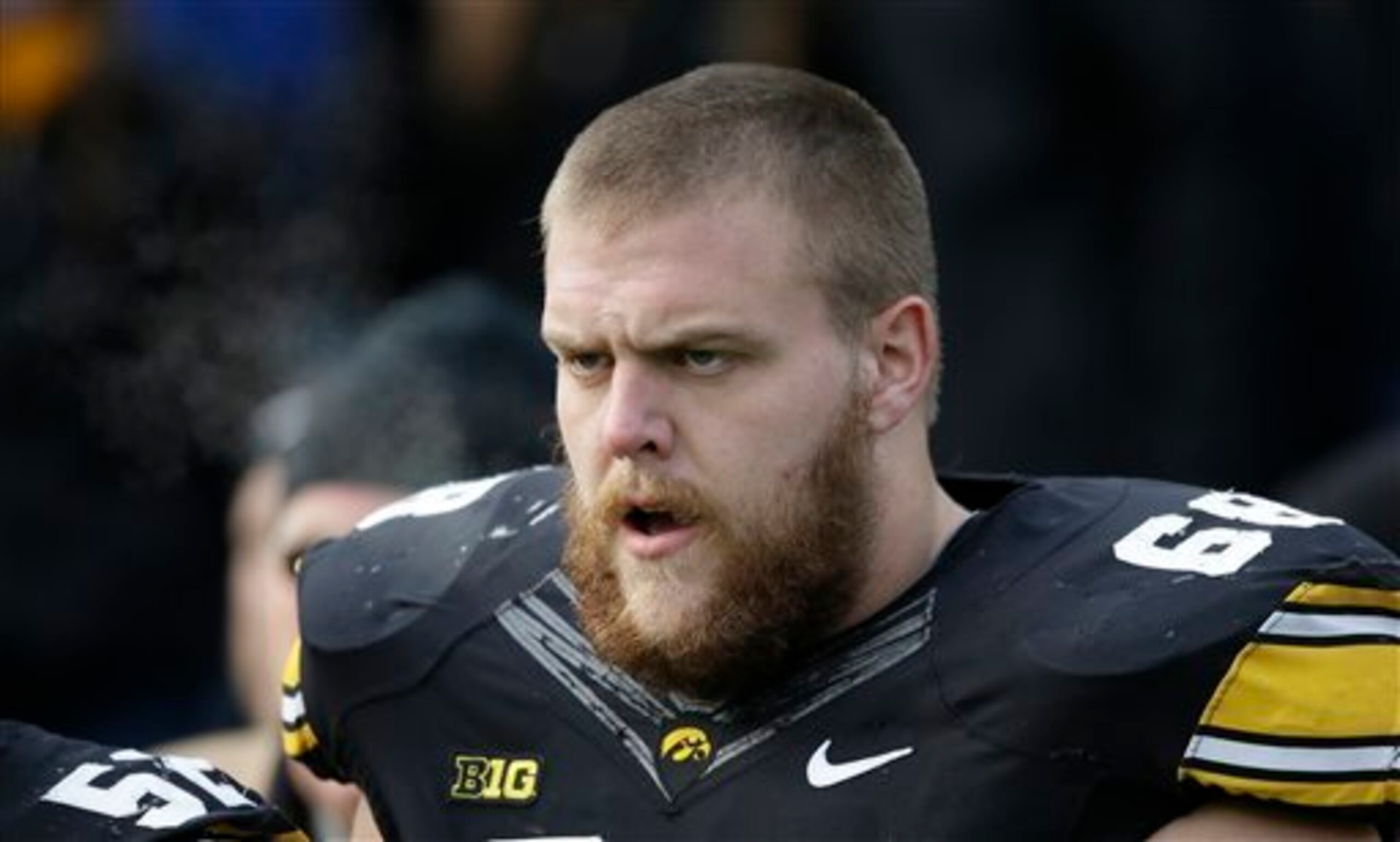
Although the Giants' offensive line played better in 2014—it only allowed 28 sacks, a steep drop from the 39 sacks allowed the year before—the unit is still a work in progress.
In terms of free agents, G/T John Jerry, G/T James Brewer and G/T Adam Snyder are all set to be unrestricted free agents.
As noted in previous analysis, Snyder probably makes the most sense to re-sign if the Giants are looking for a veteran swing guy who can be first off the bench at guard or tackle.
So what happens if Jerry, this year’s starting right guard, isn’t re-signed?
Simple.
Step 1 should be to move Justin Pugh from right tackle to left guard alongside left tackle Will Beatty.
Step 2 should be to move Weston Richburg from left guard to center and have J.D. Walton come off the bench at guard and center in case of injury.
Step 3 should be to move Geoff Schwartz to right guard, where, per Pro Football Focus (subscription required), he was the fourth-best right guard in 2013.
Step 5 should be to draft a stud right tackle such as Iowa’s Brandon Scherff, 6’5”, 320 pounds.
As noted above, the pass blocking improved; however, the run blocking, which contributed to the Giants finishing 23rd in the NFL in rushing (100.1 yards/game), was a problem last year.
If there is one thing the Giants were missing in their run blocking, it was a road-grader. Early scouting reports on Scherff, such as this one by Dane Brugler and Rob Rang of NFL Draft Scout, portray a prospect who is that road-grader type in the mold of former Giants right tackle Kareem McKenzie in his prime.
Inside Linebacker
2 of 5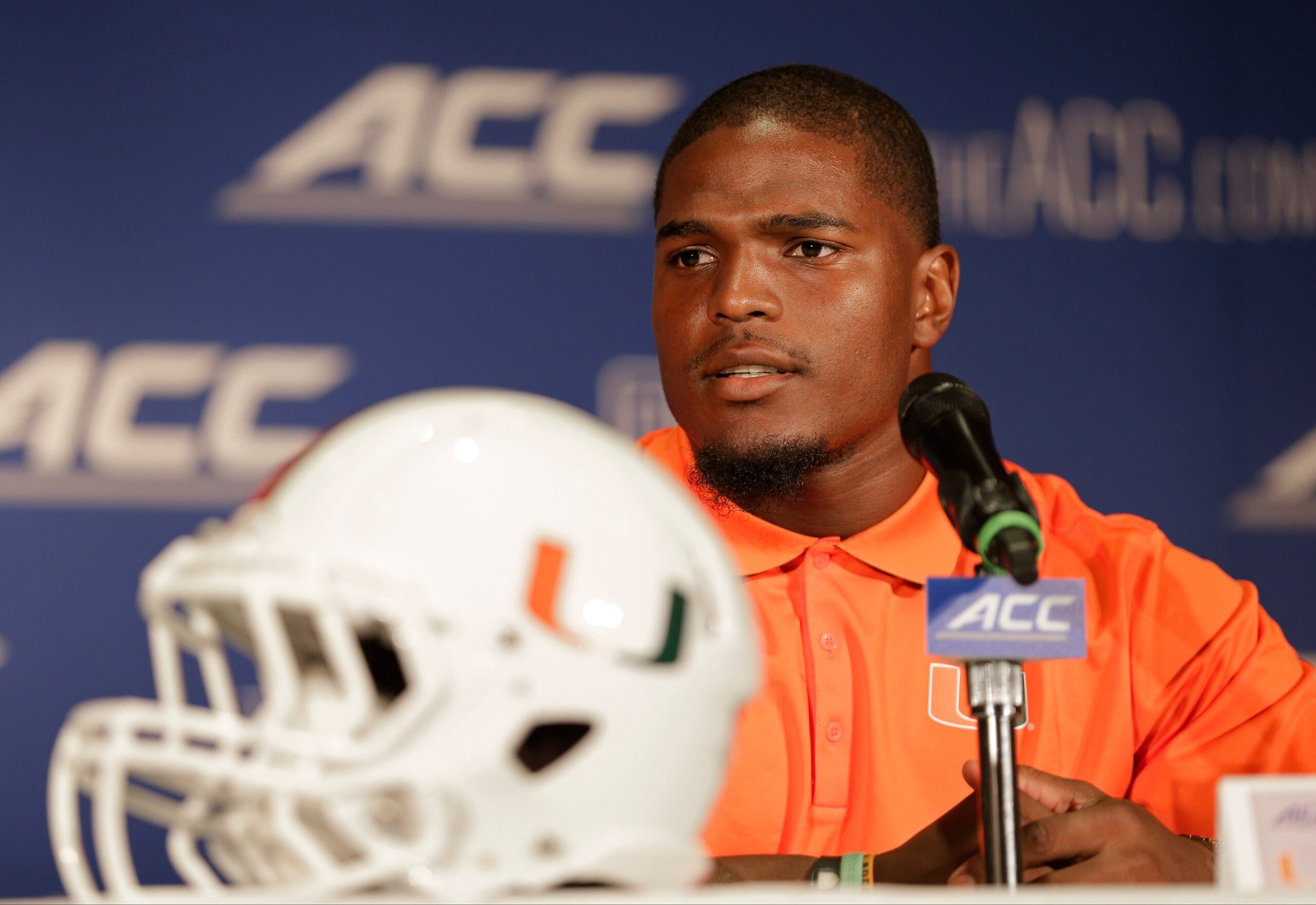
When current Giants inside linebacker Jon Beason is healthy, he is an above-average playmaker whose presence really does make a difference.
The problem is that since 2011, Beason has had one misfortune after another, all to his lower body. With each injury, it’s not unrealistic to wonder what toll the surgical procedures have taken on his soon-to-be 30-year-old body.
Beason’s latest injury, a broken sesamoid bone and torn ligament in his big toe on his right foot last June, should be as good as new by the spring, though it remains to be seen if he will be ready for OTAs or if the Giants medical staff will limit him.
While it would be nice if Beason, who again has had more than his fair share of injuries that have resulted in him playing 24 games since 2011, it’s time to start planning for the future.
Inside linebacker Denzel Perryman, who like Beason is from "The U" (Miami) would be the perfect candidate if he were sitting there in the second round on Day 2.
Perryman, who played outside linebacker at Miami, but who projects inside, according to Derek Stephens of NFL Draft Scout, could sit and learn behind Beason for a year or two.
According to his University of Miami bio, Perryman finished with 351 career tackles, 27 for a loss, 4.5 sacks, seven forced fumbles and 10 pass breakups.
While he would likely be a situational linebacker as a rookie, much like Devon Kennard was, until injuries forced him into full-time duty, with time and experience, Perryman should blossom.
Wouldn’t it be nice to see a pair of young and promising linebackers such as Perryman and Kennard playing the role of enforcers for the Giants defense?
Defensive End
3 of 5
Barring something crazy happening, defensive end Jason Pierre-Paul should be a Giant in 2015, whether it’s due to him signing a multiyear contract or if it’s because he receives the franchise-tag designation.
As noted in analysis from earlier this week, 26-year old pass-rushers who can also play the run don’t grow on trees.
Those who opine that the Giants should move on from Pierre-Paul, such as Bleacher Report’s NFC East lead writer Brad Gagnon, who lays some thought-provoking arguments, offer valid points.
However, there is one point missing from the equation that needs to be made when evaluating stats.
In 2011, when Pierre-Paul had his breakout season with 16.5 sacks, on the other end of the line was Justin Tuck, who, per Pro Football Focus (subscription required), was no slouch in the pass-rushing department either.
That season, Tuck graded out with a 3.2 mark on the pass rush, according to Pro Football Focus (subscription required), while finishing with 5.0 sacks, a year removed from posting 11.5 sacks.
In 2012, Pierre-Paul’s back issues began to take their toll, and in 2013, he spent most of that season recovering from back surgery.
By the time 2014 rolled around, Tuck had left for Oakland, replaced by an aging and less effective Mathias Kiwanuka on the other side. Despite often having a bull’s-eye on his back, Pierre-Paul still managed to record 12.5 sacks.
The moral of this backstory is that with a solid defensive end who can rush the passer playing on the opposite end, the Giants now create a “pick your poison” scenario for opposing offenses if they line that still- to-be-named defensive end opposite a healthy Pierre-Paul.
So let’s look at the current personnel at the position. Kiwanuka is most likely finished.
Robert Ayers Jr. showed promise as a defensive end, but his versatility—he can play defensive tackle, likely precludes him from being an every-down defensive end.
Kerry Wynn has shown flashes; however, we still need to see more of him in game situations to know if he is unquestionably a keeper.
Damontre Moore has shown a lot of promise as a pass-rusher, but his inability to play on first and second down after two seasons is starting to become a concern, though perhaps with a new defensive coordinator, he will finally get his breakout season in 2015.
Regardless of all of the above, a young pass-rusher who can ideally play the run might not be a bad idea in the first three picks. Alvin Dupree (6’4”, 267 lbs) from Kentucky, might be a candidate worth considering.
Per Rob Rang of NFL Draft Scout, Dupree’s “length, agility and closing speed stand out on tape, as does his comfort playing out of the two or three-point stance.” That versatility could enable the next Giants defensive coordinator to potentially toy with some 3-4 fronts.
.jpg?w=2560 "Seahawks Chiefs Football")


Safety
4 of 5
Antrel Rolle, Stevie Brown and Quintin Demps are all set to be unrestricted free agents. Cooper Taylor and Nat Berhe, the two safeties who will be back in 2015 given that they’re under contract, have combined for 37 defensive snaps, according to Pro Football Focus (subscription required) (five by Taylor and 32 by Berhe).
That’s not a very pretty picture at safety, which is almost certain to get a dose of free agency, whether it be the re-signing of Rolle and/or Brown or the addition of an outsider such as Devin McCourty of the New England Patriots.
What the Giants end up doing in free agency will likely dictate what, if anything, they do at this position in the draft.
Let’s say the Giants decide to let Rolle, despite his versatility is probably best playing in the box, walk and promote Berhe to that spot.
That would leave the Giants in need of a free safety, a position that could be filled by Brown who would be two years removed from his ACL surgery by next season or by a draft pick.
Regardless, a draft pick would seem to be the way to go for the future. And if the Giants wanted to use an early pick on a safety (unlikely, but please play along), the best of the bunch would be Cody Prewitt, 6’2”, 217 pounds of Ole Miss.
According to Rob Rang of NFL Draft Scout, Prewitt is a classic center fielder on the gridiron, a player “with good vision and the athleticism to handle deep coverage responsibilities” that “changes directions fluidly and is a smooth accelerator.”
If there is a drawback to Prewitt, Rang notes that he has rarely been asked to cover slot receivers closer to the line, a role he might have to learn at the NFL level, especially with offensive coordinators occasionally lining up a big tight end in the slot.
Prewitt has nice size for a safety and comes with a reputation as a solid tackler who is not afraid to hit, traits that the Giants could really use in the defensive secondary.
Defensive Tackle
5 of 5
In 2014, the Giants run defense allowed an average of 135.1 yards per game on the ground, putting them 30th in the league.
Not good.
While the Giants took the first step toward fixing their run defense issues by relieving defensive coordinator Perry Fewell of his duties, that’s only a start.
Now the onus is on the front office to get the right personnel to help beef up that run defense, which especially had its share of struggles against read-option quarterbacks in 2014.
You might remember that following the 2012 season, a year in which the Giants defense finished 31st overall and allowed 129.1 yards per game (24th in the NFL), New York went on a massive spending spree to acquire defensive tackles.
That offseason brought Cullen Jenkins and Mike Patterson and Shaun Rogers to join Rocky Bernard and Linval Joseph. They also drafted Markus Kuhn in 2012 and Johnathan Hankins in 2013.
Rogers, Bernard and Joseph were all subtracted from the defensive tackle group in 2014.
Per Pro Football Focus (subscription required), Patterson, a short-yardage run-stopping specialist, finished with 23 tackles and a minus-8.7 run-stopping grade, while Jenkins, who battled a calf injury for part of the season, wasn’t much better when he was on the field, finishing with a minus-7.1 run-stopping grade.
If the Giants are looking to add youth in any of the first three rounds of the draft, an intriguing prospect is Danny Shelton, 6’2”, 332 pounds out of Washington. Rob Rang of NFL Draft Scout cleverly noted that Shelton is “built like a Coke machine and he's just as tough to move.”
Physically, Rang compares Shelton to a younger Vince Wilfork of the Patriots—a big body that is capable of mucking up the interior running lanes.
While not quite as efficient as a pass-rusher, at least on the college level, it needs to be remembered that Jenkins didn’t really have much in the way of pass-rushing stats to show for his efforts because his primary role was to muck up the middle.
Patricia Traina covers the Giants for Inside Football, the Journal Inquirer and Sports Xchange. All quotes and information obtained firsthand unless otherwise sourced. Follow me on Twitter @Patricia_Traina.
.jpg?w=2560 "Raiders Saints Football")