

San Francisco 49ers: 2014 Defensive Report Card
With the year coming to an end, it’s time for the San Francisco 49ers and their fans to take one last look back on the 2014 season that was. With that in mind, we continue giving out our year-end positional grades.
Yesterday, we looked at the offense, which was, at best, middling this season. However, the offense was never the calling card of Jim Harbaugh’s squads, just as it wasn’t for Mike Singletary or Mike Nolan. It remains to be seen if the new head coach, whoever it ends up being, will return the 49ers to the offensive identity they had for most of the ‘80s, but for now it’s the average albatross around the team’s neck.
What the 49ers did boast, of course, was a top-flight NFL defense. While injuries meant most of the familiar faces missed some time this season, backups and depth stepped up and kept the 49ers’ defense somewhat formidable this year. For the fourth straight year, Vic Fangio’s defense ranked in the top five in yards allowed, an impressive streak. While this year’s defense doesn’t rank up with the 2011-13 editions, which are arguably the three greatest defensive units in 49ers history, it was still a more than respectable unit.
However, the defense as a whole did decline as the year went on. By the end of the season, it was down Ray McDonald, Ian Williams, Glenn Dorsey, Patrick Willis, NaVorro Bowman, Chris Borland, Tramaine Brock, Ahmad Brooks, Eric Reid, Perrish Cox and Jimmie Ward. That’s potentially a starting defense right there.
That decline pushes the grades for the defense down a bit. I considered applying heavy weights to these sorts of things—they were average with backups! Give them an A!—but ultimately decided there is no effort awards in the NFL. If your backups play like average NFL starters, that’s a good thing but it still means you’re average at the end of the day. You can adjust some of the grades yourself to account for the loss of so many star players.
Let’s go unit by unit along the defense, handing out grades. Again, we’ll be trying to find both areas of strength and areas of weakness—constructive criticism to go along with praise, in an attempt to see what the team can build on and what will need to improve in 2015.
Defensive Line
1 of 6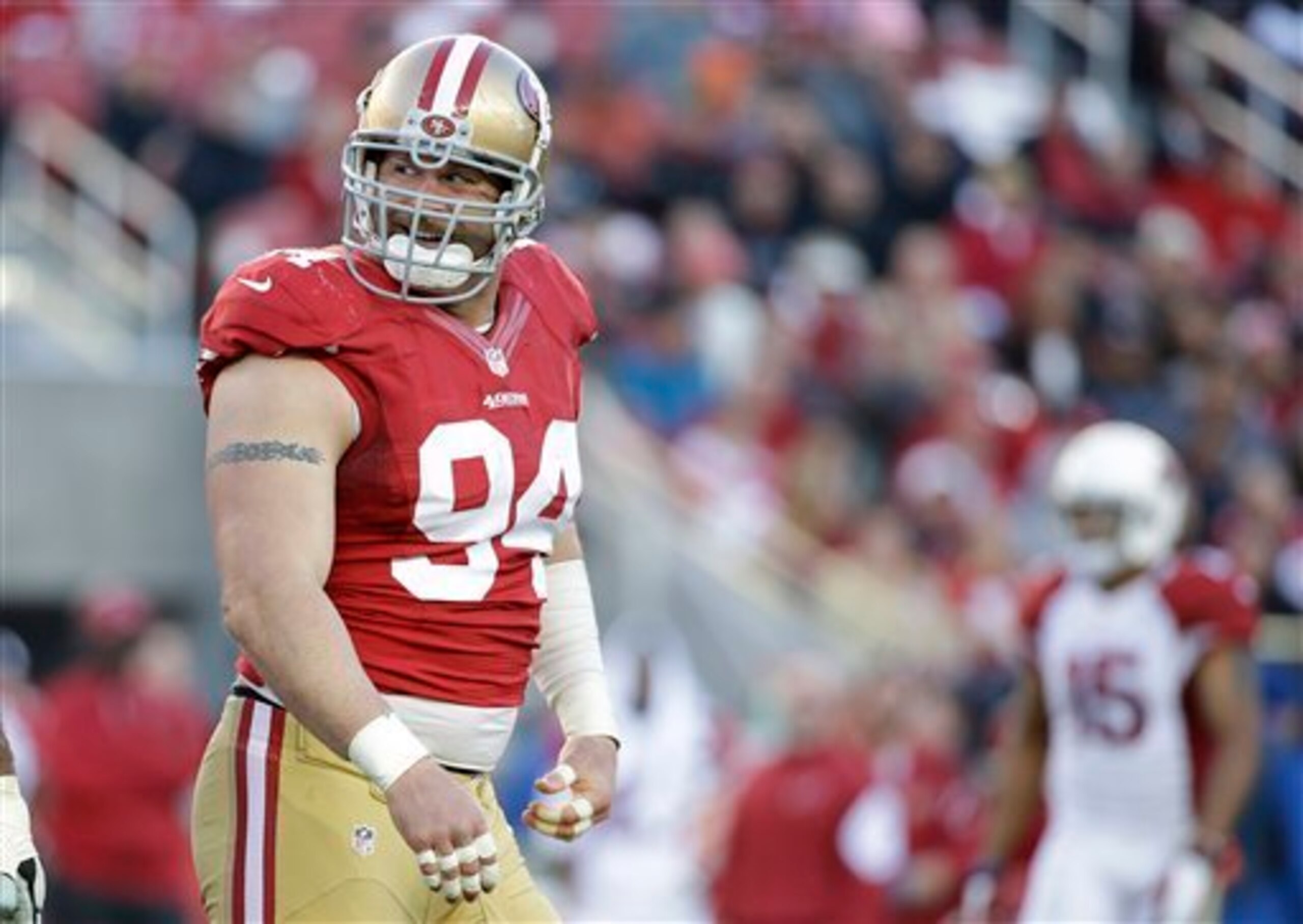
Defensive Line
Midseason grade: B+
The defensive line suffered a late-season swoon, turning what was a very positive grade into a more average one between the bye week and the end of the season.
The run defense is a good example of this. In the first seven games, the 49ers allowed just 594 rushing yards, which was the sixth-best total in the NFL. After the bye, however, the 49ers ended up allowing 920 rushing yards, which ranks them 22nd. The 49ers allowed seven of their nine post-bye opponents to rush for at least 90 yards, while holding three of their seven pre-bye opponents to less than that.
Losing Ian Williams midseason certainly didn’t help these numbers; he was having his normal strong season until he fractured his fibula. It’s not just that, though—William’s replacement, Quinton Dial, showed some promise in the last seven games and was trending upwards as the season ended. While the 49ers would prefer Williams or Dorsey to start over Dial, Dial actually looked like an average NFL starter by the end of the season, which is great news for depth.
Less promising was Ray McDonald’s replacement, Tony Jerod-Eddie. The 49ers better hope Justin Smith opts not to retire because it doesn’t feel like Jerod-Eddie is ready to take over a starting role in 2015. The fact Jerod-Eddie had to start the last two games, and was a key rotational player, hurt the 49ers this season. Jerod-Eddie showed occasional flashes in 2013 but almost none in 2014. It’s probably time to give Tank Carradine more of a chance.
Justin Smith, of course, was as great as ever, and it’s the play of Smith and McDonald that keeps the defensive line’s grade as high as it is. This is a unit that needs an influx of depth, because it might have to replace both defensive ends this season.
Pass-Rush Grade: C
Run Defense Grade: C+
Penalty Grade: A
Overall Grade: C
Linebackers
2 of 6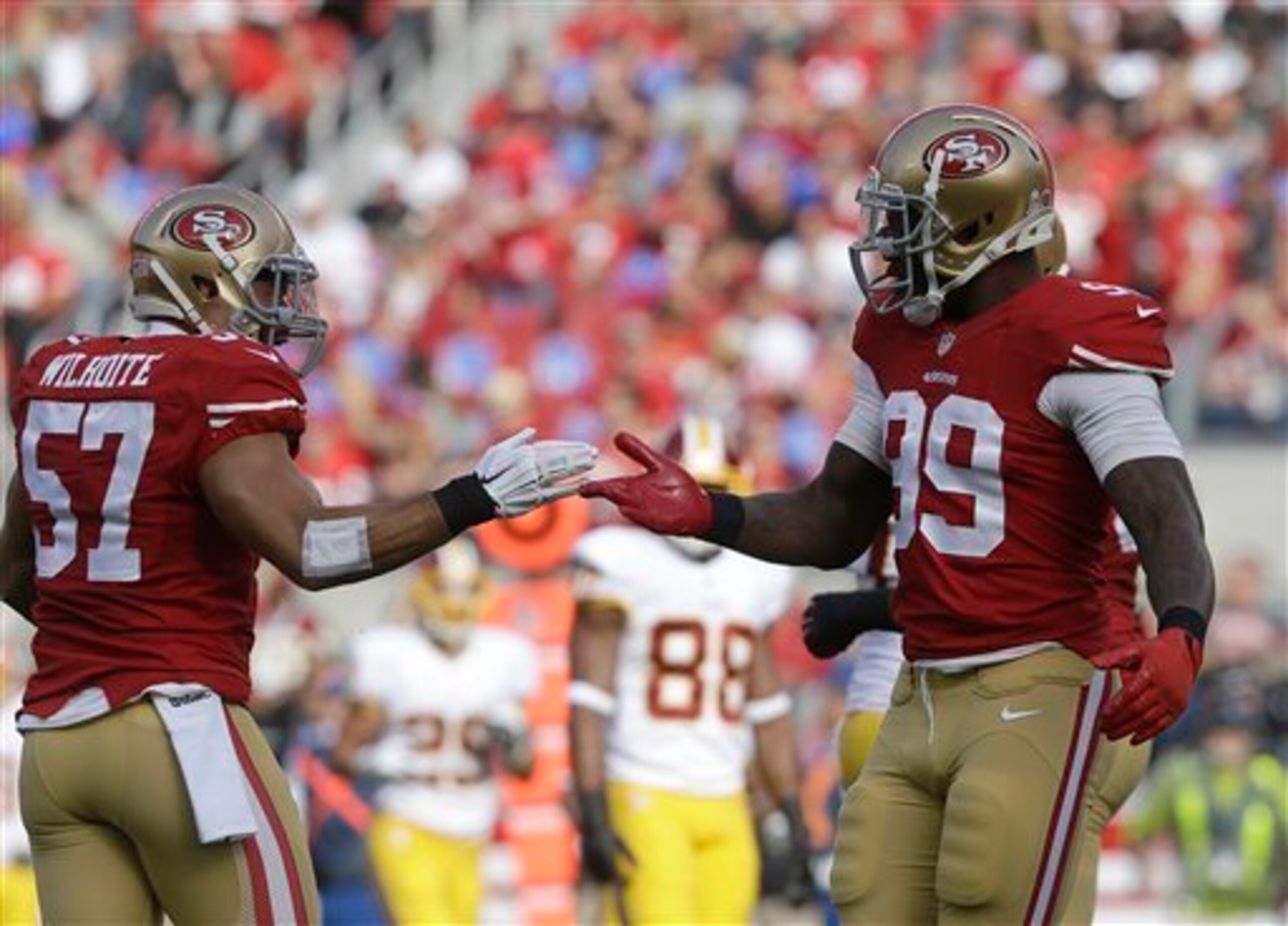
Midseason grade: C
Here’s where the injuries really started to impact San Francisco’s grade. Find me a team that can miss a full season from an All-Pro like NaVorro Bowman and half-seasons each from Patrick Willis and Aldon Smith and still be an average linebacking unit. This C should hang on the wall of the backups who found themselves pressed into a very difficult situation and performed more than adequately.
Chris Borland, of course, performed much more than adequately—he should be Pro Bowl-bound. He finished the season with the highest Pro Football Focus rating on the entire defense (subscription required) despite only starting eight games. While his early starts against New Orleans and the New York Giants perhaps set expectations too high, he continued to play at a high level throughout the second half of the season. He’s already a run-stopping machine, and he’s not bad at anything else. If he can get his pass-coverage game up to the level of Bowman or Willis, watch out.
Borland played like a great starter, but he wasn’t the only backup to impress. Aaron Lynch and Dan Skuta, who served as Aldon Smith’s replacements, looked very promising for rotational players, with Lynch adding a pass-rush punch most of the defense was lacking. Even Michael Wilhoite, who didn’t quite play up to the level the other three did, had bright moments. He also played the second-most snaps on defense, which is worth something in and of itself.
With the backups playing well, it was actually the starters that disappointed this season. Bowman didn’t play a single snap. Willis missed the second half of the season with a chronic toe injury. Smith wasn’t quite the same pass-rushing threat after his suspension, as it took time for him to shake off rust.
Then there was Ahmad Brooks, who ended up benched multiple times due to attitude problems. The ex-Pro Bowler didn’t play up to the level expected from him, either. He finished the year with 25 solo tackles, his lowest number as a starter and lowest total since 2009. His six sacks were also his lowest total as a starter. It seems doubtful he’ll be on the team in 2015.
Pass Coverage Grade: C+
Run Defense Grade: C
Pass-Rush Grade: D+
Penalty Grade: C+
Overall Grade: C
Secondary
3 of 6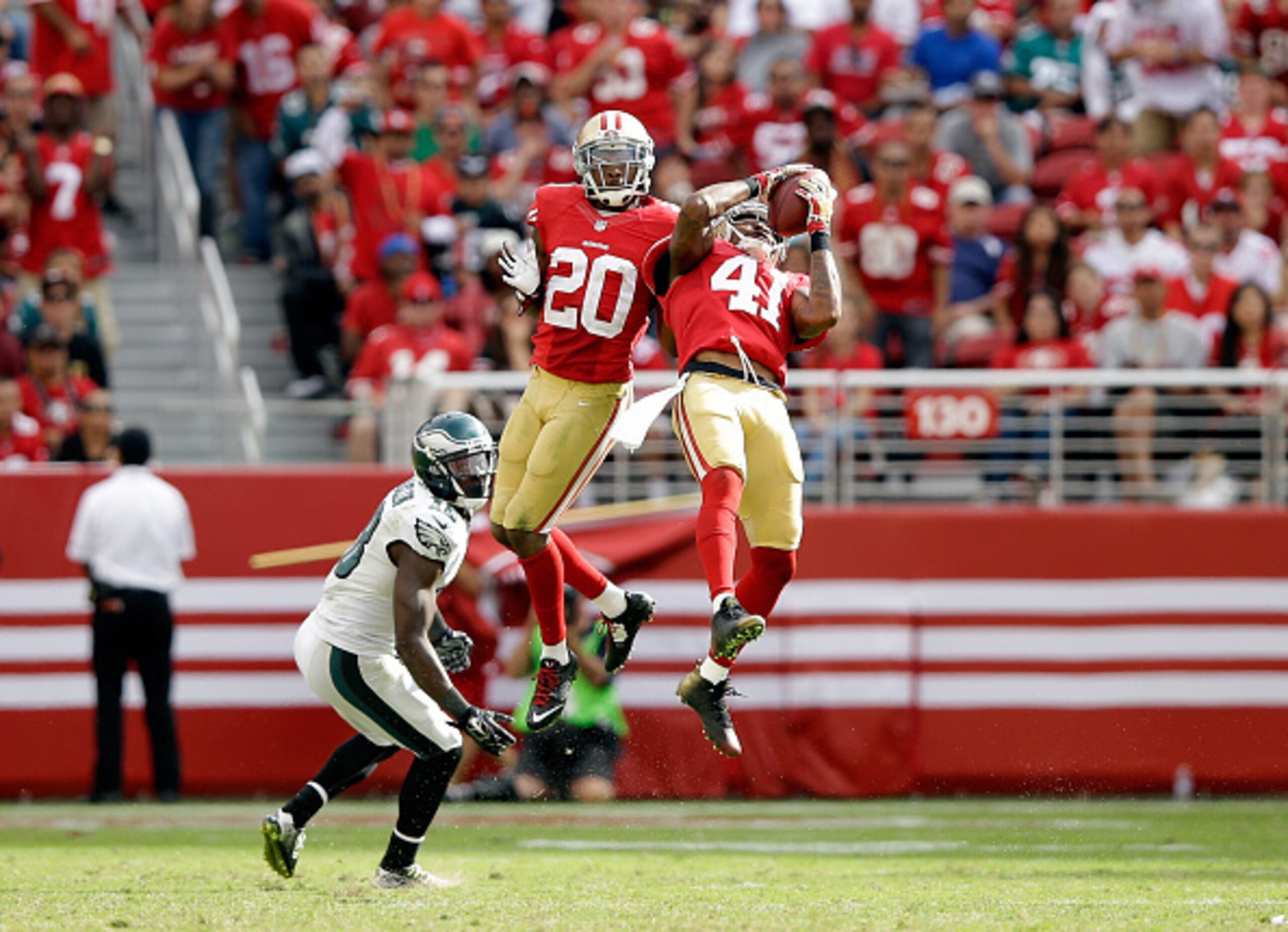
Midseason grade: A
If you had told me before the season started I’d give the 49ers’ secondary the highest defensive grade, I would have thought you were crazy.
Of course, the secondary avoided most of the injury woes the rest of the defense had to absorb throughout most of the season. Yes, Tramaine Brock ended up missing nearly the entire year, but that’s nothing compared to three starting linebackers or your top two nose tackles. The secondary unit was for the most part intact and played like Vic Fangio and the 49ers would have hoped.
As a unit, the 49ers’ secondary allowed the fifth-fewest passing yards in the NFL this season and led the league in interceptions. The only reason they don’t get the full A in coverage is because they also allowed 29 touchdowns—that can somewhat be attributed to poor field position, but that’s the sort of excuse that, say, the Seattle Seahawks don’t have to make.
They were led, of course, by Antoine Bethea, who should also have been named to the Pro Bowl. Bethea was the unanimous choice by the 49ers’ beat writers for team MVP, and it’s hard to argue too strenuously against him. He didn’t just provide veteran leadership; he provided real, tangible impact in the form of interceptions and touchdown-saving tackles.
While Bethea was by far the standout, there was very solid play from a number of different players in the secondary. Both Chris Culliver and Perrish Cox had career years at cornerback. Culliver returned from the ACL injury that cost him the entire 2013 season without missing a beat, and Cox managed to perform well despite being thrust into the starting lineup with Tramaine Brock’s injury. Eric Reid was also solid, though not up to the standard he set as a rookie in 2013.
Two players did struggle in the secondary, though—the two rookies. Dontae Johnson can be forgiven, as he was a fourth-round pick who the 49ers had to start due to injuries, and all that considered, he didn’t play too badly. Jimmie Ward, on the other hand, had a couple of really rough days, with both Brandon Marshall and Brandin Cooks giving him trouble in a couple of ugly performances. There’s still time for him to bounce back, but he was one of the lesser first-round rookies this season.
Coverage Grade: B+
Run Defense Grade: B-
Penalty Grade: B
Overall Grade: B+
.jpg?w=2560 "Seahawks Chiefs Football")


Overall (Defense)
4 of 6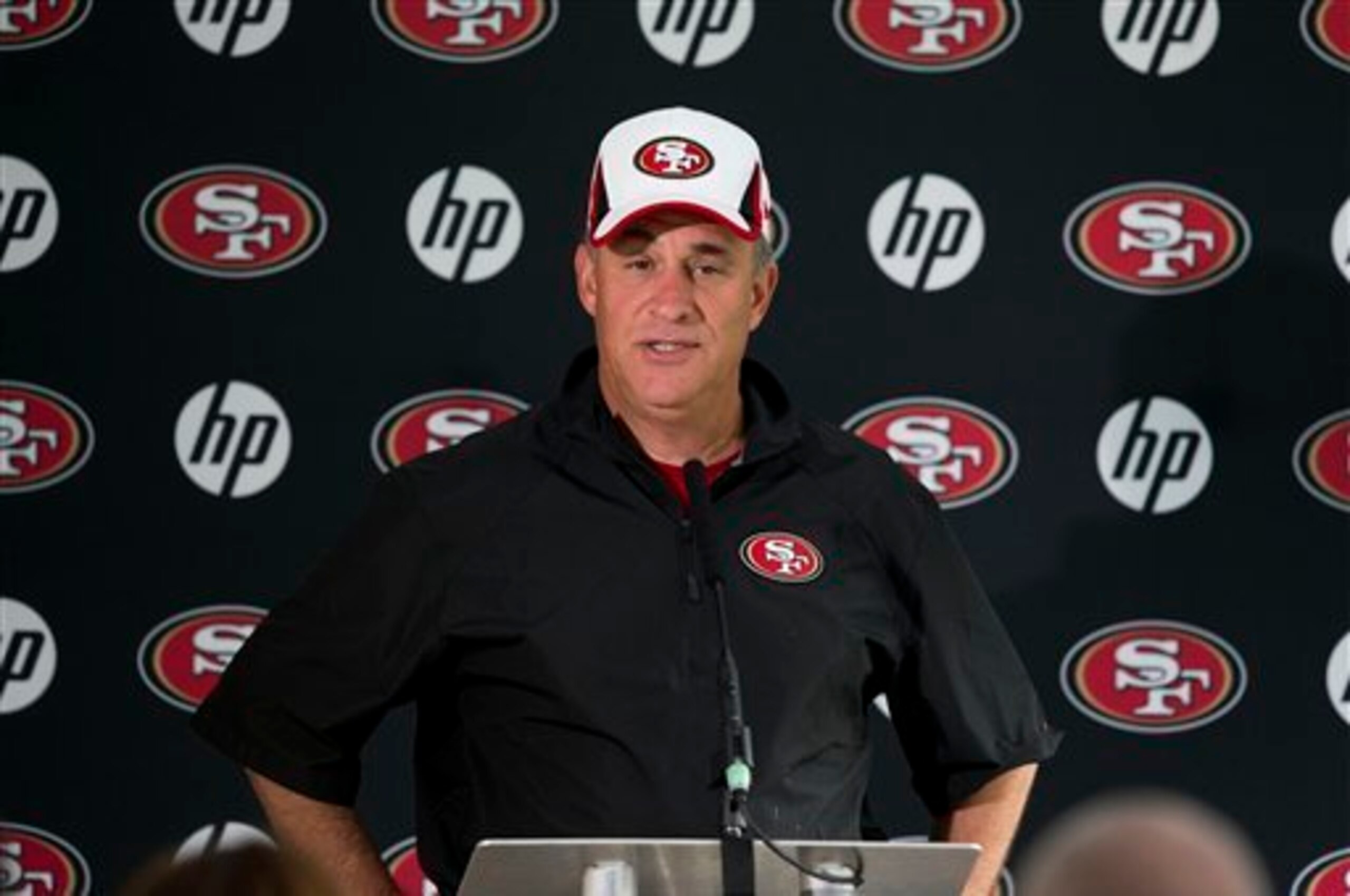
Vic Fangio did an amazing job keeping this defense at the level it was despite all of the injuries, suspensions and off-field turmoil. That alone should be enough to give him the head coaching job for 2015.
The end result of the defense was one that was more than the sum of its parts. Fangio did an amazing job plugging players in without the defense missing too much of a beat. Until the end of the year, when the amount of injuries simply overwhelmed the team’s depth, Fangio dialed up defenses that protected his young developing players, allowing people like Chris Borland and Aaron Lynch to look like stars. It was an astounding coaching performance.
It was, all in all, a down year for the defense, but that’s due to the high standards provided from the last three seasons. According to Pro Football Reference’s Simple Rating System, the top three defenses in 49ers history are, in order, 2012’s, 2013’s and 2011’s. This year’s defense doesn’t hit the top 25, but considering all the turmoil it had to go through, it’s still a remarkable achievement. I can’t go the full A thanks to the greater number of points allowed, but Fangio should be proud of what his platoon managed to do this season.
Defense Grade: B+
Special Teams
5 of 6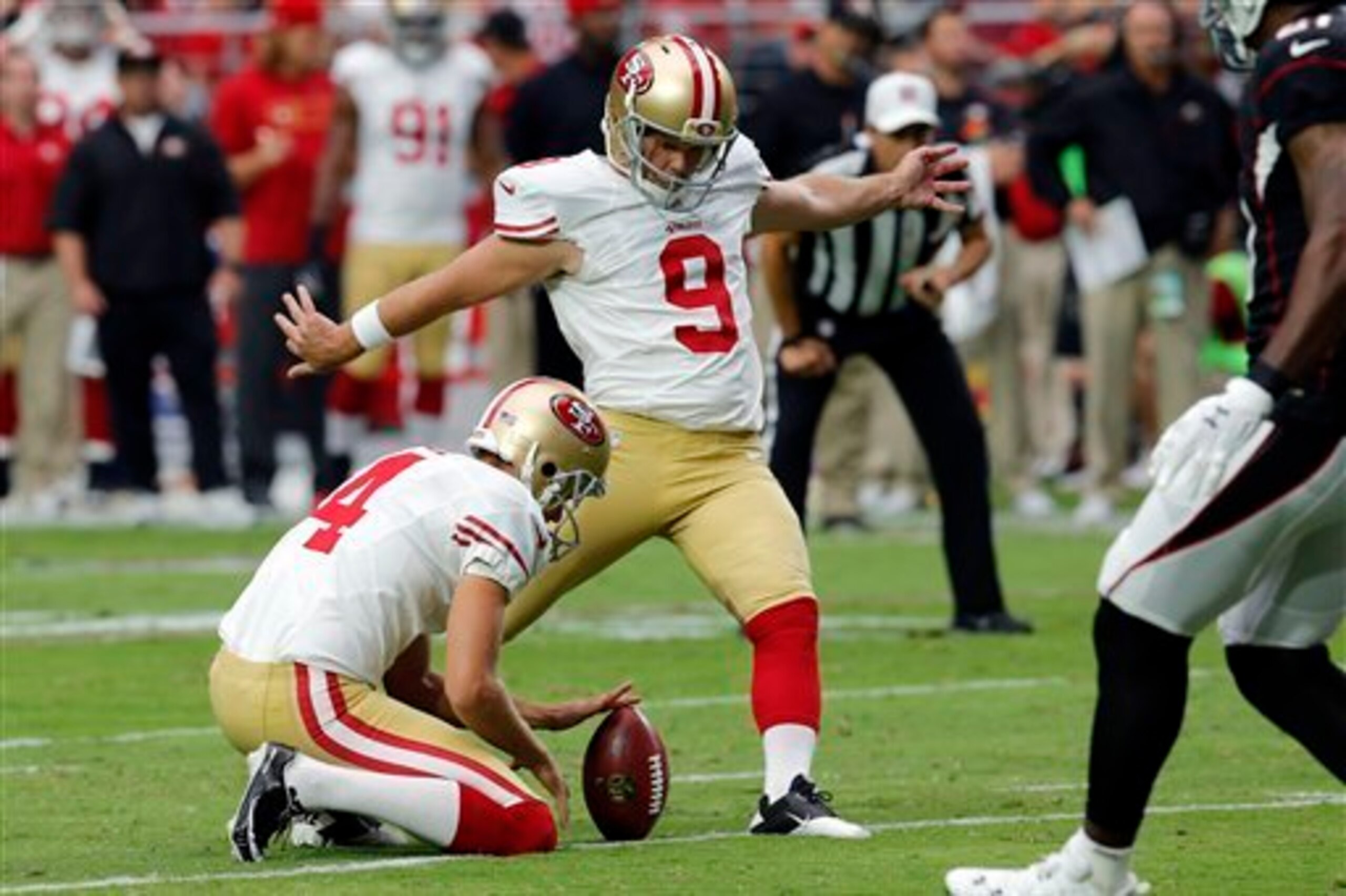
Phil Dawson made less field goals in the last nine games than he did in the first seven, though he was still above 80 percent, so that wasn’t so bad. Dawson’s leg isn’t the strongest in the league so he only managed a touchback on 32 of his 73 kickoffs, meaning the 49ers had to face a lot of runbacks. All in all, though, Dawson played fine.
Andy Lee’s average dropped in the second half of the season from 47.7 yards per punt to 46.3. All in all, it was his worst yards-per-punt year since 2010. His punt team didn’t give him too many favors, either, and the 49ers ended with a net of 41.5 yards per punt, which is right in the middle of the pack. Lee also had an above-average number of touchbacks with seven.
It’s the return game, though, that lowers this grade the most. Bruce Ellington was alright as a kick returner, if nothing super splashy, and Carlos Hyde filled in adequately at times, but the 49ers have been looking for a punt-return weapon since Ted Ginn left town, and this year wasn’t it. Neither Ellington nor Perrish Cox added much of anything to the punt return game; the 49ers’ longest return was just 23 yards, good for 27th in the league. On a team that played a lot of the field-position game, not having an advantage on special teams is a serious blow.
Kickoff Grade: B-
Field-Goal Grade: B-
Punting Grade: C-
Kick Return Grade: C-
Punt Return Grade: D
Overall Grade: D+
Coaching
6 of 6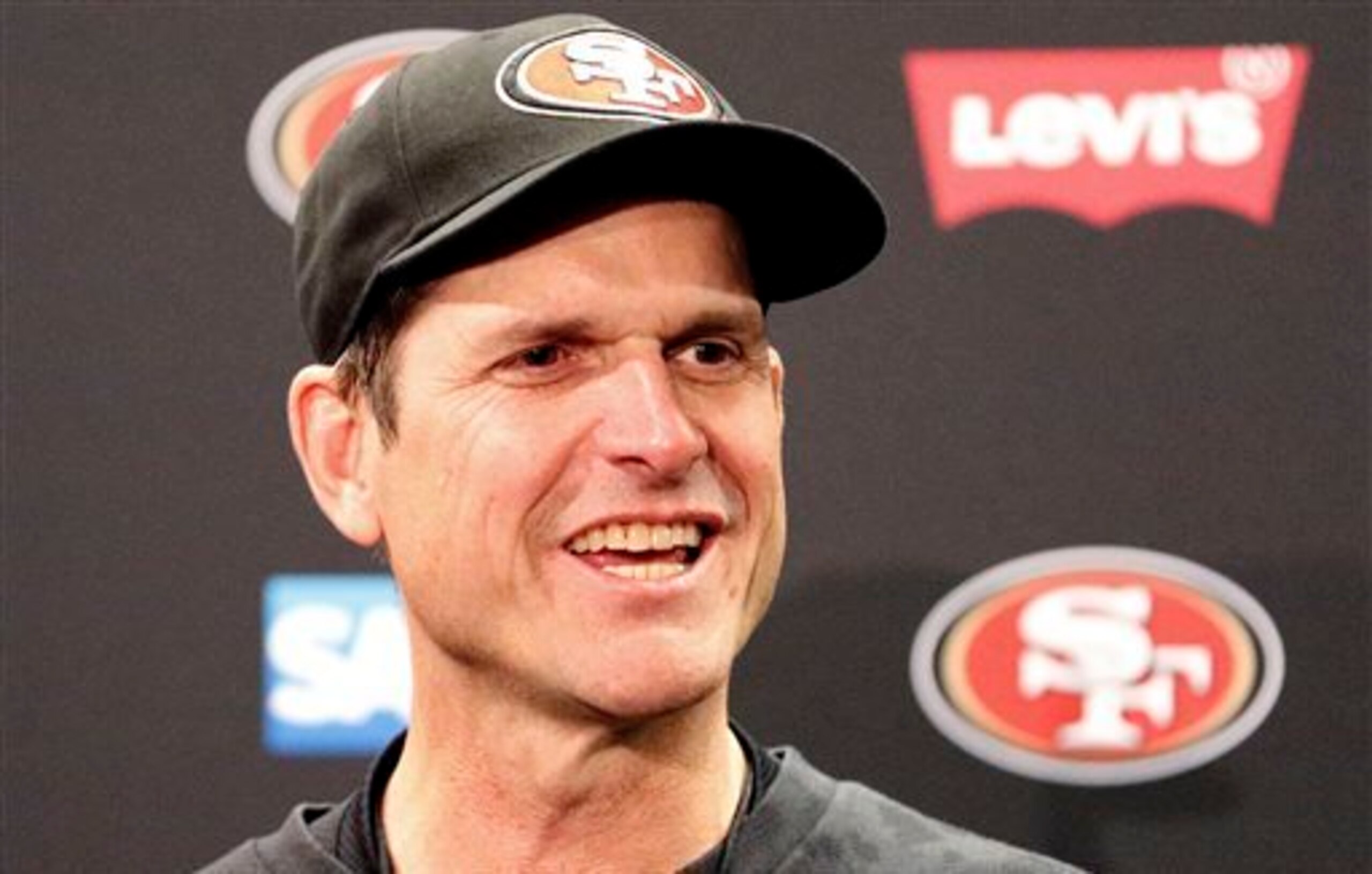
How do you grade Jim Harbaugh’s final year? If you’re judging him by preseason expectations, he deserves an F—to fall from a Super Bowl contender to an 8-8 team is disastrous. If you’re judging him by his ability to overcome injuries and off-field drama, then he deserves a much higher grade; to get to .500 despite losing essentially an entire starting defense deserves some credit. If you’re just judging by wins and losses, then he deserves a C—they finished 8-8, which is average.
I think all of that is fair. Harbaugh’s going to go down in 49ers history books as a divisive figure—a coach who took the team to heights it hadn’t seen in over a decade and yet couldn’t find a way to work with his owner and general manager. He’s an incredibly intense, unbelievably competitive figure who wears out his welcome after a handful of seasons. We’ll see if he lasts more than four years up at the University of Michigan.
All in all, he definitely did not deserve to be fired. This may have been his worst season as head coach of the 49ers, but the franchise will be lucky to get someone half as good as their next coach.
Overall Grade: B
Bryan Knowles is a featured columnist for Bleacher Report, covering the San Francisco 49ers. Follow him @BryKno on twitter.
.jpg?w=2560 "Raiders Saints Football")



