Mike Tomlin's Pittsburgh Steelers Offense Takes New England Patriots' Mentality
Weeks after his team took Super Bowl 43, head coach Mike Tomlin was laying the groundwork for the next great generation of Pittsburgh Steelers.
As the league's landscape continued to evolve, so was the need for Tomlin's Steelers to follow suit.
The NFL was different game in 2009 than it was when former head coach Bill Cowher's Steelers won Super Bowl 40 in early 2006. Still, today, the NFL is contrasting to the year Tomlin's squad achieved a Lombardi Trophy in Super Bowl 43 in early 2009.
.jpg?w=2560 "Commanders 49ers Football")
.jpg?w=2560 "Colts Football")
.jpg?w=2560 "DOLPHINS-AIKMAN")
Today's NFL is about creating matchup disasters with subpackages. For better or worse, it's become a weekly shootout.
A rebuild for Pittsburgh seemed imminent and necessary during that 2009 offseason. Even as the team would go to the Super Bowl the following season (2010), aging veterans on both sides of the ball like Hines Ward, Aaron Smith and Casey Hampton to name a few, the core of the Steelers for three Super Bowl appearances in six years, would eventually have to be replaced.
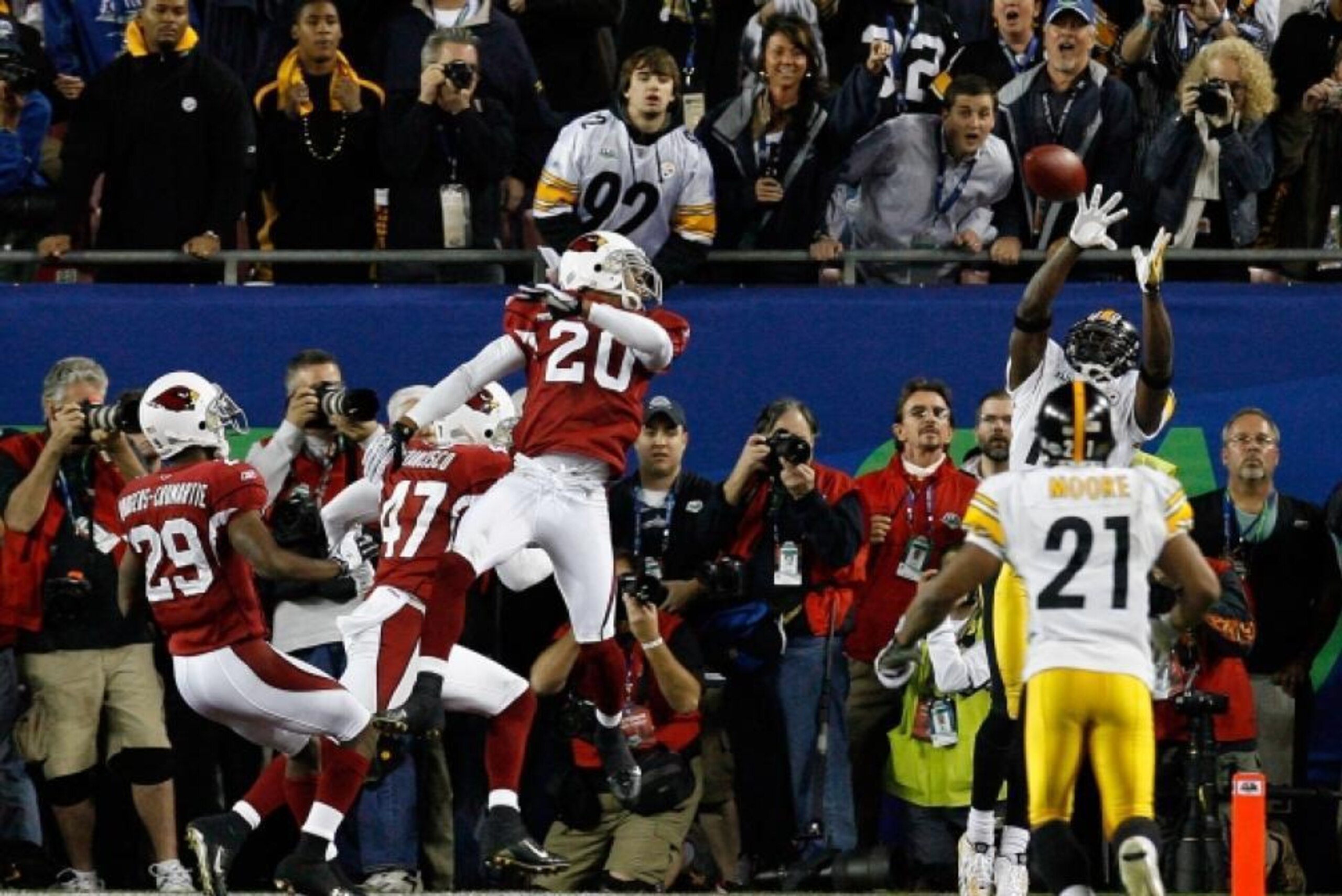
So, what did Tomlin desire for his offense? Caught in the "Tomlinisms" and coach talk often associated with a typical press conference during the 2009 season, he laid a few key quotes that were buried as the years went by.
"You study a team like New England, and they walk into a stadium offensively, and week to week they can be whatever they choose to be," Tomlin told Ed Bouchette of the Pittsburgh Post-Gazette in a Sept. 23, 2009 article. "They can beat you in three wides, four wides, three tight ends, and it makes them very difficult to prepare for and ultimately beat."
Flash to today, the team is earning high praise on the offensive side of the ball, where it seems like the long turnover of a championship-caliber team may finally be bearing fruit. That after two, long torturous seasons of...8-8 football. Oh, Pittsburgh fans, why must we bear such pain?
Offensively, the Steelers are well on their way to becoming that ideal image, that Patriots image Tomlin swooned over in 2009. The 2014 version is executing with the ball in a variety of ways, able to attack teams with a devastating power counter run game or with a record-breaking aerial assault. Or, in many cases, both at the same time.
Another Tomlin quote from that press conference:
"I think the great teams are capable of winning in many forms or fashion and playing to their strengths on a week-to-week basis based on a matchup. I thought a great deal about that, frankly, this offseason.
"
Contrasting offensive styles have been on display in varying degrees all this season. After nearly half a decade of drafting players, replacing players, dealing with character issues and scheme disappointments, the Steelers may finally have what Tomlin's so craved. His offense. His team. His image.
The proof is in the pudding.
| Game | Rushing Yards | Passing Yards | Total Points |
| Week 8 vs. IND | 117 | 522 | 51 |
| Week 9. vs. BALT | 55 | 340 | 43 |
| Week 11 vs. TEN | 206 | 207 | 27 |
| Week 14 vs. CIN | 193 | 350 | 42 |
| Week 15 vs. ATL | 45 | 360 | 27 |
In each instance, the offense simply took what it was given. In Weeks 8 and 9, the Steelers unleashed Roethlisberger's arm, as the quarterback threw for a record 12 passing touchdowns, 862 yards and Pittsburgh scored a ridiculous 94 points.
In Week 11, the Steelers took an old-school approach, grinding down the Tennessee Titans with seven consecutive runs from running back Le'Veon Bell in the fourth quarter, all of which accumulated in 43 yards and helped burn the final seven minutes of the game off the clock in a 27-24 victory. Bell rushed for 204 yards on 33 carries that night.
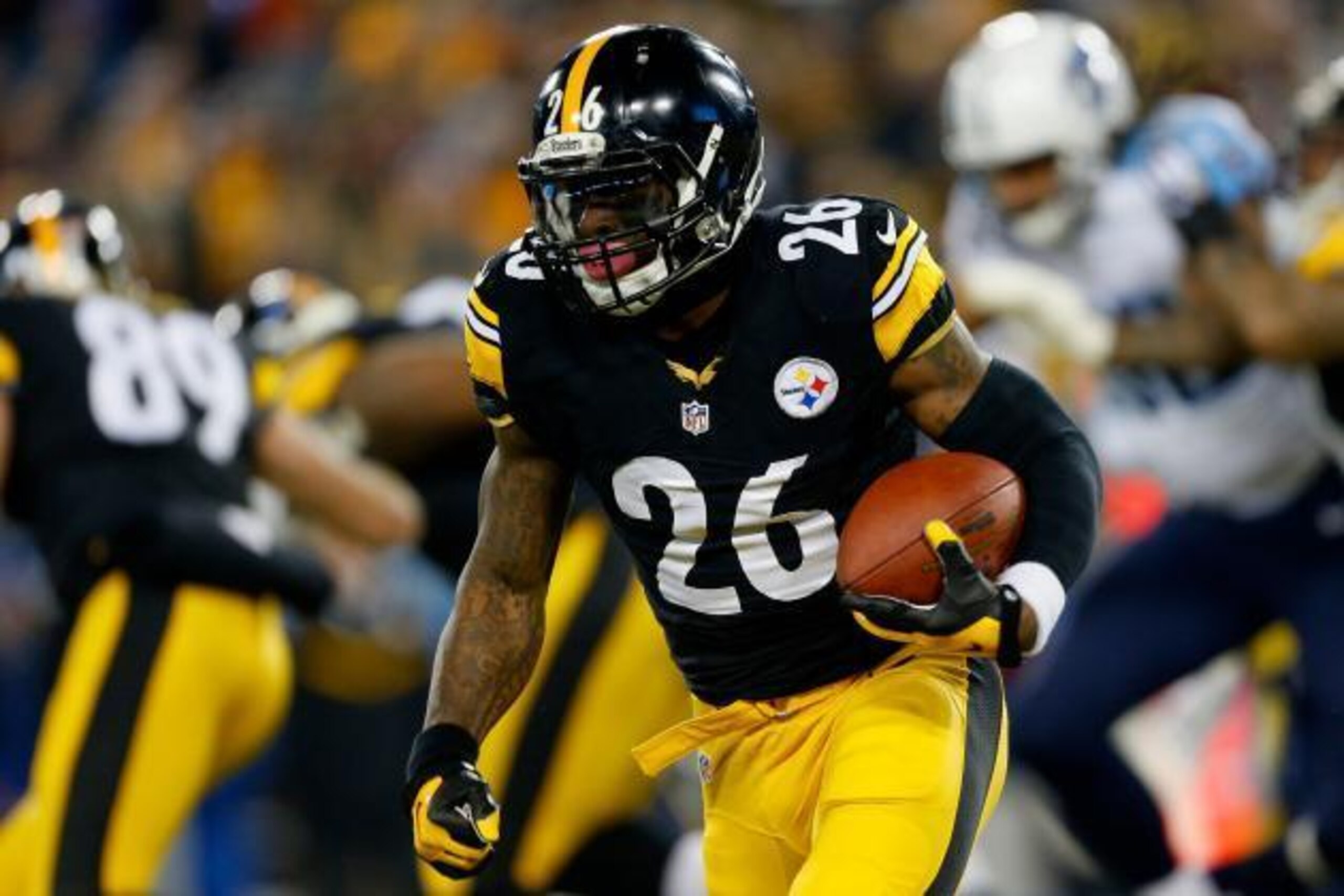
It was certainly Bell's coming-out party (with an assist to the release of backup LeGarrette Blount following the game), as the consecutive weeks displayed his abilities as both a runner and receiver.
After a Week 12 bye, Bell rushed for 95 yards and added 159 yards receiving in a 35-32 loss against the New Orleans Saints. The following week, the Cincinnati Bengals surrendered 185 rushing yards and 50 passing yards to Bell as the Steelers closed the gap in the AFC North with a 42-21 triumph.
Bell was certainly running loose, but it was what happened the next week against the Atlanta Falcons that showed the versatility of the Pittsburgh offense.
The Falcons defense made a point to shut down the Steelers' ground game, limiting Bell to just 47 yards on the day. However, the aerial attack of Pittsburgh's offense was able the fill the gap, as Roethlisberger passed for 360 yards, including 72 to Bell on five catches. The Steelers won 27-20.
“I wouldn’t say (it’s) frustrating,” said Bell to Dale Lolley of the Observer Reporter after that game (h/t Neal Coolong at BehindtheSteelCurtain.com). “Teams are obviously trying to slow down the run a little bit, but they can’t stop the pass when they do that. Pick your poison.”
That sounds an awful lot like the way the Patriots attack their opponents on a weekly basis.
This year, New England, again, has shown the ability to win by any means necessary, taking an AFC-best 12-3 record into the final week of the season. Here are a few examples that showcase some striking similarities to the Steelers this season.
| Game | Rushing Yards | Passing Yards | Total Points |
| Week 5 vs. CIN | 220 | 292 | 43 |
| Week 6 vs. BUF | 50 | 361 | 37 |
| Week 9 vs. DEN | 66 | 333 | 43 |
| Week 10 vs. IND | 246 | 257 | 42 |
| Week 11 vs. DET | 90 | 349 | 34 |
The particularly interesting games from the chart above occur from the three games from Week 9 to Week 12 (the team was on bye in Week 10).
A Week 9 matchup against the high-octane Denver Broncos featured 53 Tom Brady passes to just 22 running back carries. Seven of those 22 runs came in the final two New England drives of the game, winning 43-21.
The Patriots then switched to a ground approach their following game in Week 11, leaning on 201 yards on 37 carries by Jonas Gray in a 41-20 in Indianapolis.
Then, in true Patriots fashion, Gray is benched for missing practice the following week, and Brady passes 53 times, ignoring a first-ranked Detroit rushing defense in a 34-9 triumph.
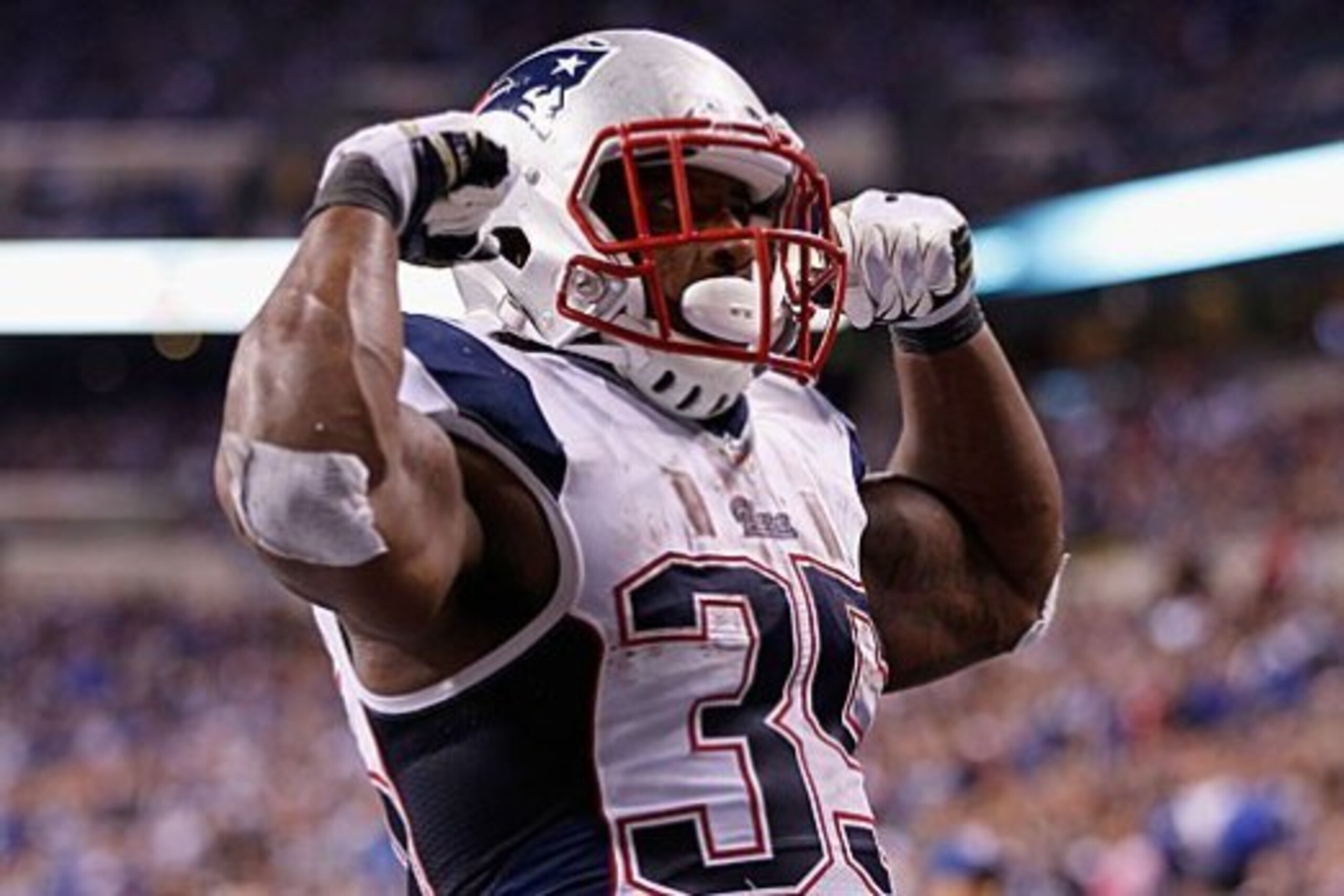
Gray furthers the point of dynamic, interchangeable parts and pieces that Tomlin mentioned was a factor in the team's success.
Any other team that had a 200-yard runner, it'd strap its fortunes to that guy and ride with him the rest of the season. Gray didn't see another carry until he received just one in Week 13.
After Gray's quick dismissal to the dog house, the Patriots ironically leaned on Blount, who was released by the Steelers after their Week 11 contest with the Titans.
In those games on the schedule, all wins, the Patriots did what was necessary. They didn't try to "impose their will" on the ground when things weren't working. They didn't air it out 60 times every game versus three runs. They took what the other team gave them.
Former New England linebacker Tedy Bruschi stated similar sentiments in a recent round table concerning the Patriots offense by Mike Reiss at ESPN.com:
"This is the opposite of what I call a "do-what-you-do" team -- offenses that do one thing really well and perfect it as part of their system. A team like the old Pittsburgh Steelers comes to mind. They were a power running team with certain plays, and they'd run those plays continually and adjust to whatever fronts were given to them.
They essentially were saying, "We think we are stronger and better than you are." New England is completely different and stands out because of it. The Patriots want to attack weaknesses. They're going to look at an opposing unit, figure out where there is weakness and find a way to attack it.
"
Bruschi notes the old Cowher Steelers team, which had issues with New England's teams during the early 2000s. Cowher's squads from the day were very run-heavy, using a strong offensive line with the run game of Jerome Bettis to insulate a weak-throwing Kordell Stewart.
The old idea of strong defense and a running game took Cowher nearly his entire tenure to shake. It wasn't until Pittsburgh fostered more balance with the drafting of Ben Roethlisberger did it achieve playoff glory.
That's ultimately the key to any offensive juggernaut—flexibility and balance. That enables a team to exploit weaknesses and matchups in a world of sub-package football.
That's where Tomlin and his staff should be praised.
The infamous Todd Haley is calling plays that reflect his offense's flexibility. Tomlin and Colbert have done a great job of selecting skill position players on offense since Tomlin joined the team. Offensive line coach Mike Munchak has helped solidify a unit of underachieving high-round picks in the trenches.
Most importantly, the players are executing on the field. The Steelers are the first team in NFL history with a 4,500-yard passer, a 1,500-yard receiver and 1,300-yard rusher in the same season, according to Scott Brown at ESPN.com.
Antonio Brown. Le'Veon Bell. Ben Roethlisberger.
The "Killer B's" will be the driving force in Pittsburgh's first playoff run in three years. With a defense that is getting hot at the right time, anything is possible this postseason.
Though that developing defense will likely be the team's demise in a divisional-round venture to Denver or an AFC Championship Game in New England, give Tomlin a few more years. He's helped rejuvenate a team and fanbase that have been doubting the direction of this club all season.
He'll have it back to "the standard" in no time.
(Special mention to the members of Steelerfury.com, for providing excellent talking points for Steelers information throughout my years as a fan, including the inspiration for this article.)
.jpg?w=2560)
.jpg?w=2560 "NFL Paris Football")

.jpg?w=2560 "Malik Beasley Negotiating Plea Deal (AP)")