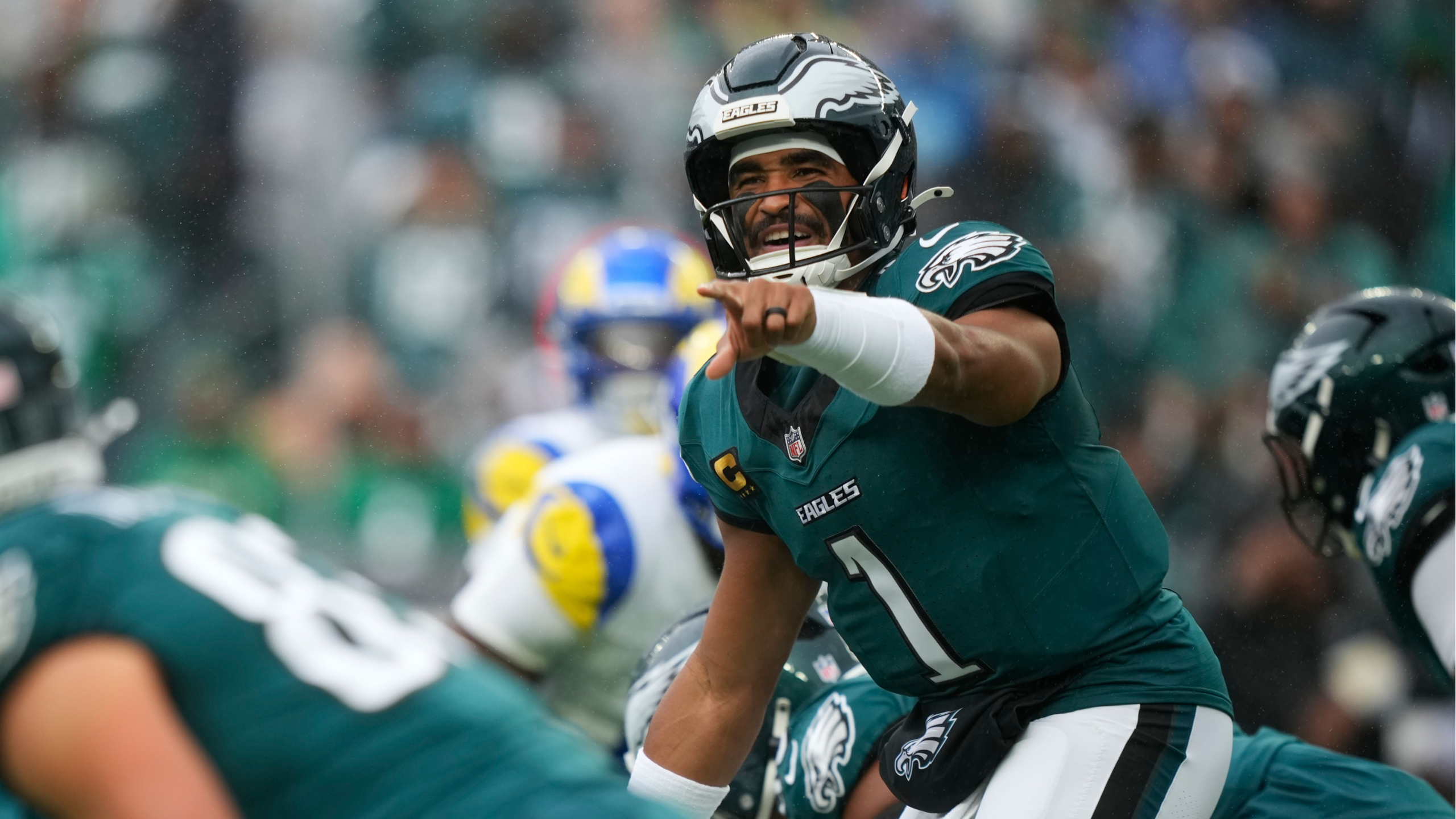
Blueprint for Marcus Smart to Become Boston Celtics' Next Great Point Guard
And just like that, the Boston Celtics have a new franchise point guard.
Or at least that's the hope with Marcus Smart after ESPN.com reported that management shipped off Rajon Rondo in a trade to the Dallas Mavericks.
You'd like to imagine that when general manager Danny Ainge drafted Smart with the No. 6 pick in 2014, he did so knowing that Rondo likely wouldn't be back, given his status as an impending free agent and the team's current rebuilding efforts.
TOP NEWS

Pic of LeBron's Helicopter Commute 🚁

Duren Calls Out 'False' Rumors

NBA Power Rankings Entering Preseason 🔢
Unfortunately, Smart has already missed 12 games with an ankle injury and a couple more as of late with Achilles pain. Quite frankly, he didn't have the greatest summer league or preseason, where he shot below 32 percent from the floor in both settings.
But the Oklahoma State product flashed a few can't-miss qualities that fueled his strong NBA appeal, along with some weaknesses that would need to be ironed out over time.
At 220 pounds, Smart isn't your traditional point guard. He's built more like a diesel NFL running back than a ball-handler.
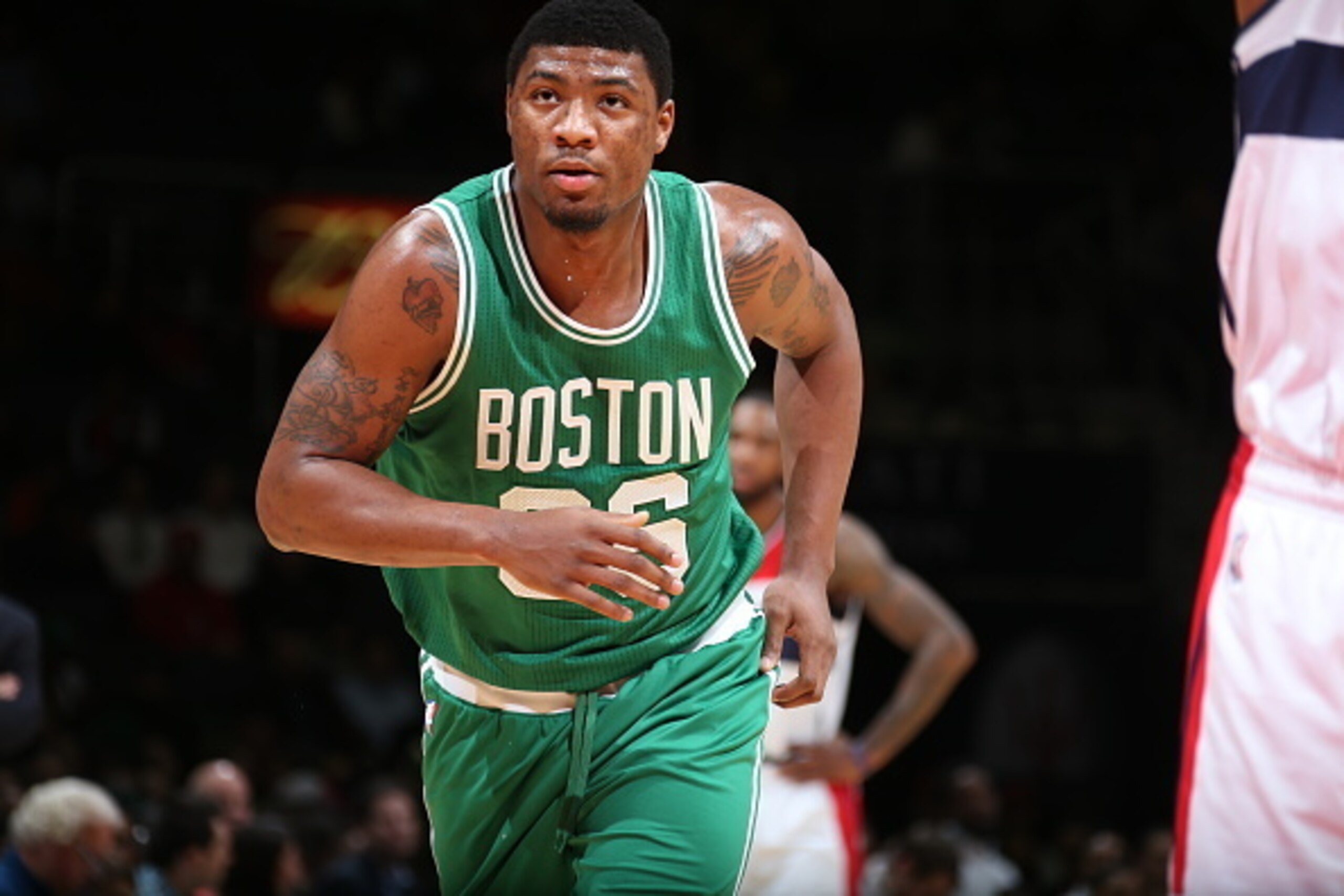
He played mostly the 2 in high school, while he wore just about every possible hat for the Cowboys during two years in college.
Smart has terrific passing instincts, which is ultimately what drives his potential as a facilitator.
I wouldn't put too much stock into Smart's so-so 4.8 assists per game as a sophomore, given how much he was relied on to score.
In the limited action we've seen him in since being drafted, he's been more than willing to put his teammates first. Smart isn't the most elusive off the dribble, but he sees the floor extremely well, while his ability to put pressure on the defense as a driver leads to kick-outs for shooters and drop-offs for finishers.
However, one of the areas in which Smart's track record and projection are cloudy is executing pick-and-rolls.
According to Matt Kamalsky of DraftExpress, only 21.2 percent of his possessions at Oklahoma State were used on pick-and-rolls, which ranked "well below average" among point guard prospects. He only knocked down 36 percent of his shots dribbling over those screens.
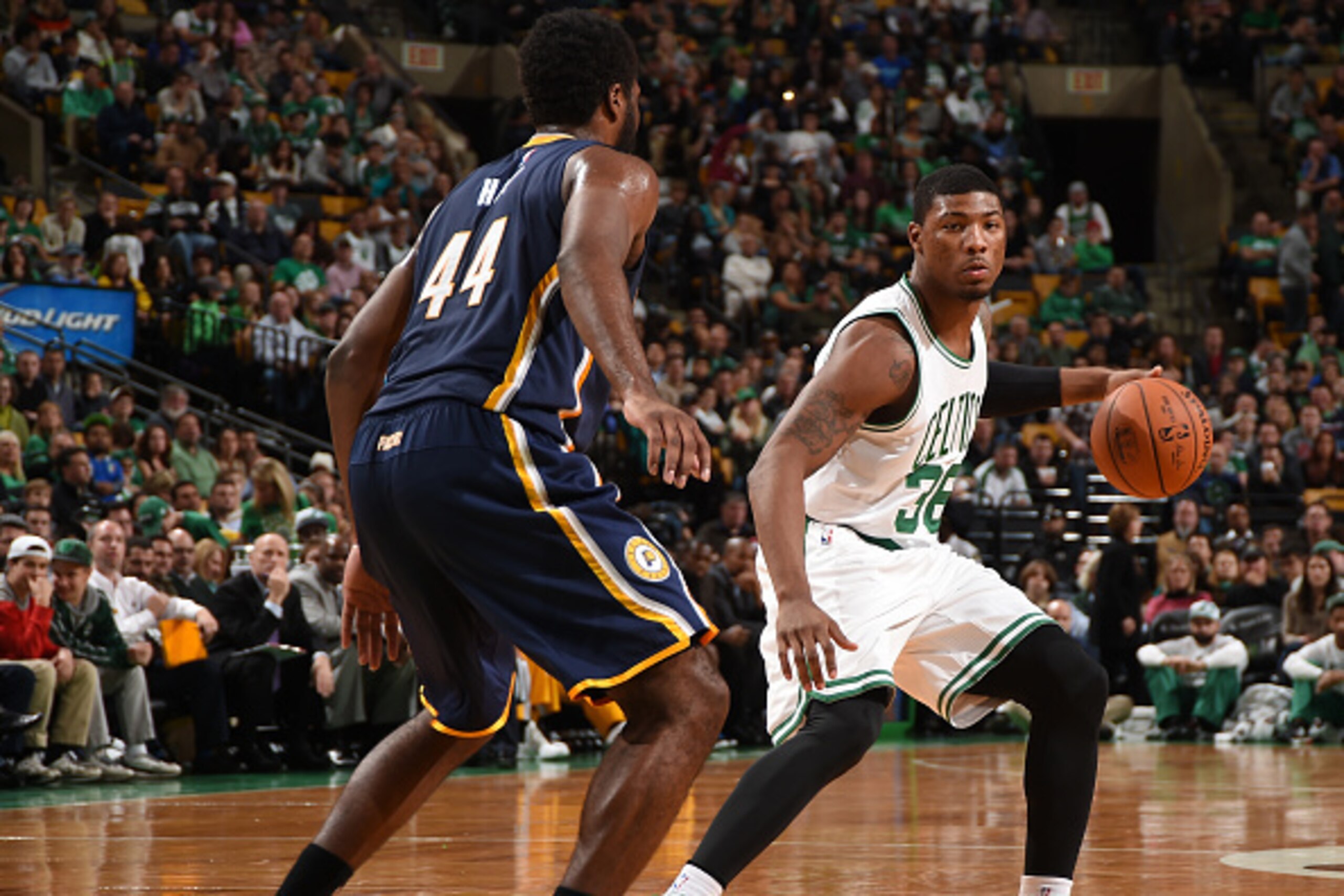
Of course, Smart's teammates will need a proficient pick-and-roll setup man, but for his own sake, the pick-and-roll is arguably the most ideal playmaking opportunity for a point guard in the half court.
Based on what we've seen so far, it's an opportunity he's going to have to learn how to capitalize on—Smart's shot selection in terms of creativity is currently lacking.
Of Smart's 60 shots in preseason, 44 of them were three-pointers. And that's with shooting as arguably the biggest hole in his game. He hasn't quite figured out yet just how to go about seeking quality scoring chances, and as a result, he's been forced into taking too many low-percentage shots out of his range.
In 10 regular-season games, his shot selection has been a little better, but he's still taken 37 threes to 20 two-pointers.
The sample size is tiny, but of the 19 shots he's made so far, only three have been jumpers off the dribble outside 10 feet.
Ironically, Rondo might be one of the only point guards in history to successfully get away with not having a pull-up in the arsenal. But Smart isn't Rondo. This is a shot he's going to need, whether it's over ball screens out of pick-and-rolls or just as a weapon to use in space, given the heavy rim protection that exists at the NBA level.
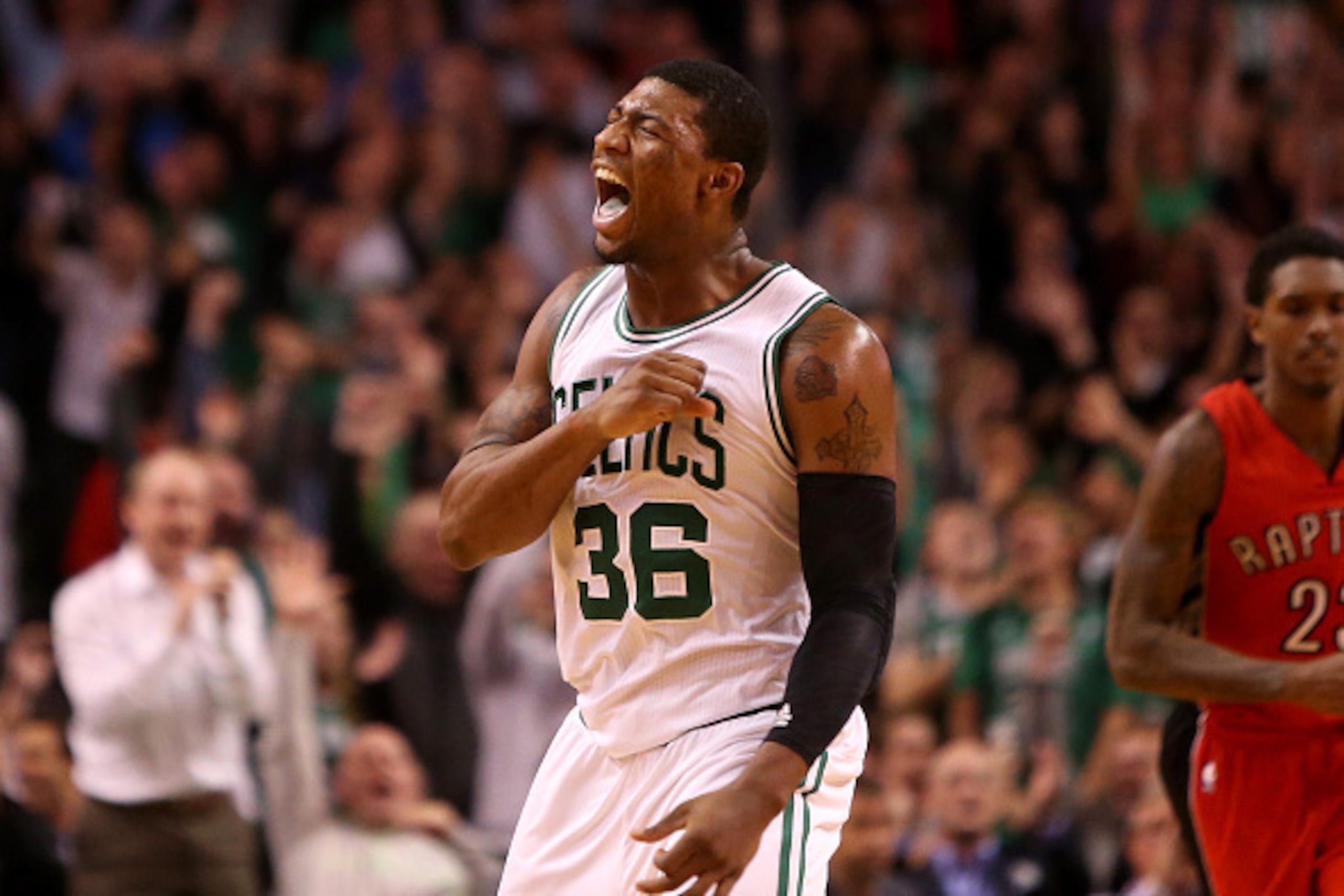
Last year, Smart knocked down just 28.4 percent of his jumpers in the half court, per Kamalsky.
The good news is that he's proven himself capable as a shooter. Smart has made 10 threes in 10 games so far, and he hit 49 total a year ago.
Though streaky, he's got the ability to catch fire, as he recently did against the Washington Wizards on December 8, when he knocked down four triples, with three of them in the fourth quarter and overtime.
The next step is becoming more consistent, which these extra minutes and reps should ultimately help him achieve.
If there's one thing we don't have to worry about with Smart, it's confidence. He touched on his shooting stroke earlier this summer when speaking with Mark Murphy of the Boston Herald:
"I’m a good shooter. Even though the percentages say different, that’s because I took a lot of bad shots in college. I’m not worried about that. You can see that there’s nothing wrong with my shot mechanically. It’s all about staying balanced, and it’s repetition. I’ve worked every day on it. My shot isn’t falling . . . and my shot is going to fall.
"
At this point, Smart's core strength revolves around his NBA-ready defense, and it's probably going to carry him through the offensive growing pains early on. Smart is tenacious on the ball, where his length, strength and lateral quickness can overwhelm on the perimeter.
His defensive IQ shows up off the ball, where his hands are active in passing and driving lanes.
If there's an NBA point guard out there for Smart to try and emulate, it might be the Toronto Raptors' Kyle Lowry—another physical bulldog in the backcourt whose floor game and jumper have both steadily improved.
Looking ahead, Smart should be locked into regular minutes for the Celtics, assuming coach Brad Stevens won't waste too much time on newly acquired veteran Jameer Nelson.
Between Smart's defensive presence and offensive feel for the game, you'd like to think he'll more than hold his own once he builds some rhythm following his time on the injury shelf.
But this is about Smart's long-term outlook as a potential franchise lead guard for the Celtics.
From a glass-half-full perspective, he excels in areas of the game you can't teach, from his physical tools and vision to his killer instinct and energy, while he's shown promise in other places where there's plenty of room for growth.
He also couldn't have asked for a better opportunity than the one he has in Boston, where there's an open path to the starting lineup and no real immediate expectations to win.
However, he'll still have some major adjustments to make if he plans on convincing fans and management he's the point guard to build with.
Either way, the Marcus Smart era has officially begun in Boston, and hopefully it's one that will last as the franchise takes its next few steps in restoring its NBA credibility.
.jpg?w=2560 "OBJ Calls Out Giants After Release")



.jpg?w=2560 "NFL investigating referee after viral exchange with player")