
Can New Wave of Coaches Bring Big Ten's Beleaguered Blue Bloods into the Future?
Identity isn't just about self but also about time and place. You want to stay true to who you are but also need to keep up when the world changes.
That's what's making things so hard on the Big Ten, as it has a rare opportunity right now to refresh its image, to shed the perception that it's a relic. It is no coincidence that three of the top coaching jobs to open at the end of the season have been at traditional Midwestern powers, known for their old-fashioned, smashmouth styles: Michigan, Wisconsin and Nebraska.
The trick now is in bringing college football's beleaguered blue bloods into the future.

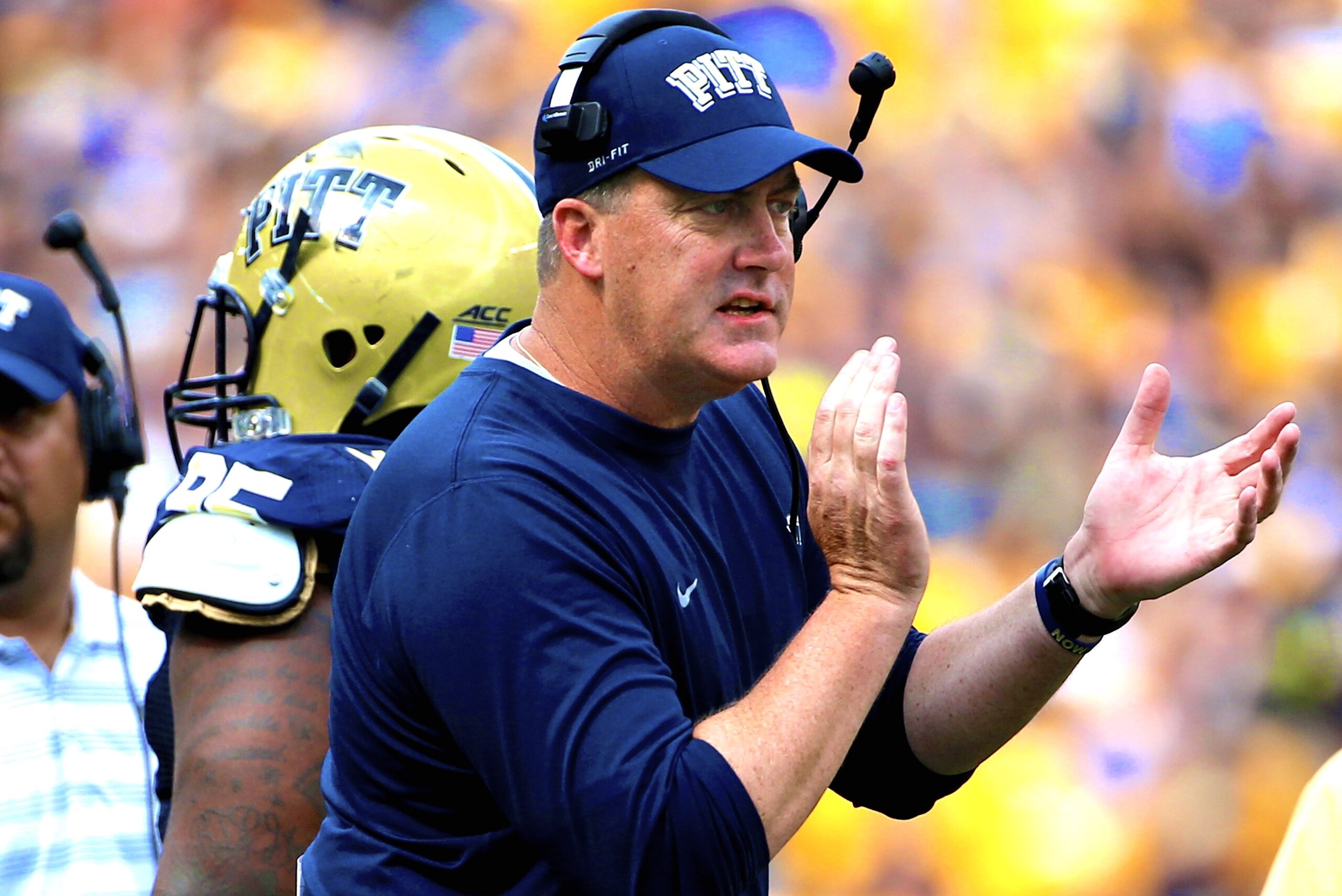
On Wednesday, Wisconsin named Pittsburgh coach Paul Chryst as its new coach. Chryst grew up in Madison, played quarterback for the Badgers and was their offensive coordinator. His dad was a former Wisconsin player, too. So the hire keeps things in the family, which isn't automatically a good thing if a program needs to change its style to modernize.
Chryst figures to add some pro-set formations into Wisconsin's typical pounding game. But two coaches have now quit Wisconsin in the past three years. The job opened this time when Gary Andersen left following a 10-win season, opting for Oregon State and the Pac-12's brand of football. Previously, it was Bret Bielema fleeing to Arkansas and the SEC.
Nebraska, which fired Bo Pelini after winning nine games this year and 67 in his seven seasons, doesn't seem to realize these aren't the days when it can regularly win national titles anymore. It hired Oregon State's Mike Riley, who is a nice guy—Pelini rubbed fans the wrong way—and a good coach but doesn't have the star power. It's going to be a tough sell for him to get top recruits to come to Lincoln, Nebraska.
That leaves Michigan out in the cold, and it seems to be trying to get that star-power coach. But that isn't going well.
"I want to get rid of the name 'Michigan Man,'" Michigan interim athletic director Jim Hackett told reporters when asked about who he might hire.
And that was the best thing anyone has said. The term has come to mean a style centered on toughness at Michigan, which just fired Brady Hoke, the ultimate Michigan Man.
The title itself draws up images of long ago. The Big Ten has been playing in black and white, and Michigan still has a cold reality to face. So many of the top names in coaching have been linked to the search, and they all apparently have said no. Jim Harbaugh might change his mind, though, after Michigan's latest massive offer, per NFL Media Insider Ian Rapoport, that would make him the highest-paid coach in college football.
While college fans trade on emotion and tradition, it has been 17 years since Michigan won a Rose Bowl. High school kids don't know Michigan as a destination-place anymore, and it can't just live on its name.
Everyone gets exposure on TV now. Everyone has big TV money to pay coaches, build stadiums. The rest of the nation has moved to the modern, hurry-up, spread-in-the-sun offenses, like in the Pac-12, Texas and big parts of the SEC. And speedy kids don't want to go plod in Michigan in the cold.
So there is no reason for, say, Patterson to leave TCU for Michigan.

Said again: There is no reason for a coach to leave TCU for Michigan. Ohio State is still a national program, Michigan State borderline. But Nebraska and Wisconsin aren't national top-tier destinations anymore either. In fact, they have dropped even more than Michigan has.
And it is no guarantee the right coaching hires could bring Michigan, Wisconsin and Nebraska back to that level, change the conference's dinosaur image. The answer might not just be in the coach. It might take commitment at higher levels.
Wisconsin athletic director Barry Alvarez, the former longtime coach, might be part of the problem, hovering over the program and insisting that coaches follow what he did.
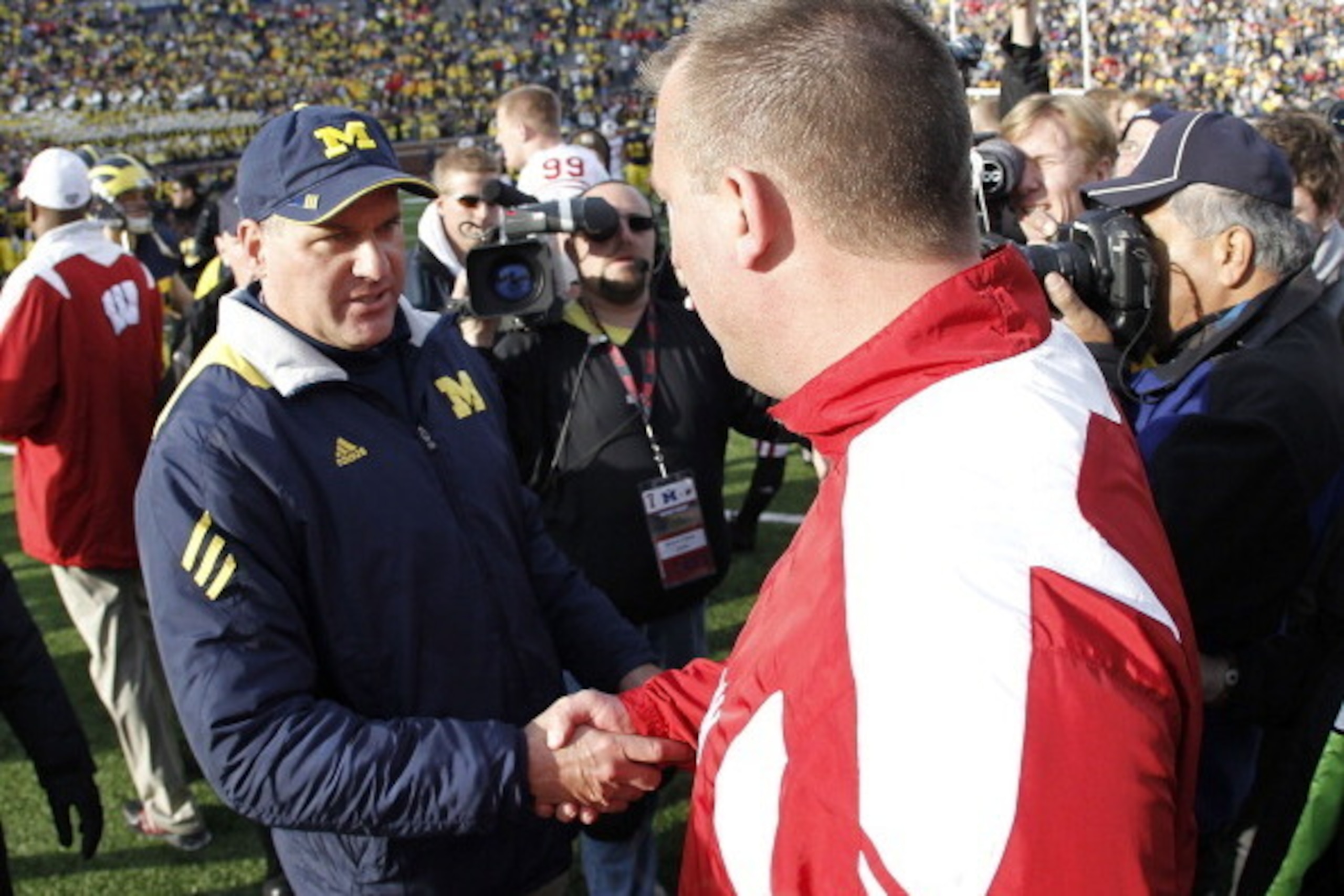
At Michigan, they gave up on Rich Rodriguez's attempt to modernize the system roughly 10 minutes after he started. He now is turning Arizona into a Pac-12 power, while Michigan got progressively worse under Michigan Man Hoke.
Big change isn't easy.
The Big Ten—other than Ohio State—simply isn't going to appeal to, say, the top quarterback prospect out of Florida. Look at Wisconsin: Can it really expect to suddenly start playing like, say, Baylor and to get the athletes who can keep up that kind of speed?
Wisconsin, like Nebraska, still stocks its teams with beefy Midwestern kids who can block. Both teams had great tailbacks this year. Nebraska's Ameer Abdullah was considered a Heisman Trophy candidate most of the season, while Wisconsin's Melvin Gordon was one of three finalists.
If Wisconsin isn't going to be able to spread out and keep up with, say, Arizona, then maybe it could make a pitch to every top high school running back in the country: Come here and you'll get a lot of carries behind a big line and will be ready for the NFL when you're done.
That is Wisconsin's identity. Nebraska's, too. It's what makes them teams that won 10 and nine games this year, respectively. Attempting to change that is difficult and risky.
But for many Midwestern teams, even their bases are starting to wobble.
"I mean, just take a look at Pennsylvania, the great high school teams that used to be in that area," Notre Dame coach Brian Kelly told me earlier this season. "Now, because of the steel town, the exodus of so many jobs in that area, that high school football is not what it once was. I think that's happened in a lot of these industrial cities throughout the Midwest as well."
Typically, when a once powerful team starts to drop off, fans scream that it's because the team has strayed too far from its roots. With the Big Ten blue bloods, those roots are actually tying them down.
Greg Couch covers college football for Bleacher Report. He also writes for The New York Times and was formerly a scribe for FoxSports.com and the Chicago Sun-Times. Follow him on Twitter @gregcouch.
.jpg?w=2560 "Cam Ward Says He's Not A Loser")
.jpg?w=2560 "🚨 Texans Trade for MHJ")
.jpg?w=2560 "Chargers Fall to 0-5 🤢")
.jpg?w=2560 "Grading MHJ Trade 📝")
.jpg?w=2560 "MHJ Bought Own Jugs Machine")