
5 Surprising Statistics That Are Defining the Boston Celtics Season
The 2014-15 Boston Celtics have been one of the league's quirkiest teams, relying on a run-and-gun offense and unconventional lineups to stay close against those with superior talent.
They make up for a putrid defense with a San Antonio-style offense that relies on jacking three-pointers and Rajon Rondo's offensive creativity.
Boston is far from a title contender, but it is showing signs of a real identity, which the depressing 2013-14 Celtics lacked.
Unsurprisingly, 22 games into the season, some statistics have emerged that capture exactly what kind of campaign the rebuilding Celts have been having.
Anyone who has watched Boston this season has seen its struggles in close games, its crowded big-man rotation and the bizarre stat lines that Rondo has been throwing up on a nightly basis.
While one cannot sum up 1,056 minutes in five stats, read on to see some numbers that encapsulate the C's season and what we can expect from the next 60-plus games—both good and bad.
37.5 Field-Goal Percentage in Crunch Time
1 of 5
The Celtics’ struggles in close games have been the most frustrating aspect of the 2014-15 season, and their late execution has been truly awful.
The team is hitting just 37.5 percent of its shots in the clutch, per NBA.com, good for 21st in the league.
Given the C’s offensive potency this season (first in the league in assists, sixth in points per game), it’s surprising just how dismal their offense gets in crunch time.
While that could be chalked up to this being a young team, an offense led by Rondo and coached by Brad Stevens should get better looks than it does.
The C’s crunch-time lineup typically features their more proven offensive weapons, so the struggles are somewhat surprising.
Obviously, the game slows down in the final few minutes, but Rondo has always been a gifted half-court executor who can read angles and find his open teammates.
Boston is just 2-6 in games that are decided by five or fewer points, and their poor end-of-game offensive play is a major reason why.
This team is never going to be elite defensively, but it needs to keep scoring at the end of close games, something it has consistently failed to do.
Too often the ball movement becomes stagnant, and the Celts wind up settling for a low percentage attempt.
This problem hurt the C’s even when they had Paul Pierce and Kevin Garnett, so it isn’t shocking, but it would be nice to see Stevens draw up some more creative plays late in the clock to combat these issues.
29th in Opponent Three-Point Percentage
2 of 5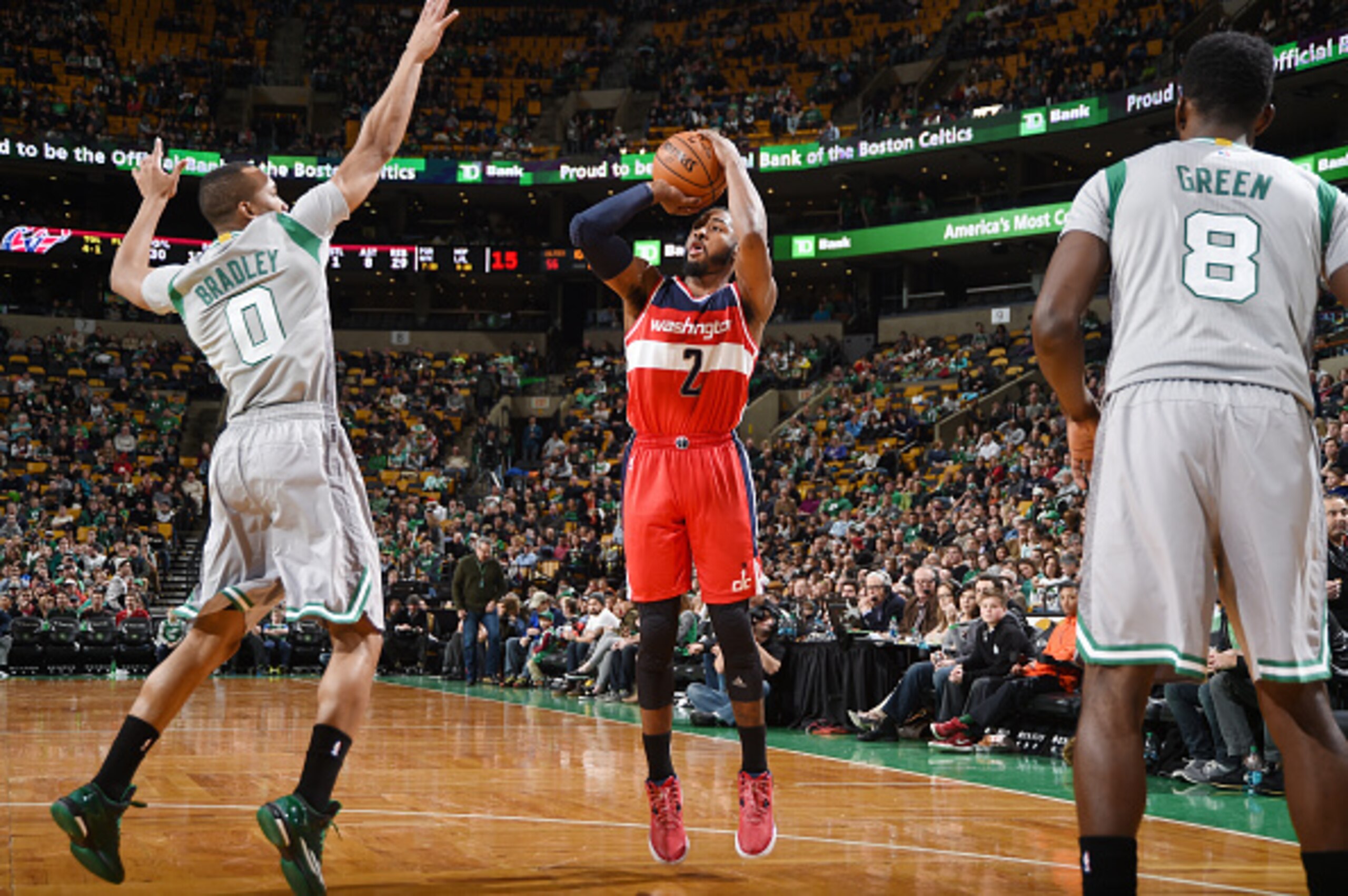
The Celtics are often maligned for their lack of interior defensive talent, but the real problem is they are one of the league’s worst squads at defending the three.
Only the Dallas Mavericks allow opponents to shoot better from deep, as the C’s are letting their foes knock down 38.8 percent of their attempts from downtown.
Given that Rondo, Marcus Smart, Avery Bradley and Jeff Green are all long, rangy defenders, this ineptitude is surprising.
Conversely, the C’s are 17th in field-goal percentage from within five feet, per NBA.com. Letting opponents hit 58.7 percent of their shots in close is not great, but it’s a number that a team can live with if it does a decent job on the perimeter.
Boston does a great job of pressuring ball-handlers but struggles in the pick-and-roll, which can create open looks for shooters.
Too often a crafty point guard will get into the lane and collapse the defense, only to kick the ball out for an open three-pointer.
Obviously, the league as a whole is improving from distance, but the C’s need to be quicker with their rotations and do a better job of staying with shooters in order to improve their three-point defense.
The C’s have the personnel to have a strong perimeter defense, so hopefully with time they can improve this stat.
None of Boston’s Big Men Play 30-Plus Minutes
3 of 5
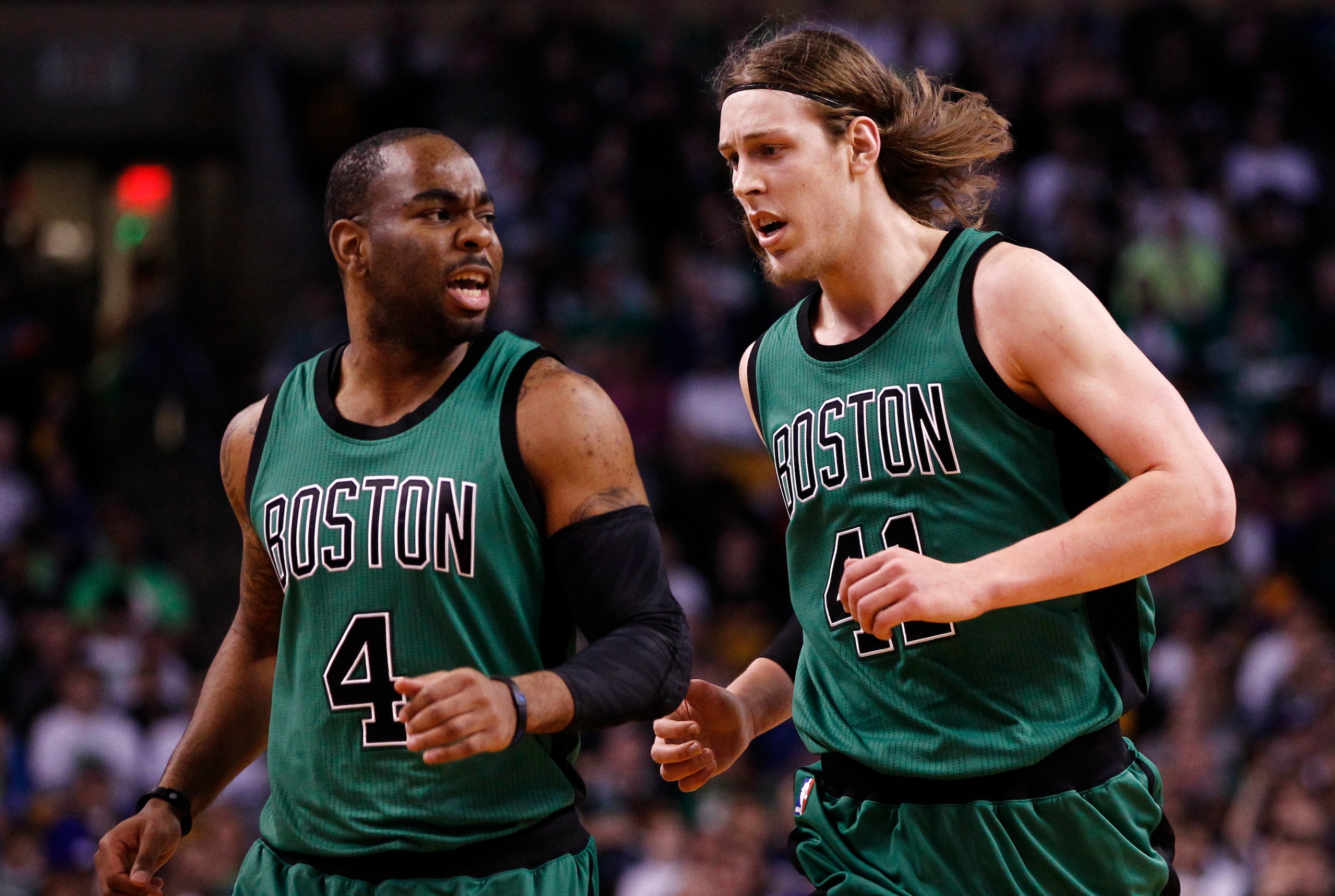
Nowhere is Boston’s mid-rebuild status more evident than in the crowded frontcourt rotation.
While Jared Sullinger and Kelly Olynyk appear to be the future at the 4 and 5, Stevens is still having trouble trusting them with heavy minutes.
Sullinger is playing 29 minutes per game despite cutting down on foul trouble, while Olynyk is hamstrung by fouls and getting just 25.1 minutes.
Off the pine, Brandon Bass is logging an efficient 19.4 minutes per night and often playing down the stretch in big moments due to his defensive presence.
Tyler Zeller, who has recently joined the starting lineup, is up to 18.6 minutes and has had several impressive two-way games.
Obviously, as an expiring contract, Bass is not a priority, but the playing-time battles between the other three rotation bigs are certainly notable.
Olynyk and Sully are still learning how to defend at an NBA level, and Olynyk in particular has struggled against starting 5s.
He’s letting opposing centers average a 20.5 player efficiency rating, and Zeller is actually even worse at 22.7, per 82games.
Sully actually does the best job against centers, holding them to a mere 10.8 PER, but against 4s he cedes 21.2, according to 82games.
None of the aforementioned is a quality rim protector, and while Zeller is a decent post defender, he’s sometimes late to help and is far from an intimidating presence.
The C’s need Olynyk on the court for his outside shooting to open up driving lanes for the guards, so it is essential that he figure out his foul issues.
Really, though, the team needs better defensive effort out of its trio of young bigs, because this patchwork, mix-and-match frontcourt approach is not going to work in the long-term.



Rondo Has Nine Games with More Rebounds Than Points
4 of 5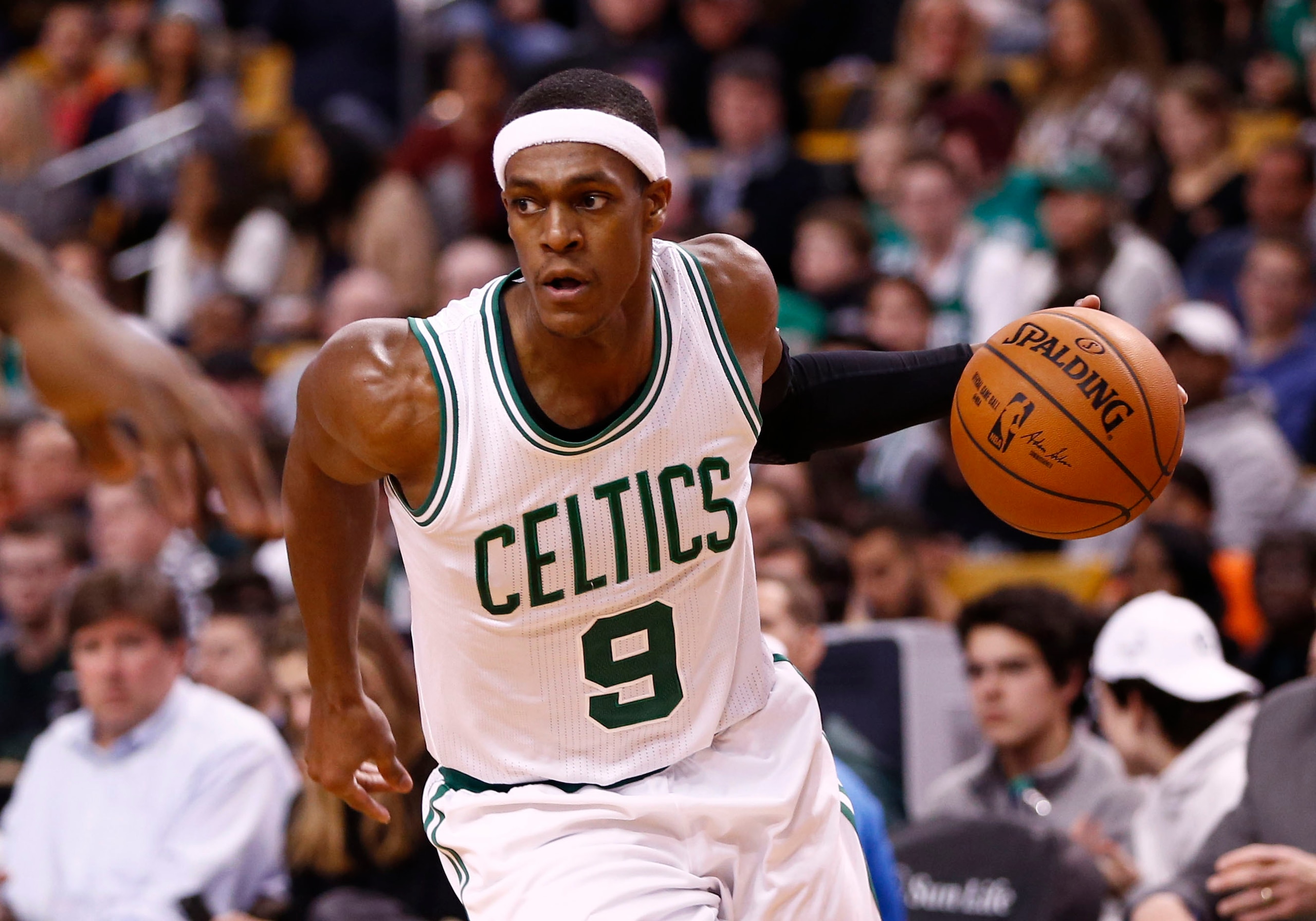
Rondo has never been a scoring point guard, but his offensive game has completely fallen off the map this season.
The talented playmaker is averaging just 8.2 points to go with 7.6 rebounds and 10.8 assists.
To make matters worse, he’s hitting just 39.5 percent of his shots from the field and nailing free throws at a 32.4 percent clip, which makes DeAndre Jordan look like a sniper.
Rondo is far from a gifted shooter, but his career averages of 47.2 percent from the floor and 61.4 percent from the stripe are at least decent.
He’s also hitting just 34 percent of the mid-range jumpers he usually knocks down at a solid clip, per Basketball-Reference.com.
Rondo’s passing game has thrived in this new, uptempo offense, but he continues to routinely pass up quality looks to create more difficult shots for his teammates.
Additionally, he has had games where he simply refuses to look for his shot.
Rondo has shot the ball less than five times on four separate occasions this year.
The C’s have some decent scorers, but they need Rondo’s penetration and the threat of his mid-range jumper if they want to be truly dangerous.
Also, if Rondo really thinks he’s worth a max contract extension, he’s going to need to raise that scoring average to at least double figures.
Smart and Pressey Are Leading the Team in Three-Point Attempt Rate
5 of 5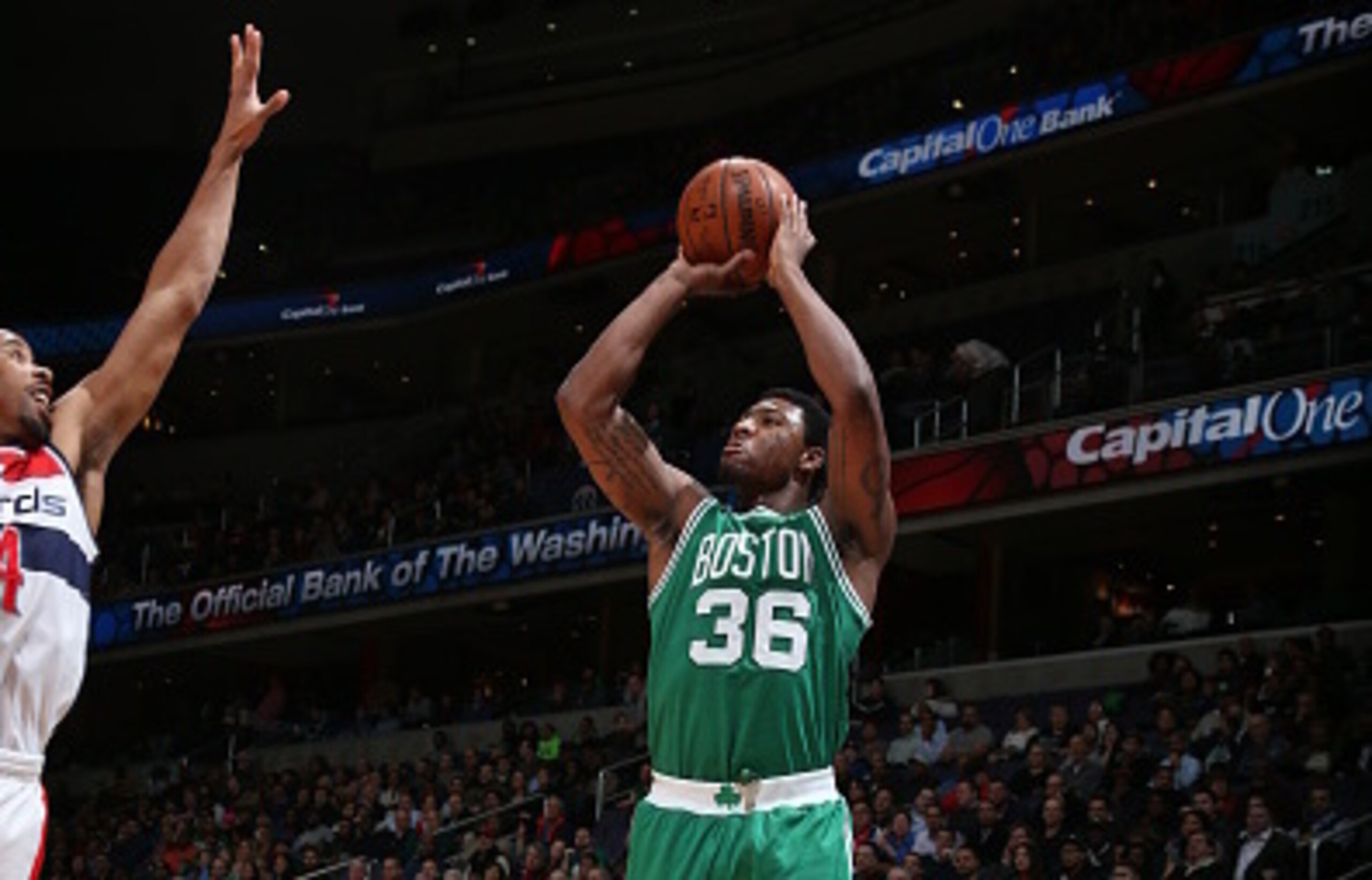
The C’s offense calls for lots of three-pointers, but the team isn’t exactly setting the league on fire from deep.
In fact, Boston is hitting just 33.1 percent of its three-point attempts this season.
Part of that is a simple personnel issue, but some of it is that the Celts simply have the wrong players jacking triples.
Boston effectively has three capable three-point shooters right now: Marcus Thornton (42.3 percent), Olynyk (39.2 percent) and Sullinger (36.1 percent).
Both Green (31.8 percent) and Bradley (33.7 percent) have proved they can hit outside shots with regularity, but they are struggling from deep this year.
The biggest problem, though, is that two dismal outside shooters are leading the C’s in three-point attempt rate by a wide margin.
Neither Smart nor Phil Pressey plays huge minutes, but they are regular parts of the rotation who simply gun too many jumpers.
Of all his shots taken, 64.9 percent of Smart’s have been threes this year, while Pressey’s percentage is slightly better at 54.9.
For reference, Smart is canning just 27 percent of his triples, and Pressey is making 20 percent.
Both are far better at driving than pulling up, but they are firing away in Stevens’ new offensive system instead.
The C’s offense stalls when they start taking ill-advised threes instead of driving to the hole, and for as good as Smart has been this season, he is a too reckless of a shooter.
Obviously, these stats are somewhat skewed given the pair’s relatively low minutes per game, but that’s no excuse for them to chuck so many threes when both are non-threats from the perimeter.
.jpg?w=2560 "OBJ Calls Out Giants After Release")