
7 NBA Teams in Need of a Total Teardown
The best-laid plans of mice and men often go astray.
There’s a reason that line has circulated through the collective psyche more often than a Kanye West hook: It so often rings true, irrespective of context.
The NBA is no exception. Every year, we hear about how so-and-so team is poised to take the next big step on its journey to national relevance. And every year, we see piles of cards where houses were supposed to be.
In this downtrodden spirit, we present the seven NBA franchises that should seriously consider tearing down and rebuilding entirely.
Some of the teams will be obvious, either because of stated plans on the part of the front office or because the basketball itself is so irredeemably terrible that rebuilding is quite literally the only option.
Lest you think we’re all about criticism without the constructiveness, we’ll also provide a brief synopsis for what each particular team needs to do to get back on track.
Ladies and gentlemen, it’s demolition time!
Indiana Pacers
1 of 7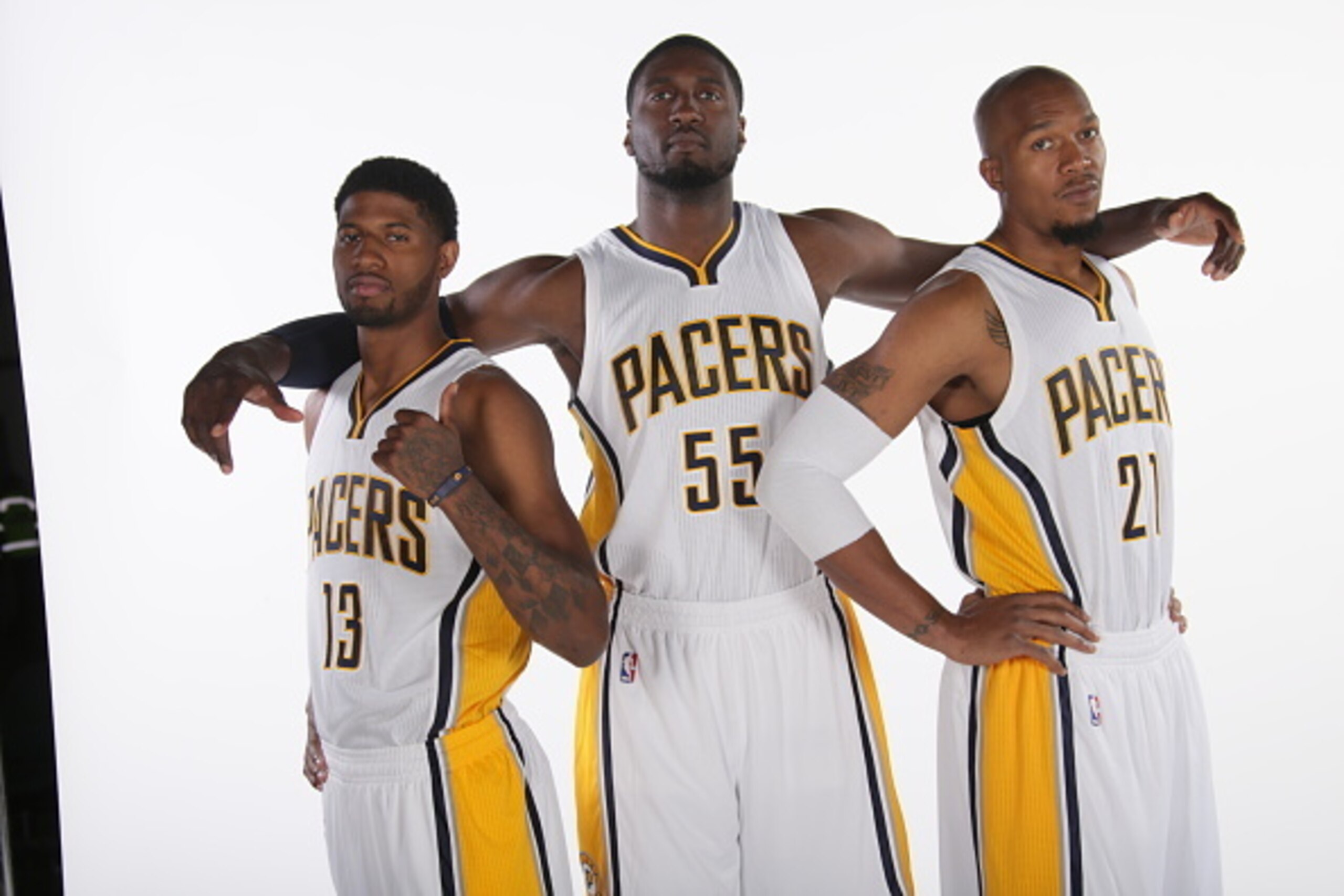
What Went Wrong?
Let’s be clear: There’s plenty of gray area for what constitutes a rebuild. The Indiana Pacers are a perfect case in point.
Start with the obvious: The awful injury to Paul George during a Team USA scrimmage back in August by no means spells the end of what was charting toward a terrific career. What it should do, though, is force Larry Bird and Co. to reconsider how best to build around George’s unique two-way talents.
Roy Hibbert hasn’t blossomed like he should’ve. Long-gone Lance Stephenson was a train wreck. David West is over the hill. Speaking of hills, George Hill is nowhere near an elite-level point guard. Taken together, these are the telltale signs of a franchise on the cusp of collapsing completely—if they haven’t already.
What’s the Plan?
With the roster in flux and prospects of a playoff return growing increasingly dim (the Pacers were 7-17 as of this writing), Indiana could go one of two directions: Either completely recalibrate the roster with George as its center and hope against hope he returns to something resembling former form, or commence an all-out fire sale of assets—PG24 included.
It’s impossible to say what kind of return George would fetch, of course. Even if it were a sizable one, he would have to pass a physical before Indy could include him in any prospective package.
But if there’s anyone who can pull off an unexpected haul, it’s Bird. Indiana got to where it is by investing in young talent. It may need to do so again if it hopes to return to the Eastern Conference mountaintop. Even if it means, sad to say, parting with their most beloved star.
Denver Nuggets
2 of 7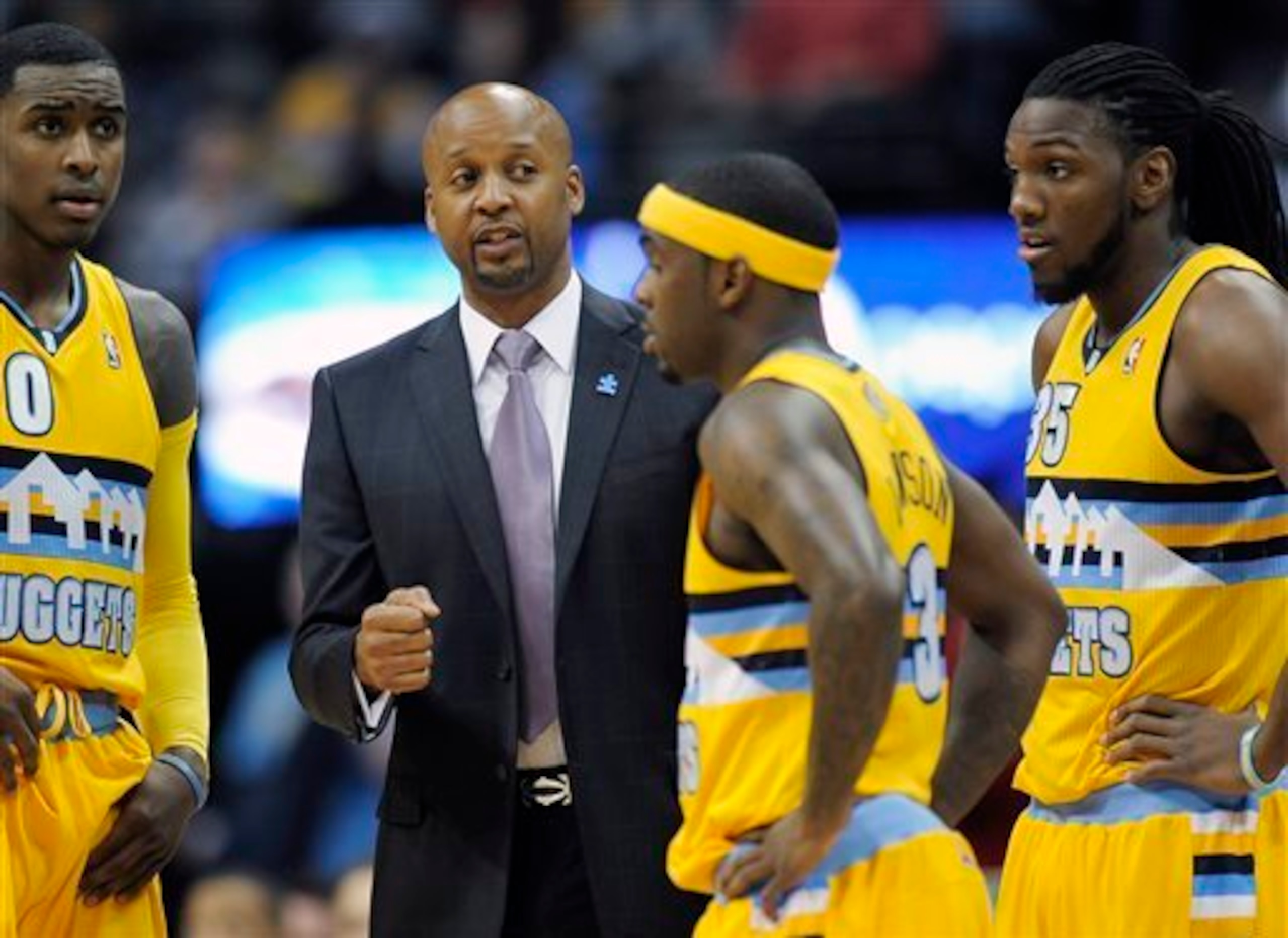
What Went Wrong?
It seems like every year, there’s a team that takes the league by surprise. In 2012-13, that squad was the Denver Nuggets. Winners of 57 games, the George Karl-marshaled Nuggets laid siege to the league (and a loaded Western Conference) with an uncanny combination of open-court quickness, half-court playmaking and passable—if often porous—defense.
Two years later, not even a decent dose of roster continuity has been enough to stem disappointment’s tide. Karl is gone, jettisoned despite winning the 2013 Coach of the Year Award. In his stead stepped Brian Shaw, who’s struggled to forge a coherent offensive identity.
Giving JaVale McGee $44 million over four years is bound to go down as Denver’s biggest blunder. Otherwise, it’s been a simple case of homegrown talent—Kenneth Faried and Ty Lawson in particular—falling a bit shy of expectations.
What’s the Plan?
Denver has plenty of picks at its disposal. Trading away one or two of its young talents could net them a few more. Small market teams must be able to build from within, and the Nuggets are no exception.
Between Lawson and Faried, the former is much more conducive to being a long-term franchise cornerstone. Consequently, teams are always in the market for high-energy guys like Faried. Translation: Denver should look to sell high on their dreadlocked demon and hope that their treasure trove of picks can yield pieces worth building around.
Detroit Pistons
3 of 7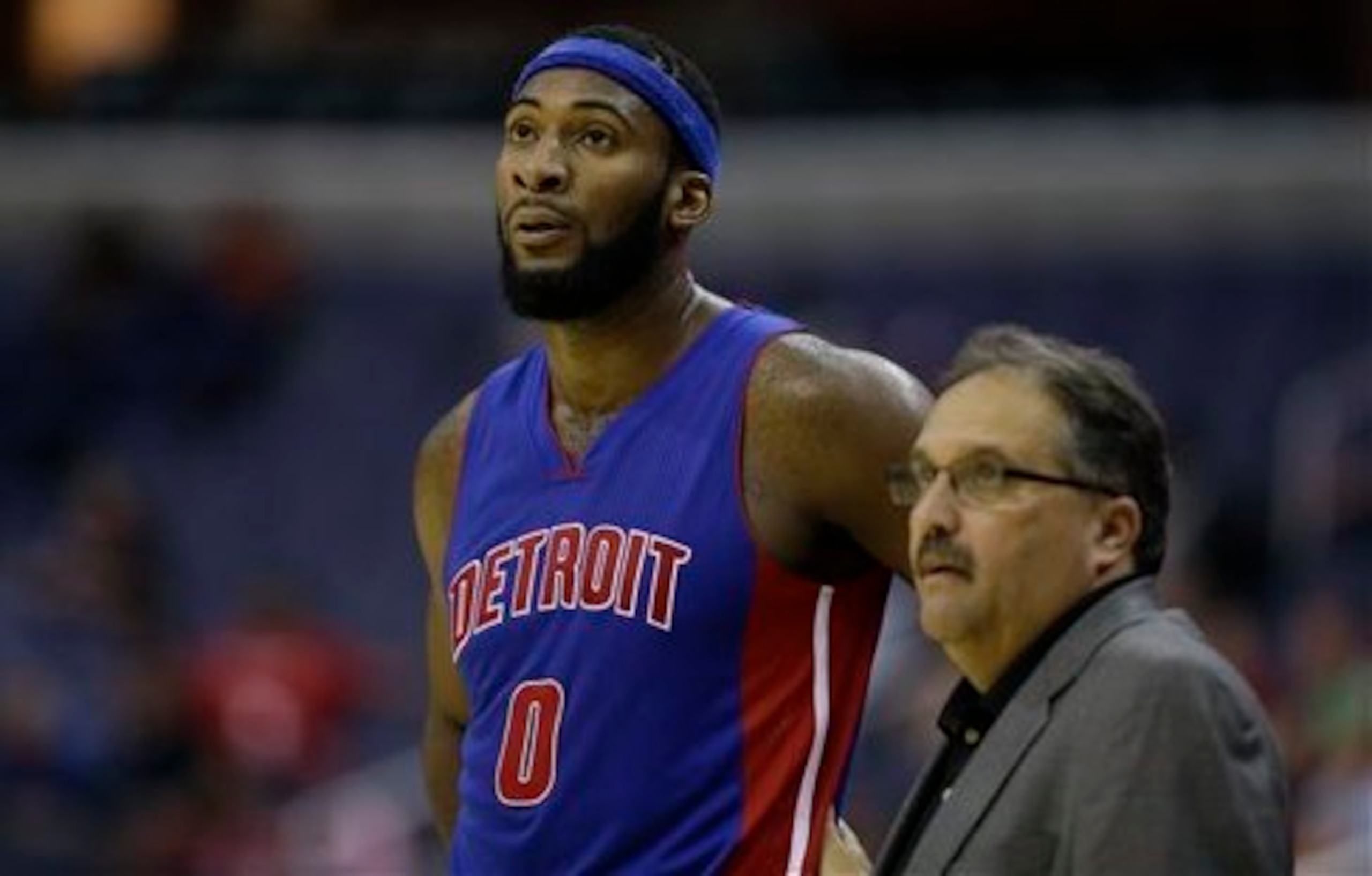
What Went Wrong?
It’s no secret the Detroit Pistons have been in a bad way for some time now. For all the savvy moves early in his tenure (Darko Millicic aside), Joe Dumars simply had too many misses for too long to continue as Pistons general manager.
Signing Ben Gordon and Charlie Villanueva for tens of millions of dollars? Bad move. Trading Brandon Knight for Brandon Jennings? Bad move. Signing Josh Smith when you already had Greg Monroe? Bad move. Hiring Maurice Cheeks? Bad move.
Noticing a trend?
With so many onerous salary commitments still waiting to be shed, Detroit’s near-future prospects aren’t exactly rosy. There is, however, a way out.
What’s the Plan?
Andre Drummond. That’s it—that’s the plan.
Stan Van Gundy knows a little something about building around All-Star-caliber centers. As head coach of the Orlando Magic from 2007 to 2012, Van Gundy used Dwight Howard as the linchpin for one of the league’s most potent offensive attacks—particularly from downtown.
Detroit doesn’t have anywhere near the shooters necessary for Van Gundy to implement that program straightaway. Still, there are some pieces in place: Jodie Meeks, Kentavious Caldwell-Pope…that’s pretty much it, actually. Just how extreme does Detroit’s overhaul need to be? As extreme as it gets, writes Rant Sports’ Keith Alrick:
"Detroit didn’t come into the season on anyone’s short list of Eastern Conference contenders, but no one thought it would be this bad. Stan Van Gundy teams aren’t supposed to be capable of this level of incompetency.
Perhaps even above all of the losses, the most frustrating part about this team is there is no real plan to get better. Which is why they should look to the [Philadelphia] 76ers to see how to get the most out of losing.
"
With their pick ledger at even keel, the Pistons have to do a better job of taking advantage of the draft pool. That, coupled with a few savvy signings and a blossoming from Drummond that just about everyone expects, could be enough to put the Pistons back on the Eastern Conference map.



Utah Jazz
4 of 7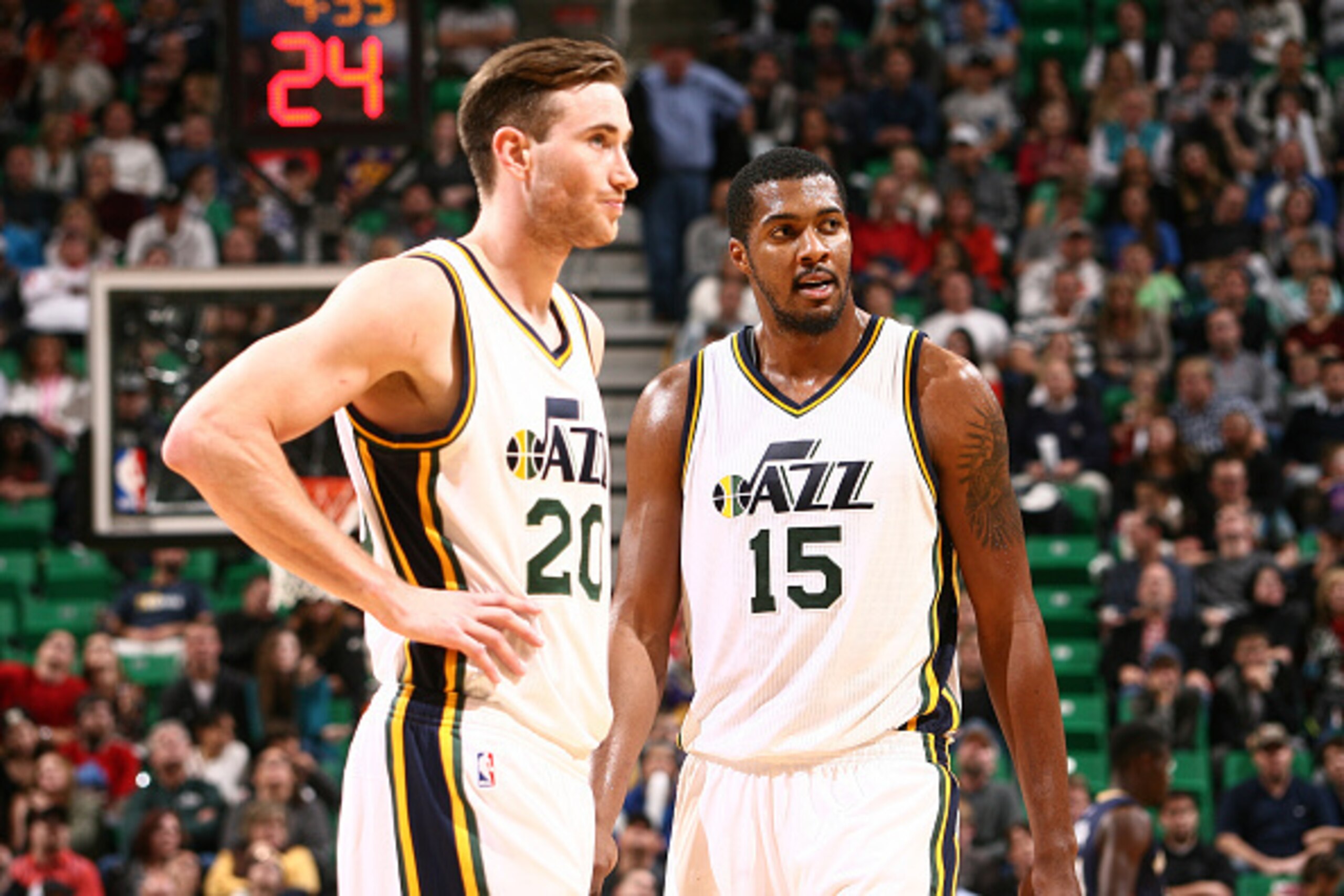
What Went Wrong?
This isn’t going to go down well with some folks.
We know the Utah Jazz are young. We know they’re talented. We know they have the pieces to become a legitimate player in the West. But when there’s this big of a disconnect between potential on the one hand and reality on the other, it’s high time you consider starting from scratch.
As of this writing, the Jazz are 6-18 and going nowhere fast. For all their compelling pieces—Gordon Hayward, Derrick Favors, Enes Kanter and Dante Exum being the most notable examples—there’s scarcely one you can truly call a franchise cornerstone.
You’d have to go back quite a ways to pinpoint a move the Jazz made that was especially egregious. What their plight amounts to, then, is death by a thousand cuts—the cumulative effects of a lot of almosts and could-have-beens.
What’s the Plan?
Life is all about choices. And right now, it doesn’t seem like Utah is interested in making any. That has to change and quick.
Hayward’s $64 million contract means he likely remains as a keystone. Ditto Favors, likewise signed through the 2017-18 season. After that, it’s a lot of ostensibly nice pieces that should probably be packaged in an effort to reel in more established talent.
Kanter, Rudy Gobert, Alec Burks, Trey Burke—Even if they don’t deal all of them, the Jazz should at least start floating some of their assets out there to see what kind of return haul they might be able to fetch. Which is where their slew of second-round picks come in handy as incentives to pass what might otherwise be an unenticing deal.
Utah will never be a top-tier free-agent destination. To get out of purgatory, then, requires the Jazz to bet right on the talent in hand, while reeling in pieces capable of punching a bit above their weight.
Brooklyn Nets
5 of 7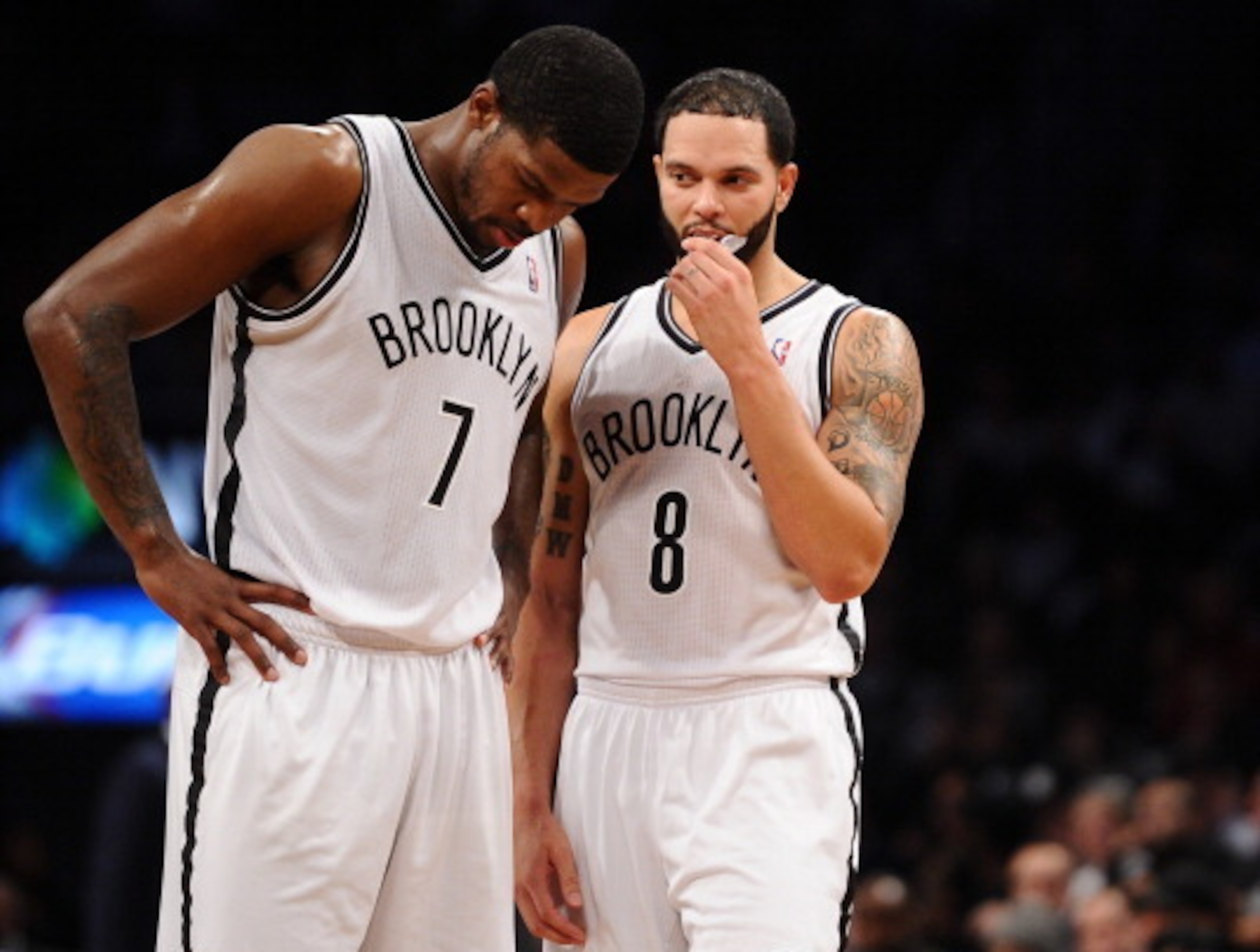
What Went Wrong?
When not even $186 million is enough to get you out of the second round of the playoffs, something is askew. Such as it is for the suddenly wayward Brooklyn Nets, who’ve already made it known that no one—not even their most shimmering of mantle pieces—is off limits (via ESPN’s Marc Stein and Ohm Youngmisuk).
Give owner Mikhail Prokhorov credit: He swung for the fences time and again. Deron Williams, Brook Lopez and Joe Johnson aren't total busts. But they also haven't lived up to expectations inherent in the price tag.
Worse still, the Nets gave up a U.S. Mint’s worth of draft picks just to build the team they have, most notably in the now clearly disastrous Kevin Garnett-Paul Pierce deal.
What’s the Plan?
What’s the solution? We’ll give you a hint: It’s not Lionel Hollins as head coach.
Maybe Prokhorov will find willing takers for his tired stars—contenders, perhaps, for whom draft picks don’t mean nearly as much. Lopez would seem the most promising bit of trade bait, although concerns over the oft-injured center’s health are sure to be at the forefront of any discussion.
They’ll never recoup what’s been lost to these past few years, but with a few breaks here and there, there’s no reason why Brooklyn can’t at least keep its course as a legitimate big-market player.
New York Knicks
6 of 7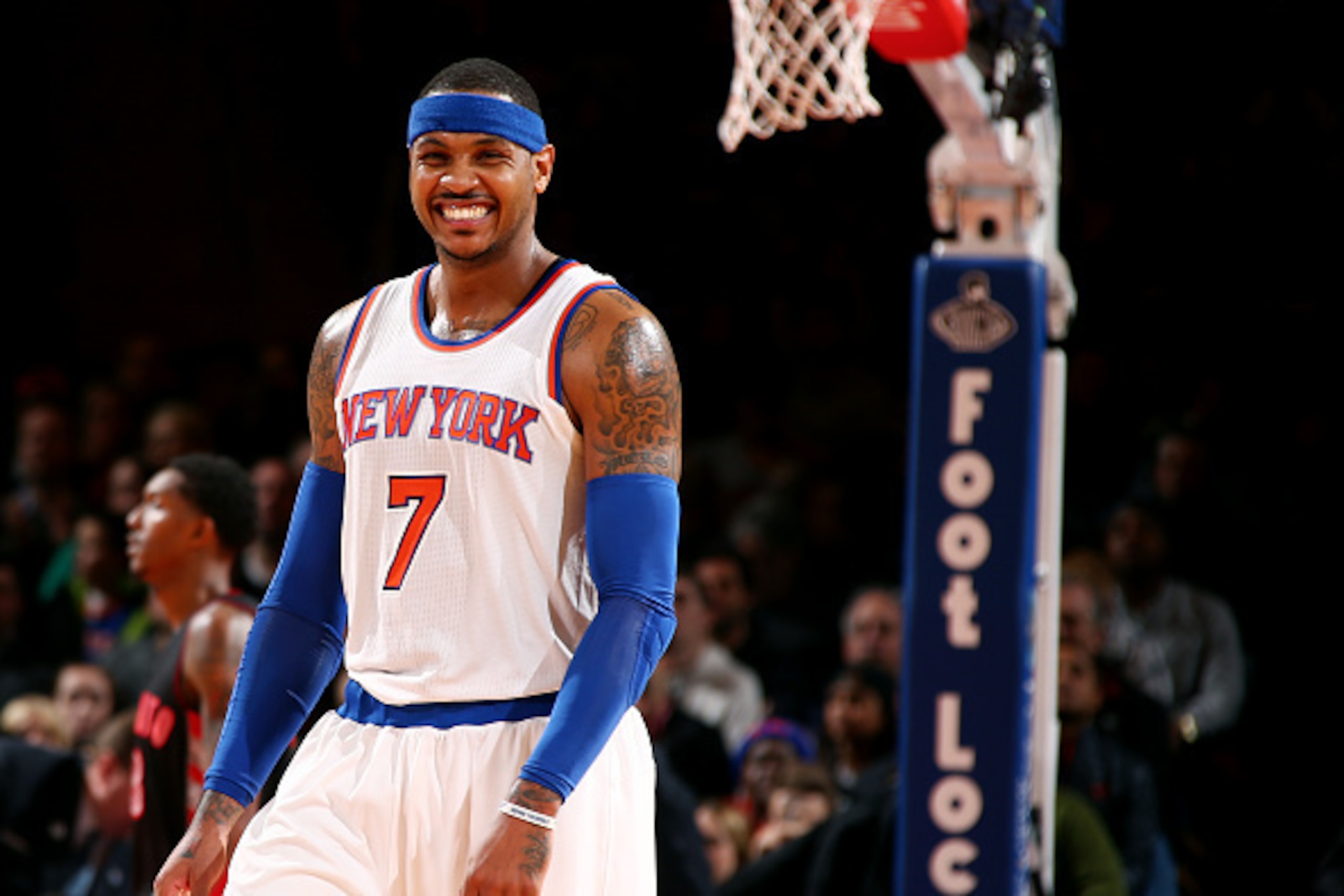
What Went Wrong?
I mean…where to begin?
With Amar’e Stoudemire’s five-year, $100 million contract, we suppose. Sure, STAT begat Carmelo Anthony, and Carmelo Anthony begat a 54-win mini-renaissance in 2012-13. But a bevy of horrible ancillary moves—the trade for Andrea Bargnani, the flippant disregard for draft picks, even the haul sent in order to land Anthony in the first place—have put the Knicks way behind the eight ball.
The arrival of Phil Jackson may well prove just the fix this long-wayward franchise needs. Before he could even think about rebuilding, though, Phil had to spend considerable effort cleaning up the mess others had left for him.
What’s the Plan?
Keeping Melo was Phase 1—mission accomplished on that front. Now it’s about the Knicks clearing this year’s cap-clogging contracts and doing their darndest to reel in top-flight free agents over the next couple of years.
Early indications are that Jackson understands the importance of draft picks. This is a good thing. Parlaying those picks into actual long-term talent is, of course, another matter entirely.
You don’t win 11 championships as a coach (and two as a player) without gleaning at least a little bit of front-office know-how. “In Phil We Trust” might sound like an overly simplistic mantra. But for these Knicks, it’s quite literally the only way out of their most recent mess.
Los Angeles Lakers
7 of 7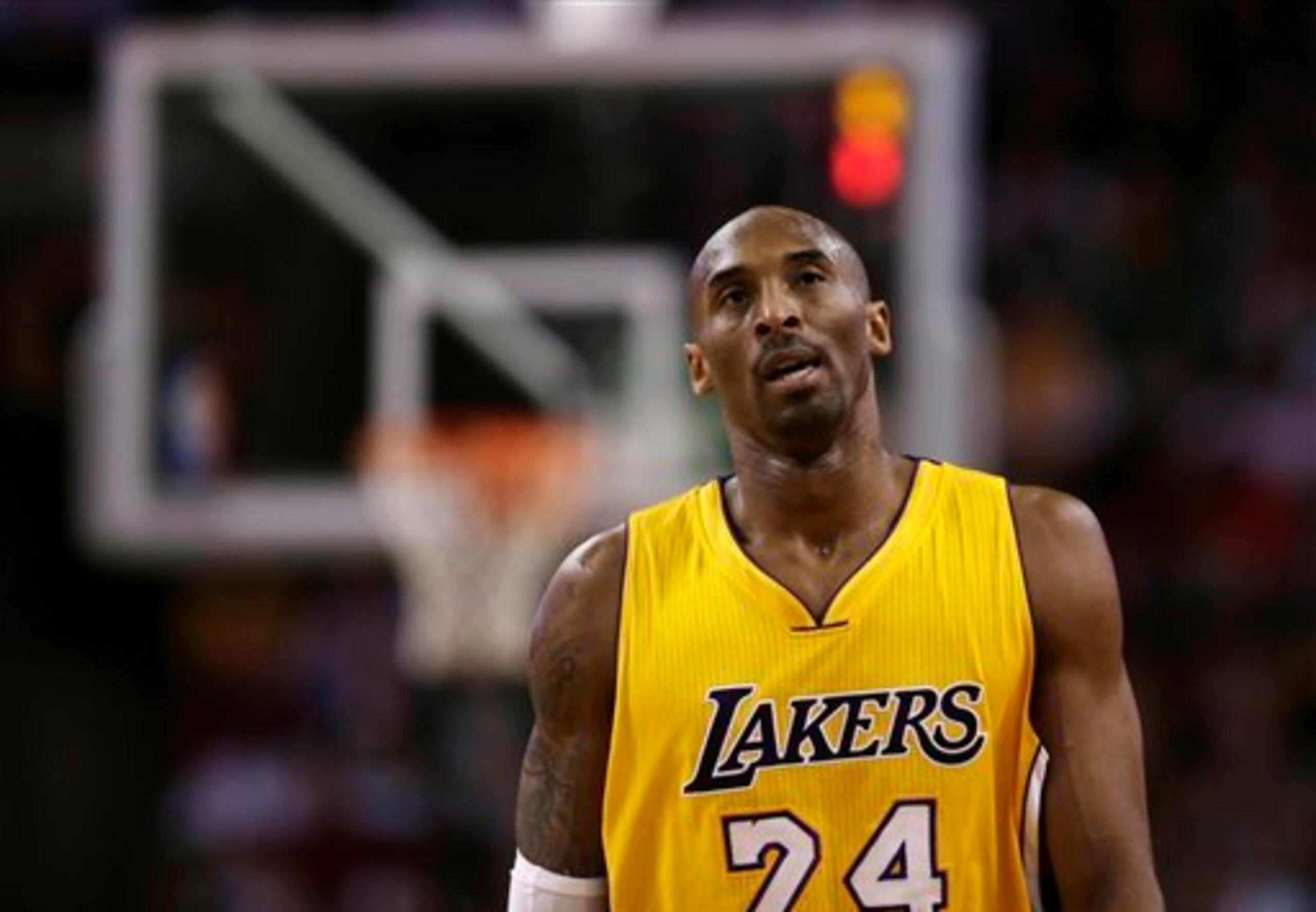
What Went Wrong?
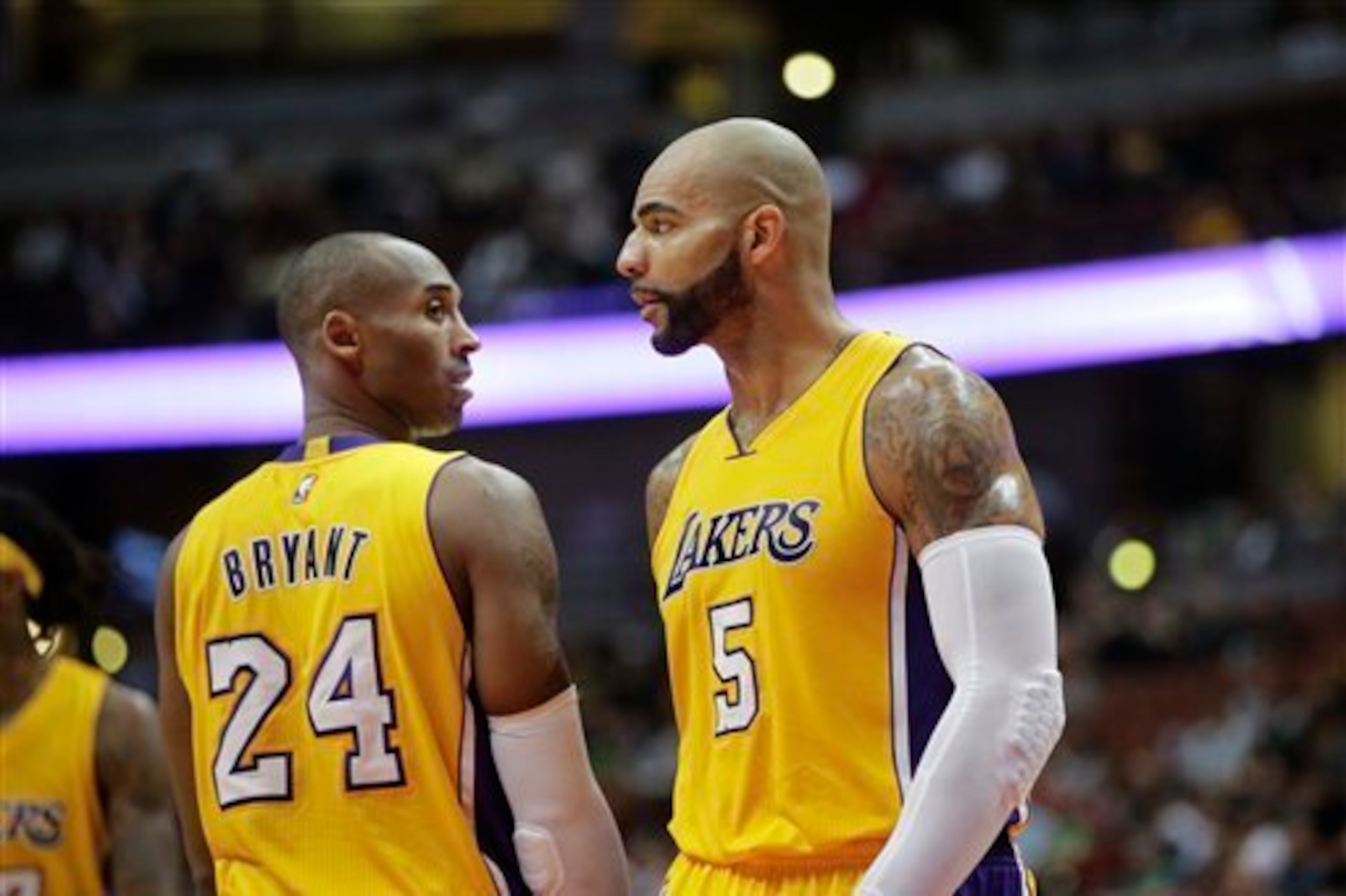
The seeds of the Knicks' decline were sewn years ago. For the Los Angeles Lakers, however, the fall was as steep as it was swift. Yes, the Steve Nash and Dwight Howard trades were debacles. But how many people at the time actually believed them to be bad gambles? Exactly.
The Lakers’ biggest boondoggle was giving a 35-year-old Kobe Bryant a two-year, $48.5 million extension. With so little cap room to round out the roster, L.A. was forced to make do on the fringes. The result: another trip to the lottery this year, with no sense of who might emerge as the team’s next great cornerstone.
What’s the Plan?
Getting Julius Randle back healthy is of the utmost importance. At that point, L.A. has to appeal to a pair of classic pillars (tradition and scenery, basically) in an effort to attract whatever free agents they can. The resulting title push may well be futile (Have you seen the Western Conference?), but at least the Lakers would be interesting.
In the meantime? Lakers legend Magic Johnson has some friendly words of advice.
"I hope the Lakers lose every game," Johnson told reporters during a recent promotional event, via ESPN Los Angeles. "Because if you're going to lose, lose. And I'm serious."
You sound serious!
L.A.’s asset cupboard isn’t completely barren. That, coupled with cap room galore over the next two seasons, should put the Lakers right back where they belong: major players in the free-agent market, with the kind of championship pedigree capable of churning out a contender practically overnight.
.jpg?w=2560 "OBJ Calls Out Giants After Release")



.jpg?w=2560 "Saquon Out for Game")