6 Statistics That Are Defining the Portland Trail Blazers' Season So Far
The Portland Trail Blazers are off to another hot start. Through 24 games, they're 18-6 and have established themselves as a top-four seed out West as a result.
When looking at how Rip City got here, a few key statistics come to mind. Most of them are positive, such as the efficiency of LaMarcus Aldridge and Wesley Matthews. Some, however, are emblematic of potential problems in the playoffs (we're looking at you, bench production).
There's always time to improve (and potentially regress), but in 24 games we've learned a lot about this roster. Stats will fluctuate throughout the year, but we have a solid idea as to what this team's identity looks like with the quarter mark of the season behind us.
Defensive Efficiency
1 of 6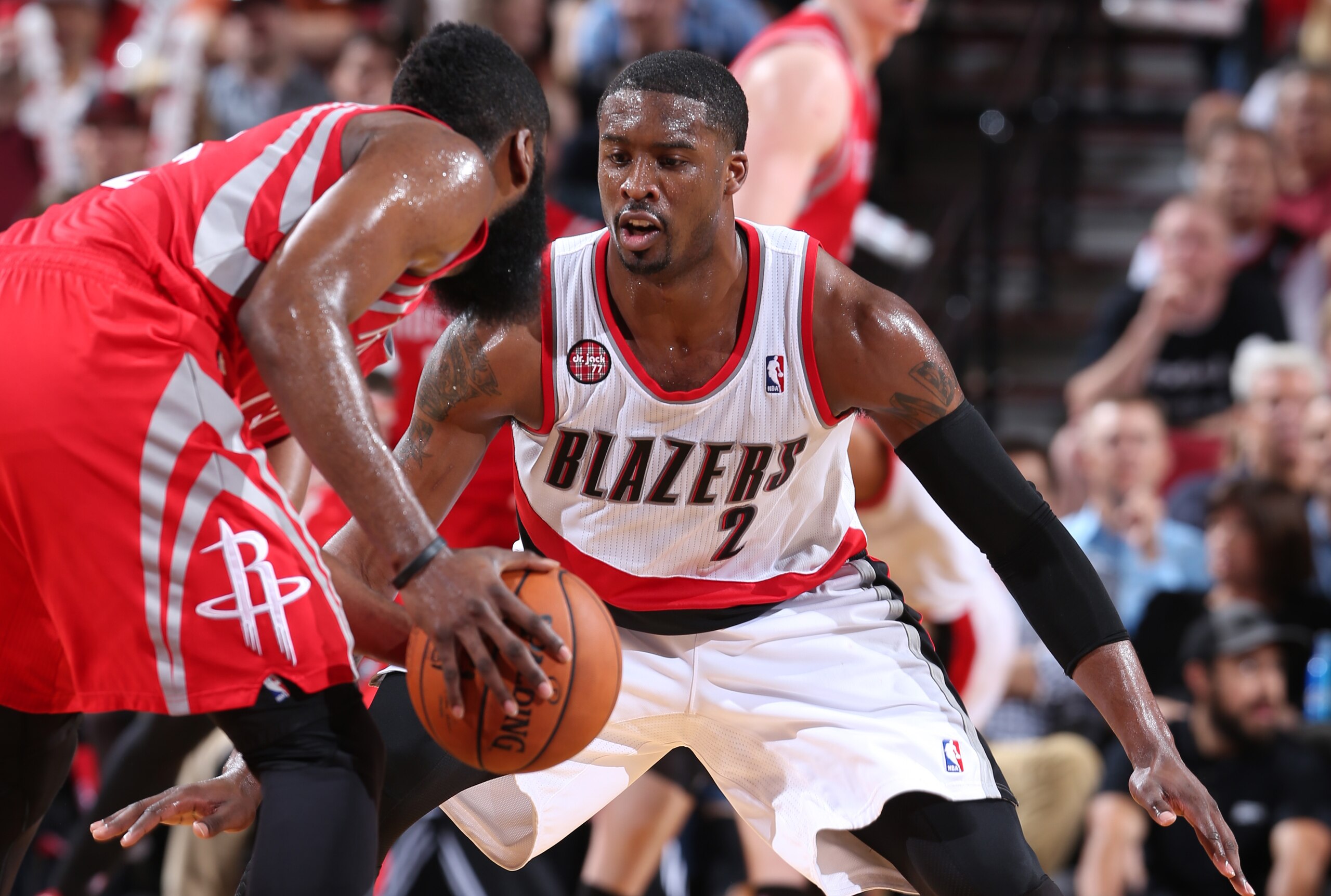
In 2014-15, the Blazers have had the fifth-most efficient defense, via ESPN.com. That's a vast improvement from the No. 16 slot they occupied last year.
Interestingly enough, Portland has established this elite ranking without forcing turnovers. The Blazers force just 11.5 turnovers per game, which puts them at 28th in the NBA.
So how have the Blazers been so efficient defensively? They take a low-risk approach on that end of the floor by not gambling on steals. Head coach Terry Stotts has said this season, via Grantland's Zach Lowe, "It's just not a priority. Good defensive teams don't necessarily force a lot of turnovers."
On the year, the Blazers are fourth in terms of field-goal percentage allowed, second in three-point percentage allowed and second in points per shot allowed, according to ESPN.com. The team is also second when it comes to opponent-adjusted field-goal percentage, fifth in blocks and first in opponent three-pointers made per contest.
Missed shots will never be considered turnovers when it comes to statistical analysis, but that's exactly what they are. Portland is one of the best at forcing opponents into misses, which has more than made up for a lack of steals at this point.
Wesley Matthews' Shooting Numbers
2 of 6
When it comes to the Trail Blazers, the two-headed monster of LaMarcus Aldridge and Damian Lillard perpetually occupies the limelight. The duo combine for 42.5 points per night and were both chosen to represent Rip City and the Western Conference in last year's All-Star Game.
There's no denying that these two are the stars of the roster, but Wesley Matthews has also taken strides and has become a key cog on offense.
On the year, Matthews is averaging 16.6 points per game. He's shooting 48.5 percent from the field, and according to Basketball-Reference.com he's the only player in the league shooting better than 38.1 percent from downtown while also shooting better than 62.4 percent from two-point range.
What does this mean for Portland? It means it has a reliable offensive option behind Aldridge and Lillard. Nicolas Batum has struggled scoring the ball, but with Matthews playing so efficiently, the starting lineup has remained one of the most productive units across the Association.
Starters Production
3 of 6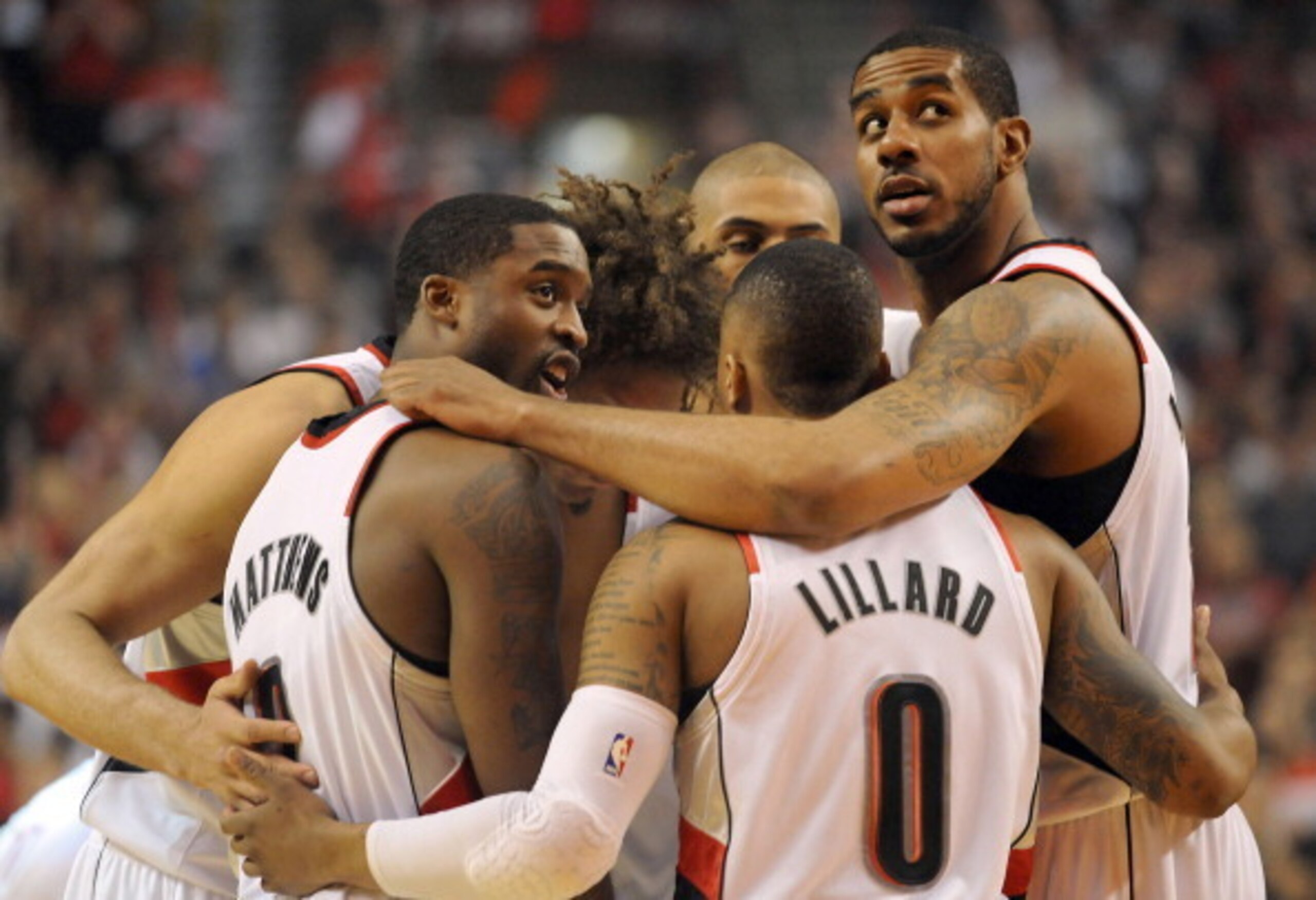
Chemistry and continuity are two themes that perfectly describe the starting lineup in Portland. As a result, the group has become one of the best five-man units in all of basketball.
According to HoopsStats.com, the Blazers are second only to the Chicago Bulls in terms of minutes played per game by starters. The crew Portland puts on the floor at the start of each contest is third in points per game, fifth in rebounds, eighth in assists, sixth in blocks, fourth in offensive efficiency and sixth in defensive efficiency.
These stats are impressive to say the least, but you have to wonder about the first one listed: minutes.
In the 2014 postseason, we saw the team fall apart against the San Antonio Spurs in the second round. Depth and tired legs proved to be a problem when it mattered most.
Having one of the most productive starting units in the NBA is a good thing and should be recognized as such. That said, when looking at statistics that define the season, you have to consider the production of the starters and recognize what it means for the second unit.
.jpg?w=2560 "NBA Gambling Charges")

Bench Production
4 of 6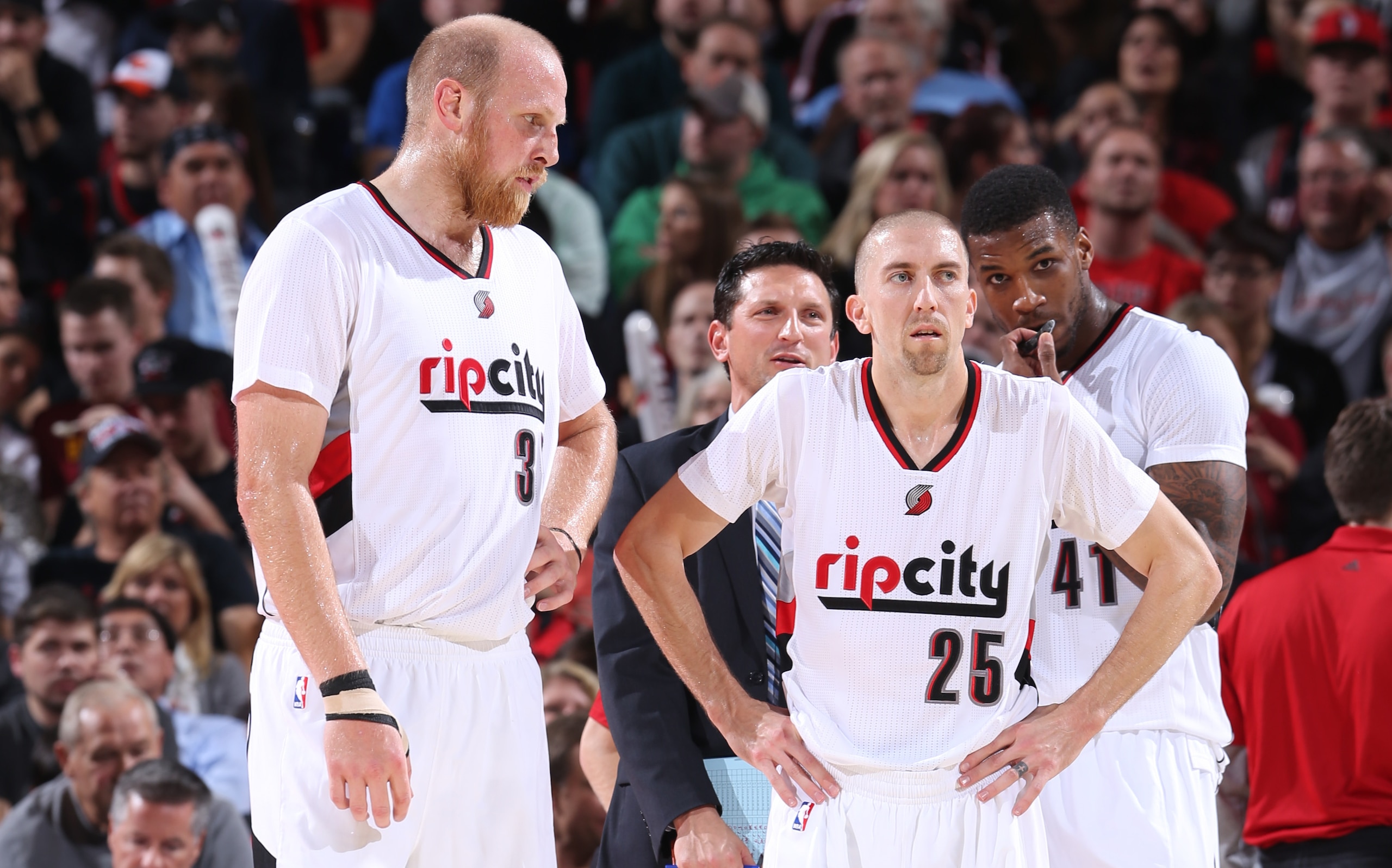
The Blazers bench has improved this season. The additions of Chris Kaman and Steve Blake have given the team two reliable reserves at two of the most important positions on the floor: center and point guard, respectively.
Unfortunately, the improved statistics are more an indication of how bad the bench was a year ago than a testament to how good it is now.
Consider the following bench rankings, via HoopsStats.com:
| MPG | PPG | RPG | APG | SPG | BPG | O-EFF | D-EFF | |
| 2013-14 | 30 | 30 | 25 | 17 | 29 | 29 | 30 | 27 |
| 2014-15 | 30 | 26 | 15 | 11 | 29 | 13 | 22 | 12 |
Portland is playing well, and the improved bench production is part of the reason why. But just imagine where this team would be if it were getting regular contributions from guys such as Thomas Robinson, Dorell Wright and the currently injured C.J. McCollum.
The Blazers are knocking on the door of the NBA's elite, but until they can round out the rotation, they'll be a step behind in their quest for a championship.
LaMarcus Aldridge's Usage and Turnover Rates
5 of 6
Back in November, B/R's Grant Hughes pointed out that LaMarcus Aldridge had an impressive turnover rate compared to his usage rate.
"Through 13 games this season, Aldridge's usage rate is over 27 percent, and his turnover rate is under five percent, per Basketball-Reference.com," Hughes stated. "He's the only player in the league who can boast such a major offensive role with so few mistakes."
Now, through 24 games, Aldridge's usage rate has increased to 28.9 percent. His turnover rate has also increased to 6.6, but he's still the only player (other than seldom-used Devyn Marble of the Orlando Magic) to boast those numbers.
For comparison's sake, Damian Lillard's usage rate is 24.9 percent, and his turnover rate is 12.4 percent. The young guard is unequivocally considered the future of this franchise, but it's clear that the team is still riding the success of its 29-year-old big man.
Strength of Schedule
6 of 6
Portland's hot start has been impressive, but it's also a byproduct of the team's early-season slate of games.
Through 24 contests, the Blazers are 28th in terms of strength of schedule, according to ESPN.com. Of their first 12 games, nine took place within the familiar confines of the Moda Center.
In fact, Portland didn't experience consecutive road games until a three-game trip that began on Nov. 23.
But don't knock the Blazers for having an easy start to the schedule. It would be one thing if they were struggling, but they're doing exactly what contenders do: taking advantage.
The only problem with being 28th at this point in the process is that it's all uphill from here. The Blazers are going to compete for home-court advantage come playoff time and will need to use their hot start as momentum when the strength of schedule increases.





.jpg?w=2560 "Aikman Blasts Cowboys WR 🫣")
.jpg?w=2560 "Jonathan Taylor Landing Spots")