

Washington Redskins vs. New York Giants: Breaking Down Washington's Game Plan
A lot can happen in 25-30 years. Remember when a game between the Washington Redskins and New York Giants was the marquee clash of the NFC East? You know, back in the halcyon days when Joe Gibbs led the Redskins and Bill Parcells fumed on the other sideline for the Giants.
This was that golden era when the NFC East was the NFL's premier division. It was a period when Washington and New York snaffled five Super Bowls in a decade, beginning in the early '80s and stretching to the barely out of diapers part of the '90s.
TOP NEWS
.jpg?w=2560 "Titans Giants Football")
OBJ Calls Out Giants After Release
.jpg?w=2560 "Cardinals Giants Football")
NFL investigating referee after viral exchange with player
Lamar Jackson Day-to-Day
If Redskins and Giants fans find themselves submitting to nostalgia, you can hardly blame them. Fast forward to the present day and the only thing Big Blue and the Burgundy and Gold are battling for is to avoid the shame of propping up the division.

Despite several contrasts between the two, their results are depressingly the same. The Redskins enter Week 15 3-10. Their season has been blighted by out-of-his-depth first-year head coach Jay Gruden, a failing defense and struggling, inexperienced quarterbacks.
The Giants aren't so tall anymore either. The team that won a pair of Super Bowls in 2008 and 2012 now finds itself just a step up from Washington at 4-9.
Big Blue has its own coaching issue. But it's not focused on a confrontational novice, instead New York is facing up to waving goodbye to Tom Coughlin, the NFL's oldest sideline general, who's probably seen one battle too many.
There's more veteran problems at quarterback. Eli Manning arrived in the Big Apple with Coughlin in 2004, but he's become increasingly mistake-prone.
Yet, gaffes aside, Manning has led the Giants to four wins in their last seven meetings with the Redskins. To avoid a fifth defeat, Washington must focus its efforts on corralling tight end Larry Donnell and rookie wide receiver Odell Beckham Jr.
That will take a twofold approach. The first involves paying more attention to tight ends than the Washington defense has done this season.
Double Larry Donnell
The Redskins have been diabolical at covering tight ends this season. They certainly were when the Giants came to town in Week 4 and won 45-14.
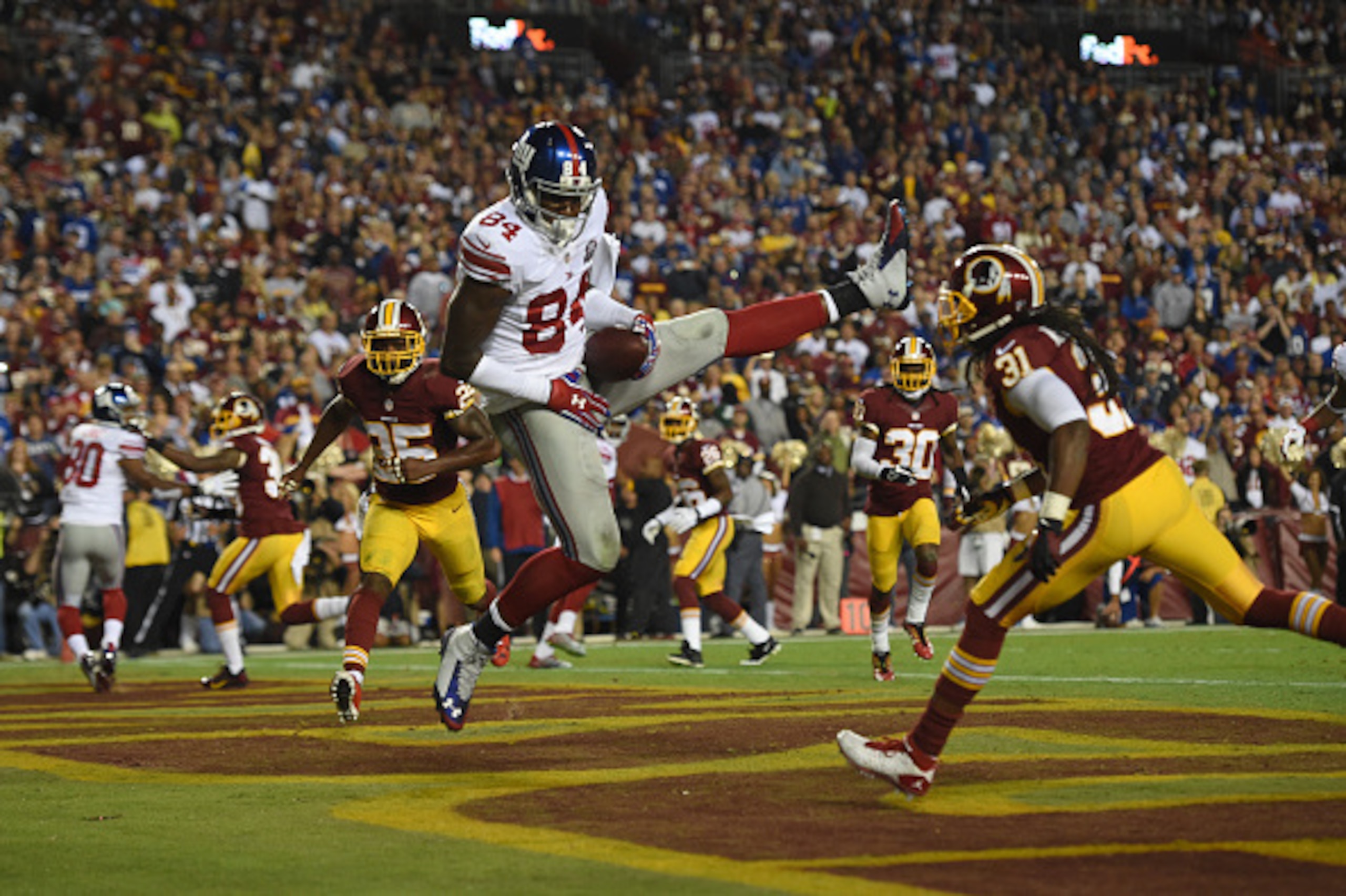
Donnell ran riot in that win, hauling in three touchdowns. To prevent a repeat, defensive coordinator Jim Haslett must change a coverage structure that has given tight ends too much freedom in recent weeks.
Jared Cook certainly benefited from that space in Week 14. The St. Louis Rams ace caught four passes for 61 yards, including a 35-yard score.
Cook described how he exploited failings in Washington's coverage, per St. Louis Post-Dispatch writer Jim Thomas, saying, "I don’t know if somebody busted coverage, but I think they just went plain old Cover 2. The middle parted like the Red Sea, Shaun gave me a good ball, and I just kind of fought my way in."
Taking a look at the play shows how easily Haslett's "plain old" two-deep look was manipulated into breaking down. In fact, all it took was a play fake.
The Redskins showed a basic Cover 2 look with Brandon Meriweather and Ryan Clark covering the deep halves. Cook, who aligned as an in-line tight end next to the left tackle, would simply attack the voided middle:
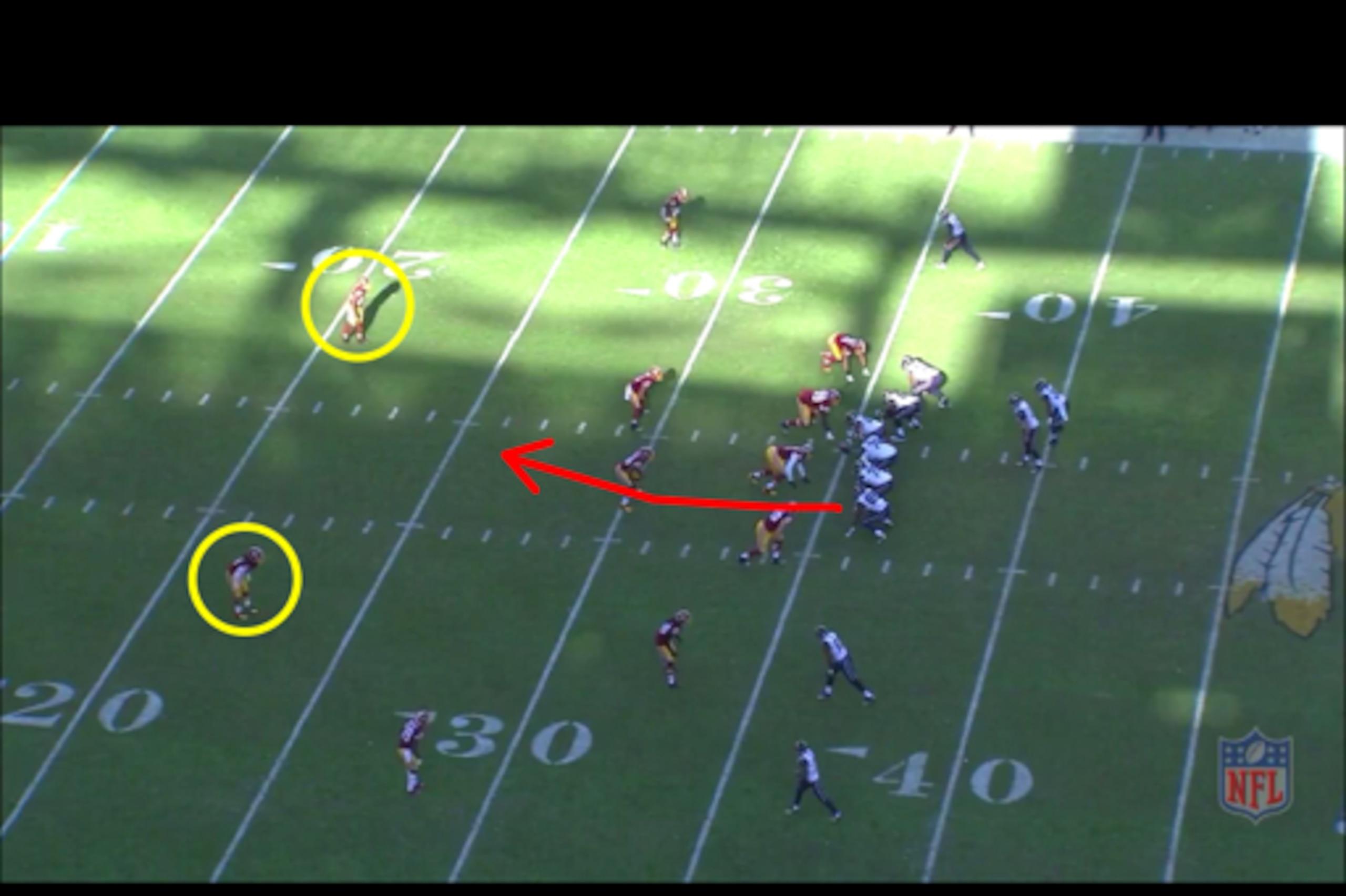
Trouble began when Clark inexplicably began to rotate down into the box. Whether he was overanxious reading run or this was a planned shift to Cover 3 or a single-high safety look was unclear:

The former is probably more likely since Clark bit so easily on the fake handoff between quarterback Shaun Hill and running back Tre Mason. He was joined in his foolhardy jaunt by linebackers Will Compton and Perry Riley Jr.:
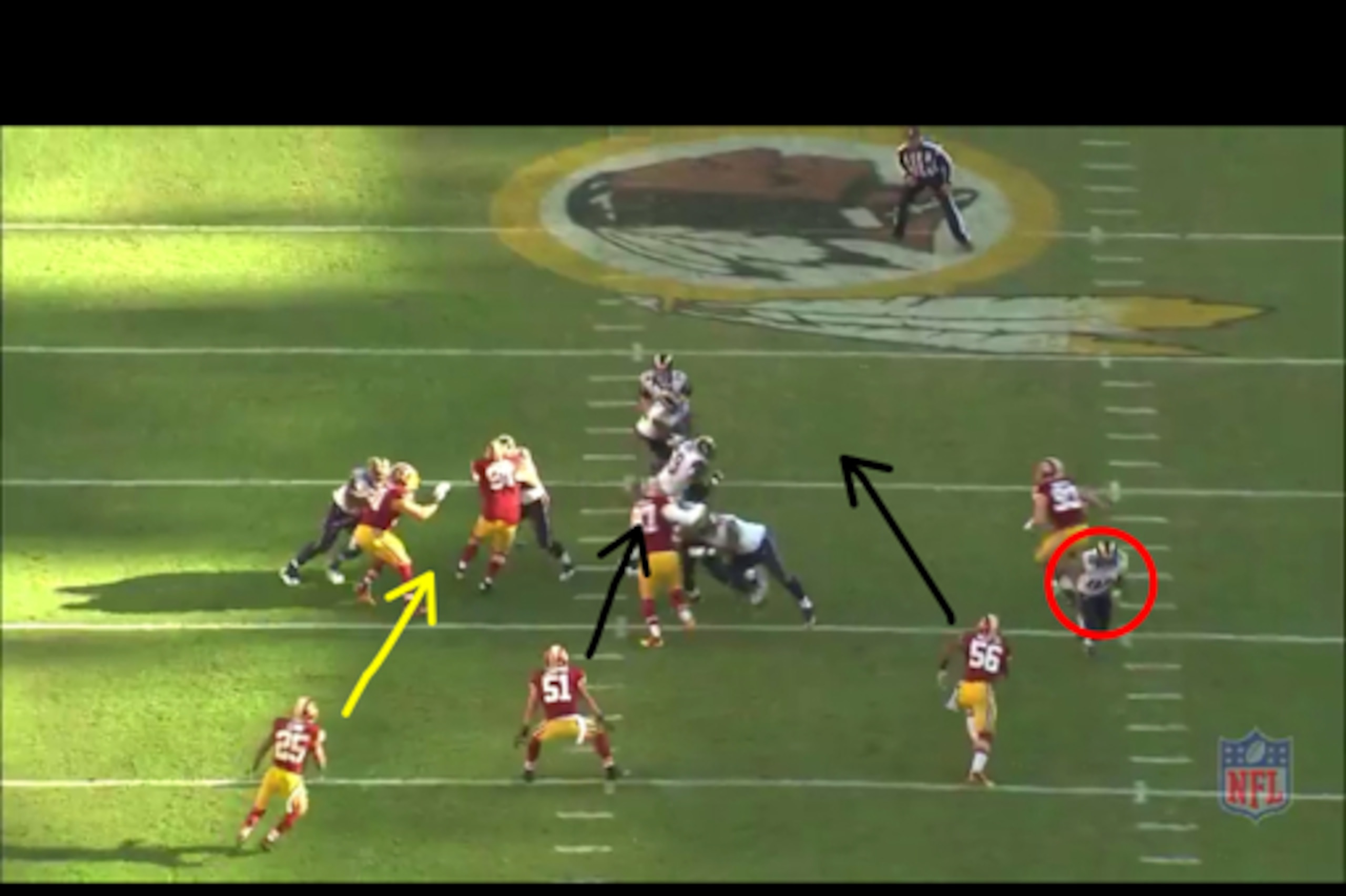
You can see from the overview how much space this left behind the defense for Cook to exploit:
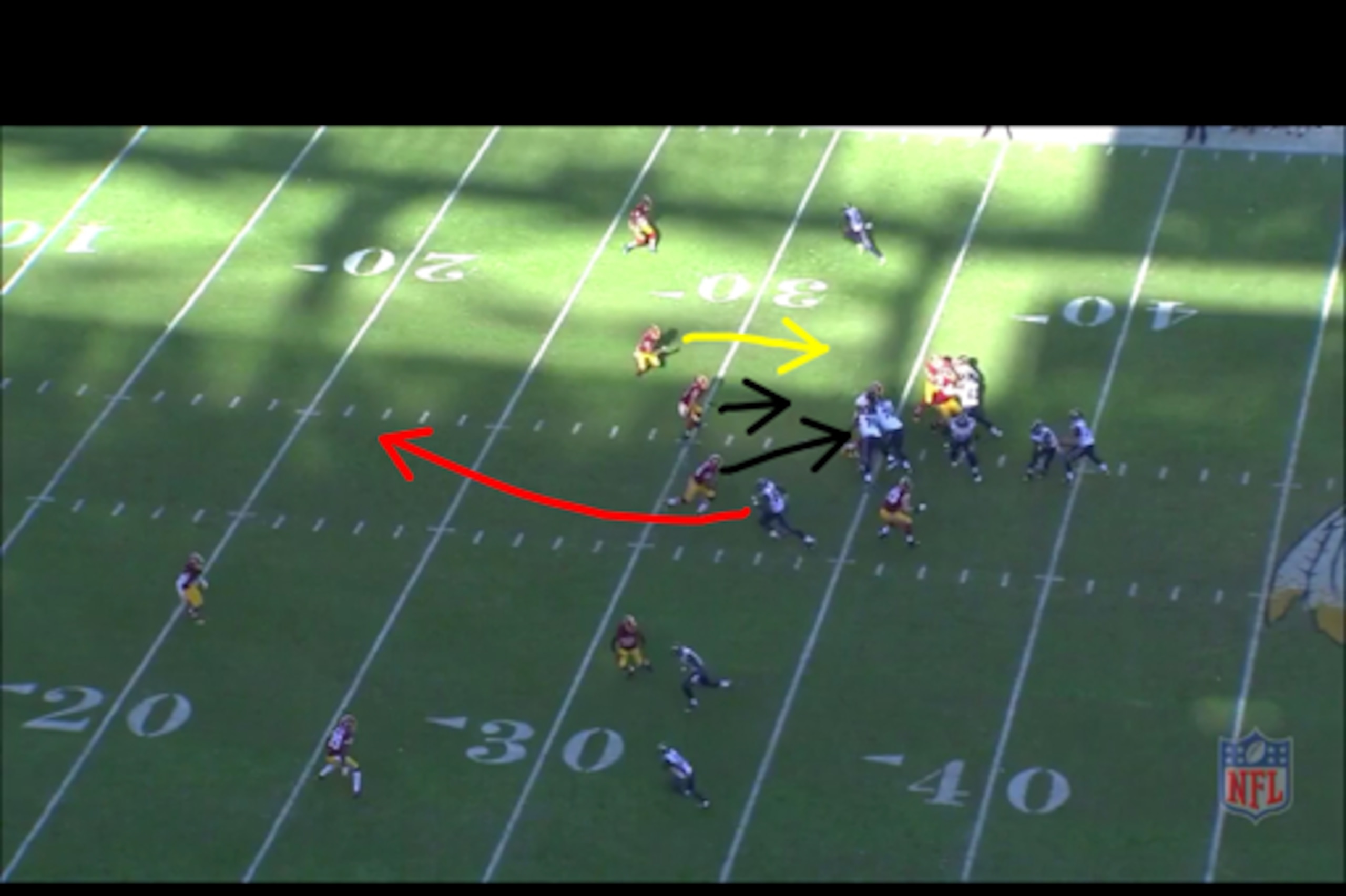
Taking another look at Meriweather's position reveals this probably wasn't a planned coverage shift. Instead, it was an obvious breakdown.
Meriweather remained in his deep half. He hovered over the two-receiver side of the formation, no doubt what the Rams were hoping for with this alignment:
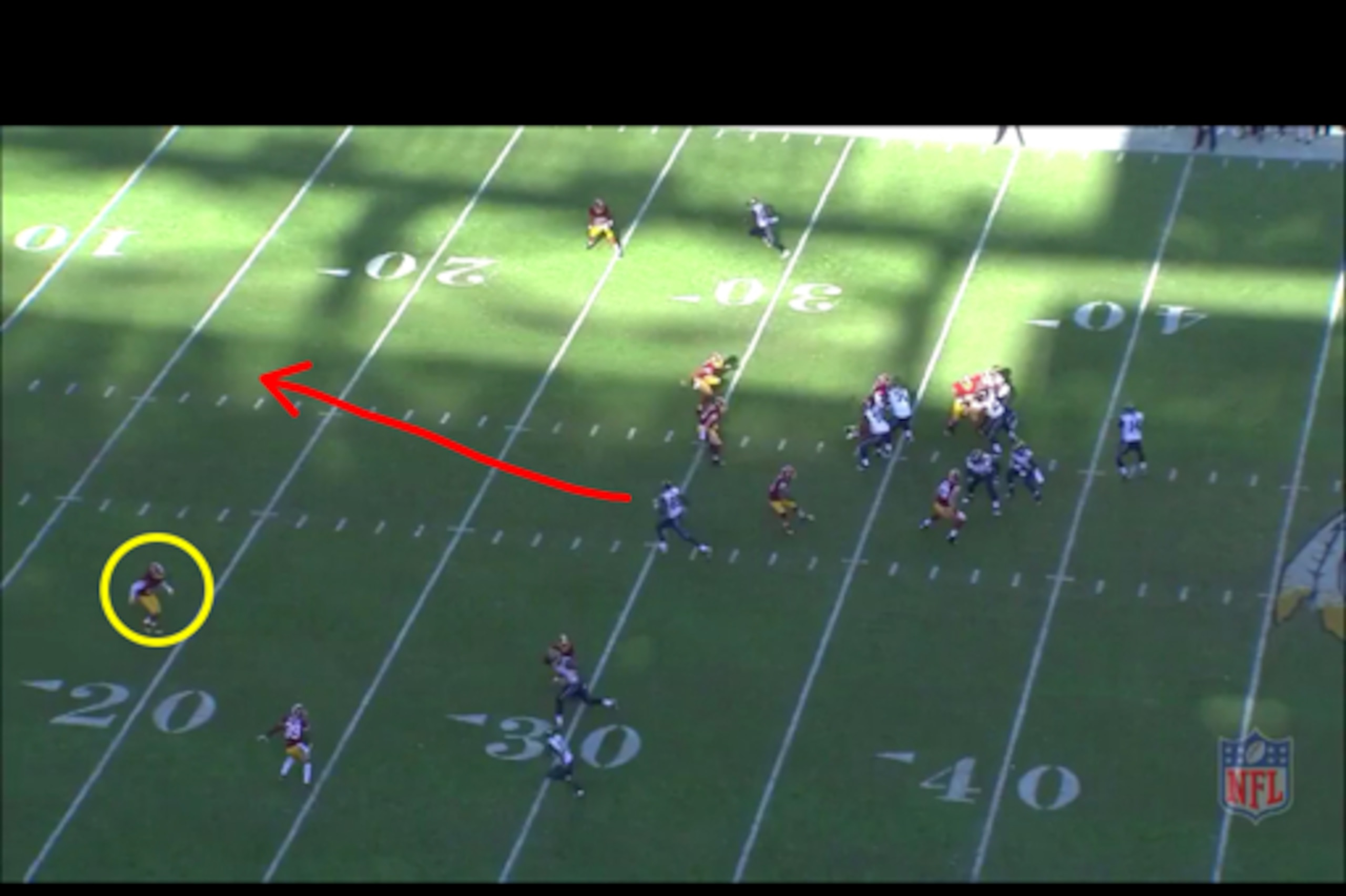
Cook was now wide-open to make an easy catch. Clark was out of position and Meriweather was too far away to get across and make a tackle:

Cook scored what has to rate as one of the easier touchdowns of his career.
Haslett cannot let Donnell have things as easy. The first step will be tracking him. That's not something Haslett's D did when Donnell caught seven passes for 54 yards in Week 4.
His longest gain, a 14-yarder on the final play of the first quarter, showed how simple it was for Donnell to go unnoticed into space.
He began the play aligned in the backfield as a de facto fullback:
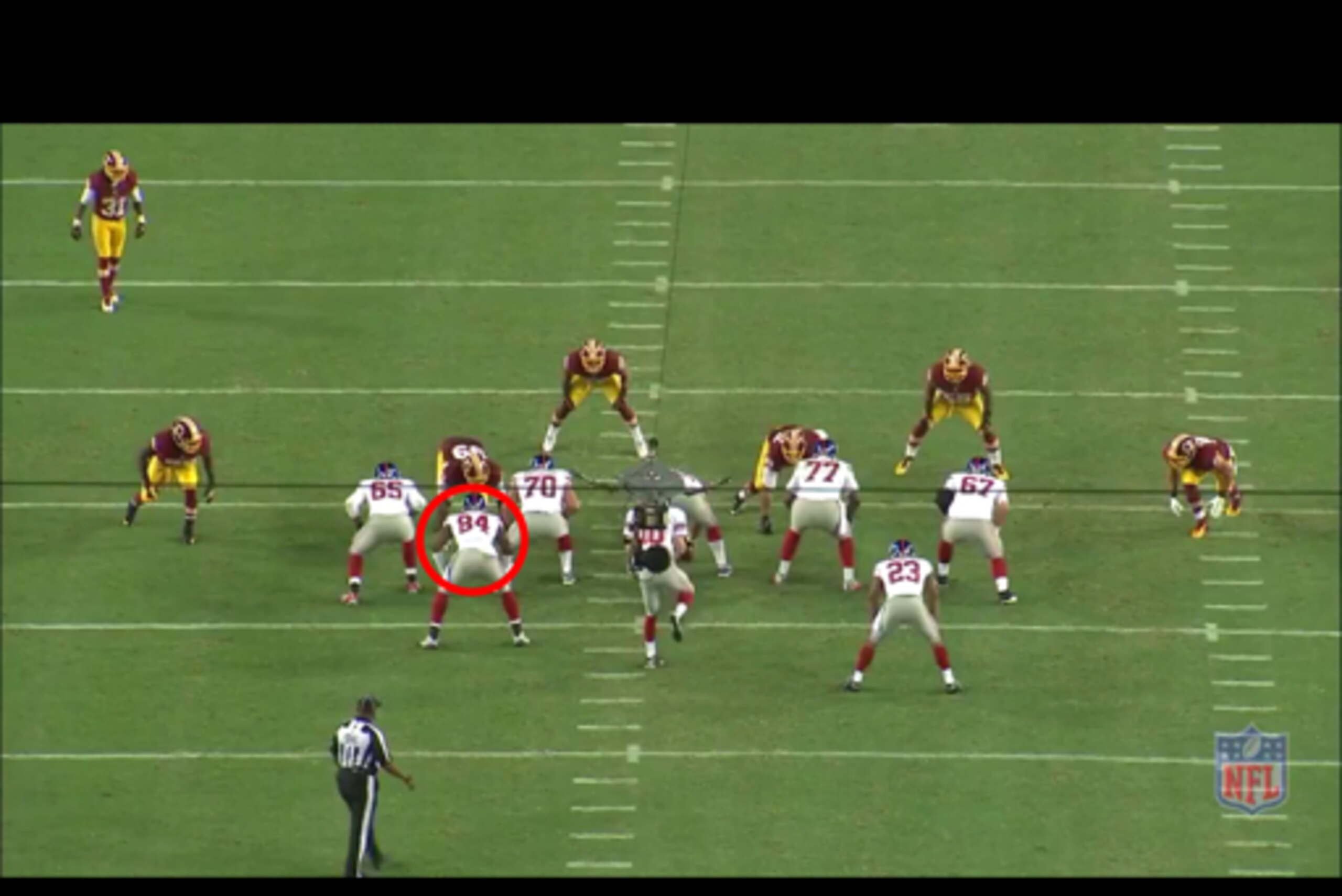
Washington aligned in its all-too predictable Cover 2 shell. Clark and Meriweather split the deep halves. Meanwhile, Donnell planned to split the gap between the hapless safeties:
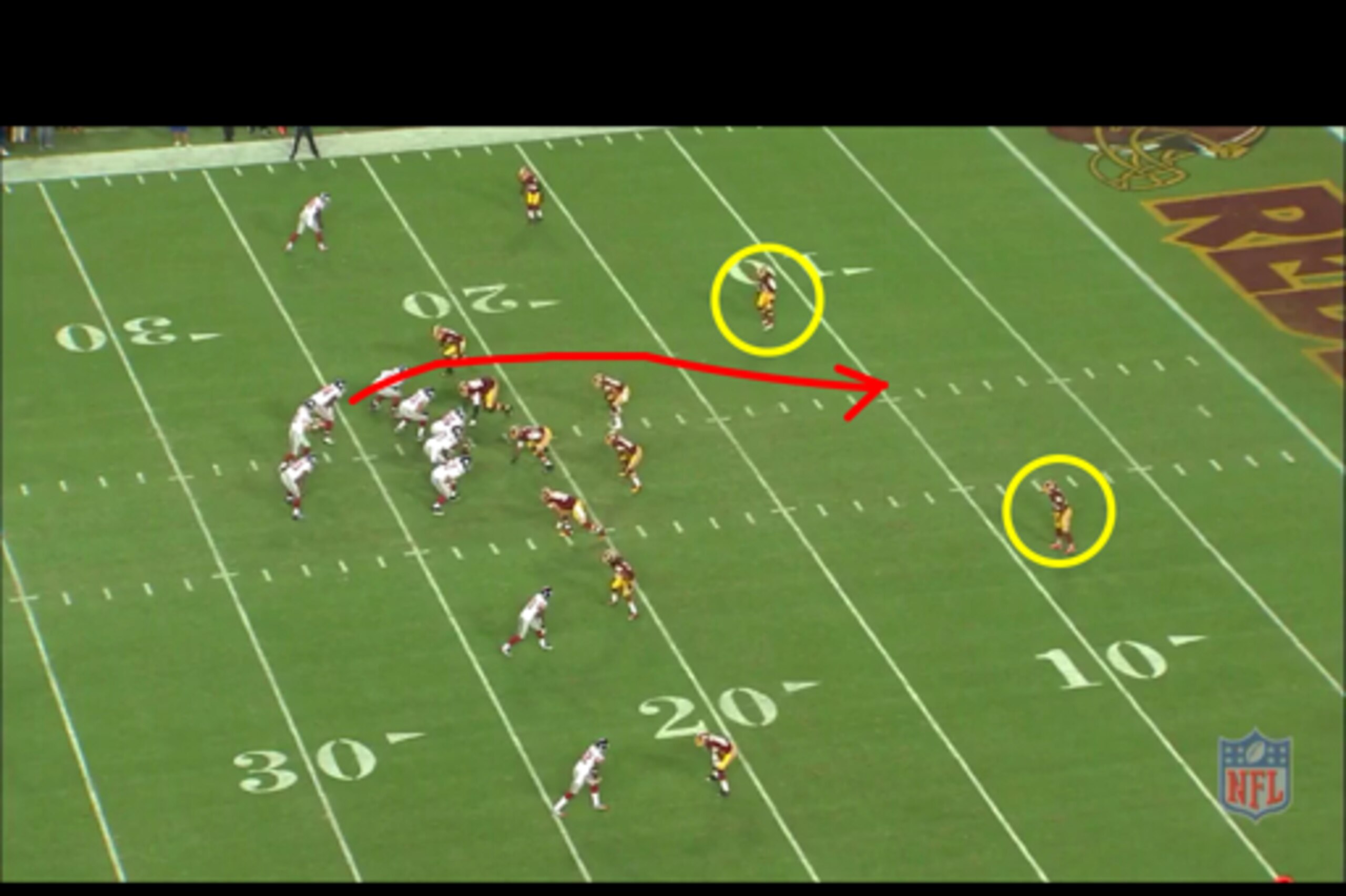
Again, all it took was a play-action fake between Manning and running back Rashad Jennings to make the inside 'backers forget any coverage responsibilities:
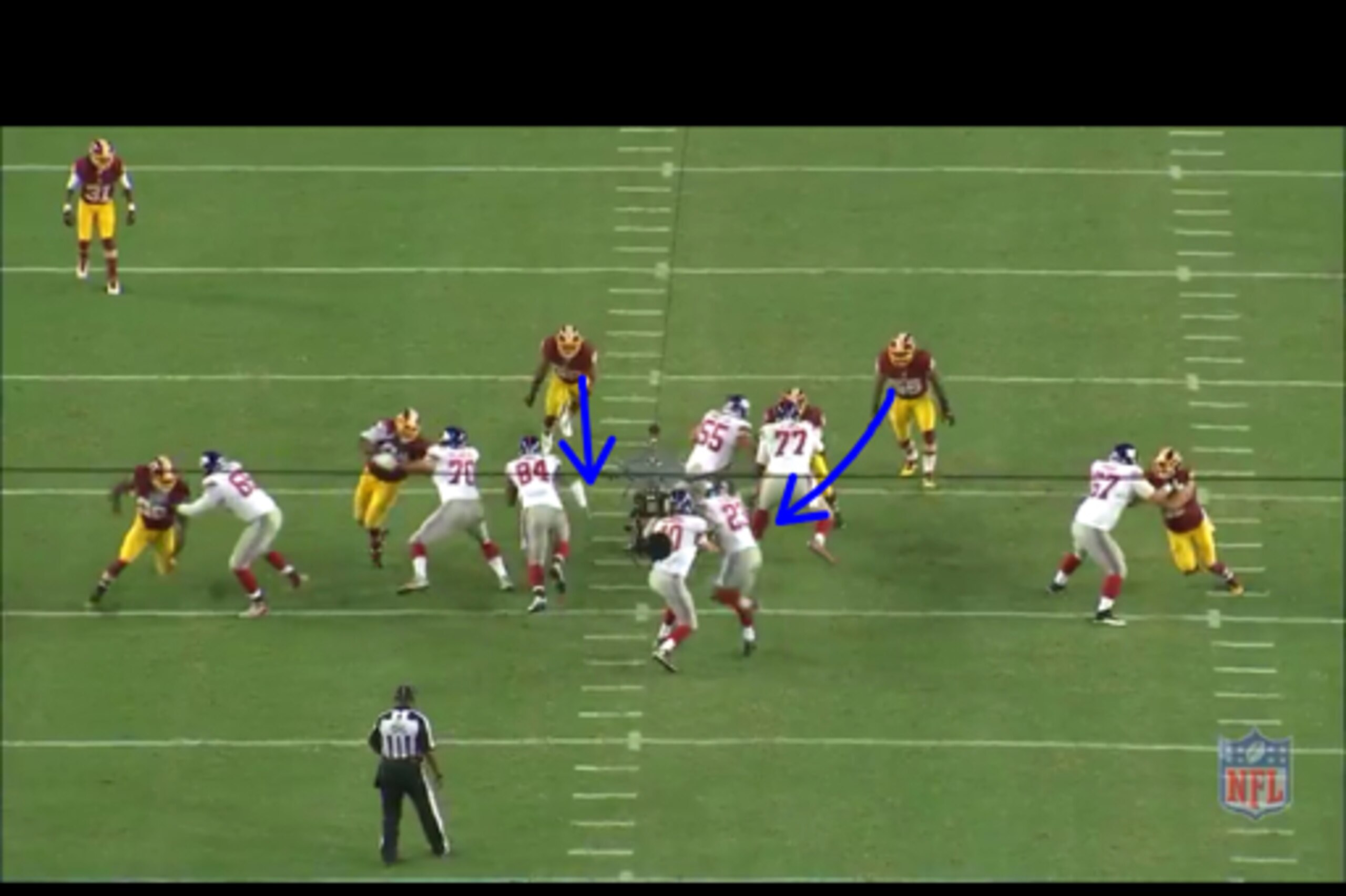
Another familiar flaw reared its ugly head. This time, Clark stayed to the outside, hovering over New York's two-receiver side of the formation:

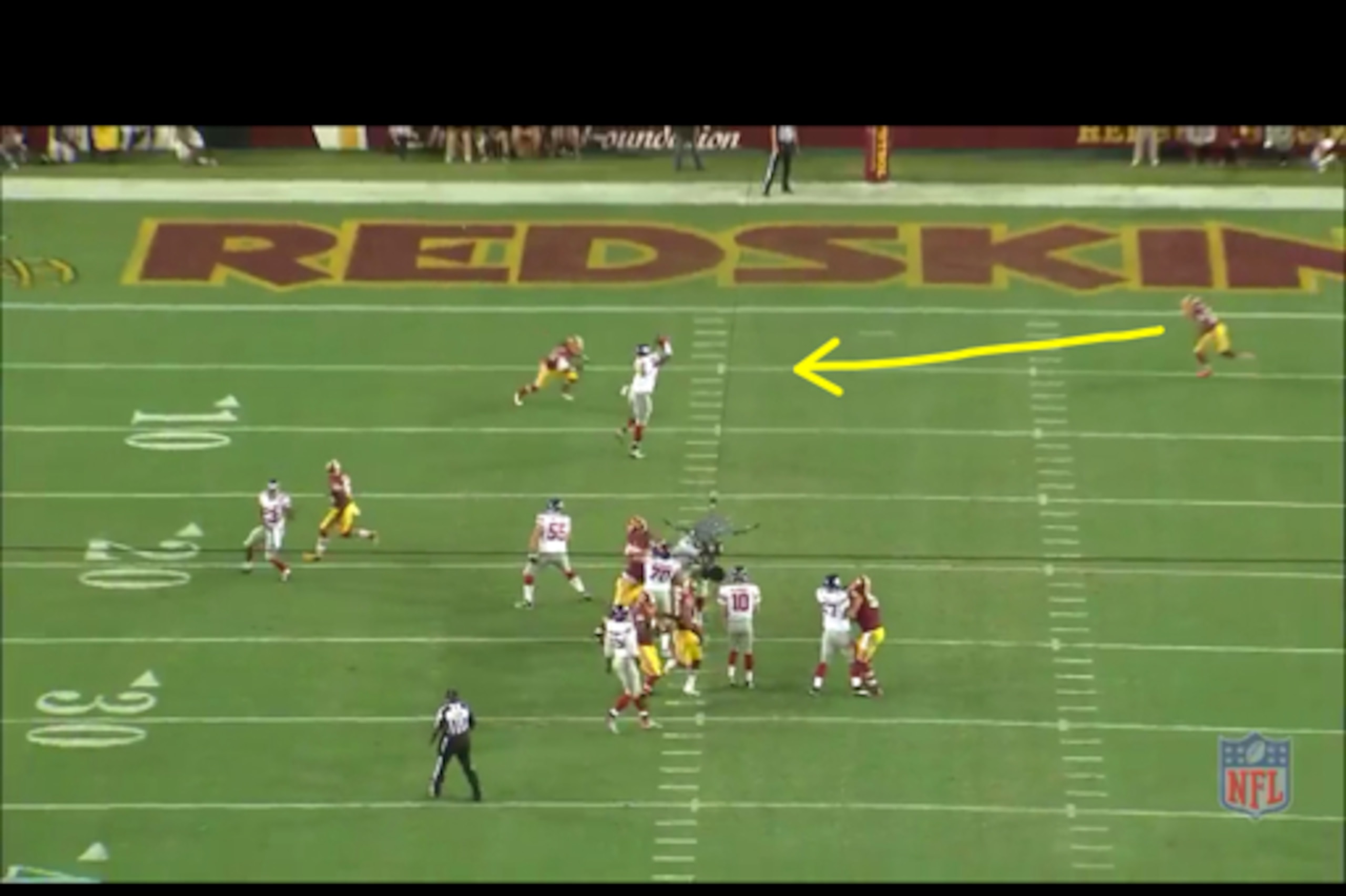
It's startling how easily Washington's coverage schemes can be pulled apart simply by formation and movement. Notice how big a gap a simple three-receiver set helped create between the two safeties:

That meant that once Donnell made the catch, Clark was too far away to make a play on the ball or the receiver:
Washington's linebackers and safeties have likely been seeing tight ends in their nightmares recently. Cook's two-touchdown effort came one week after Indianapolis Colts playmaker Coby Fleener caught four passes for 127 yards and a pair of scores.
Haslett must tweak his coverage schemes to show some single-high looks, freeing up one of Clark or Meriweather to help a linebacker double Donnell underneath. He needs to see at least two coverage defenders every play.
Press Giants Receivers to Avoid Double Moves
Doubling up on Donnell inside will force the Redskins to gamble with single coverage on explosive rookie receiver Beckham on the outside. But the risk can be minimized by instructing cornerbacks to regularly employ aggressive, press techniques.
This can be a particularly useful strategy against the Giants. Big Blue's receivers love double moves. But they won't be able to execute multilayered breaks if they can't escape the grasp of the covering defender directly in front of them.
The one thing the Redskins can't do is give Beckham room on the outside. The Tennessee Titans made that mistake during New York's 36-7 rout in the Music City in Week 14.
In this particular example, cornerback Jason McCourty aligned in an off-coverage look, leaving a chasm of space between himself and Beckham:

Allowed a clean release off the line, Beckham had more than enough room to not only build up speed but also set up his first move. That initial move was an outside break:
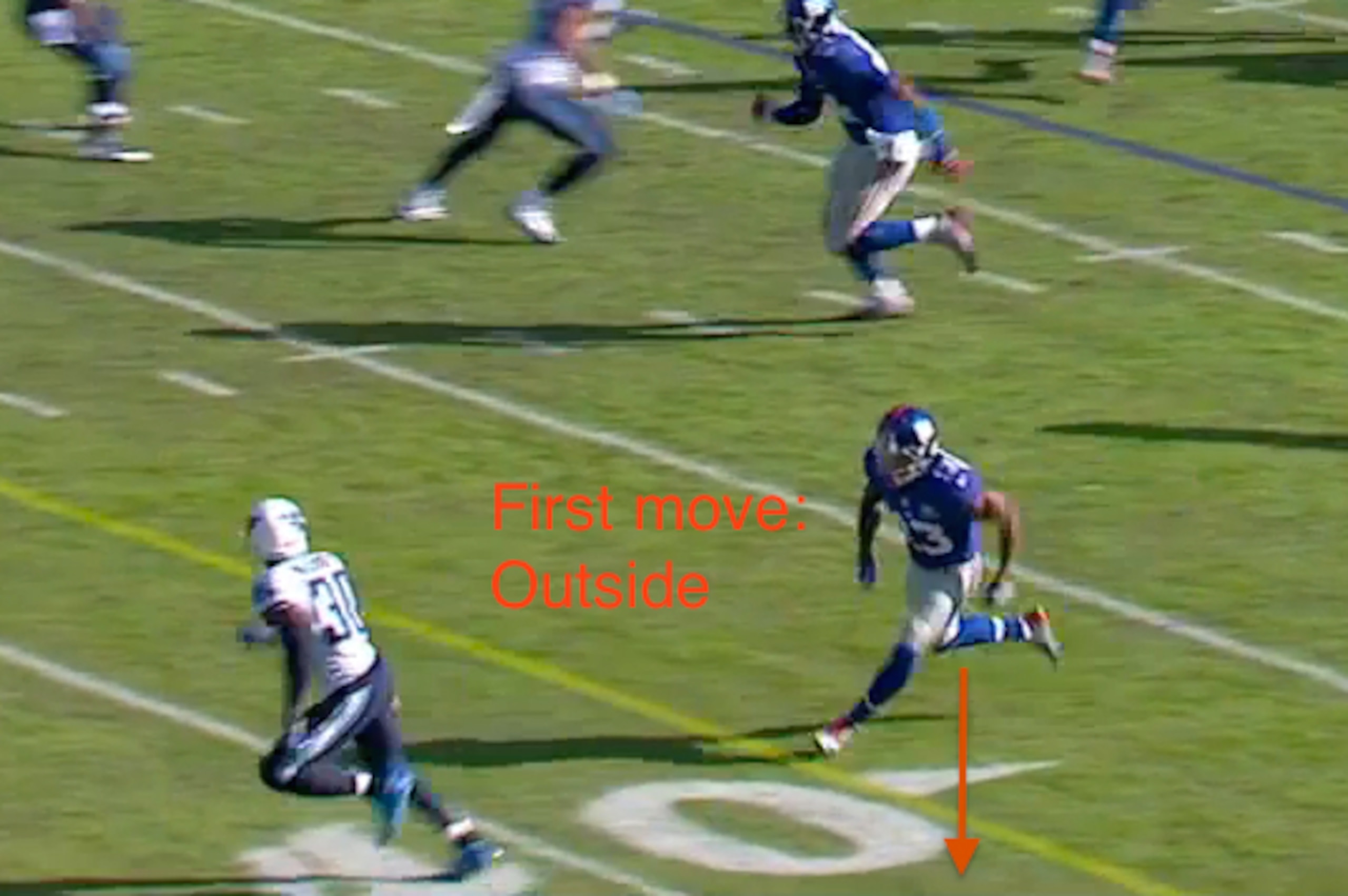
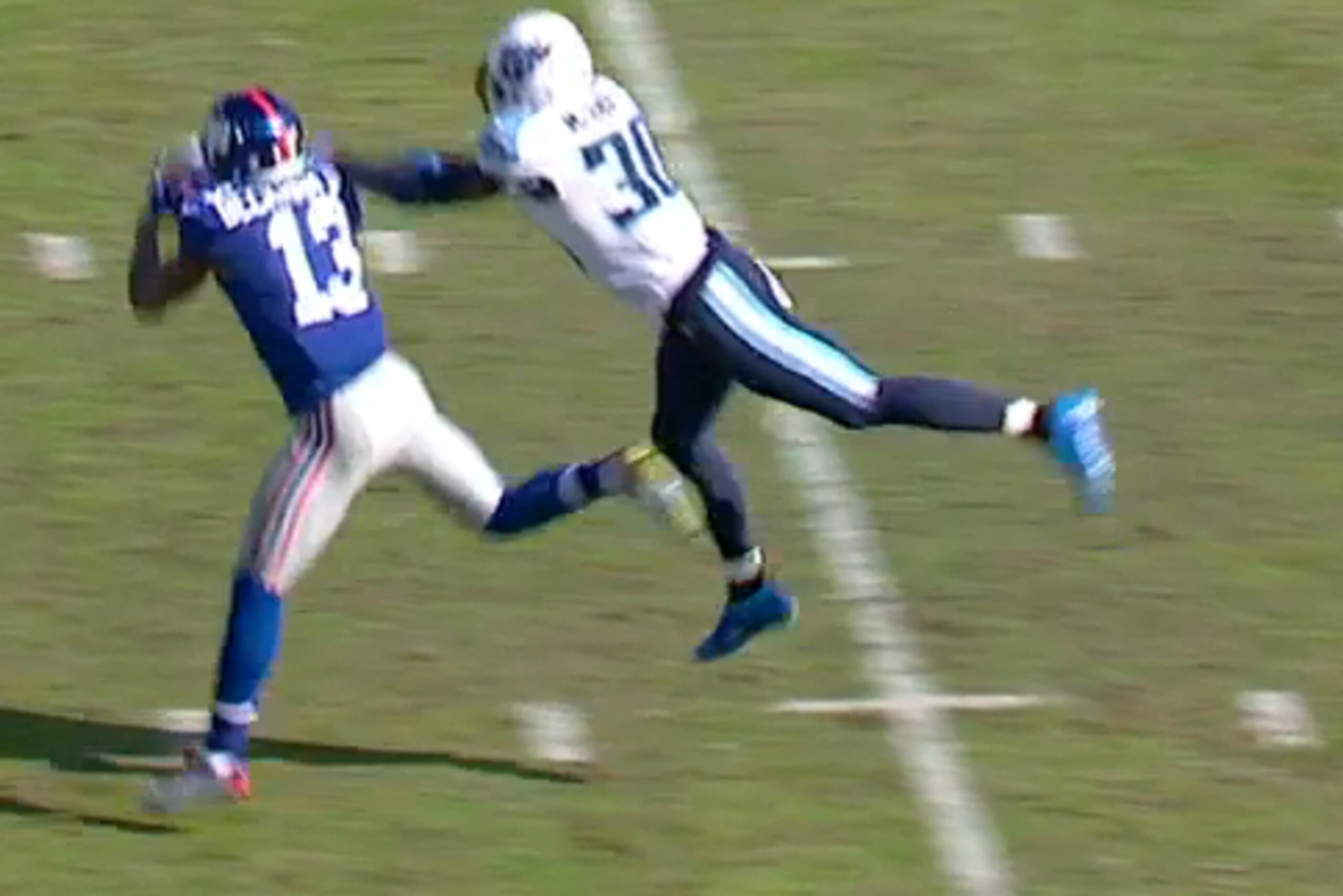
With McCourty already on the back foot, Beckham redirected the cover man with a sharp break to the inside to complete his double move:

With this out-and-up route executed, Beckham was beyond McCourty and well positioned to haul in a 50-yard reception:
Haslett can't let Beckham's talent for the big play undermine a secondary that has given up too many of those in recent games. The smart ploy would be to have rookie corner Bashaud Breeland plaster onto Beckham at the line.
Breeland has shown a nasty disposition and an aptitude for pressing receivers this season. He has the attributes to make Beckham fight for every clean break.
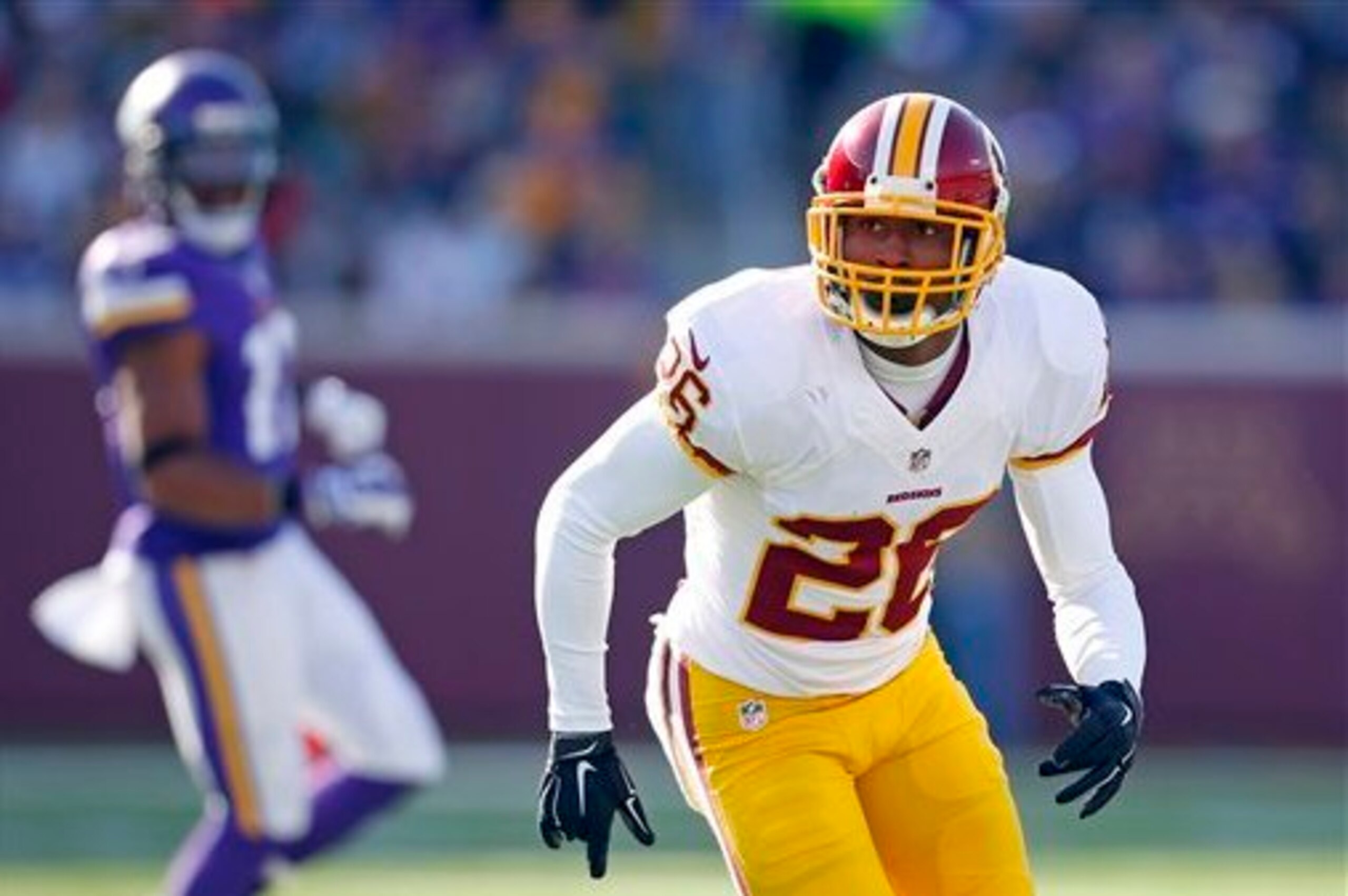
Beware of Blitzing Linebackers
The Giants notched eight sacks in Tennessee last week. It was a season-high number for a defense that's generally struggled to apply pressure in 2014.
The key to the sudden feasting on the passer was more blitzing from the linebackers. In particular, rookie Devon Kennard caused havoc whenever he joined Big Blue's front four as a supplementary rusher.
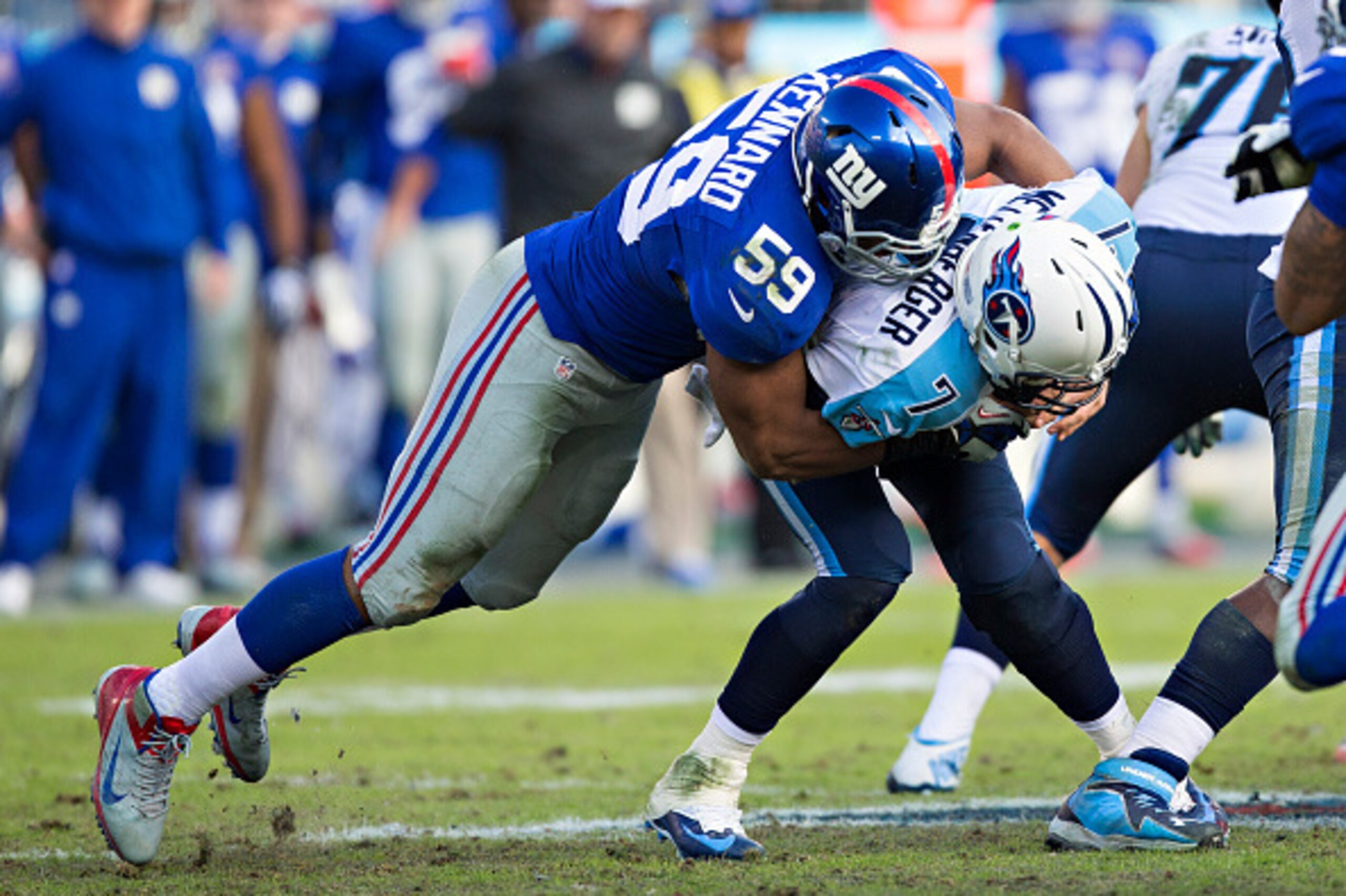
Kennard's efforts won him league-wide plaudits, per NJ.com writer Jordan Raanan:
"Linebacker Devon Kennard was named the NFC Defensive Player of the Week for Week 14 after recording six tackles, two sacks, two tackles for a loss, two quarterback hits and a forced fumble in Sunday's 36-7 rout of the Tennessee Titans. It was the second straight week that Kennard had a multi-sack game.
...
The fifth-round pick out of USC has made quite an impact of late at strongside linebacker. Defensive coordinator Perry Fewell has used his pass-rushing skills (he was a defensive end and outside linebacker for the Trojans) to the Giants' advantage.
Kennard, 23, knocked the ball loose in the first quarter on Sunday when his helmet hit the arm of Titans quarterback Zach Mettenberger. Defensive tackle Markus Kuhn returned it for a touchdown, the Giants' first non-offensive score of the season.
"
Kennard's ability to rush off the edge could pose serious problems for a Washington protection scheme that's allowed 18 sacks in the last three games. Obviously, that's an indicator of major problems along a talented, depleted offensive line.
But just as serious are the failures of supplemental blockers to aid protection. The problem is most obvious when running backs are called on to help.
A pass-rusher against a running back is the kind of mismatch the Giants can create whenever they blitz Kennard. That very mismatch led to the sack-fumble-touchdown Kennard caused against the Titans.
He blitzed over the right tackle. With New York's front four occupying the Tennessee O-line, running back Jackie Battle was forced to block the first-year pass-rusher:
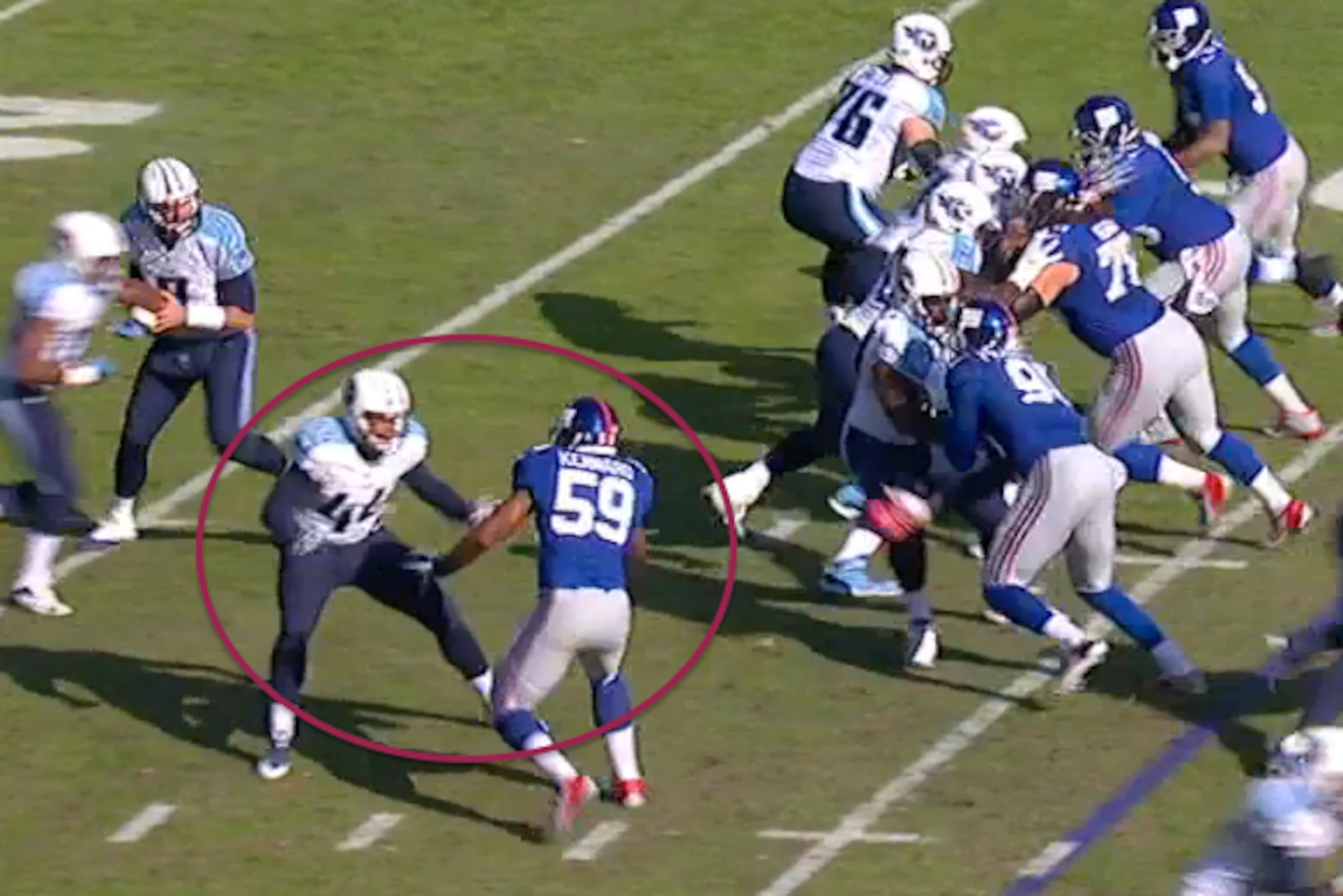
With Kennard blitzing off the same side as end Jason Pierre-Paul, the Giants created an overload that overwhelmed Tennessee's blocking:

Pierre-Paul broke free to get a hand on rookie passer Zach Mettenberger. He had to step up and away from the pressure:
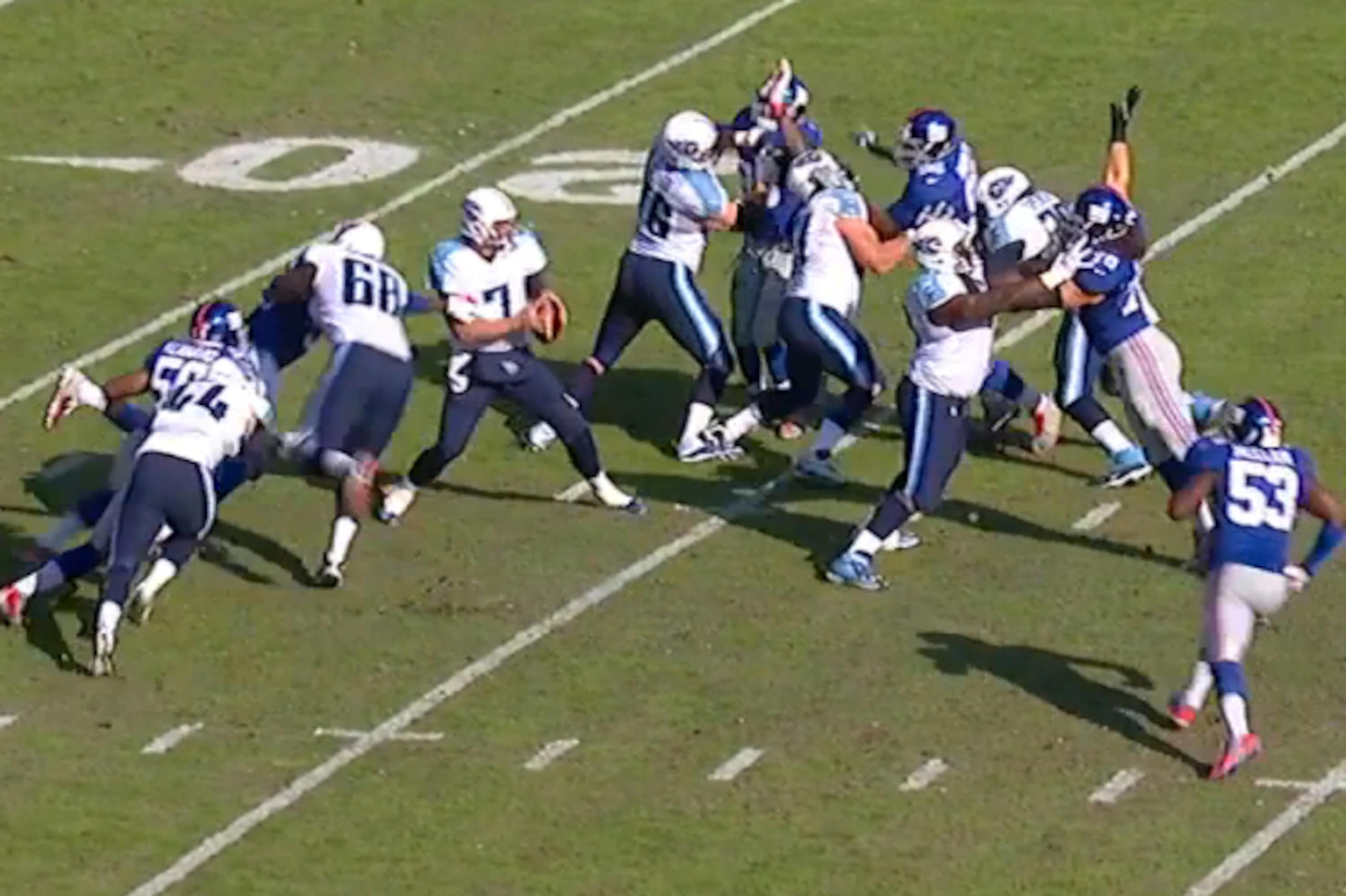
But as he climbed the pocket, Mettenberger was hit by Kennard, a hit that knocked the ball loose:
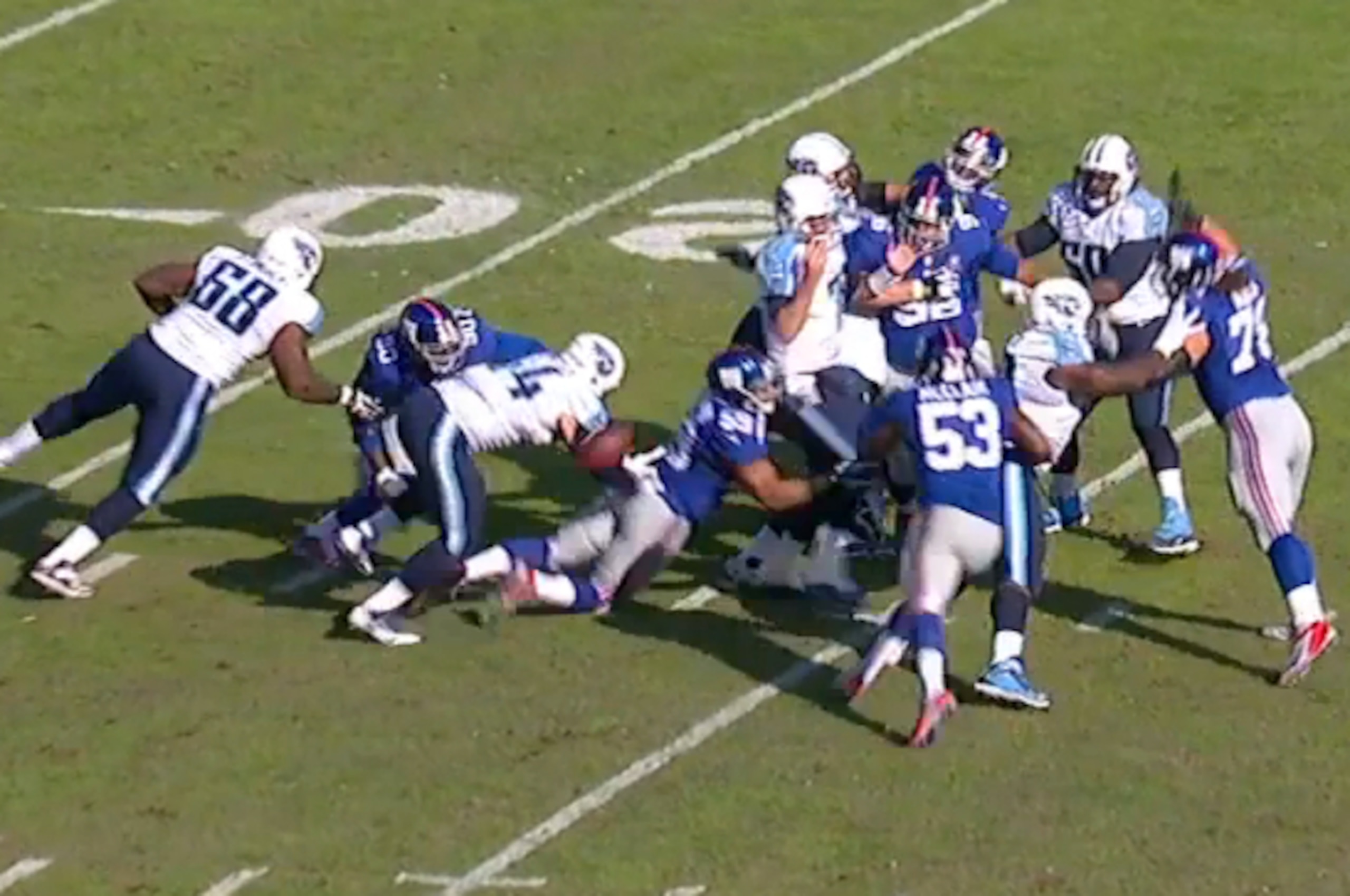
Four of Big Blue's eight sacks last week came from linebackers and defensive backs. Kennard's double was added to by Jameel McClain and defensive back Mike Harris.
Redskins running backs will have to be more aware of extra blitzers than they were against the Rams. Safety Mark Barron logged a sack after swatting aside Roy Helu Jr.:
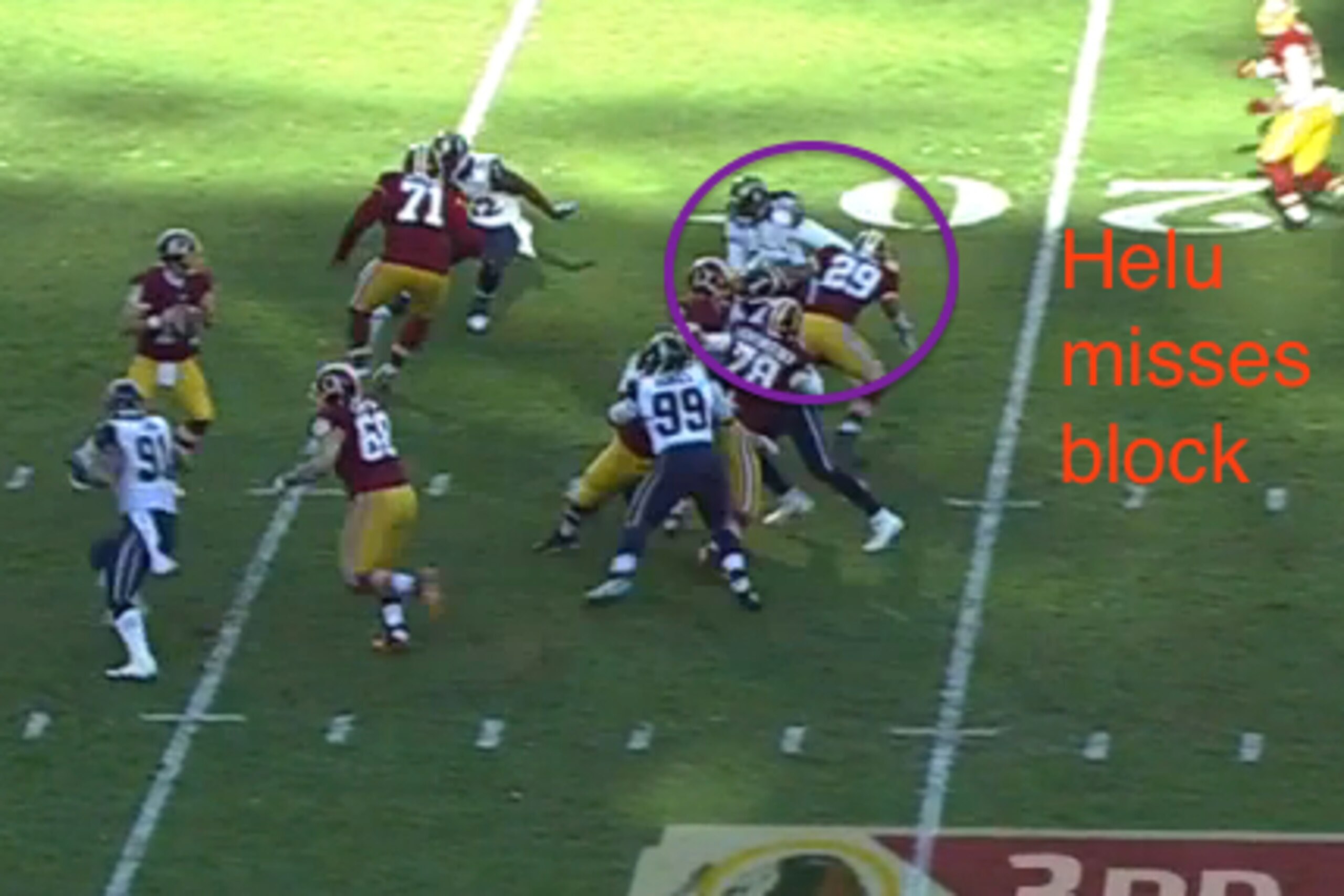
Later, after Barron had made too easy work of Helu, it was Morris' turn to hang his quarterback out to dry. The Rams cleverly isolated defensive end Eugene Sims against Morris by using inside pressure to cause left tackle Trent Williams to block down.
Morris attempted to cut Sims low. But the runner made a mess of the block:
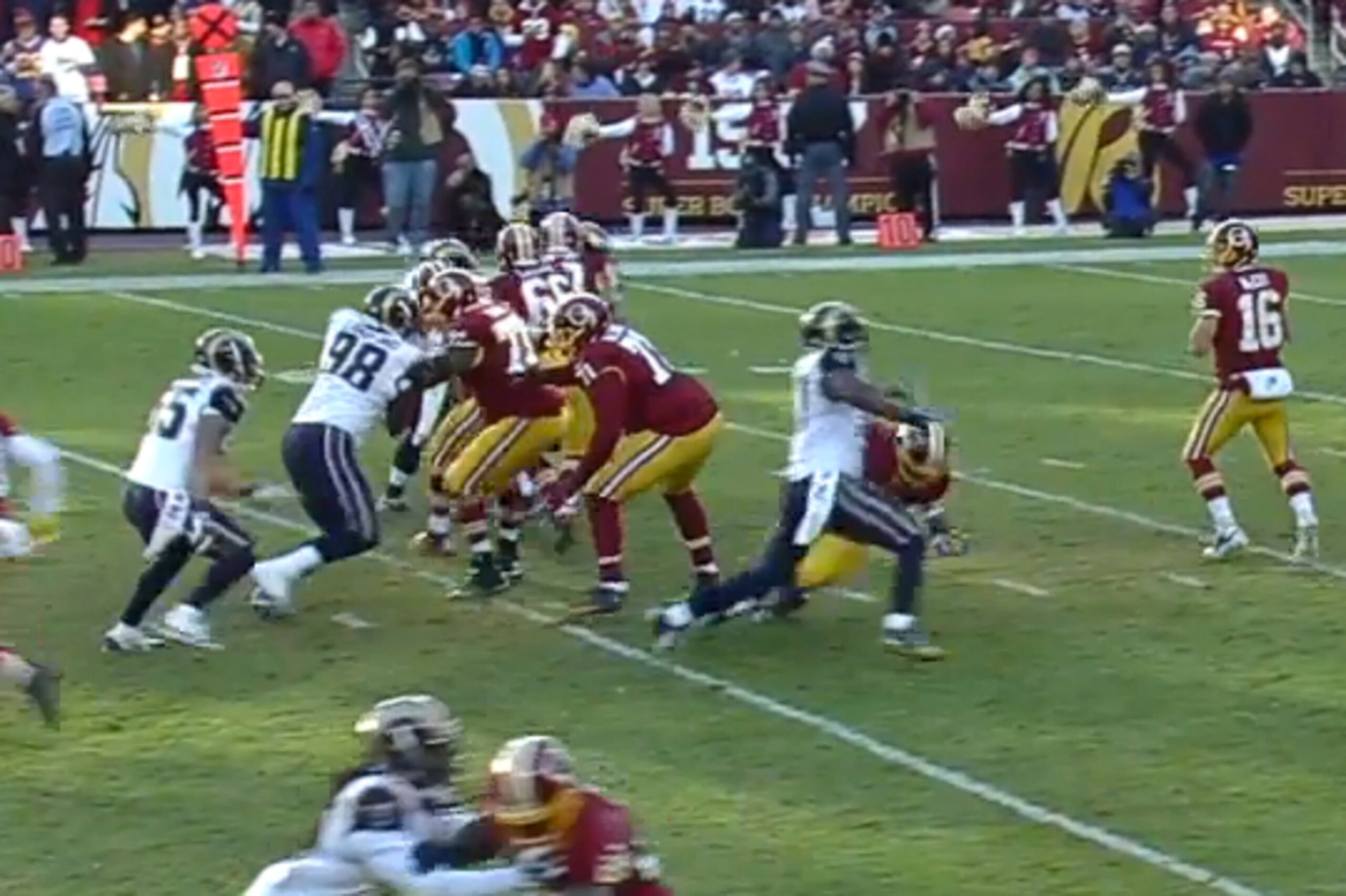
Sims ran through the feeble attempt as if Morris hadn't even tried, before notching another sack on Colt McCoy:
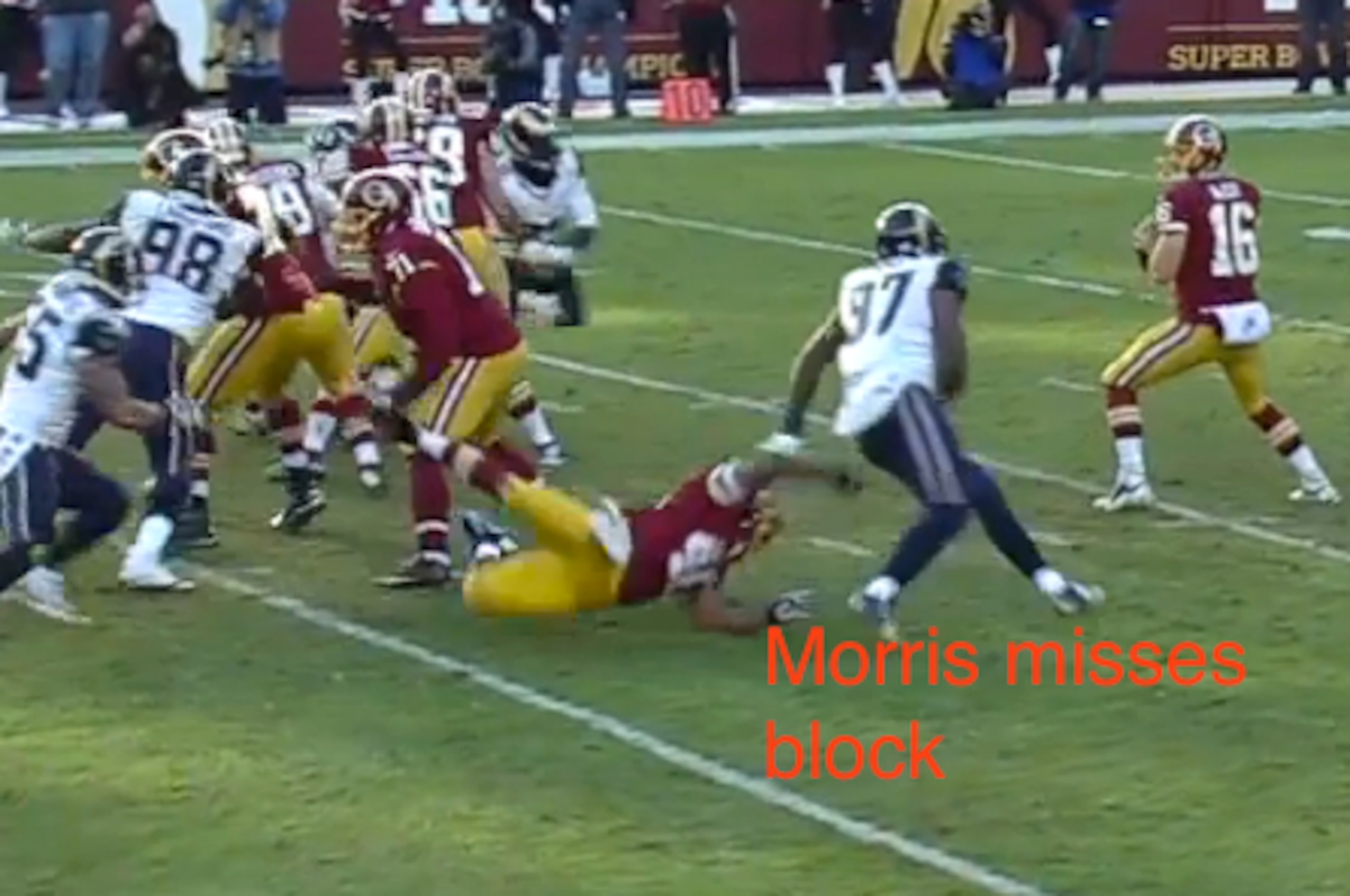
Improvements in Washington's pass protection will have to be a collective effort. That means players such as Morris, fullback Darrel Young and tight ends Jordan Reed and Niles Paul doing more to help repel pressure.
Attack the Inside Routes
If the Redskins can give the passer (whomever that might be), any time in the pocket, the offense can exploit the inside routes. The Giants have major weaknesses defending throws aimed at connecting with receivers breaking to the inside.
Michael Crabtree and the San Francisco 49ers made a mockery of this fundamental coverage flaw in Week 11. He caught three passes for 85 yards, including two big plays off in-breaking routes.
The first was a 25-yard catch in the second quarter. Dominique Rodgers-Cromartie was covering Crabtree. Even by his stance, Rodgers-Cromartie was favoring the outside:

With the corner leaning toward the outside, Crabtree immediately gained inside leverage:
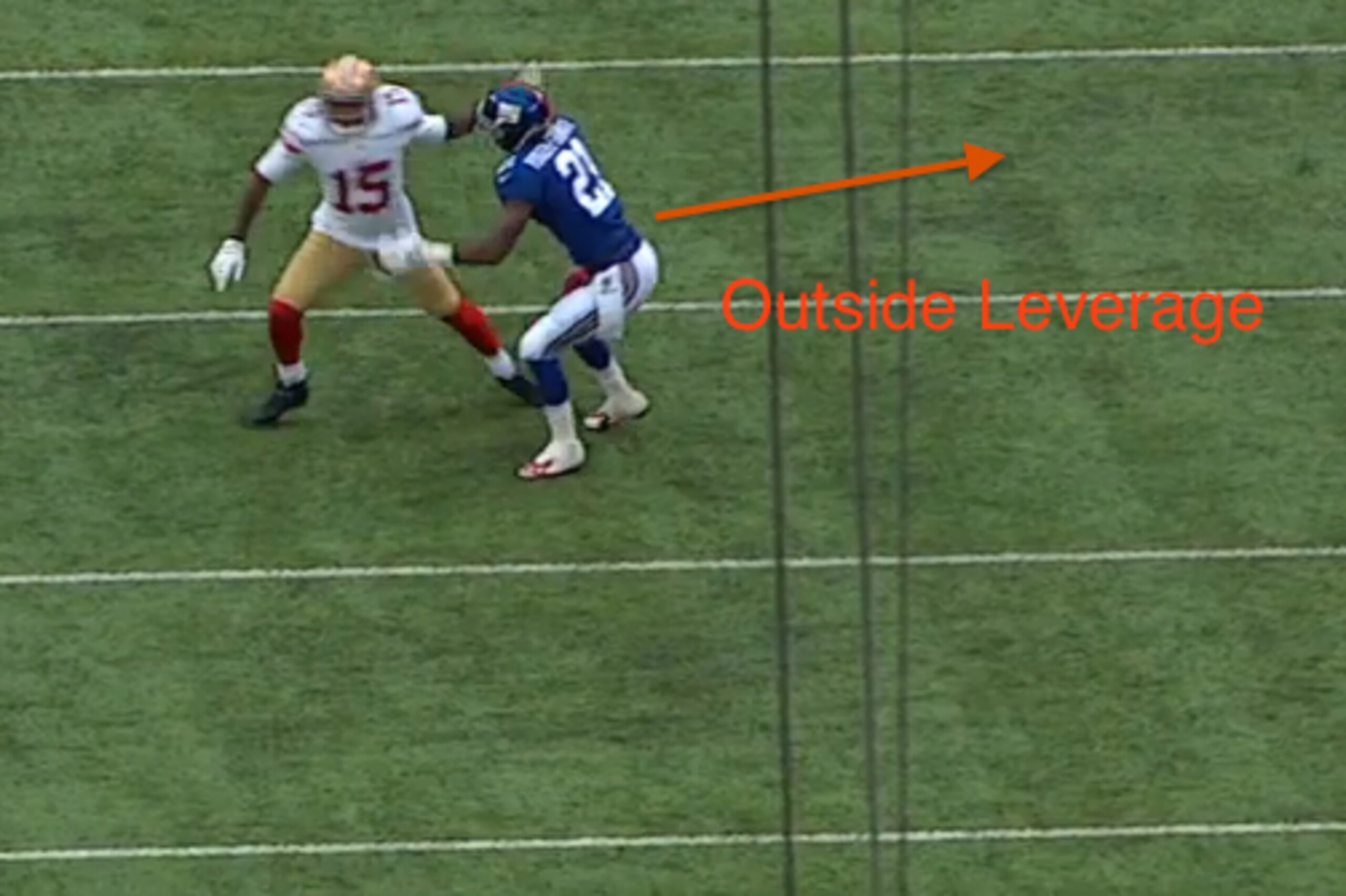
Crabtree easily shrugged off Rodgers-Cromartie's attempts to slow him down:
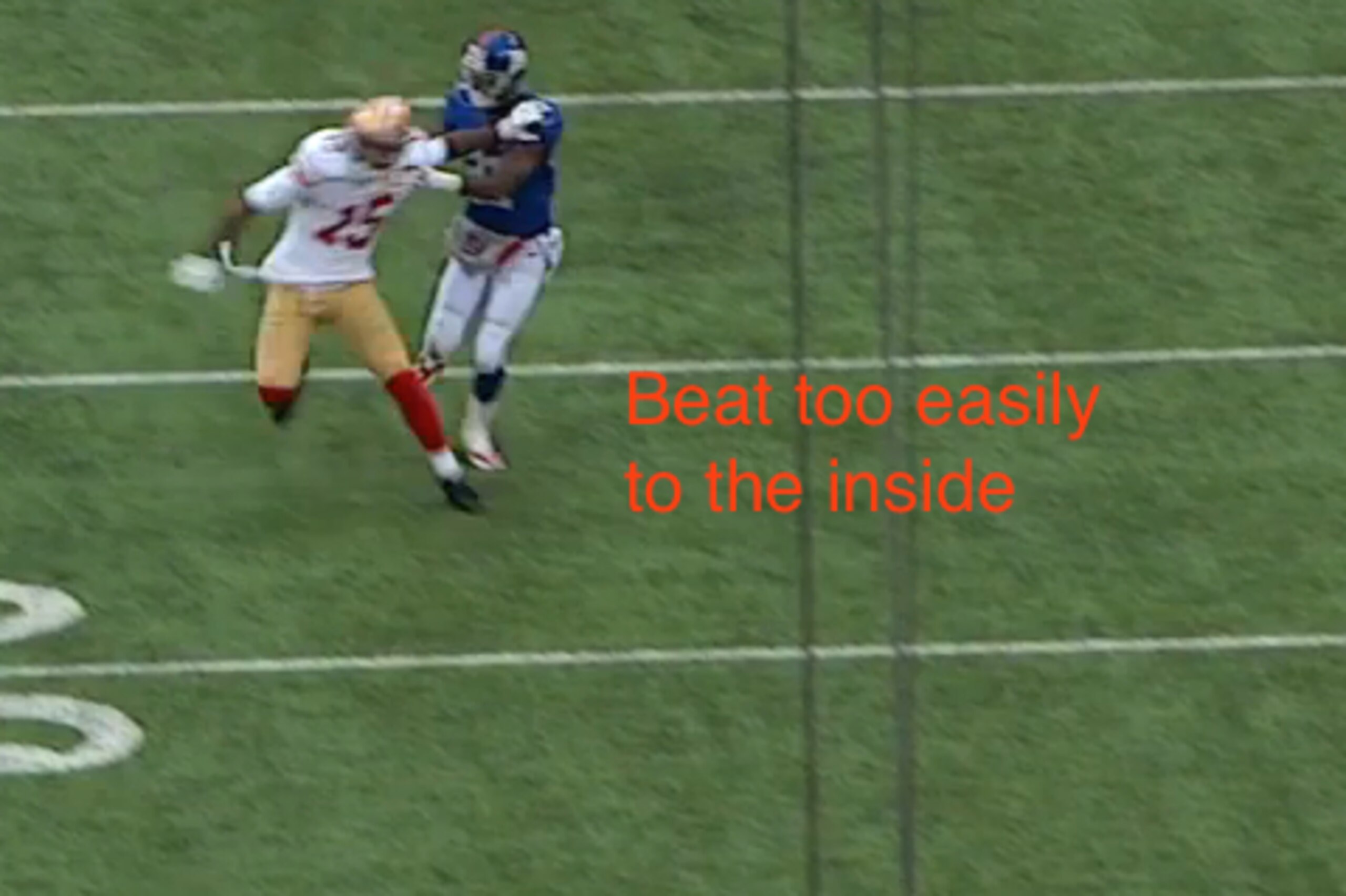
This is a common problem for the Giants. Their cover men are too often and too easily beaten to the inside.
Once Crabtree made it inside, he had an easy catch to make to complete a big gain:

The Giants are so generous releasing receivers to the inside that a quarterback can hardly miss his target:

That's the kind of open throwing lane Washington's passers haven't seen too often this season.
San Francisco quarterback Colin Kaepernick had an even more inviting window to aim for when he connected with Crabtree for a bigger play in the third quarter.
Again, Rodgers-Cromartie was leaning toward the outside even before the ball was snapped:

His telegraphed alignment meant Crabtree could lose him with just one move. All it took was a swift inside break to leave Rodgers-Cromartie lagging:
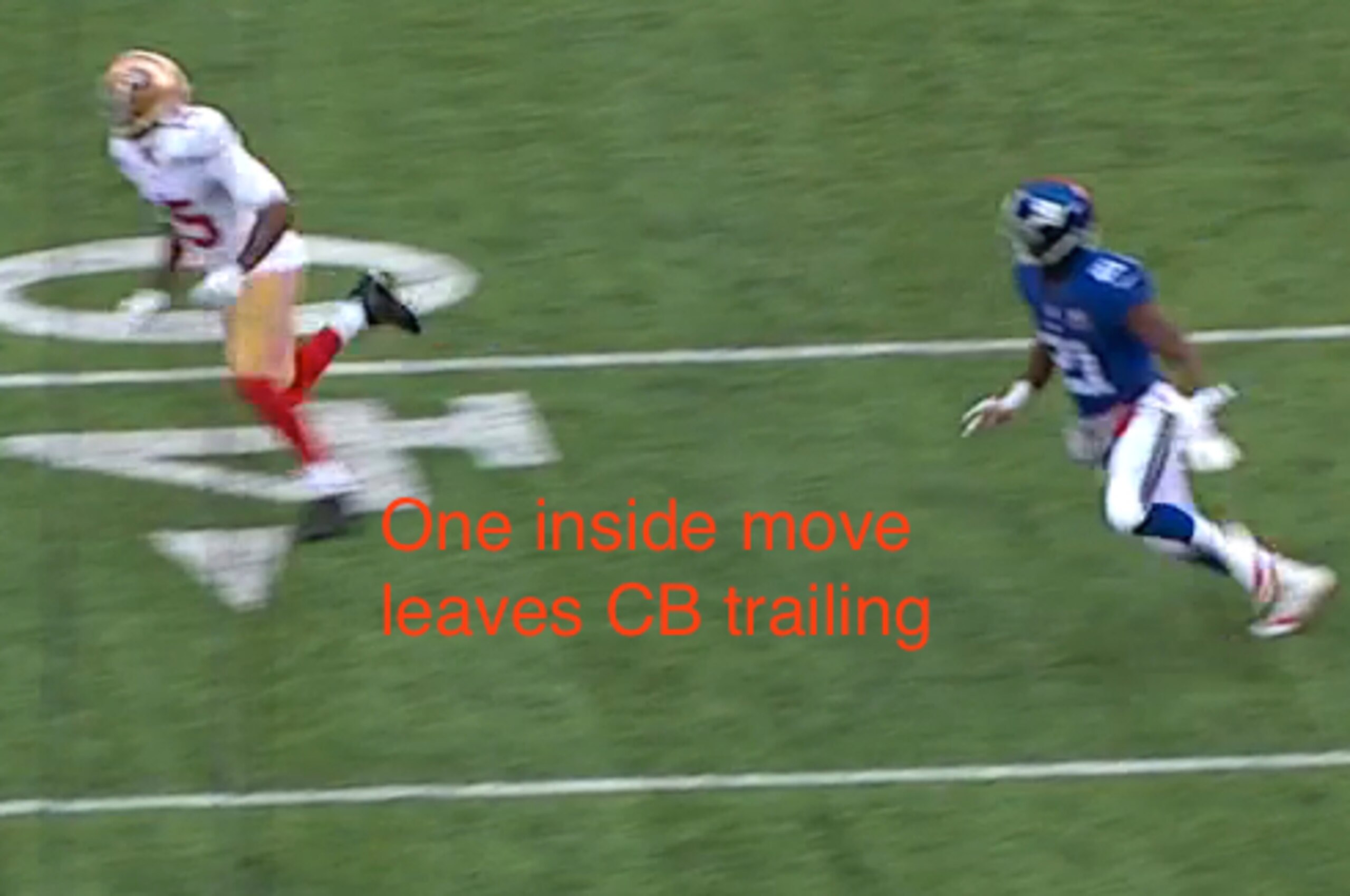
Then Crabtree was free to snatch the ball on the run:
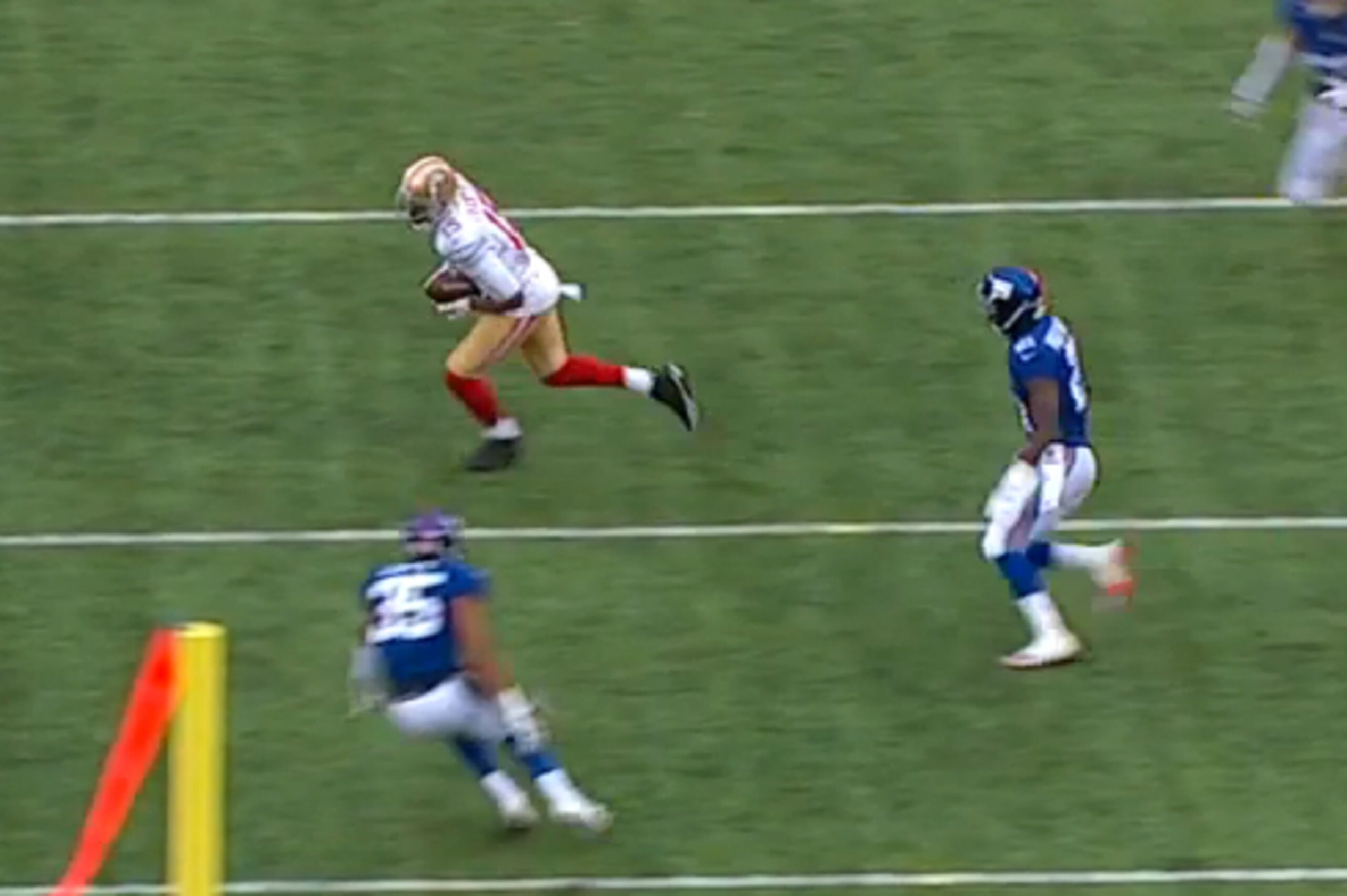
Once he had the ball in his hands, Crabtree sprinted past poorly positioned New York safeties and ran through would-be tacklers to complete a 48-yard scoring catch-and-run:

The Redskins are entering this game with some uncertainty under center following the beating McCoy suffered against the Rams. For his part, the ex-Cleveland Browns starter says he'll be ready for the Giants, per Mike Jones of The Washington Post:
"As long as I’m breathing, as long as I can pick up a football, I’m going to go out there and help my team win. There’s no other way to look at it from my mind and that’s the way I’m approaching it. So I’m doing all the things I need to do to be ready to play, and we’ll keep moving forward.
"
But whether it's McCoy, Robert Griffin III or even Kirk Cousins under center, Gruden must gear his offense to attack the inside passing lanes.
There might only be a change in draft order and some mild pride at stake, but the Redskins should still want to beat an old enemy. The Giants are the first of three straight NFC East foes who will close out this season's schedule.
Beating Big Blue would set up a potentially strong and hopeful finish to what has been a nightmare campaign.
All statistics via NFL.com.
All screen shots courtesy of CBS Sports, Fox Sports, NFL Network and NFL.com Game Pass.





.jpg?w=2560 "LaFleur's Fumbling Warning ⚠️")