Jets vs. Vikings: Breaking Down Minnesota's Game Plan
The Minnesota Vikings return to the cold confines of home in Week 14, fresh off a convincing home victory, to take on the New York Jets.
Instability at the quarterback position and question marks surrounding their head coach has been a massive crux for the Jets in 2014. The struggling team has won only a single game in its previous 11 outings.
A midseason trade for Percy Harvin has hardly lit the fuse for the Jets. Harvin’s return will be on Sunday’s prominent storylines, though, an enigmatic receiver jettisoned from Minnesota before finding the same ending in Seattle. New York will need everything it can get from Harvin, having scored no more than 13 points in its last four games.
TOP NEWS
.jpg?w=2560 "Titans Giants Football")
OBJ Calls Out Giants After Release
Lamar Jackson Day-to-Day

Live Live: Updates from every NFL game
Let’s compare and contrast how these teams match up statistically, courtesy of StatMilk.com.
Keys for a Vikings victory over New York start with sustaining offensive success.
Blitzes are coming
If there’s one consistent quality to Rex Ryan’s defense in New York, one that cannot be pigeonholed easily, it is the willingness to bring intelligent, impactful blitzes and do it often.
Neil Hornsby of Pro Football Focus shares blitz percentages over a three-year sample from 2010 to 2012. Only a single defense blitzed with more frequency over the time period than Ryan’s. Does his 2014 defense still feature the blitz? Minnesota can bet on it.
The defining quality of Ryan’s blitz-related wizardry is the ability to overload a single side of pass protection to bring the heat, not necessarily sending the kitchen sink.
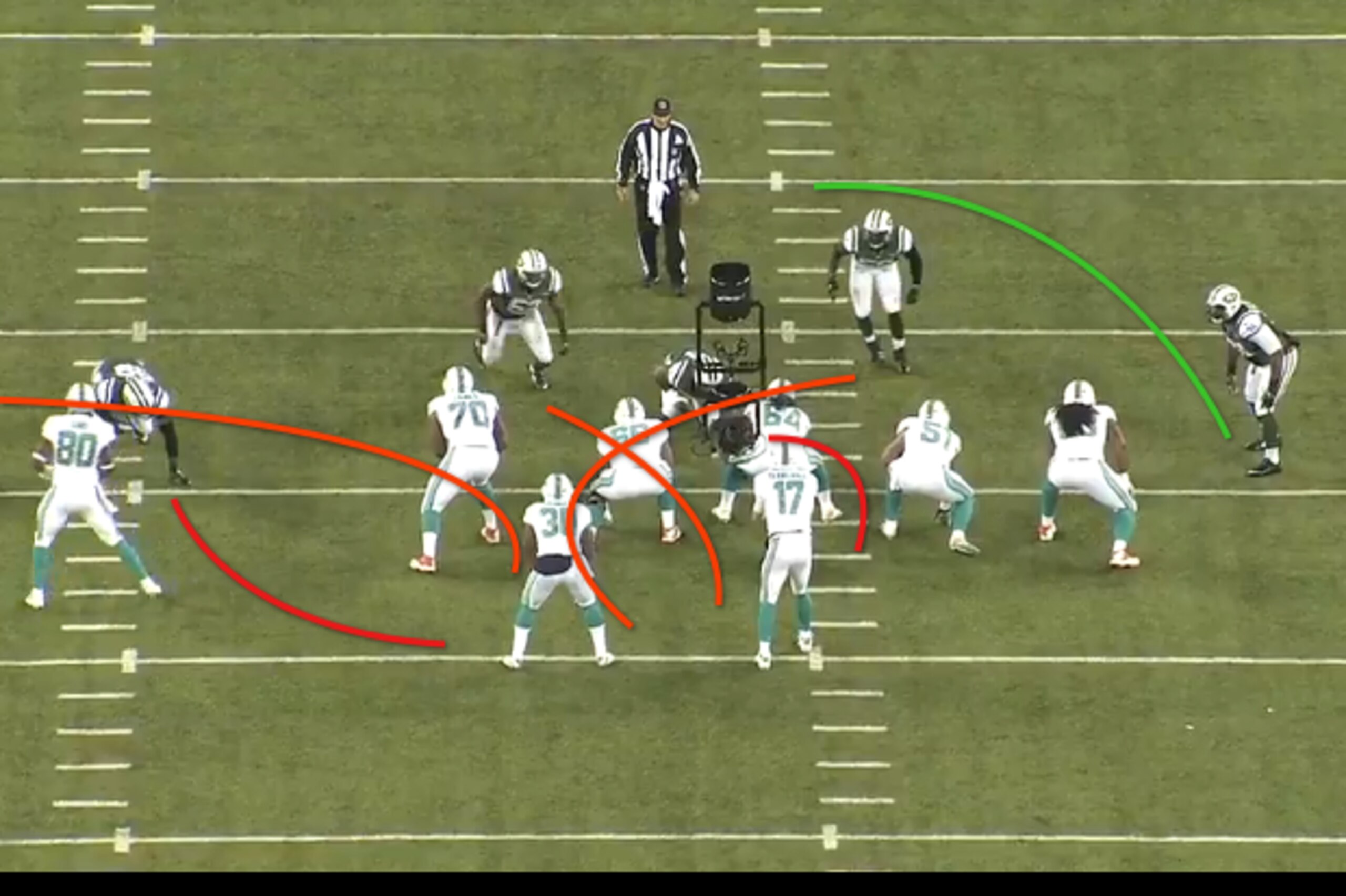
The Miami Dolphins succumbed to a Jets blitz on Monday night that brought five rushers, flooding the left side of the offense’s protection. Ryan’s defense will bring linebackers from off the ball frequently and cross up rushers to create mass confusion.
For Teddy Bridgewater, that means staying the course. His poise against the blitz has not been an issue.
The pass protection better be prepared, however. A miscommunication between center John Sullivan and running back Joe Banyard left Bridgewater hanging against the Carolina Panthers last Sunday, something that New York will definitely look to exploit this week.
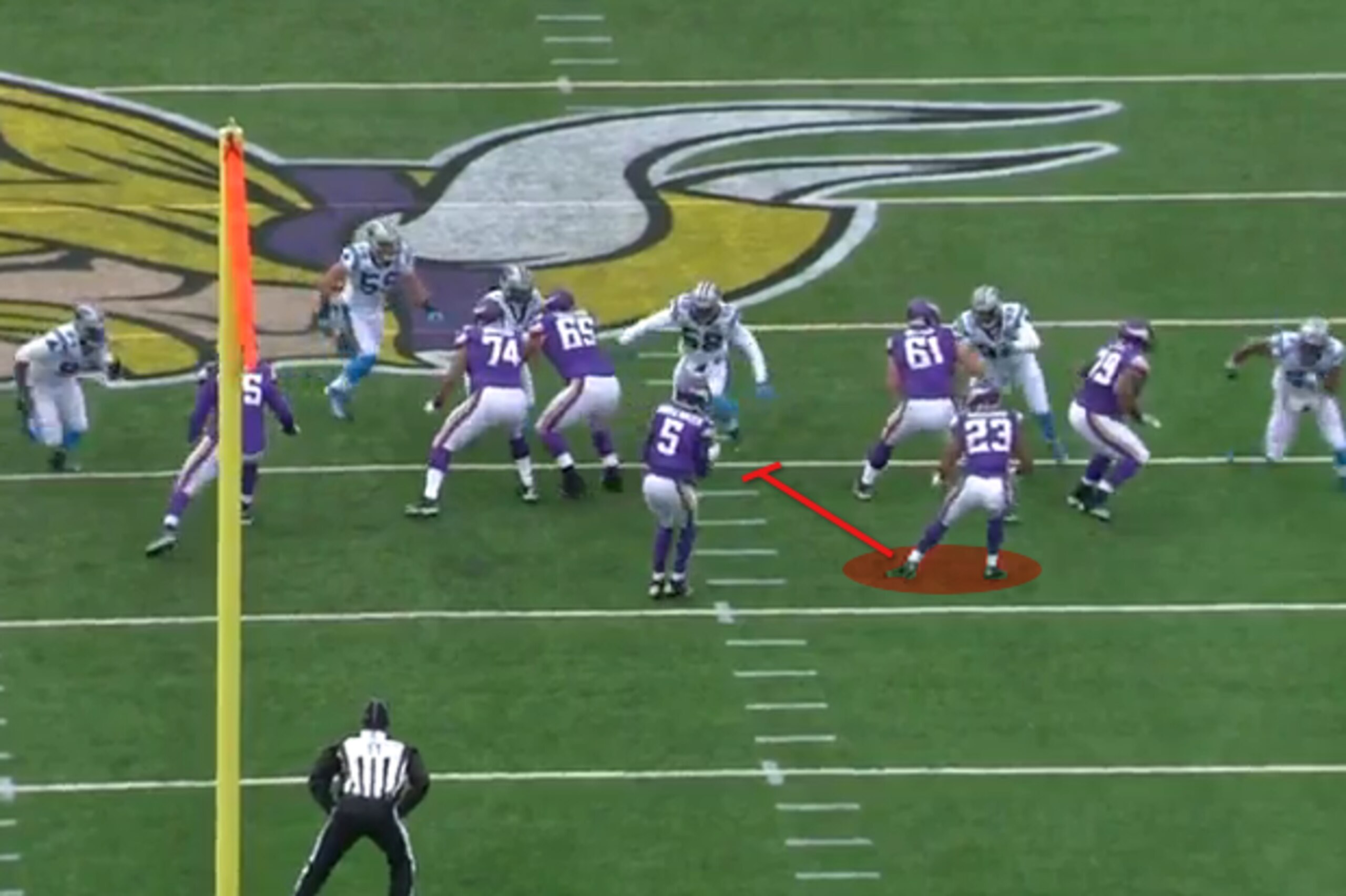
The reshuffled Minnesota line needs to get back to the basics in gap protection and in communication. With a veteran center in Sullivan, it has no excuse for some of the gaffes in blitz pickup that have occurred over the last few weeks.
Matt Asiata should see another big share of snaps as Minnesota’s most reliable pass-blocker without legitimate competition for the title.
Test the cornerbacks
New York’s secondary lacks talent across the board. Safety rotation has been frequent over the last few weeks, but cornerbacks Marcus Williams and Darrin Walls are the full-time starters on the outside. The Vikings can have success throwing on both.
| Comp. % | YPA | TD | INT | Passer Rating |
| 67.9% | 9.26 | 4 | 1 | 108.13 |
The youth of these cornerbacks has showed all season long for the Jets. Ryan will scheme and rely on front-seven talent to carry his defense, because the weak link is clear.
Mike Zimmer indicated that Ryan’s defense might be more conservative as a result, per Brian Costello of the New York Post:
"Vikings coach Mike Zimmer on Jets defense: "I would never call Rex conservative, but he has been more careful with the backend." #nyj
— Brian Costello (@BrianCoz) December 3, 2014"
When Bridgewater has a Jets CB singled up, whether it’s Greg Jennings underneath or Charles Johnson down the field or even Cordarrelle Patterson, he must be willing to take his chances and trust his receivers can go get the ball.
That will mean hitting New York over the top with accuracy down the field, just like he did against Carolina.
Divide the RB reps
The carousel that is the 2014 Vikings backfield keeps on spinning. Upstart rookie Jerick McKinnon missed Sunday’s game with a back injury and was unable to go in Wednesday’s practice, per the Vikings.com injury report. If his status doesn’t change on Thursday or Friday, Minnesota will be in the same situation it was against Carolina.
Asiata was given 38 snaps to Ben Tate’s eight and Joe Banyard’s five last Sunday, per Pro Football Focus premium stats (subscription required). Expect Asiata to carry the load again because of his value as a receiver and a blocker, as well as his contributions in short-yardage situations.

Banyard’s workload should increase. After failing to pick up that blitz, Minnesota went away from him against Carolina, but he offers more upside as a runner than Tate and Asiata.
Tate did not look particularly explosive against the Panthers and ran with poor vision for a back with so much experience behind zone blocking. Outside of a nine-yard gain in which he ran right into the back of his blockers and lumbered for an uncontested gain, Tate only gained six yards on four carries.
Going back to the well with Tate instead of giving more carries to Banyard seems like wishful thinking if Minnesota does it.
Cloud of dust
From the not-so-breaking news department, the Jets will run the football against Minnesota.
Last week against Miami, the Jets ran 64 offensive plays, 49 of which were runs. With a triumvirate of talented rushers in Chris Ivory, Chris Johnson and Percy Harvin, New York will stick with its run-heavy plan from here on out.
Each of the three runners brings something different to the table, but Harvin presents the most unique challenge for Zimmer and the Vikings.
Reinforce the alleys
Extra measures must be taken into account for Harvin’s ability to hit defenses on the edge. The Jets have a full repertoire of ways to involve the playmaker in the running game, including speed sweeps, reverses, inside gives, options and tosses.
Anything that hits the perimeter, especially with speed already built up, requires safeties and cornerbacks to play with their eyes up and their positioning sound.
This quick toss to Harvin in the red zone is an example of required discipline in pursuit angles on the outside:
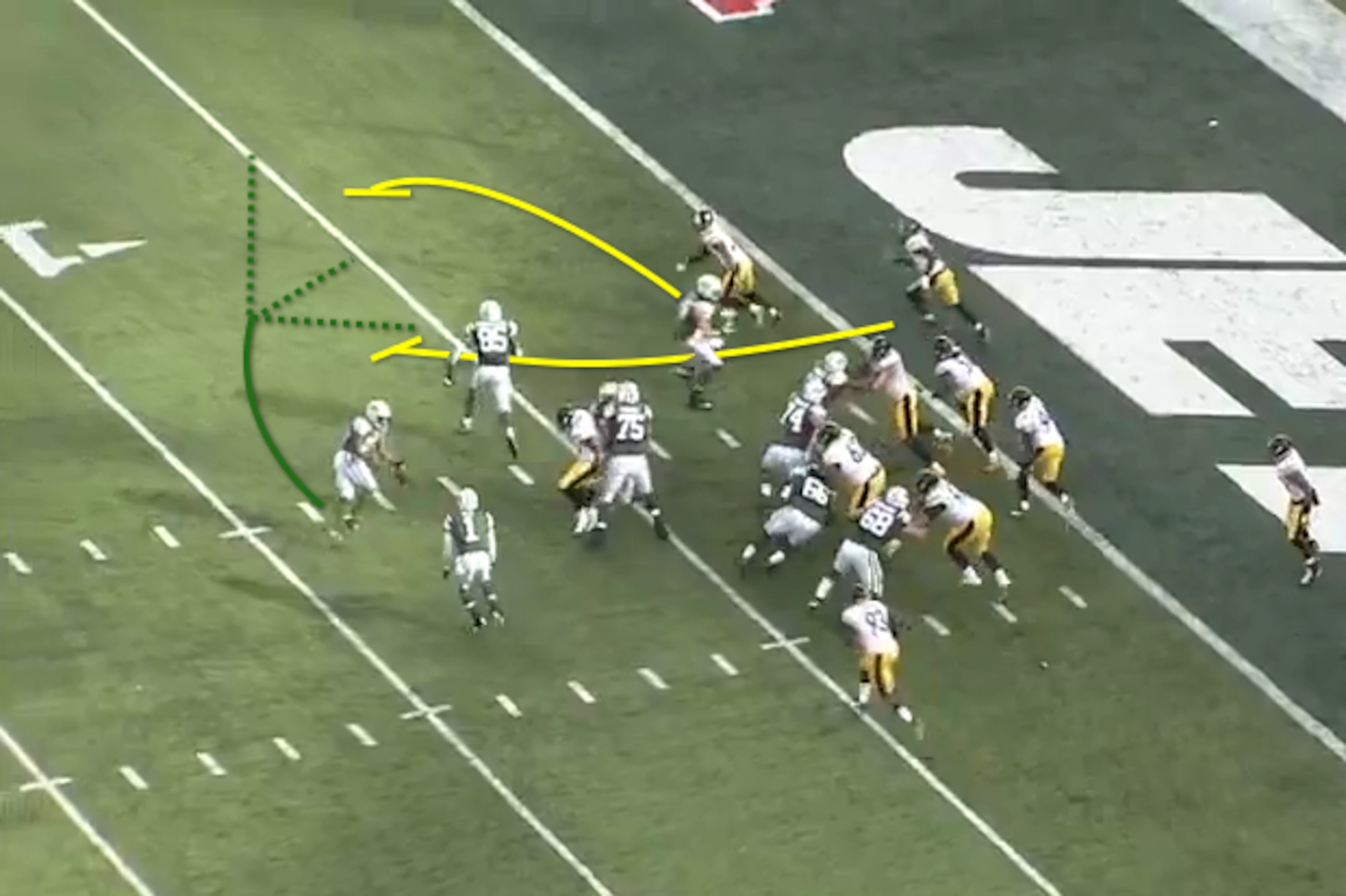
Cornerbacks must keep perimeter runs contained. If the edge is lost, the scales tip Harvin’s way. That means aggressively meeting blockers and keeping outside position to pinch things down for Xavier Rhodes, Captain Munnerlyn or Josh Robinson.
Inside pursuit, whether safeties or a slot CB, need to aggressively pursue in the alley. In certain defenses, this player might be the contain player, taking the duty previously described to the cornerback.
With the Jets’ preference to run the ball and the lack of a vertical passing attack, Minnesota can afford to be aggressive with Harrison Smith and Robert Blanton providing aid to the run defense, just like it did against Carolina.
New York will attack Minnesota on the ground with a wide variety of looks like Carolina did. The key is to keep pursuit angles intact and close down running lanes in a hurry. The Vikings didn’t do that consistently against Jonathan Stewart and the Panthers.
Get after Geno
Defenses always hope to pressure the quarterback, and the Vikings have had success doing so in 2014.
With Geno Smith, though, pressure is the most important component for the pass defense. He is not an incredible QB if no pressure comes, but getting to him affects him in such a negative way that Minnesota should be able to create turnovers and run out ahead of New York.
Of 28 quarterbacks with 50 percent of their teams’ dropbacks, Smith ranks dead last in accuracy percentage under pressure, according to Pro Football Focus premium stats. Here’s how Smith performs under pressure:
| Comp. % | YPA | TD | INT | Passer Rating |
| 36.3% | 4.2 | 3 | 4 | 42.5 |
For comparison purposes, Bridgewater performs far better when pressure gets to him.
| Comp. % | YPA | TD | INT | Passer Rating |
| 52.7% | 4.2 | 2 | 2 | 61.5 |
Blitzing is not necessarily the required course of action for Minnesota. Smith’s stats don’t drop off like expected against blitzes.
What the second-year QB does struggle with is responding to disguised coverage and making smart throws when defenses ask him to adjust on the fly. When pressure is involved, the results are disastrous for the Jets. Pressure speeds up Smith’s already-cumbersome processing, forcing him into rash decisions.
Expect Zimmer to frequently play games with linebackers and safeties at the line of scrimmage, testing Smith’s comprehension of numerous moving parts before and after the snap.
From there, Minnesota’s arsenal of rushers can tee off on a struggling offensive line. Then when Smith puts the ball in harm’s way, the secondary needs to make him pay.
Another fast start
Racing out to a lead set the table for the Vikings to have success against Carolina. That same start against the Jets will give Minnesota the leeway to put it in cruise control.
The Jets are built to play with a lead. It gives their offense the freedom to pound the rock and mix play action when absolutely necessary. It gives their defense the signal to ramp up the blitzes and go into attack mode.
Playing with a lead eased the task for Bridgewater and the Vikings offense against Carolina. Asking the QB to manage the game and ice-away a lead is the most appropriate role for him at this point.
If Minnesota plays another complete game in Week 14, another wide margin should be expected in another home victory.
Statistics via ESPN.com unless noted otherwise.



.jpg?w=2560 "Saquon Out for Game")