

San Antonio Spurs Power Rankings: Gauging Full Roster After First 6 Weeks
With nearly a quarter of the season wrapped up, the San Antonio Spurs' post-championship lull has seemingly come to an end. Despite a handful of injury-related issues, the roster has rebounded from its slow start, as the defending champions now sit among the NBA's elite with a 14-5 record.
Much of what makes the team great is its ability to, in fact, function as a team. Roles are distinct, and each player appears to be working toward the same ultimate goal.
But even as San Antonio operates as a sum of its parts, the parts that ultimately drive the machine. San Antonio's individual contributors have been fantastic thus far from top to bottom.
With a solid sample size behind us, we can finally dissect each player and his impact, both as far as this season goes and in comparison to preseason expectations.
The Other Guys
1 of 11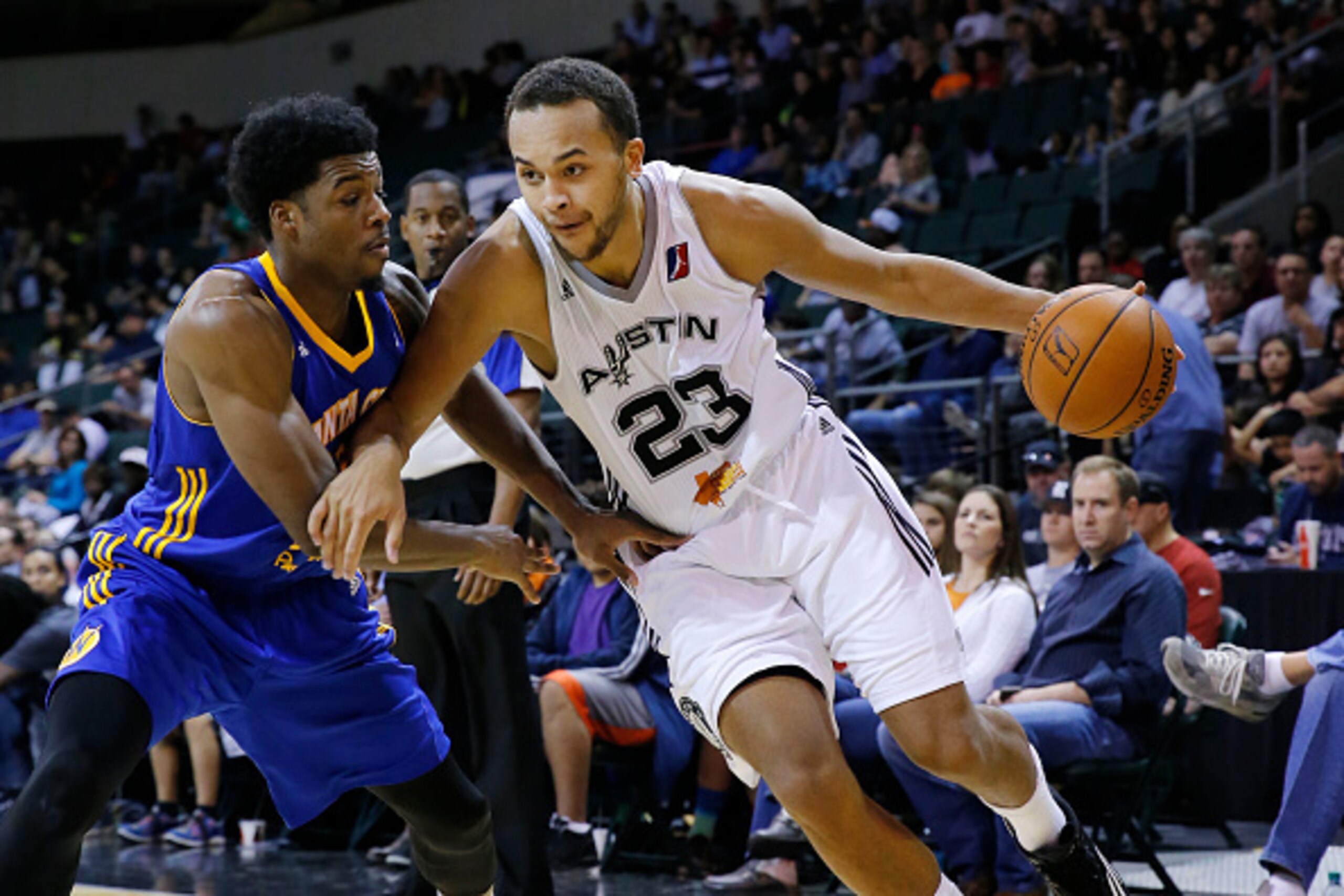
Injured: Tiago Splitter, Patty Mills
Though he'll likely make a big impact once he returns, Patty Mills will miss a good chunk of the season after receiving shoulder surgery that will sideline him until mid-January. As for Tiago Splitter, the Spurs' starting big man looked impressive in the 10 minutes he played this season, but it's far too small a sample size to accurately judge his play.
13. Jeff Ayres
Jeff Ayres is one of the few garbage-time players on the roster who doesn't make the most of his rare on-court appearances. Shooting just 36 percent on the season, the second-year Spur is little more than a wasted roster spot at this point.
12. Austin Daye
In under 12 minutes of playing time, Austin Daye is averaging just under four points and three rebounds. Though that might not jump out as "impressive" by any means, it's worth noting that he hasn't been a complete zero in his limited time on the court.
However, it's unlikely that he emerges from his end-of-the-bench role at all this season given his inability to do so on a shorthanded roster. However, unlike Ayres, that isn't his fault, but rather the result of playing for such a deep team.
11. Kyle Anderson
Fun fact: Kyle Anderson is the only player in San Antonio with a negative PER according to Basketball-Reference.com. So why, you might ask, is his name higher than those of Daye and Ayres? Quite simply, all three have made negligible impacts in the NBA this season. But Anderson, unlike the other two, has seen time in the NBA D-League.
With 18 points, 11 rebounds and six assists in his debut with the Spurs' minor league affiliate, Anderson proved his potential, even if it wasn't on an NBA stage. That alone tips the scale in his favor.
10. Matt Bonner
2 of 11
For the first time in seemingly forever, Matt Bonner has escaped the "Other Guys" slide.
Of course, that isn't due to stellar play or increased production. Though his nearly 40 percent three-point shooting is impressive, it's skewed by a handful of great nights that offset a number of terrible ones.
Quite simply, with Splitter and Mills injured, there was simply nobody who could be included ahead of him.
Even if the aforementioned trio were more talented, its be difficult to gauge given their limited roles. Only Bonner has logged significant minutes—17.8 minutes per game—and for that, he is clearly the only low-level rotation guy to make a tangible impact so far.
9. Marco Belinelli
3 of 11
Marco Belinelli began the 2013-14 NBA season as one of the most promising San Antonio free-agent finds in recent times. However, his stellar play began to drop off after the All-Star break, and he has yet to find his step in 2014-15.
He missed a good portion of the season with a groin injury and appears to still be in recovery. Regardless, he simply has not re-emerged as the bench spark San Antonio needs him to be.
His minutes are down and, predictably, so are his stats. As he returns to full health, both should gradually increase as he looks to contribute to the second unit's scoring attack. Thus far, though, he has yet to make that impact.



8. Aron Baynes
4 of 11
Before the season began, few outside of San Antonio would recognize the name Aron Baynes.
Though he's still far from being a household name, the Australian big man has certainly garnered more recognition after an impressive start to the season.
Thrust into the rotation due to Splitter's injury, Baynes has emerged an interior presence on both ends and a machine on the boards.
Averaging over seven points and nearly five rebounds in just 17 minutes of play, the center has made strides since his frustrating inconsistency last year, and though he is still quite raw, the development is nonetheless evident.
Though he still has a lot of room to improve, Baynes has definitely made a jump this season. Given the team's increased reliance on his services, the fact that he's been serviceable is enough evidence to warrant a jump in the rankings, given how far he's come over just one summer.
7. Cory Joseph
5 of 11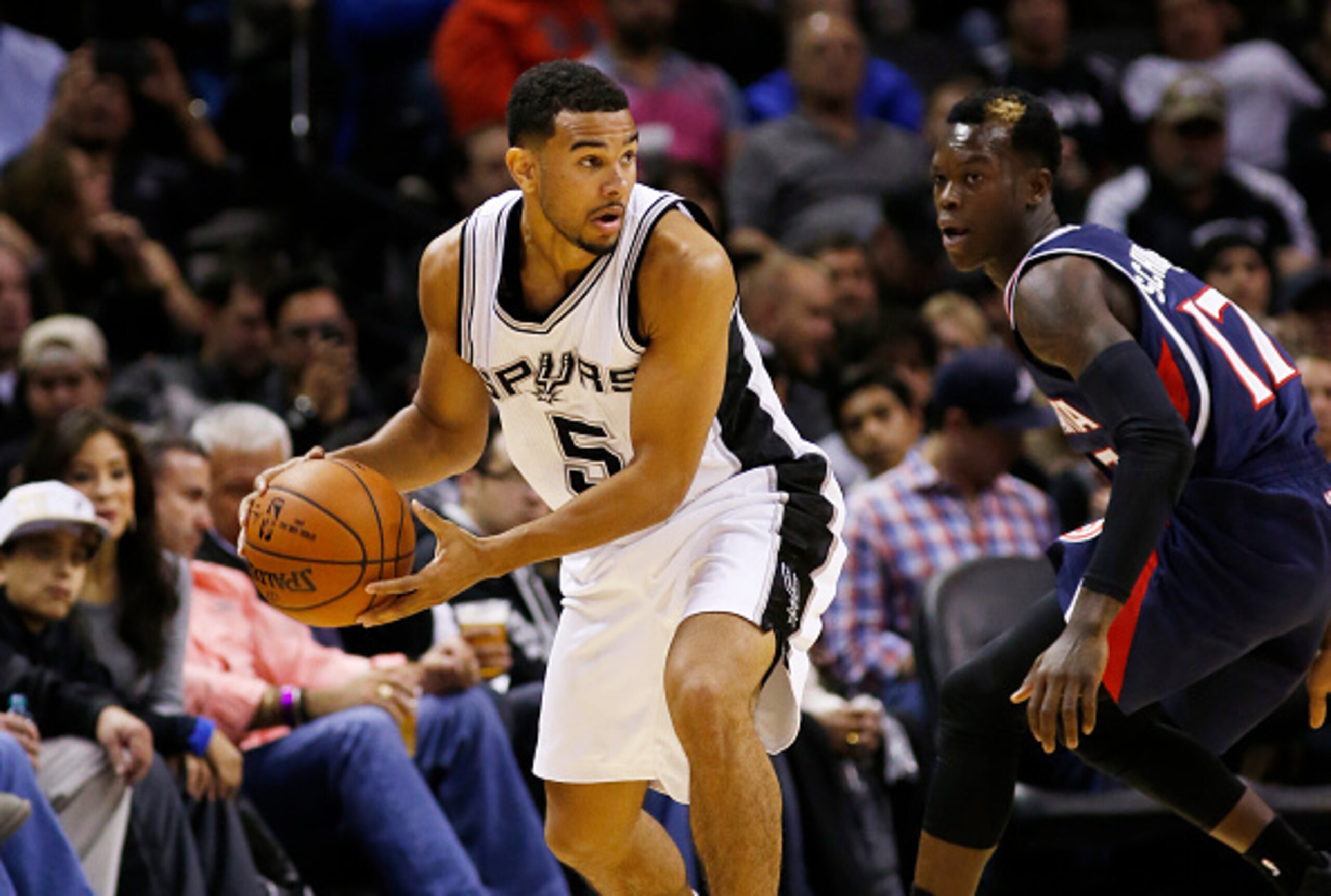
Filling in for Patty Mills as the backup point guard, Cory Joseph had big shoes to fill.
With nearly a quarter of the season in the books, I think it's safe to say that Joseph has both met and surpassed expectations.
Though he has always been recognized as a great defender, his increase in playing time has only validated his consistently elite play on that end. According to the NBA's media stats (subscription required), Joseph gives the team its best defensive rating when he's on the court, outside of Duncan. Throw in the difficulty of some of his assignments, and Joseph has put forth quite the impressive campaign on that end.
However, his offense has been noteworthy too. On more than one occasion, Joseph has taken over as the team's go-to-guy for stretches, and his versatility on that end—he can drive, shoot, create his own shot or score off the pass—is reminiscent of Tony Parker.
Though he might not be on the fast track to Most Improved Player, Joseph has come a long way from his benchwarmer role with last year's team.
6. Boris Diaw
6 of 11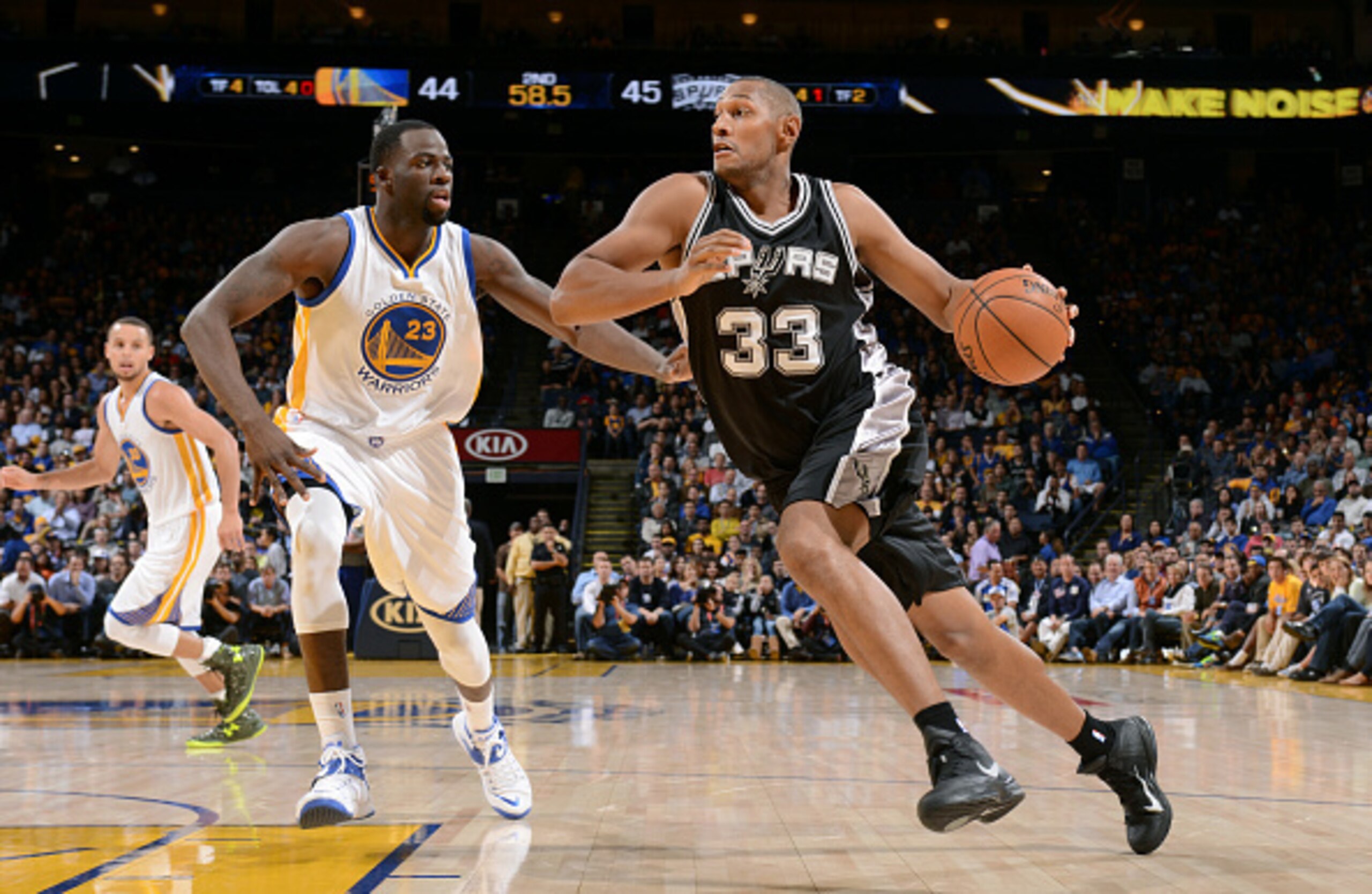
With Tiago Splitter out, Boris Diaw's importance to the team has increased twofold.
Not only does he have to be a bench spark in the post, but the French big man also needs to be the team's second-best big man on a nightly basis—and on some nights, where Tim Duncan struggles, he'll be looked to as their offensive leader in the interior.
Now, Diaw shouldn't be expected to post otherworldly stats in a single category. After all, his versatility has become his trademark. That said, Diaw's inability to take a leadership role in the offense—he has posted over 15 points just once this season—is a bit alarming.
Though side-by-side his season has been better than the No. 5-ranked player, expectations were much higher for Diaw, and his responsibility—with Splitter sidelined—is far greater.
He hasn't been bad by any means. Managing just over eight points, five rebounds and three assists, he's been versatile and an important cog in the Spurs' machine. That said, one would hope that he'd have made a jump given the shallow state of the frontcourt.
So far, he hasn't.
5. Danny Green
7 of 11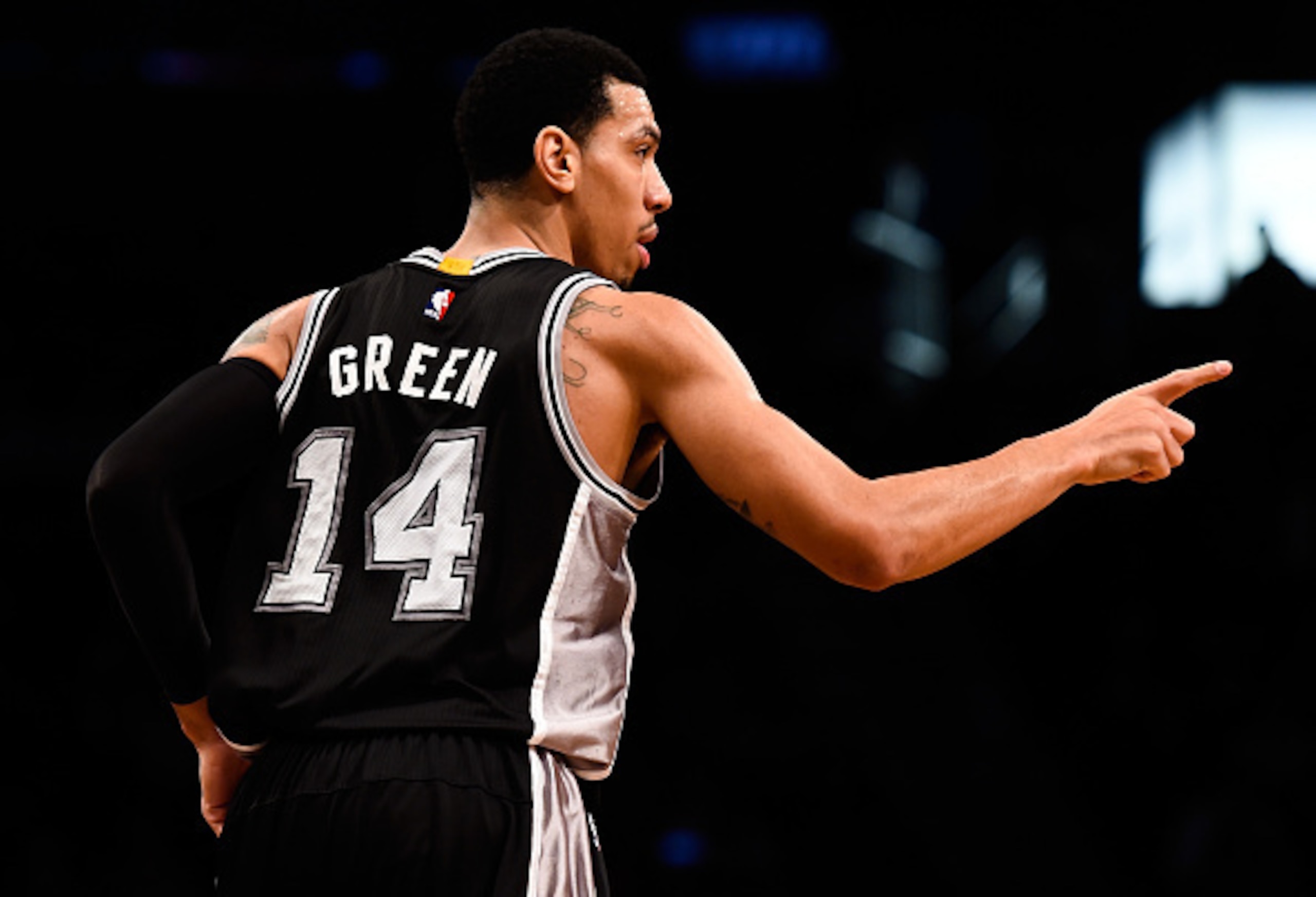
With Danny Green, you never know what you're going to get.
Though he always finishes with remarkable three-point shooting averages and respectable scoring statistics, it's also true that his offensive contributions are often centralized in a handful of breakout contests.
The same holds true this season, and though consistency is something that would be welcomed from his end, the shooting guard has given the team plenty to be thankful for already.
Though his offensive contributions range from nonexistent to admirable depending on the game, he's a perennial defensive stud, and his overall shooting statistics have been trending in the right direction.
Having scored over 18 points in four of his last seven contests, Green has demonstrated his ability to serve as an offensive centerpiece when his shot is on from the beginning.
Granted, he could be a reliable contributor every game, but so far Green has brought more good than bad.
T-3. Kawhi Leonard
8 of 11
He still has a way to go before he can reach anywhere near his true potential, but Kawhi Leonard's start to the 2014-15 NBA season has turned quite a few heads.
Entering the season as a lockdown defensive player with a growing offensive repertoire, the San Antonio youngster has become the team's second-best scorer this year, averaging just under 15 points.
When the team's veterans sit, Leonard has shown his ability to step up, as evidenced by his 26-point breakout against the Philadelphia 76ers, though his defensive prowess and his emergence as one of the Spurs' most reliable rebounders make him a valuable asset even as a supplement to the Big Three.
He's made the defensive impact people thought he would, but Leonard's growth offensively and on the boards only foreshadow how high he'll ascend.
T-3. Tim Duncan
9 of 11
You're not going to believe this, but Tim Duncan actually looks to have lost a step this season.
Whether it's the impact of a heavier burden due to Splitter's absence or the slim possibility that age has, in fact, begun to catch up with the 38-year-old veteran, Duncan appears to be on his last legs.
His offensive contributions have not been nearly as consistent this year, and at times the big man simply looks awkward and unable to run with younger opponents. That said, we've seen our fair share of vintage Timmy performances already, so while dominance is not served up at every opportunity, Duncan is far from washed up offensively.
But even as he appears to have lost a stop offensively, the Big Fundamental has excelled as the Spurs' defensive anchor. Statistically, he makes a more positive impact than any other player on the team, all while drawing the toughest interior matchups with Splitter watching from afar.
Even if his offensive play remains inconsistent going forward, as long as Duncan can retain his elite defense, he'll still be one of San Antonio's top guys.
2. Manu Ginobili
10 of 11
In the summer of 2013, Spurs fans and NBA fans alike were calling for Manu Ginobili's retirement. With the veteran shooting guard having just wrapped up his awful postseason campaign, it appeared as though his tank was empty—that age had finally claimed its first victim of the Spurs' Big Three.
Fast-forward a few years, and the public's perception of Ginobili has reversed entirely. His prescribed downfall is a thing of the past, as the 2014-15 NBA season has been something of a renaissance for the veteran bench spark.
With San Antonio's depth hurting as a result of injuries, Manu—the leader of the second unit—has taken it upon himself to lead the offense, both in times when the team's starters need rest and down the stretch, when the roster—starters included—need a crunch-time hero.
Though age and a history of injuries has limited his playing time, Ginobili has made the most of it, scoring upwards of 11 points per game and dishing out four assists on average. While his defensive presence doesn't compare to that of Duncan or Leonard, Ginobili is one of the most reliable Spurs when it comes to offensive production.
More so than with anyone else, the Spurs log their highest offensive rating with Ginobili on the court, per the NBA's media stats (subscription required). He might not make quite the difference as the No. 1-ranked Spur, but the veteran guard's ability to serve as an immediate bench spark has saved a second-unit offense that might otherwise be in shambles.
1. Tony Parker
11 of 11
Superstar point guards are by no means a rare commodity in today's NBA. Nevertheless, Tony Parker—in his 13th NBA season—has continued to set himself apart from a good chunk of the competition.
Though San Antonio's offensive attack is far more balanced than, for example, a star-dependent team like the New York Knicks, Parker is without question their frontman and responsible for much of the team's success on that end.
He leads the team in scoring with 16.8 points, but—like always—the impressiveness of his production can be found in his efficiency. Shooting over 50 percent, Parker ranks second at the point guard position for his shooting clip—though that hardly comes as a shock to fans who have watched Parker over the past few seasons.
But while his consistently high field-goal percentage is often the result of his elite ability to finish in the paint, Parker has introduced a whole new weapon to his arsenal this season. Never viewed as an elite long-ball shooter, the team's floor general has emerged this season with, statistically, the best three-point shot in the league. Making two-thirds of his attempts, Parker is exceeding lofty expectations with his expanded offensive repertoire and making history in the process.
Throw in the impact he has made as an orchestrator—in addition to his 5.7 assists per game, nearly every play begins with the ball in his hands—and there is no player who can claim more responsibility for the Spurs' offensive success this season than Tony Parker.
.jpg?w=2560 "OBJ Calls Out Giants After Release")
.jpg?w=2560 "NFL investigating referee after viral exchange with player")




.jpg?w=2560 "LaFleur's Fumbling Warning ⚠️")