St. Louis Rams vs. Washington Redskins: Breaking Down Washington's Game Plan
Colt McCoy won't be able to get by without a little help from Jay Gruden this week. If he thought the Indianapolis Colts pass rush was tough, McCoy's eyes will be well and truly opened by the St. Louis Rams' front four.
McCoy was taken down six times by the Colts in Week 13. If Washington Redskins head coach Gruden wants to avoid seeing a repeat, he must lean on Alfred Morris and the still-capable running game this week.
Speaking of pressure, Redskins defensive boss Jim Haslett should be under a fair amount of that after last week's horror show. Haslett can ease his own pressure by making sure St. Louis passer Shaun Hill feels the heat. He'll also need to make sure his defense gets plenty of coverage around an underrated playmaker in the Rams' passing attack.
TOP NEWS
.jpg?w=2560 "Titans Giants Football")
OBJ Calls Out Giants After Release
Lamar Jackson Day-to-Day

Live Live: Updates from every NFL game
Here's a closer look at how Washington can beat the team it gave so many draft picks to in order to select currently benched quarterback Robert Griffin III back in 2012:
Be Wary of the Pass Rush
McCoy and Gruden should still feel confident about making plays against the suddenly resurgent St. Louis defense. Despite some impressive recent showings, the numbers for the unit still aren't great, far from it:
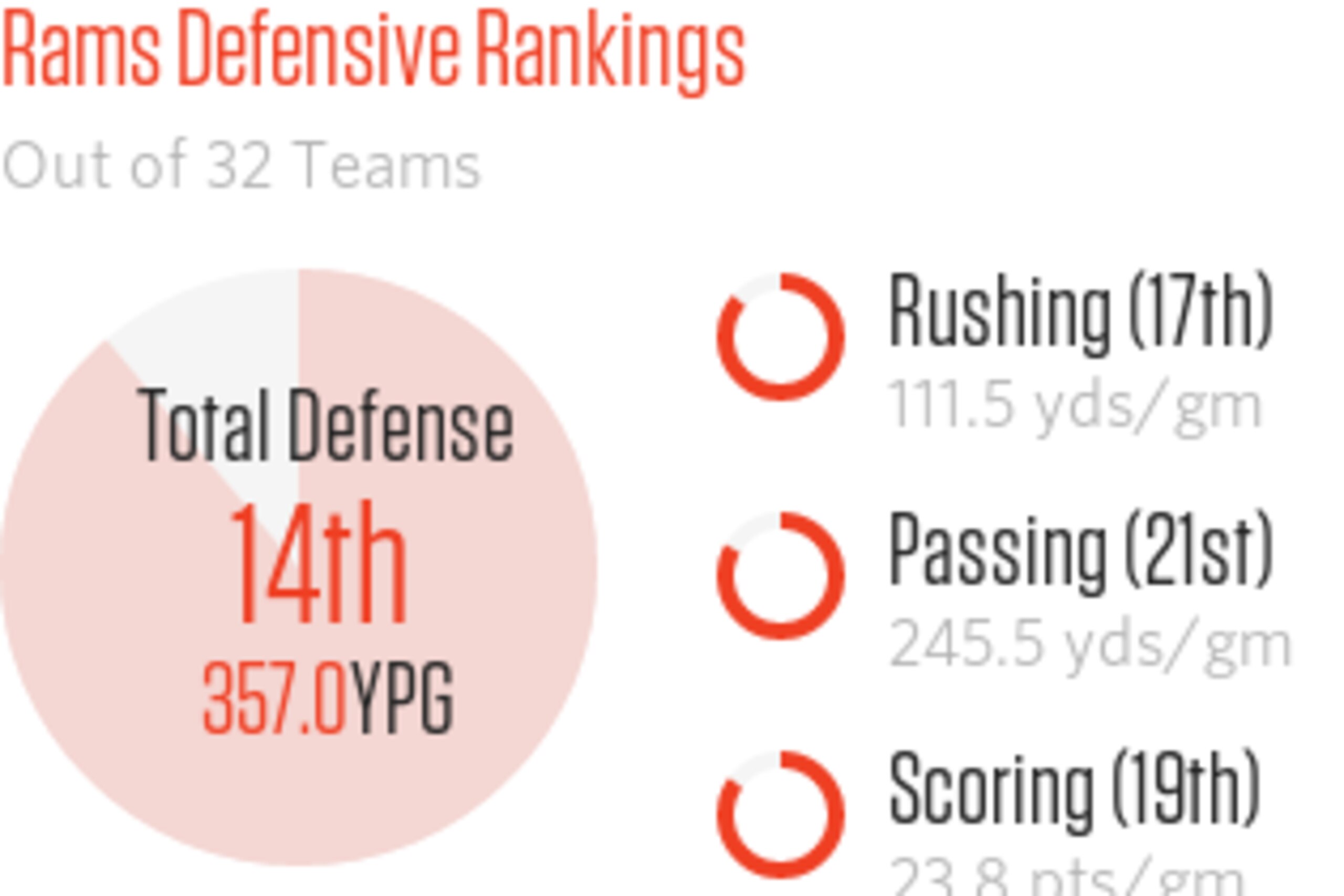
But it's in the turnover department where the Rams defense has excelled. Redskins.com writer Andrew Walker broke down some sobering numbers:
"But, as the saying goes, the games aren’t played on paper, and the Rams have really stepped it up of late — especially on defense, leading all NFL teams with eight takeaways in Weeks 12 and 13. The Redskins aren’t far behind, however, as their six takeaways in that same timespan are tied for second in the league.
But back to the Rams. In the past two weeks, their defense has been all over the field, earning two fumble recoveries and an interception in their Week 12 loss to the San Diego Chargers, and then earning three interceptions and two more fumble recoveries in their Week 13 throttling of the Oakland Raiders.
"
Many of those takeaways owe a debt to the consistent pressure applied by a rampaging defensive line. Preventing a group featuring bookends Robert Quinn and Chris Long, along with dynamic rookie tackle Aaron Donald, from dominating the game will be Washington's biggest challenge.
The play of the front four underpins everything the Rams do defensively. Specifically, it allows head coach Jeff Fisher and coordinator Gregg Williams to lean on a heavy diet of man coverage.
When front-line pressure and man coverage meet, the Rams usually create negative plays. This sack from Week 13's 52-0 demolition of the Oakland Raiders is a fine example.
The play began with the Rams showing a typical, single-high safety, man coverage shell:
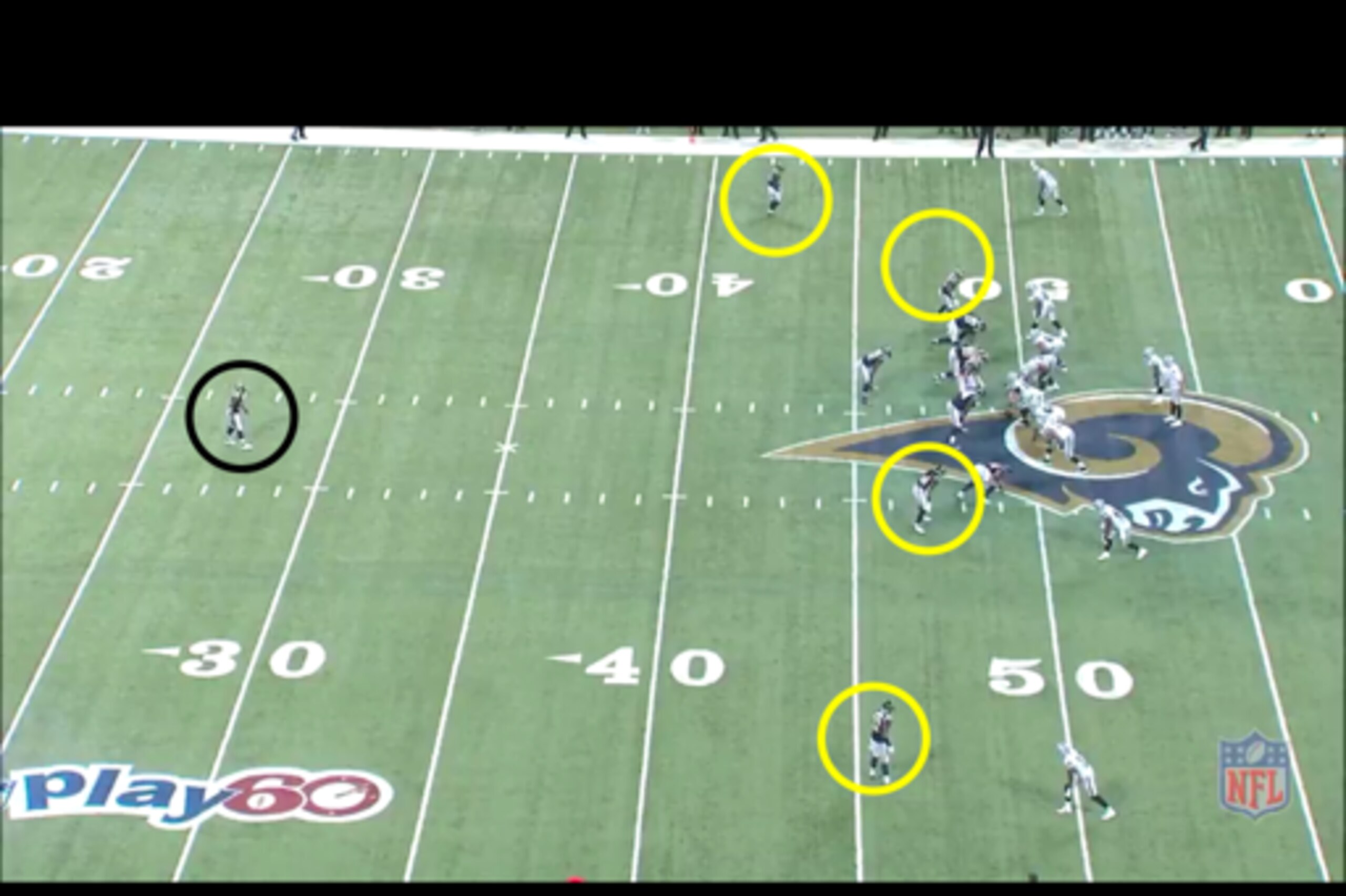
The pressure, as it so often does, would come from Robert Quinn off the edge. The Rams also stacked middle linebacker James Laurinaitis on the front:
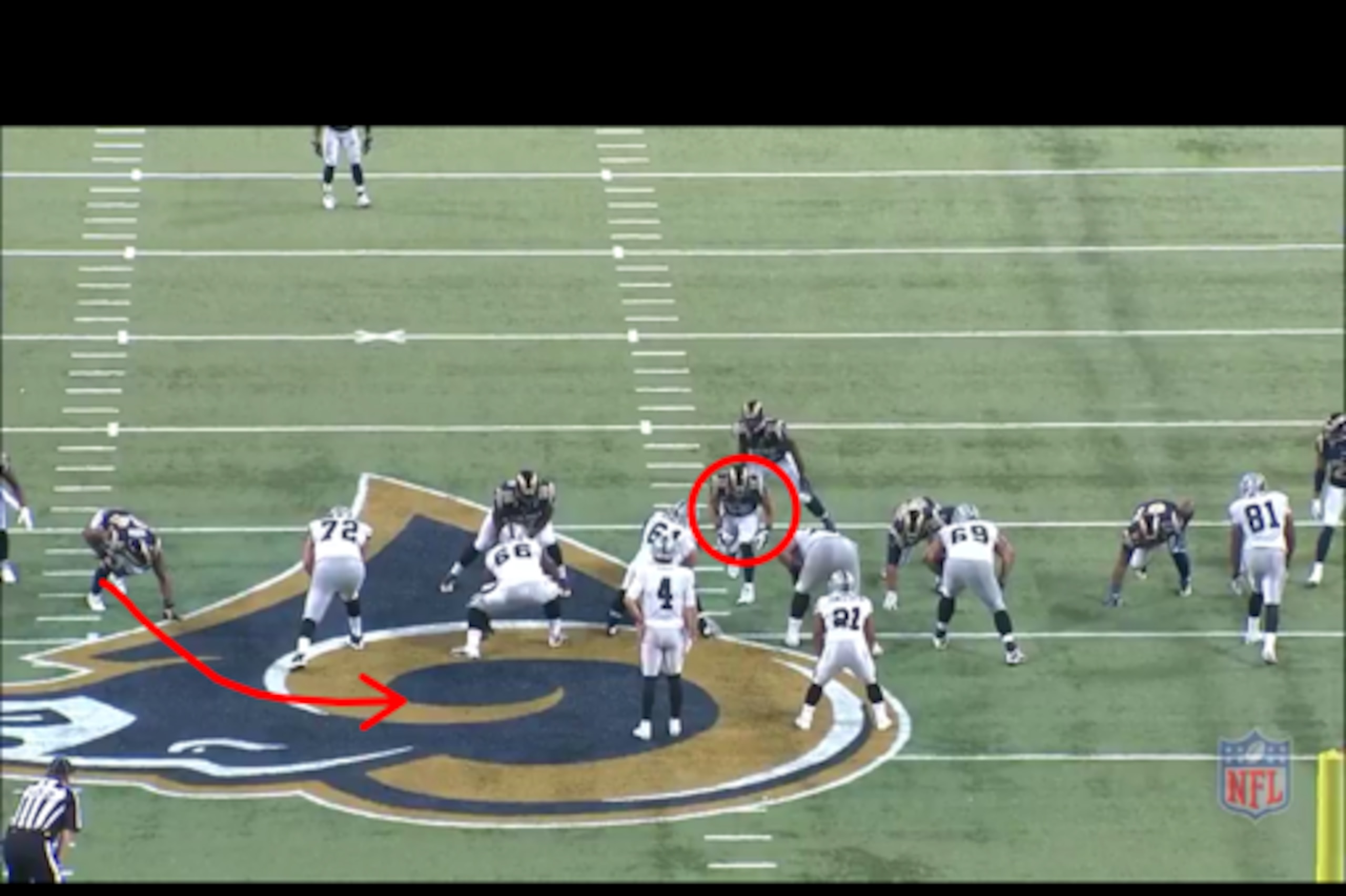
This is one of Williams' favorite ploys. The presence of Laurinaitis helps shift protection toward the middle, which can create one-on-one matchups for Quinn and Long on the outside.
Once the ball was snapped, notice how tight the coverage was down the field:
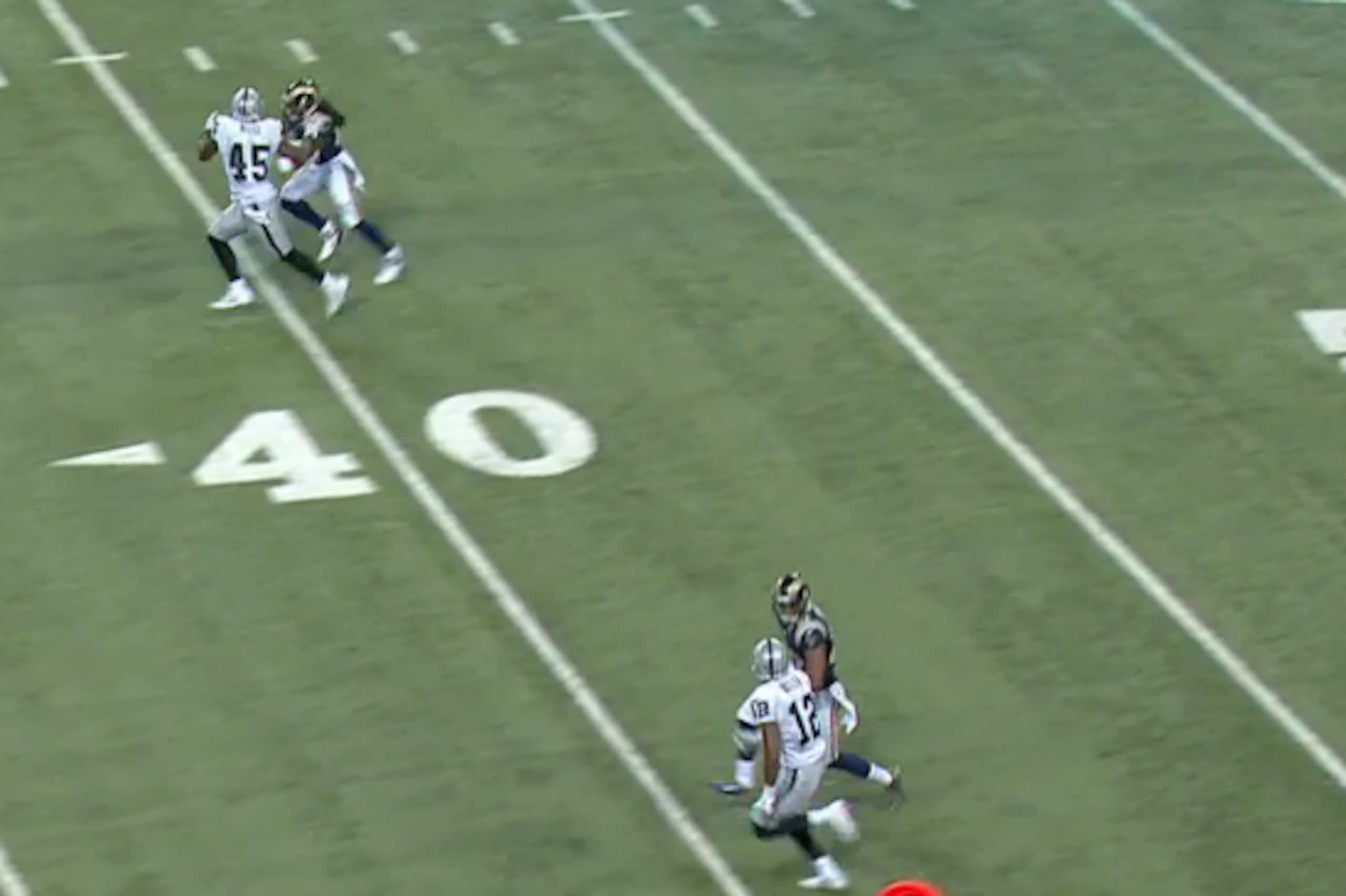
Every eligible Raiders receiver had a covering defender in front of him:
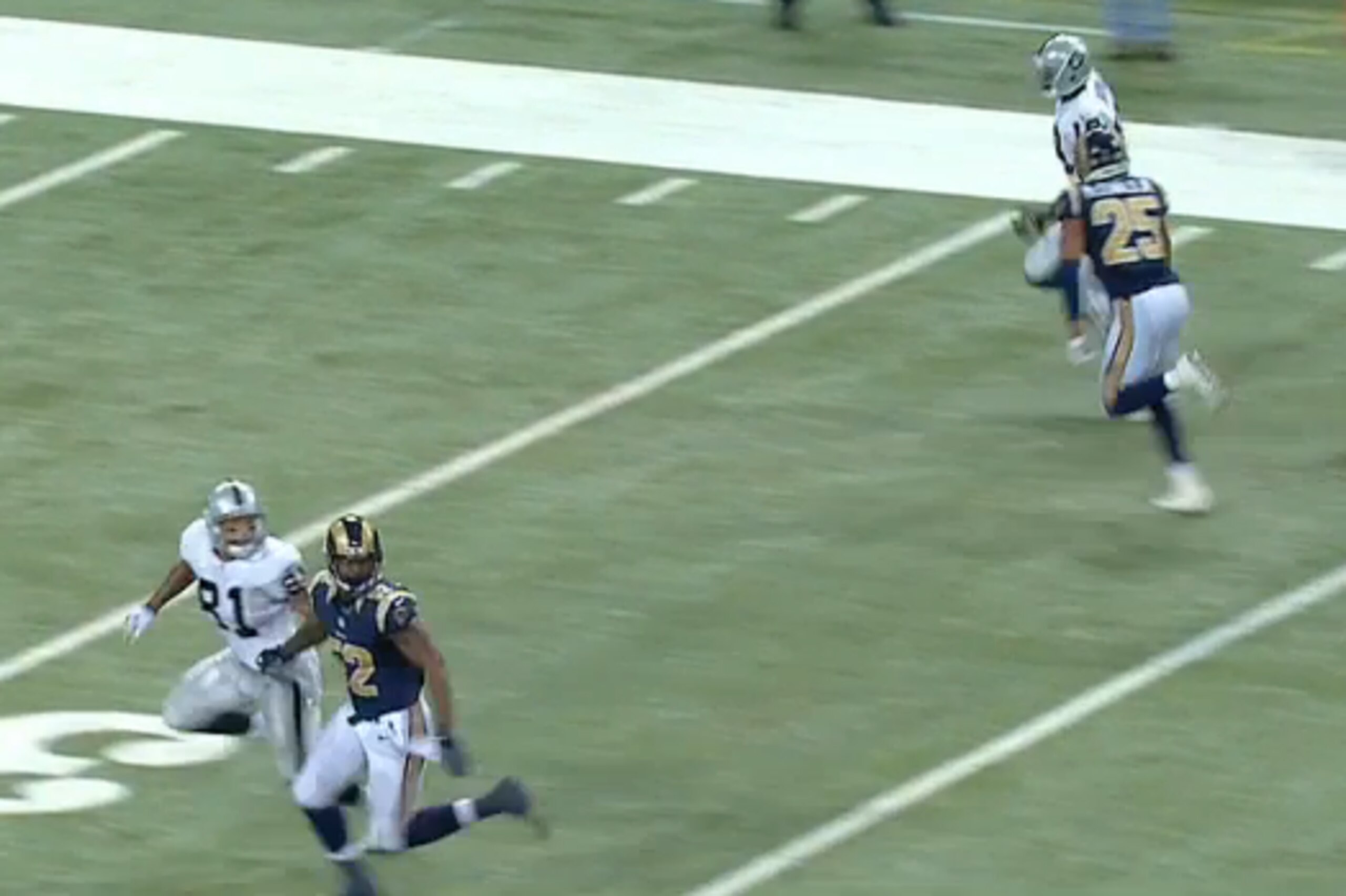
Coverage this tight naturally forces a quarterback to pause. That's just what rookie quarterback Derek Carr did.
But pausing in the pocket is never a good idea with Quinn around. The cat-quick rush end easily beat his man off the edge and closed on Carr to record a sack for an eight-yard loss:
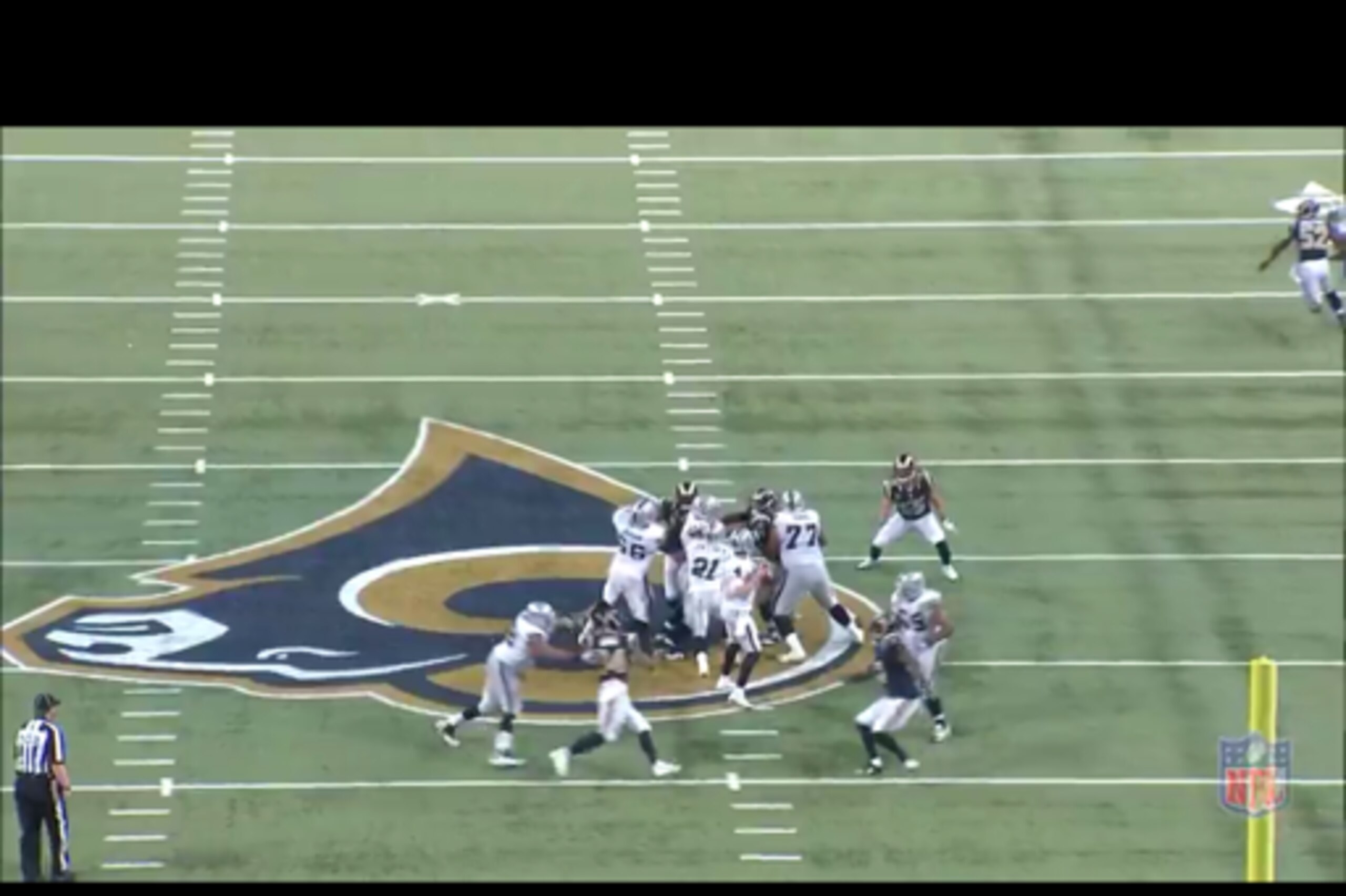
That's the sort of havoc the Rams can unleash just by rushing four. They have genuine stars in Quinn, Long and Donald.
But the rotation also includes Michael Brockers, another former first-round pick, as well as capable veterans William Hayes, Kendall Langford and Eugene Sims. That level of strength in depth could cause havoc against a Washington offensive line that's allowed 39 sacks already this season.
To make matters worse, the Rams don't just limit themselves to rushing four. Redskins fans will remember Williams' fondness for the blitz when he ran the Washington defense for Joe Gibbs from 2004-08.
With offensive lines naturally paying so much attention to the front four, a well-timed blitz is rarely picked up. Take a look at another sack from the rout of the Raiders.
The Rams overloaded one side with blitzing linebackers Laurinaitis and Alec Ogletree, while dropping out a tackle into pass coverage away from the pressure:
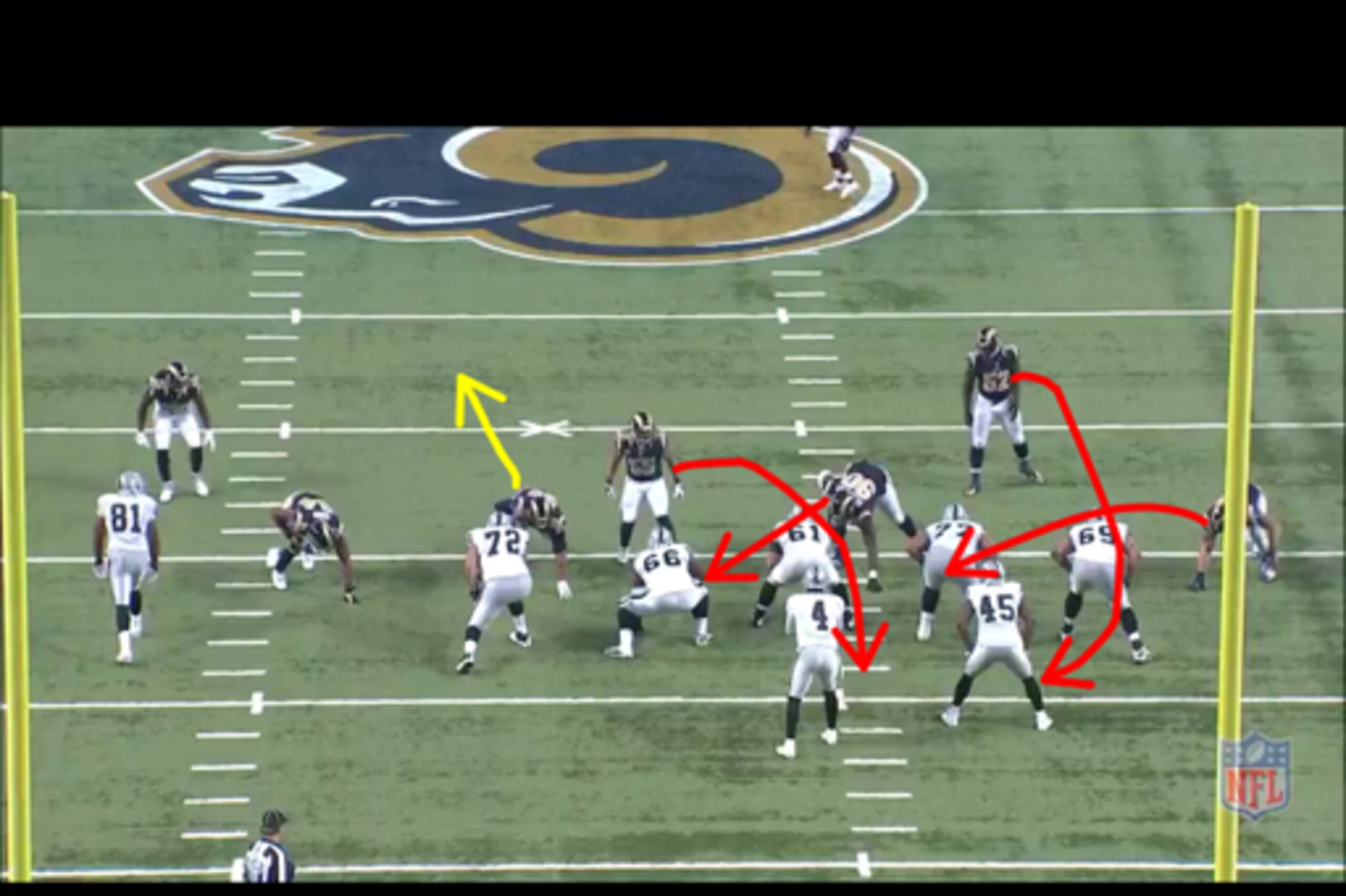
To help set up the blitz, Long and Brockers slanted to the inside, while Laurinaitis and Ogletree rushed around them.
The blitz caused instant chaos in Oakland's protection schemes. Quinn, Long and Ogletree soon swarmed around Carr:
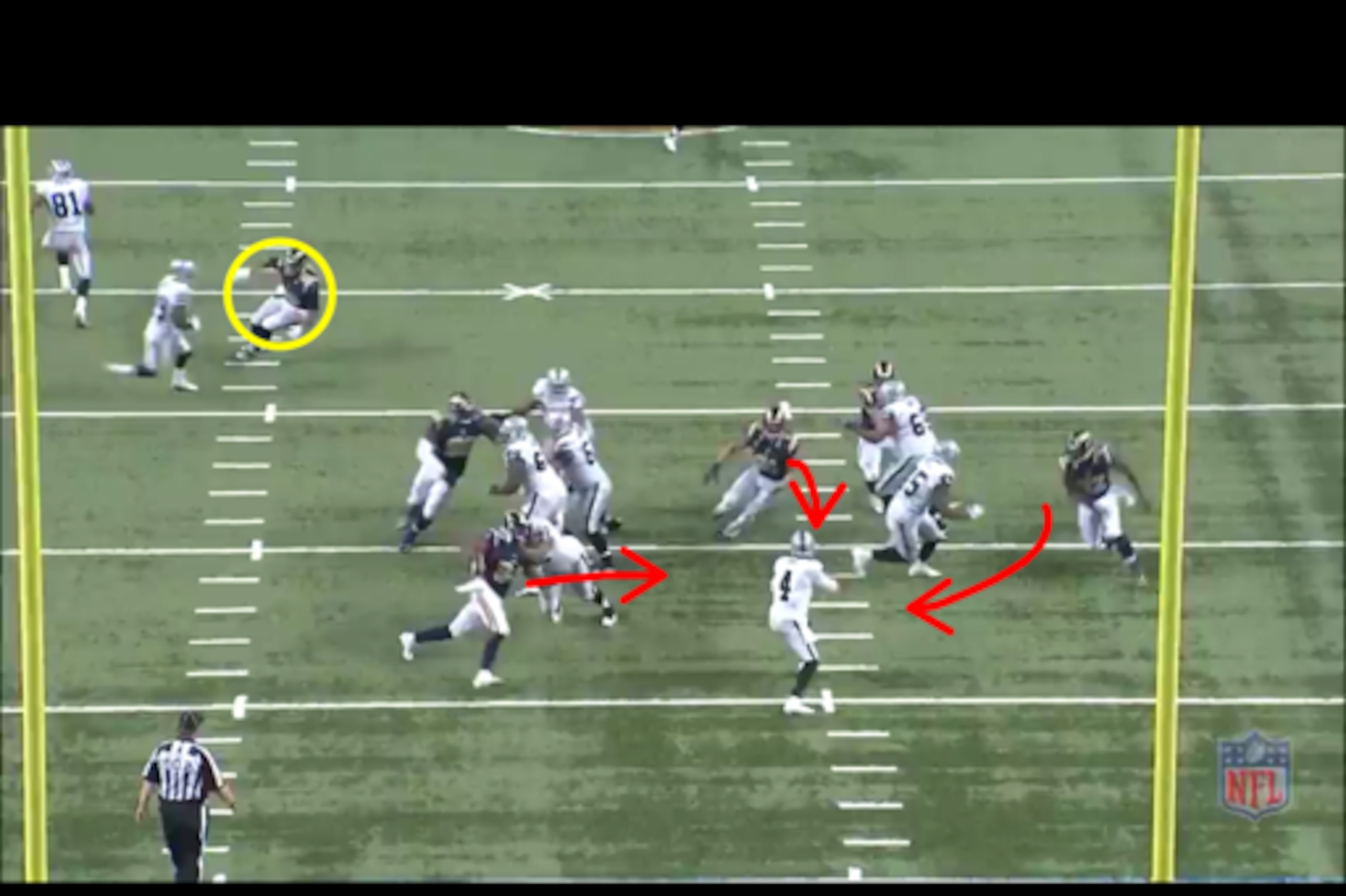
As Carr stepped up to avoid Quinn and Ogletree, he was engulfed by Long who dropped him for a seven-yard loss:
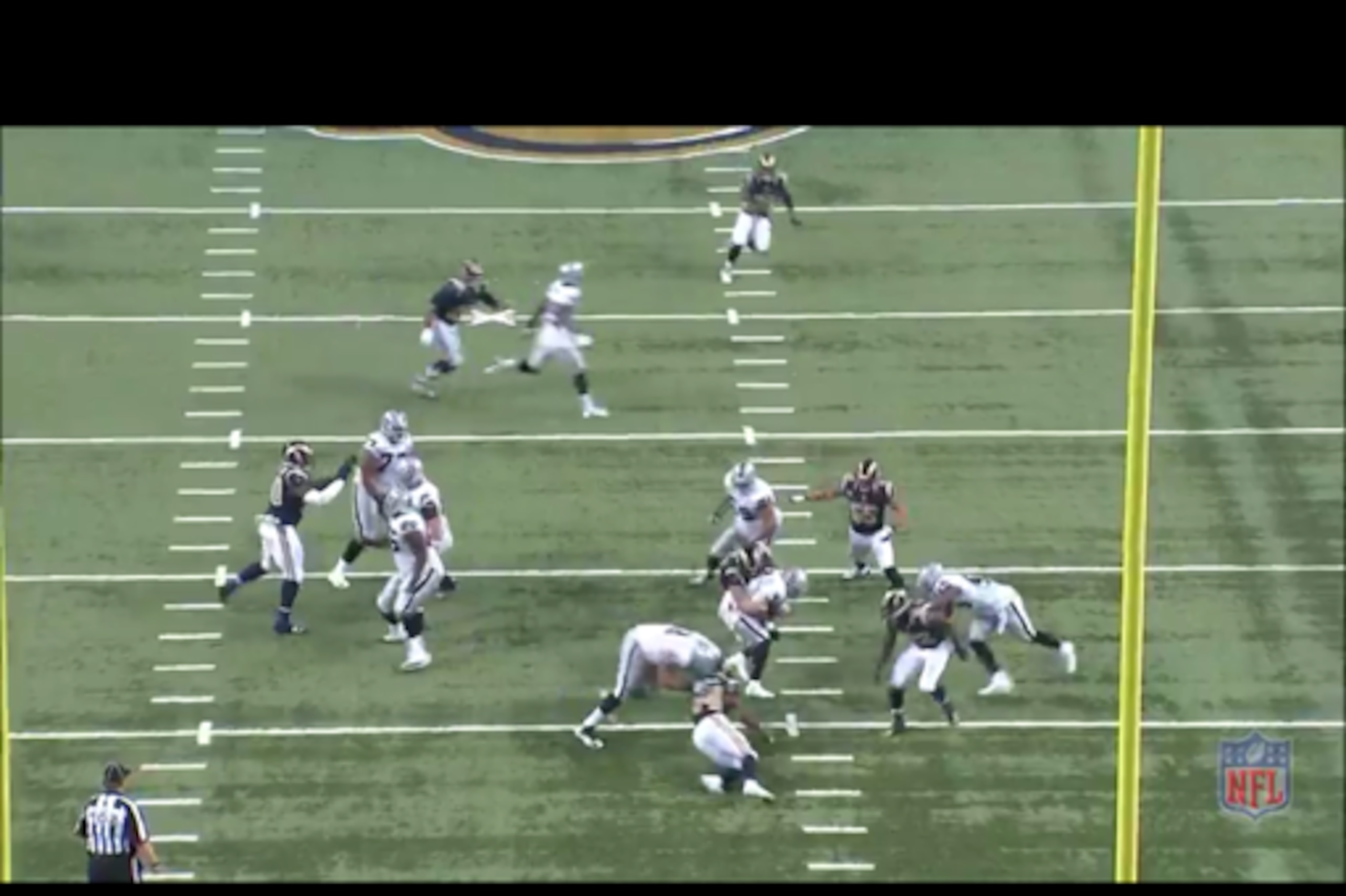
The Redskins will have to make a commitment to not being overrun by this front four. That'll mean regularly chipping Quinn and Long with running backs and showing plenty of balanced, two-tight end looks.
But it will be just as important to account for Williams' pressure schemes. This is where center Kory Lichtensteiger must improve.
He's struggled identifying blitz and adjusting protection accordingly in recent weeks. The veteran must quickly get a good feel for when and where Williams will send extra pressure.
If Washington's blockers can give McCoy time, he has a chance to make some big plays against this coverage scheme.
Target Linebackers in Man Coverage
One of the great disadvantages of playing so much man coverage is the Rams often leave linebackers isolated against tight ends and running backs. The Washington passing game has the players to exploit this obvious weakness.
Taking a closer look at how St. Louis linebackers struggle in coverage, consider this play from the Rams' 27-24 Week 12 loss to the San Diego Chargers. It was a fourth-quarter pass to hybrid tight end Ladarius Green.
The Chargers started off by spreading out the defense. They aligned two receivers together on either side of the formation:
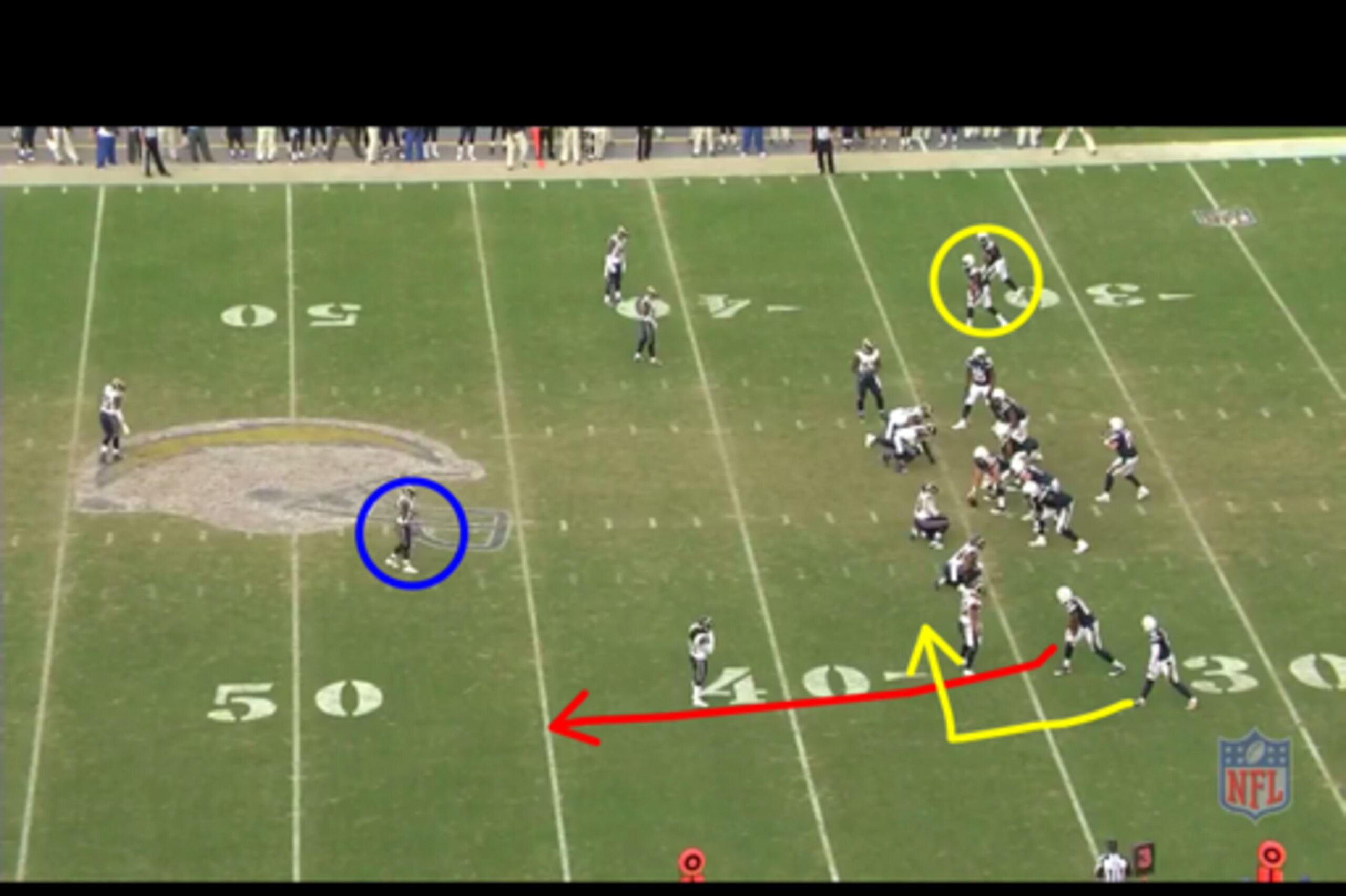
The Rams responded with man coverage with something akin to a two-deep shell behind it. Green was isolated against Laurinaitis and would run a post pattern on the outside (red arrow).
Once the ball was snapped, the outside cornerback and strong safety both rotated down to stay with wide receiver Keenan Allen. He had started upfield before cutting his route short as if he were ready to catch a screen pass:
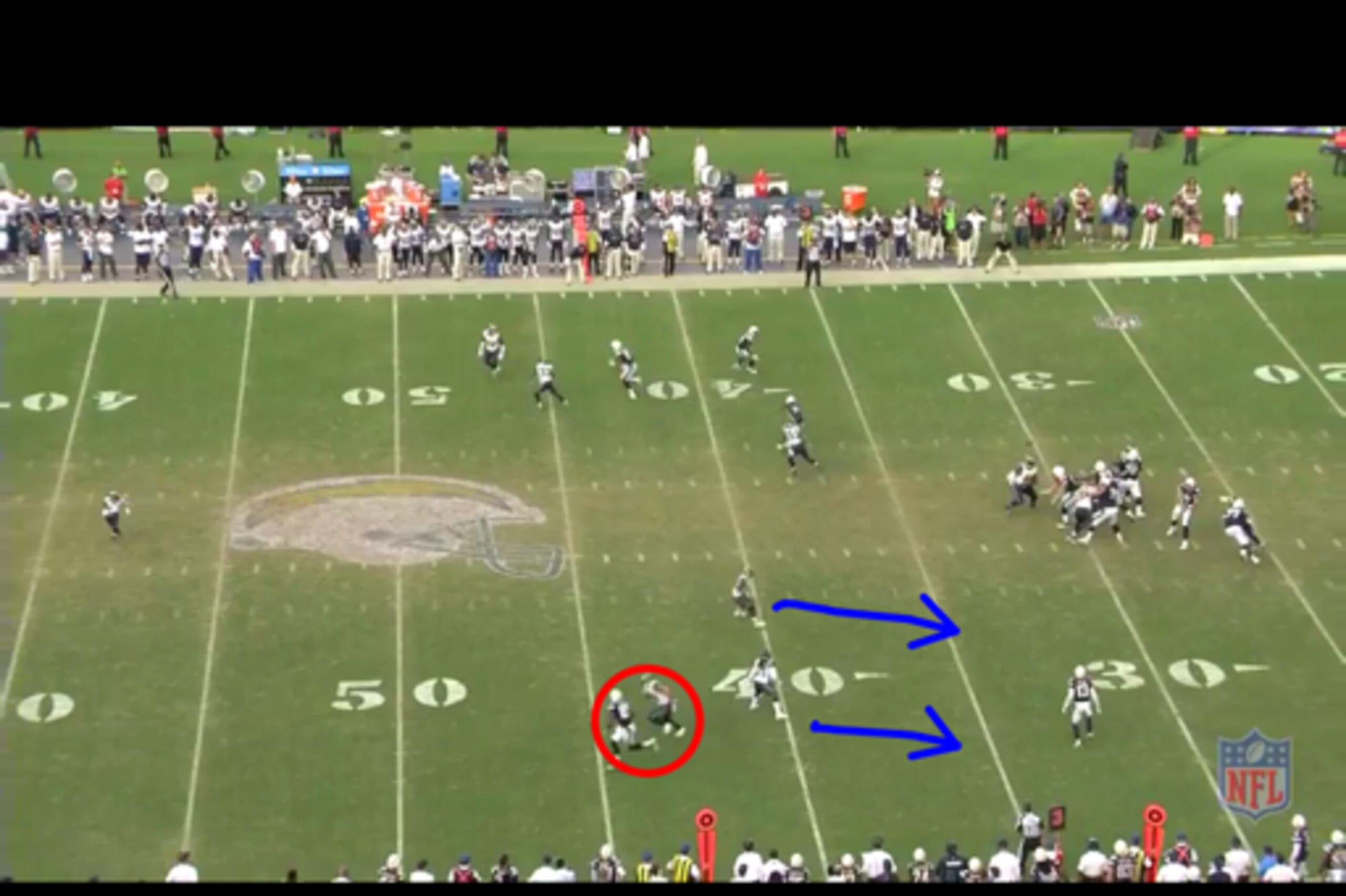
This helped keep Green isolated against Laurinaitis and get him behind the coverage.
The pass was dropped right over the linebacker's head and beat the single-high free safety before he could rotate over the top. Green made the grab for a 28-yard gain:
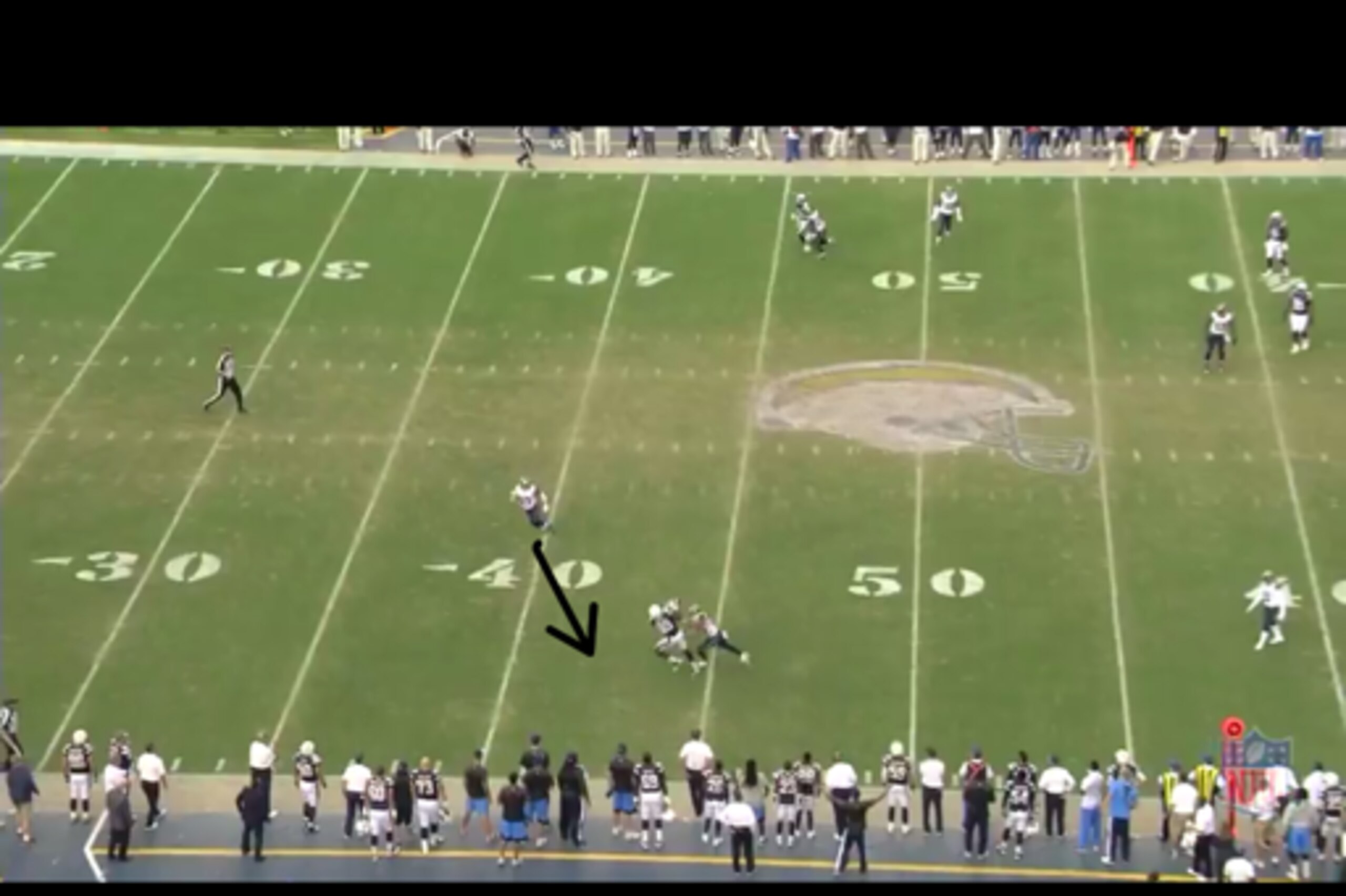
The Rams can be guilty of trusting their linebackers a little too much to hold up in coverage. Laurinaitis is a solid and savvy 'backer, but he's always going to be mismatched against a "move" tight end like Green.
That's good news for Washington because the franchise has its own tight end trapped in a wide receiver's body in the form of Jordan Reed. He caught nine passes for 123 yards against the Colts and should be a matchup nightmare against St. Louis.
In this week's breakdown article, I detailed two plays where Gruden and offensive coordinator Sean McVay used formation to isolate Reed against Indy linebackers. If they can scheme some of the same things this week, Reed will have a monster game.

But Reed isn't the only versatile pass-catcher who can trouble the Rams. Roy Helu Jr. can exploit this defense's vulnerability covering running backs in space.
Consider this play from the Rams' 34-7 Week 8 loss to the Kansas City Chiefs. The Chiefs planned to target Jamaal Charles out of the backfield on 3rd-and-6 in the third quarter.
The Rams again showed man coverage across the field. Kansas City shifted the strength of the coverage away from Charles by deploying a trips bunch set on the other side of the formation:
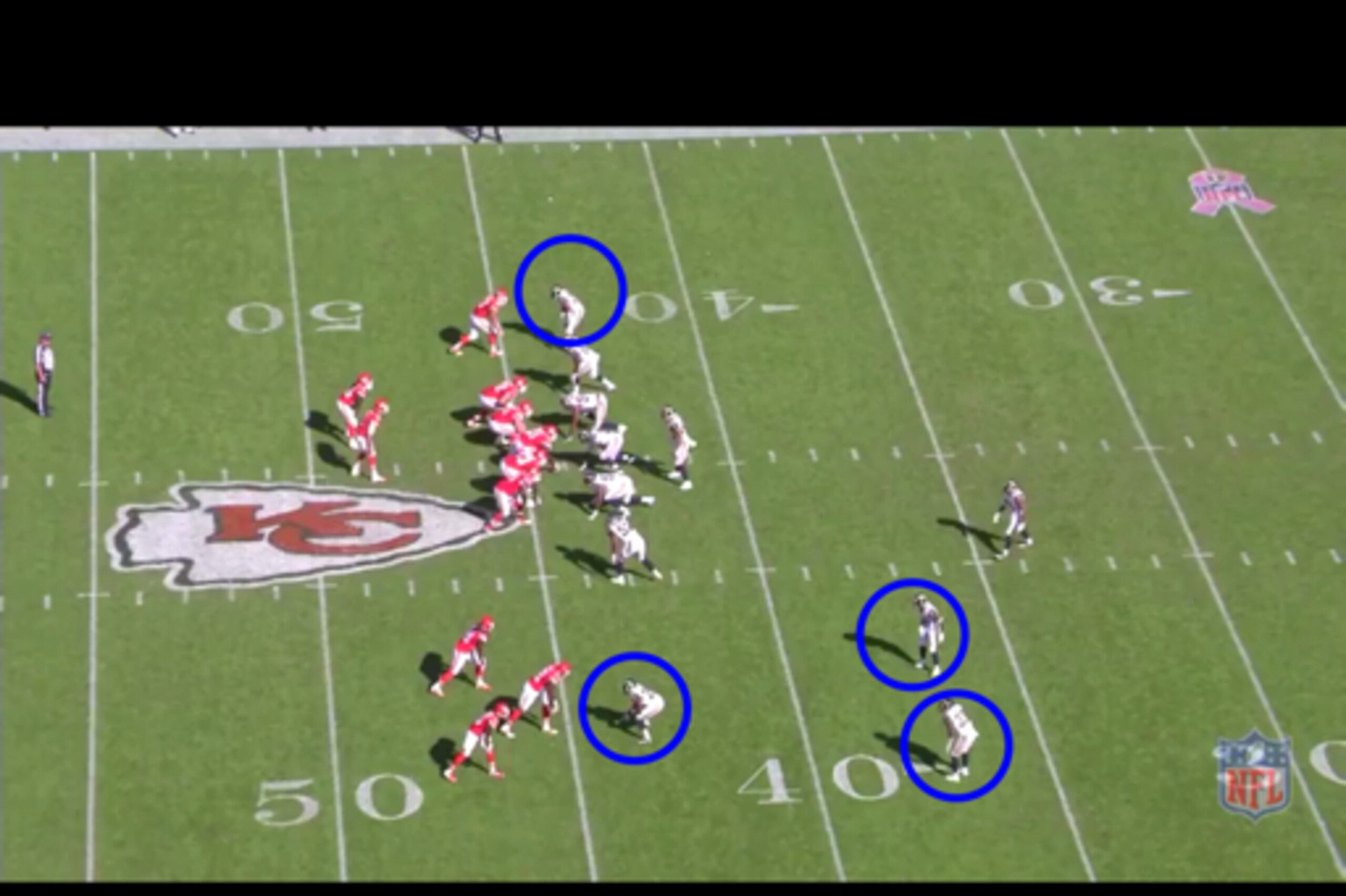
Charles was now isolated against Jo-Lonn Dunbar. He ran a circle route against the outside linebacker:

Not at all surprisingly, Charles easily got in front of Dunbar and was able to catch the ball on the run:
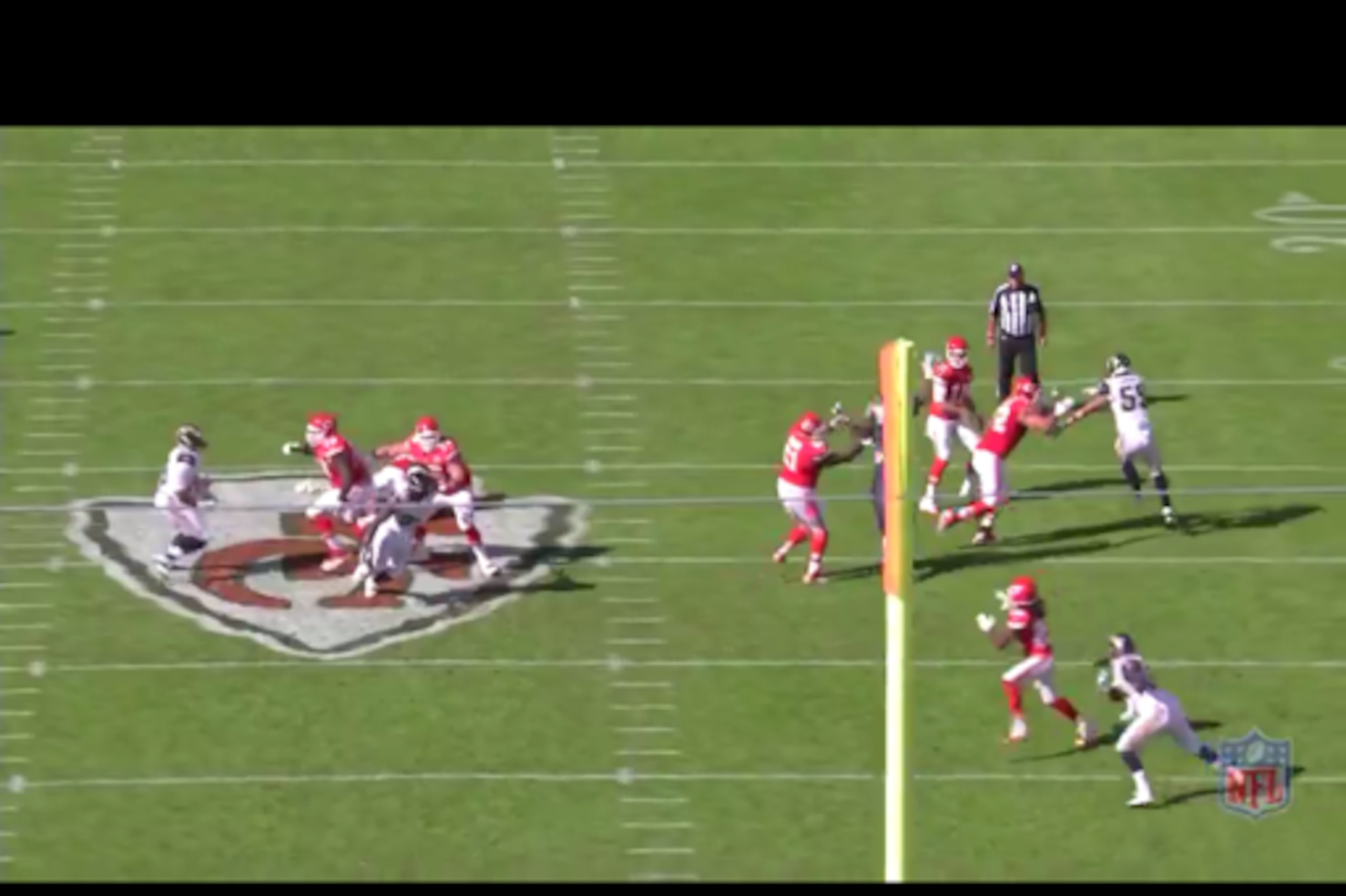
He quickly broke a desperate, lunging tackle from the linebacker:
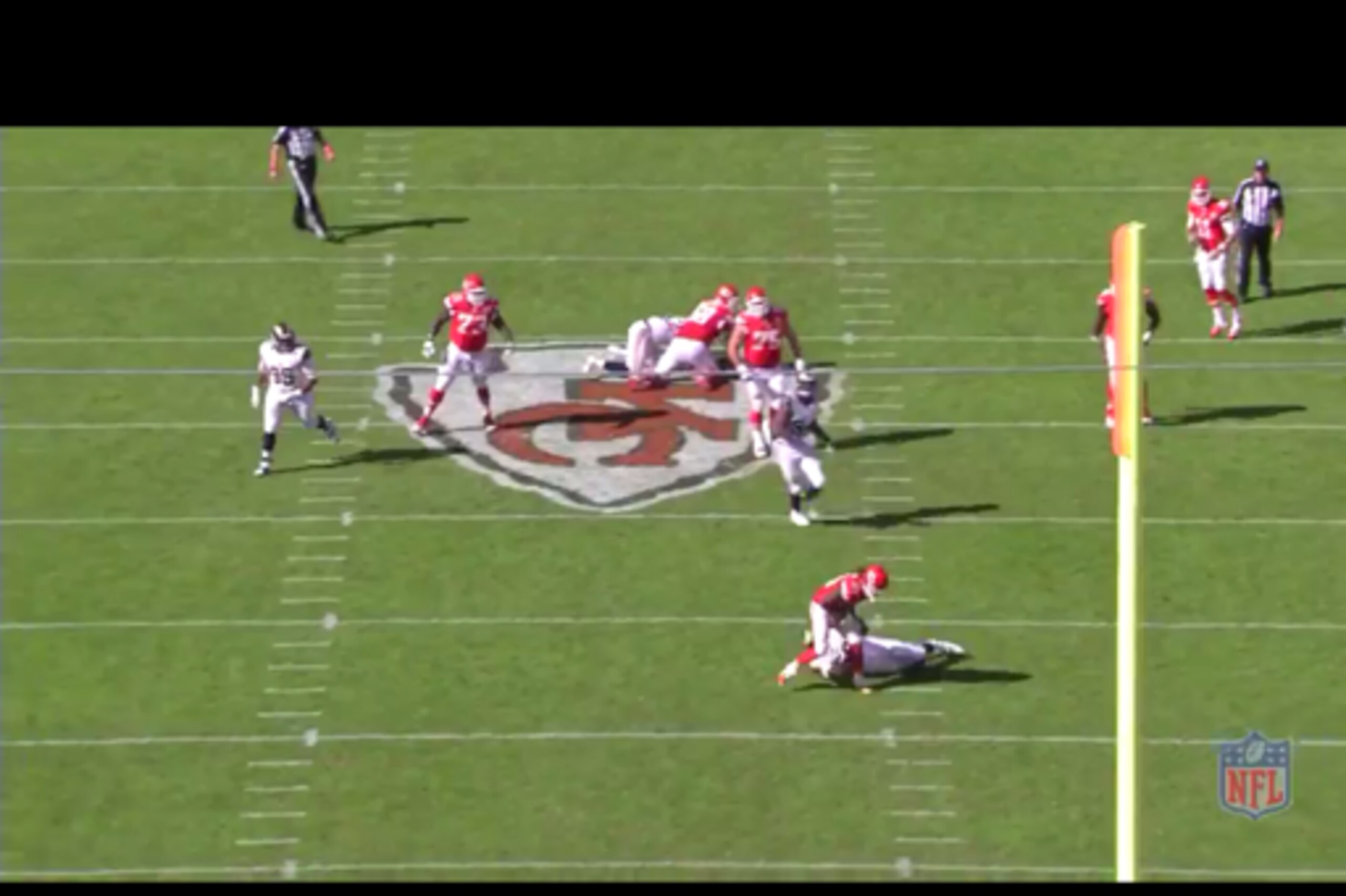
Charles then scampered his way to a 30-yard gain:
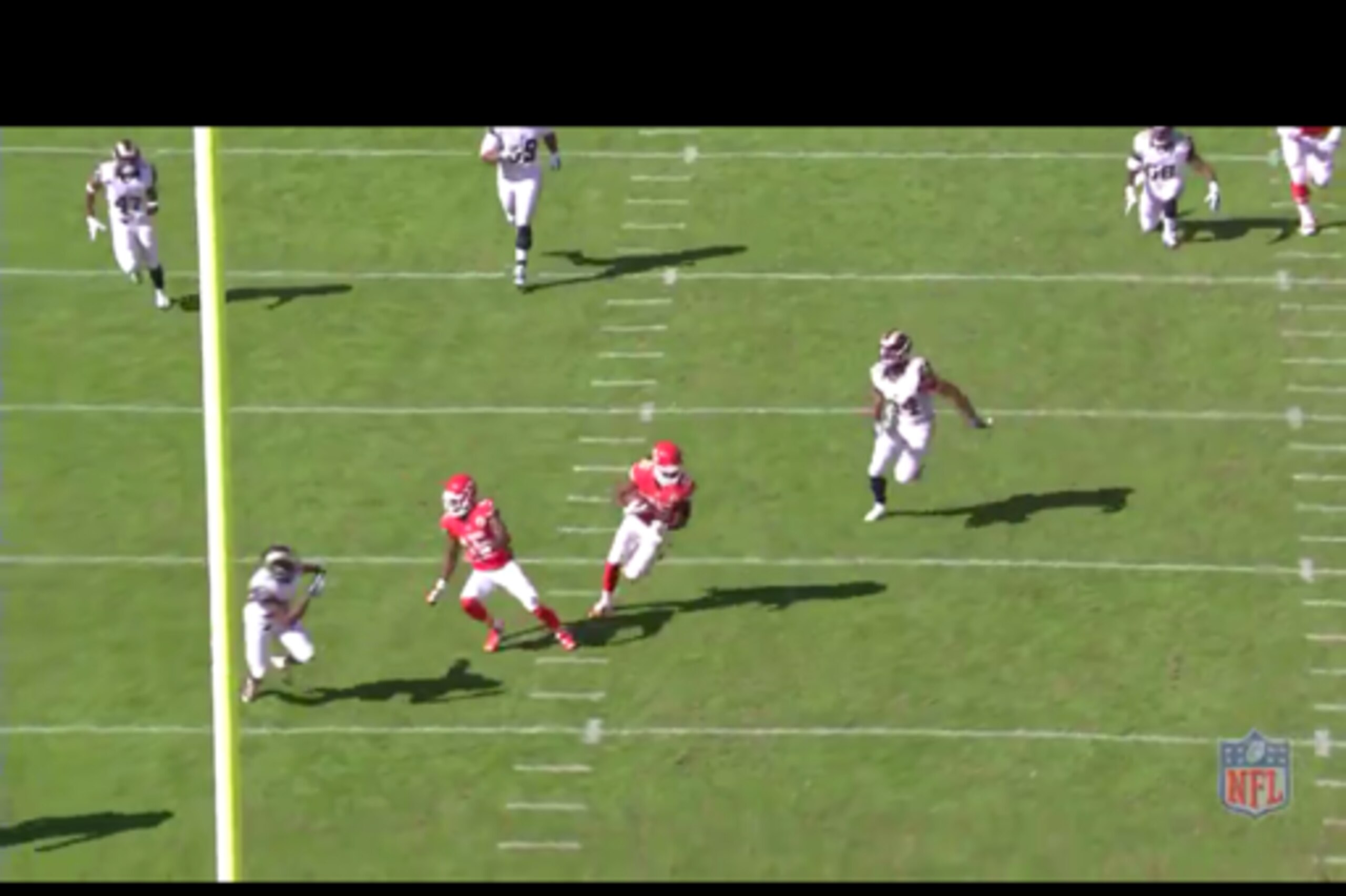
Again, a linebacker against a running back in space is an obvious matchup win for an offense. It's also worth taking note of the missed tackle on this play. The Rams are often guilty of missing tackles in space.
Helu has the speed and agility to take full advantage of these failings. He's still not used enough in this passing game, but he's a highly effective receiver.
Helu made four catches for 61 yards in Indianapolis, including a 21-yard scoring grab when he was isolated against inside linebacker Jerrell Freeman:
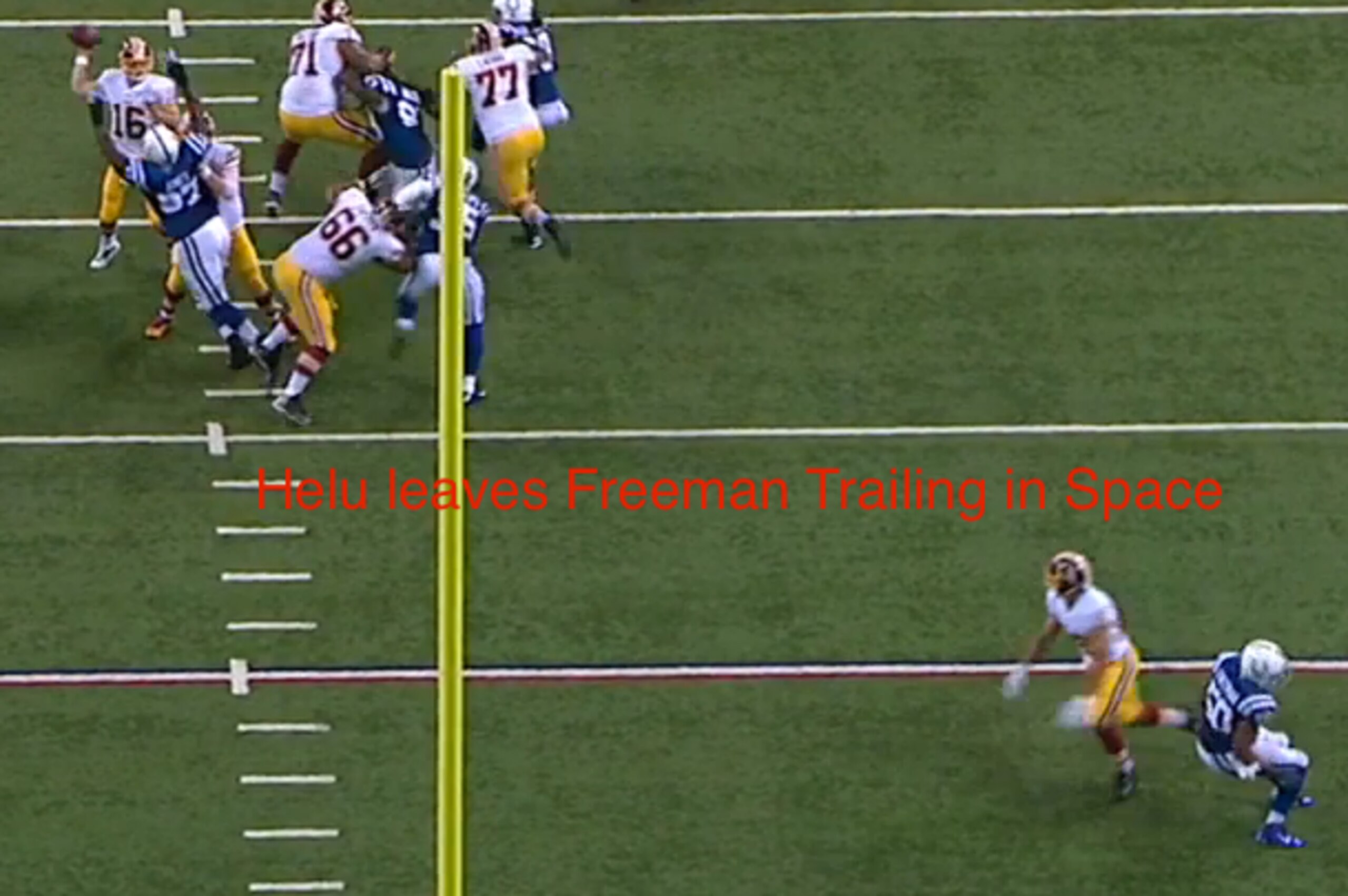
Gruden and McVay have to involve Helu more this week.
However, it could be the role of another running back that proves pivotal.
Turn Morris Loose to Control the Pass Rush
The best way for Washington to control the St. Louis pass rush and create manageable down-and-distance situations is to lean on Morris. The latter factor is something that should concern the Redskins.
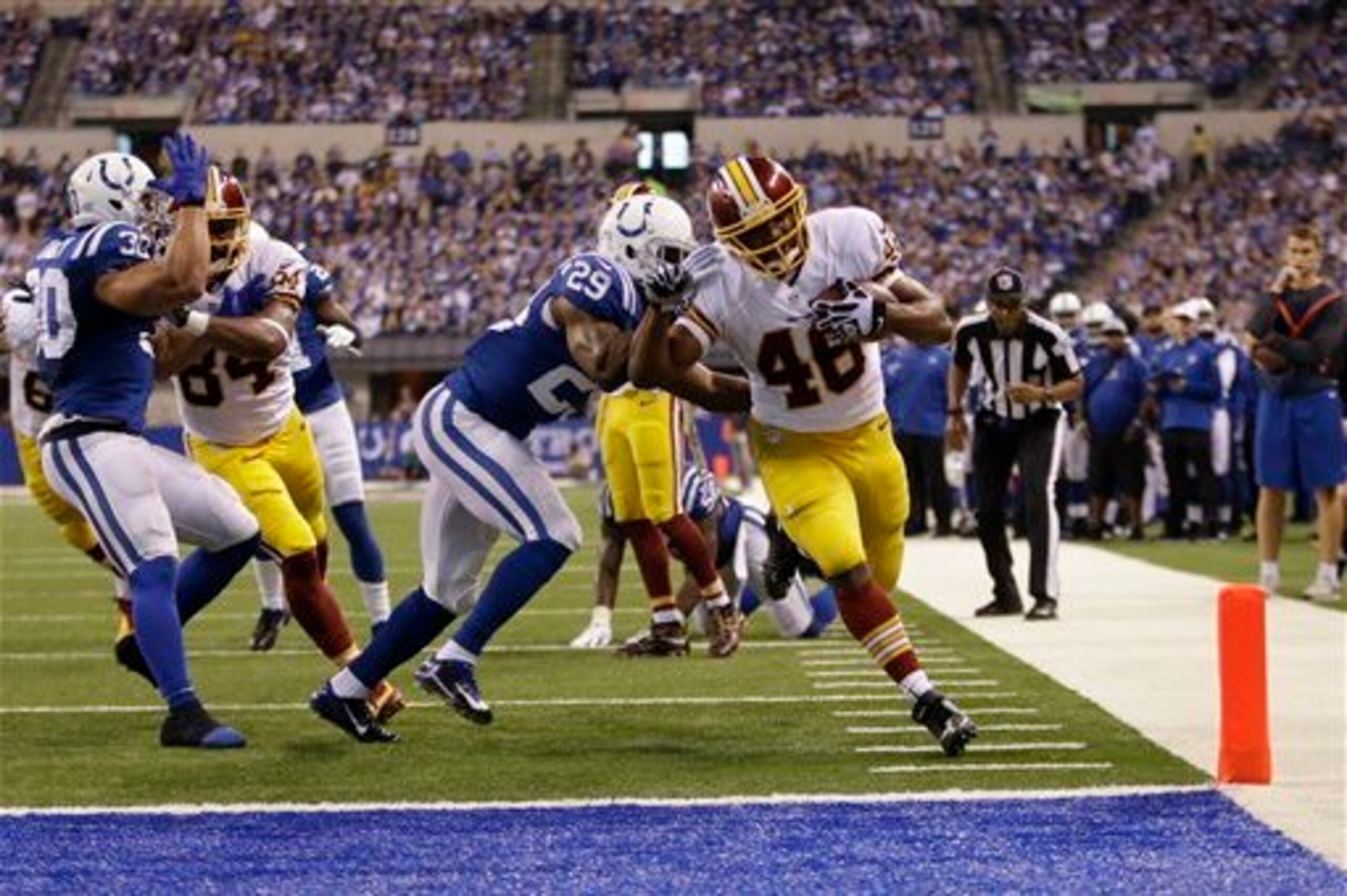
The team has been terrible on 3rd-and-long. ESPN.com Redskins reporter John Keim has detailed some of the numbers:
"The Redskins have been in this situation (3rd-and-10 plus) 48 times, which is 12th in the league. But they’ve been in this spot 31.8 percent of the time, which is ninth. The Redskins have converted just four of those instances into first downs (last in the NFL). The average number of first downs picked up is 12. The bad numbers don’t end there: They’ve been sacked seven times in these situations -- second most in the NFL -- and average an NFL-worst 3.71 yards per pass attempt.
"
But Keim also noted how the script flips whenever the Washington offense creates more favorable situations:
"This is a popular down and distance (3rd-and-3 or less) for Washington, with 46 plays (tied for ninth). But the Redskins haven’t been as successful when facing a shorter distance, converting 26 into first downs (tied for 21st). And this speaks, perhaps, to not having a run game made for short distances, as the Redskins average 2.11 yards per carry -- ranking them 25th -- on 19 runs in this situation.
"
Avoiding the former category of third-down plays has been identified as a priority by McCoy, per Liz Clarke of The Washington Post:
"I felt like in the first half last week, we just stayed in third and long, third and long, third and long. The first time we did convert on third and long, we went down and scored a touchdown. So when you can convert, it gives you some momentum.
"
Fortunately, McCoy doesn't have to worry. At least he won't have to as long as Gruden turns Morris loose. Strong running from him will create manageable down-and-distance situations.
That strong running is very likely against a defense that struggles against zone blocking. The Chargers targeted that weakness in Week 12, helping Ryan Mathews gain 105 yards on just 12 carries.
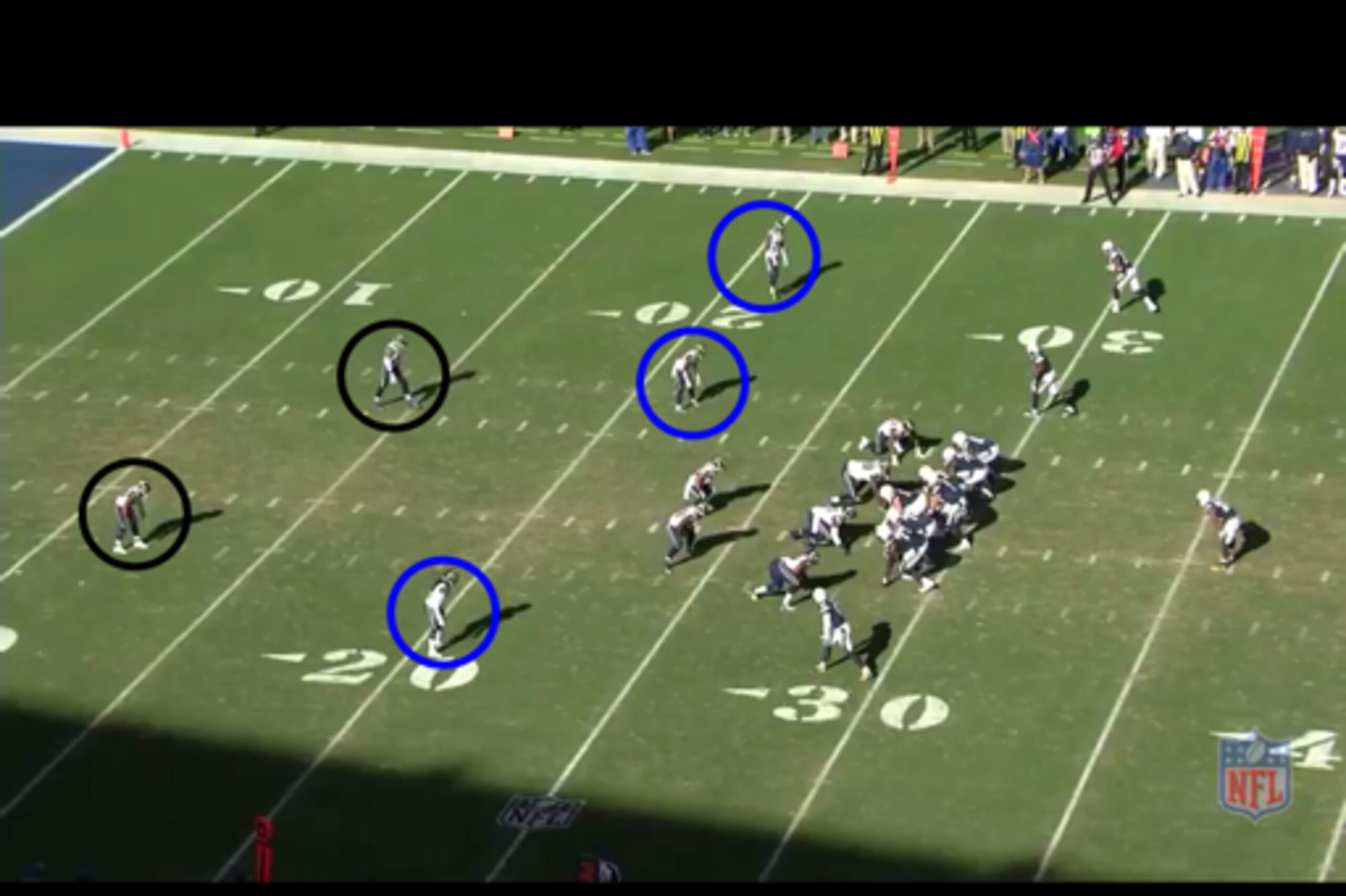
On this second-quarter play, the Chargers spread the field with three receivers. The Rams responded with man coverage underneath and a two-deep safety shell behind it:
Mathews would run a stretch play to the left before making one sharp cut back toward the inside:
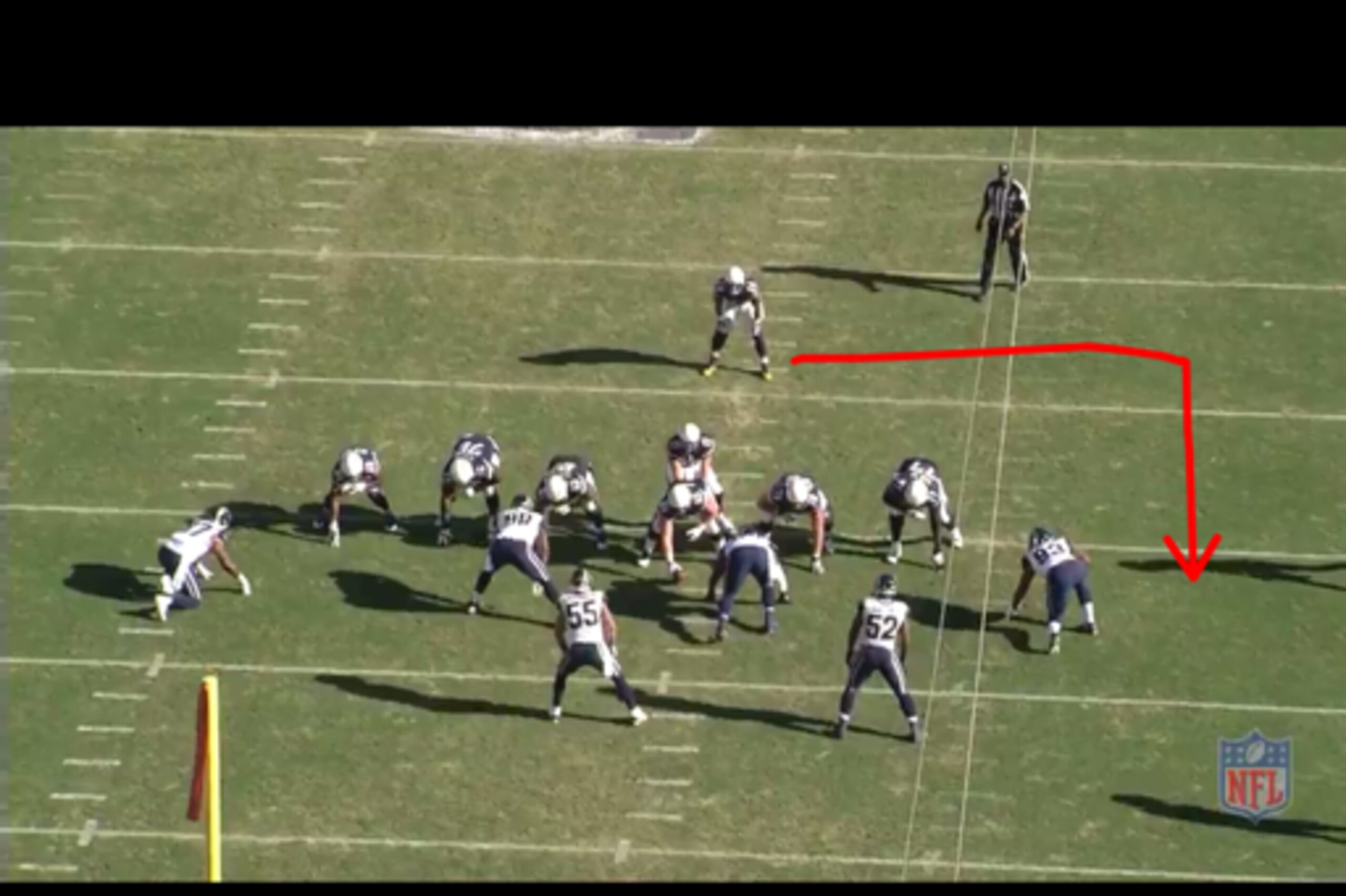
Once the ball was snapped, the Chargers quickly set up double-teams on tackles Langford and Brockers. Meanwhile, tight end Green easily controlled end Sims on the edge:
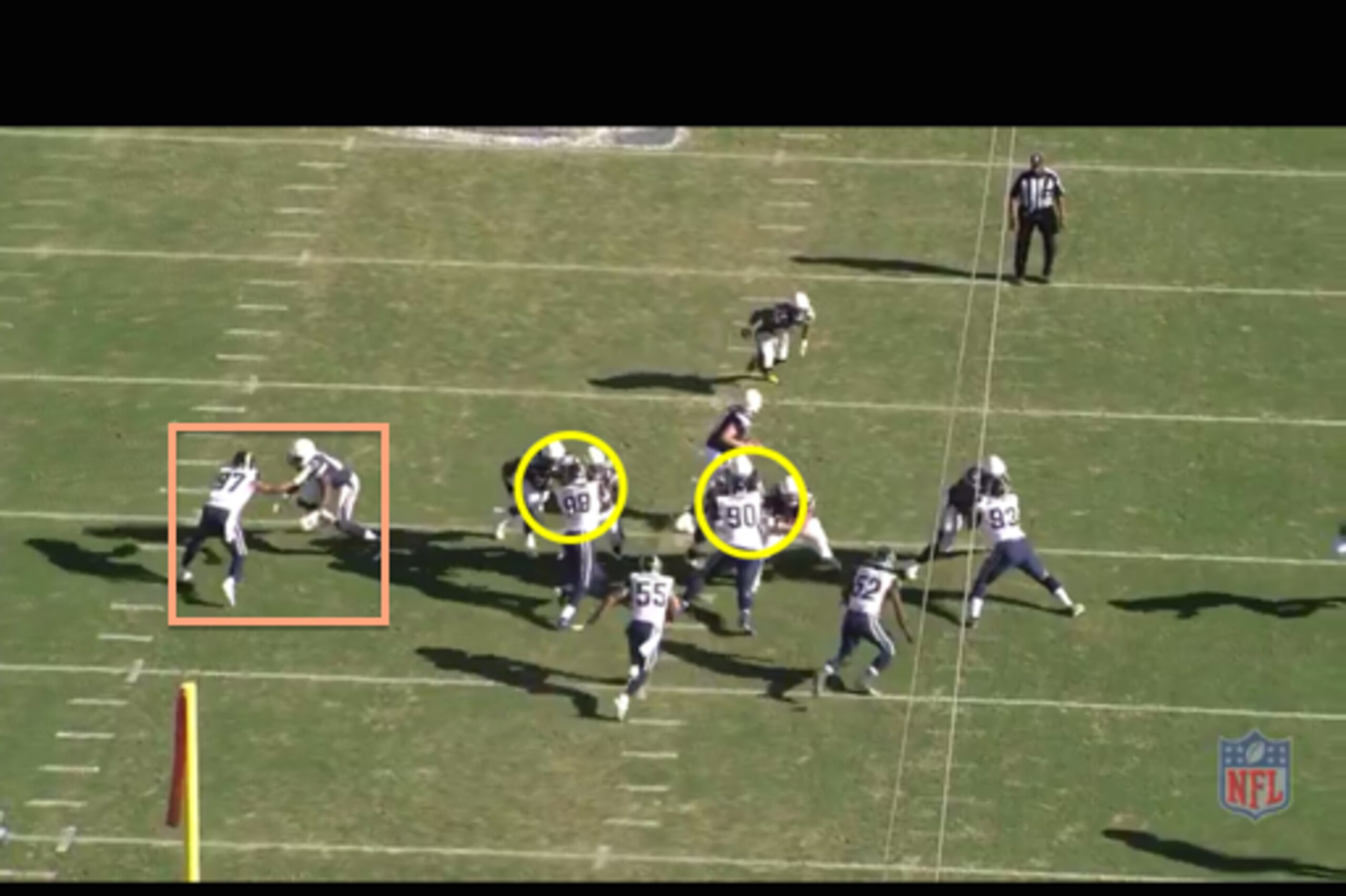
In typical zone-blocking fashion, one member from each inside double-team soon released to absorb linebackers Laurinaitis and Ogletree at the second level:
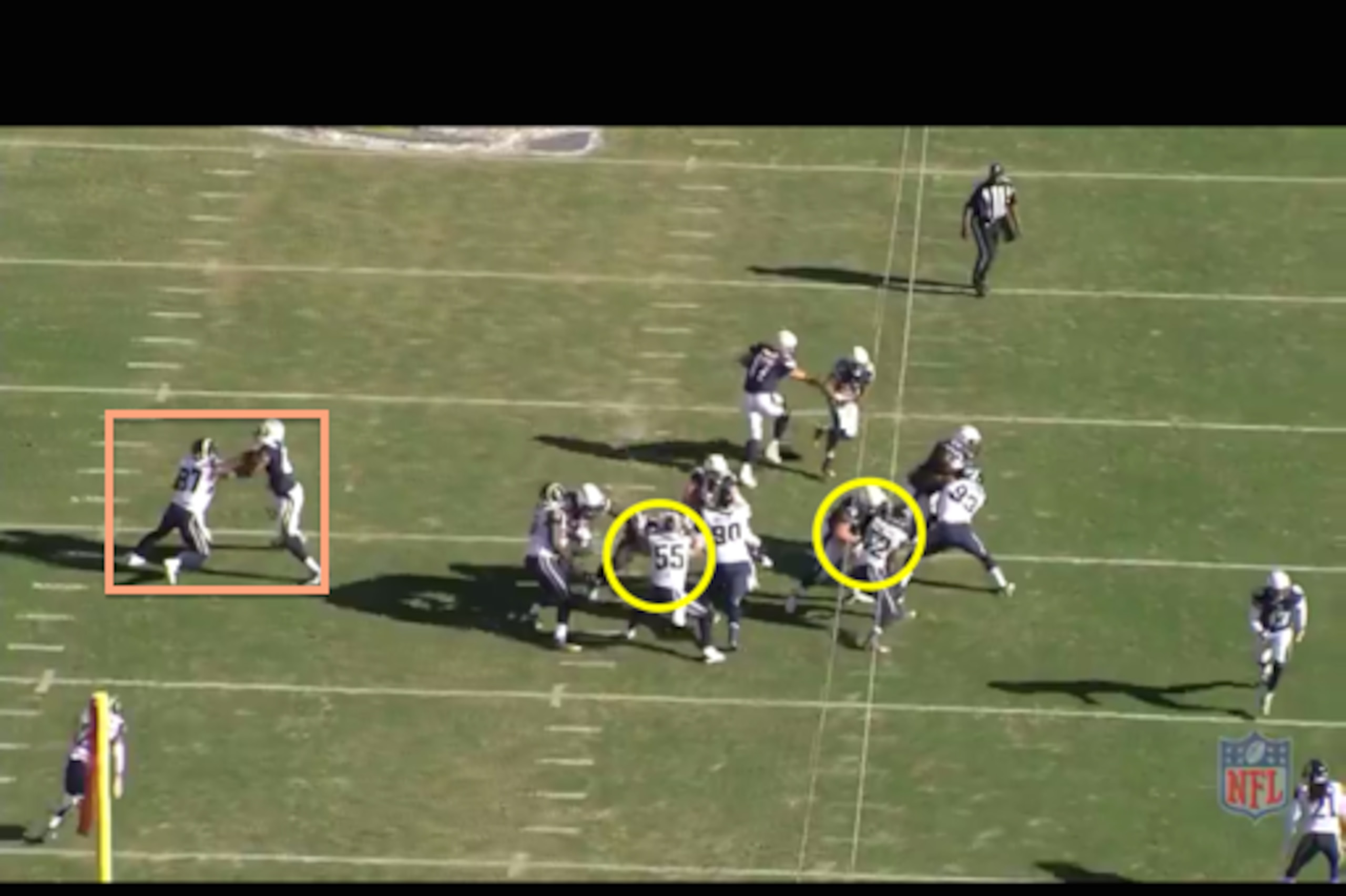
With those blocks set, Mathews had a free run around the outside. There was no backside pursuit to track him down, and by the time he made his cut, Mathews was close to completing a 19-yard run:
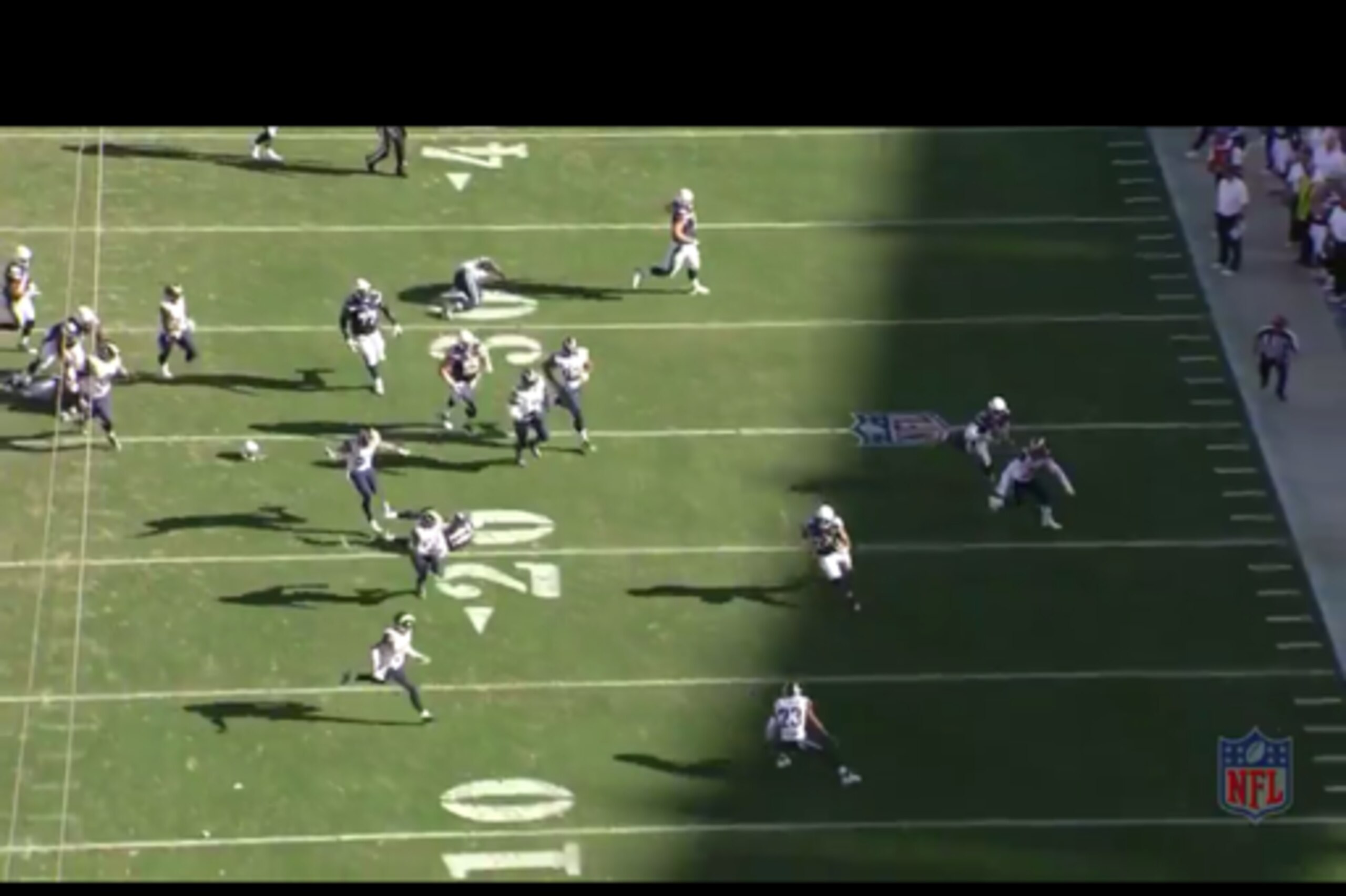
If this play looks familiar, it should. It's the signature stretch run of Washington's zone-based scheme. Gruden must trust that scheme to carry the team this week.
If he does, expect Morris to produce a number of big plays. Mathews did exactly that in the third quarter.
The Chargers again spread the Rams out with a three-receiver set. The St. Louis response was another man-under, two-deep look:
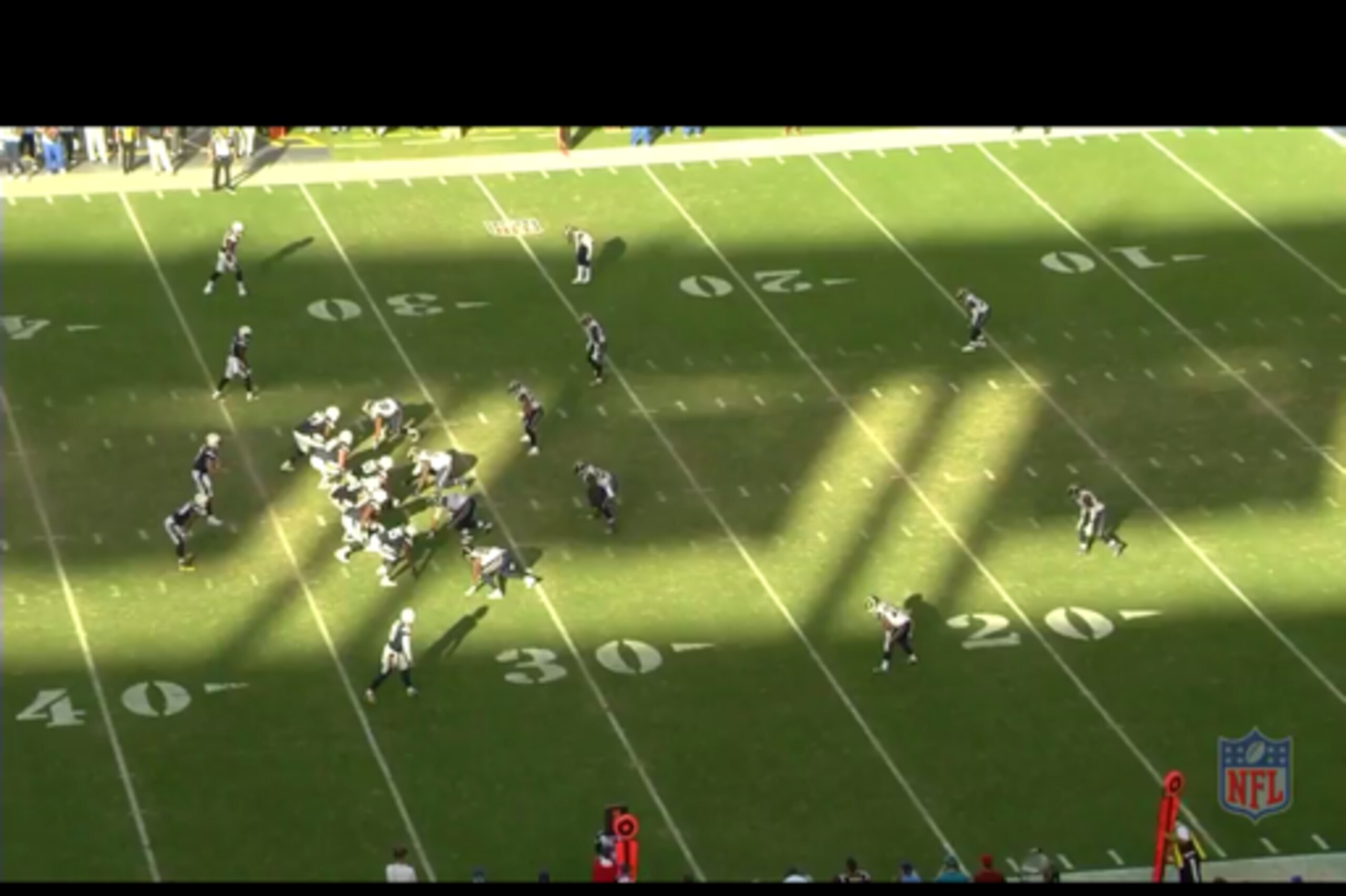
This time, Mathews would run an inside zone play. He would take the ball and shape to the outside before quickly cutting back through the middle:
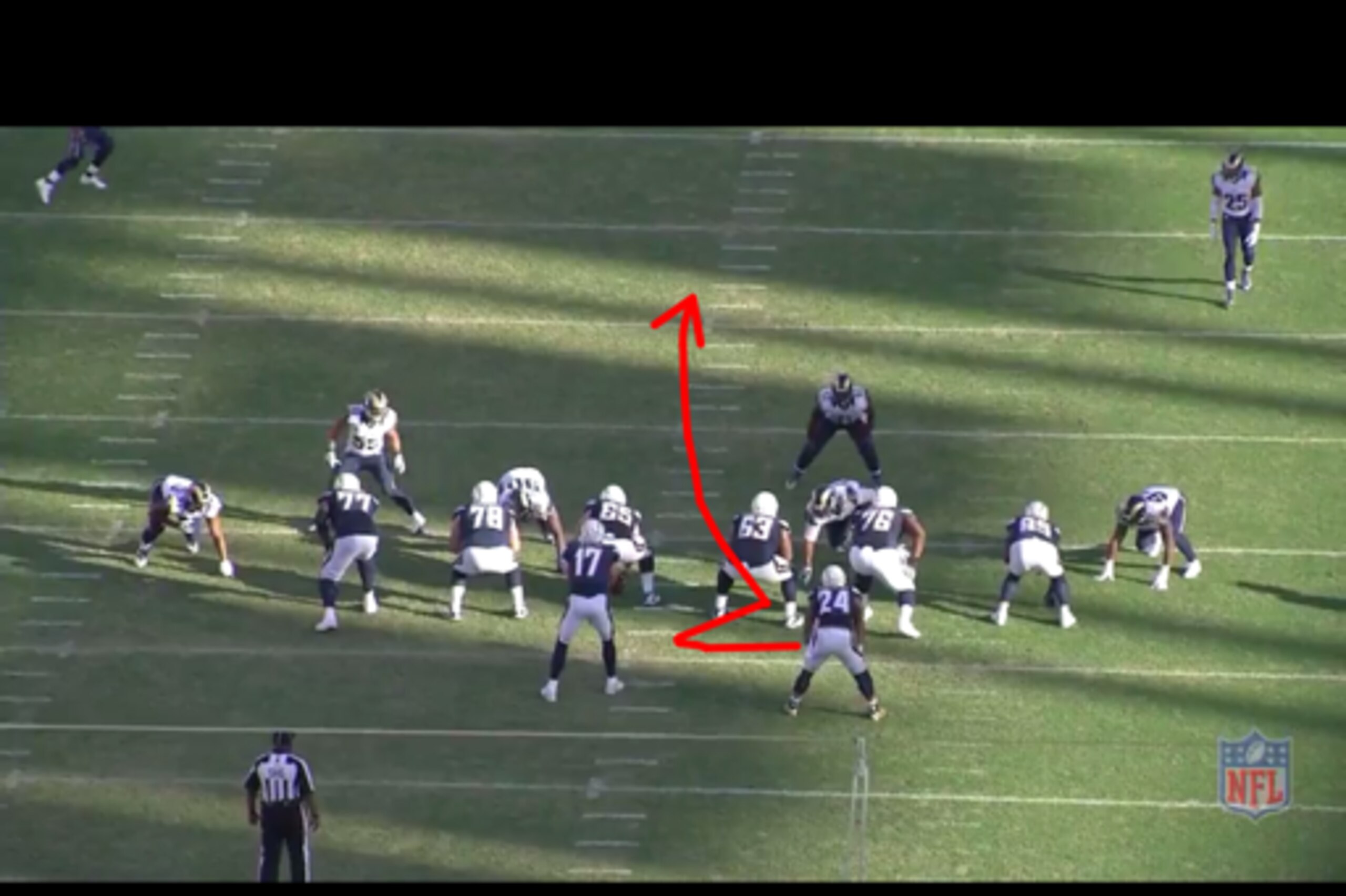
Once again, San Diego's blockers quickly got double-teams set inside. The Chargers also again enjoyed the luxury of a tight end, this time veteran Antonio Gates, nullifying a defensive end:
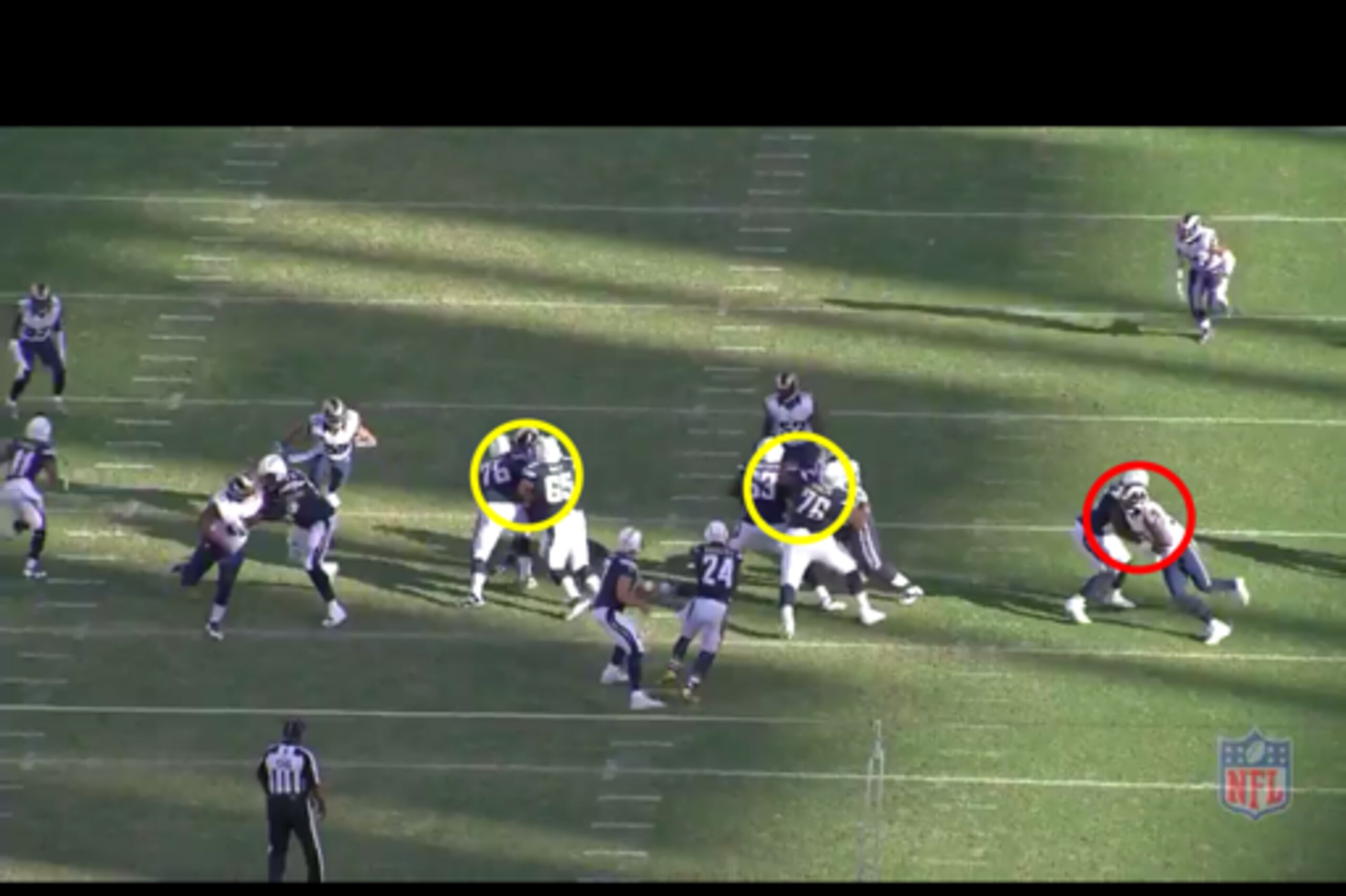
Once the double team took hold, the Chargers quickly got blockers to the linebacker level:
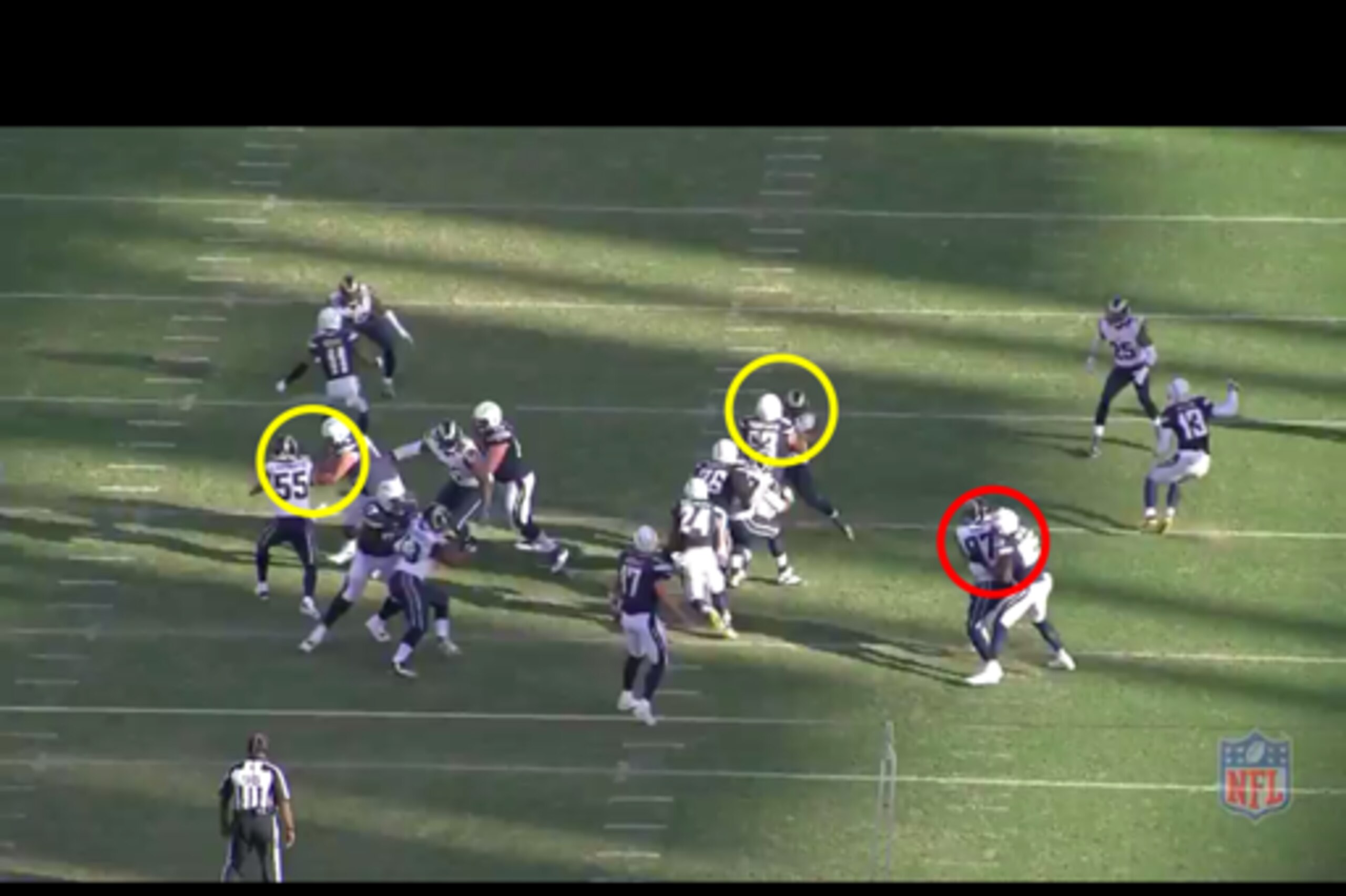
Next, it was the turn of receivers Allen and Eddie Royal to secure blocks in the secondary. No zone run can create a big play without wideouts willing to sustain blocks:
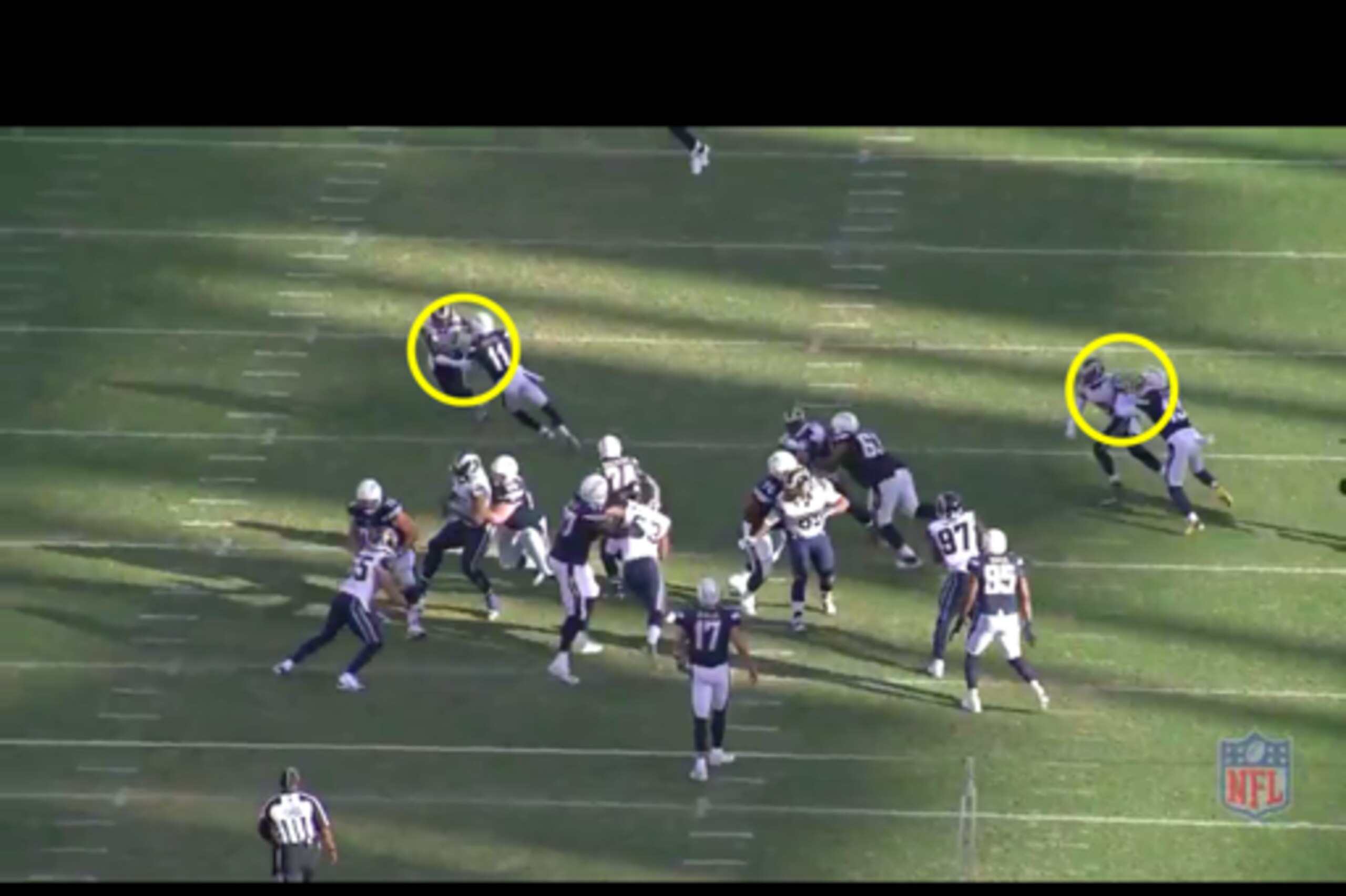
With all of his blocks set, Mathews soon made it to the safety level. He made the deep safety miss and broke a tackle before finishing off a 32-yard scoring sprint:
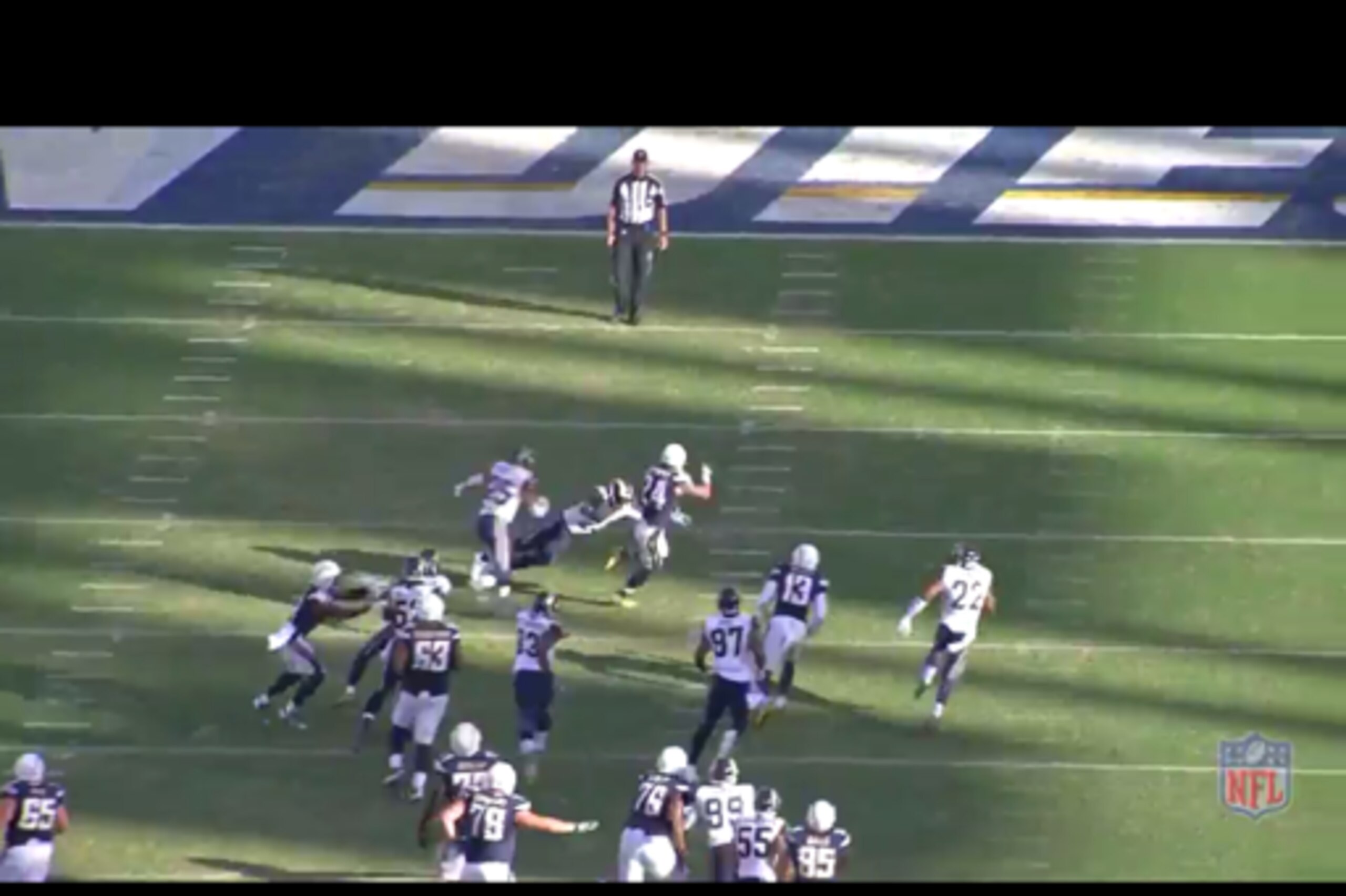
These two plays highlighted everything that's wrong with the Rams run defense. St. Louis linebackers too often get lost in traffic. They can also easily be absorbed at the second level.
It doesn't help when D-ends can't beat tight ends on the edges. That should always be a mismatch favoring the defense. Finally, poor tackling in space usually sees solid runs turn into big gains.
The Rams rank 17th against the run, but even that number could be soft. Remember that in two of their last three games, St. Louis has played the pre-C.J. Anderson Denver Broncos and the Oakland Raiders, the last-ranked rushing offense in football.
Morris could enjoy his best day of the season if Gruden is willing to keep giving him the ball. That approach would help set up what should be the defensive strategy.
Blitz Hill and Double Jared Cook
Washington's defense is at its best whenever it brings the blitz. Haslett shouldn't need any encouragement to send extra rushers against an O-line that has allowed 35 sacks this season.
If the Redskins commit to the run, that'll put journeyman quarterback Hill into a pass-first mode. Then Haslett can turn his pressure concepts loose.

The aggressive approach might help mask the deficiencies and avoid the coverage breakdowns that tormented the defense in Indianapolis. It would also help if the pressure is married to a more simplistic approach in coverage.
That approach should involve trusting young cornerbacks David Amerson and Bashaud Breeland to play press on the outside. Then Haslett can tweak his inside coverage to consistently double tight end Jared Cook.
The former Tennessee Titans starter is a potential matchup nightmare for Washington. He's 6'5" and 254 pounds, but Cook carries the weight on a lean frame built more for athleticism and speed.
Those are the exact qualities he brings to the St. Louis passing game. Cook is a big-play target who's averaged 12.8 yards per catch and has a 59-yard touchdown reception to his credit this season.
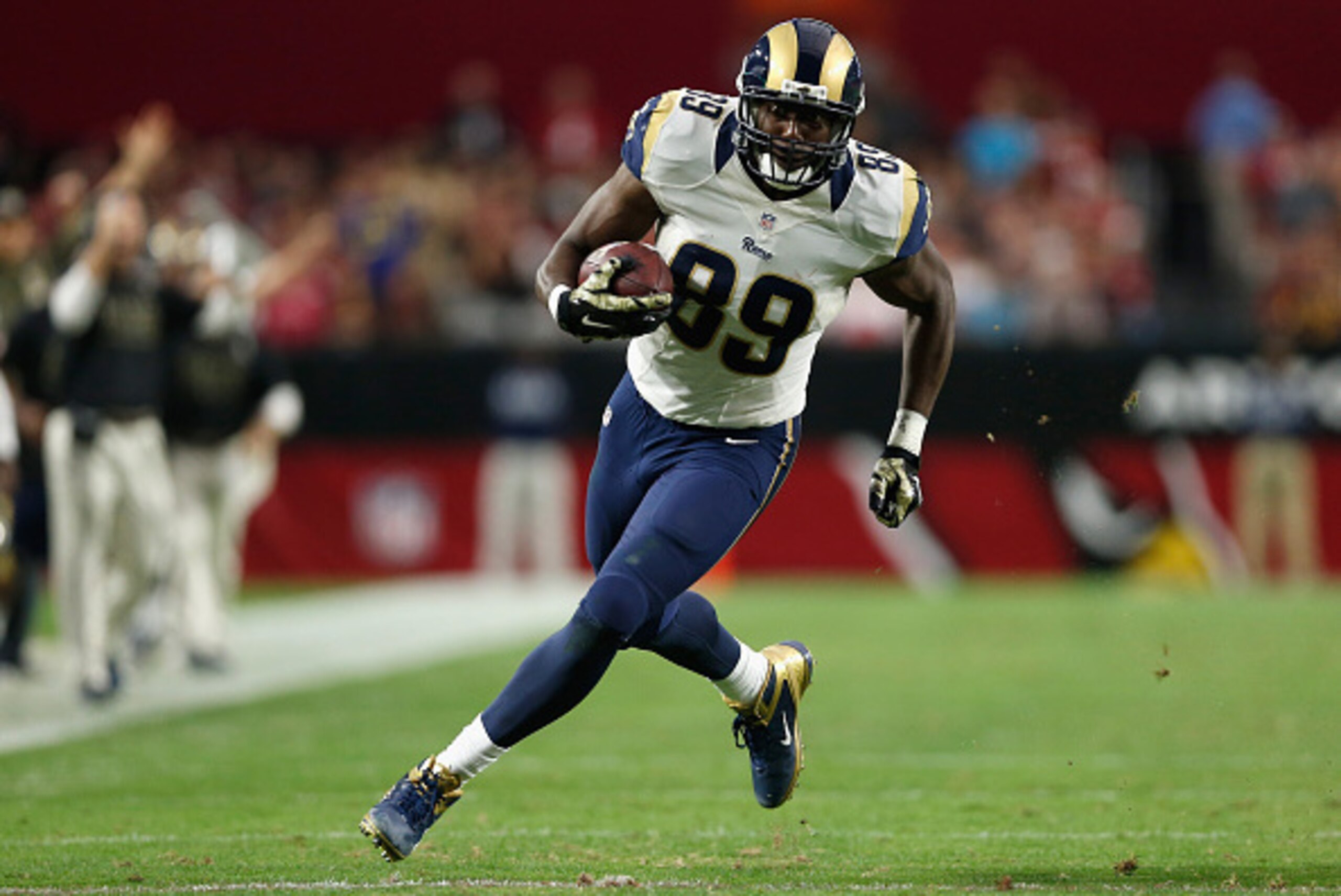
Given how much Coby Fleener destroyed Washington's coverage schemes last week, hauling in four catches for 127 yards and a pair of scores, Haslett can't let another roving tight end toy with his defense.
Fortunately, Haslett's group won't be the key to this game. Instead, events will be determined by McCoy and the offense.
There are plenty of big plays to be had against the Rams D, both on the ground and through the air. Making those happen will require protection and a smart game plan based on running to wear down linemen that treat the run as an afterthought on their way to quarterbacks.
All statistics via NFL.com, unless otherwise stated.
All screen shots courtesy of CBS Sports, Fox Sports and NFL.com Game Pass.



.jpg?w=2560 "Saquon Out for Game")