
10 Biggest Surprises of the 2014 College Football Season
Anyone who says they predicted even a few of the craziest things that have happened during the 2014 college football season is 1) a major fan of chaos and 2) probably lying.
The long offseason leaves plenty of time to guess what's going to happen during the fall, but while some things are easy to project—Nebraska will win nine games, Navy and Georgia Tech will run for a bunch of yards and at least one team ranked high in the preseason will fall way short of expectations—there will always be far more occurrences during the season that come as huge shockers.
The 2014 season was no different, as on a weekly basis something happened that had us all saying variations of "wow!" But looking at it from an overall perspective, here are the 10 biggest surprises of this season, ranked based on how unexpected they were either before the season or as the campaign progressed.
10. Playoff Excitement
1 of 10
The clamor for a playoff system in FBS has been going on for years, and we finally got it this season in the form of a four-team field chosen by a selection committee. Unlike the BCS, which for 16 years used a combination of computer rankings and polls to choose which teams would play for the national title, now it would be up to a group of (presumed to be) impartial decision-makers.
Some were thrilled with the change, others were skeptical. But as we head toward the final week of the regular season, with the semifinal pairings set to be announced on Sunday, it's hard to argue that the switch to a playoff has been anything short of thrilling.
"Not only has the regular season not been weakened, I think the months of October and November have gotten even better than they were before," Big 12 commissioner Bob Bowlsby, among those on the skeptical side coming in, told Jon Solomon of CBS Sports.
The near-weekly shifting of the top four teams in the committee's rankings since late October, as well as the shuffling of those waiting in the wings to step over a falling squad, has made it so that every game this season has drawn our interest and made us look even more forward to how the first-ever playoff will unfold.
9. The Next Great Mid-Major Program Flopped
2 of 10
Boise State has been the gold standard of teams outside the power conferences for more than a decade, a program that has been able to maintain success with fewer resources at its disposal while occasionally knocking off one of the big boys. Other schools have looked like they might be able to come close to what Boise has done but haven't been able to keep the run going.
The University of Texas - San Antonio had all the makings of a program that could become such a power, based on how quickly it had gone from a startup to one seemingly on the verge of a breakthrough. Located in a football-hungry region (San Antonio), with a championship coach (Larry Coker won the 2001 national title with Miami, Florida) and a roster that featured more than 30 seniors including 18 in their fifth year at the program, the Roadrunners seemed on the cusp of greatness.
USA Today called UTSA "college football's best startup" back in August, after it won 27-7 at Houston in its season opener. Since then, though, it has won only three of 11 games to finish with a program-worst 4-8 record.
Despite a veteran-laden roster, the Roadrunners scored 13 or fewer points in seven games and ranked 122nd out of 128 FBS teams in total offense.
8. Memphis' One-Season Turnaround
3 of 10
Every season features a few schools that go from really bad to pretty good in a short time frame. Last year, Tulane and Washington State ended long bowl droughts while Missouri went from 5-7 to the SEC East title game and Auburn played for a national championship a season after going 3-9.
The candidate list this year for best one-season improvement includes Arkansas, Louisiana Tech, North Carolina State and TCU, but none of those teams have gotten better as dramatically or as quickly as Memphis.
From 3-9 in 2013 to 9-3 this fall, the Tigers have clinched a share of the American Athletic Conference title, its first championship since winning the Missouri Valley Conference in 1971.
Coach Justin Fuente has overseen this turnaround in his third season, with Memphis' offense making the most significant improvements. Last year the Tigers averaged 19.5 points per game, and this fall they've scored 34.7 per contest, while their defense went from giving up 24.6 in 2013 to 17.1 this season, seventh-best in FBS.


7. South Carolina's Major Backslide
4 of 10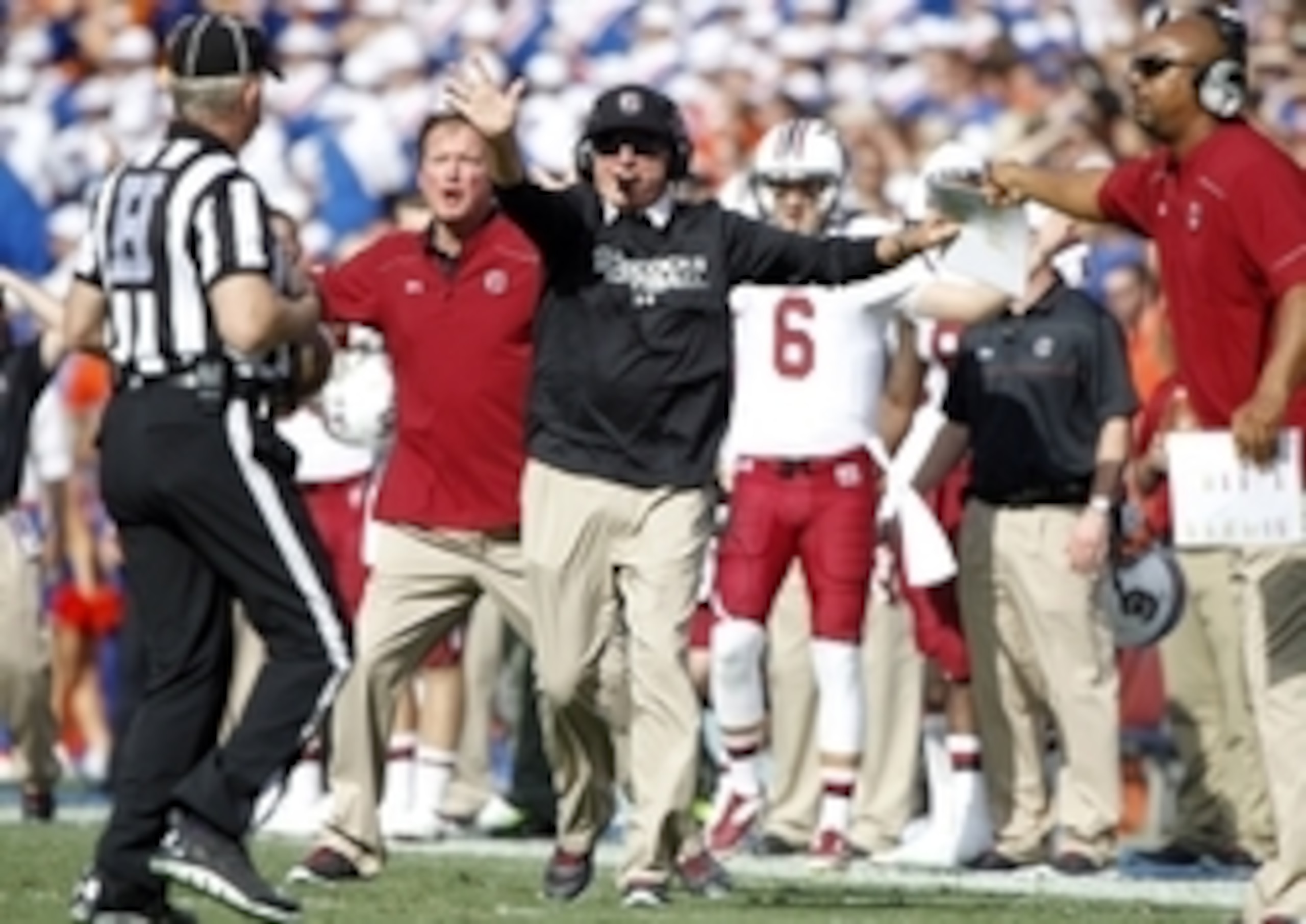
Just as there are one-season jumps, there are also single-year backslides. These are often easier to project, based either on graduation or coaching changes, both of which contributed to Vanderbilt going from back-to-back 9-4 seasons under James Franklin to a 3-9 campaign in Derek Mason's first year.
But the way South Carolina plummeted in 2014, going 6-6 after three consecutive 11-2 seasons, that wasn't on any prognosticator's radar.
Yes, the Gamecocks lost a lot of talent from last season, but that didn't stop voters in the Associated Press preseason poll from ranking them ninth. Maybe they should have, wrote Bleacher Report's Barrett Sallee earlier this week after coach Steve Spurrier confirmed he would return in 2015.
"When the best player in program history, the winningest quarterback in program history and the majority of the front four and secondary moves on, there are speed bumps. That's exactly where South Carolina found itself after star defensive end Jadeveon Clowney, quarterback Connor Shaw, defensive end Chaz Sutton and corner back Vic Hampton, among others, moved on after the 2013 season. For a program like Alabama, those rebuilding years are still 10-win seasons, as was the case in 2010. For South Carolina, though, they result in seasons like this. Inconsistency, uncertainty and frustration are inevitable.
"
Losing to good teams and beating the bad ones would have made South Carolina's struggles more understandable, but instead it beat Georgia two weeks after getting blown out at home by a Texas A&M that came into the season with far more question marks. The Gamecocks lost three times at Williams-Brice Stadium after entering 2014 with an 18-game home win streak, yet also won at Florida when the Gators were at their hottest.
6. The Rise and Fall of Kenny Hill
5 of 10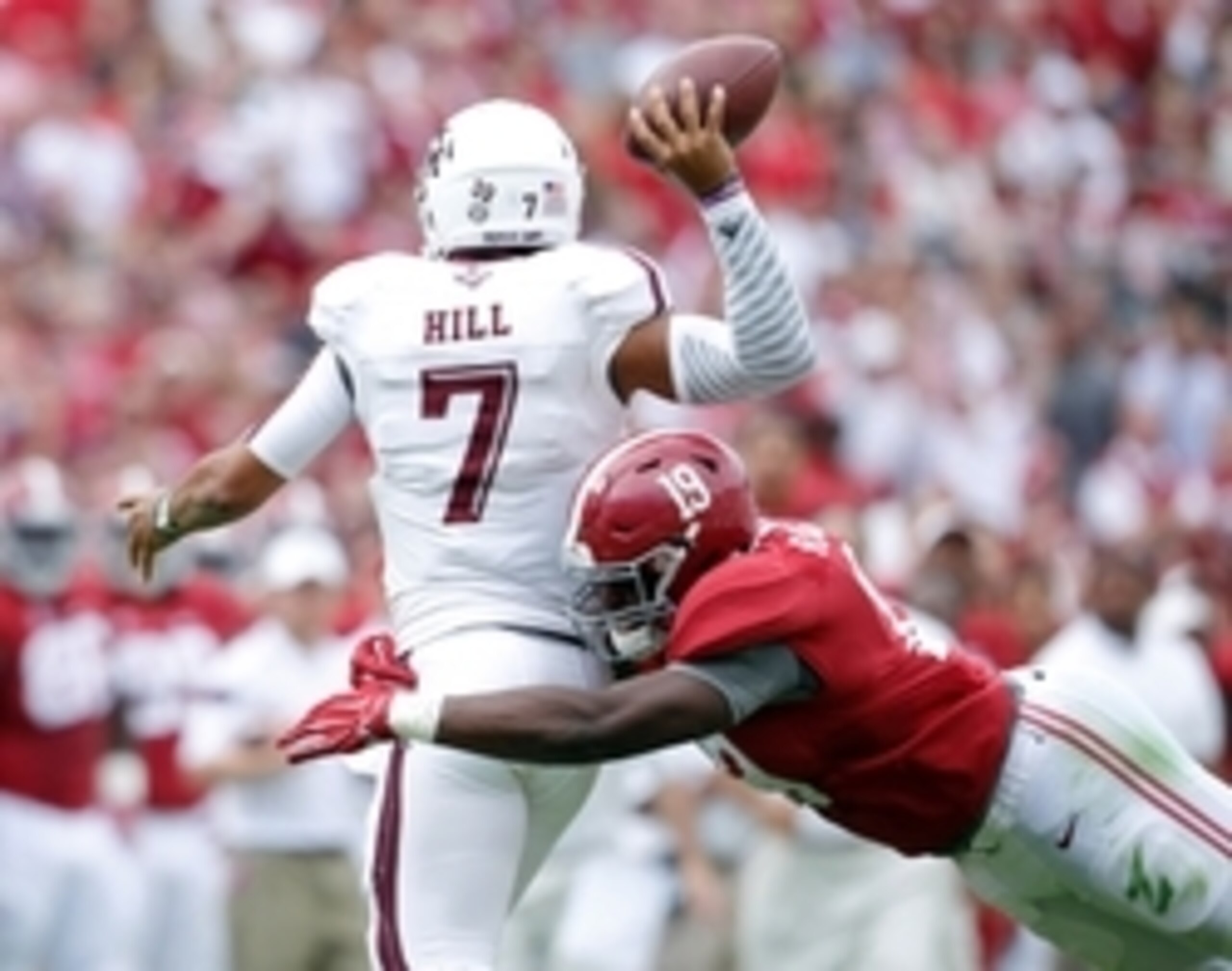
Oh, how quickly we forget.
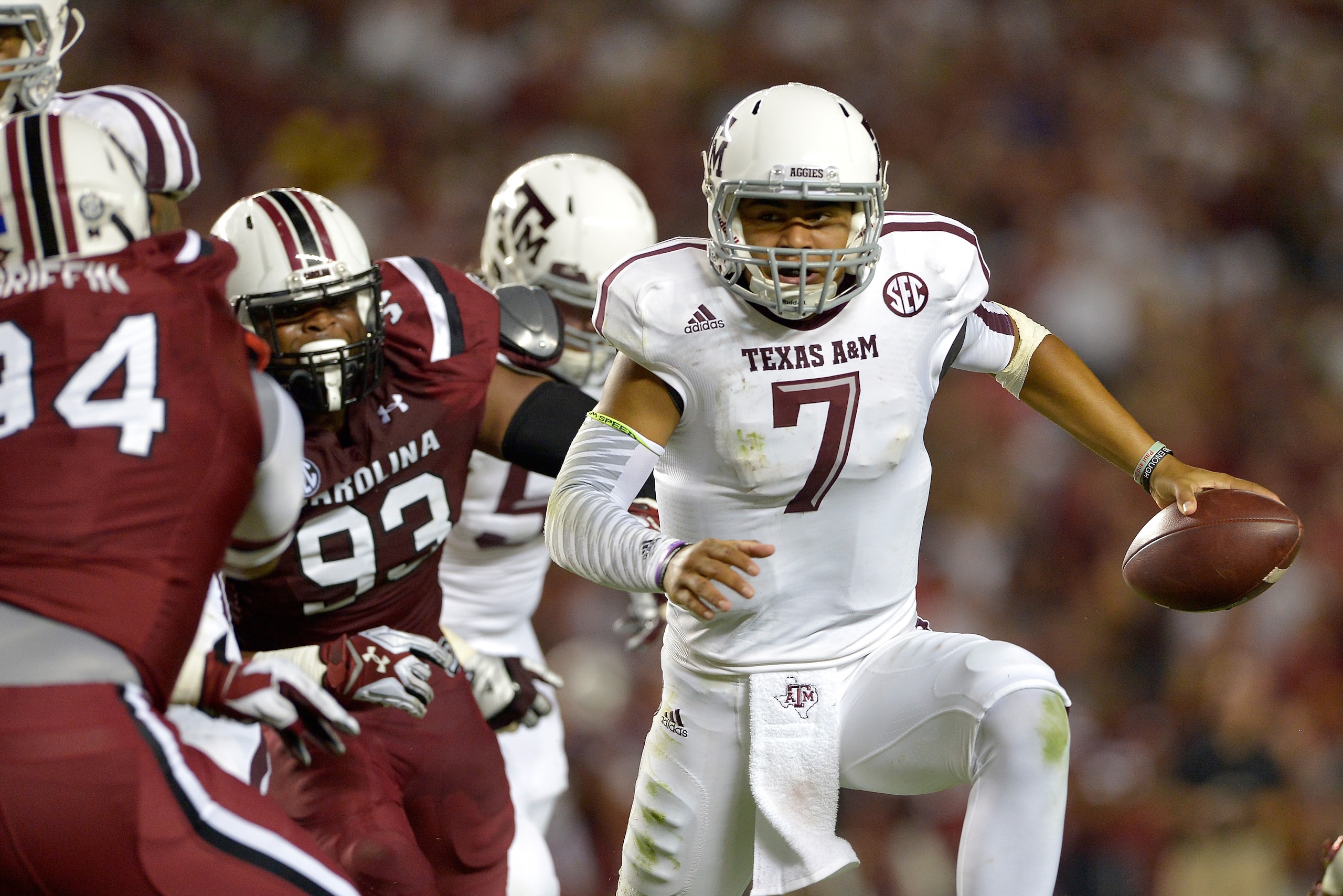
This sentiment applies to Texas A&M quarterback Kenny Hill in two ways. First, after he had one of the best first starts in recent history, throwing for a school-record 511 yards and three touchdowns at South Carolina, the sophomore was so quickly thrust into early Heisman talk that it was like no one remembered the Heisman winner (Johnny Manziel) he'd succeeded.
Johnny Football had been replaced by Kenny Trill, and the Aggies went from being considered a young team with a lack of experience and questions all over the defense to one that rocketed up the rankings.
And six weeks later, A&M began a major free-fall thanks to three straight losses, the last a 59-0 drubbing at Alabama, and before the Aggies' next game Hill had been suspended two games for "violation of team rules and athletic department policies." He hasn't played since, getting surpassed by true freshman Kyle Allen, who started A&M's final four games and presumably will be under center for the bowl game.
Meanwhile, there's no word on the status of the "Kenny Trill" trademark that Hill's parents filed for in September.
5. Trevone Boykin's Emergence
6 of 10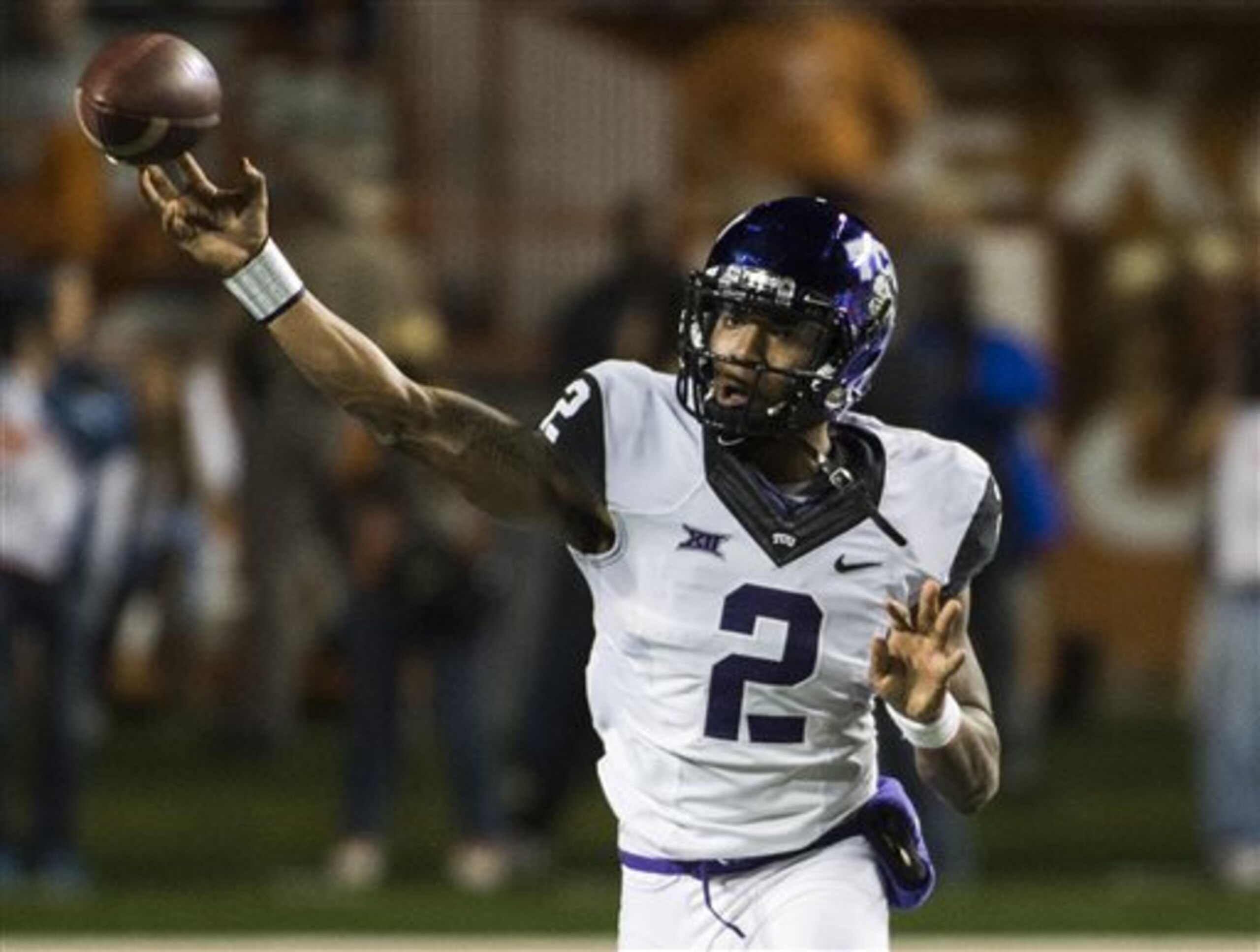
We're on the cusp of awards season, the time of year in college football when numerous organizations hand out trophies and plaques for the best individual players in the country at pretty much every position as well as the top overall offensive and defensive stars. There's also hardware for the top coaches, the best former walk-on and most inspirational player.
If there was an award for Most Improved Player—surprisingly, there isn't—it would have to go to TCU quarterback Trevone Boykin, who more than anyone else deserves credit for the amazing season the Horned Frogs are having.
Boykin, a junior, became a man without a position toward the end of last season. He started at quarterback, running back and wide receiver as TCU looked to utilize his skills and athleticism.
"For parts of two seasons, Boykin has alternated between making impressive, tough plays and struggling with the mundane," Bill Connelly of SB Nation wrote in July. "He still has time to live up to the promise at which he sometimes hints, but the odds are decent that he ends up spending much of his time at wideout in 2014."
New coordinators Doug Meacham and Sonny Cumbie kept him at quarterback this fall, though, and that decision has paid off in spades.
Boykin has thrown for 3,264 yards and 26 touchdowns while adding 598 rushing yards and eight scores. In the previous two seasons he accounted for 4,186 yards and 32 TDs.
4. Notre Dame's Late-Season Free-Fall
7 of 10
Notre Dame came into 2014 with high hopes internally but tempered expectations from outside the program. Coach Brian Kelly had won everywhere he'd been, including getting the Fighting Irish into the BCS title game after the 2012 season, but now his team was replacing both coordinators, several defensive playmakers and appeared to be putting a lot of faith in a quarterback who missed the previous season because of an academic suspension.
Yet Everett Golson's play through the first two months of the season made it seem like, despite all the red flags and warning signs, this season could be one of destiny for Notre Dame. Even after losing in the final seconds at defending national champion Florida State in mid-October, it appeared to be a legitimate playoff contender based on how the year had gone to that point.
The Fighting Irish now sit at 7-5, having lost four straight to end the season for their worst streak since 2009, the final year of the Charlie Weis era.
A 7-5 record likely fell in the range of predictions for Notre Dame before the year began, but how that mark was achieved was quite surprising.
3. No Record Is Safe
8 of 10
The old adage that records are meant to be broken gets bandied about whenever a high-profile feat is accomplished, especially if it's one that stood for a long time. Then we laud the breaker of the record and often declare it will be an achievement that won't soon get matched.
That wasn't the case with one of college football's most amazing individual single-game records, as in the span of one week in mid-November LaDanian Tomlinson's 15-year-old rushing mark was topped twice.
First it was Wisconsin junior Melvin Gordon, who needed only three quarters on Nov. 15 to rush for 408 yards against Nebraska and surpass Tomlinson's 406-yard output. Then, on Nov. 22, Oklahoma freshman Samaje Perine went for 427 yards against Kansas, though he needed a few minutes of the final period to get there.
Earlier in the season, Washington State senior quarterback Connor Halliday threw for a single-game record 734 yards against California to outdo the 716 yards that Houston's David Klinger passed for in 1990. The closest anyone came to Halliday's mark after that was 601, ironically by the player who replaced Halliday (redshirt freshman Luke Falk) after he was lost for the season with a leg injury.
2. Worst Loss of 2014: Missouri Falls at Home to Indiana
9 of 10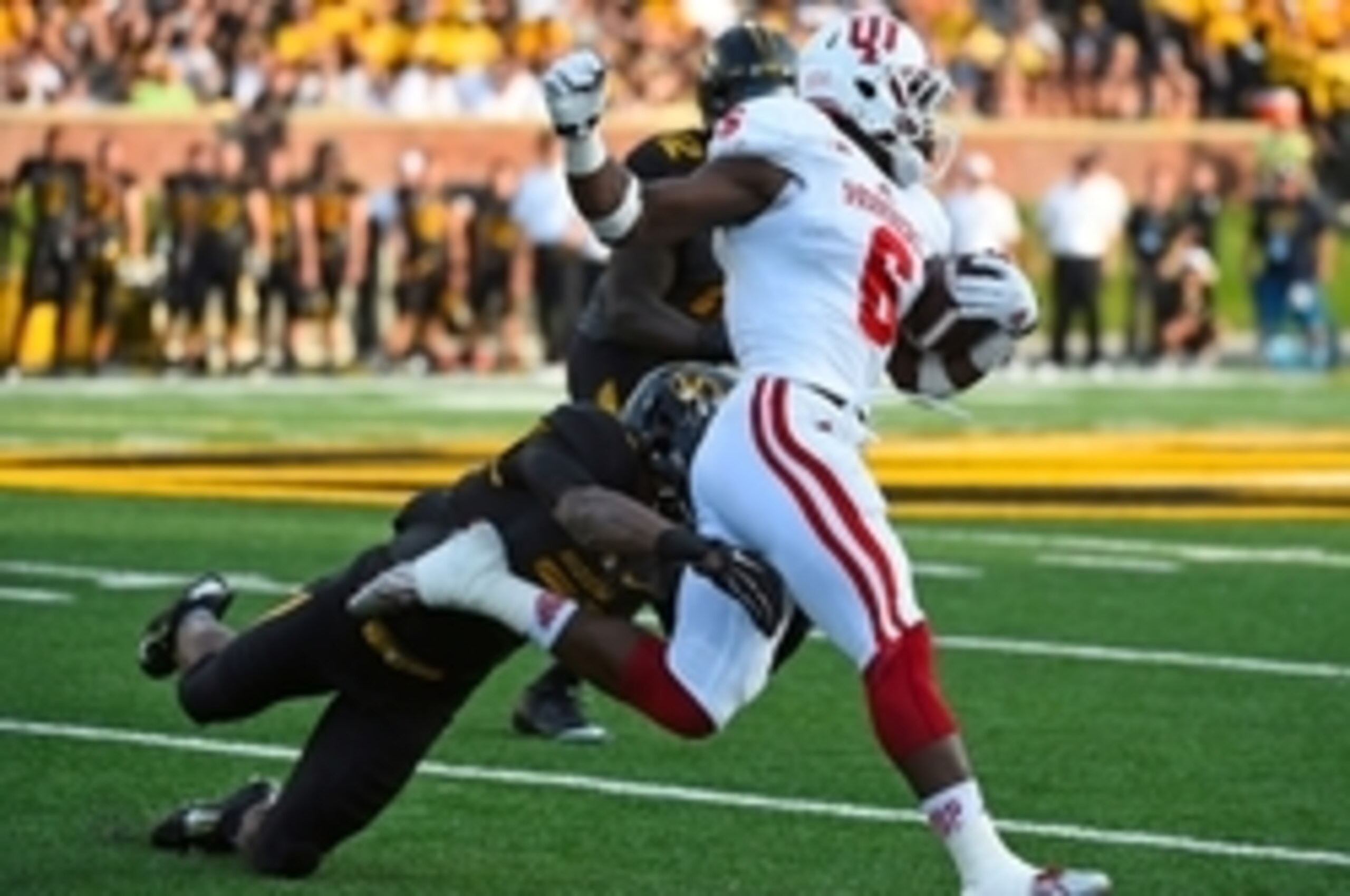
For those not familiar with the idea of the transitive property, it goes something like this: If A is greater than B, and B is greater than C, then by rule A must be greater than C.
This is a match concept, yet it gets brought up a lot in sports, especially when an unexpected result or performance occurs. And it's been cited countless times since the 2014 season's most unexplainable upset, when Indiana won at Missouri, 31-27, on Sept. 20.
Indiana was coming off a 45-42 loss to Bowling Green of the Mid-American Conference, while Missouri was 3-0 with impressive wins at Toledo and against 2013 Cinderella team UCF.
The Hoosiers would end up going 4-8, losing seven of nine after going into Columbia and pulling off the shocker. Mizzou would only lose once more (also at home, albeit to Georgia) and claim a second straight SEC East Division title as well as a matchup Saturday against No. 1 Alabama in the conference championship game.
In terms of the transitive property, though, it goes like this: Indiana beat Missouri, which beat Arkansas, which beat Ole Miss, which beat Alabama, so Indiana must be better than Alabama.
1. Nebraska Hires Oregon State's Mike Riley
10 of 10
If this list were published even a day earlier, that Indiana-Missouri anomaly would have gone down as the biggest surprise of the 2014 college football season. But thanks to the craziness of the coaching carousel, we got some stunning news Thursday that went to No. 1 with a bullet.
Just days after firing Bo Pelini despite having won in overtime at Iowa on Friday to log his seventh nine-win record in as many seasons, Nebraska announced it had hired Oregon State's Mike Riley as its next coach. To say that development caught everyone off guard would be a candidate for understatement of the year.
"I'm not sure anybody saw this coming," wrote Steven M. Sipple of the Lincoln Journal Star.
Since Pelini was let go, dozens of names had been mentioned as possible candidates for the job, but Riley was not one of them. Instead, athletic director Shawn Eichorst kept his search quiet, something that might have been made easier by the fact that Florida's courtship (and eventual hiring) of Colorado State's Jim McElwain had been so out in the open at the same time.
Follow Brian J. Pedersen on Twitter at @realBJP.
.jpg?w=2560 "Jaguars Colts Football")
.jpg?w=2560 "Malik Beasley Negotiating Plea Deal (AP)")
.jpg?w=2560 "Aikman Blasts Cowboys WR 🫣")

.jpg?w=2560 "Jonathan Taylor Landing Spots")