Rebuild Mode Would Be Empty Exercise for New York Knicks This Season
Of the scant few luxuries the New York Knicks enjoy, an ability to rebuild without regard for 2014-15 is not among them.
Impatience has often been cited as the force behind their transition-allergic rituals. The fans wouldn't stand for it; the Knicks organization itself was above it. The closest this team recently came to a conventional rebuild was under Donnie Walsh, when he scraped and clawed and pinched pennies in anticipation of a 2010 spending spree.
Even then, though, the term "rebuild" felt taboo. Draft picks were still viewed as trade assets, as a means to a swift turnaround (see: Carmelo Anthony acquisition). Cap space was the team's primary building block (see: Amar'e Stoudemire signing).
TOP NEWS
Giannis' Warning to NBA ⚠️

NBA Power Rankings Entering Preseason 🔢
Wizards Guard Admits Tanking 😨
After years defined by more of the same—plus a couple playoff berths—in came Phil Jackson last season, the man with a plan and system, preaching patience and process. And now, with the Knicks cemented in the throes of the transition they initially tried to avoid, a more traditional rebuild almost feels right.
But, for these Knicks, it's still wrong.
The Case for Rebuilding
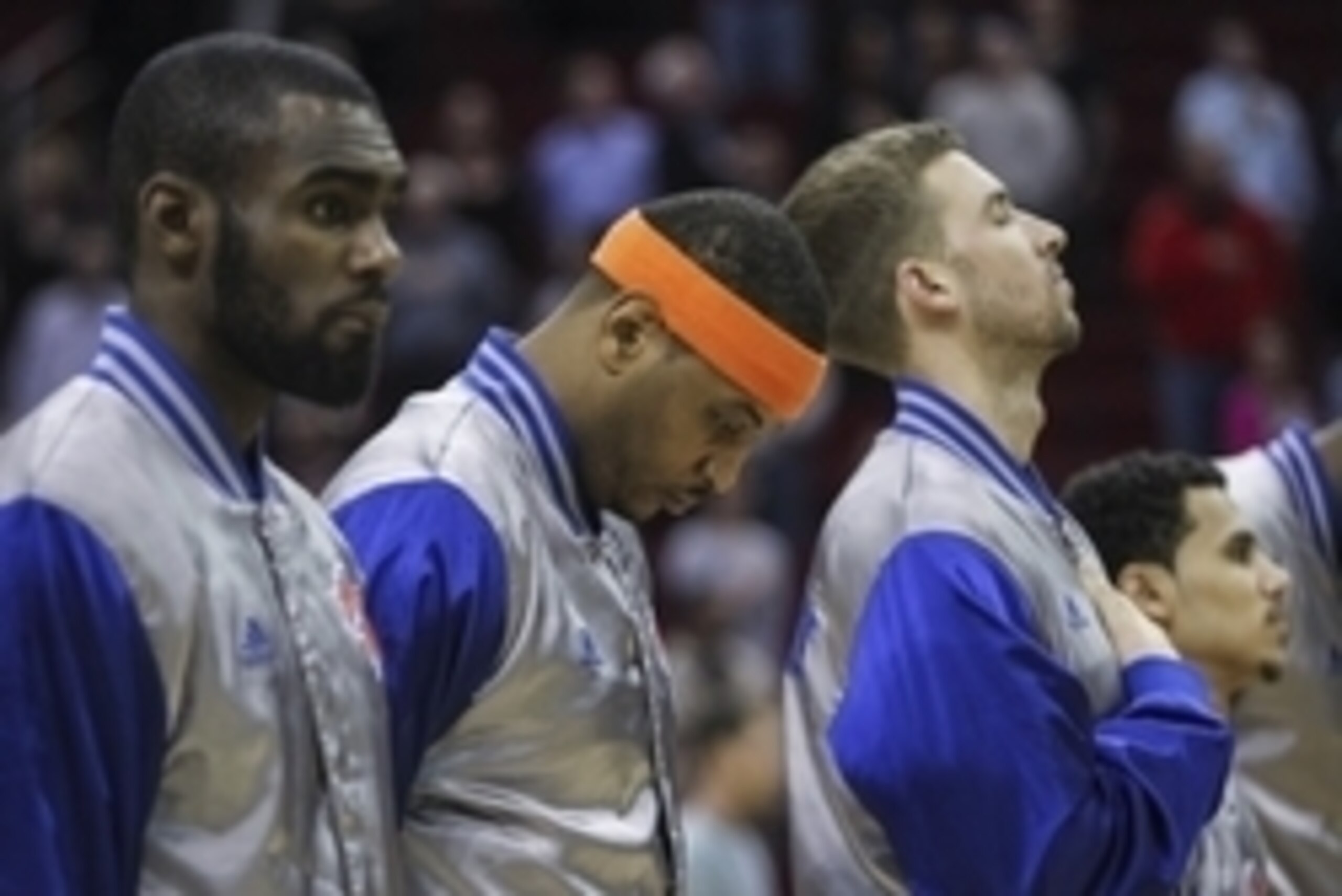
One season after bending to the will of a poorly put together and managed roster, the Knicks are playing like a team that would benefit from forgetting about this year entirely.
Offensively, they've been middling at best as they try to master the famed triangle system. The ball movement is there—they rank second in passes per game—but more than 40 percent of their shot attempts come from mid-range, and they rank 19th in efficiency.
"Perhaps the most noticeable: In part because of where the triangle offense is activated from," wrote The Wall Street Journal's Chris Herring, "the team’s shot selection has been heavily dependent on mid-range jumpers—shots that, in today’s NBA, are viewed as inefficient and undesirable when compared to a three-pointer or a close-range attempt."
Defensively, they've been even worse.
There's an obvious focus on guarding against point-blank opportunities. The Knicks collapse on every single dribble-drive and form of penetration, which, despite the absence of a true shot-blocker, has them ranked in the top 10 of opponent field-goal percentage in the restricted area and paint.
This interior-centric model comes at the expense of perimeter protection, though. The Knicks rank 29th in three-point prevention and find themselves with a bottom-five defense overall. And this, in turn, has left them dwelling within the Eastern Conference's basement.
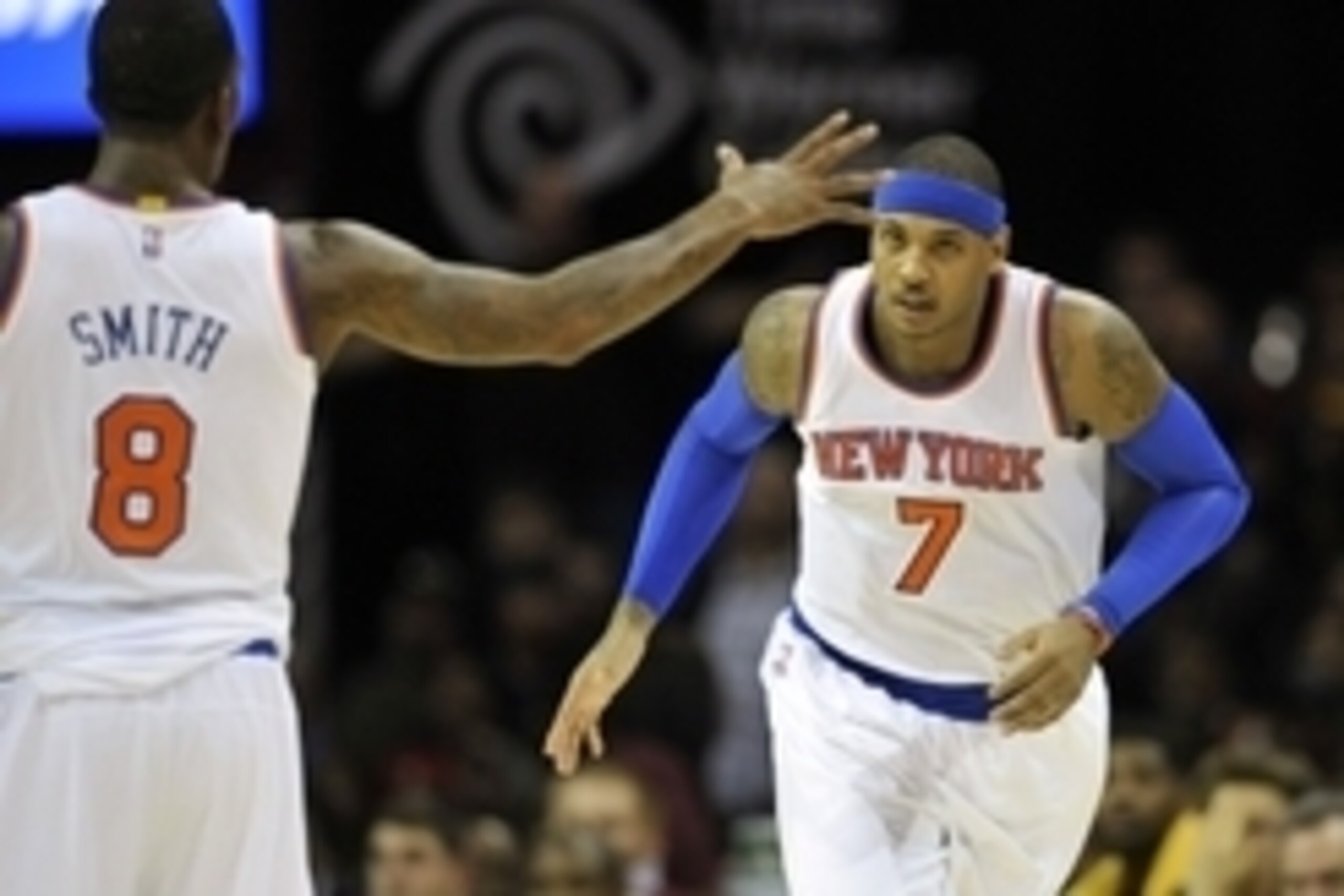
Nine of the East's 15 teams own sub-.500 records. These Knicks have also faced the league's easiest schedule to date.
They're 4-11 and have won just twice in their last 12 games.
Now, then, would seem as good a time as any to hit reset.
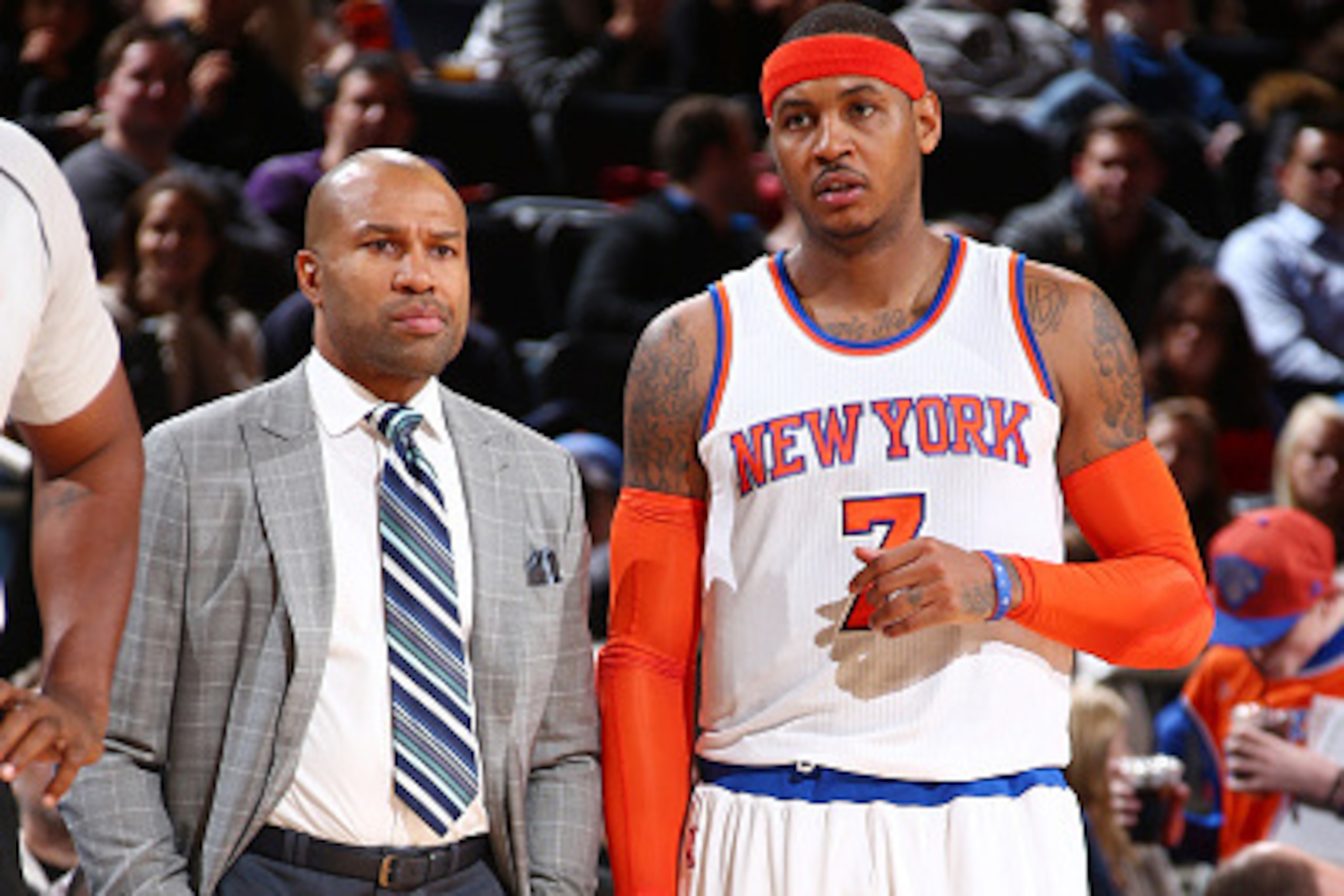
Five of the Knicks' next nine tilts come against Western Conference teams; Anthony is suffering back spasms that will keep him sidelined for an undisclosed period of time, according to Newsday's Al Iannazzone; and J.R. Smith is talking about milking the offensive talents of a 32-year-old Amar'e Stoudemire, who is at least three years removed from shouldering such expectations:
To top it all off, the Knicks actually own the rights to their own first-round pick. This isn't last year, when a lottery finish is tainted even further by another team reaping the draft-day gravy. They can rebuild freely, without worry, knowing a consolation prize awaits.
Except that consolation prize—along with the process by which it's earned—remains relatively meaningless.
The Futility of Rebuilding

Fully blown rebuilding won't look much different, for starters.
For all the changes Jackson has made, the Knicks are still barren of youth to evaluate, an integral ingredient of any rebuild. Most of the roster is a makeshift mold. Short-term and expiring contracts reign supreme as the team prepares to enjoy significant financial flexibility in the coming summers, per ShamSports.
What few young pieces the Knicks do have aren't worth the price of rebuilding. Declining to pick up Shane Larkin's option for next season renders him another placeholder. They can still monitor his development, but positive play stands to drum up his market value, costing the Knicks valuable cap space they're unlikely to forfeit. Rookie Cleanthony Early has been touted as a second-round steal, but he's sidelined with a knee injury.
Quincy Acy is more energy than skill. While he's only 24, he's incredibly foul-prone and has neither the offensive nor defensive chops to warrant extensive looks. Travis Wear, also 24, continues to earn consistent playing time against all odds. But coach Derek Fisher's minutes management provides little long-term insight, and Wear is not of the "Worth Rebuilding For" ilk.
Iman Shumpert (24 years old) and Tim Hardaway Jr. (22) are the only developing prospects who fit into the rebuilding schematic. Yet teams don't enter restoration mode for two players—especially when one of them remains an enigma.
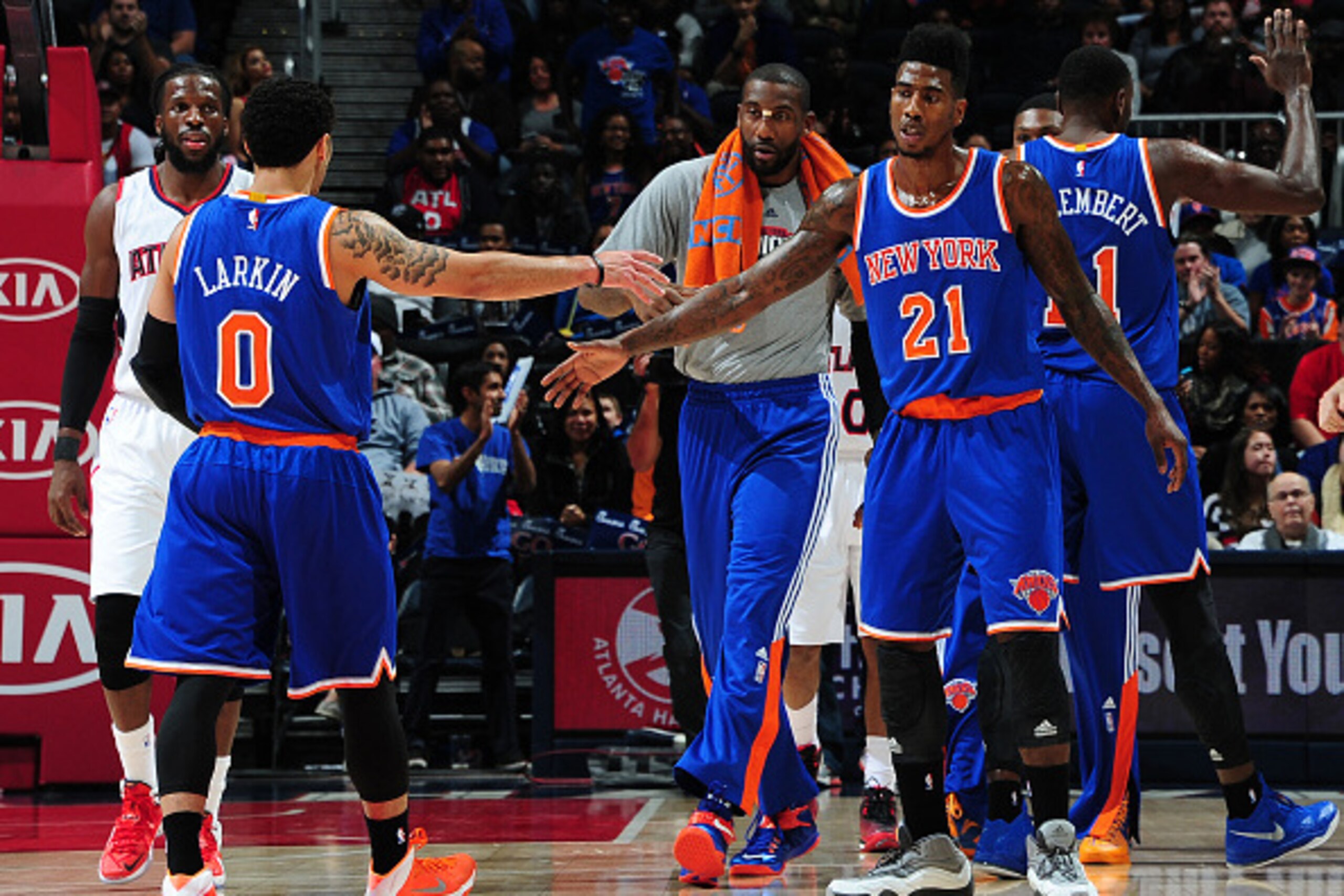
"Amid a heaping dumpster of old players, big contracts, and forfeited draft picks," wrote KnickerBlogger.net's Jonathan Topaz, "Shumpert for the last three years has been a brilliant but fleeting hologram—a young, homegrown, wildly athletic two-way player whose injury problems and maddening inconsistency make you wonder if your talent-starved eyes have been deceiving you the whole time."
Despite a hot start to 2014-15—during which he's averaging career highs in points (11.6), field-goal percentage (45.9), three-point percentage (44.2) and player efficiency rating (15.4)—the Knicks have seen enough of Shumpert to know he's no cornerstone. Even if he were, the time to delve deeper into this experiment isn't now, when he's tracking toward restricted free agency and a major raise.
All the Knicks have, at best, is Shumpert and Hardaway. There aren't enough other developmental parts or permanent pieces lying around to hand major minutes. There are only veterans like Anthony and Smith, and expiring pacts like Stoudemire and Andrea Bargnani.
And the Knicks have modeled their future plans accordingly.
Cap space remains their greatest building block. Assuming they don't take on any more sizable contracts, they'll have the means to create space for another max superstar.
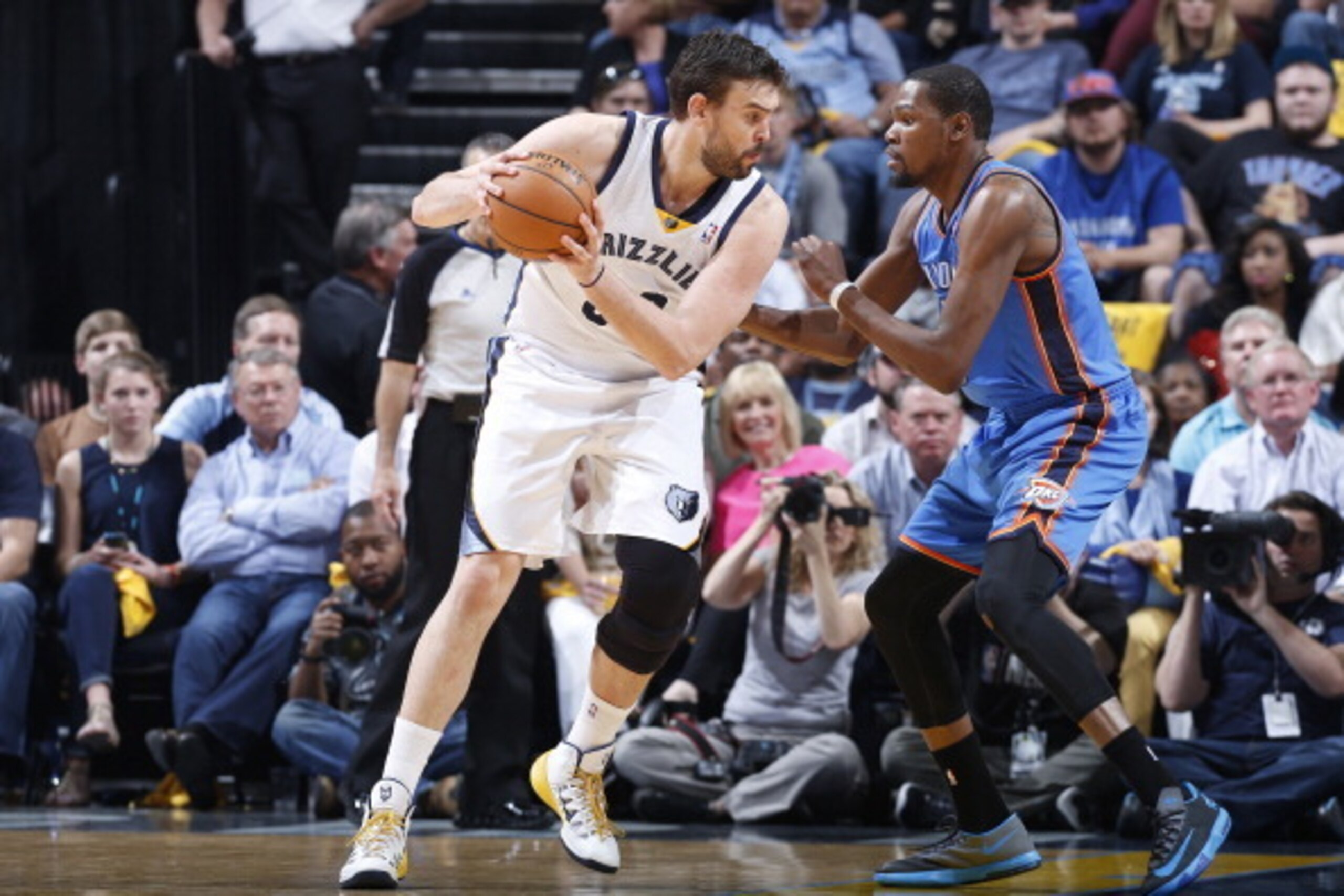
Reports are already surfacing about whom they'll pursue, too. Marc Gasol, an ideal fit for Jackson's triangle offense, is on their radar, per the New York Daily News's Frank Isola. Other stars such as LaMarcus Aldridge, Goran Dragic, DeAndre Jordan and, perhaps, Kevin Love will be available as well.
There's also the matter of the projected salary-cap eruption and Kevin Durant's free agency in 2016. Jackson has not shied from admitting the Knicks intend to explore every avenue—like the aforementioned—of quick and substantial improvement available to them.
"Carmelo took less money—even though it seems rather minuscule—but it's enough for us to have flexibility in the coming year," he said in October, per ESPNNewYork.com's Ian Begley, "and then as the years go on the pie's going to get bigger, things will happen."
Draft picks—however high, however promising—won't help the Knicks entice top-flight free agents. There is no New York-bred LeBron James barreling toward the open market, preparing for a return borne out of deep-seated loyalty and obligation.
Wins and playoff berths mean more than picks and even market size. The Gasols and Durants won't be seduced by Jackson's mystique or Anthony's presence alone.
Preceding results and security—in the form of postseason contention—will mean more.
Sticking to the Plan

The quickest way for the Knicks to rebuild in their own, abbreviated way is by being as good as possible, as quickly as possible. Their slow start does nothing to justify otherwise. If anything, it's only increased the urgency behind playing up to snuff.
They, along with the rest of the conference, see the cost of rebuilding in the East: uncertainty. Unpredictable, unmanageable uncertainty.
Rebuilding teams are at the mercy of turbulent competition. Projected playoff contenders like the Knicks and Detroit Pistons are doldrums-dwelling. Transitioning teams like the Milwaukee Bucks, Orlando Magic, Boston Celtics and injury-ravaged Indiana Pacers find themselves within striking distance of the playoff picture.
Only the Philadelphia 76ers are definitively equipped to rebuild through the draft. They're last-place locks. If a team wishes to go draft-pick fishing, they're the standard. As ill-fated as the Knicks seem, they're not ready to meet those standards.
"We're here with him," Smith said of Anthony's injury, per Iannazzone. "We just have to figure out a way to do it without him.''
Playing in the Eastern Conference lends immediate hope to that being possible. Botched beginnings and all, the Knicks are still only 2.5 games back of the final postseason spot, a familiar place promising a familiar battle—one they waged all of last year, to the bitter, disappointing end.
That battle isn't worth giving up now. The young pieces aren't there to condone it; the means to rebuild or tank aren't there to facilitate it.
Competing makes more sense. Modifying the offense to resemble a modern-day attack and hoping against hope the defense improves makes more sense.
Trying to survive without their lone superstar is the closest the Knicks should ever come to truly rebuilding this season. Actual restructuring comes later—cash in hand, free agents in sight, hope in bloom—when the process by which they can rebuild isn't totally futile.
*Stats courtesy of Basketball-Reference and NBA.com unless otherwise cited and are accurate as of games played on Nov. 25, 2015.
.jpg?w=2560 "Every Trade's Best Trade Asset 🔁")
.jpg?w=2560 "Insiders: Cowboys Overpaid for Porter")
.jpg?w=2560 "Top NFL Trade Targets")