Red-Zone Woes Crippling 49ers' Inconsistent Offense
The San Francisco 49ers can't seem to find paydirt in the red zone.
What is going on here?
The offense was supposed to be an upgraded element of a team with nothing less than a Super Bowl championship in its sights, but 2014 has revealed anything but.
TOP NEWS
Bears' Santos Wanted to Kick 58-Yarder
Picking Each NFL Division Winner 🔮
.jpg?w=2560)
B/R's Expert Week 7 NFL Picks 🔮
At no other point has this deficiency revealed itself more than within the opponent's 20-yard line.
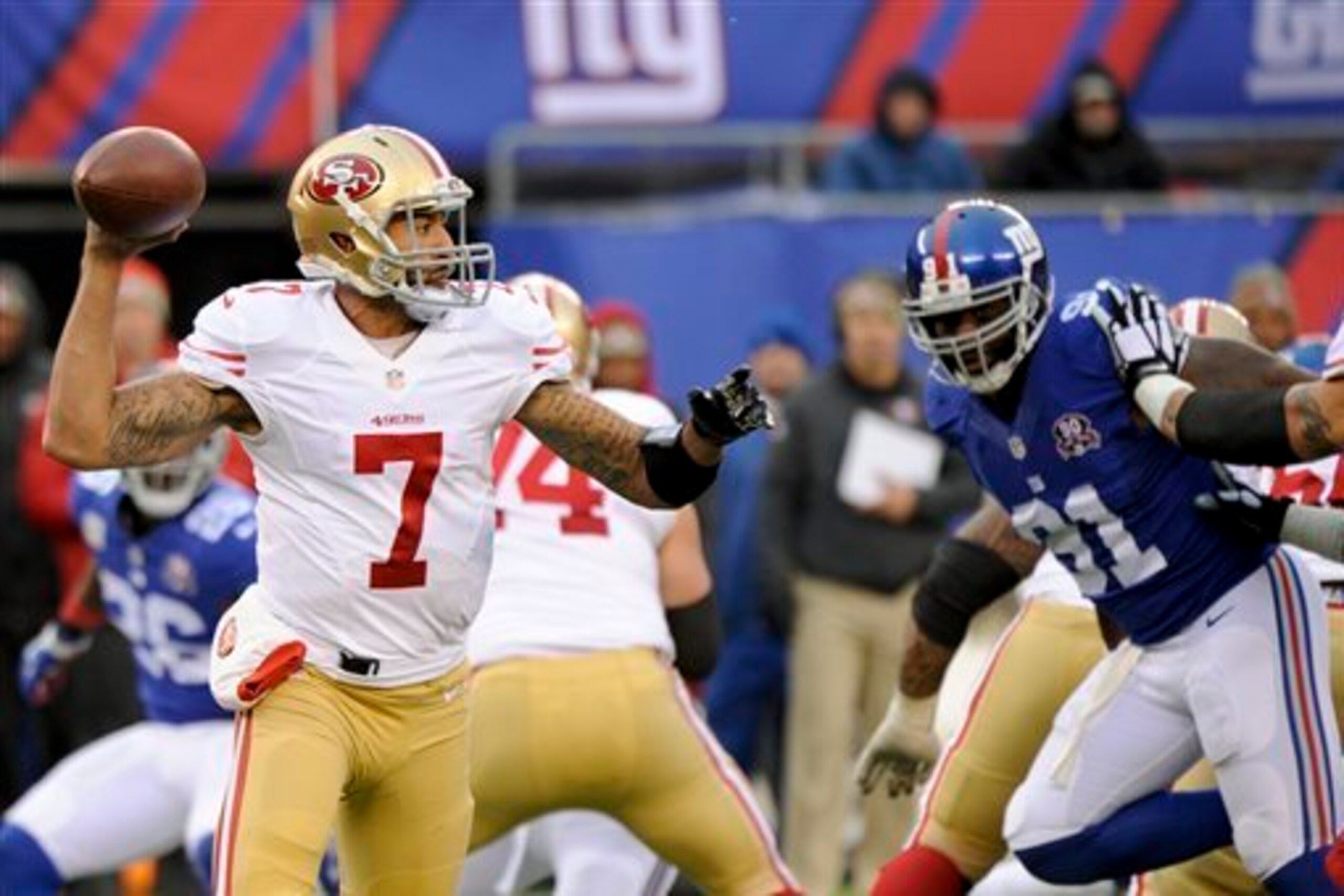
Anyone who might have thought otherwise was reminded of such during the 49ers' 16-10 victory over the New York Giants in Week 11.
The 49ers moved into the red zone four times in Sunday's win, but they came away with zero touchdowns from inside the 20.
Even more disturbing is the fact that San Francisco forced five interceptions during the contest yet was able to muster just three points off the turnovers.
Five turnovers should have been enough to give the 49ers a decisive victory. But the Giants were just one score behind in the waning minutes of the fourth quarter, requiring a goal-line stand and a defensive pick by linebacker Chris Borland to thwart the second-to-last Giants drive.
The above paragraph illustrates what the red-zone problems—and offensive struggles in general—are doing to San Francisco's chances. The 49ers defense is forced to hold on to leads late into games.
Sometimes this works, but considering San Francisco's first-team offense has yet to score a fourth-quarter touchdown, one can only wonder if the defense can bail out the 49ers each and every time in a context where every victory is vital to San Francisco's playoff chances.

Breaking Down the Numbers
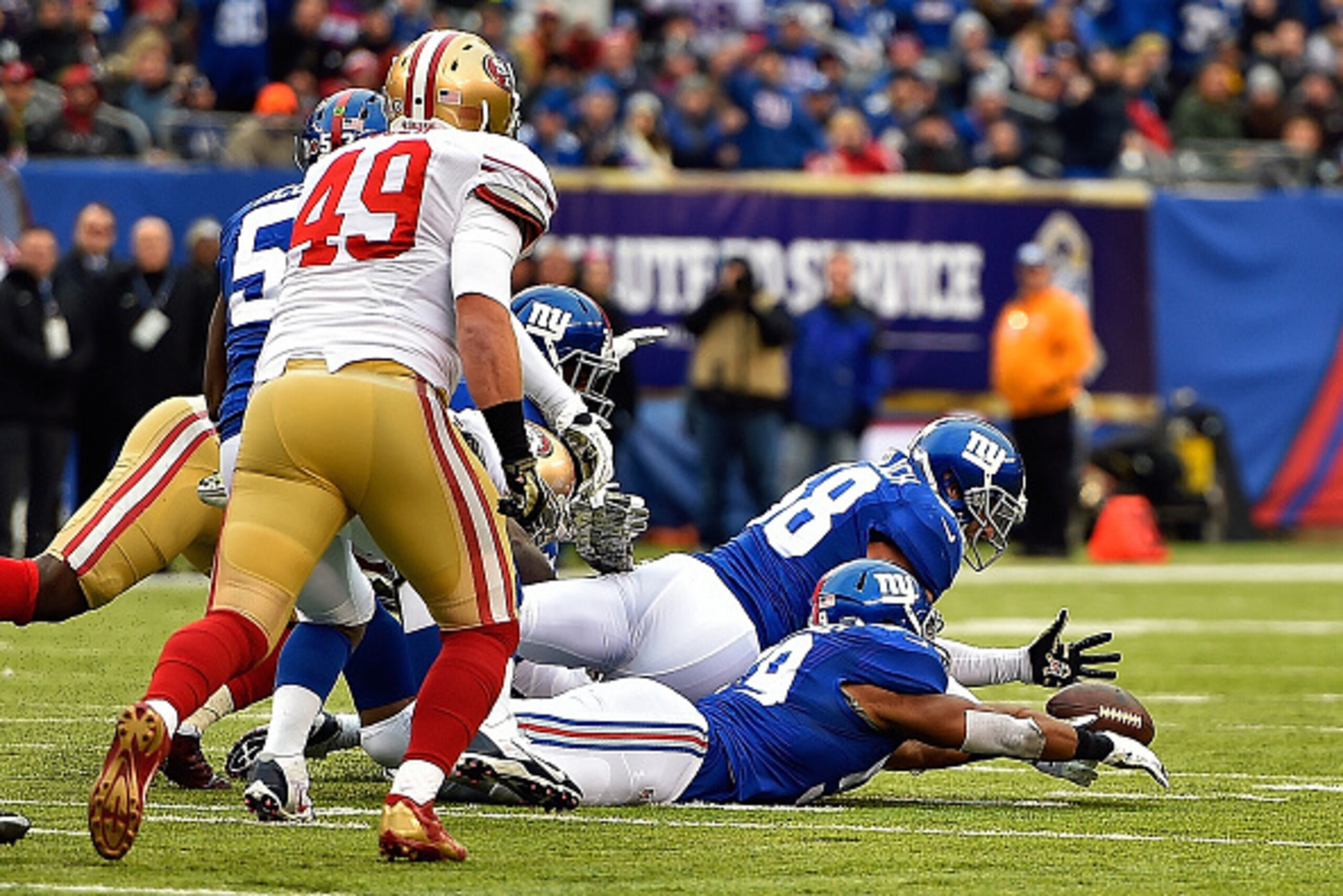
Two of the 49ers' four trips inside the red zone on Sunday ended in Phil Dawson field goals. San Francisco's first red-zone possession ended up producing a fumble by running back Frank Gore—his first of the season, and one that was subsequently recovered by New York.
San Francisco's final red-zone trip came at the 29-second mark of the fourth quarter. Quarterback Colin Kaepernick simply had to kneel to give the 49ers a victory.
We can give a pass on the final attempt given the situation, but the lack of execution in the other appearances points out a major problem.
The 49ers have scored just 13 touchdowns in 33 appearances in opponents' red zones this season per Doug Williams of NBC Bay Area—good for a whopping 39.4 percent, which ranks No. 31 in the NFL.
Here is a further breakdown of the 49ers' field-position splits, provided by Pro-Football-Reference.com:
| Own 1-10 | 4.20 | 3.8 | 4.0 | 66.7 |
| Own 1-20 | 5.55 | 5.6 | 4.1 | 60 |
| Own 21-50 | 8.59 | 5.3 | 8.1 | 62.2 |
| Opp. 49-20 | 5.63 | 4.2 | 7.6 | 73.7 |
| Red Zone | 3.47 | 2.5 | 3.4 | 57.9 |
| Opp. 1-10 | 2.88 | 2.1 | 3.3 | 71.4 |
Two stats jump out from this chart: completion percentage and average rushing yards per attempt.
San Francisco is completing just 57.9 percent of passes within the 20-yard line. Removing quarterback Blaine Gabbert from the equation, Kaepernick's red-zone completion rate is 60.71 percent—second lowest behind his attempts from the 49ers' own 21-50-yard lines (60.54).
Running the ball has also been a red-zone problem. The 49ers are generating just 2.5 yards per carry inside opponents' 20-yard lines, and the number drops to 2.1 when running the ball inside the 10—numbers far lower than at any other field position.
Teams do stack up against the run in red-zone situations. Whether or not this led to Gore's fumble is debatable, yet the 49ers veteran back was quick to take the blame, via Paul Gutierrez of ESPN.
"We’ll watch the film and try to clean up what we’re not doing in the red zone," Gore said. "I hurt us on the fumble in the red zone and that could have been, if not seven, that could have been three points."
But the general lack of efficiency is a cause for major concern.
"Per ESPN Stats & Info, the 49ers posted minus-10.8 expected points added in the red zone Sunday, the fifth-worst total by any team this season," Gutierrez noted.
Overall, the 49ers' offensive woes have been a major issue this season. While San Francisco is ranked No. 7 in rushing at 124.8 yards per game per StatMilk.com (subscription required), the passing game has generated an average of just 218.0 yards per contest, which ranks 23rd.
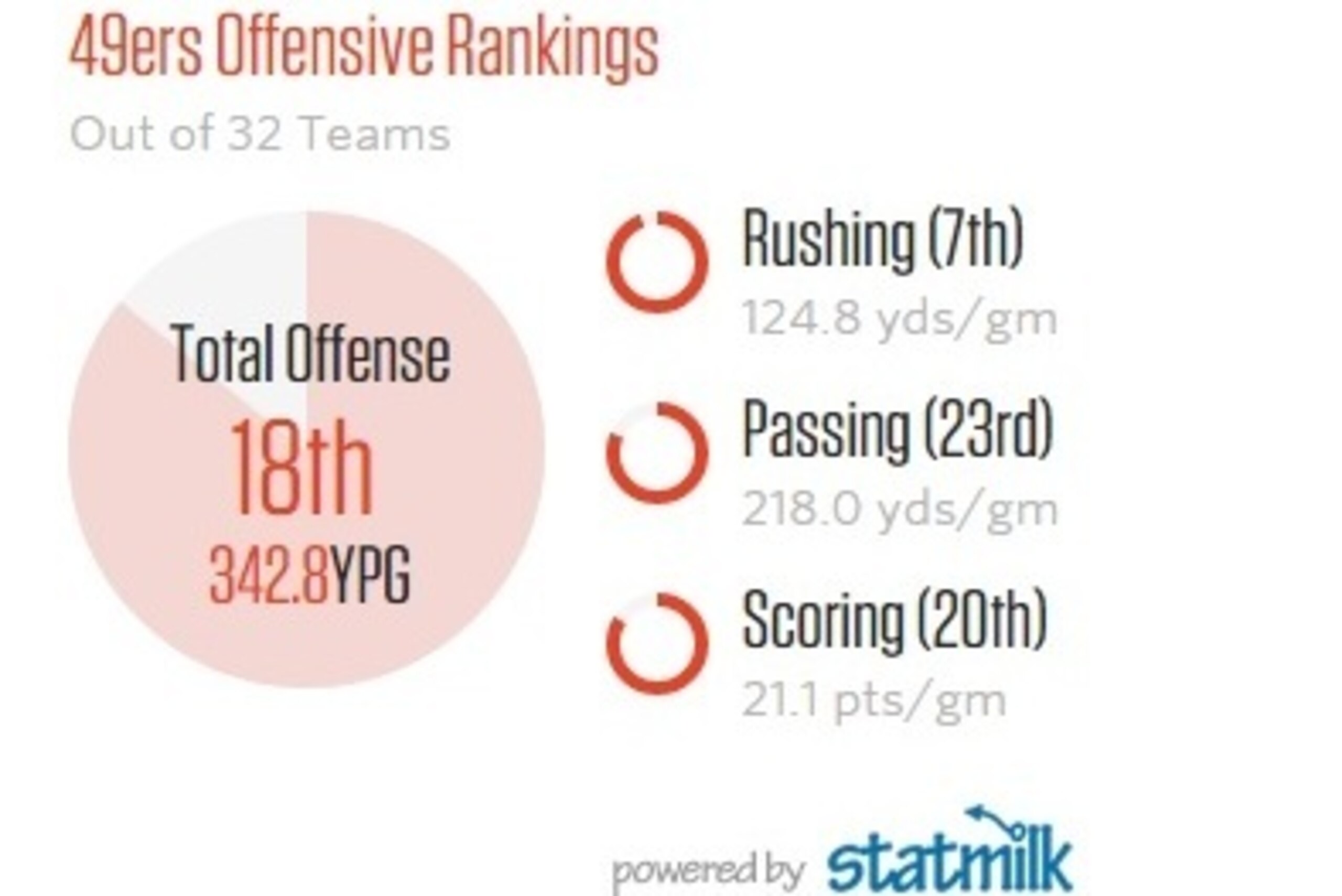
Averaging 21.1 points per game also ranks low—20th-best in the league.
Breaking Down the Film
Gore stated the need to watch the film and see what the offense is doing wrong.
Let's start with Gore's fumble on the opening 49ers possession. The play starts at the 9:16 mark of the first quarter—a position in which San Francisco found itself on New York's 16-yard line on a 1st-and-10 play.
Gore is lined up behind Kaepernick. Note fullback Bruce Miller lined up to the right. Gore will receive the handoff while Miller will serve as a lead blocker to the left side of San Francisco's offensive line.
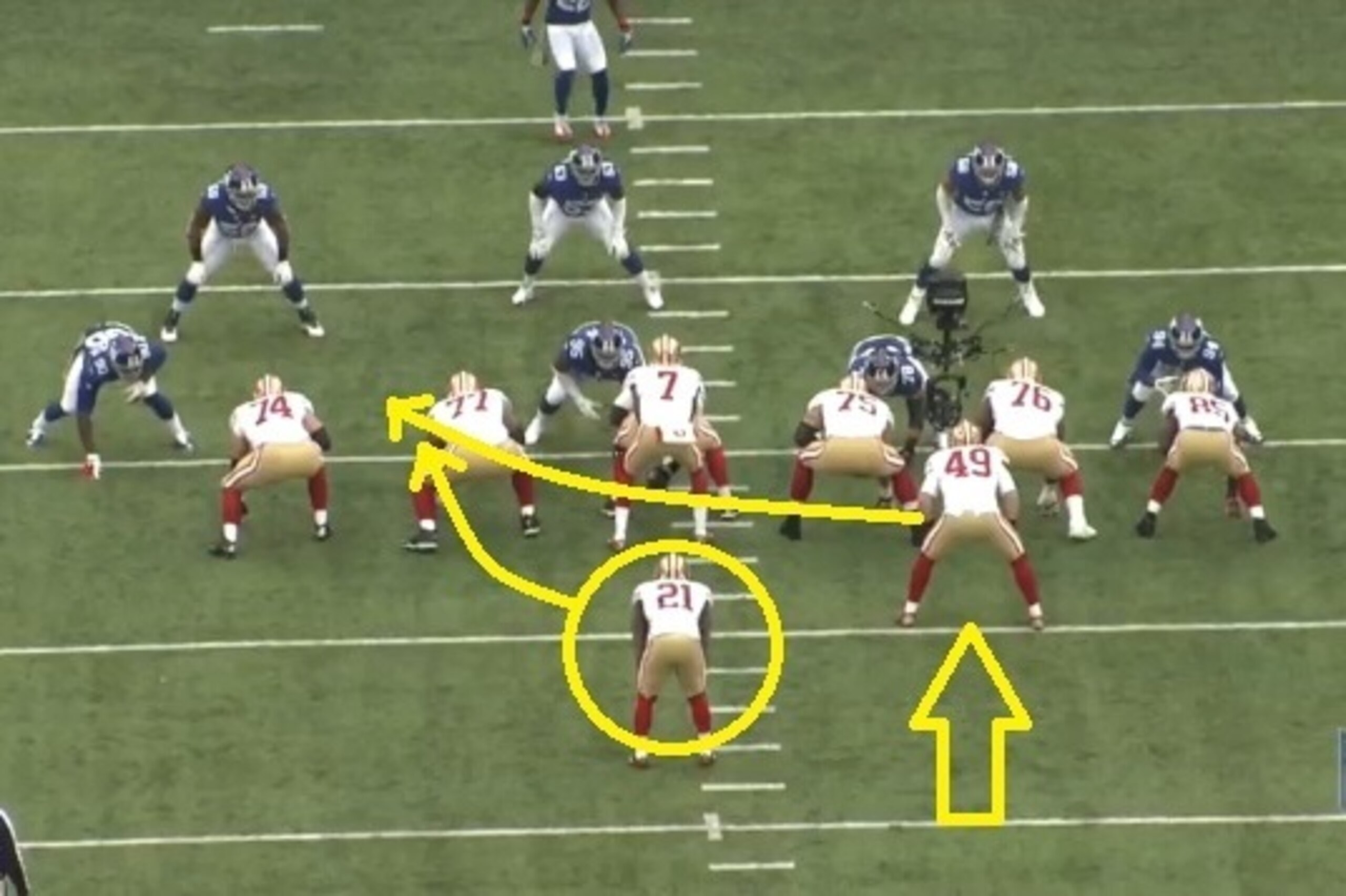
Just after receiving the handoff, Gore trips over Kaepernick's foot, forcing the former to stumble and lose much of his forward momentum.
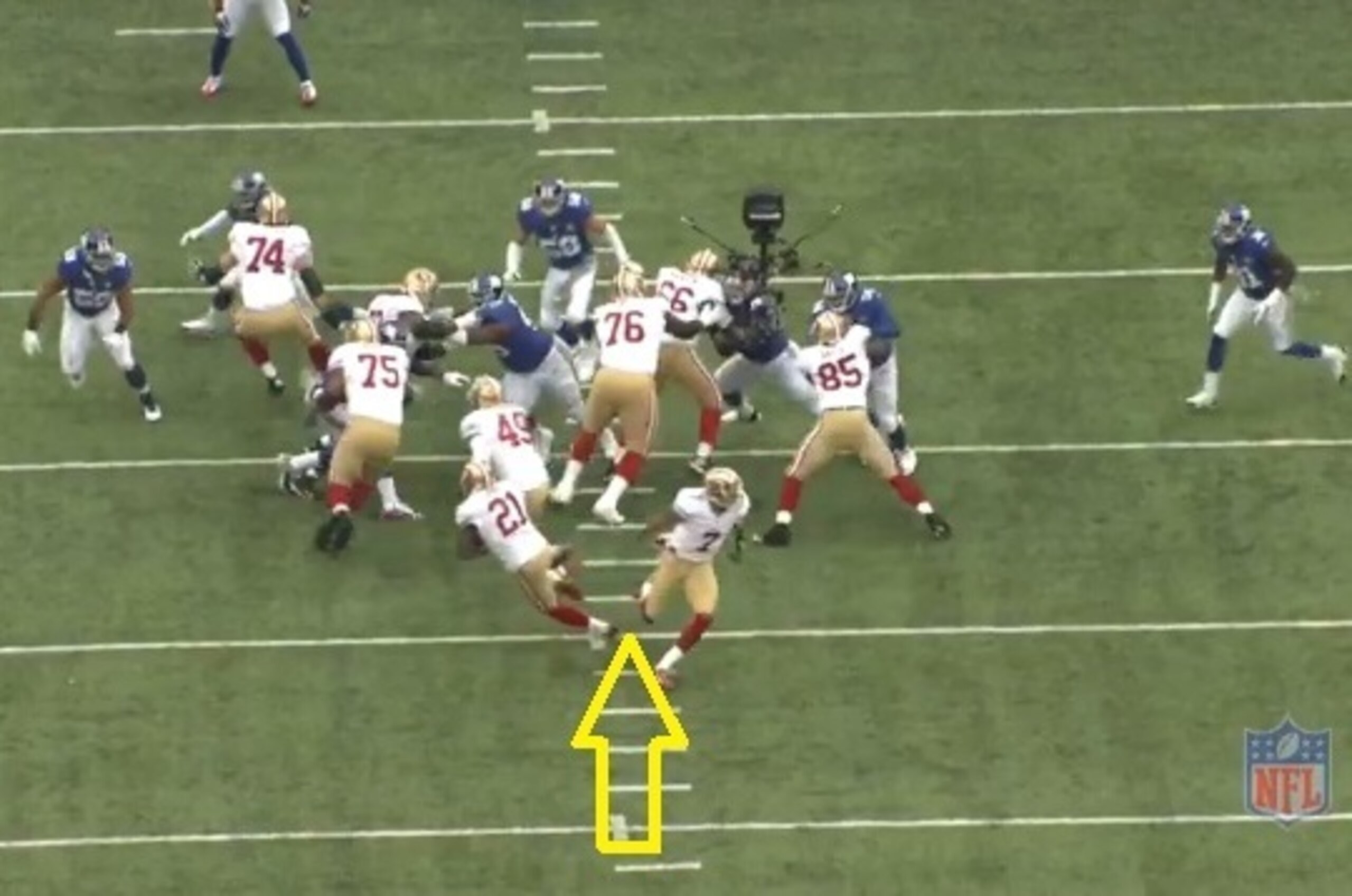
Already off balance, Gore is again tripped up by Miller in this frame. The ball comes loose before Gore gets to the ground, which opens up the opportunity for a Giants recovery.
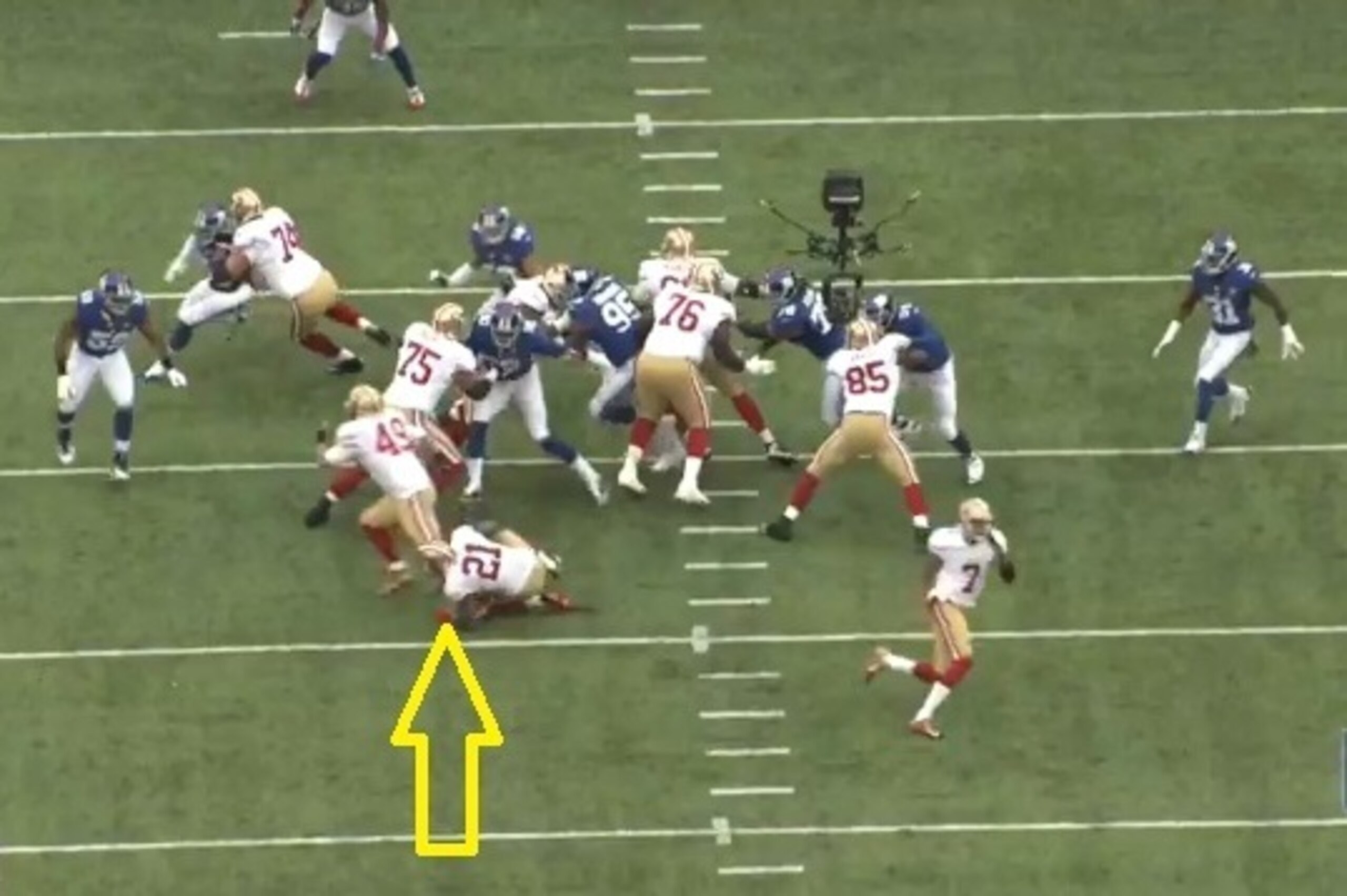
New York would march down the field and score seven points off the turnover.
One cannot fault offensive coordinator Greg Roman's play-calling here. It was a simple matter of execution—or lack thereof. Kaepernick and Gore tripped over each other, which threw the play out of whack. Miller getting tangled up with Gore made things worse.
But this lack of execution doesn't describe everything behind the 49ers' offensive woes.
Fast-forward to the 2:37 mark of the same quarter. The 49ers find themselves in a 1st-and-goal situation on the Giants' 10-yard line.
On the first play from scrimmage, Kaepernick will attempt to rush out of a read-option play. He is lined up in shotgun with Carlos Hyde the running threat. Note wide receiver Stevie Johnson motioning to the opposite side just before the snap.
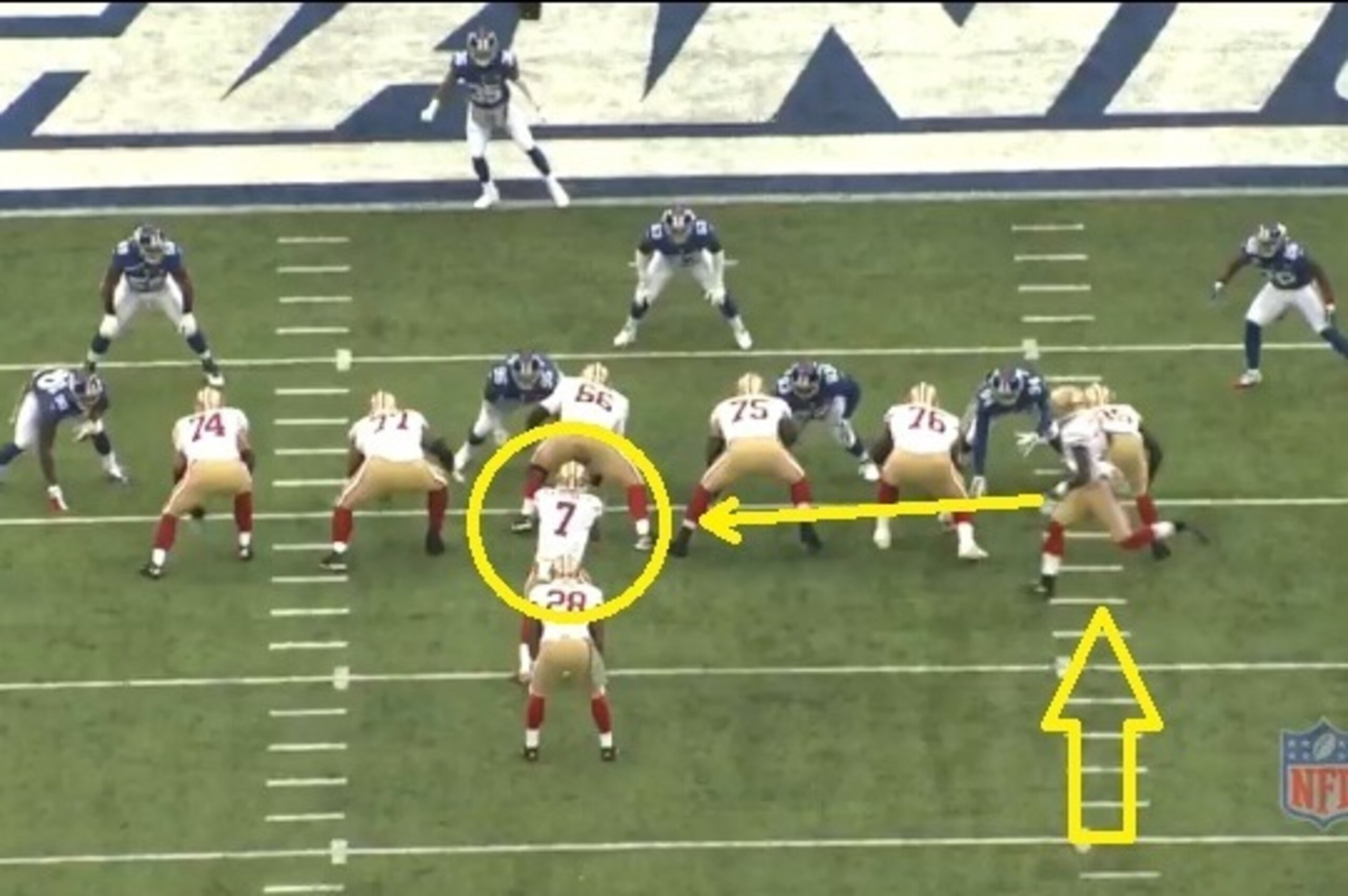
Johnson's motion has a consequence—suggesting to New York's defense that the play will come that way. Kaepernick's decision to keep the ball initially looks correct considering how Hyde is bottled up in the middle of the line.
But left tackle Joe Staley loses containment on his man, which pushes Kaepernick further back and to his left. The 49ers signal-caller will evade this tackle but is brought down by the linebacker at the left end of the screen for a seven-yard loss.

Play-calling might bear a portion of the blame, but execution is also a problem. Staley missed his man, but Johnson also failed to block the outside linebacker as illustrated in this screenshot. Had these blocks been held, Kaepernick could have had a one-on-one matchup with the Giants defensive back (highlighted in red), potentially setting up a modest plus gain.
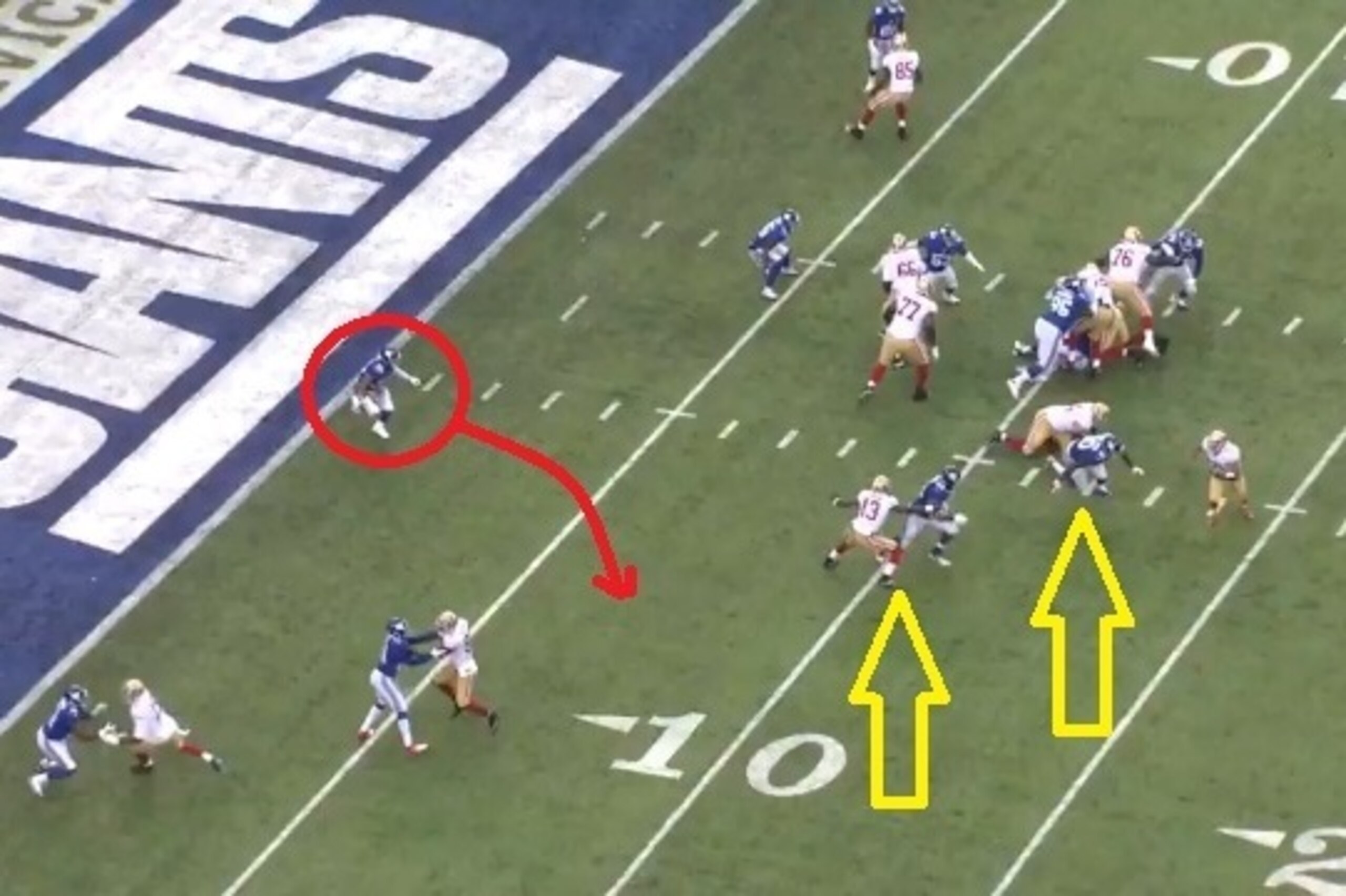
Instead, the play went for a loss.
After a four-yard gain by Hyde, the 49ers were faced with a 3rd-and-goal play from the 13-yard line. The 49ers will roll out four receivers in this set. Anquan Boldin (bottom of screen) will be the primary target. But notice wide receiver Michael Crabtree at the top of the screen. He'll move to the center of the end zone in single-man coverage.
New York's other defensive back (red arrow) is split between tight end Vernon Davis (yellow arrow) and Crabtree. He'll offer zero help in covering the latter receiver.

But Kaepernick locks in on Boldin, delivering an underthrown ball in the process. Had the pass been on target, one can only speculate whether or not Boldin uses his strength to work his way into the end zone.
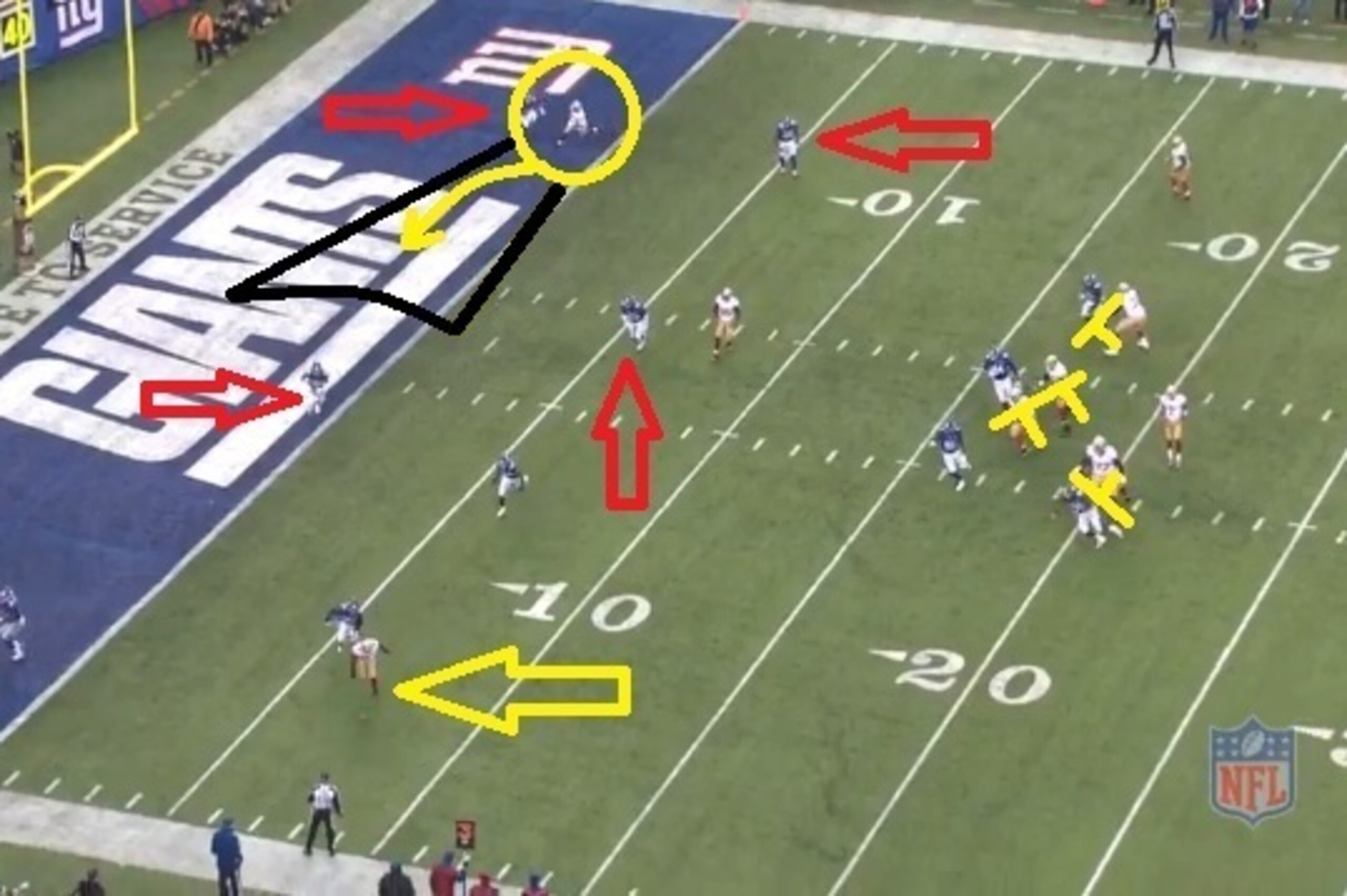
Perhaps he does, but notice the window (black area) in which Kaepernick has an opening with Crabtree. Crabtree had an inside lane with which to work. Note how the Giants defensive backs in the vicinity were out of position to make an immediate play.
Kaepernick simply didn't look his way, and it wasn't like he was under pressure. Note the O-line doing a good job of holding its blocks.
The 49ers would be forced to settle for a field goal.
San Francisco's third red-zone appearance came on a 4th-and-6 play at the Giants' 19-yard line. A five-yard reception by Hyde on the previous snap moved the 49ers into this territory, thus making it a red-zone appearance. San Francisco would again be forced to settle for three.

Finding the Solutions
Roman's play-calling can, and will, receive plenty of criticism. But that's the easiest target when an offense—particularly in the red zone—is struggling.
Gore spoke of the difficulties, via Lorenzo Reyes of USA Today, but defended his coaches' decisions that took place during San Francisco's two-game losing streak in Weeks 7 and 9, respectively:
"We had to look at ourselves. It wasn't coaches. We had to check ourselves. Watching the [Week 9] Rams game, everybody looked at every play and said, "What did you mess up on this here?" That wasn't us. We all messed up. So we had to check ourselves. I know we've been doing it the last two weeks. We've been playing great ball. We've just got to play better in the second half and score in the red zone.
"
Execution is just as critical as making the correct calls. Roman's efforts, no matter what the calls are, will be measured as far as his players can carry them out on the field.
"Blame Greg Roman all you want. And you should. But these players severely fail to execute in the second half each week.
— Ian Tomitch (@itomitch) November 16, 2014"
Some of the above footage reveals that the players have yet to perform at the necessary level.
But a coaching staff can do a better job toward putting the offense in a position to win considering all surrounding circumstances.
For example, running the ball up the gut on a 2nd-and-long at an opponent's 18-yard line probably won't do much. But a swing play to the outside—especially against teams that stack the box—might gain substantial yards.
Yet this approach may not work inside the 5-yard line, where a north-to-south runner could do best.
Perhaps the utilization of a red-zone screen would offset aggressive interior defenses and open up blocks to the outside.
Whatever the solution is, San Francisco needs to address this in a hurry.

The 49ers will have the chance to do so against a Washington Redskins defense that ranks No. 18 in red-zone defensive efficiency, per Gutierrez.
But as larger, more important games against the Seattle Seahawks and Arizona Cardinals draw near, San Francisco will need to be able to turn those field goals into touchdowns.
The 49ers' playoff hopes hinge on this ability.
All statistics, records and accolades courtesy of Pro-Football-Reference.com unless otherwise indicated.
Peter Panacy is a featured columnist for Bleacher Report, covering the San Francisco 49ers. Be sure to check out his entire archive on 49ers news, insight and analysis.
Follow him @PeterPanacy on Twitter.