Monta Ellis' Brilliant Career Remake Needs Even Stronger Sequel
Monta Ellis has been a polarizing figure for most of his professional basketball career. To the untrained eye, he is a supremely talented scorer, boasting point averages rivaling the league's elite. To NBA pundits, the 6'3" slasher has been regarded as a lamentable volume shooter, putting himself ahead of the team.
If Ellis, 29, didn't win over all the critics last last season, he certainly tipped the scales in his favor.
Some players are more adaptable than others and thus easier to incorporate into a balanced roster. Others are wild cards who can blossom in the right system or single-handedly make a team implode. It's not hard to figure out which type the swift guard belongs to.

The circumstances couldn't have been better for Ellis last year. He was viewed as damaged goods after leaving the Milwaukee Bucks, a reject the Dallas Mavericks sheltered after missing out on the juicy free-agent names. Hardly anyone, possibly even the Mavs themselves, realized how well he would fit.

With expectations relatively low, Ellis didn't have immediate pressure to shine and could simply settle in. It was the first time he played on a team full of veterans, led by one of the top three head coaches in the league, Rick Carlisle.
Some people pretend as though Ellis, due to some kind of divine intervention, evolved as a player. He didn't. As his teammates rained praise on him, his media narrative changed as well, but we knew that he was capable of this—we had seen it before.
Ellis was coming off the worst shooting season of his career when he joined Dallas, putting up 17.5 shots per game as a Buck while connecting at a 41.6 percent clip. He has shot over 50 percent in a season before, but his percentages started declining in 2011-12.
While he didn't do himself any favors with his individual play during that time span, the dysfunctional situation he was part of prior to landing in Dallas made it difficult to thrive.
Even though he significantly improved his field-goal percentage as a Maverick, that wasn't the most impressive aspect of his 2013-14 campaign. What was more striking about Ellis' debut season in Texas is that it actually looked like he cared and wanted to adapt.
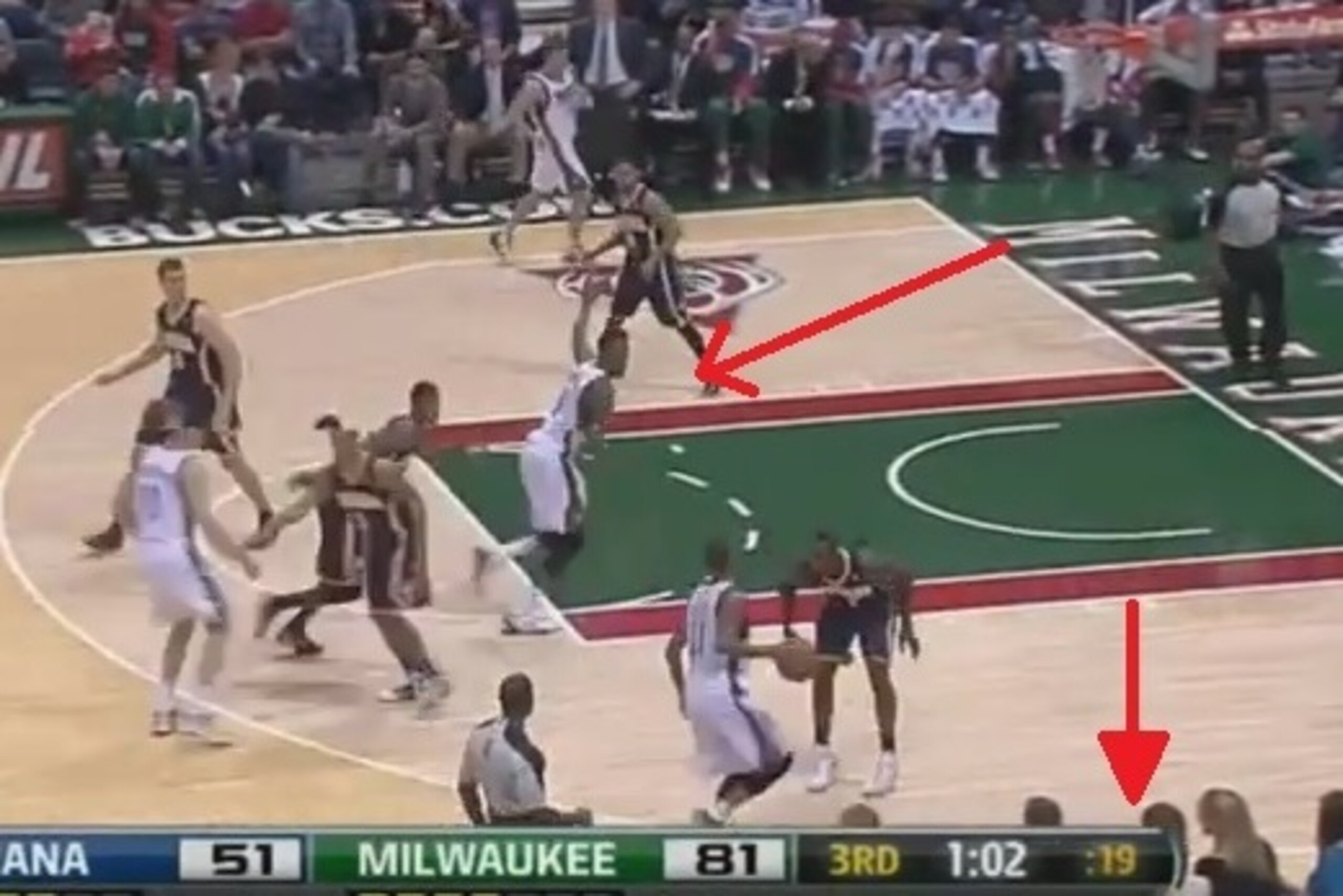
In Milwaukee, he looked lethargic and often played within his own bubble. As a result, plays such as the one below became all too common at the BMO Harris Bradley Center:
Ellis calmly dribbles up to the right wing and gets a double screen. The Indiana Pacers switch, and Larry Sanders rolls to the basket. With 19 seconds left on the shot clock, Ellis simply pulls up for a wing three, despite having a perfect opening to hit Sanders on the roll:
His shot selection still isn't perfect, as he tends to fall in love with the mid-range shot a bit too much. However, Carlisle has kept Ellis on a significantly tighter leash, releasing the hold just the right amount to get the most out of him.
Take a look at Ellis' shot charts over the last two seasons, starting with 2012-13:
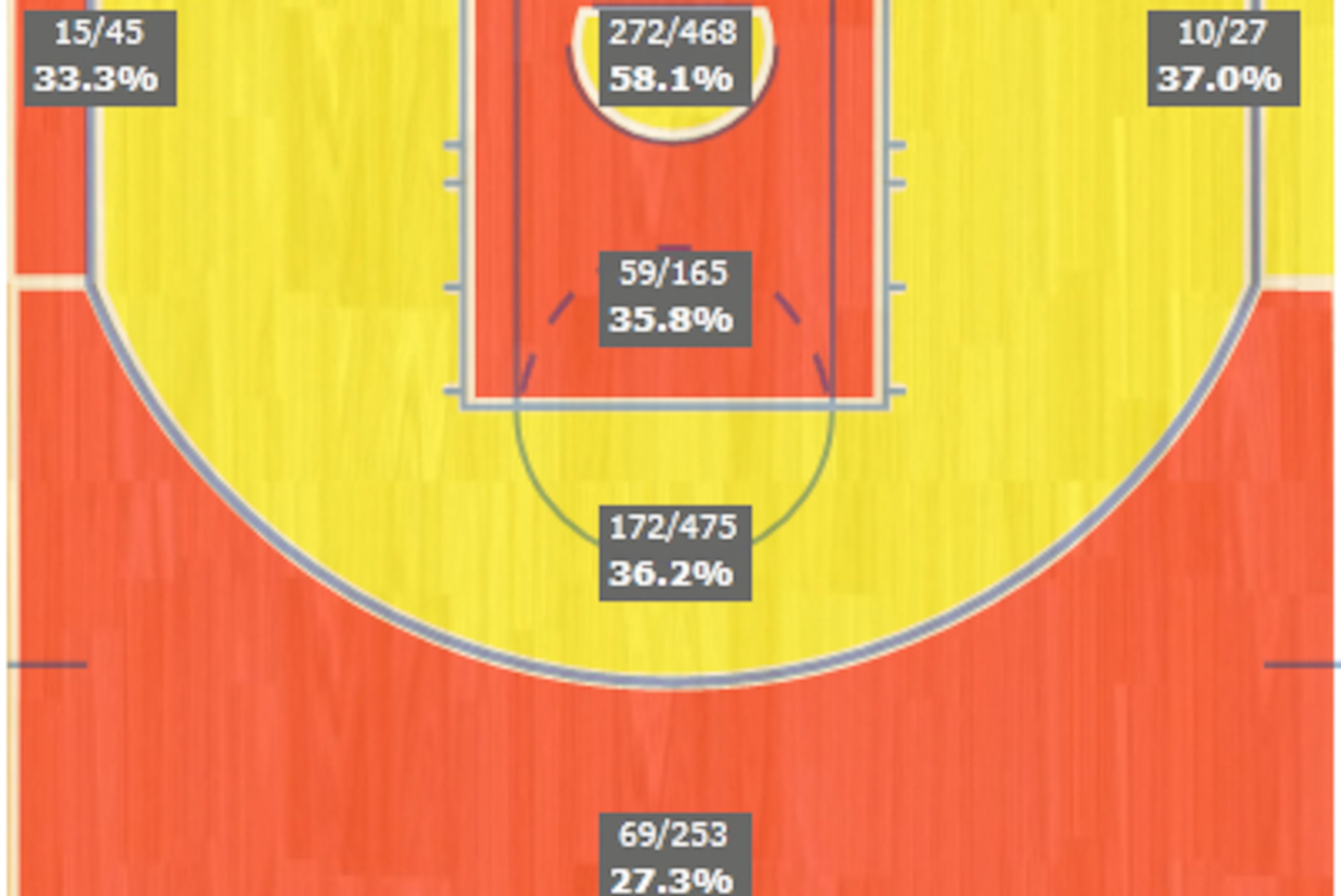
He was a bad spot-up shooter from the corners when Brandon Jennings took over the ball-handling duties. His finishing around the rim has always been solid, but he settled for more mid-range jumpers than attempts at the basket. He also took and missed a ton of threes on the wings and at the top of the key.
Before we look into Ellis' chart from last year, it's important to glance at how his shot selection changed. In 2012-13, 22.6 percent of his total shots were threes. That number dropped to an excellent 16.2 percent with Dallas. He also took fewer mid-range jumpers and had 8.1 percent more attempts in the paint than the previous year with the Bucks.
Here is how his shot chart looked last season:
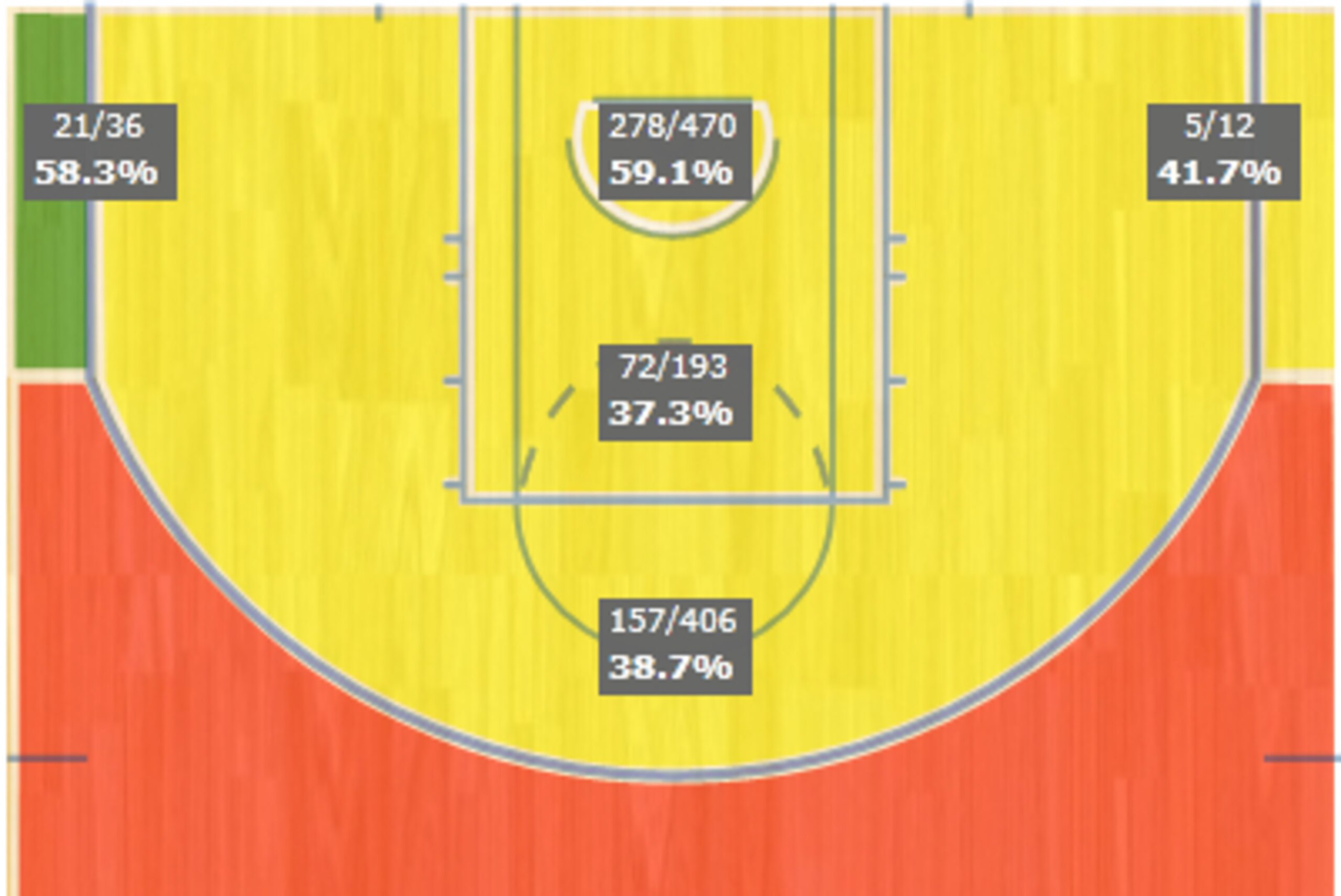
Ellis filtered out some of the bad shots above the break. He also improved on his corner three, especially on the left side. Just about every single one of his shots from that spot was a wide-open one.
When Jose Calderon ran the offense, Ellis did an excellent job of slowly drifting into that corner, sneakily creating passing lanes when his teammates drew attention.
Most importantly, Ellis was relentless attacking the basket and a perfect complement to Dirk Nowitzki. They combined on handoffs all over the floor and hyper-efficient, high pick-and-rolls that drove defenses mad.
There are very few coaches in the league who consistently get the most out of their players. Gregg Popovich of the San Antonio Spurs and Carlisle are two leaders who know exactly how to use every single guy on their rosters. Ellis didn't really remake his career—he adjusted admirably to a system Carlisle engineered to let him shine.
Encore?

After a year with the Mavs, Ellis should only get more comfortable moving forward.
His shot selection will never be unsullied. He is an explosive heat-check guy, and the ill-advised mid-range heaves come with the package. It's all about maintaining a balance and playing within the system.
Jason Terry was in a similar situation when he joined the Mavericks in 2004-05. He was an inefficient tweener-guard with the Atlanta Hawks but fit right in with Nowitzki.
Like Ellis, Terry brought an element of unpredictability and controlled chaos to the table. His efficiency jumped through the roof in his very first year in Dallas as he adjusted to a new role. In a similar way, Ellis is now the engine of the Mavericks, playing for the team rather than trying to put his one-on-one prowess on display.
Other than Nowitzki post-ups, Carlisle's fluid offensive system is almost completely free from isolation plays. This means that even the bad shots Ellis takes are generally within the flow of the offense. Still, there are things he can clean up.
Take a look at these two very different mid-range shots he took in the 2014-15 season opener against the San Antonio Spurs:
The first shot is good. Ellis screens for Nowitzki in the low block, as the German attempts to make his way to the high post for the entry pass. He gets sandwiched by Tim Duncan and Danny Green, who try to buy time for Matt Bonner to catch up. Meanwhile, Ellis recognizes the free space at the elbow and uses Tyson Chandler's excellent screen to calmly knock down the jumper.
In the second clip, he kind of leaps into a shot just inside the three-point line. He doesn't have time to set his feet and just rushes it. The shot clock was ticking down, but Devin Harris was open right next to him.
Here is another freeze frame of an Ellis shot against the Spurs:
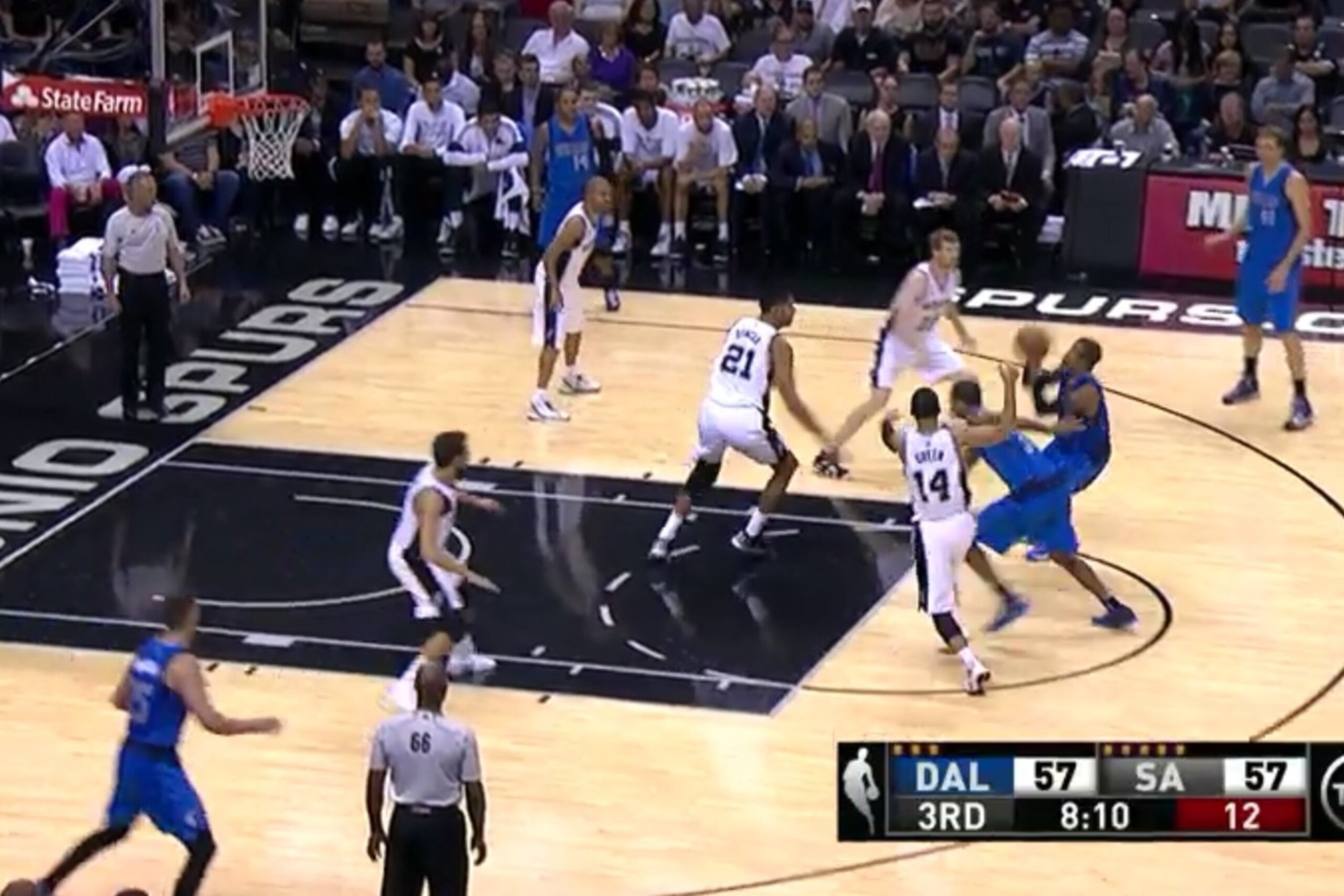
This is a relatively common occurrence. The opposing big man sags off to bait Ellis into pulling up for a mid-range shot after a high pick-and-roll. Sometimes, when the shot clock is winding down, for instance, you have to take that look. When given enough space, Ellis can knock that shot down relatively consistently in rhythm.
However, in the freeze frame above, it was another rushed shot. Duncan denied the driving lane but remained close enough to contest. Meanwhile, Chandler Parsons' man also rushed to the paint at the threat of Ellis penetrating. Had he been a little more composed and swung the ball, the Mavericks could have gotten a better look.
All that being said, Ellis was invaluable to Dallas last year and will be even more so this season.
Sometimes lost behind the curtain of criticism and scrutiny is the fact that Ellis is an exceptional passer. The Mavericks have a lot of players who move the ball well, but no one can create off the dribble quite as well as he can. Here are two plays from the same game that show this:
The first play shows exactly what we've been talking about: Aron Baynes seals off the driving lane, but instead of releasing a mid-range shot, Ellis adjusts in midair to find an open Jameer Nelson.
The second clip is just beautiful. Ellis crosses over Marco Belinelli, absorbs the contact in the paint and still somehow manages to hit Richard Jefferson with a perfect pass. Notice that four Spurs players have collapsed in the paint on this play.
The Mavericks have some nifty sets and rely on a ton of ball movement, but they still lose an extra dimension when Ellis isn't on the floor. He has the speed and the quality to single-handedly compromise defenses in just a couple of dribbles.
Parsons will need to figure out where his looks will come, but he is a guy who should take over some of the offensive load. This means that eventually, Ellis will be able to focus even more on his playmaking and less on scoring.
Before the season began, Mavericks owner Mark Cuban proclaimed that he didn't want to see anyone on his team average over 20 points per game this year.
“I’m not expecting anyone on our team to be a 20-point scorer,” Cuban said, according to ESPNDallas.com's Tim McMahon. “Not Dirk. I don’t want him to be a 20-point scorer. Seriously."
Cuban is right. With Parsons around, there is no need for Ellis to improve on his 19 points per game of last year. However, if he becomes even more pass-friendly than before, he could easily dish out a career-high average of seven or eight assists.
Closing Thoughts

The Mavericks are not favorites to win the title this year, but hardly anyone would be knocked off his chair if this group of players manage to come out of the Western Conference.
With most of his critics silenced, Ellis has a golden opportunity to continue being the catalyst behind this team's success. Nowitzki is more than happy to defer to his speedy accomplice, who's game has matured considerably with time.
Ellis is comfortable with his surroundings, has even more talent around him and appears to be poised. For him, it's always been about finding a balance in his game.
Who knows? Maybe this year he will fully discover that elusive equilibrium.
You can follow me on Twitter: @VytisLasaitis

.jpg?w=2560 "NFL House in Paris Closes for Protests")
.jpg?w=2560 "Trevon Diggs Cut by Seahawks")