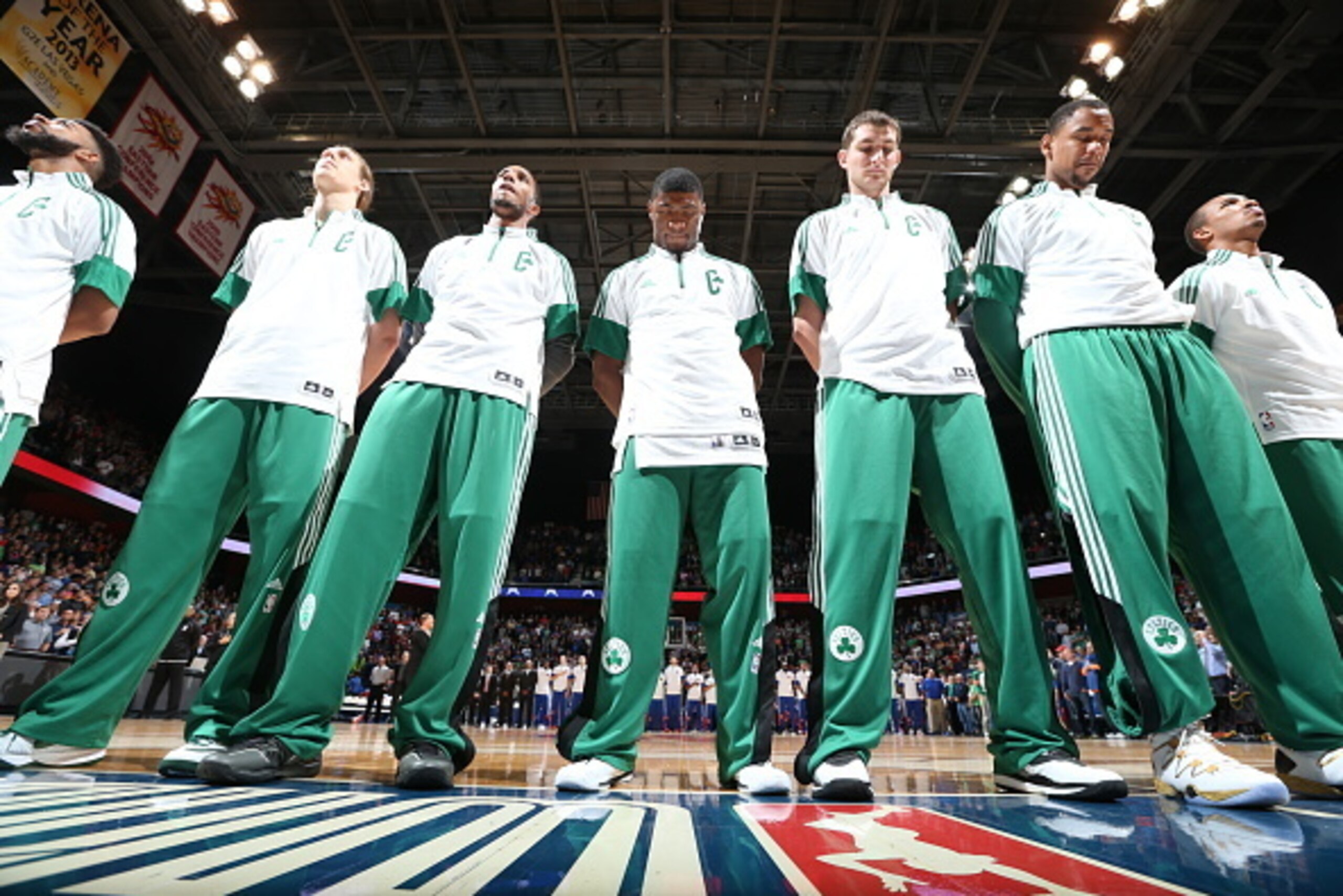

Grading Boston Celtics' Final 15-Man Roster
With the 2014-15 NBA season upon us, it is time to evaluate how the Boston Celtics' 15-man roster grades out.
According to CSNNE's A. Sherrod Blakely, the Celtics trimmed six players, including newly acquired Will Bynum, to narrow their roster down to the NBA's maximum 15. Joining Bynum on the cutting room floor were Travis Frazier, Rodney McGruder, Erik Murphy, Jarell Eddie and Christian Watford.
We learned a fair amount about Boston's players during the preseason, and coupling that with past experiences and current expectations, we can determine a suitable grade for each position and the respective backup spots.
So, let's bring back those pencils, take out your books and welcome back those teachers' dirty looks. The offseason is over, and it is time to hit the Bleacher Report classroom once again.
Starting Point Guard
1 of 10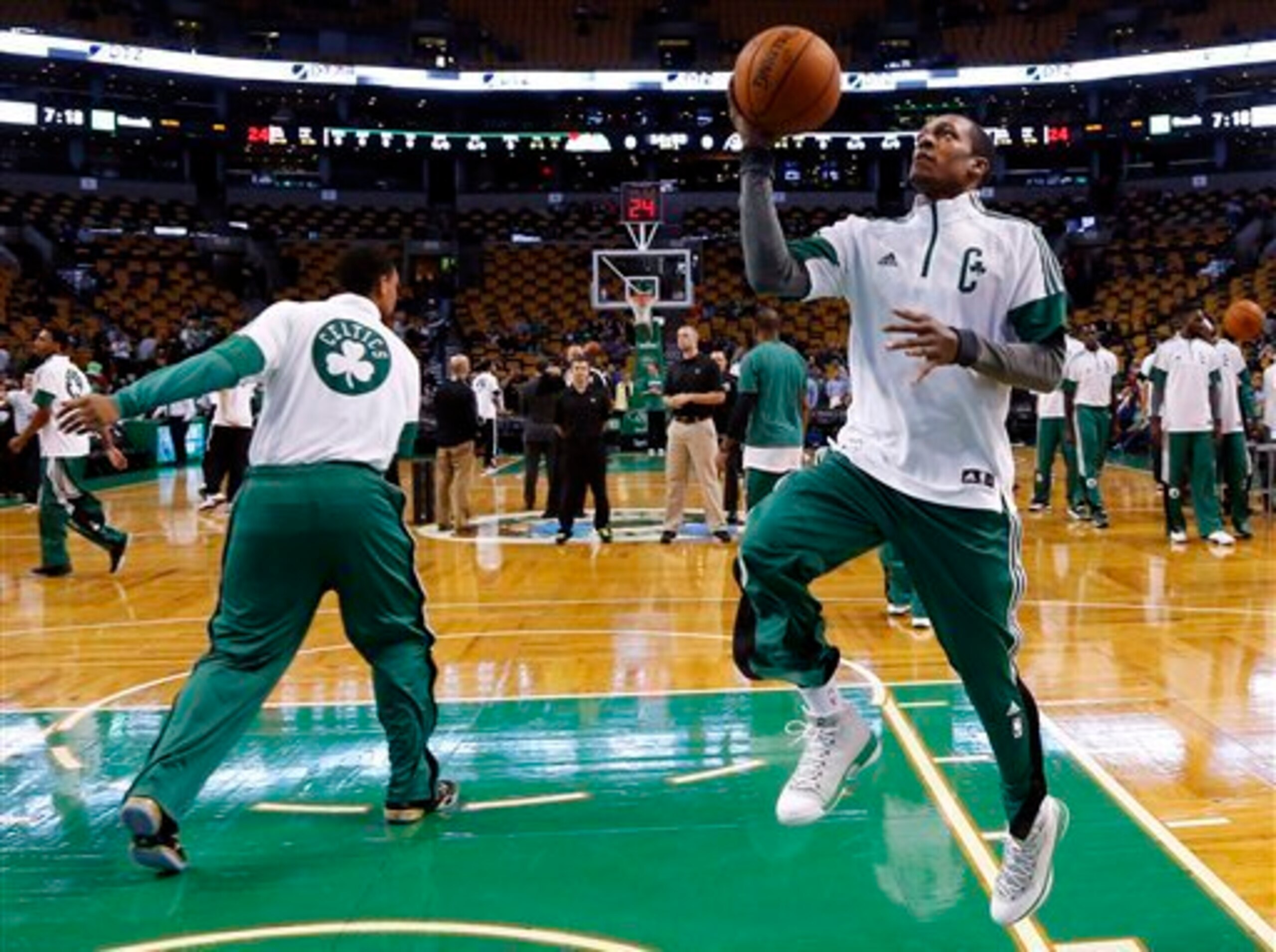
Player: Rajon Rondo
Grade: B+
The most important five digits in New England currently reside on the left hand of one Rajon Rondo, starting point guard of the Boston Celtics.
The latest on Rondo is that he is still questionable for Oct. 29's regular-season opener, according to Julian Benbow of The Boston Globe.
"If he goes through the next couple of days without pain and he feels really good and the doctors give him clearance, then he’ll be good to go," head coach Brad Stevens said. "But there’s a lot of ifs there. So I’d still say he’s somewhere in the realm of questionable, but all signs have been moving forward."
With Rondo's grade, we are forced to go entirely off previous performance and speculation. With his sitting out the preseason after breaking his hand, there has been little opportunity to see Rondo mesh with his new teammates.
Still, not too many months ago, he was viewed as one of the best players in basketball. He has a championship ring and was possibly the best player on a couple of playoff teams. Playing for his first legitimately big contract and with a lot to prove after a couple of injury-stunted seasons, it is safe to expect a lot from Rondo this season.
For as long as he remains in a Celtics jersey, he can't earn less than a B-plus. Keeping him from an A are the injury concerns and possibility of attitude-fueled drama while he toils away his prime on a rebuilding team.
Per the Benbow piece, if Rondo is unable to go in Boston's opener, Marcus Smart will fill the starting role.
Starting Shooting Guard
2 of 10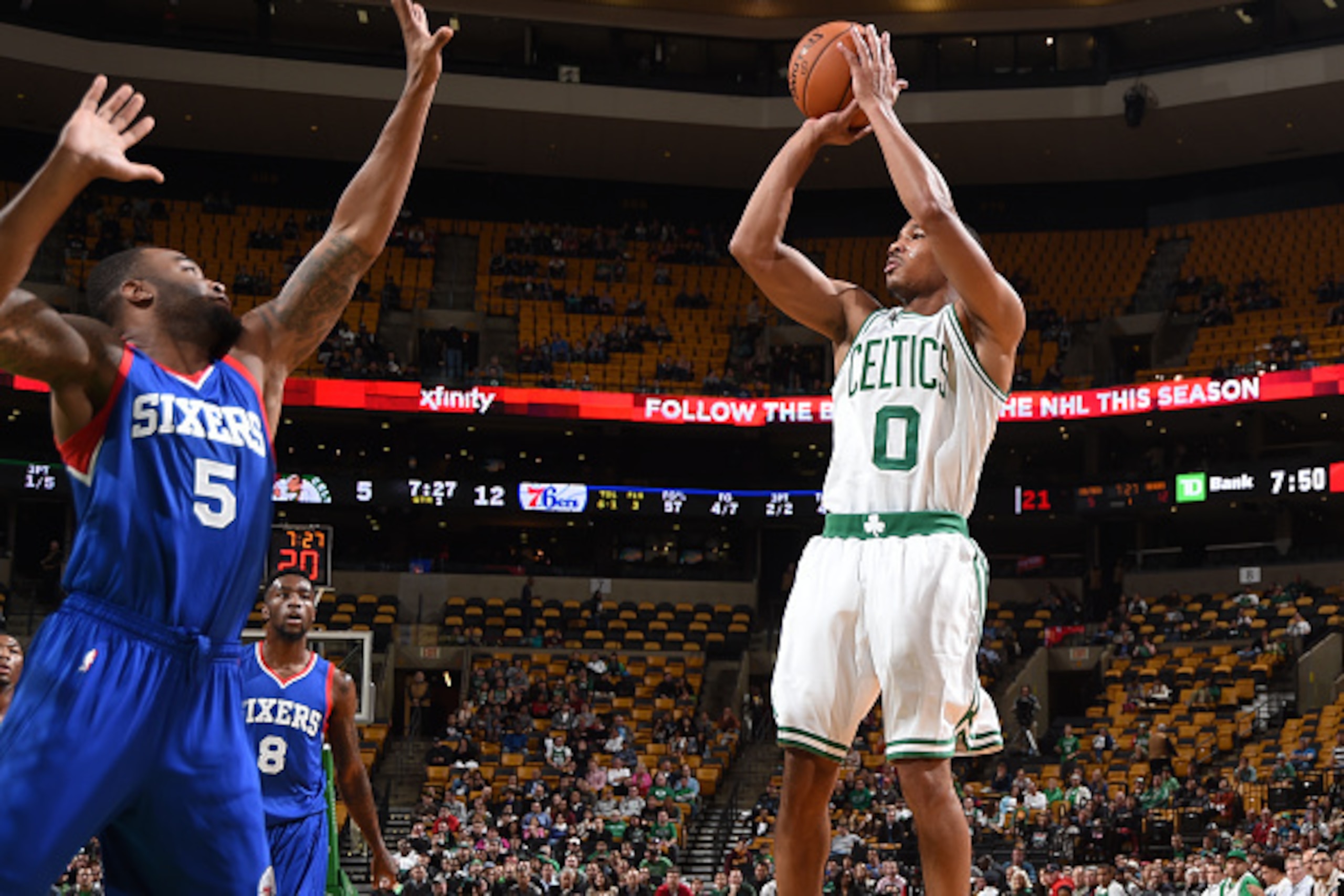
Player: Avery Bradley
Grade: B-
At the starting shooting guard spot, Boston has Avery Bradley.
The 23-year-old picked up a nice four-year, $32 million contract over the summer and will now try to buck complacency with a strong 2014-15.
Continuing improvement is important for Bradley, who put together a strong 2013-14 campaign. Last season, he averaged 14.9 points per game and shot 39.5 percent from beyond the arc. In doing that, Bradley showed that he was capable of completing the necessary requirements of becoming a starting shooting guard. He is in the process of shaking that defensive designated-hitter label.
The issue with those numbers, of course, is that they came in just 60 games. Once again, Bradley was forced to miss a significant chunk of time. He missed 32 games the year before and sat out 10 playoff games in 2012.
There are a few things that Bradley must prove to everyone in 2014-15. One is that he can stay on the floor for 75-plus games. Another is that he can complement Rondo. Finally, Bradley has to solidify his standing on the team and in the league by proving that last year wasn't a fluke. If his offensive game has truly progressed, it should continue to improve or stabilize and not backslide.
The defense will always be there because of the effort he puts forth on that side of the ball. However, the novelty is wearing off, and Bradley needs to continue proving that there is more substance to his overall game.
Otherwise, he would be just another average role player, earning a satisfactory C.
Starting Small Forward
3 of 10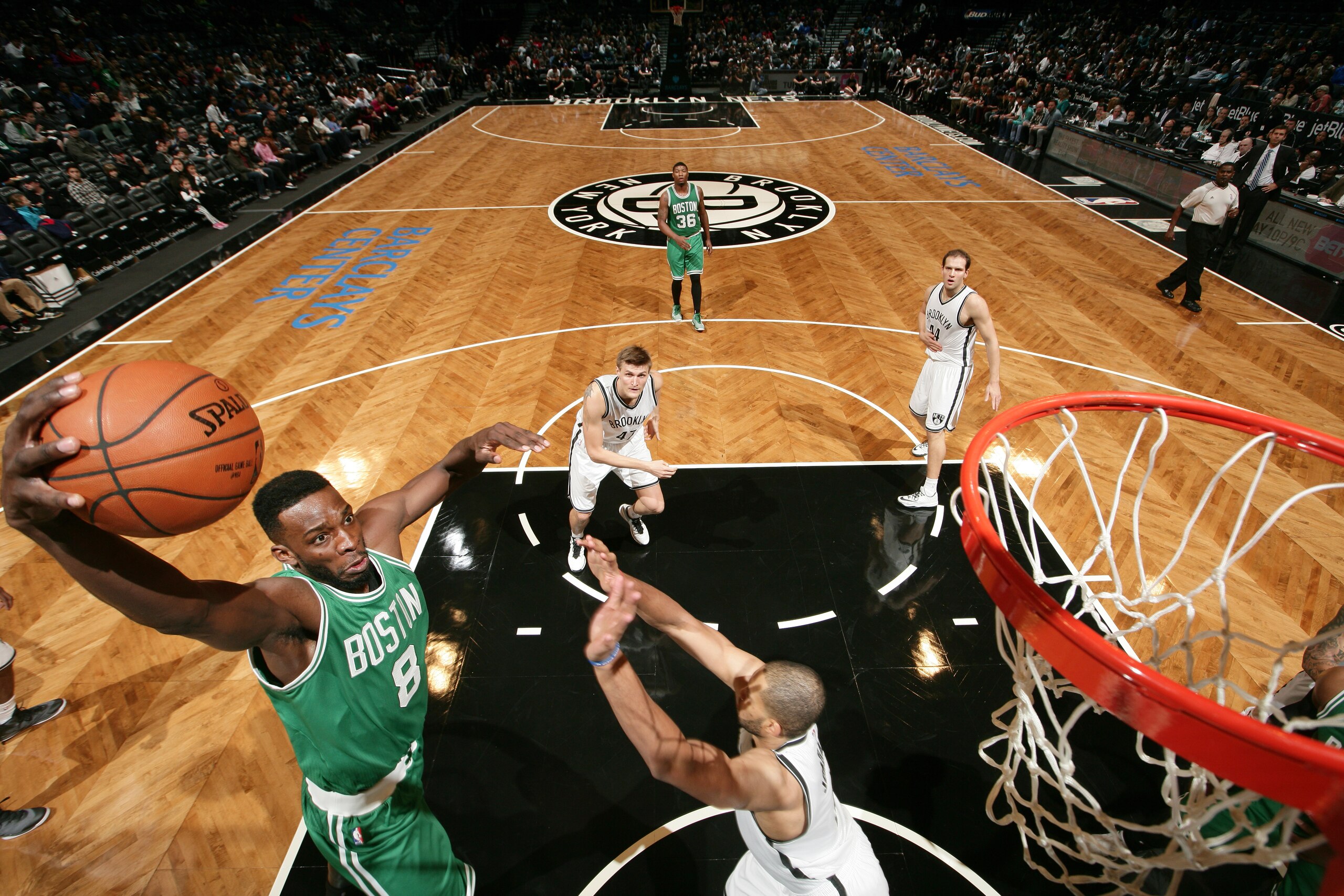
Player: Jeff Green
Grade: B
Jeff Green didn't do anything to lose his spot at starting small forward entering the season. There was some push from newcomer Evan Turner, but for now, Green will remain Boston's leading man on the wing.
Expectations are always going to be higher for Green than his play might necessitate. Watching him play basketball can occasionally be a real treat because he can do things that few other people are capable of. He can combine incredible athleticism with beautiful grace, but those moments seem few and far between.
Green averaged a career-high 16.9 points per game last season but shot a ghastly 41.2 percent from the field. The career 34.4 percent three-point shooter hoisted up 4.8 threes per game. While that percentage isn't bad, I'm not sure it qualifies one to dial up that many long-distance shots.
For a player who is as capable of getting to the rim as Green is, attempting 33.8 percent of his field-goal attempts from outside the arc is irresponsible and inefficient. Only 27.6 percent of his 1,171 field-goal attempts came from the restricted area or at the rim. Green nailed 62.5 percent on those, per NBA.com.
In Stevens' world, a lot of three-point shooting and creativity is allowed on offense. However, if Green's shot selection becomes an issue, it could be the final straw that lowers those expectations to that of a simply average player.
For now, we'll keep him at a solid B, because he was productive last year and remains the team's most dangerous scoring threat. With Rondo hopefully back in the lineup, he can build on something instead of floundering away while freelancing his own offense.


Starting Power Forward
4 of 10
Player: Jared Sullinger
Grade: B
One of the big winners from preseason has been starting power forward Jared Sullinger. His play during these exhibition games has solidified his spot atop the frontcourt depth chart.
Sullinger posted a pair of monster double-doubles to close out his preseason, going for 21 points and 19 rebounds and following that up with a 15-and-17 performance in Boston's finale. Both games came against the Brooklyn Nets.
Playing in a much more convincing 74 games last season after missing half his rookie year, Sullinger impressed statistically, and one could easily see his confidence growing with each contest. He posted 13.3 points and 8.1 rebounds per game during his sophomore campaign.
Two general spots for concern are holding Sullinger back from earning a higher grade. The first issue is simply conditioning. He averaged only 27.6 minutes per night last season and started just 44 of those 74 games. He played just 25.1 minutes per game in November, working his way up to 33.4 per night in April. Minutes are a tough thing to judge in preseason games, so it remains to be seen how much playing time Sullinger can handle.
If he can stay on the court for 30-35 minutes per night, we can elevate his expectations to that of a possible star player instead of just a solid starter.
The other concern is the three-point shooting, which was a new development last year. In two years of college basketball, Sullinger attempted 52 threes. During his second NBA season, he jacked up 208, missing 155 of them.
As far as adding elements to one's game early in a career, I am all for that. However, if it starts to take away from more valuable spots, then it becomes an issue.
Sullinger shot five less free throws than he did three-pointers last year. Kevin Love, for example, posted 211 threes in his third NBA season but was 424-of-499 at the free throw line that season as well. Even last year, when he jacked up 505 treys, he got to the charity stripe 633 times.
Sullinger can try to stretch the floor all he wants, as long as it doesn't detract from his value in the paint.
Starting Center
5 of 10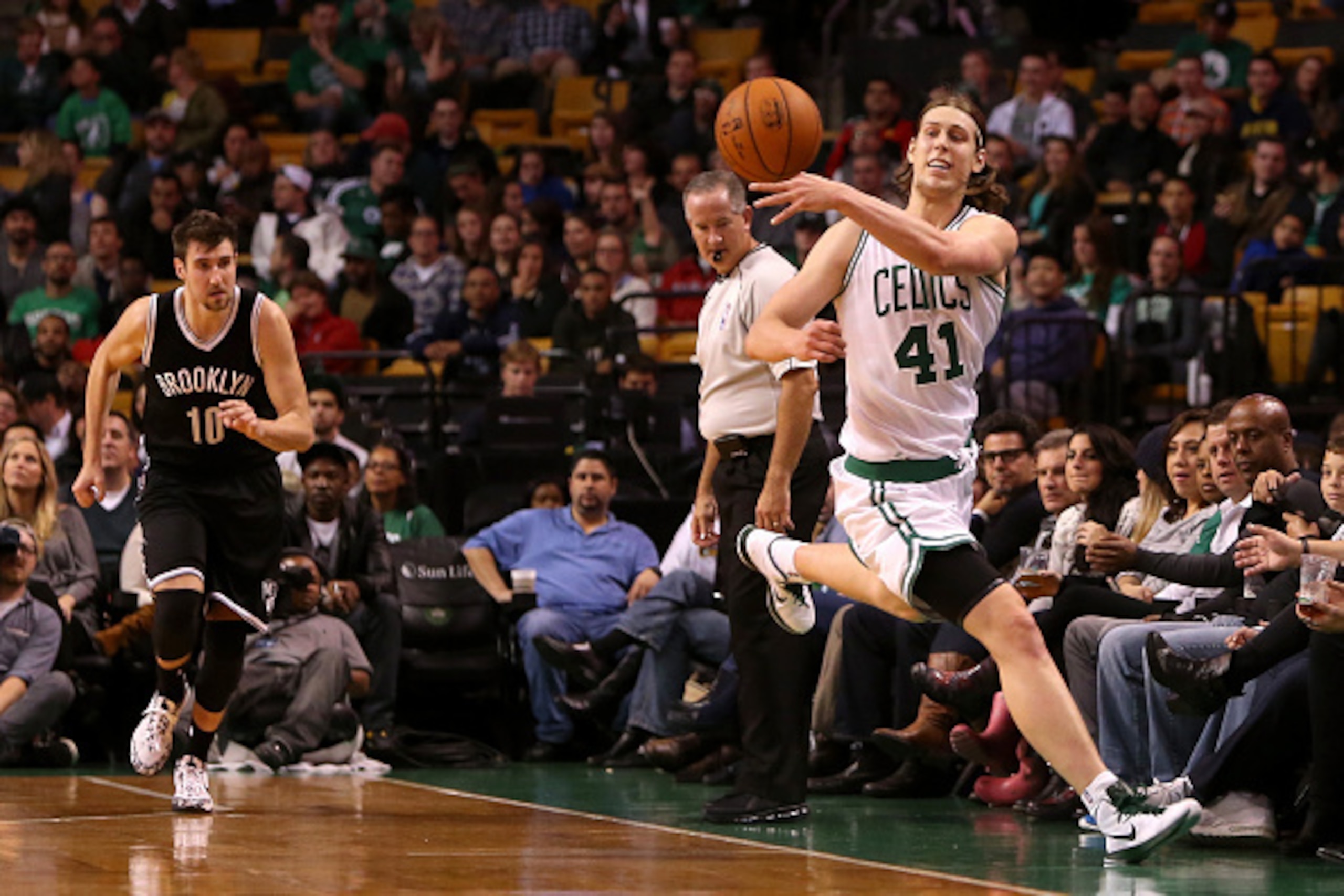
Player: Kelly Olynyk
Grade: C
Boston could go a few different ways with its final starting spot, but throughout the preseason it appeared starting center was Kelly Olynyk's job to lose. He appeared to play well enough to keep it, or at the very least, he wasn't surpassed by any teammates.
Olynyk got a lot of praise early in training camp and does appear to have worked hard over the offseason on a few different parts of his game. Entering his sophomore season in the league, Boston's former lottery pick should have a decent amount of expectations.
As a rookie, he was solid offensively. He averaged 8.7 points in 20 minutes per game while shooting a clip of 46.6/35.1/81.1. He also grabbed 5.2 rebounds per night. With 70 professional games under his belt, we can hopefully extrapolate on those numbers and what we saw in the preseason.
Boston's 23-year-old center loses some points on defense, which was pretty bad overall last year. However, he showed some signs of improvement during preseason in awareness and positioning, which are two important things for a defensive center.
Olynyk was able to stay in front of his man better and use his long frame to become wider in the paint. There were also less awkward lunges and situations where he wound up out of position. Instead, he held his ground and picked up the charge where necessary.
Still, Olynyk has a long way to go on both sides of the ball. He isn't a shot-altering big on defense or a huge three-point threat on offense. Those fringe aspects of his game are what could elevate him to another level, but until we see more consistent play in other areas, we have to keep him at a C.
Reserve Point Guards
6 of 10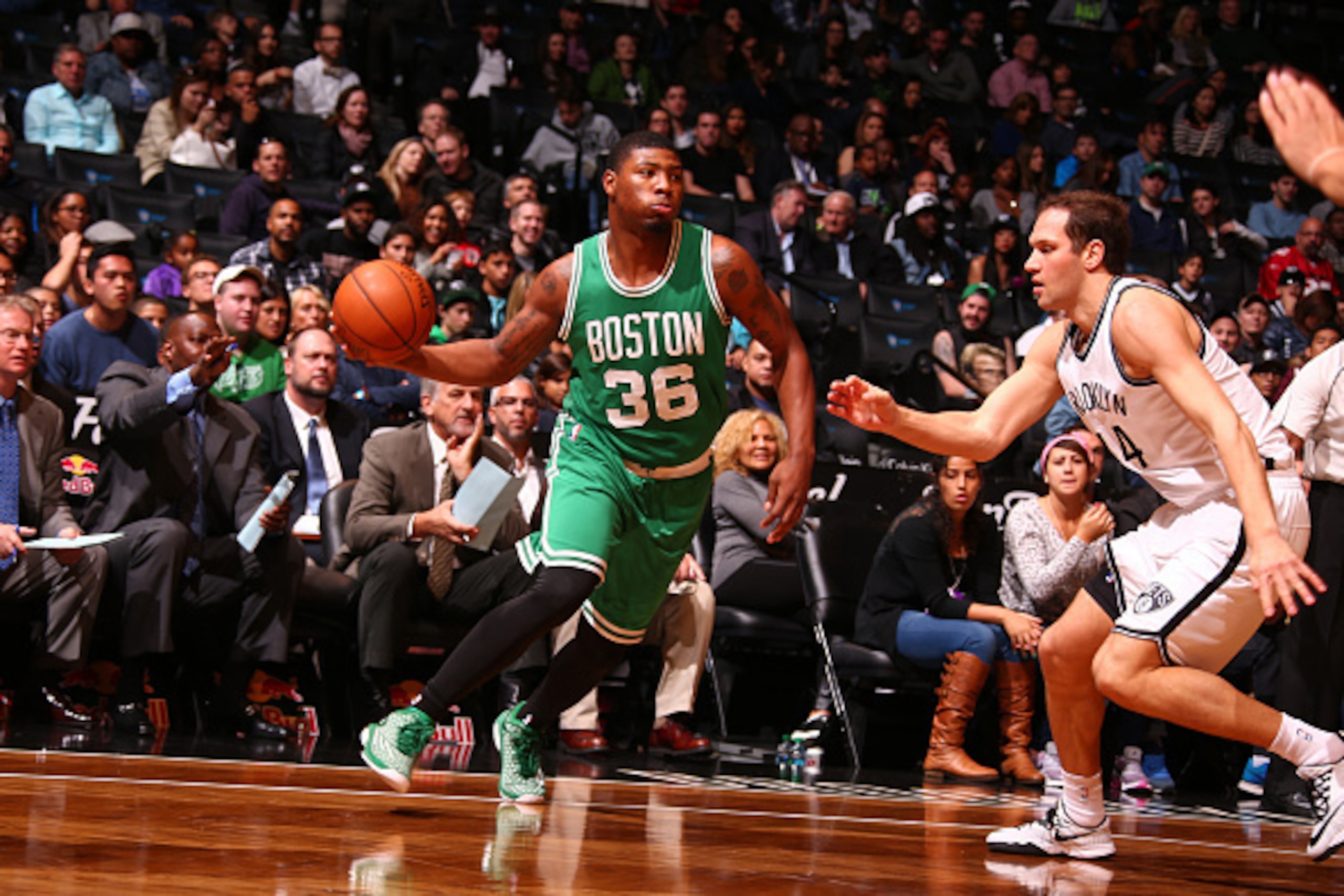
Players: Marcus Smart, Phil Pressey
Grade: C+
We got a healthy dose of Marcus Smart and Phil Pressey during Boston's preseason slate due to Rondo sitting out. This was a good thing as it gave us plenty of time to evaluate and formulate our expectations for both players.
Boston used the No. 6 overall pick in this summer's draft on Smart, and this was his first real test against actual NBA competition. Despite it being preseason, Smart contended with some legitimate NBA guards and mostly solidified those opinions that were already forming of him.
He is going to be a solid NBA player, and that could happen as soon as this winter. He is an absolute bull on defense and is already making a name for himself on that end.
However, he will need to somehow improve his shooting if he is ever going to become a star. Even if he is to become a starter in this league, shooting below 40 percent from the field is unacceptable. That is a sin Smart committed during the preseason and summer league.
For all the talk about how poor a shooter Rondo is and was, he holds a 47.5 percent clip from the field during his career. If Smart is wise and works hard, he'll find a way to get those numbers up.
Pressey was also used quite a bit this preseason by Stevens. He worked well in the pick-and-roll with a couple of Boston's bigs, in particular Olynyk and Tyler Zeller. That is a good sign for his future with the team. He has definitely proved he deserves a roster spot.
Unfortunately, once Rondo returns to full health, there likely won't be much playing time for the Celtics' third point guard.
Reserve Shooting Guards
7 of 10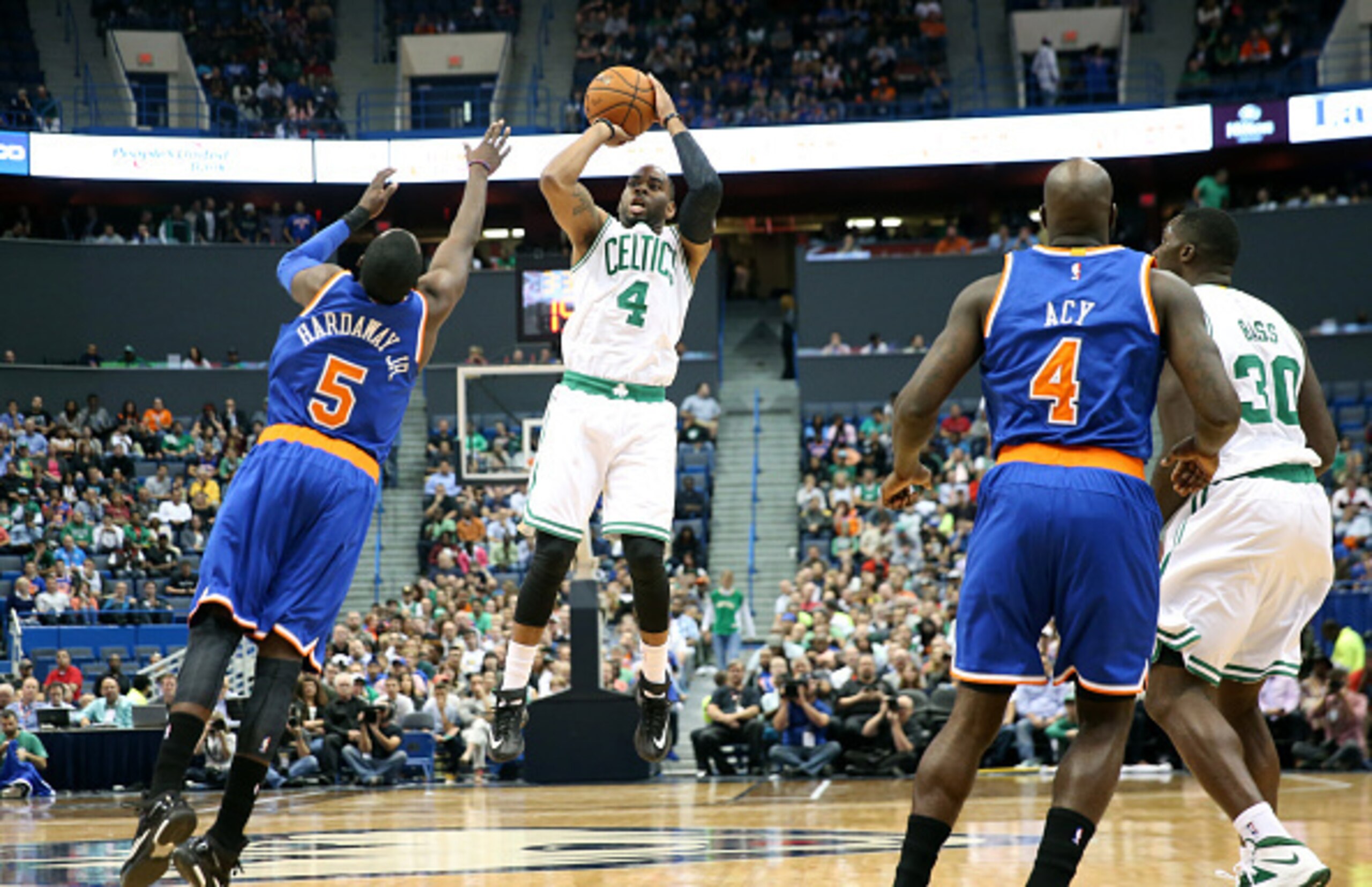
Players: Evan Turner, Marcus Thornton
Grade: C-
Both Evan Turner and Marcus Thornton did solid work with the minutes they were given in October. Unfortunately, they were both also wildly inconsistent.
Turner saw time at three positions, occasionally playing some point guard in Rondo's absence. He thrived with the ball in his hands, creating for himself or teammates on pick-and-rolls. The trouble is that his shooting range has not improved through his four years in the league. He is a career 42.7 percent shooter, and there is now little hope of him improving.
However, Turner is a talented basketball player in general, and on a team as talent-starved as Boston may be, there will be a role for him to fill. Expectations will be low after the Indiana Pacers virtually scrap-heaped him at the end of last season. Low expectations may be the best thing for Turner, though, after trying to live up to the No. 2 overall pick for four years.
Thornton was essentially his streaky self during preseason play. In a couple of games it appeared he couldn't miss from outside, while he also submitted performances like 1-of-7, 1-of-5 and 0-of-3 from beyond the arc.
Thornton's three-point shooting (career 36.1 percent) will be called upon by the Celtics this season. However, depending on how consistent he is and how well Turner and Smart play, he could be on the bench more often that you'd think.
Reserve Small Forwards
8 of 10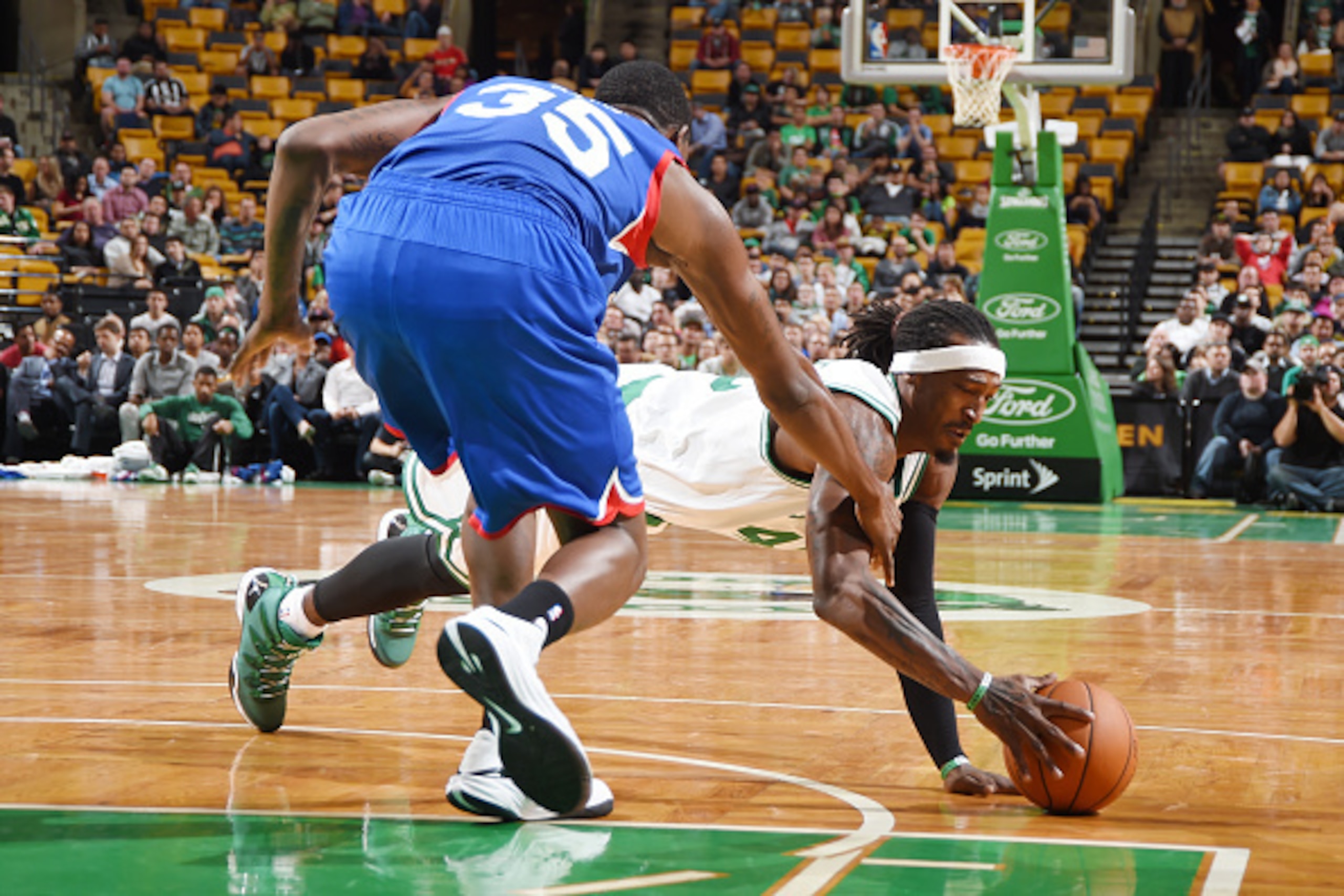
Players: Gerald Wallace, James Young
Grade: D
More than likely, this is the position that will be occupied by Turner, with Smart playing a lot of minutes at shooting guard. However, positionally speaking right now, Boston's reserve wings are Gerald Wallace and James Young.
Though he finished the preseason on a 12-point, five-assist high note against the Brooklyn Nets, Wallace doesn't appear destined for a ton of minutes. At 32 years old and coming off season-ending surgery in 2013-14, Wallace just doesn't have the game he once had. He will be good for brief defensive stands, but for the most part the Celtics will be looking to get young guys involved.
Young was drafted by Boston with the future in mind. Expectations are pretty low for the 19-year-old this season, but the potential is there for improvement right away.
If he can find minutes, he will likely play behind Green on the wing, where his outside shooting could provide some much-needed floor spacing. Unfortunately, for the time being, Young is just as much of an injury concern as Wallace. He missed the entire summer league recovering from a car accident and then played just two preseason games due to some other nagging injuries.
Overall, this position is dangerously weak right now, but thanks to Young's potential, things could get brighter down the line.
Reserve Power Forwards
9 of 10
Players: Brandon Bass, Dwight Powell
Grade: B-
Brandon Bass is still likely a starting-caliber player on a handful of teams, but for the 2014-15 Celtics, he will likely serve in a reserve role.
It is nice to know he is there, though, because if Olynyk doesn't work out at center, we've seen Stevens throw height out the window and start Bass with Sullinger.
Having Bass come off the bench is a sizable win for Boston. He is a very reliable scorer and rebounder who can post consistent numbers regardless of his role. He made 73 starts in 82 games last year, averaging 11.1 points and 5.7 rebounds.
He has mostly been a starter for Boston but has come off the bench in 41 games over three seasons. In two seasons with the Dallas Mavericks, Bass was a reserve in all but one of 160 games played. During those two years, he put up very solid numbers given his 19.7 and 19.4 minutes per game. If he can do the same thing for the Celtics, they are in good shape for frontcourt depth.
Dwight Powell survived Boston's last round of cuts before the regular season. The 2014 second-round pick was traded to the Celtics in the recent Keith Bogans exchange.
He averaged 14 points and 6.9 rebounds per game as a senior at Stanford last year. If he can scratch out any playing time, it will likely be because of his 6'11" frame.
Reserve Centers
10 of 10
Players: Tyler Zeller, Vitor Faverani
Grade: C
Tyler Zeller will likely be challenging Olynyk for the starting center role all season long. Unfortunately, that is more likely due to Olynyk's shortcomings than Zeller's prowess.
Still, both players appear to be very competent NBA bigs, though neither screams superstar or rim-protector.
Zeller has a strong 7'0" frame, weighing in at 253 pounds, which makes him likely a better defensive option than Olynyk. However, Stevens has more experience with the latter and can use him in a few more creative ways because of how good the starter is offensively and with the ball in his hands.
Zeller will see plenty of playing time and should mesh nicely with a fast-paced second unit. One of his biggest strengths is his ability to get up and down the court and score in transition.
Expectations are low for him right now after a tough year with the Cleveland Cavaliers, where his minutes were nearly halved from his rookie to sophomore seasons. He now has a new place to make a name for himself and the opportunity to do it.
Vitor Faverani is currently healing from knee surgery he underwent earlier in October. He will miss the first month or so of the regular season. Upon his return, it is unclear if there will be minutes for him to make any sort of impact.
Boston has four frontcourt players (Sullinger, Bass, Olynyk and Zeller) who will be getting nearly all the minutes available. Whatever is left may go to experimenting with Green at power forward.


.jpg?w=2560 "NFL House in Paris Closes for Protests")
.jpg?w=2560 "Trevon Diggs Cut by Seahawks")

